The IEC 61000-4-30 Class A standard defines the measurement methods, time aggregation, accuracy, and evaluation, for each power quality parameter to obtain reliable, repeatable and comparable results between various brands and models of PQ instruments and systems.
IEC 61000-3-30 Class A Edition 2
IEC 6100-4-30 Class A Edition 2 standardizes the measurements of:
Power frequency
Supply voltage magnitude
Flicker (by reference to IEC 61000-4-15)
Voltage dips/sags and swells
Voltage interruptions
Supply voltage unbalance
Voltage harmonics, and interharmonics (referenced to IEC 61000-4-7)
Mains signaling voltage
Rapid voltage changes
Magnitude of current
Current harmonics and interharmonics (referenced to IEC 61000-4-7)
Current unbalance
IEC 61000-4-30 Edition 3 Introduced new measurements definitions and PQ parameters.
“This third edition cancels and replaces the second edition published in 2008. This edition constitutes a technical revision”.
Rapid voltage changes
Flicker class F1
Magnitude of the current
Current unbalance
Current harmonics (by reference to IEC 61000-4-7)
Current interharmonics (by reference to IEC 61000-4-7)
Additional changes in harmonic parameters from IEEE 519 2014
The number of harmonics to be evaluated. In many application, 50 harmonics are not enough and modern DC to AC inverters used in Wind and Solar generation have significate harmonic component up to the 100th.
Recording resolution – the latest edition of the IEEE 519 requires a daily and weekly harmonic evaluation of both voltage and current at 150/180 cycles (~3sec) resolution per phase. An edition 3 compliant instrument must record this data and prepare a report from the instrument.
Why these revised standards are important to electric utilities?
1. Rapid Voltage Change (RVC) parameter captures voltage changes (sags) that can be disruptive to some loads without exceeding the standard of +/- 5% voltage change limit. An instrument that does not make RVC measurements will miss these events. So a utility may receive customer complaints (most common is light flickers) and not have any data to find the source of the complaint. (most common is large motor starts or other sudden load or distributed generation switching. (tripping)
2. The Edition 3 revision transfers the responsibility for measurement methods continue in this standard, but responsibility for influence quantities, performance, and test procedures are transferred to IEC 62586 -1 and -2.
Part 1, namely IEC 62586-1, was constructed to define a comprehensive PQ device product standard, coined within as PQIs. The standard outlines safety, electromagnetic compatibility (EMC), climatic, and mechanical requirements, and refers to IEC 62586-2 for functional aspects. These requirements serve to ensure the instrument’s robustness will be suitable for its installation within the severe environments of a power station or substation.
Part 2, IEC 62586-24, defines the functional tests cited in the first part of the series. These tests are intended to comprehensively verify the PQ measurement methods outlined in 4-30. This chapter was established to provide traceable and repeatable procedures to verify the compliance of each PQ metric outlined in 4-30. This firstly addresses the main shortcoming of 4-30 and ensures better method adherence between PQ meter manufacturers. Additionally, the standard allows regulatory laboratories adhering to ISO/IEC 170255 to issue conformance reports and certificates according to IEC 62586-1 or IEC 62586-2 (with compliance to IEC 62586-2 meaning compliance to IEC 61000-4-30). The latter provides PQ meter manufacturers a way to provide internationally recognized compliance for the entire scope of PQI requirements.
3. To help ensure accurate PQ metrics in the harsh installation environment of a power station or substation, a number of electromagnetic compatibility (EMC) and influence quantity tests were also added to the scope of the IEC 62586 series.
“IEC 62586-2:2013 specifies functional tests and uncertainty requirements for instruments whose functions include measuring, recording, and possibly monitoring power quality parameters in power supply systems, and whose measuring methods (class A or class S) are defined in IEC 61000-4-30. This standard applies to power quality instruments complying with IEC 62586-1. This standard may also be referred to by other product standards (e.g. digital fault recorders, revenue meters, MV or HV protection relays) specifying devices embedding class A or class S power quality functions according to IEC 61000-4-30. These requirements are applicable in single, dual- (split phase) and 3-phase a.c. power supply systems at 50 Hz or 60 Hz.”
4. Environmental impact on the instrument from a laboratory environment. (25 Degrees C to a substation environment 40 Degrees C + ) is now part of the requirement of this standard. Detailed measurement procedures for Harmonics including to the 100th are included. Reporting of the harmonics to IEEE 519-2014 with harmonic limits specified for 1 and 1 week are included.
5. Detailed measurement procedures for Harmonics including to the 100th are included.
6. Reporting of the harmonics to IEEE 519-2014 with harmonic limits specified for 1 and 1 week are included.
All of these issues can be defined as IEC 61000-4-30 Class A, Edition 3 compliant.
Published by 1. Kheira MELOUK1, 2. Mohamed DELLA KRACHAI1, 3. Saidia DELLA KRACHAI2, Faculty of Electrical Engineering, Department of Automatics, University of Science and Technology of Oran. U.S.T.O.M.B (1), Spatial Development Center, Algeria (2) ORCID: 1. 0000-0002-9300-649X; 2. 0000-0002-0899-8923; 3. 0000-0002-0710-1037
Abstract. This paper presents a model predictive control (MPC) technique applied to a DC-DC boost converter powered by a photovoltaic ( PV ) generator. The control objective is to ensure the maximum power point tracking (MPPT) using neural networks and achieve a stable output voltage under varying environmental conditions. Photovoltaic systems are highly dependent on solar irradiance and temperature, which affect their output characteristics. The proposed method leverages predictive control algorithms to anticipate system behaviour and adjust the converter’s duty cycle in real-time, thereby improving the system’s overall efficiency and response time compared to conventional control methods. Simulation results validate the effectiveness of the proposed control scheme in terms of response time, voltage regulation, and robustness against environmental changes.
Streszczenie. W artykule przedstawiono technikę modelowego sterowania predykcyjnego (MPC) zastosowaną w przetwornicy podwyższającej˙ napięcie DC-DC zasilanej z generatora fotowoltaicznego (PV). Celem sterowania jest zapewnienie śledzenia punktu maksymalnej mocy (MPPT) przy użyciu sieci neuronowych i osiągnięcie stabilnego napięcia wyjściowego w zmiennych warunkach środowiskowych. Systemy fotowoltaiczne są w dużym˙ stopniu zależne˙ od natężenia promieniowania słonecznego i temperatury, które wpływają na ich charakterystykę wyjściową. Proponowana metoda wykorzystuje algorytmy sterowania predykcyjnego do przewidywania zachowania systemu i dostosowywania cyklu pracy przekształtnika w czasie rzeczywistym, poprawiając w ten sposób ogólną wydajność systemu i czas reakcji w porównaniu z konwencjonalnymi metodami sterowania. Wyniki symulacji potwierdzają skuteczność proponowanego schematu sterowania pod względem czasu reakcji, regulacji napięcia i odporności na zmiany środowiskowe. (Poprawa wydajności konwertera podwyższającego zasilanego energią fotowoltaiczną przy użyciu sieci neuronowych i sterowania predykcyjnego modelem)
Keywords: Model predictive control, DC / DC boost converter, maximal power point tracking, artificial neural networks. Słowa kluczowe: Modelowe sterowanie predykcyjne, konwerter podwyższający DC/DC, śledzenie punktu mocy maksymalnej, sztuczne sieci neuronowe.
Introduction
Photovoltaic (PV) energy has become a crucial element of modern renewable energy systems [1][2]. The intermittent nature of solar energy presents challenges in efficiently converting and controlling the power output of PV generators [1][2]. To extract maximum power from a PV array, it is essential to employ efficient control techniques that adapt to changing environmental conditions, such as irradiance and temperature. One widely used topology is the boost converter, which steps up the variable DC output from the PV generator to a higher, more usable level for energy storage or grid connection. Several MPPT algorithms have been proposed in literature, with P&O and IC being the most commonly implemented [1][2][3][4]. These methods, though simple and reliable, often fail to achieve satisfactory performance in rapidly changing environments. They suffer from oscillations around the MPP and slow dynamic response. Therefore, the efficiency of PV systems is critically determined by their ability to continuously operate at their maximum power point (MPP). The present paper explores the use of neural networks (NNs) for tracking the MPP [1][2]. Model Predictive Control (MPC) has emerged as an advanced technique that can handle system non-linearity and constraints more effectively [58]. MPC uses a dynamic model of the system to predict future behavior and adjusts the control input accordingly [8]. In this paper, we focus on implementing MPC for a boost converter powered by a PV system and demonstrate its superior performance over conventional approaches.
System modelling
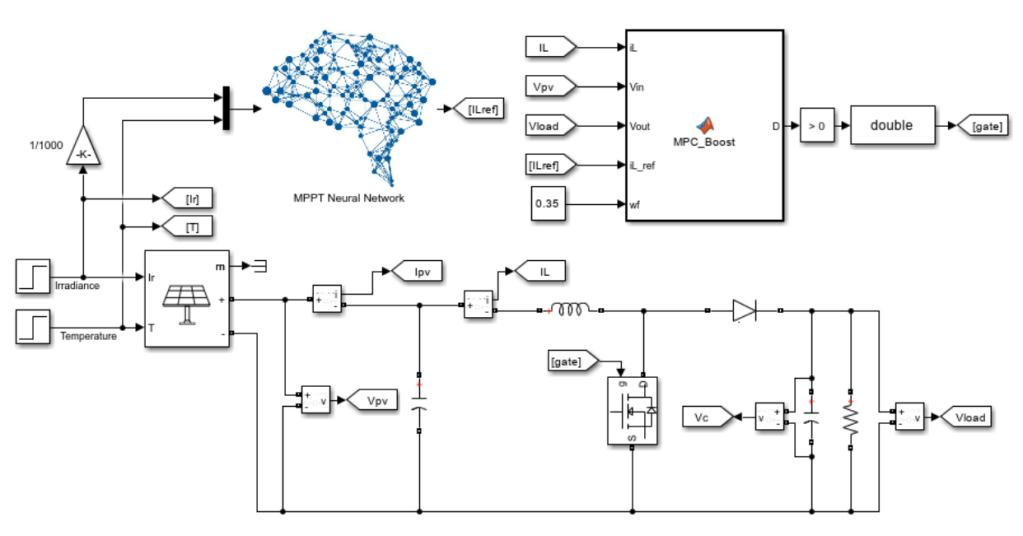
Figure 1 depicts the overall block diagram of the system. The system is composed of a photovoltaic module as a power source. A voltage step-up converter is connected to this generator in order to raise the input voltage to supply the load. The measurement of the system currents/voltages is carried out in order to control the duty cycle of the converter by the MPC technique, while ensuring transfer of the maximum power of the photovoltaic module by the use of neural networks.
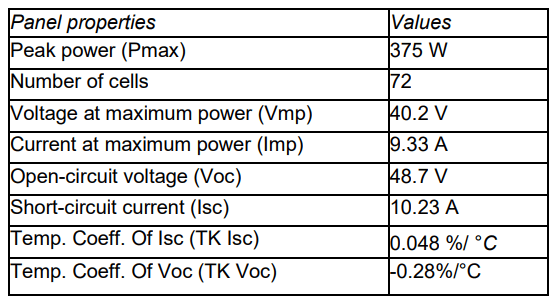
Table 1. PV module parameters
.
Photovoltaic generator
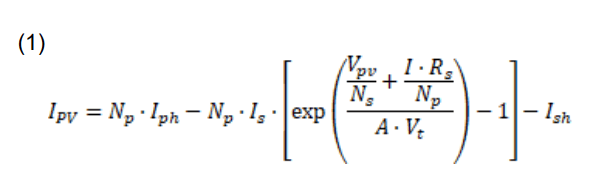
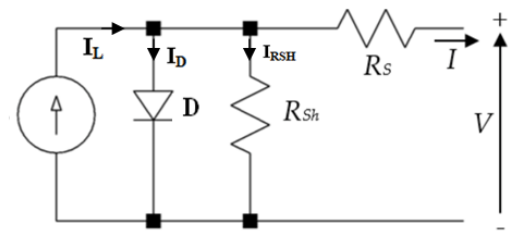
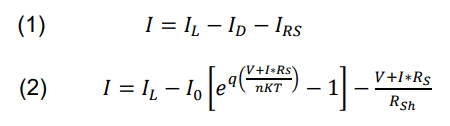
Electricity is generated by a photovoltaic (PV) panel that converts sunlight into electrical energy [1-3]. Table 1 provides the key parameters of the PV module used in this study. The current generated by a photovoltaic panel can be represented by this equation, which is based on the single-diode model of a solar cell [1]:
.
Where:
• IPV -Total current produced by the PV panel.
• NS– Number of cells connected in series in a module (increases the voltage).
• NP – Number of cells connected in parallel in a module (increases the current).
• Iph– Photocurrent (current produced by sunlight).
Fig.1. System model under study
• Ish– is the current through the shunt resistor (Rsh).
• IS– Saturation current (current in the diode when reverse biased).
• VPV – Voltage across the PV panel.
• Rs– Series resistance.
• A– Diode ideality factor (a measure of how ideal the diode behaves).
• Vt– Thermal voltage (a function of temperature).
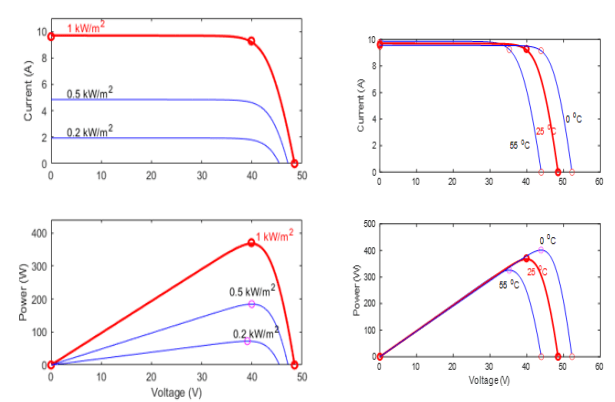
As illustrated in Figure 2, the generated current and voltage demonstrate a non-linear relationship, with the I-V curve. being divided into three distinct operating regions. On the left side of the curve, the PV module behaves as a constant current source, while on the right side, it operates in a constant voltage mode. Between these two operating modes lies the point of maximum power output, which corresponds to the highest efficiency.
Figure 2. left illustrates the effect of irradiance on the I-V and P-V characteristics. An increase in irradiance results in higher current and output power increases as well. As temperature increases, as shown in Figure 2.right, the current shows a small increase, but the voltage drops significantly indicating that higher temperatures negatively affect the overall performance of the PV panel.
Maximal power point tracking
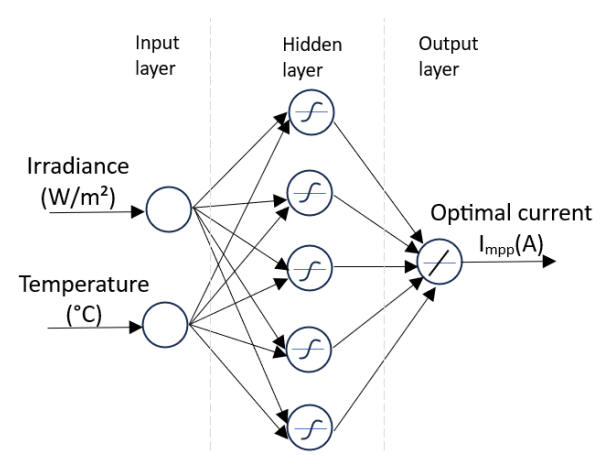
Neural networks are well-suited for dynamic environments where they can learn to map nonlinear relationships between inputs (e.g., irradiance and temperature) and the desired output (voltage, current or power). The neural network used for MPPT (figure 3) is a feedforward architecture with one hidden layer, optimized for real-time tracking of the maximal power [1-2]. Feed Forward neural network type is in this paper. It is designed as an interconnected layers. Each layer consists of a set of neurons. Increasing the number of layers and neurons in hidden layers leads to the best representation of non-linearities of the system, however, it exhibits complex computations, and therefore, hardware implementation constraints. The input layer consists of two neurons representing the irradiance one hidden layer with five (5) neurons which gives a satisfactory prediction.
Fig.2. Irradiance and Temperature impact on PV module characteristics
The neural network is trained offline using data generated from the PV module under various irradiance and temperature conditions. Once trained, the neural network is deployed for real-time simulation, where it dynamically adjusts the duty cycle to maximize the output power. Supervised learning is employed to train the neural network. The training is performed using Levenberg-Marquardt algorithm, which minimizes the mean square error (MSE) between the predicted and actual MPP current. The training process is carried out using Levenberg Marquardt Algorithm. The database was partitioned as follows:
Training data: 70% of dataset
Validation data: 15% of dataset
Testing data: 15% of dataset
Fig.3. Neural network architecture
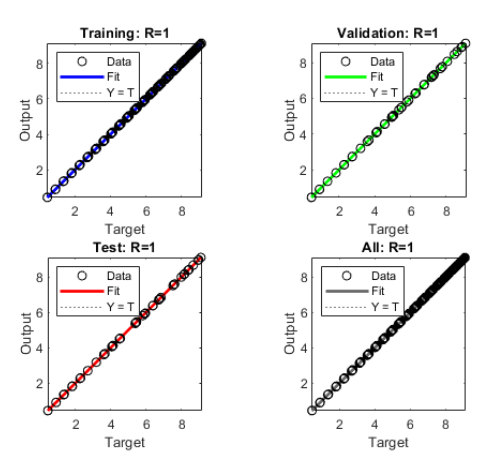
Fig.4. Regression plot at the end of the network training
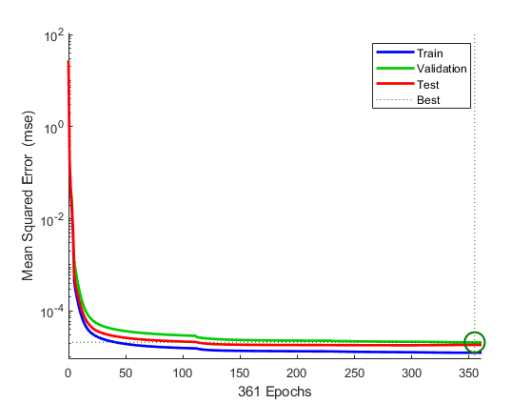
Fig.5. Mean squared error issued from training process
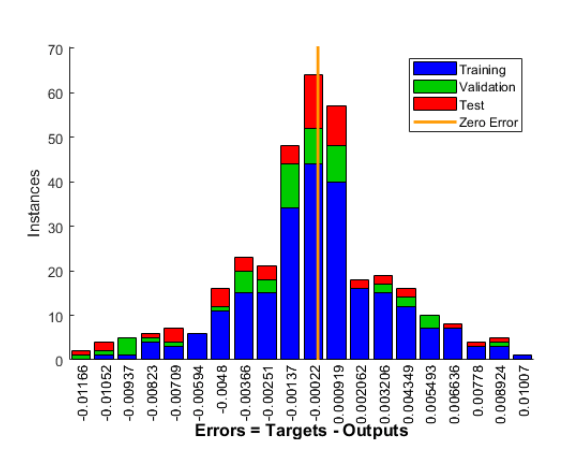
Network outputs (predicted values) are equal to the target values provided in the training, validation and testing phases. The performed fit exhibits a good approximation for all of the data sets. To provide a measure of how well the predictions of the model are compared to actual outcomes, correlation coefficient R is used as a tool. The regression plot in figure 4 displays the network predictions (output) with respect to responses (target) for the training, validation, and test sets. The tracking operation gives a satisfactory result for training, testing, and validation sets, and the R-value is 1.0 equal to the previously smallest validation error for six consecutive validation iterations. A plot of the training errors, validation errors, and test errors are shown in figure 5. It is observed that the final mean-square error is small, the test set and the validation set errors have similar behaviors, which concludes that no overfitting has occurred. To further investigate the distribution of errors in the model, figure 6 gives a plot of the error histogram. The error histogram plot looks fairly symmetric and the peak of the distribution lies exactly in the middle of the error’s interval indicating the absence of any bias.
Model predictive control
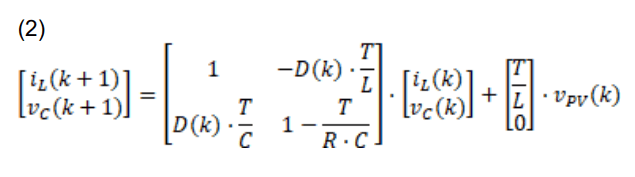
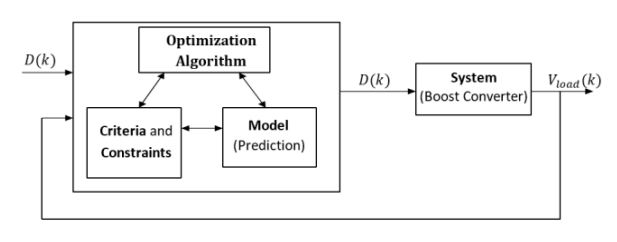
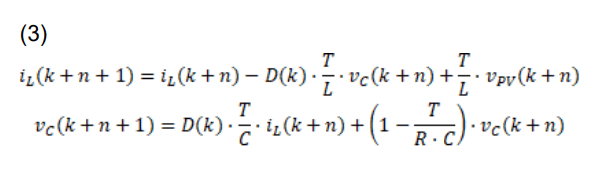
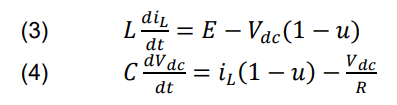
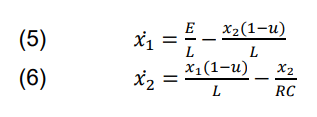
Predictive control involves using the system model to anticipate its future behavior while minimizing the cost function [8-10]. This approach requires solving a finite dimensional optimization problem at each sampling interval (figure 7) [4][8]. For the boost converter, MPC continuously predicts behaviors, which concludes that no overfitting has occurred. To further investigate the distribution of errors in the model, figure 6 gives a plot of the error histogram. The error histogram plot looks fairly symmetric and the peak of the distribution lies exactly in the middle of the error’s interval indicating the absence of any bias. for the total data set and shows a very satisfactory accuracy. Training finished when the validation error was larger than or the output voltage and current over this horizon and determines the optimal duty cycle D that minimizes a cost function subject to system constraints [6][8-12]. The predictive model of the boost converter is derived from its state-space representation. The state variables are the inductor current iL and the output voltage vC (or vload, as the output capacitor is parallel to the load), governed by the following equations [6-12]:
.
where L is the inductance and C is the capacitance of the boost converter. These equations are discretized for implementation in the MPC framework, and the future values of iL are predicted based on inductance current measurements and control inputs.
Fig.6. Error histogram resultant from training process
Fig.7. Model Predictive Control workflow
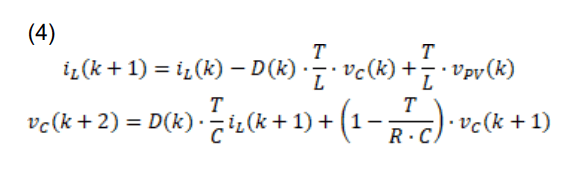
Taking into account the predictive control horizon over n samples, the prediction equations for the current iL and the voltage vC are provided as follows [6-8]:
.
And the two-step prediction horizon is:
/
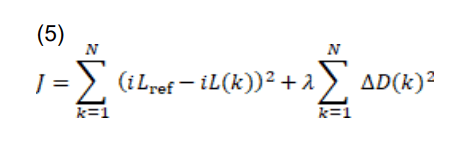
The typical cost function is defined as:
.
where:
iLref : is the reference current (desired output),
iL(k) : is the predicted inductance current at future step k,
D(k): is the duty cycle,
λ : is a weighting factor, and
∆D(k): is the change in duty cycle.
By minimizing J, the MPC algorithm ensures that the output voltage follows the reference as closely as possible, while avoiding large variations in the duty cycle, which could result in instability or excessive switching losses.
Simulation and Results
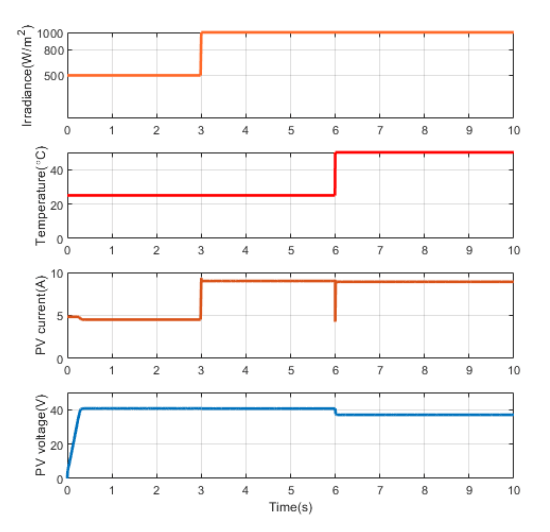
To validate the effectiveness of the proposed predictive control method, simulations were performed using MATLAB/Simulink. The parameters of the PV system and the boost converter were selected based on typical commercial photovoltaic module and converter components. Figure 8 shows the performance of the proposed control strategy under variable irradiance and temperature conditions. The MPC controller successfully tracked the maximum power point and maintained stable output voltage, demonstrating its robustness and fast response to irradiance and temperature changes.
Fig.8. System response to variation of irradiance and temperature
First, PV module is exposed to an irradiance of 500W/m2 and a temperature of 25◦C. The neural network estimates with high precision the maximal output current. Second, a change at 3s and 6s of irradiance and temperature respectively is injected to test the dynamic response of the system. It is observed that the tracking of maximal power is performed with a high accuracy.
The proposed MPC controller provided superior performance in terms of transient response, steady-state accuracy, and handling of non-linearities.
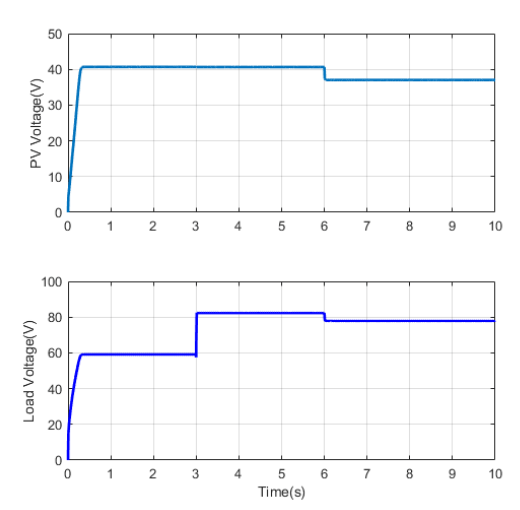
Figure 9 shows the voltage boosted (load voltage) from PV voltage. The combination of neural network and MPC controller was able to converge to the MPP much faster, while, maintaining the load voltage to the desired values with less oscillations.
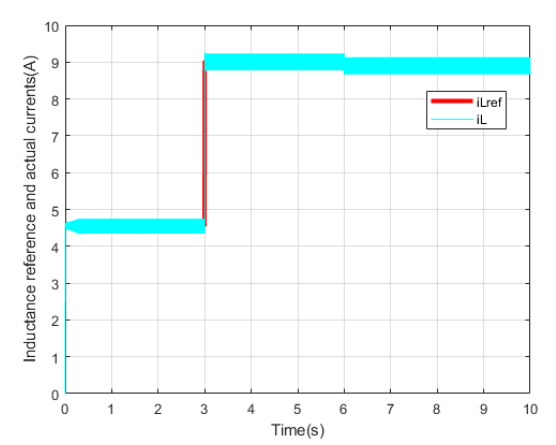
In figure 10, MPC controller was also able to drive the inductor current to its reference value, ensuring thus good dynamic response of the system.
Fig.9. PV voltage and Load voltage for the corresponding conditions
Fig.10. Inductance reference and actual currents
Conclusion
This paper has demonstrated the feasibility and effectiveness of using neural networks for MPPT and MPC control in PV systems coupled with a boost converter. The integration of neural networks into MPPT allows for real-time learning and adaptability to changing environmental conditions, thus offering improved tracking speed and accuracy.
By leveraging the learning capabilities of neural networks, the controller is able to adapt quickly to changing environmental conditions. This results in faster convergence to the MPP, reduced power oscillations, and improved overall efficiency. On the other hand, MPC exhibited superior performance in terms of response time, accuracy, and robustness. Future work will focus on the implementation of MPC in hardware and investigating its performance in real-world scenarios.
REFERENCES
[1] Della Krachai. M, Melouk. k, Keddar. M: Investigating sineband hysteresis control of photovoltaic-grid connected inverter, International Journal of Power Electronics and Drive System (IJPEDS), 11(2), pp. 969 976, 2020. [2] Della Krachai. S, Boudghene Stambouli. A, Della Krachai. M, Bekhti: Experimental investigation of artificial intelligence applied in MPPT techniques, International Journal of Power Electronics and Drive System (IJPEDS), 10(4), pp. 2138 2147 , 2019. [3] KACIMI, Nora et al.: New improved hybrid MPPT based on neural network-model predictive control-kalman filter for photovoltaic system, Indonesian Journal of Electrical Engineering and Computer Science, 20(3), pp. 1230 1241, 2020. [4] Ma, C., Li, N., Li, S.: Maximum Power Point Tracking for Photovoltaic System Using Model Predictive Control, Intelligent Computing for Sustainable Energy and Environment ICSEE (2013), pp. 515 525, 2013. [5] Zhao, Y., An, A., Xu, Y. et al.: Model predictive control of gridconnected PV power generation system considering optimal MPPT control of PV modules, Prot Control Mod Power Syst, 6(32), pp. 2 12, 2021. [6] M. B. Shadmand, X. Li, R. S. Balog and H. A. Rub: Model predictive control of grid-tied photovoltaic systems: Maximum power point tracking and decoupled power control, First Workshop on Smart Grid and Renewable Energy (SGRE), pp. 1 6 , 2015. [7] Ahmed, M.; Harbi, I.; Kennel, R.; Rodríguez, J.; Abdelrahem, M.: Maximum Power Point Tracking-Based Model Predictive Control for Photovoltaic Systems: Investigation and New Perspective, Sensors, vol. 22, pp. 1 18, 2022. [8] M. Metry, S. Bayhan, R. S. Balog and H. A. Rub: Model predictive control for PV maximum power point tracking of singlephase submultilevel inverter, IEEE Power and Energy Conference at Illinois (PECI), pp. 1 8, 2016. [9] Irmak, E and Güler. N: A model predictive control based hybrid MPPT method for boost converters, International Journal of Electronics, vol. 107, no. 1, pp. 1 16, 2020. [10] Ravi K. M., Jyoti P. M., Ashish A. D.: MPC-based DC microgrid integrated series active power filter for voltage quality improvement in distribution system, International Journal of Circuit Theory and Applications, vol. 51, no. 3, pp. 1349 1371 , 2022. [11] Marahatta. A, Rajbhandari. Y,Shrestha. A, Phuyal. S, Thapa. A, Korba. P.: Diagnostic Model predictive control of DC/DC boost converter with reinforcement learning, Heliyon, vol. 83 , pp. 1 13, 2022. [12] Sowparnika. G.C, Sivalingam. A, Thirumarimurugan. T: Modeling and Control of Renewable Source Boost Converter using Model Predictive Controller, International Journal of Computer Application, vol. 5, no. 7, pp. 2250 1797, 2015.
Authors: Dr. Melouk Kheira, Dr. Della Krachai Mohamed, Faculty Electrical Engineering, Department of Automatics, University of Science and Technology of Oran. U.S.T.O.M.B, PO. Box 1505 El Menaouer USTO, Oran, Algeria, email: kheira.melouk@univ-usto.dz, mohamed.dellakrachai@univ-usto.dz, Dr. Della Krachai Saidia, Spatial Development Center, Algeria email:saidia.dellakrachai@univ-usto.dz
Source & Publisher Item Identifier: PRZEGLĄD ELEKTROTECHNICZNY, ISSN 0033-2097, R. 101 NR 2/2025. doi:10.15199/48.2025.02.41
Published by Anna ZIELIŃSKA, AGH University of Science and Technology, Faculty of Management
Abstract: The article describes new legal regulations in Poland and the EU, which are to introduce the possibility of peer-to-peer trading in electricity. The text presents the possibility of using blockchain technology for this purpose. It describes how blockchain can revolutionize the traditional energy model, enabling direct trade between producers and consumers, eliminating intermediaries. It presents the advantages and challenges in this area, explains the key features of the technology, and discusses its potential applications in the energy sector, focusing on peer-to-peer trading (P2P) of energy from renewable sources.
Streszczenie: Artykuł opisuje nowe regulacje prawne w Polsce i UE, które wprowadzają handlu partnerskiego energią elektryczną. Tekst przedstawia możliwość wykorzystania do tego celu technologii blockchain. Opisuje, jak blockchain może zrewolucjonizować tradycyjny model energetyczny, umożliwiając bezpośredni handel między producentami a konsumentami, eliminując pośredników. Prezentuje zalety i wyzwania, wyjaśnia kluczowe cechy technologii, oraz omawia jej potencjalne zastosowania w energetyce, skupiając się na handlu peer-to-peer (P2P) energią z odnawialnych źródeł. (Technologia blockchain i handel partnerski energią elektryczną)
Energy trading in decentralized electricity markets is a revolution in the way electricity can be bought and sold. By using blockchain technology, traditional models of central management and intermediation are being replaced by distributed networks that can enable direct trading between energy producers and consumers.
In the traditional energy model, energy is produced by large producers, transmitted through the distribution network to consumers and settled by central institutions such as electricity suppliers. The development of blockchain technology can enable the creation of decentralized energy markets that enable direct trade of energy between producers and consumers, without the intermediation of traditional institutions. In decentralized energy markets, energy producers, such as owners of home photovoltaic panel installations or small wind farms, can offer excess energy for sale to other market participants. For the consumers, this gives them the opportunity to buy energy directly from local producers, which often translates into lower costs and can increase flexibility in choosing energy sources [1,2,3].
The procedure cited above, in great simplification, describes the amendment to the Act of 28 July 2023 amending the Energy Law Act [4] and certain other acts (Journal of Laws of 2023, item 1681). The amending Act implemented a number of European energy law acts into the Polish legal order, in particular Directive (EU) 2019/944 of the European Parliament and of the Council of 5 June 2019 on common rules for the internal market in electricity [5] and Directive (EU) 2018/2001 of the European Parliament and of the Council of 11 December 2018 on the promotion of the use of energy from renewable sources, the so-called “RED II Directive” [6], and amending Directive 2012/27/EU, the socalled market directive. Among the most important changes introduced on the basis of the above-mentioned amendment to the Act, the following should be mentioned:
• creation of a civic energy community,
• possibility of peer-to-peer trading in energy from renewable energy sources,
• obligation to conclude only comprehensive contracts with recipients of gas fuels or electricity in households;
• increasing the availability of direct line institutions for recipients;
• creation of an electronic comparison tool for offers from electricity sellers for recipients;
• changes in the functioning of the Central Energy Market Information System (CSIRE);
• extension of the competences of the President of the Energy Regulatory Office, and others [1].
As you can see, there are many changes, all of which are dictated by European law. One of them, in which, due to the possibility of using blockchain technology, great hopes are placed, is the aforementioned partner trade, which can introduce completely new possibilities and a new order to the energy sector.
Key Features of Blockchain Technology in the Energy Sector
Blockchain is a decentralized and distributed data recording technology that enables the creation of an immutable and transparent blockchain, where each transaction or piece of information is cryptographically secured and linked to the previous ones. This makes the data tamper-proof and fraud-proof, and the network functions without the need for a central governing body, as participants jointly verify and confirm records.
Key features of blockchain include:
• Decentralized structure – the possibility of no central control unit.
• Peer-to-peer (P2P) transactions – direct exchange of resources or information between network participants, the so-called “each with each other” concept.
• Cryptographic security – data is protected against unauthorized changes.
• Immutability – once added, information is practically impossible to remove or modify.
• Transparency – each network participant has access to the full transaction history [7].
Blockchain technology is used in many areas, such as finance (cryptocurrencies), energy, logistics, supply chain management and electronic voting. In the light of the currently applicable directives and the above-mentioned amendment to the act, these features perfectly fit into the assumptions of the changes, providing the possibility of creating decentralized databases and carrying out transactions between prosumers and electricity consumers [8].
In addition to its basic features, blockchain technology has several additional key aspects that have a significant impact on its operation and applications in the energy sector. These include the lack of trusted intermediaries. Blockchain can function without the need for intermediaries (e.g. banks, government institutions, sales agents) in processes such as financial transactions, data transfer or trade agreements. This allows transactions to be made directly between parties (peer-to-peer), which reduces the costs and risks associated with trusting a third party. An important element is the use of consensus mechanisms, which are based on an algorithm that allows network participants to agree on the state of the ledger without the need for central supervision. Another feature is the aforementioned transparency, to which the auditability feature can be added. Each P2P transaction recorded in the blockchain is visible to all network participants, which increases transparency. This makes this technology ideal for applications where it is crucial to track the origin of data or products, e.g. in the supply chain (tracking products from source to consumer). Although blockchain is often associated with transparency, many solutions offer mechanisms to ensure transaction privacy. There are also private blockchains that allow controlled access to data only for selected participants [9]. Another key aspect of blockchain technology that is applicable to electricity transactions is speed and automation through the use of smart contracts. Smart contracts are programs running on the blockchain that automatically execute agreements or transactions when certain conditions are met. This allows for the automation of complex processes without the need for human intervention. Examples include automatic settlements, insurance systems or even selfgoverning organizations (DAOs). Resilience to attacks and failures is also an important feature of the distributed nature of blockchain. The network is much more resistant to failures and attacks than centralized systems. Even if some nodes go down, the rest of the network remains operational and data is still available. The last feature of this technology is the possibility of multi-sector applications, in various industries and business models. Blockchain is a technology with a wide range of applications that also go far beyond finance. It covers sectors such as:
• Finance and cryptocurrencies: The most well-known applications of blockchain are cryptocurrencies such as Bitcoin or Ethereum. Blockchain enables safe, fast and cheap transfer of funds without intermediaries such as banks.
• Supply chain: Blockchain allows products to be tracked at every stage of production and distribution, which increases transparency and helps fight counterfeiting. The origin of raw materials can be traced, and the quality of products can be monitored, which is particularly important in the food, pharmaceutical or fashion industries.
• Intellectual property protection: Blockchain allows copyrights and intellectual property to be registered in an immutable way, making it easier to prove the rights to works or inventions.
• Electronic voting: Blockchain enables safe and transparent voting, which eliminates the risk of manipulation of results and increases trust in democratic systems.
• Identity management: It allows for the secure storage and management of digital identities, eliminating the need for central institutions to store personal data.
• Energy: Blockchain supports peer-to-peer energy trading, micro-energy pool management, and automated settlement based on smart contracts, as we discussed earlier [10].
The cited features and properties of blockchain technology are the answer to the question of whether this technology finds its application in the energy sector of the economy. Of course, one cannot forget about the limitations. For example, about the efficiency of the system. Blockchain requires significant computing resources and energy to maintain the network, which can be a challenge with a large scale of applications. Costs cannot be ignored either, because the implementation of blockchain systems in the energy sector is associated with high implementation and maintenance costs, which may be a barrier to the wide use of this technology.
Despite the above (and other) limitations, there are arguments in favour of using this solution, which allow for more efficient, transparent and safe management of energy flows and settlements of its purchases and sales between market participants, thus also supporting the development of decentralised renewable energy production.
Electricity trading market
Currently, the Polish electricity trading market is complex, dominated by regulations, several key entities and the dynamically developing renewable energy sources (RES) segment. That is why such great hope is seen in the use of blockchain technology in this sector of the economy. In Poland, electricity trading takes place on several levels and differs depending on the type of entities participating in the market. The market structure can be divided into two main segments, i.e. the wholesale market – a place where large producers and recipients (e.g. companies) trade energy, and the retail market – where individual consumers and small and medium-sized companies buy energy. The main entities on the energy market are producers, operators and distributors of energy. In Poland, producers are both large state-owned energy companies such as PGE, Tauron, Energa, Enea, as well as smaller private producers, including wind farm and photovoltaic installation operators. Transmission of energy is the responsibility of transmission and distribution system operators – Polskie Sieci Elektroenergetyczne (PSE). Energy distribution is handled by distribution companies, which transport energy to end users. The next market participants include energy sellers – companies offering energy to end users, both businesses and individual consumers, and end users – consumers of electricity, including households, industry, the service sector, and others.
Transactions of purchase and sale of electricity take place mainly thanks to the Polish Power Exchange (TGE), where energy is traded in the form of futures contracts and on the spot market (short-term energy trading). We have at our disposal the Day-Ahead Market, where transactions for energy delivery take place the day before the actual delivery, and the Intraday Market, where transactions for energy delivery are possible during the same day on which the energy is consumed. Energy can also be purchased on the basis of bilateral contracts, i.e. where large companies can enter into direct contracts for the supply of energy with producers under the so-called bilateral agreements (PPA – Power Purchase Agreement). The above explanation is of course brief and does not present the entire spectrum of market mechanisms. It is important to mention the fact that on the electricity market in Poland, an important role is played by the institution of URE and PSE, which are to some extent regulators of activities. The transformation towards renewable energy sources and the development of technologies such as energy storage and smart grids also operate according to their regulations, thus influencing further changes in the market structure and the way it functions [11].
Currently, the Polish Power Exchange (TGE) does not use blockchain technology on a large scale in its electricity trading operations. TGE relies on classic IT and market solutions. However, in the recent years, due to international political decisions (European Union directives), the growing interest in blockchain technology does not seem to be waning, which directly translates into its development and possible markets for its implementation.
Peer-to-peer trading in electricity
The role of blockchain technology is strengthened in relation to the provisions of the above-mentioned directives ((EU) 2019/944 of 5 June 2019, (EU) 2018/2001 of 11 December 2018), which stipulate that the Member States are obliged to ensure that prosumers have the right to produce renewable energy, including for their own needs, store and sell their surplus energy production, including through peer-to-peer trading arrangements. In relation to such a provision, and in particular to ensuring the possibility of peer-to-peer trading, the features of blockchain technology seem to correspond perfectly.
In accordance with the directives, the amendment to the Polish legal system (the Act of 10 April 1997 – Energy Law) introduced many new institutions, also expanded the competences of the President of the Energy Regulatory Office (URE), and introduced a number of regulations related to the need for the Central Information System on the Energy Market (CSIRE).
One of the significant changes in the law and thus a strong reference to the possibility of using decentralized databases is the introduction of the possibility of partner trade in energy from renewable energy sources (peer-topeer, P2P). Its definition is given in the amended art. 3 point 55c of the Act of 10 April 1997 – Energy Law (consolidated text: Journal of Laws of 2023, item 295, as amended; hereinafter: “p.e.”). Peer trading is a new formula for selling energy generated by a prosumer or collective prosumer to other system users based on an agreement specifying, in particular, the conditions for automated execution of the transaction and payment for it directly between the parties to the agreement, or through a third-party system user or a company operating a commodity exchange. As it can be interpreted, “the purpose of the draft regulations is to leave P2P trade participants the greatest possible margin of freedom in deciding whether to participate in this form of energy trading, choosing the method of organizing P2P, or finally choosing the provider of the electronic platform enabling trading. In the opinion of the drafter, such an approach will allow for gathering the necessary experience in a relatively limited local “environment” of P2P market participants, which at a later stage may result in extending the scope of P2P trading and adapting the appropriate regulatory instruments to it” [1, 2, 4].
As the authors of the amendment to the RES Act explain, the peer-to-peer concept is an element of a new model of operation of the power system, which is based on the exchange of energy between two or more users and, as a consequence, on the constant and short-term switching of recipients between different suppliers. The divergence of this concept from the previously established relations occurring in the electricity market means that it does not correspond to the current state of law and regulations in the field of energy. Considering the above, it is therefore necessary to enable the design of the necessary communication and control networks that could guarantee the possibility of P2P trading between individual entities in local micro-networks or between them, via dedicated national or regional internet platforms and appropriate technologies, the role of which will be similar to the role of the seller in the electricity sector [4]. Such an interpretation of the law absolutely composes the system to use blockchain technology and market decentralization and the use of smart contracts to execute energy purchase and sale orders. The introduction of a new energy trading model should provide prosumers with “additional opportunities, while also constituting another element of activation of the usually passive energy recipients, and also allow for the initiation of cooperation between the most important participants of the energy market, such as active recipients and aggregators1 [4]. Such an assumption is nothing more than Peer-to-Peer (P2P) Trading, i.e. P2P platforms enabling direct trade in electricity between producers and consumers, bypassing the traditional structures of suppliers and distributors. Such a possibility is far from the above-described procedures of the Energy Exchange, such a possibility is in a way allowing prosumers who are not legal entities to enter the market. P2P electricity trading can therefore be compared to purchases at online auctions available to everyone. Blockchain technology supports such initiatives by its assumptions, also enabling tracking and authorization of transactions [1]. It can therefore be expected that blockchain technology, properly promoted and implemented, will open up new possibilities of action and improve the system [12].
1 Aggregator – activity consisting in combining the volume of power or electricity offered by recipients, electricity producers or owners of electricity storage facilities, taking into account the technical capabilities of the network to which they are connected, in order to sell electricity, provide system services or flexibility services on electricity markets.
Perspectives and opportunities for peer trading
The idea of peer trading described above has the potential to enable owners of small renewable energy source (RES) installations, e.g. photovoltaic panels, to directly sell surplus energy to other network users. Thanks to the amendment and appropriate legal provisions, prosumers could more easily conclude P2P agreements, sell energy on the local market or use digital platforms that facilitate transactions. As a result, it will increase the number of prosumers and local energy producers, which also supports the development of civic energy and reduces dependence on large producers.
The possibility of peer trading and blockchain also means the possibility of dynamic energy exchange between entities in real time, which contributes to better management of demand and supply in the energy system. Introducing appropriate regulations facilitating such transactions could help stabilize the network, especially in the context of the increase in the number of RES sources, which are characterized by production variability. The effect of such actions may be to improve network stability and reduce the costs of balancing the energy system [3].
There is also great hope for change in direct transactions between energy producers and consumers, where, thanks to the use of blockchain technology, costs resulting from the elimination of intermediaries and reduction of the costs of energy transmission over long distances could be reduced. The amendment enabling the development of partner trade could also affect the diversification of prices depending on location and time, which could bring tangible benefits to consumers [13].
The amendment to the act also supports the development of digital platforms and tools enabling P2P energy trading. These platforms could use technologies such as blockchain to automate and secure transactions. The introduction of appropriate regulations would also encourage investments in this type of innovative solutions. New technologies also mean the development of new business models and the integration of modern technologies, which supports the digitalization of the sector [14].
The use of the idea and the possibility of partner trade could thus significantly affect the development of the energy sector in Poland and Europe. It would facilitate the integration of renewable energy sources, it would be possible to promote local energy production and consumption and reduce costs for consumers. P2P trade is also an opportunity to participate in the energy market for consumers and prosumers who are private persons – this fact seems very promising. However, it should not be forgotten that such activities would of course require the development of modern infrastructure, transmission networks and the creation of a new legal framework that will balance the interests of various market participants.
Summary
To sum up, the Act of 28 July 2023 amending the Energy Law and certain other acts (Journal of Laws of 2023, item 1681) implementing Directive 2019/944 into the Polish legal system introduces a number of changes and new institutions (the entry into force of which has been extended in time). The provisions found in the law encourage the possibility of using blockchain technology. The aspects that speak in favor of this are the fact that blockchain technology is known for its high transparency, security and decentralization, so it has the potential to revolutionize the way energy is sold and consumed, especially in the context of dynamically developing distributed energy and renewable energy sources (RES).
Blockchain enables direct transactions between energy producers and consumers without the participation of intermediaries, which is crucial for the development of partner trade. Thanks to smart contracts, transactions can be carried out automatically, which increases efficiency and reduces the risk of errors. This technology also enables tracking the origin of energy, which supports the development of green energy and increases consumer trust.
The paper also discusses the current energy trading model and the challenges related to blockchain implementation, i.e. the need to modernize energy infrastructure, create an appropriate legal framework and ensure data security. Despite these challenges, the use of blockchain in P2P trading has the potential to significantly impact the energy transformation by reducing transaction costs, supporting local energy production and integrating renewable energy sources in energy systems. To sum up, blockchain technology can play a key role in the future of the energy market, especially in the peer trading model, offering a new quality in energy management and enabling decentralization and democratization of the energy sector.
REFERENCES
[1]. https://hww.pl/nowelizacja-prawa-energetycznegonajwazniejsze-zmiany-przepisow-i-co-one-oznaczaja-dlauczestnikow-rynku-energetycznego/ z dnia 20.09.2024 [2]. https://energyid.org/service/energia-elektryczna-formyhandlu/ z dnia 20.09.2024 [3]. https://www.gramwzielone.pl/energiasloneczna/107429/prosumenci-dostana-nowa-mozliwoschandlu-energia z dnia 20.09.2024 [4]. USTAWA z dnia 28 lipca 2023 r. o zmianie ustawy – Prawo energetyczne oraz niektórych innych ustaw [5]. DYREKTYWA PARLAMENTU EUROPEJSKIEGO I RADY (UE) 2019/944 z dnia 5 czerwca 2019 r. w sprawie wspólnych zasad rynku wewnętrznego energii elektrycznej oraz zmieniająca dyrektywę 2012/27/UE [6]. DYREKTYWA PARLAMENTU EUROPEJSKIEGO I RADY (UE) 2018/2001 z dnia 11 grudnia 2018 r. w sprawie promowania stosowania energii ze źródeł odnawialnych (wersja przekształcona) [7]. Mataczyńska E., Blockchain Technology Impact on the Energy Market Model. Energy Policy Studies, (2017) [8]. ZIELIŃSKA A., Possibilities of using blockchain technology in the area of electricity trade settlements, Przegląd Elektrotechniczny, ISSN 0033-2097., (2021), R. 97, nr 12, doi: 10.15199/48.2021.12.32 [9]. Piech K., „Leksykon pojęć na temat technologii blockchain i kryptowalut”, (2016) [10]. Rafał K., Radziszewska W., Król P., Bazior G., Grabowski P., Model funkcjonowania energetyki rozproszonej w oparciu o blockchain i systemy zarządzania energią, Nowa Energia, (2021). [11]. https://tge.pl/ z dnia 20.09.2024 [12]. Zielińska A., Application possibilities of blockchain technology in the energy sector, E3S Web Conf., 154 (2020), doi: 10.1051/e3sconf/202015407003K [13]. Manish Kumar Thukral, Emergence of blockchain-technology application in peer-to-peer electrical-energy trading: a review, Clean Energy, (2021), 104–123, doi: 10.1093/ce/zkaa033 [14]. https://brandsit.pl/energetyka-2-0-blockchain-jako-klucz-dooptymalizacji-sieci-energetycznych-i-handlu-zasobami/ z dnia 2.08.2023.
Author: dr inż. Anna Zielińska, AGH University of Science and Technology, Faculty of Management, al. A. Mickiewicza 30, 30-059 Krakow, e-mail: azielinska@agh.edu.pl;
Source & Publisher Item Identifier: PRZEGLĄD ELEKTROTECHNICZNY, ISSN 0033-2097, R. 101 NR 3/2025. doi:10.15199/48.2025.03.30
Published by Marta BĄTKIEWICZ-PANTUŁA, Wrocław University of Science and Technology. ORCID: 0000-0002-1628-1818
Abstract. Receivers such as power electronic devices, due to their widespread use and non-linear characteristics, are the most common cause of poor quality electricity. The share of non-linear receivers in the overall balance of power installed at a single customer increased to the level that the power supply voltage was affected by such phenomena as: overload of the neutral conductor, higher harmonics, and asymmetry. The article presents the assessment of electricity quality parameters based on measurements carried out at consumers. The assessment was based on the Regulation of the Minister of Economy of. May 4, 2007. On the detailed conditions for the operation of the power system and the PN-EN 50160: 2010 standard – Parameters of the supply voltage in public power networks. The analysis was carried out on the example of real measurements of electricity quality parameters. The assessment of electricity quality parameters was carried out on the basis of the analyzes discussed.
Streszczenie. Odbiorniki jakimi są urządzenia energoelektroniczne ze względu na swoje powszechne zastosowanie i charakterystykę nieliniowa są najczęstszą przyczyna złej jakości energii elektrycznej. Udział odbiorników nieliniowych w ogólnym bilansie mocy zainstalowanej u pojedynczego odbiorcy wzrósł do poziomu, że w napięciu zasilającym pojawiły się zjawiska takiej jak: przeciążenie przewodu neutralnego, wyższe harmoniczne, asymetria. W artykule zaprezentowano ocenę parametrów jakości energii elektrycznej pozyskiwaną od odbiorców. Ocena została oparta na Rozporządzeniu Ministra Gospodarki z dnia. 4 maja 2007 r. W sprawie szczegółowych warunków funkcjonowania systemu elektroenergetycznego i normy PN-EN 50160: 2010 – Parametry napięcia zasilającego w publicznych sieciach elektroenergetycznych . Analiza została przeprowadzona na przykładzie rzeczywistych pomiarów parametrów jakości energii elektrycznej. Ocena parametrów jakości energii elektrycznej została przeprowadzona na podstawie omówionych analiz (Zakłócenia występujące w instalacji elektrycznej, ze szczególnym uwzględnieniem negatywnego oddziaływania odbiorników nieliniowych na sieć zasilającą).
Keywords: power quality, non-linear loads, negative impact on the electricity grid Słowa kluczowe: jakość energii elektrycznej, odbiorniki nieliniowe, negatywny wpływ na sieć
Introduction
The power quality is a concept that is difficult to define. This is due to how electricity is defined. It can be defined as a physical phenomenon resulting from the transformation of energy from e.g. mechanical, thermal or chemical form into electricity, or it can be understood as a commodity, a product that can be produced and sold to recipients who need this energy [1]. And it is in this aspect that the power quality is usually defined because each product, through its physical properties, should be able to determine whether it is good or not. The definition of electricity quality also depends on the entity that describes it. Different meanings of quality will be defined by electricity suppliers, different by manufacturers of electronic equipment, and still different by electricity consumers, because everyone has their own individual needs regarding this issue [2].
Currently, the most accurate description of the power quality is the definition proposed by the Advisory Committee on Electromagnetic Compatibility IEC, which says that the power quality is the parameters that describe the properties of electricity supplied to the consumer during normal operation [3]. They determine the continuity of the supply, i.e. short and long interruptions in the supply, and describe the supply voltage, namely its value, asymmetry, frequency and shape of the waveform.
The power quality in question is not only dependent on the power supply conditions, but also on the electronic equipment used, which may be more or less susceptible to electromagnetic interference, and may also generate and send it into the grid. Therefore, for the poor power quality cannot be blamed solely on the service provider, because the quality of energy also depends on the manufacturers of electrical devices, which should comply with applicable standards and regulations, as well as on the user, who should use the equipment purchased in accordance with the attached instructions for use.
Power Quality Parameters
Charging The parameters characterizing the power quality include easily measurable quantities that can be parameterized and normalized [4]. These are:
• frequency, • voltage changes, • asymmetry, • harmonics voltage.
All these parameters are standardized by the relevant normative documents, which include:
• EN 50160 Voltage characteristics of electricity supplied by public electricity networks [5].
• Regulation of the Minister of Economy of Poland dated. May 4, 2007 on detailed conditions of functioning of the power system (Journal of Laws of 29 May 2007, item 623) [6].
• Distribution Network Operation and Operation Manual applicable to a given distribution system operator.
The above legal acts normalize the permissible values of given parameters in normal conditions, in power connectors of consumers supplied from public power grids. The PN-EN 50160:2010 standard explains in detail what normal conditions mean, namely it describes them as a state of equilibrium in which the electrical energy demand is equal to the generated energy and switching operations are performed, and all disturbances are automatically removed by means of protection automation.
For the professional power industry, the biggest problem is to ensure the reliability of power supply [7]. The most sensitive to the poor quality of electric energy are recipients from industries such as:
• hospitals, • airports, • chemical industry, • refineries, • metallurgical industry, • IT sector, • plastics industry.
Depending on the type of facility, in the event of an unplanned failure, there may be threats in the form of material damage, e.g. damage to the installation, production losses, poor quality of the product, or human risk, e.g. damage to the health of employees and bystanders, and in extreme cases even death (chlorine, propylene/ethylene and other hazardous media), and environmental hazards, e.g. environmental pollution.
Receivers such as power electronic devices, due to their widespread use and non-linear characteristics, are the most common cause of poor quality electricity.
The share of non-linear receivers in the overall balance of installed power at a single customer increased to the level that the following phenomena appeared in the supply voltage:
• harmonics voltage, • asymmetry, • overload of the neutral conductor
The most common disturbances are harmonics of the supply voltage, therefore they will be discussed in the following paper.
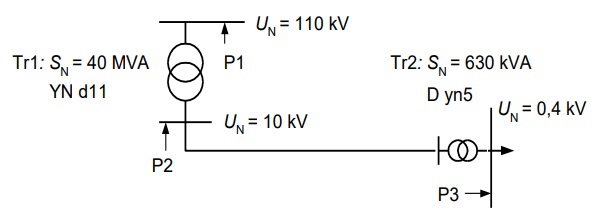
On their example, the average levels of supply voltage disturbances encountered in the distribution network were discussed, starting from 110 kV voltage (point P1, Fig. 1) through medium voltage (point P2, Fig. 1) to low voltage (point P3, Fig. 1) in the city municipal network.
Fig.1. A simplified diagram illustrating the discussed places of electricity quality measurements, indicating the levels of rated voltages, measurement points P1, P2 and P3 as well as power and transformer connection groups
From the UN = 10 kV switching station, apart from the analyzed T2 transformer, also many other loads in the city municipal network were supplied, including the tram network converter station equipped with six-pulse rectifiers. The only building powered by the T2 transformer was a large office building.
Harmonics voltage in the supply
The main reason for the presence of higher harmonics in the supply voltage is the consumption of currents distorted from the sinusoidal waveform by non-linear receivers connected to the network. These currents cause the appearance of voltage drops on the elements of the transmission system not only for the fundamental harmonic, but also for the next higher harmonics of the current, as a result of which there is a distortion of the voltage at the considered supply point [8-10]. Standard [5,11,12] and regulation [6] specify the acceptable levels of harmonic content in such a way that they are calculated according to the relationship (1) up to h = 25 and according to (2) up to h = 40 as averaged values for a 10-minute time window .
The standard time for assessing the voltage quality according to [5] and [6] is 1 week, i.e. 1008 such 10-minute measurement sections.
The permissible levels are determined in such a way that for normal working conditions, during each week, 95% according to [5] and 100% according to [6] of measurements should not exceed the given limit values.
The measurement results presented in the paper are primarily intended to illustrate typical waveforms at various voltage levels (P1, P2, P3, Fig. 1) in the city municipal network.
Measurements on both sides of the T1 transformer (Fig. 1) were made as a simultaneous 4-day measurement, while the measurements in the low-voltage switchgear as a 1- week measurement at a different time than the high-voltage measurements.
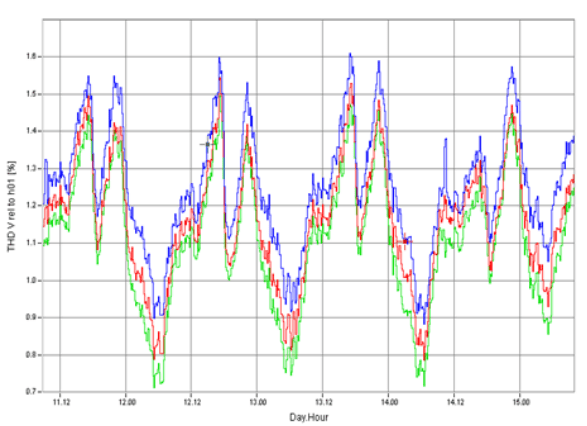
Fig.2. Weekly trends of changes in the THDU(RMS)% factor, respectively for point P1 (fig. 1)
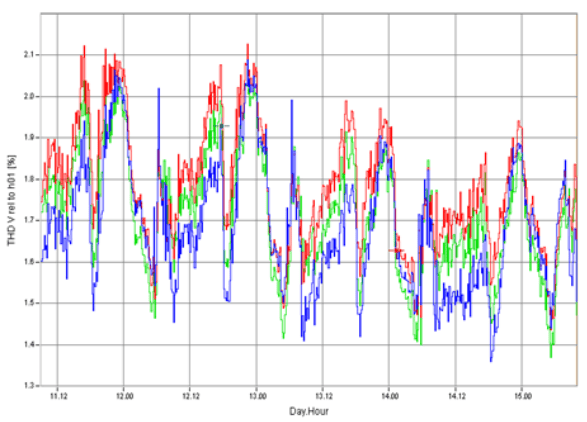
Fig.3. Weekly trends of changes in the THDU(RMS)% factor, respectively for point P2 (fig. 1)
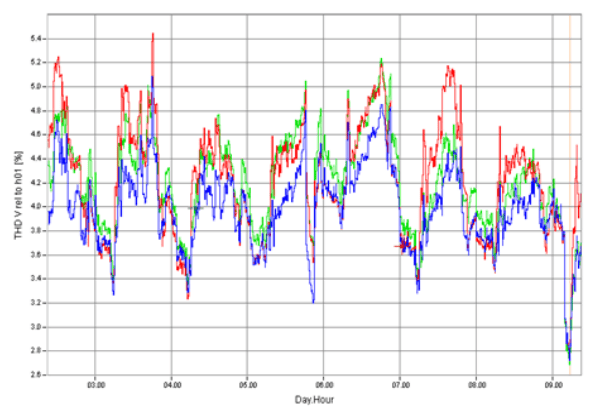
Fig.4. Weekly trends of changes in the THDU(RMS)% factor, respectively for point P3 (fig. 1)
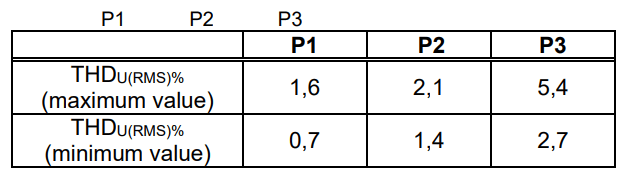
Fig.2,3,4 presents three waveforms of changes in the THDU(RMS)% coefficient, successively for points P1, P2 and P3 (Fig. 1). Approximate values of the range of changes of this indicator are listed in Table 1.
Table 1. Approximate ranges of coefficient changes THDu(rms)% for points P1, P2 i P3 (fig. 1)
.
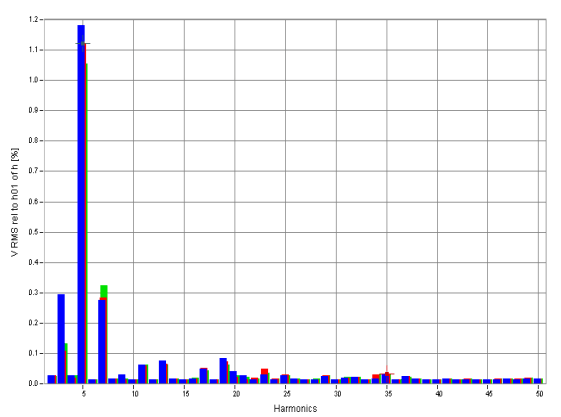
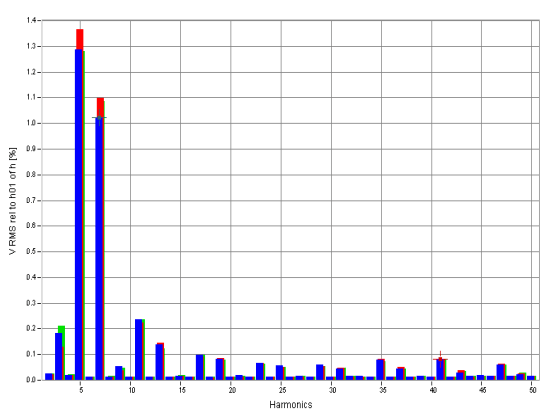
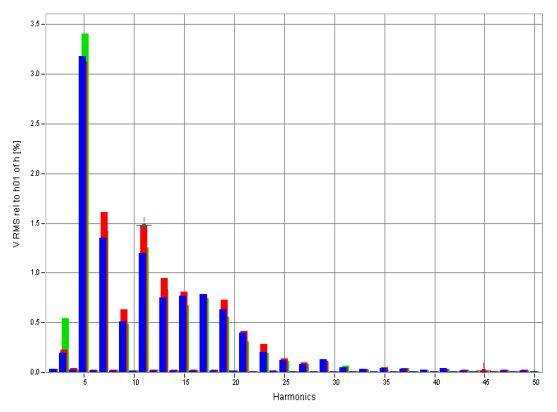
In turn, Figure 5,6,7 presents three spectra of voltage harmonics for points P1, P2 and P3, respectively.
Fig.5. Spectrum of voltage harmonics respectively for point P1 (fig. 1)
Fig.6. Spectrum of voltage harmonics respectively for point P2 (fig. 1)
Fig.7. Spectrum of voltage harmonics respectively for point P3 (fig. 1)
The analysis of the presented waveforms allows to conclude that:
• the range of changes and values of the voltage distortion coefficient are the greatest for the supply network at the low voltage level, and decrease with increasing network voltage; it follows that the main source of voltage harmonics are non-linear low voltage receivers,
• in the 110 kV network harmonics of the 3rd, 5th and 7th order dominate, while at lower voltage levels the share of other harmonics is much larger; a kind of surprise is the higher harmonic level of the 3rd order in the 110 kV network than in the 10 kV network, despite the fact that the medium voltage winding of the T1 transformer is delta connected; it follows that the source of such a high level of the 3rd harmonic in the 110 kV network is not the loads in the 10 kV network, but the source is in the 110 kV network, e.g. it may result from earth current resulting from load asymmetry,
• the source of harmonics 5 and 7, clearly distinguishable in measurements at 10 kV voltage, is the converter station supplying the tram network, connected to this substation,
• characteristic daily changes of the coefficient are visible on all waveforms, however they differ depending on the voltage level; these differences are mainly due to the local nature of the supplied loads, which may be the subject of a separate, detailed analysis; the regularity of daily changes and the symmetry of the load of individual phases along with the decrease of the rated voltage of the network are characteristic; the minima of the runs fall on the night and late-afternoon hours, while the maxima on the evening and morning hours; these changes are related to daily load changes,
• the values of all measured parameters are within the acceptable levels specified in [3] and [4], except for the voltage of the 15th harmonic at point P3, which exceeded the permissible level of 0.5% and was 0.8%.
Summary
It is possible to observe the presence of higher harmonics in the presented waveforms, which distort the signal from the sine wave. With the exception of one harmonic, all parameters met the requirements of the standard. The reason for this is mainly converter devices, such as computer power supplies located in the building, as well as LED light sources that have replaced traditional light bulbs and are present in all rooms. Their construction is based on semiconductor elements such as thyristors, diodes, etc. whose task is to adjust the network parameters to such that the devices work properly, i.e. converting alternating voltage to constant and reducing its value in order to properly power supply. Another type of equipment causing visible interference is the high-powered motors installed to drive elevators that facilitate the movement of the building.
In order to eliminate poor quality electricity faster, a good solution is to use, among others:
• System for monitoring electricity quality parameters.
• Enabling the collection of statistical information about disturbances that occur in the plant. Each disruption entails greater or lesser financial losses.
• Recording and cost analysis of poor quality electricity – faster dispute and complaint resolution process.
• Application of more stringent requirements specified in the PN EN 50160 standard, in particular for two parameters, i.e. voltage dips and swells. Reducing or completely eliminating the problem of poor quality electricity should consist in:
• continuous measurement and analysis of electricity quality parameters – more measurement points,
• eliminating sources interfering with the operation of the system, e.g. by separating the circuit, adding receivers with high short-circuit power, applying good engineering practice,
• the use of appropriate devices for the designed conditions aimed at increasing the resistance of receivers to disturbances, e.g. by using input filters,
• limiting the impact of interference source emission by using passive or active filters, react
REFERENCES
[1] Kowalski.Z.: Power quality. Monographs of the Lodz University of Technologyj. Łódź 2007. [2] Fuchs E., Masoum M.: Power Quality in Power Systems and Electrical Machines. Elsevier Inc., 2008. 205 [3] Z. Hanzelka, Quality of electricity supply, Krakow: Publisher AGH Krakow, 2013 [4] A.Klajn, M.Bątkiwicz-Pantuła, Application Note – Standard EN 50 160: Voltage characteristics of electricity supp [5] EN 50160:2010. Voltage characteristics of electricity supplied by public electricity networks. [6] Regulation of the Minister of Economy of Poland dated. May 4, 2007 on detailed conditions of functioning of the power system (Journal of Laws of 29 May 2007, item 623). [7] Biernacik T., Skliński R. Negative impact of non-linear receivers on the power supply network and its reduction using passive filters of higher harmonics, Wiadomości Elektrotechniczne, 2020, R. 88, nr 11, 3-6 [8] Baggini A., Hanzelka Z., Voltage and Current Harmonic, Handbook of Power Quality, Whiley, 2008, 200-236 [9] Kamuda K., Klepacki D., Kuryło K., Sabat W. Statistical analysis of influence of the low-power non-linear loads on deformation of supply voltage, Przegląd Elektrotechniczny, R. 91 Nr 8/2015, 19-22 [10] Kuśmierek Z.: Harmonics in power systems, Przegląd Elektrotechniczny, 82 (2006), nr 6, 8-19 [11]PN-EN 61000-3-11:2020-01 Electromagnetic compatibility (EMC) – Part 3-11: Limits – Limitation of voltage variations, voltage fluctuations and flicker in public low-voltage power supply networks – Equipment with a nominal current < or = 75 A subject to conditional connection [12] PN-EN IEC 61000-3-2:2019 Electromagnetic compatibility (EMC) – Part 3-2: Limits – Limits for harmonic current emissions (phase supply current of the receiver ≤ 16 A)
Authors: dr inż. Marta Bątkiewicz-Pantuła, Wrocław University of Science and Technology, Faculty of Electrical Engineering, Power Electrical Department, ul. Wybrzeże Wyspiańskiego 27, 50-370 Wrocław, e-mail: marta.batkiewicz-pantula@pwr.edu.pl
Source & Publisher Item Identifier: PRZEGLĄD ELEKTROTECHNICZNY, ISSN 0033-2097, R. 101 NR 1/2025. doi:10.15199/48.2025.01.52
Published by1. Kornelia A. BANASIK, 2. Andrzej Ł. CHOJNACKI, Kielce University of Technology, Chair of Power Engineering, Power Electronics and Electrical Machines ORCID: 1. 0000-0002-6629-8650, 2. 0000-0002-9227-7538
Abstract. The duration of outages (restoration time) is a fundamental parameter characterizing the extent of failures, as well as the quality of organisation during their elimination. Its understanding allows for estimating the costs incurred by consumers and electric energy distributors. Besides technical and organizational factors, the weather conditions during repair works also influence its value. This paper presents a statistical analysis of the impact of weather conditions, represented by air temperature, wind speed, and daily precipitation, on the failure (restoration) time of medium voltage power lines. The econometric modelling method was used for this purpose.
Streszczenie. Czas trwania awarii (odnowy) jest podstawowym parametrem charakteryzującym rozległość awarii, a także jakość organizacji prac przy jej usuwaniu. Jego znajomość pozwala na oszacowanie kosztów ponoszonych przez odbiorców oraz dystrybutorów energii elektrycznej. Poza czynnikami technicznymi i organizacyjnymi na jego wartość mają wpływ także warunki atmosferyczne występujące w czasie wykonywania prac naprawczych. W referacie przedstawiona została analiza statystyczna wpływu warunków atmosferycznych, reprezentowanych przez temperaturę powietrza, prędkość wiatru oraz dobową sumę opadów, na czas trwania awarii (odnowy) linii elektroenergetycznych średniego napięcia. Wykorzystana została w tym celu metoda modelowania ekonometrycznego. (Wpływ czynników klimatycznych na czas odnowy linii elektroenergetycznych SN)
Keywords: electrical distribution networks, MV power lines, failures, failure duration, wind, precipitation, air temperature
Słowa kluczowe: elektroenergetyczne sieci dystrybucyjne, linie elektroenergetyczne SN, awarie, czas awarii, wiatr, opady atmosferyczne, temperatura powietrza
Introduction
The problem of ensuring continuity of electricity supply to consumers is a primary and most important issue for distribution companies. However, there are many phenomena and factors that contribute to the occurrence of failure states. These factors include primarily storms with atmospheric discharges, winds, soot, activities of third parties, and improper or incorrectly conducted operation. The presented factors belong to the group of external factors. In many cases, the factors causing failures are phenomena occurring within the power grid. These are the so-called internal factors. Among them are: switching surges and earth failures in networks with an isolated neutral point, fatigue phenomena (mechanical and electrical), aging phenomena, manufacturing and assembly defects, etc. [4, 5, 8, 9, 12].
The unreliability of power equipment results in losses incurred by consumers and electricity distributors. These are called reliability losses. Losses for industrial consumers mainly result from production not being carried out or being delayed, as well as from the destruction of raw materials used in production. In the case of municipal consumers, these losses include: losses due to forced inactivity (waste of time), material destruction losses (mainly food), and losses caused by deteriorating sanitary and health conditions. Losses for energy distributors result from the need to remove the occurred failure and the loss of profit for the duration of its occurrence [3, 9, 13].
The primary parameter determining the extent of a failure is the failure (restoration) duration ta. It is defined as the time from the moment the device failure occurs until its repair or replacement is completed, with the simultaneous restoration of the device’s power supply capability [9, 11, 13]. This parameter primarily provides a statistical picture of the quality of the failure removal organization and the extent of the damage.
Another parameter characterizing the reliability of power systems is the outage duration for consumers tp. This time is defined as the time from the moment the consumers lose power until it is restored with the simultaneous capability to provide the required power [13].
The device outage time due to a failure twa is the time from the moment the device is switched off (either automatically or by operation) due to its failure until the power is restored by the device after its repair. This time is not equivalent to the failure duration time because after the main cause of the failure is removed, the device may be energized despite still being in a failure state, provided that it can perform its functions completely or to a limited extent and does not pose a risk to operation. The final failure removal work is performed under voltage. During this time, even though the failure has not yet been removed, the device is no longer in a failure state. Furthermore, not every failure causes automatic device shutdown. In this case, the device in a failure state is not in an emergency shutdown state.
In the event of a failure, the losses incurred by consumers depend on the outage duration, while the losses incurred by distributors depend on the failure duration [3, 7]. Therefore, the distribution company should aim to minimize the outage duration for consumers by using backup or emergency power supplies and to minimize the failure duration through proper failure removal organization.
Factors that significantly hinder or even prevent failure removal (restoration) are weather conditions. Among the most significant are high and low air temperatures, high wind speeds, large daily rainfall totals, and lightning strikes [1, 2, 6].
In the event of lightning, storms, or hail, regulations prohibit work on electrical equipment. A similar situation occurs when wind speeds exceed 10 m/s. In such cases, all work at heights on power lines should be suspended [10]. Another factor preventing work on overhead lines is dense fog. The problem also arises when weather conditions are not clearly assessable. In such cases, it is best to refrain from unnecessary work until the weather conditions improve. In situations of urgent work that should be carried out immediately, the decision to start or refrain from work is made by the person leading the team or the foreman, after prior assessment of whether the work can be safely conducted in the existing weather conditions and in accordance with applicable regulations.
In this article, the authors presented the results of analyses regarding the impact of weather conditions, represented by air temperature, wind speed, and precipitation, on the duration of restoration (failure duration) of medium-voltage power lines. The method of modelling the relationship between failure duration of power system components and various environmental factors was discussed. The results obtained during many years of research for overhead power lines with bare conductors, overhead lines with partially insulated conductors, and underground cables, operated in national electricity distribution networks, were presented.
All the analyses were carried out at the level of significance α = 0.05.
The analyses presented in the article were based on data on failures that occurred over a period of 15 years in two electricity distribution companies in the country.
Modelling the Impact of air temperature, wind speed, and daily precipitation on the restoration time of medium-voltage power lines
Weather conditions in Poland and around the world are constantly changing. The range of temperatures occurring on Earth is very large. The maximum air temperature in the shade in an open space is around 60°C (the highest recorded is 56.7°C in Death Valley, USA). The lowest temperatures, on the other hand, can reach nearly -90°C (the lowest recorded is -89.2°C in Antarctica). The range of temperatures observed is obviously dependent on geographic latitude. The record temperatures recorded in Poland are -41.0°C (Siedlce) and 40.2°C (Prószków near Opole). Also, the range of wind speeds observed on Earth is very large. The maximum measured wind speed in a gust was over 110 m/s (113.33 m/s – Barrow Island, Australia). The highest officially recorded wind speed in a gust in Poland was 95.83 m/s (Meteorological station on Śnieżka). However, these are not record values. Much higher wind speeds are reached in tornadoes. The highest value on Earth, recorded by Doppler radar, was over 133.33 m/s (Oklahoma, USA), while in Poland, it was 102.50 m/s (near Lublin). The average annual wind speed in Poland is around 3-4 m/s. The highest wind speeds occur in late autumn, winter, and early spring. During these times, they are often accompanied by sub-zero air temperatures and heavy precipitation. Environmental conditions such as these are unfavourable and contribute to the occurrence of failures in electrical equipment (particularly overhead lines) as well as complicate the restoration process.
The world record for the highest daily precipitation was observed in Réunion, amounting to 1825 mm. In Poland, the record daily precipitation was observed at Hala Gąsiennicowa, reaching 300 mm.
It is important to note that various values of individual weather factors occur in different combinations with values of other weather factors. In many situations, it is the specific combination of these values that negatively or positively impacts electrical facilities and their operation. To determine the outage duration as a function of air temperature, wind speed, and daily precipitation t̅α = f (T, W, O) it is necessary to calculate the average values t̅αi = (Ti, Wi, Oi) for successive combinations of air temperature intervals Ti , wind speed Wi , and daily precipitation Oi .
Determining the empirical functions t̅α = f (T, W, O) does not fully address the problem of investigating the dependency of the restoration time on the considered atmospheric factors. It is also important to determine the functional form of these dependencies, i.e., to implement mathematical models.
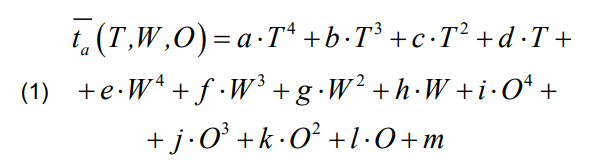
Knowing the discrete values of the failure duration t̅α and the values of the environmental factors present during the restoration of electrical lines allows for the creation of a general multiple regression equation in the form:
.
where: T – air temperature value [°C], W – wind speed value [m/s], O – daily precipitation sum value [mm], a, b, c, d, e, f, g, h, i, j, k, l, m – coefficients of the approximating function.
Preliminary studies have shown that the dependency of outage duration on individual environmental stressors can be approximated by a fourth-order polynomial. Since, in all cases, the coefficients of the approximation function obtained for an order higher than the fourth are close to zero, it was decided to approximate these dependencies with a polynomial of at most the fourth order. Therefore, the final general regression equation was adopted in the form (1).
To implement the above mathematical model, the econometric modelling method was used. For the individual medium-voltage lines, the functional form of the failure time was determined, and the theoretical models obtained were verified by assessing their conformity with empirical data. In the considered models, the intervals of climatic factors were analysed on the principle that each interval of a given factor was combined with each interval of every other factor. In total, 393,984 intervals were created. The number of combinations of intervals in which failures occurred, and thus non-zero values of the average failure (restoration) time, for the respective lines is as follows: bare overhead medium-voltage lines – 890 observations (over 15 years), semi-insulated overhead medium-voltage lines – 21 observations (over 13 years), and medium-voltage cable lines – 465 observations (over 15 years).
The failure time of bare overhead medium-voltage lines is determined by an econometric model given by:
.
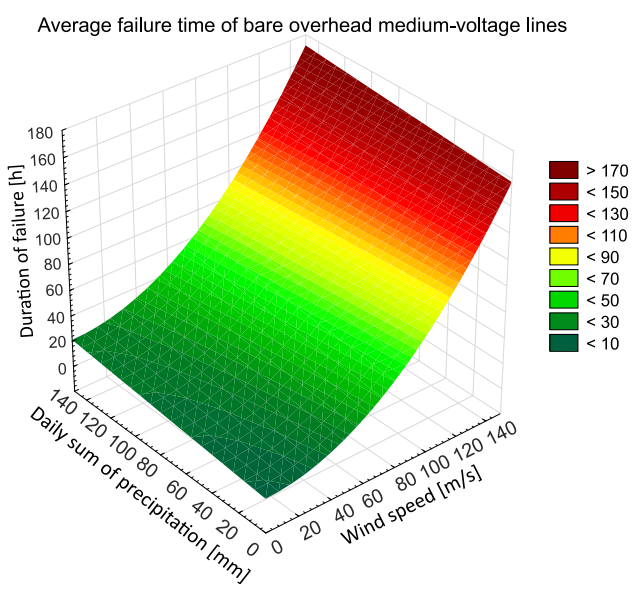
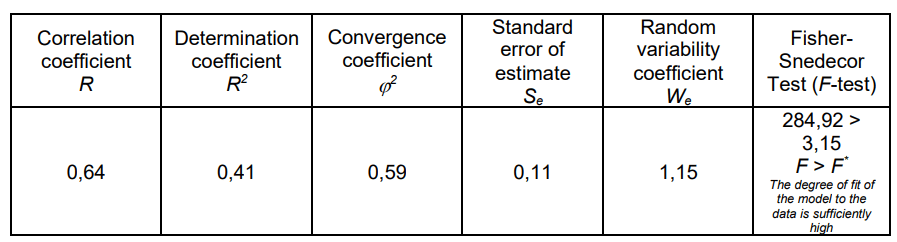
To determine the quality of the model fit to empirical data, the following measures were used: multiple correlation coefficient, coefficient of determination, convergence coefficient, standard error of estimation, and the coefficient of random variability. Additionally, the F Fisher-Snedecor test was conducted. The results of this verification are shown in Table 1. As indicated by equation (2), the factor that most strongly influences the restoration time of bare overhead medium-voltage lines is wind speed.
The duration of restoration is proportional to the square of the wind speed. A slightly lesser influence is attributed to the daily sum of precipitation. In this case, it is a relationship in the first power. The influence of other atmospheric factors is so weak that they were rejected in the procedure of creating the econometric model. The theoretical variability of the failure duration for bare overhead medium-voltage lines is shown in Figure 1.
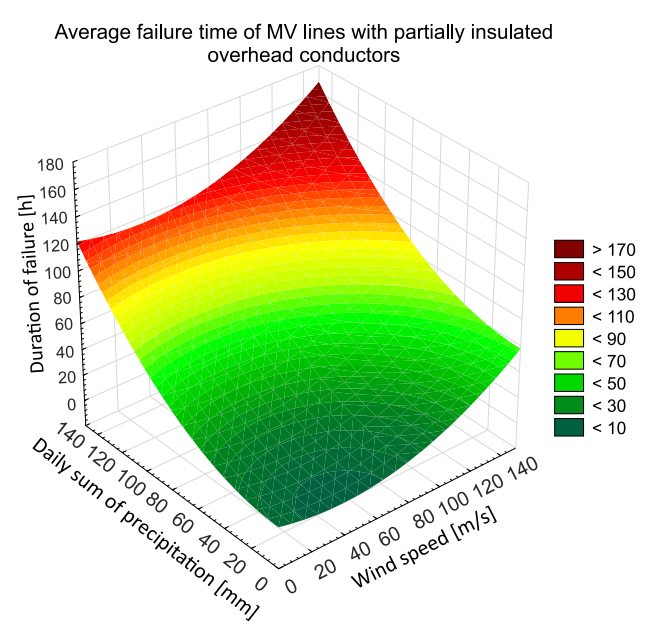
The duration of failure of medium-voltage overhead lines with partially insulated conductors is determined by an econometric model in the following form:
.
The results of the model verification are presented in Table 2.
As indicated by the relation (3), the factors that most strongly influence the duration of failure of medium-voltage lines with partially insulated conductors are precipitation and wind. The duration of failure (restoration) of these lines depends on the daily precipitation in the second power and the wind speed in the fourth power. The influence of other atmospheric factors is so weak that they were rejected in the procedure of creating the econometric model. The theoretical variability of the failure duration for overhead lines with partially insulated conductors is shown in Figure 2.
Fig.1. Theoretical durations of failures of bare overhead lines depending on wind speed and daily precipitation sum
Fig.2. Theoretical durations of failures of overhead lines with partially insulated conductors depending on wind speed and daily precipitation sum
The duration of failure of MV cable lines is determined by an econometric model in the following form:
.
The results of the model verification are presented in Table 3.
As stated in equation (4), the factors that most strongly influence the restoration time of high-voltage cable lines are precipitation and ambient temperature. In this case, we observe a very strong influence of daily precipitation, on which the duration of recovery depends in the power of the fourth. The effect of ambient temperature in the first power is much smaller, but clearly noticeable. The influence of other atmospheric factors is so weak that they were rejected in the procedure of creating the econometric model. The theoretical variability of the duration of failure of MV cable lines is presented in Figure 3.
Fig.3. Theoretical durations of failures of MV cable lines depending on daily precipitation and ambient temperature
Conclusions
The article presents the results of an analysis regarding the influence of weather conditions, represented by air temperature, wind speed, and daily precipitation sum, on the restoration (failure) time of medium-voltage power lines. The analysis considered the independent effects of weather on uninsulated overhead lines, partially insulated overhead lines, and underground cable lines. As indicated by the relationships (2), (3), and (4), the factors that most strongly affect the restoration time of overhead lines are wind speed and daily precipitation sum, while for underground cables, it is the daily precipitation sum and air temperature. The influence of air temperature on the restoration time of overhead lines and wind speed on the restoration time of underground cables is relatively weak, leading to their exclusion during the econometric model creation process. The most significant factors affecting the restoration time of lines are: for uninsulated (bare) overhead lines – wind speed, and for partially insulated overhead lines and underground cable lines – the daily precipitation sum.
The developed mathematical models enable the calculation of the expected restoration time for medium-voltage power lines in the event of simultaneous influence of multiple atmospheric factors. As the analyses have shown, these models are quite simple to apply, and the results obtained using them largely correspond with the statistical data from electricity distribution companies. These models can be used in further reliability studies of power lines. The authors have already made initial attempts to use them in simulation algorithms based on Petri nets.
Table 1. Verification of the model of duration of failure of overhead lines with bare conductors
.
Table 2. Verification of the model of duration of failure of overhead lines with partially insulated conductors
.
Table 3. Verification of the model of duration of failure of cable lines
.
REFERENCES
[1] Banasik K., Chojnacki A. Ł., Gębczyk K., Grąkowski Ł., Influence of wind speed on the reliability of low-voltage overhead power lines, Progress in Applied Electrical Engineering (PAEE) – IEEE, czerwiec 2019 [2] Banasik . K. A., Analiza wpływu warunków atmosferycznych na niezawodność eksploatacji urządzeń i obiektów w elektroenergetycznych sieciach dystrybucyjnych. Praca doktorska. Kielce 2023 [3] Chojnacki A. Ł., Analiza skutków gospodarczych niedostarczenia energii elektrycznej do odbiorców indywidualnych. Wiadomości elektrotechniczne Nr 09/2009, s. 3-9 [4] Chojnacki A. Ł., Analysis of Seasonality and Causes of Equipment and Facility Failures in Electric Power Distribution Networks,. Przegląd elektrotechniczny, Nr 1/2023, s. 157 – 163 [5] Chojnacki A. Ł., Impact of ambient temperature on the failure intensity of overhead MV power lines. Przegląd elektrotechniczny Nr 10/2022, s. 307 – 311 [6] Chojnacki A. Ł., Kaźmierczyk A., Wpływ temperatury otoczenia na intensywność awarii stacji transformatoroworozdzielczych SN/nN, Logistyka Nr 6/2014, s. 2610-2618 [7] Chojnacki A. Ł., Świercz ewski Z. : Koszty strat u dystrybutorów energii elektrycznej spowodowane zawodnością stacji elektroenergetycznych SN/nN. Energetyka Nr 03/2010, s. 149-157 [8] Chojnacki A.Ł., Sezonowość oraz przyczyny uszkodzeń elektroenergetycznych sieci dystrybucyjnych. Elektro Info Nr 03/2023, s. 90 – 94 [9] Kowalski Z., Niezawodność zasilania odbiorców energii elektrycznej. Wydawnictwa Politechniki Łódzkiej, Łódź, 1992 [10]Rozporządzenie Ministra Infrastruktury z dnia 6 lutego 2003 r. w sprawie bezpieczeństwa i higieny pracy podczas wykonywania robót budowlanych (Dz.U. 2003 nr 47 poz. 401) [11]Sozański J., Niezawodność i jakość pracy systemu elektroenergetycznego. WNT, Warszawa, 1990 [12]Sozański J., Niezawodność urządzeń i układów elektroenergetycznych, PWN, Warszawa 1974 [13]Sozański J., Niezawodność zasilania energią elektryczną. WNT, Warszawa, 1982
Authors: Dr. Eng. Kornelia Agnieszka Banasik, Dr. hab. Eng. Andrzej Ł. Chojnacki, prof. at PŚk, Kielce University of Technology, Faculty of Electrical Engineering, Automation and Computer Science, Department of Power Engineering, Energoelectronics and Electrical Machines, Aleja Tysiąclecia Państwa Polskiego 7, 25-314 Kielce, e-mail: k.banasik@tu.kielce.pl, a.chojnacki@tu.kielce.pl
Source & Publisher Item Identifier: PRZEGLĄD ELEKTROTECHNICZNY, ISSN 0033-2097, R. 101 NR 2/2025. doi:10.15199/48.2025.02.57
Published by Marta BĄTKIEWICZ-PANTUŁA, Wrocław University of Science and Technology. ORCID: 0000-0002-1628-1818
Abstract. Converter devices, i.e. computer power supplies prevalent in buildings, as well as LED light sources, which have replaced traditional light bulbs due to their widespread use and characteristics, are the most common cause of poor power quality. The construction of the devices is based on semiconductor elements such as thyristors, diodes, etc. whose task is to adjust the network parameters so that the devices work properly, i.e. converting the alternating voltage into direct current and reducing its value in order to provide proper power supply. The share of receivers in the overall balance of power installed at a single consumer increased to the level that phenomena such as higher harmonics appeared in the supply voltage. The article presents the assessment of electricity quality parameters based on measurements carried out at consumers. The assessment was based on the Regulation of the Minister of Economy of. May 4, 2007. On the detailed conditions for the operation of the power system and the PN-EN 50160: 2010 standard – Parameters of the supply voltage in public power networks. The analysis was carried out on the example of real measurements of power quality parameters. The assessment of power quality parameters was carried out on the basis of the analyzes discussed.
Streszczenie. Urządzenia przekształtnikowe, czyli przeważające w budynkach zasilacze komputerowe, jak i LED-owe źródła światła, które wyparły tradycyjne żarówki ze względu na swoje powszechne zastosowanie i charakterystykę są najczęstszą przyczyna złej jakości energii elektrycznej. Budowa urządzeń opiera się na elementach półprzewodnikowych takich jak, tyrystory, diody itp. których zadaniem jest dostosowanie parametrów sieciowych do takich, aby urządzenia pracowały poprawnie, czyli zamiana napięcia przemiennego na stałe i zmniejszenie jego wartości, w celu poprawnego zasilania. Udział odbiorników w ogólnym bilansie mocy zainstalowanej u pojedynczego odbiorcy wzrósł do poziomu, że w napięciu zasilającym pojawiły się zjawiska takiej jak wyższe harmoniczne. W artykule zaprezentowano ocenę parametrów jakości energii elektrycznej pozyskiwaną od odbiorców. Ocena została oparta na Rozporządzeniu Ministra Gospodarki z dnia. 4 maja 2007 r. W sprawie szczegółowych warunków funkcjonowania systemu elektroenergetycznego i normy PN-EN 50160: 2010 – Parametry napięcia zasilającego w publicznych sieciach elektroenergetycznych . Analiza została przeprowadzona na przykładzie rzeczywistych pomiarów parametrów jakości energii elektrycznej. Ocena parametrów jakości energii elektrycznej została przeprowadzona na podstawie omówionych analiz. (Zakłócenia występujące w instalacji elektrycznej ze szczególnym uwzględnieniem wyższych harmonicznych)
Keywords: power quality, harmonic, negative impact on the electricity grid. Słowa kluczowe: jakość energii elektrycznej, harmoniczne, negatywny wpływ na sieć
Introduction
Power quality is a set of parameters describing the properties of the process of supplying energy to the user under normal operating conditions. These parameters determine the continuity of the power supply and characterize the supply voltages. In practice, the power quality is perceived as satisfactory when deviations from nominal values do not have a significant impact on the stable and effective operation of devices and the system. Currently, the most accurate description of power quality is the definition proposed by the Advisory Committee on Electromagnetic Compatibility IEC, which says that power quality are parameters that describe the properties of electricity supplied to the recipient when operating under normal conditions. These parameters determine the continuity of the power supply, i.e. short and long interruptions in the power supply, and describe the supply voltage, namely its value, asymmetry, frequency and waveform. [1]
The discussed power quality does not depend only on the power supply conditions, but also on the electronic equipment used, which may be more or less susceptible to electromagnetic interference, as well as generating and feeding into the network itself. [2]
Higher Harmonics
Even harmonics occur the least in the power supply network, the reason for this is that few devices that are currently used generate this harmonic in large quantities. The receivers characterized by even harmonics include mainly arc furnaces. The course of the current consumed by them is random, due to the arc discharge conditions, which depend on the melting phase, the largest deformations occur in the melting phase.
Odd harmonics are part of the distorted signal whose frequencies, as the name suggests, are an odd number of integer multiples of the fundamental component of the waveform. These types of harmonics are most commonly found in power lines. They are further divided into triple and non-triple. Triple harmonics are characterized by the fact that their number, in addition to being an odd number, is also a multiple of the digit 3. They are particularly dangerous for the neutral wire of the network, because in each phase the triple harmonics have the same phase shift. As a consequence, they add up in the neutral wire, and the value of the current flowing through the neutral wire can sometimes be higher than in the phase wire.
The main cause of these harmonics are single-phase receivers, discharge light sources, and transformers, which are characterized by the 3rd harmonic. In the case of transformers, it mainly depends on the operating point at which they are located and the magnetization characteristics, which are strongly non-linear. Generally, these devices are designed in such a way that the magnetization current does not exceed 1-2% of the rated current. Thanks to this, the transformer’s operating point is located on the linear part of the magnetization characteristic, and the generation of higher harmonics is small. However, the situation changes in the case of even a slight increase in the supply voltage, the ferromagnetic core becomes saturated, the operating point moves to the nonlinear part of the characteristic and the magnetization current increases. Then transformers become a significant source of 3rd harmonics. One way to eliminate this effect is to connect the windings in D/y, which gives a low-impedance circuit for the 3rd harmonic in the delta-connected windings. [3]
The occurrence of non-triple harmonics is characteristic of converter devices such as power supplies, especially 6- pulse ones. This is due to the nature of their work, where a constant voltage is obtained at the output by appropriately switching on the thyristors. This keying has a significant impact on the distortion of the voltage supplying the rectifier, mainly 5th and 7th harmonics occur. This group of receivers also includes engines. Most motor windings have 5 or 7 grooves for each pole, which results in the appearance of the 5th or 7th harmonic, which, despite being much smaller than in converters, becomes noticeable when the power of such a machine is high or their number is greater. [3]
The occurrence of higher harmonics causes many problems. In the case of receivers such as generators, motors and transformers, the losses generated in the windings increase, which is also associated with an increase in temperature that must be discharged to the environment, as a result of which the life of the device is shortened, the insulation of the wires is subjected to high thermal stress and deteriorates faster its properties. Additionally, the noise of such devices increases significantly, and in the case of moving machines, uneven operation may also occur. It should also be remembered that starting engines may be difficult due to increased slip due to the occurrence of higher harmonics.
Other effects of this phenomenon include a reduction in the switching capacity of circuit breakers, where the occurrence of higher harmonics may increase the value of the current derivative di/dt during zero crossing, which significantly worsens the process of interrupting load currents. Although converter devices are the main cause of harmonics in the power supply network, they are also susceptible to their effects. Synchronization errors resulting from false zero crossing of voltage or damage to system components caused by an increase in the maximum voltage value.
Measuring instruments are also exposed to higher harmonics. They are usually tuned to measure sinusoidally variable values, and due to the appearance of harmonics, the measured signal may significantly deviate from the ideal sinusoidal shape, which consequently results in an incorrect measurement of a given value. This was of great importance in the case of power meters, which were equipped with a motor that, due to harmonics, could incorrectly count the consumed electricity. With the digital meters currently used, the situation looks better.
Thermal hazard also occurs in electrical cables, which accelerates the aging of insulation. Two mechanisms influence this. The first of them is the so-called skin effect, which is characterized by the displacement of current streams from adjacent wires. This effect leads to an increase in the resistance of the power lines, which is proportional to the higher harmonic frequency. The second one is related to the neutral wire and the triple harmonic current flowing in it (3, 9, 15…), which in each phase have the same phase shift and due to summation in the neutral wire, the current value is significant, and due to the fact that it is not designed for high current values may be damaged due to overheating. [3]
Higher Harmonics Filtration Methods
In order to reduce the negative effects of higher harmonics in current and voltage waveforms, various methods are used to reduce their occurrence. Such methods include:
• active and passive higher harmonic filters • appropriate connection of transformer windings • reduction of higher harmonic values in the receiver current.
Higher harmonic filters are the most commonly used solution to improve the quality of electrical energy and eliminate distortions of current and voltage waveforms. They fulfill two basic roles: firstly, they provide reactive power at the fundamental frequency, and secondly, they relieve the network from the flow of harmonic currents. They can be divided into series, parallel, series-parallel, first, second and third order, but basically there are two types of filters: active and passive.
Passive filters consist of passive LC power electronic elements, the values of which are selected individually for a given object or receiver. Most often, they are connected as a shunt to the receiver’s power supply system. Their principle of operation is to select LC elements so that the resonant frequency of the resulting series circuit is equal to the value of the higher harmonic frequency that is to be eliminated. This creates a low-impedance path for the filtered frequencies. These filters are most often constructed as a single, separate branch filtering a specific harmonic. If the receiver generates harmonics of higher orders, e.g. above 17, a broadband filter is additionally used. Note that when designing LC filters, it is necessary to start with the lowest order harmonic, even when it is not dominant. This is due to the impedance characteristics of the filter system. A big advantage is that the use of an active filter eliminates not only the higher harmonics generated by the non-linear receiver, but also the harmonics already present in the power supply network. However, passive filters also have disadvantages, including: [3]:
• the effectiveness of filters depends on the impedance of the power supply system at the point of connection, which is usually unknown and changes during changes made to the network configuration,
• already at the stage of filter design, special attention should be paid to the frequency characteristics to avoid resonance phenomena that could lead to amplification of the harmonic signal,
• filters become detuned due to frequency changes,
• usually only characteristic harmonics are filtered, although other harmonics also occur, • they cause teletransmission interference.
Active filters are an alternative to passive filters and, compared to them, they have numerous advantages, including high operational stability, accuracy, ease of frequency tuning, lack of attenuation of the useful signal, and can even be used to amplify such a signal. They are also devoid of induction elements, which are very expensive. Another big advantage of this system is its flexibility in the case of expansion of a given installation, the filter can be easily adjusted to the current requirements, as well as the possibility of reactive power compensation.
Active filters work in follow-up mode, i.e. they automatically adjust to the receiver current. When using active filters, the distorting current components are closed in the filter-receiver circuit, without causing additional losses in the network supplying the given receiver, which generates interference. [4]
Most often, these types of filters are used in [5]:
• low-voltage networks with a large number of frequency converters,
• modern converter drives, with high harmonic feedback, but with low demand for reactive power,
• low voltage networks with mainly 3rd order harmonics and a large number of single-phase receivers. Such networks are characterized by relatively high current values in the neutral wire, which should not occur with a symmetrical distribution of loads on individual phases. As a result of the electronic load, in addition to possible asymmetries of resistive loads, harmonic currents accumulate in the neutral conductor, which may result in a higher current in the neutral conductor than in the phase conductor, leading to its overload, which is not intended for this purpose. In addition to the above higher harmonic filtering methods, there are other solutions used by manufacturers of equipment with non-linear characteristics. Such methods include, for example, input chokes in AC and DC circuits. They significantly contribute to reducing the THD value. Another element is the use of multi-pulse power supply systems. A larger number of pulses visibly reduces the distortion of the converter current, thus eliminating the negative effects of higher harmonics in the power supply network.
Actual measurements of higher harmonics
The measurements of electricity quality parameters presented in the article were carried out in a public building. There are electrical devices in the building which, through their operation, shape the final shape of current and voltage waveforms in the internal power supply network, and also influence the type of disturbances occurring in it. The main elements include elevator circuits, lighting and computer workstations. Overall, the installed load capacity is around 140 kW. However, please remember that the above devices will not all work together, at the same time, and in the case of engines with the same power, which depends on its load. When assuming a simultaneous operation factor of 0.6, the maximum instantaneous power consumed from the network is approximately 84 kW.
When analyzing the occurrence of higher harmonics in the network of a public building (Fig. 1), the 7th and 11th harmonics dominate, and to a lesser extent the 5th, 9th, 13th and 17th harmonics. A similar situation occurs in the current waveform (Fig. 2). Mainly there are harmonics of odd orders, up to the 19th harmonic. The next ones have a negligible impact on the voltage and current distortion.
Fig.1. Spectrum of higher voltage harmonics
Fig.2. Spectrum of higher current harmonics
After isolating the 5th harmonic (Fig. 3), an increase in values can be observed during the weekend, when most of the installed devices are turned off. The reason for this phenomenon may be the loads which, normally working on working days, additionally compensate for the 5th harmonic, or on these two days equipment was used whose characteristic harmonic is the 5th harmonic..
Fig.3. Waveforms of the 5th harmonic voltage in 3 phases
Another deviation is the occurrence of harmonic number 21 mainly in the L3 phase (Fig. 4 – blue). It means that single-phase devices are installed, which generate this harmonic characteristic.
Fig.4. Waveforms of the 21st harmonic voltage in 3 phases
Forecasting of higher harmonics occurrence
To predict the behavior of higher harmonics, one type of statistical series, which is a time series, can be used. It can be defined as a sequence of observations of a phenomenon in subsequent units of time, e.g. years, quarters, months.[14-17] The phenomenon under consideration may be subject to certain regularities, the detection and description of which is the purpose of time series analysis.[16]
The basic functions of time series include::
The regression function described by the formula:
.
The difference between empirical and model values described by the formula:
.
Seasonality index described by the formula:
.
Determination of modified theoretical values taking into account seasonality, described by the formula:
.
Forecasting described by the formula:
.
Based on the observations of harmonic variability, the type of seasonality can be identified. In the example discussed, it has an additive character.
The figures below show example charts of the seasonality function for a public building (Fig. 5).
Fig.5. An example chart of the seasonality function for a public building
Analyzing the charts (Fig. 5), it can be observed that the seasonality function has a positive trend. The measure of model fit is low. This is most likely due to the nature of the coefficient changes.
By determining the basic functions of time series in accordance with the relationship (1) and (5), the regression function and forecasting take the form:
.
The forecast increase in the occurrence of harmonics for a period of 24 months is 1.67.
Summary
The analysis of electricity quality parameters did not reveal any exceedances. It can be noticed that in both current and voltage waveforms there are higher harmonics that distort the signal. Odd harmonics predominate to the greatest extent, the 5th, 7th, 11th and 13th harmonics are characteristic of the voltage signal, and to a lesser extent the 3rd, 9th, 13th and 17th harmonics. The current waveform mainly contains the 5th and 7th harmonics. It can therefore be concluded that these are characteristic harmonics (5 and 7) of devices located in the building, such as:
• converter devices, i.e. computer power supplies prevailing in the building, as well as LED light sources. Their construction is based on semiconductor elements such as thyristors, diodes, etc. whose task is to adjust the network parameters so that the devices work properly, i.e. converting the alternating voltage into direct current and reducing its value for proper power supply,
• as well as high-power motors used in elevator drives.
When taking into account the type of facility that is a public building, the best solution would be to use an active filter to reduce the number of higher harmonics. This is justified by the positive seasonality trend. The work system in the analyzed facility proves that the building is continuously equipped with the latest equipment containing converter elements,
REFERENCES
[1] Kowalski.Z.: Power quality. Monographs of the Lodz University of Technologyj. Łódź 2007. [2] Fuchs E., Masoum M.: Power Quality in Power Systems and Electrical Machines. Elsevier Inc., 2008. 205 [3] Z. Hanzelka, Quality of electricity supply, Krakow: Publisher AGH Krakow, 2013 [4] K. Kuczyński, J. Szymański,Harmonic compensation – introduction to active filters, elektro.info 12/2020 [5] https://jeanmueller.pl/filtry-aktywne-wyzszych-harmonicznych/ [6] A.Klajn, M.Bątkiwicz-Pantuła, Application Note – Standard EN 50 160: Voltage characteristics of electricity supp [7] EN 50160:2010. Voltage characteristics of electricity supplied by public electricity networks. [8] Decree of the Minister of Climate and Environment of March 22, 2023 on detailed conditions for the operation of the electricity system (Dz. U. 2023 r., 819). [9] Heping P., Wenxiong M,. Yong W., Le L., Zhong X. Identification method for power quality disturbances in distribution network based on transfer learning, Archives of Electrical Engineering , 2022 , vol. 71 , No 3 , 731-754 [10] Baggini A., Hanzelka Z., Voltage and Current Harmonic, Handbook of Power Quality, Whiley, 2008, 200-236 [11] EN 61000-4-30:2015 Electromagnetic compatibility (EMC) – Part 4-30: Testing and measurement techniques – Power quality measurement methods [12] Chojnacki A. Ł., Kończak Z., Seasonality and causes of damage to power distribution networks, Elektro.info 7-8/2023, 2023 [13] Golkhandan, N.H.; Ali Chamanian, M.; Tahami, F. A New Control Method for Elimination of Current THD under Extremely Polluted Grid Conditions Applied on a Three Phase PWM Rectifier. In Proceedings of the INTELEC, International Telecommunications Energy Conference (Proceedings), Turino, Italy, 7–11 October 2018 [14] Kot S., Jakubowski J., Sokołowski A., Statistics, Difin, Warszawa 2011 [15] Sokołowski A., Time series analysis and forecasting, Statistics in research and teaching statistics, Statsoft, Kraków 2010 [16] Ręklewski M. Descriptive statistics. Theory and examples. State Vocational University in Włocławek, Włocławek 2020 [17] IEA,Management Seasonal and Interannual Variability of Renewables , IEA, Paryż https://www.iea.org/reports/managing-seasonal-andinterannual-variability-of-renewables, Licencja: CC BY 4.0, 2023 [18] Kuśmierek Z.: Harmonics in power systems, Przegląd Elektrotechniczny, 82 (2006), nr 6, 8-19 [19] PN-EN 61000-3-11:2020-01 Electromagnetic compatibility (EMC) – Part 3-11: Limits – Limitation of voltage variations, voltage fluctuations and flicker in public low-voltage power supply networks – Equipment with a nominal current < or = 75 A subject to conditional connection [20] PN-EN IEC 61000-3-2:2019 Electromagnetic compatibility (EMC) – Part 3-2: Limits – Limits for harmonic current emissions (phase supply current of the receiver ≤ 16 A)
Authors: dr inż. Marta Bątkiewicz-Pantuła, Wrocław University of Science and Technology, Faculty of Electrical Engineering, Power Electrical Department, ul. Wybrzeże Wyspiańskiego 27, 50-370 Wrocław, e-mail: marta.batkiewicz-pantula@pwr.edu.pl
Source & Publisher Item Identifier: PRZEGLĄD ELEKTROTECHNICZNY, ISSN 0033-2097, R. 101 NR 2/2025. doi:10.15199/48.2025.02.52
Published by 1. Aleksander CHUDY1, 2. Paweł MAZUREK1, 3. Korneliusz PAWLAK2, Lublin University of Technology (1), Ball Packaging Europe Lublin Sp. z o.o. (2) ORCID: 1. 0000-0002-3183-8450, 2. 0000-0002-7098-2084
Abstract. In the present study, power quality parameters across two residential blocks, a single-family house, and an industrial facility were studied and evaluated. Compliance was generally satisfactory, with occasional voltage harmonic exceedances in residential and industrial areas and exceedances in THDV and long-term flicker perceptibility in the industrial setting, highlighting the need for continued monitoring and potential mitigation strategies.
Streszczenie. W badaniu dokonano oceny parametrów jakości energii elektrycznej w dwóch blokach mieszkalnych, domu jednorodzinnym oraz obiekcie przemysłowym. Zgodność była zadowalająca, choć sporadyczne przekroczenia harmonicznych w obszarach mieszkalnych oraz krótkotrwałe przekroczenia THDV i współczynnika długotrwałego migotania światła obiekcie przemysłowym podkreślają konieczność ciągłego monitorowania i potencjalnych strategii łagodzących. (Analiza parametrów jakości energii w obiektach przyłączonych do miejskiej sieci elektroenergetycznej)
Keywords: power quality, residential power supply, industrial power supply, harmonic distortion Słowa kluczowe: jakość energii, zasilanie budynków mieszkalnych, dystrybucja energii dla przemysłu, zniekształcenia harmoniczne
Introduction
Nowadays, the necessity for reliable and high-quality power is vital across various sectors, ranging from residential to industrial settings. Ensuring the stability and efficiency of power supply networks is essential to satisfy the demands of occupants and sustain the productivity of industrial facilities [1, 2]. With this necessity in mind, this study gives an analysis of power quality parameters in networks providing apartment blocks, a single-family house, and an industrial facility.
For apartment blocks, the primary concern often revolves around managing diverse and fluctuating loads from multiple units within the same building. Issues such as harmonic distortion, voltage fluctuations, and power factor imbalance can arise due to the collective impact of various appliances and equipment used by residents [3].
In single-family houses, while the scale may be smaller compared to apartment blocks, similar concerns regarding load diversity and quality persist. Additionally, factors such as renewable energy integration, electric vehicle charging, and smart home technologies further complicate the energy quality landscape. Addressing these complexities requires tailored approaches to monitoring, analysis, and mitigation strategies [4].
Industrial facilities present a distinct set of challenges, often characterized by high-power loads, sensitive equipment, and stringent reliability requirements. Energy quality issues such as voltage sags, transients, and power interruptions can have significant operational and financial implications for these establishments. Therefore, comprehensive analysis of power quality parameters Is essential to minimize downtime, enhance productivity, and ensure regulatory compliance.
Furthermore, advancements in technology and regulatory frameworks play a crucial role in shaping the landscape of power quality management. The recent changes in Polish regulations regarding power quality parameters limits were introduced in Regulation of the Minister of Climate and Environment of 22 March 2023 on detailed conditions for the operation of the power system [5] partially based on the PN-EN 50160 standard. These updates replaced the previous regulation from 2007, reflecting ongoing efforts to ensure the effectiveness and relevance of standards within the power distribution sector. From this point forward in the article, the term regulation will refer to the 2023 regulation. Integration of renewable energy sources, deployment of smart grid technologies, and adherence to stringent quality standards are integral components of modern power supply networks.
The study [6] monitored and analysed various power quality parameters in a typical commercial building with non-linear loads like computers, printers, and compact fluorescent lamps. The proliferation of non-linear loads their harmonic current injections was identified as the root cause behind most of the major power quality issues observed.
In [3] issues such as voltage/current unbalance, harmonics, and power factor in residential loads (lights, fans, AC/DC drives) and a real-time system with multiple single-phase AC servo motors were analysed. Experimental results showed significant voltage unbalance, current total harmonic distortion (THDi) reaching 120%, and poor power factors ranging from 0.25 to 0.75 due to the non-linear nature of the loads. The authors highlighted the need for mitigation techniques like active power filters to reduce harmonics and improve power quality when operating multiple non-linear household/industrial loads.
The study [4] presents one-minute resolution measurements of voltage, THDi, active/apparent power, and power factor for 17 common household appliances like lights, fans, AC units, washing machines. Key results include maximum THDi reaching 120%, THDV up to 3%, and poor power factors from 0.25 to 0.8 across different residential loads.
Methodology
Measurements of power quality parameters were carried out using different devices and lengths of averaging time for each kind of location.
a) Residential Blocks
Power quality measurements were undertaken utilizing the Sonel PQM-711 power quality analyser equipped with F-5A current clamps. The measurements encompassed a distribution transformer serving two residential blocks in lubelskie voivodeship, each comprising 77 flats. Opting for a measurement duration of 2 days, an averaging time of 3 seconds was implemented to enable the analysis of current harmonics in compliance with the IEEE 519-2022 standard.
b) Single-Family House
The power quality measurements were conducted using the Chauvin Arnoux 8336 power quality analyser paired with MA193 current clamps. Given the lower complexity of the load profile, the measurements were conducted for a duration of 4 hours. The averaging time for measurements was set to 1 minute to achieve a balance between obtaining detailed data and decreasing measurement duration.
c) Industrial Facility:
The power quality measurements were conducted within an industrial facility located in Lublin, part of the city’s economic zone. The facility, established in 2008, initially intended to produce food cans but later shifted its focus to manufacturing aluminium lids. The production process is highly automated. High-tech components such as PLC controllers, frequency converters, servo drives, and realtime plant visualization systems are integral to the production modules.
The measurements were performed using the Sonel PQM-711 power quality analyser. Due to the higher complexity of the industrial load and the need for comprehensive data collection, the measurements were conducted over a two-week period. The averaging time for measurements was set to 10 minutes.
During the first week, the measurements were exclusively performed at substation R4, while in the second week, attention shifted to substation R2. Substation R4 serves critical functions, including powering machinery supporting the third production module and supplying compressor with a capacity of 200 kW. Additionally, it provides power to another substation, responsible for one of the production modules. On the other hand, substation R2 is tasked with powering essential systems for facility maintenance, such as internal and external lighting, server rooms, UPS emergency power supplies, cooling for production presses, heaters, ventilation, waste disposal presses, and other 2 compressors each with a capacity of 200 kW.
The Sonel PQM-711 analyser adheres to the IEC 61000-4-30 Class A standard, while the Chauvin Arnoux 8336 analyser complies with the IEC 61000-4-30 Class B standard.
These specific measurement setups and durations enabled for complete investigation of power quality parameters in varied circumstances, guaranteeing reliable data collection and valuable insights into the functioning of the individual power supply networks.
Results
a) Phase voltage profile and voltage unbalance The voltage profile diagram (Fig. 1.) shows the RMS voltage values for the three phases (UL1, UL2, and UL3) over a two-day period concerning residential blocks. The red lines in the diagram represent the voltage limits specified by the PN-EN 50160 standard, which allows for a ±10% deviation from the nominal voltage of 230V. Based on the diagram, the voltage values for all three phases remain within the upper and lower limit, indicating that the voltage magnitudes comply with the PN-EN 50160 standard requirements.
In each graph presented within this article, the red line serves as a clear indicator of the permissible values defined in the PN-EN 50160 standard.
The RMS voltage profile measured at a switchboard in a single-family house over a 4-hour period is presented in Figure 2. The highest peaks are around 235–237 V for all three phases (maximum value: 237.6 V, phase L2) which is still within the PN-EN 50160 standard limit. The lowest measured voltage value was 232.9 V for phase L2.
Figure 3 illustrates voltage fluctuations measured in distribution substations R4 and R2. The cyan line demarcates the division between measurements from substations R4 and R2. For distribution substation R4, the RMS voltage fluctuates between a minimum of 232 V and a maximum of 242 V meeting regulatory requirements. In the case of distribution substation R2, the RMS voltage ranges from a minimum of 235 V to a maximum of 246 V.
The 95th percentile of voltage unbalance factor was found to be 0.29%, 0.33%, and 0.31%/0.31% for the residential blocks, single-family house, and industrial facility (R4/R2), respectively. This indicates that the measured voltage unbalance falls well within the limits established by the PN-EN 50160 standard.
Fig.1. RMS Voltage Profile (two residential blocks)
Fig.2. RMS Voltage Profile (single-family house)
Fig.3. RMS Voltage Profile (industrial facility)
b) Total harmonic distortion of voltage
The 95th percentile values for phases L1, L2, and L3 were obtained for the distribution substation supplying two residential blocks and the switchboard at a single-family house. Additionally, diagrams illustrating THDV levels were provided for the industrial facility.
At the distribution substation supplying two residential blocks, THDV levels were within acceptable limits according to limit established by PN-EN 51060 standard. The 95th percentile values for phases L1, L2, and L3 were 2.86%, 2.66%, and 2.95%, respectively. Similarly, the THDV measurements at the switchboard of the single-family house indicated relatively low levels of harmonic distortion, with 95th percentile values of 2.2%, 2.1%, and 2.0% for phases L1, L2, and L3, respectively.
For the industrial facility, analysis of THDV revealed noteworthy findings. At substation R4, THDV values ranged from a minimum of 2.75% to a maximum of 5%. The values of 95th percentile were 4.23%, 4.34%, 4.32% for phases L1, L2 and L3, respectively. Well within the criteria specified in the previously mentioned standard (8%). Conversely, substation R2 exhibited significantly higher THDV values, the values of 95th percentile were 7,28%, 7,77%, 7,68%. Disturbances introduced by frequency converters and electric motors were observed in substation R4, while anomalies from energy-efficient LED lighting throughout the facility were noted in substation R2.
Figure 4 presents THDV levels at the distribution substations at the industrial facility.
Fig.4. Total harmonic distortion of voltage variation (industrial facility)
c) Voltage harmonics
One significant change introduced by the 2023 regulation [5] is the requirement to analyse voltage harmonics up to the 50th harmonic order, doubling the previous scope of analysis which only extended to the 25th harmonic. This expanded scope reflects advancements in power system monitoring and the recognition of the impact of higher-order harmonics on system performance and equipment operation.
By extending the analysis to the 50th harmonic order, a more comprehensive assessment of voltage harmonics can be achieved, enabling a deeper understanding of potential harmonic distortion effects on the power supply network. This enhanced analysis is essential for ensuring compliance with regulatory standards, optimizing power system performance, and mitigating risks associated with harmonic distortion.
At a distribution substation supplying two residential blocks it was observed that the 15th harmonic order for phase L3 exceeded the prescribed limit of 0.5%. The measurements revealed 95th percentile values of 0.5%, 0.41%, and 0.55% for phases L1, L2, and L3, respectively. The examination revealed no additional exceedances beyond the 15th harmonic order, with the 5th and 7th harmonics emerging as the most prominent. Figure 5 depicts voltage harmonic values from the 2nd to the 25th order. Harmonic values from the 26th to the 50th order were negligible, warranting their exclusion from further analysis.
Fig.5. Voltage harmonic spectrum (95th percentile; two residential blocks)
In the single-family house, values of voltage harmonics across phases were below standard thresholds. For instance, the 3rd harmonic showed values of 1%, 0.6%, and 0.6% across phases L1, L2, and L3, respectively, below the limit of 5%. Similarly, the 5th harmonic displayed values of 1.5%, 1.6%, and 1.6%, below the limit of 6%. Harmonics like the 7th, 9th, and 11th also stayed within acceptable limits, with slight variations across phases. Voltage harmonics values beyond the 15th order up to the 50th were negligible, indicating minimal impact on power quality.
At substation R2, the 95th percentile values for the 5th harmonic across phases L1, L2, and L3 were 6.09%, 6.56%, and 6.38%, respectively, exceeding the specified limit of 6%. This indicates a potential issue with power quality at the substation that warrants further investigation and mitigation measures. However, at substation R4, the corresponding values were 3.67%, 3.84%, and 3.81%. Further analysis identified the most dominant voltage harmonics observed, including the 5th, 7th, 9th, 11th, 13th, 17th, 19th, 23rd, and 25th harmonics. Despite variations in their magnitudes, all of these harmonics remained within the specified limits, indicating satisfactory power quality conditions at the industrial facility.
d) Long-term flicker perceptibility
At the distribution substation supplying two residential blocks, the 95th percentile PLT values for phases L1, L2, and L3 were 0.6, 0.31, and 0.3 respectively, all falling within the limit (1) of PN-EN 50160 standard.
At a single-family house switchboard, the 95th percentile PLT values for the same phases were observed to be 0.82, 0.88, and 0.81, also adhering to the standard. At this point, the PLT calculation was updated in a two-hour window every 10 minutes due to the short duration of measurement, with most values falling within the range of 0.3 to 0.45.
In the industrial facility, the PLT values fluctuated mostly within the range of 0.3 to 0.45 phases L1, L2, and L3, respectively. However, it is worth mentioning that two events occurred where the PLT value exceeded 1, with one event recorded at substation R4 (1.34 – phase L2) and another at substation R2 (1.39 – phase L3). Nevertheless, it did not cause non-compliance with the PN-EN 50160 standard.
e) Power frequency
In all points of measurement – the values of power frequency were well within the acceptable limits with a significant margin of the limit (50 Hz ± 1%). Therefore, further consideration of this parameter is deemed unnecessary for the analysis in this article. The 99.5th percentiles for frequency were measured as 50.03 Hz, 50.04 Hz, and 50.03 Hz for residential blocks, single-family house, and industrial facility, respectively, reaffirming the stability of the parameter.
f) Current harmonics
In the assessment conducted for the case involving two residential blocks, an analysis of current harmonics was undertaken. While the PN-EN 50160 standard and the regulation do not explicitly address current harmonics, the requirements outlined in IEEE 519-2022 were employed.
The analysis was divided into two separate periods of 24 hours each to analyse variations in load profiles. The daily limits specified for the short-circuit current (ISC) to the maximum demand load current (IL) ratio less than 20 were considered (99th percentiles values; very short time, 3 s, harmonic currents). The maximum demand load current was determined as the highest average fundamental current across all recorded current channels during the measurement period (103.1 A). The values of the 99th percentiles of current harmonics for the 3rd harmonic were recorded as 7.69 A, 7 A, and 7.07 A for phases L1, L2, and L3, respectively.
These values were compared against the IEEE 519-2022 limit of 8.25 A, which corresponds to 8% of IL. These measurements approached the limit, particularly in the case of phase L1, indicating a potential proximity to the threshold for acceptable harmonic distortion. Further examination revealed that the remaining values of 99th percentiles across the harmonic spectrum were lower, with significant decreases observed, especially in the 26th to 50th order region.
Figure 6 presents the 99th percentile values of current harmonics recorded during the first 24 hours of measurements.
Fig.6. Current harmonic spectrum (99th percentile; two residential blocks)
Conclusions
In summary, the power quality assessment across residential blocks, the single-family house, and the industrial facility reveals satisfactory compliance in most parameters. However, the presence of the 15th voltage harmonic exceedance in residential blocks and the 5th voltage harmonic in the industrial facility, as well as occasional short exceedances in THDV and long-term flicker perceptibility in the industrial facility, warrant further attention. Table 1 presents the compliance status of each parameter, emphasizing the need for ongoing monitoring and potential mitigation strategies to ensure sustained power quality.
Table 1. Power quality parameters assessment (results by location)
.
This work was supported by Lublin University of Technology grant no. FD-20/EE-2/403.
REFERENCES
[1] Chudy A., Mazurek P., Electromobility – the Importance ofPower Quality and Environmental Sustainability, Journal of Ecological Engineering, 20 (2019), No. 10 [2] Chudy A., Hołyszko P., Mazurek P., Fast Charging of an Electric Bus Fleet and Its Impact on the Power Quality Based on On-Site Measurements, Energies, 15 (2022), Nr 15, p. 5555 [3] Thentral T. T., Palanisamy R., Usha S., Bajaj M., Zawbaa H. M., Kamel S., Analysis of Power Quality issues of different types of household applications, Energy Reports, 8 (2022), 5370-5386 [4] Garabitos Lara E., Electrical dataset of household appliances in operation in one apartment, Data in Brief, 51 (2023) [5] Minister of Climate and Environment. Regulation of the Minister of Climate and Environment of 22 March 2023 on detailed conditions for the operation of the power system, 2023 [6] Ojo A., Awodele K., Sebitosi A., Power Quality Monitoring and Assessment of a Typical Commercial Building. In: 2019 IEEE AFRICON; IEEE, 92019, 1-6
Author: dr inż. Aleksander Chudy, dr inż. Paweł Mazurek, Department of Electrical Engineering and Smart Technologies, Lublin University of Technology, Nadbystrzycka Street 38A, 20-618 Lublin, e-mail: a.chudy@pollub.pl, p.mazurek@pollub.pl; mgr inż. Korneliusz Pawlak, Ball Packaging Europe Lublin Sp. z o
Source & Publisher Item Identifier: PRZEGLĄD ELEKTROTECHNICZNY, ISSN 0033-2097, R. 101 NR 2/2025. PRZEGLĄD ELEKTROTECHNICZNY, ISSN 0033-2097, R. 101 NR 2/2025
Published by 1. Ali Boukerche1, 2. Salima Lekhchine1, 3. Tahar Bahi2, Department of Mechanical Engineering, Faculty of technology, University of 20 August 1955, LGMM Laboratory, Skikda, Algeria (1), Department of Electrical Engineering,Faculty of technology, Badji Mokhtar University, Laboratory (LASA) , Annaba, Algeria (2) E-mail: a.boukerche@univ-skikda.dz
Abstract. At present, energy saving and renewable energies represent one of the most important axes of sientific research. One of these renewable energies is solar energy, which has two aspects: solar thermic and solar photovoltaic; this energy is highly coveted due to its availability, but the cost of this energy remains very high, specially for autonomous installations where there are storage batteries. the aim of this work is to minimise the invisible cost of storage and to promote energy saving using a connected network energy management system controlled by fuzzy logic.. There are several types of storage batteries, including batteries that are less expensive in terms of storage capacity and price (Wh/Price), such as OPZS batteries, but they cannot be used for a single consumer because their capacity is very large. In our work, we propose a collective storage structure between multiple variable loads, and each load is equipped with a photovoltaic generator that supplies the same storage bus. Fuzzy logic is used to collect information on the behaviour of loads, in other words the consumers, their compliance with the consumption instructions set in advance, as well as the degree of contribution to recharging the collective storage bus. Using mathlab simulink, we have performed a simulation of the proposed system. The result is that the program classifies the consumers and gives them a quantity of energy from the storage bus according to their class, a quantity that can be estimated using fuzzy logic. This approach can be used in a number of different ways, either by the electricity network distributors by installing collective storage buses in each utility, with multiple benefits such as the use of the storage bus as a back-up source in the event of a network failure to ensure continuity of service, energy savings, because consumers will try to save as much energy as possible in order to have a good rating and benefit from more energy in unfavourable weather conditions. It will also enable the electricity distributor to have a more smart and better-controlled grid, because consumers will respect hourly power consumption thresholds to have a better rating at all times instead of varying consumption rates on an hourly basis, as many suppliers do, to avoid consumption peaks that cause problems on the electricity network, such as voltage drops. Or co-location in a collective storage bus for off-grid installations to minimise the investment cost of the storage bus and be more respectful of the environment.
Streszczenie. Obecnie oszczędzanie energii i odnawialne źródła energii stanowią jedną z najważniejszych osi badań naukowych. Jedną z tych odnawialnych energii jest energia słoneczna, która ma dwa aspekty: słoneczną energię cieplną i słoneczną energię fotowoltaiczną; energia ta jest bardzo pożądana ze względu na jej dostępność, ale koszt tej energii pozostaje bardzo wysoki, szczególnie w przypadku autonomicznych instalacji, w których znajdują się akumulatory. Celem tej pracy jest zminimalizowanie niewidocznych kosztów magazynowania i promowanie oszczędzania energii przy użyciu połączonego sieciowego systemu zarządzania energią kontrolowanego przez logikę rozmytą. Istnieje kilka rodzajów akumulatorów, w tym akumulatory, które są tańsze pod względem pojemności i ceny (Wh / Cena), takie jak akumulatory OPZS, ale nie można ich używać dla pojedynczego konsumenta, ponieważ ich pojemność jest bardzo duża. W naszej pracy proponujemy zbiorczą strukturę magazynowania między wieloma zmiennymi obciążeniami, a każde obciążenie jest wyposażone w generator fotowoltaiczny, który zasila tę samą magistralę magazynową. Logika rozmyta jest wykorzystywana do zbierania informacji na temat zachowania obciążeń, innymi słowy konsumentów, ich zgodności z instrukcjami zużycia ustalonymi z wyprzedzeniem, a także stopnia wkładu w ładowanie zbiorczej magistrali magazynowej. Korzystając z programu Mathlab Simulink, przeprowadziliśmy symulację proponowanego systemu. W rezultacie program klasyfikuje konsumentów i daje im ilość energii z magistrali magazynowej zgodnie z ich klasą, ilość, którą można oszacować (Zalecenia dotyczące struktury i sterowania rozmytego wspólnego systemu magazynowania pomiędzy autonomicznymi systemami fotowoltaicznymi)
Nowadays, the ever-increasing need for electrical energy throughout the world requires an increase in the production of electrical energy in order to satisfy this need and therefore requires the establishment of a significant number of power stations.
Indeed, to satisfy the growing demand for electrical energy, several types of conventional power plants are installed [1-3]. These stations use as raw material the fossil energies which are known as not-renewable, they are polluting and have a negative impact on the environment, and are also being depleted [4,5]. This goes against the current standards and issues defined for the environment. To overcome these problems, governments have adopted as an indispensable solution the promotion of electric energy production facilities based on renewable resources such as solar energy, wind energy, biomass etc…[6-8]. However, solar energy is the most used because of its wide availability. It is divided into two types, the first type being solar thermal, a partly chemical process generally used in high power plants (thermo-solar power station) and the second type is the photovoltaic solar energy which can be used for large as well as for small powers [9,10].
In this work we are interested to design an optimal structure and to propose the power management of solar photovoltaic installations not connected to the distribution network (autonomous) equipped with a common storage system. The storage system consists of a set of lithium batteries with deep discharge of voltage 2V particularly batteries OPZS: O: Ortsfest (stationary), PZ : PanZerplatte (tubular plate) and S : Flüssig (flooded) which are designed on the basis of an electrical energy storage technology particularly adapted to photovoltaic solar systems [11]. These batteries are made of positive and negative lead plates, separated by separators and immersed in a liquid electrolyte. In contrast to other types of batteries, OPZS batteries have the advantage of being transparent, which makes it easy to see the condition of the plates and electrolyte [12]. They have a relatively long life, which makes them an interesting choice for applications requiring long-term storage of the renewable energy produced. However, to obtain 24V or 48V storage bus, several of these batteries are needed, which is appropriate for large load. They are used as an intermediary to all production facilities in order to optimize the investment on storage bus and promote the saving of electrical energy. Nevertheless, to ensure their optimal use, a large load or several medium loads are required. This is the subject of our work as well as the promotion of economy of electrical energy.
Structure and modeling
Structure In this work a new structure of an electrical network consisting of a collective storage bus between several isolated sites with a photovoltaic generator each one is proposed. The charging and discharging system of each installation is based on a Buck-boost converter and a proportional integral (PI) controller. The systems will be interconnected using a control system based on fuzzy logic that will take into consideration the energy delivered by each system to the storage bus as well as the consumption mode of each system in order to incite the users to better consume and respect the energy consumption thresholds.
Using MatLab/Simulink software, we have developed a system composed of 4 photovoltaic generators two of them composed of five of 215Wp panels which are the GPV1 and GPV4, 4 panels of the same type for GPV2 and 3 panels for GPV3 all equipped with a Boost converter with a Maximal Power Point Tracking (MPPT) incremental control, each one of them powering a variable load with different variations for each load, the set of loads connected to storage bus 120Ah- 24V controlled by a controller based on fuzzy logic as shown in the Fig.1.
Fig.1. Global diagram of the chain
Modeling Photovoltaic cell model
The photovoltaic cell is the basic element of a solar panel and consists of a current generator and a diode, as well as two resistors – one in series (Rs) and one in parallel (Rsh). The equivalent electrical circuit of this cell is shown in the Fig.2.and considered this figure we can deduce the expression of the current [13-15]:
Fig.2. Equivalent model of photovoltaic cell
.
Where, I0 (A): diode saturation current; K: constant of Boltzmann (1, 380649×10-23 m2 kg s-2 K-1); q: charge of the electron; T: temperature; n: factor of diode junction; IL (A): short-circuit current; ID (A): current through the diode; IRsh (A) : current through the shunt resistor.
DC-DC converters
A DC/DC converter is an electronic device that converts a DC voltage from one power source to another DC voltage of a different level, usually using a pulse width modulation (PWM) technique [16,17]. There are several types of DC/DC converters, each with different characteristics and advantages, such as Buck converters it converts a high input voltage to a lower output voltage, Boost Converter: it converts a lower input voltage to a higher output voltage, and the Buck-Boost Converters it can convert a high input voltage to a lower output voltage or convert a lower input voltage to a higher output voltage. The table 1 shows the most frequently used DC/DC converter models [18-20].
Table 1. Converters DC/DC
.
Boost converter model
The mathematical model of the boost converter is derived by applying Kirchhoff’s laws to the basic schematic of the converter, as shown in Fig.3 and taking into account the mode of operation and the state of the S-switch. In other words, the principles of conservation of energy and electrical load are used to describe the behavior of the boost converter under different operating conditions as a function of parameters such as input voltage, connected load, and the switching frequency of the S switch [21].
Fig.3. Equivalent model of Boost converter
.
The dynamic equations of the boost converter are derived for the current in the inductor and the voltage across the capacitor in the continuous conduction regime, where IL is the current in the inductor L, E is the input voltage, Vdc is the output voltage, and U is the control. For x1 =IL and x= Vdc then the equations of state become:
.
The equation of state of the boost converter thus becomes:
.
Buck-boost converter model
To present the functioning of a converter of this type in the form of mathematical equations, it is necessary to consider the state of the switch S, as shown in the Fig.4 When the switch is in the ON position, the time Ton during which it is conducting is equal to α times the switching period Ts. During this phase, the energy stored in the circuit inductor increases. On the other hand, when the switch is OFF, the time Toff during which it is not conducting is equal to (1-α) times the switching period Ts. During this phase, the energy stored in the inductor is transferred to the capacitance and the load connected to the converter [22].
Fig.4. Equivalent model of Buck-Boost converter
.
The equation of state of the buck boost converter gives:
.
Incremental MPPT technique
This technique requires the use of two sensors to measure the output voltage and current [23-25]. It uses the derivative of current with respect to voltage (dI/dV) to estimate the derivative of power with respect to voltage (dP/dV). When dI/dV equals (-I/V), the algorithm detects that the maximum power point (MPP) has been reached, and it then stops to return the appropriate operating voltage value for the Maximum power point. Figure 5 shows the algorithm for the incremental technique to track the maximum power bridge.
Fig.5. Flowchart of the incremental MPPT
Charge controller
The voltage control system is a technique commonly used in photovoltaic systems to charge the batteries by imposing a voltage set point. Using a Buck-Boost DC/DC converter, this technique is very efficient because it allows to maintain the battery voltage at an optimal level according to the state of charge or discharge, which prolongs its life [26].The operation of the imposed voltage charge controller is simple the system follows the imposed voltage set point and adjusts the current according to the load requirements. In other words, the current is adapted in real time to meet the requirements of the load and the availability of the energy delivered by the PV array.
Figure 6 illustrates this process the voltage is controlled to remain constant, while the current varies according to the demands of the load. This technique maximizes the battery’s charging efficiency while protecting it from over- or under-charging, thereby significantly extending its life.
Fig.6. Control diagram of the storage system
2.2.5. fuzzy logic controller
Fuzzy logic is a method of information treatment that makes it possible to model complex systems by using fuzzy sets and variables that can take gradual values. This technique is largely used in electrical engineering for the control of control systems, the control of electric motors, robotics and image and signal processing systems [27-29]. Several fuzzy logic source management projects have been proposed by classification, as in [30] In our case we are going to use it to manage the quantity of energy delivered by the storage batteries according to the acquired data of the system, the input parameters of our fuzzy controller are the using factor that varies from 0 to 20 from very good user to very bad user and the second parameter and the giving factor that varies from 0 to 100% of the delivered energy according to the rules mentioned in the Table 2. To assure the good functioning and the longevity of the battery the energy that is delivered between the four systems will be limited to a threshold of 30% of the battery autonomy to avoid the deep discharge harmful to the battery, the rules established for the fuzzy system are as in Table 2.
Table 2. Fuzzy log
.
We will have the amount of energy to be delivered for each user at night or in bad weather and even in the case of pane. Figure 7 shows the conversion of the numerical input variables into linguistic variables. The abbreviations used for the using factor (UF) are VGU,GU,MGU,MU,MBU,BU and VBU are relative to very good user, good user, middle good user, middle bad user, bad user and very bad user this variable of between vary sell the respect of the consumer to the consumptions instructions.
.
With the condition If t=0 UFn=Cn else UFn= Cn/t
For the second input variable delivering factor (DF) we have VLD, LD, MLD, MHD, HD and VHD for very low deliverer, low deliverer, middle low deliverer, middle high deliverer, high deliverer and very high deliverer this parameter varies according to the ratio between the energy delivered by a GPVn system to the storage bus and some of the energy delivered to the storage bus by all the photovoltaic generators.
.
For t ∈ [(𝐸≥𝐸𝑥);(𝐸<𝐸𝑥)]
Fig.7. Fuzzy input/output variables
We note that Ex is the irradiation sufficient for the availability of photovoltaic energy in our case we have taken 100w/m², the data processing is done according to the program in Fig.8.
Fig.8. Fuzzy controller program
The system operates according to the flow diagram in the figure Fig.9 at time t≥t(Ex) for t(Ex) is the time when the photovoltaic system receives a large enough irradiation to develop a considerable power in our case we took E=100w/m² the data calculation is done during the period t ∈ ]𝑡(𝐸≥𝐸𝑥); 𝑡(𝐸<𝐸𝑥)] equivalent to one day of production to then deliver the energy from the storage bus at period t ∈ [𝑡(𝐸<𝐸𝑥); t (𝐸≥𝐸𝑥)] according to the giving factor estimated by the fuzzy algorithm at the end of the cycle the acquired data Uf and Df will be deleted to make place for the new data. Figure 9 shows the detailed operation of the controller for a simulation period relating to a normal day.
Fig.9. Fuzzy Logic control chart
Simulation result and discussion
The proposed structure and control was developed in Matlab/Simulink to analyze the performance of our approach and its validation under different operating profiles inspired by real cases considering a constant temperature of 25°C and a variable irradiation profile as shown in the Fig.10.
The time of data collection is from t=4.2s corresponding to an ‘irradiation E≥100W/m² which is proportional to the dawn and the distribution of stored energy is done from the moment t=17.5 or the irradiation E<100W/m² which is proportional to the twilight two simulation phase one with the fuzzy controller deactivated in second with the fuzzy controller activated.
Fig.10. Irradiation and temperature of the system
However, under the effect of climatic profiles (constant temperature and variable irradiation) of the figure 10, the evolution of the recommended power as well as the powers actually consumed by each load as a function of time, respectively shown by the dashed lines and the solid lines of the Figure 11.
Fig.11. Loads behaviors
With the knowledge of the evolution of the powers consumed by the various loads as well as the set point of consumption according to the laws of calculation establishes the factor of use Uf and the factor of donation Df which reflect respectively the respect of each load with regard to the set point of consumption and the quantity of energy delivered to the bus of storage by each system compared to the totality of the energy received by the bus of storage, the Figures 12 and 13 illustrate these two factors
Fig.12. Using Factor (UF)
Fig.13. Delivering Factor (DF)
Figure 14 shows the energy delivered by the photovoltaic generator, the consumption of the loads and the energy delivered to the storage bus of the four systems respectively. Figure 15 shows the state of charge of the battery (soc) its current and voltage without application of the fuzzy controller, We notice that the battery was charged from t=11s to t=16s the period where there was an excess of energy production. We also notice that the GPV 02 and 03 are the most implied in terms of charge of the battery having a good factor of Delivering (Df) while respecting the consumption The GPVs 01 and 04 did not contribute practically to the battery charge, however, in terms of respecting the consumption set point, the load four is higher than the load 01 (Uf04>Uf01) as shown in figures 11 and 12.
Fig.14. Energy of the system without application of the Fuzzy controller
Fig.15. Battery states
Figure 16 shows the energy delivered by the PV array, the consumption of the l loads and the energy delivered to the storage bus of the four systems but this time applying the fuzzy logic controller. Figure 17 shows the thresholds set by the fuzzy system and the consumption of each load of the storage bus. It can be seen that load 01 has been excluded at t=19s because it has a bad Uf and Df factor and it requires a large current as shown in Fig.19.
Fig.16. Energy of the system with application of the Fuzzy controller
Fig.17. Limits controller
Fig.18. Switching states
Fig.19. Battery states
Conclusion
At the end of this work, it was proven that it is possible to make photovoltaic installations with storage, which are classified among the most expensive photovoltaic installations, more profitable by investing in a collective storage bus while inciting consumers to respect consumption thresholds to promote energy saving and ensure a good continuity of service whatever the climatic conditions to which the installations are solicited and also in the event of unexpected defect occurring in one of the installations. Furthermore, the proposed structure encourages users to save electrical energy and allows suppliers to better manage their facilities by prescribing energy consumption guidelines to users and can also be designed for a more complex system.
REFERENCES
1. MD. LEONARD, E.E.MICHAELIDES and D. MICHAELIDES, Energy storage needs for the substitution of fossil fuel power plants with renewables. Renewable Energy,145, pp. 951-962 (2020).doi: https://doi.org/10.1016/j.renene.2019.06.066 2. SO. AMROUCHE, D. REKIOUA, T. REKIOUA and al. Overview of energy storage in renewable energy systems. International journal of hydrogen energy, 41, 45, pp 20914-20927 (2016).doi: https://doi.org/10.1016/j.ijhydene.2016.06.243 3. M. UMAR, X. JI, D. KIRIKKALELI and al. The imperativeness of environmental quality in the United States transportation sector amidst biomass-fossil energy consumption and growth. Journal of Cleaner Production, 285, pp.124863 (2021).doi: https://doi.org/10.1016/j.jclepro.2020.124863 4. F. GUANG, Electrical energy efficiency of China and its influencing factors. Environmental Science and Pollution Research, 27, 26, pp. 32829-32841 (2020). doi: https://doi.org/10.1007/s11356-020-09486-6 5. Ayat Y., Badoud A.E., Mekhilef S., Gassab S. Energy management based on a fuzzy controller of a photovoltaic/fuel cell/Li-ion battery/supercapacitor for unpredictable, fluctuating, high-dynamic three-phase AC load. Electrical Engineering & Electromechanics, 2023, no. 3, pp. 66-75. doi: https://doi.org/10.20998/2074-272X.2023.3.10: 6. A. SHARIF, M. BHATTACHARYA, S. AFSHAN and al. Disaggregated renewable energy sources in mitigating CO2 emissions: new evidence from the USA using quantile regressions. Environmental Science and Pollution Research,28 ,41, pp.57582-57601 (2021). doi: https://doi.org/10.1007/s11356-021-13829-2 7. SK. BHATIA, AK. PALAI, A. KUMAR, and al. Trends in renewable energy production employing biomass-based biochar. Bioresource Technology,340, pp. 125644 ( 2021). doi: https://doi.org/10.1016/j.biortech.2021.125644 8. Ali Moussa M., Derrouazin A., Latroch M., Aillerie M. A hybrid renewable energy production system using a smart controller based on fuzzy logic. Electrical Engineering & Electromechanics, 2022, no. 3, pp. 46-50. doi: https://doi.org/10.20998/2074-272X.2022.3.07 PRZEGLĄD ELEKTROTECHNICZNY, ISSN 0033-2097, R. 100 NR 6/2024 263 9. A. BORETTI, Integration of solar thermal and photovoltaic, wind, and battery energy storage through AI in NEOM city. Energy and AI, 3,pp.100038(2021). doi:https://doi.org/10.1016/j.egyai.2020.100038 10. U. EICKER, A. COLMENAR-SANTOS, L. TERAN and al. Economic evaluation of solar thermal and photovoltaic cooling systems through simulation in different climatic conditions: An analysis in three different cities in Europe. Energy and Buildings,70, pp. 207-223 (2014). doi: https://doi.org/10.1016/j.enbuild.2013.11.061 11. R. DUFO-LÓPEZ, T. CORTÉS-ARCOS, JS. ARTAL-SEVIL and al. Comparison of lead-acid and li-ion batteries lifetime prediction models in stand-alone photovoltaic systems. Applied Sciences,11, 3, pp. 1099 (2021). doi: https://doi.org/10.3390/app11031099 12. A. KARAFİL, H. ÖZBAY, Design of Stand-Alone PV System on a Farm House in Bilecik City, Turkey. El-Cezeri,5,3,pp.909-916 (2018). doi: https://doi.org/10.31202/ecjse.352826 13. Latreche S., Khenfer A., Khemliche M. Sensors placement for the faults detection and isolation based on bridge linked configuration of photovoltaic array. Electrical Engineering & Electromechanics, 2022, no. 5, pp. 41-46. doi: https://doi.org/10.20998/2074-272X.2022.5.07 14. AM. SHAHEEN, RA. EL-SEHEIMY, G. XIONG and al. Parameter identification of solar photovoltaic cell and module models via supply demand optimizer. Ain Shams Engineering Journal,13,4, pp. 101705 (2022). doi: https://doi.org/10.1016/j.asej.2022.101705 15. Y. MAHMOUD et E. EL-SAADANY, A photovoltaic model with reduced computational time. IEEE transactions on industrial electronics,62,6, pp. 3534-3544 (2014). doi: 10.1109/TIE.2014.2375275 16. S. KAPAT and P. KREIN. A tutorial and review discussion of modulation, control and tuning of high-performance dc-dc converters based on small-signal and large-signal approaches. IEEE Open Journal of Power Electronics, 1, pp. 339-371 (2020). doi: https://doi.org/10.1109/OJPEL.2020.3018311 17. H. TARZAMNI, F. ESMAEELNIA, F. TAHAMI and al, Reliability assessment of conventional isolated PWM DC-DC converters. IEEE Access,9, pp. 46191-46200 (2021). doi: https://doi.org/10.1109/ACCESS.2021.3067935 18. B. ZHU, HU, L. Shishi, Guanghui, and al, Low-voltage stress buck-boost converter with a high-voltage conversion gain. IEEE Access, 8, pp. 95188-95196 (2020). doi: 10.1109/ACCESS.2020.2995889 19. A. RAJAVEL and P. RATHINA, Fuzzy logic controller-based boost and buck-boost converter for maximum power point tracking in solar system. Transactions of the Institute of Measurement and Control,43, 4, pp. 945-957 (2021). doi: https://doi.org/10.1177/0142331220938211 20. B. CHANDRASEKAR, CH. NALLAPERUMAL, S. PADMANABAN and al, Non-isolated high-gain triple port DC– DC buck-boost converter with positive output voltage for photovoltaicapplications. IEEEAccess,8,pp.113649-113666, (2020). doi: 10.1109/ACCESS.2020.3003192 21. Tahar, Benaissa, Mahi Djillali, and Halbaoui Khaled. “Maximum Power Point Tracking under simplified sliding mode control based DC-DC boost converters.” Przeglad Elektrotechniczny 97.7 (2021). doi:10.15199/48.2021.07.12 22. N. OBEIDI, M. KERMADI, B. BELMADAN and al, A current sensorless control of buck-boost converter for maximum power point tracking in photovoltaic applications. Energies,15,20,pp. 7811 (2022). doi: https://doi.org/10.3390/en15207811 23. HAMOODI, Ali N., Safwan A. HAMOODI, and Farah I. HAMEEDI. “Enhancing the Solar PV Plant Based on Incremental Optimization Algorithm.” Przeglad Elektrotechniczny 2023.10 (2023).. doi:10.15199/48.2023.10.35 24. RB. BOLLIPO,S. MIKKILI and K. BONTHAGORLA, Hybrid, optimal, intelligent and classical PV MPPT techniques: A review. CSEE Journal of Power and Energy Systems,7,1, pp.9- 33 (2020). doi: 10.17775/CSEEJPES.2019.02720 25. I. OWUSU-NYARKO, MA.ELGENEDY, I. ABDELSALAM and al. Modified variable step-size incremental conductance MPPT technique for photovoltaic systems. Electronics,10,19,pp. 2331(2021). doi: https://doi.org/10.3390/electronics10192331 26. Jusoh, Mohd Afifi, Muhamad Zalani Daud, and Mohd Zamri Ibrahim. “Fuzzy logic-based control strategy for hourly power dispatch of grid-connected photovoltaic with hybrid energy storage.” Przeglad Elektrotechniczny 98.1 (2022). doi: https://doi.org/ 10.15199/48.2022.01.02 27. ZOUGGARET, Abdelhak, et al. “An Efficient Fuel Cell Maximum Power Point Tracker based on an Adaptive Neural Fuzzy Inference System.” Przeglad Elektrotechniczny 99.2 (2023). doi:10.15199/48.2023.02.23 28. M. KOTB, M. ELMORSHEDY, H. SALAMA and al. Enriching the stability of solar/wind DC microgrids using battery and superconducting magnetic energy storage based fuzzy logic control. Journal of Energy Storage,45, pp.103751 (2022). doi: https://doi.org/10.1016/j.est.2021.103751 29. Z. ROUMILA, D. REKIOUA, et T. REKIOUA, Energy management based fuzzy logic controller of hybrid system wind/photovoltaic/diesel with storage battery. International Journal of Hydrogen Energy,42,30, pp.19525-19535 (2017). doi: https://doi.org/10.3390/en16052286
Source & Publisher Item Identifier: PRZEGLĄD ELEKTROTECHNICZNY, ISSN 0033-2097, R. 100 NR 6/2024. doi:10.15199/48.2024.06.54
Published by Krzysztof OLESIAK, Czestochowa University of Technology ORCID: 0000-0003-4552-7810
Abstract. The paper presents a method of measuring power consumed by an industrial robot in a single phase system. A computer-based measurement set was constructed, consisting of special purpose voltage and current converters and a PC with a multi-channel measuring card. Measurements were conducted and time curves were recorded for the supply voltage and current of the robot under dynamic states at prescribed trajectories. The software DasyLab was used to plot time waveforms, to obtain power values and to record data. The power consumed by the robot was analyzed for variations in the kind of movement at prescribed trajectories.
Streszczenie. W artykule zaprezentowano koncepcję pomiarów mocy pobieranej w układzie jednofazowym przez robota przemysłowego. Komputerowy układ pomiarowy wykonano przy zastosowaniu specjalistycznych przetworników napięcia i prądu oraz komputera PC z wielokanałową kartą pomiarową. Przeprowadzono badania pomiarowe i zarejestrowano przebiegi czasowe napięcia i prądu zasilania robota dla stanów dynamicznych przy zadanych trajektoriach ruchu. Do rejestracji przebiegów czasowych, wyznaczania mocy oraz zapisu danych w czasie rzeczywistym zastosowano oprogramowanie DasyLab. Przeprowadzono analizę mocy pobieranej przez robota przemysłowego przy zmianie rodzaju ruchu dla zadanych trajektorii ruchu. (Pomiary mocy pobieranej przez robota przemysłowego w stanach dynamicznych).
Keywords: industrial robot, movement trajectory, power measurement, computer measuring system. Słowa kluczowe: robot przemysłowy, trajektoria ruchu, pomiar mocy, komputerowy system pomiarowy.
Introduction
Multiaxial robots with electric drives appeared in industry in the 1970s. They were more advanced versions of earlier robots powered by hydraulic or electrohydraulic drives used in the 1950s and 1960s [2, 3].
The development of power semiconductor systems and microprocessor control systems contributed to increase in the sales of electric drive robots and gradually expanded their applications. Nowadays, industrial robots are used in manufacturing processes requiring numerous repetitions of the same action with high precision and speed. The tasks performed by robots can be divided into four main categories according to function: i) joining components, i.e. fusion welding, pressure welding and soldering ii) moving components, i.e. sorting, packaging and arranging objects, iii) tasks involving a change in the size of an object, i.e. drilling, milling and machining, iv) tasks resulting in altering surface parameters of components, such as chemical degreasing and spray painting [2, 5, 8, 10].
Industrial robots consume electric power, the value of which depends on the nominal parameters, the movement trajectory and the load applied to the effector. A general construction schema of a controller in a multiaxial robot with an electric drive consists of a rectifier circuit, a DC circuit, converters powering the motors of the mechanical manipulator and a microprocessor control, and a programming unit. The movement trajectory is programmed by means of a manual touch programmer connected to the controller. The construction of the controller indicates that the unit is a non-linear power receiver [11, 15].
Developing the power measurement tool and method for industrial robots required the analysis of measurement methodology for converter drives, non-linear circuits, and also measurements of non-electric quantities. It was also necessary to take into consideration issues related to simulation models of power converters and converter drives [12, 13, 14].
The computer-based power measurement system
The industrial robot under scrutiny is powered by standard single-phase voltage. The computer-based power measurement system consists of two measuring transducers, a special-purpose measuring card and a PC. The power circuit is galvanically isolated from the measuring circuit by means of measuring transducers manufactured by LEM. The transducer applied in the power circuit is LA55-P, whereas the one in the voltage circuit is LA55-P. The parameters of the measuring transducers are specified in Table 1.
Table 1. The parameters of the measuring transducers [9
.
The measuring transducers transform the current and the voltage, respectively, into voltage signals of identical shape within the range from -5V to +5V. These voltage signals are connected through an external module to the measuring card Adlink 9118L installed in the PC. The measuring card has a 12-bit A/D converter with a maximal sampling frequency of 100 kHz and with 8 bipolar channels for simultaneous registration of the waveforms in the domain of time. The parameters of the measuring card are specified in Table 2.
Table 2. The parameters of the measuring card [4]
.
The PC was equipped with the DasyLab software for reading, registration and visualization of signals from the measuring card Adlink. The signals can be measured for prescribed trajectories of the industrial robot’s TCP (Tool Center Point). Individual trajectories are programmed by means of a manual touch programmer, connected to the robot controller. Fig. 1 below presents a block diagram of the computer-based measuring system.
Fig.1. The block diagram of the computer-based measuring system
The electromechanical manipulator’s arm takes a position depending on the parameters prescribed for the individual axes. The range of admissible positions of the Kawasaki robot axes is presented in Table 3.
Table 3. The range of admissible positions of the Kawasaki FS03N robot axes [7]
.
The signals received from the voltage and current converters are read by the channels of the measuring card, and subsequently processed and saved by the DasyLab software. The processing of the signals consists of the following stages: calibrating the voltage and current, reading and visualizing by the digital meter module, calculating the sought values according to the given dependencies, and presenting the results in the form of waveforms. The measurement results are recorded in real time as per the affordances of the DasyLab software. The block diagram of the system for processing the measuring signals is presented in Fig. 2.
Fig.2. The block diagram of the voltage and current measurement signal processing system
The power of the non-linear receiver
According to the classic definition of power, the active power of a receiver is [1, 6]:
.
where: P – the active power, T – period of time function, U(t), I(t) – the waveforms of the phase voltage and the phase current, Un– effective value of n-th harmonic voltage, In – effective value of n-th harmonic current, n –harmonic order, φn – the phase shift angle between n-th harmonic voltage and n-th harmonic current.
The formula above has a general character and can be applied to receivers in which the current and voltage curves are deformed. In the case of the industrial robot under scrutiny, the supply voltage is sinusoidal, whereas the current is deformed. This means that the transfer of active power involves the first harmonic of the sinusoidal voltage and the first harmonic of the deformed current. The other current harmonics do not affect the transfer of the active power. The active power of the system can be therefore represented as:
.
where: U – effective value of the sinusoidal phase voltage, I1 – effective value of the fundamental harmonic current, φ1 – the phase shift angle between the voltage and the fundamental harmonic current.
The phase shift between the sinusoidal supply voltage and the first current harmonic causes the receiver to receive reactive power Q1 equal to:
.
When the formulas for the active and reactive power are taken into account, it is possible to introduce a formula for the harmonic apparent power S1:
.
Thus, the phase shift coefficient of the fundamental harmonic becomes :
.
Higher harmonics of the distorted current are responsible for the occurrence of distortion reactive power D. This power is taken into account when the power factor λnl of the non-linear receiver is calculated by means of the following formula [1, 6]:
.
Results of the measurement study
The study of the measurements involved registering the waveforms of the supply voltage and current in the domain of time for selected dynamic states of the industrial robot. The movement trajectory was set for moving two objects by means of a pneumatic effector. One object was moved from point P[2] to point P[4], and the other from point P[6] to P[7]. The lifting and lowering of the object involved linear movement, whereas the relocating of the object at a given height involved joint movement. The movement trajectory for the TCP is presented in Fig. 3.
Fig.3. The standard trajectory of the industrial robot’s TCP
Applying a linear movement for lifting and lowering objects is a typical solution. When the robot is equipped with a pneumatic effector with height compensation, it is possible to apply joint movement instead, which reduces the time necessary for executing a given sequence of the movement. The movement trajectory of the TCP for the joint movement is presented in Fig. 4.
Fig.4. The modified trajectory of the industrial robot’s TCP
The power consumed by the robot at dynamic states was calculated by means of the DasyLab software. In the computational modules of the software mathematical functions determining the components of power were implemented. The results of the calculations are presented as waveforms in Fig. 5 and Fig. 6.
Fig.5. The time characteristics of the supply voltage, the supply current, the active power and the reactive power of the Kawasaki robot at the standard trajectory
Fig.6. The time characteristics of the supply voltage, the supply current, the active power and the reactive power of the Kawasaki robot at the modified trajectory
Integral factors were calculated for the active power and the reactive power, according to the following relations:
.
Time t=5s was assumed for the analyzed trajectories. In order to compare the obtained test results, selected parameters are presented in Table 4.
Table 4. Selected parameters for the standard and modified trajectory of the industrial robot’s TCP
.
Concluding remarks
The results of the measurements and analysis of the power consumed by an industrial robot for given movement trajectories indicate that the active power differs between the condition of linear movement and the condition of joint movement for lifting and lowering objects: in the joint movement condition both the active and reactive powers are lower. The difference occurs due to the mechanical construction of the robot manipulator, optimized for joint movement. It may be necessary, though, to apply the linear movement under some technological constraints, such as when the effector for moving objects is not height-compensated. Then the linear movement has to be applied for selected sections of the trajectory and the increase in the active and reactive fundamental harmonic power has to be taken into account.
The analysis of the power consumed for prescribed trajectories therefore indicates that applying joint movement has advantages over linear movement as long as there are no technological constraints which necessitate the linear movement at some sections of the trajectory. Reducing the active and reactive power consumption for executing given tasks reduces energy consumption for every cycle of the robot operation. Considering the fact that each cycle is repeated numerous times, the overall energy saving is significant.
REFERENCES
[1] Emanuel A. E., Power Definitions and the Physical Mechanism of Power Flow, Wiley-IEEE Press, 2010 [2] Hägele M., Nilsson K., Pires N., Bischoff R., Industrial robotics, Springer Handbook of Robotics, 2nd Edition, (2016), 1385-1421 [3] Hentout A., Maoudj A., Aouache M. A review of the literature on fuzzy-logic approaches for collision-free path planning of manipulator robots, Artificial Intelligence Review 56 (4), (2022), 3369-3444 [4] IOtech, DASYLab Data Acquisition System Laboratory – User Guide, version 10.0, IOtech Company, Cleveland, 2009 [5] Jakubiec B., Fuzzy Logic Controller for Robot Manipulator Control System. 2018 Applications of Electromagnetics in Modern Techniques and Medicine (PTZE), IEEE, New York, (2018), pp. 77-80 [6] Jeltsema D., Budeanu’s Concept of Reactive and Distortion Power Revisited, Przegląd Elektrotechniczny, 92 (2016), No. 4, 68-73 [7] Kawasaki Heavy Industries Ltd, Kawasaki Robot Controller D Series, AS Language Reference Manual, 2007 [8] Kim J., Kim S. R., Kim S. J., Kim D. H., A practical approach for minimum-time trajectory planning for industrial robots. Industrial Robot: An International Journal, 37(1), (2010), 51–61 [9] LEM: Industry Current & Voltage Transducers, Switzerland, Geneva, LEM International SA, 2013 [10] Mineo C., Pierce S. G., Nicholson P. I., Cooper I., Robotic path planning for non-destructive testing – A custom MATLAB toolbox approach, Robotics and Computer-Integrated Manufacturing, 37, Elsevier, (2016), 1-12 [11] Olesiak K., Analysis of the energy consumption by an industrial= robot for the angular movement of individual axes, Przegląd Elektrotechniczny, 94 (2018), No. 12, 218-221 [12] Popenda A., Modelling of BLDC motor energized by different converter systems, Przegląd Elektrotechniczny, 94 (2018), No.1, 81-84 [13] Popenda, A., Lis, M., Nowak, M., Blecharz, K., Mathematical modelling of drive system with an elastic coupling based on formal analogy between the transmission shaft and the electric transmission line, Energies, 13, no. 5 (2020), 1181 [14] Prauzner T., Prauzner K., Ptak P., Noga H., Migo P., Małodobry Z., Comparison of QEEG test results with regard to the environment, Journal of Physics: Conference Series 2408 (2022), 012011 [15] Tavares P., Lima J., Costa P., Double A* path planning for industrial manipulators, Advances in Intelligent Systems and Computing, 418, (2016), 119-130
Author: dr inż. Krzysztof Olesiak, Politechnika Częstochowska, Wydział Elektryczny, Katedra Automatyki, Elektrotechniki i Optoelektroniki, Al. Armii Krajowej 17, 42-200 Częstochowa, e-mail: krzysztof.olesiak@pcz.pl
Source & Publisher Item Identifier: PRZEGLĄD ELEKTROTECHNICZNY, ISSN 0033-2097, R. 101 NR 1/2025. doi:10.15199/48.2025.01.45
Published by 1. Krzysztof KRÓL1,2, 2. Grzegorz KŁOSOWSKI1,2, 3. Monika KULISZ3, 4. Arkadiusz MAŁEK2, Research and Development Center, Netrix S.A, Lublin (1), WSEI University, Lublin (2), Lublin University of Technology (3) ORCID:1. 0000-0002-0114-2794; 2. 0000-0001-7927-3674; 3. 0000-0002-8111-2316, 4. 0000-0001-7772-2755
Abstract. This article will introduce the concept of analyzing and detecting defects on production lines, paying attention to acceleration, temperature and humidity sensors. A system has been prepared to supervise the work. For this purpose, a prototype production line with intelligent sensors has been prepared. We present a comprehensive approach based on combining these three types of data, which enables early detection of potential problems.
Streszczenie. W tym artykule zostanie przedstawiona koncepcja analizy i wykrywania uszkodzeń na liniach produkcyjnych zwracając uwagę na czujniki przyspieszenia, temperatury i wilgotności. Przygotowany został system do nadzorowania pracą. W tym celu została przygotowana prototypowa linia produkcyjna z inteligentnymi czujnikami. Przedstawiamy kompleksowe podejście oparte na połączeniu tych trzech rodzajów danych, które umożliwia wczesną detekcję potencjalnych problemów. (Opracowanie systemu eksperckiego do analizy uszkodzeń na liniach produkcyjnych)
Keywords: cyber-physical systems sensors,analyse defects, fuzzy logic. Słowa kluczowe: czujniki systemów cyber-fizycznych, analiza defektów, logika rozmyta
Introduction
In today’s dynamic industrial environment, the efficiency and reliability of production lines are critical to the success of any business. Damage and failures in production processes can lead to delays, loss of quality and costly repairs. That’s why increasing attention is paid to systems for detecting and identifying defects on production lines.
Acceleration, temperature and humidity sensors have become indispensable tools in monitoring the condition of machines and production processes. Multifaceted data analysis from these sensors allows early detection of potential problems and avoidance of more serious failures. With today’s data collection, processing and analysis technologies, it is possible to create advanced monitoring systems that help identify subtle signs of damage [1-5].
In the first section, we discuss the importance of monitoring production lines and the effects of failures on production processes and the company as a whole. In the next section, we describe the acceleration, temperature and humidity sensors used and how they are integrated into the monitoring system. We then discuss data processing techniques, including filtering, normalization and aggregation, which are key to obtaining reliable analysis results.
In the main part of the article, we focus on presenting different approaches to analyzing sensor data. We describe the use of statistical techniques to identify deviations from the norm and the creation of predictive models based on historical data.
In addition, we discuss the advantages of using machine learning, including neural networks and classification algorithms, in automatic pattern recognition in data. In the conclusion of the article, we summarize the benefits of implementing advanced monitoring systems based on sensor data analysis. We point out the significant reduction in the risk of failure, improvement in the efficiency of production processes and reduction in maintenance costs. We emphasize that modern data analysis and artificial intelligence technologies create new perspectives in the field of maintenance and quality management in the manufacturing industry.
Acceleration sensors are particularly useful in detecting machine vibration and oscillation. An increase in vibration amplitude or the appearance of unusual vibration patterns can indicate impending damage to mechanical components or improper machine settings. On the other hand, temperature monitoring can reveal overheating of components, which can lead to accelerated wear and tear of materials and a shorter service life. Humidity also plays an important role, especially in processes that require specific environmental conditions, such as the production of moisture-sensitive electronic products [6-9].
System description
For this purpose, a prototype production line with intelligent sensors has been prepared. The construction of the solution makes it possible to improve the management of the company’s intelligent structure in many aspects of its operation. Thanks to the extensive system, all data from smart sensors goes into the system, where it can be used in the analytical system, which is used to monitor and optimize problematic processes [10- 11].
To guarantee optimal system functionality, including all system parameters in the configuration settings is necessary. For production lines, it is also important to establish safety procedures to be followed during operation. Among these are emergency procedures, safety procedures and protective measures for production line operators.
Fig.1. Prototype production line with sensors
The prototype line was prepared as a closed line in an oval shape. Elements move along the line. The line has the ability to control the speed of belt travel. Smart sensors have been deployed to collect data. The sensors have been placed on various parts of the system. The sensors were placed on the motor, the clamping jaws, and the line itself [12-13].
Model construction
To enable fault detection, a fuzzy logic controller model has been developed. In a typical fuzzy logic controller, four basic modules can be distinguished: the fuzzification module, the inference module, the rule base and the sharpening module. The process in the controller begins with transforming input data from a sharp form to a fuzzy form using the blurring module. The blurring is done through the membership function, where sharp values are converted to fuzzy. In the blurring process, fuzzy membership values are assigned to certain sharp parameters. Then, the fuzzy values are processed according to the rules of the inference mechanism, which are stored in a knowledge base. This database contains predefined rules. Fuzzy inference is a knowledge-processing process in which fuzzy logic is applied. During inference, decision-making is mimicked by properly interpreting the knowledge held. This process uses rules stored in a rule or knowledge base [14].
The rule base is an interpretation of the expert’s knowledge of the possible values of the state variables of an object. In order for the processed information to be used practically, it is necessary to convert it back to sharp values using the sharpening module. The sharpening process converts the fuzzy data into exact values to be used in practice. The results of the membership function are reduced to a single numerical value by sharpening.
The input parameters for the expert model being created are processed line data from sensors:
– temperature and humidity, – acceleration, and angular velocity, – atmospheric pressure.
Prepare data and model
A line was run to collect data and test the rules built. Production items moved on the line. Sensors collected data while operating under normal (no-fault) conditions. The measured data was saved to a database. Based on the collected data, the built fuzzy logic model was tested. Then, modifications were carried out on the line in such a way as to signal that some failure might occur. Many different algorithms are used for data analysis and optimization [14- 24]. The collected data was used to build a model for detecting failures on the production line [25].
Fig.2. The way the fuzzy collective inference model (Mamdani) for temperature and vibration works
Fig.3. Response surface realized by defuzzification rules depending on the probability of a fault on the engine (temperature) and the probability of a fault on the engine (vibration)
The inputs to the first fuzzy controller are the resultant vibration on the motor housing (vibration_4), resultant vibration on the jaws (vibration_5); resultant vibration on the production line (vibration_6). Mamdani’s logical inference rules were analyzed. Input data to the second fuzzy controller: temperature at the central unit (Temp_1), temperature at the motor housing (Temp_2); temperature at the jaws (Temp_3); atmospheric pressure (Pressure_1). Input to the third fuzzy controller: the displacement of the jaws in the Z-axis (displacement). The inputs to the fuzzy collective controller are the outputs from the fuzzy controllers for vibration and temperature: probability of failure on the engine – vibration, probability of failure on the jaws – vibration, probability of failure on the production line – vibration, probability of failure on the central device – temperature, probability of failure on the engine – temperature, and probability of failure on the jaws – temperature.
The purpose of creating a model based on fuzzy logic is to indicate whether a fault is present or not in the area of vibration sensors. A total of four fuzzy models were built. The first model was built from nine vibration rules. The second model concerns temperature. The third model concerns the clamping jaws’ preparation. The fourth model is an aggregate model for temperature and vibration.
The first six columns in the figure 2 are the input variables, and the last column is the rule results. The last (bottom) figure in the last column in row 5 shows the determination of the result using the center of mass (centroid) method. The rules are designed so that results closer to 0 mean no fault occurs, and results closer to one mean a fault occurs.
An example of the response surface implemented by the defuzzification rules depending on the probability of a fault on the engine (temperature) and the probability of a fault on the engine (vibration) is shown in Figure 3
Fig.4. The way the fuzzy collective inference model (Mamdani) for temperature and vibration works
Results
The model consists of 8 inputs, also inputs to fuzzy controllers. At the output of the model, we get a decision – whether a fault is present or not. The model contains fuzzy controllers. Displays have been placed at the output of each controller, where it is possible to monitor the results.
Fig.5. Performance results of the model Decision – 0 (no fault))
The graphs of the performance of the individual fuzzy controllers show what the response looks like when there are no problems on the line – this is shown in Figure 5. Another of the waveforms shows the response from the associated controller only related to vibration, and here, the high probability of a fault is apparent (figure 6).
The response to temperature sensors is shown as another of the responses, here with a high probability of no error (Figure 7). The response for the controller with combined responses for vibration and temperature is indicated in Figure 8. In this waveform, there is an average of about 55% probability of a fault.
Fig.6. Performance results of the fuzzy vibration controller
Fig.7. Results of the temperature fuzzy controller
Using the individual models, it would seem that there is a fault from the operation of the individual sensors, but looking at the whole system, it can be seen in the response of the fuzzy controller that no fault arises here, and the system works properly.
Fig.8. Performance results of the fuzzy controller on temperature and vibration
Fig.9. Results of the fuzzy controller concerning jaw displacement
Based on the above results, it is concluded that the performance of the model is correct.
REFERENCES
[1] Kong XT, Zhong RY, Zhao Z, Shao S, Li M, Lin P, et al. Cyber physical ecommerce logistics system: an implementation case in Hong Kong. Comput Ind Eng 139 (2020), 106170. [2] He J, Jia G, Han G, Wang H, Yang X. Locality-aware replacement algorithm in flash memory to optimize cloud computing for smart factory of industry 4.0. IEEE Access, 5 (2017), 16252-62. [3] Shang C, Bao X, Fu L, Xia L, Xu X, Xu C . A novel key-value based real-time data management framework for ship integrated power cyber-physical system. 2019 IEEE innovative smart grid technologies — Asia (ISGT Asia) (2019), 854-8 [4] Manavalan E, Jayak rishna K. A review of internet of things (iot) embedded sustainable supply chain for industry 4.0 requirements. Comput Ind Eng ,127 (2019), 925-53. [5] Assawaarayakul C, Srisawat W, Ayuthaya SDN, Wattanasirichaigoon S. Integrate digital twin to exist production system for industry 4.0. 2019 4th technology innovation management and engineering science international conference (TIMES-iCON), (2019), 1-5. [6] Akhtari S, Pickhardt F, Pau D, Pietro AD, Tomarchio G. Intelligent embedded load detection at the edge on industry 4.0 powertrains applications. 2019 IEEE 5th international forum on research and technology for society and industry, (2019), 427-30 [7] Poor P, Basl J, Zenisek D. Predictive maintenance 4.0 as next evolution step in industrial maintenance development. 2019 international research conference on smart computing and systems engineering (SCSE), (2019), :245-53 [8] Occhiuzzi C, Amendola S, Nappi S, D’Uva N, Marrocco G. Rfid technology for industry 4.0: architectures and challenges. 2019 IEEE international conference on RFID technology and applications (RFID-TA), (2019), 181-6. [9] Król K., Marciniak A., Gudowski A, Bojanowska J., Intelligent Sensor Platform with Open Architecture for Monitoring and Control of Industry 4.0 Systems, European Research Studies Journal, 24 (2021), No. 2, 597-606. [10]Lins T, Oliveira RAR. Cyber-physical production systems retrofitting in context of industry 4.0. Comput Ind Eng, 139 (2020), 106193. [11]Saarikko T., Westergren U. H., Blomquist T., The Internet of Things: Are you ready for what’s coming?, Business Horizons, 60 (2107), No.7. [12]Kozłowski, E., Mazurkiewicz, D., Żabiński, T., Prucnal, S., Sęp, J ., Assessment model of cutting tool condition for real-time supervision system. Eksploatacja i Niezawodność – Maintenance and Reliability, 21 (2019), No.4, 679-685. [13]Kozłowski, E., Antosz, K., Mazurkiewicz, D., Sęp, J., Żabiński, T. (2021). Integrating advanced measurement and signal processing for reliability decisionmaking. Eksploatacja i Niezawodność – Maintenance and Reliability, 23(4), 777-787. [14]Gnaś, D., Adamkiewicz, P., Indoor localization system using UWB, Informatyka, Automatyka, Pomiary W Gospodarce I Ochronie Środowiska, 12 (2022), No. 1, 15-19. [15]Koulountzios P., Aghajanian S., Rymarczyk T., Koiranen T., Soleimani M. , An Ultrasound Tomography Method for Monitoring CO2 Capture Process Involving Stirring and CaCO3 Precipitation, Sensors, 21 (2021), No. 21, 6995. [16]Kłosowski G, Rymarczyk T, Niderla K, Kulisz M, Skowron Ł, Soleimani M., Using an LSTM network to monitor industrial reactors using electrical capacitance and impedance tomography – a hybrid approach. Eksploatacja i Niezawodnosc – Maintenance and Reliability, 25 (2023), No. 1,11. [17]Kłosowski G., Rymarczyk T., Kania K., Świć A., Cieplak T., Maintenance of industrial reactors supported by deep learning driven ultrasound tomography, Eksploatacja i Niezawodnosc – Maintenance and Reliability; 22 (2020), No 1,138–147. [18]Styła, M., Adamkiewicz, P., Optimisation of commercial building management processes using user behaviour analysis systems supported by computational intelligence and RTI, Informatyka, Automatyka, Pomiary W Gospodarce I Ochronie Środowiska, 12 (2022), No 1, 28-35. [19]Kropidłowska P., Irzmańska E. Korzeniewska E., Tomczyk M., Jurczyk -Kowalska M., Evaluation of laser texturing in fabricating cut-resistant surfaces for protective gloves, Textile Research Journal, 93 (2023), No. 9-10), 1917–1927. [20]Pawłowski S., Plewako J., Korzeniewska E., Field Modeling of the Influence of Defects Caused by Bending of Conductive Textronic Layers on Their Electrical Conductivity, Sensors, 23 (2023), No. 3, 1487. [21]Rymarczyk T., Kłosowski G., Hoła A., Hoła J., Sikora J., Tchórzewski P., Skowron Ł., Historical Buildings Dampness Analysis Using Electrical Tomography and Machine Learning Algorithms, Energies, 14 (2021), No. 5, 1307. [22]Kłosowski G., Rymarczyk T., Niderla K., Rzemieniak M., Dmowski A., Maj M., Comparison of Machine Learning Methods for Image Reconstruction Using the LSTM Classifier in Industrial Electrical Tomography, Energies 2021, 14 (2021), No. 21, 7269. [23]Rymarczyk T., Kłosowski G., Hoła A., Sikora J., Tchórzewski P., Skowron Ł ., Optimising the Use of Machine Learning Algorithms in Electrical Tomography of Building Walls: Pixel Oriented Ensemble Approach, Measurement, 188 (2022), 110581. [24]Koulountzios P., Rymarcz yk T., Soleimani M., A triple-modality ultrasound computed tomography based on fullwaveform data for industrial processes, IEEE Sensors Journal, 21 (2021), No. 18, 20896-20909. [25]Kłosowski G., Cloud Manufacturing Concept as a Tool of Multimodal Manufacturing Systems Integration. Foundations of Management, 4 (2012), No.1, 17-42.
Authors: Grzegorz Kłosowski, Ph.D. Eng., Lublin University of Technology, Nadbystrzycka 38A, Lublin, Poland, E-mail: g.klosowski@pollub.pl;; Krzysztof Król, WSEI University, Projektowa 4, Lublin,, Research&Development Centre Netrix S.A., Lublin Związkowa 26. Email: krzysztof.krol@netrix.com.pl; Monika Kulisz Ph.D. Eng., Lublin University of Technology, Nadbystrzycka 38A, Lublin, Poland, E-mail: m.kulisz@pollub.pl; Arkadiusz Małek, Ph.D. Eng., WSEI University, Projektowa 4, Lublin, e-mail: arkadiusz.malek@wsei.lublin.pl
Source & Publisher Item Identifier: PRZEGLĄD ELEKTROTECHNICZNY, ISSN 0033-2097, R. 101 NR 1/2025. doi:10.15199/48.2025.01.38
Published by Krzysztof BOLEK1, Mirosław CZECHOWSKI2, Tymoteusz NACZYŃSKI3, Politechnika Krakowska (1), Politechnika Krakowska (2), Politechnika Krakowska (3), ORCID: 1. 10009-0005-4756-8327.; 2. 0000-0001-5093-4870; 3. 0000-0003-0323-5393
Abstract. This article describes the concept of building an inexpensive power supply for testing devices in Poland whose destination is the USA. Firstly, the power grid configurations used in the USA is described. Secondly, the concept of power supply that provide required voltage parameters 60Hz / 110V out of European 50Hz / 230V is described. Next parts of the paper treat about lab testing of the device when it is not loaded and when it is loaded with required by client 2,5-3 kW.
Streszczenie. W artykule opisano koncepcję budowy niedrogiego zasilacza do testowania urządzeń w Polsce, której przeznaczeniem są USA. W pierwszej kolejności opisano konfiguracje sieci elektroenergetycznych stosowane w USA. W drugiej kolejności opisano koncepcję zasilacza zapewniającego wymagane parametry napięcia 60 Hz / 110 V z europejskich 50 Hz / 230 V. Kolejne części artykułu dotyczą badań laboratoryjnych urządzenia w stanie nieobciążonym oraz pod obciążeniem wymaganą przez klienta mocą 2,5-3 kW. (Podłączanie urządzeń europejskich w USA)
Keywords: Single and three phase connections used in the USA, Voltage inverter, Frequency inverter. Słowa kluczowe: Połączenia jedno- i trójfazowe stosowane w USA, Przetwornica napięcia, Przetwornica częstotliwości.
Introduction
Like all over the world, electrical appliances in the United States (USA) are powered by single- or three-phase sinusoidal current. Three-phase sinusoidal current, as in every country, is produced by electricity generators in power plants. Only the AC pulsation frequency here is different from the European 50 Hz, and is 60H z. Single pole generator turbines rotate at 3600 rpm. In Europe, 3000 rpm was adopted. As elsewhere in the world, three-phase sinusoidal current is distributed over longer distances by high-voltage lines. Three-phase sinusoidal current is also distributed via medium voltage lines to industrial plants, larger individual energy consumers and housing estates. Here the resemblance to the European, American electricity system ends.
For domestic purposes, including small businesses and even large rural farms, the US uses a completely different power connection from Europe. Medium voltage three-phase, or even sparingly interphase, or single-phase, is distributed along American roads and streets most often on wooden poles. Near the property, on the street pole, a single-phase transformer is installed, lowering the interphase, or single-phase medium voltage to a low voltage – designed to power one or several local consumers, or a local low voltage lines, that run along the street for a short distance. The transformer has a secondary winding 240 V, in the middle with a grounded detachment, realizing a two-phase power supply with a voltage of 120/240 V, with phases shifted by a 90-degree angle.
It should be added that large multi-family buildings, office buildings or large industrial facilities are directly powered by a three-phase medium voltage connection, and in a local three-phase transformer lowering this medium voltage, to three-phase low voltage, secondary winding connects in a star configuration with a central point grounded, where the phase voltage is 120V, and the interphase voltage reaches not 240 but 208V. This voltage is accepted by most 240V receivers available on the North American market [1].
As already mentioned in the USA, typical low-voltage systems (500V AC and less) are single-phase and three-phase circuits, with a frequency of 60 Hz. The connection systems of single- and three-phase installations used in the USA differ significantly from the standards adopted in Poland.
In the USA, the systems are divided into:
1) Single-phase sinusoidal current circuits: a) 120/240 V, 3-wire, single phase. b) 240 V, 2-wire, single phase. c) 120 V, 2-wire, single phase d) 480 V, 2-wire, single phase
2) Three-phase systems are divided into: a) 208Y/120 V, 4-wire, 3-phase. b) 480 Y/277 V, 4-wire, 3-phase. c) delta connection, where voltage is 240 V, 277 V, 480 V or 600 V d) delta connection, 3-phase, 3-wire, triangle with “corner” grounding (line grounding) e) delta connection, 3-phase, 4-wire, 120/240 V triangle, with one phase grounded at the center point; f) open delta, 3-phase, 4-wire with two transformers[2]
In single-family houses, protection with 2×60 A, 2×100 A, 2×200 A fuses is used. In work places, the values of the safety fuses are very different. but in most cases the values of the main safety fuses are larger and are above 2×100 A, or 3×100 A. It should also be reminded, that electric motors imported from the EU will have a higher rotational speed which is related to the US network frequency of 60 Hz.
U. S. single-phase and three-phase power systems must comply with Article 210 of the National Electric Code (NEC) [3]. Article 210 of the NEC includes general requirements for branch circuits. When designing special purpose branch circuit, Article 210 is always applied, with some modifications or additions (references to specific devices) [4]. The National Electric Code (NEC) marked as ANSI/NFPA 70. Is the standard adopted in the United States (USA) for the safety of electrical wiring and electrical equipment installation? The NEC is developed by the Committee on National Electrical Code associated with NFPA, which consists of 19 code making panels and Technical Correlation Committee. The work on the NEC is sponsored by the National Association for Fire Protection. NEC has been approved as a US national standard by the American National Standards Institute (ANSI).
The concept of creating a power supply prototype
For the purpose of testing machinery built in Poland, whose destination is North America, a prototype power supply (Fig. 1.) was developed and built so that it simulates the parameters of the US power grid. Machines built for European market, that are based on devices powered by sine wave voltage with frequency of 50Hz, must be tested before release. One of the tested devices are drives of vibrating feeders [5], for which frequency and voltage waveform are important for correct operation. Machinery produced for North America market must be tested as well. For this purpose, a company producing machines for the US market built a prototype power supply (Fig. 1.), which simulates the parameters of a low-voltage power supply grid in the USA [6].
The prototype power supply consists of two elements:
• DC power supply ZJIVNV S-3000-110 (Fig 1. pos.1); • Pure sine wave inverter Belevschi 8000W (Fig 1.pos. 2.).
Fig.1. The prototype of tested power supply
The other components are electrical protection devices and cooling fans. The power supply (Fig. 1. pos. 1) was selected to meet the requirements of the industry for machines produced for the US market, that is estimated as 2.5 – 3 kW.
The inverter (Fig 1. pos. 2) was oversized for a reason of possible future increase of the power supply and was chosen as the smallest of the type series available at the manufacturer. Oversizing the inverter was also to ensure a clean sine wave, by guaranteeing that the inverter is not overloaded with too much power consumption, power level close to a rated power.
The manufacturer of the Belevschi 8000W voltage inverter (Fig. 2.) declares pure sine wave.
Laboratory testing of power supply prototype
For the purpose of verifying the declaration of the manufacturer of the inverter(Fig. 3. pos. 1.), a test stand that consists of a resistive load (Fig. 3. pos. 2) and a measuring system (Fig. 4. ) was created.
Fig.2. Belevschi 8000W inverter
Fig.3. A lab testing of the prototype
Measurement was performed with digital oscilloscope RIGOL MS5104 (Fig. 4. pos. 1) via differential probe TT-SI 9002_TESTEC_1:20/1:200_25 MHz (Fig. 4. pos. 2) set to the attenuation range 1:200, and the oscilloscope read was multiplied appropriately, so that actual voltage was shown on the oscilloscope. The oscilloscope sampled 20 million samples per second during all the tests performed.
Fig.4. The measuring system
In order to verify the manufacturer’s declaration, voltage waveform (Fig. 4.) that was received at the output of the inverter, has been examined (Fig. 1.).
Fig.5. The measured voltage waveform
As it can be seen on the Fig. 5., sinusoidal waveform is “clean”. The stable frequency of 60 Hz RMS and voltage of about 115 V is archived. In addition, it can be noticed that the inverter has many “steps” (fig. 6) thanks to which it is able to reproduce the sinusoidal voltage waveform so well. There is a slight distortion when passing through zero (Fig 5. pos. 1).
Fig.6. Switching of the next steps of the inverter
On the above waveform (Fig. 6.), which is a section of the waveform shown in Fig. 5., the switching of successive stages of the voltage inverter is clearly visible. The number of these steps in the cycle corresponds to the number of cycles by which one period of output sine wave voltage has been divided. The more cycles have been performed, the more accurate is the mapping of the perfect sine wave is achieved. Today IGBT transistors for low power can switch with frequencies up to 50 kHz.
The prototype power supply loading
A resistive load has been connected to the inverter (Fig. 7.) of parameters of Pmax = 5 kW, Umax = 250 V. With the power supply of 120 V RMS, the power of the load should be about half of the rated power expected for European power supply system voltage of 230 V.
The purpose of this test was to check whether the inverter produces the pure sine under a load of about 2.4 kW. The load value read from the inverter display was 31% of the rated load of 8 kW, which is about 2.4 – 2.5 kW.
The loaded inverter also generates a sufficiently clean sinusoidal waveform (Fig. 8.). Slightly increased RMS voltage to 119V, but it is still normal (Fig. 9.).
It should be remembered that the voltage inverter is oversized in correlation to the DC power supply, so there are no obstacles in maintaining a “nice” sinusoidal voltage waveform.
Fig.7. Resistive load of 2.4 kW
Fig.8. The voltage waveform of the loaded inverter.
Fig.9. Inverter indication when a resistive load is connected
Conclusion
The prepared prototype successfully simulates the parameters of the power grid such as can be found in the American power supply system. Laboratory tested power supply transforms our native 50Hz and 230V voltages to American standard 60Hz and 120V with high accuracy. Minor deviations of parameters recorded by the measuring apparatus, both in rated condition and under load, fall within the reasonable margin and result from the imperfections of the devices used for the construction of the system. This quality can be improved by using better but also more expensive inverters, however, it should be considered that the system is intended to power industrial equipment and not laboratory equipment, which could require greater accuracy. Industrial devices must be characterized by a certain tolerance to power conditions, because the power grid is a living organism that constantly remains in a dynamic state. However, the presented system provides sufficient power reserve of the inverter, obtained by oversizing the inverter in relation to the power supply, so that even at the full assumed load of the power supply, approx. 3 kW, the inverter had no problems with maintaining the parameters. And as it has been shown, such loaded circuit further maintains the parameters of the sine wave of the supply voltage at a very same level, as unloaded circuit. Considering that one of the aims of the construction of the system was to keep its production costs at a fairly low level, which necessarily had to translate into the quality of the selected elements, it should be considered that the obtained voltage parameters at the output of the system are completely sufficient, and the system successfully serves the purpose for which it was built.
REFERENCES
[1] ELHU.pl “Zasilanie elektryczne w USA,” USA Power | ELHU, dostep kwiecień 2024. [2] EEPOWER., National Electrical Code Basics: Branch Circuits Part 1, https://eepower.com/technical-articles/nationalelectrical-code-nec-basics-branch-circuits-part-1/, dostep kwiecień 2024. [3] Article 210, “Branch Circuits. Part I. General Provisions,”, Based on the 2023 NEC, Article 210 |(thenecwiki.com), dostep kwiecień 2024. [4] Mark Lamendola, “National Electrical Code Articles and Information. National Electrical Code Top Ten Tips: Article 210 – Branch Circuits,”, Based on the 2023 NEC, dostep kwiecień 2024. [5] INWET, “Maszyny wibracyjne – podajniki wibracyjne,” https://inwet.eu/maszyny-wibracyjne/podajniki-wibracyjne/, dostep kwiecień 2024. [6] Robert Seitz, PE, “Electrical design guide for zone classified areas,” Material IEEE Paper No. PCIC-2005-6
Authors: Mgr. inż. Krzysztof Bolek, Politechnika Krakowska Wydział Inżynierii Elektrycznej i Komputerowej, ul Warszawska 24, 31-155 Kraków, E-mail: krzysztof.bolek@doktorant.pk.edu.pl; Mgr. inż. Mirosław Czechowski, Politechnika Krakowska Wydział Inżynierii Elektrycznej i Komputerowej, ul Warszawska 24, 31-155 Kraków, E-mail: miroslaw.czechowski@doktorant.pk.edu.pl; Mgr. inż. Tymoteusz Naczyński, Politechnika Krakowska Wydział Inżynierii Elektrycznej i Komputerowej, ul Warszawska 24, 31-155 Kraków, E-mail: tymoteusz.naczynski@doktorant.pk.edu.pl.
Source & Publisher Item Identifier: PRZEGLĄD ELEKTROTECHNICZNY, ISSN 0033-2097, R. 101 NR 1/2025. doi:10.15199/48.2025.01.17