Analysis of Series Resonance in Power Distribution Networks with Aggregate Harmonic Sources

Published by Felix KALUNTA1, Tolulope AKINBULIRE2, Frank OKAFOR3, Federal Institute of Industrial Research, Lagos (1), University of Lagos (2,3)


Abstract. A hybrid technique for the analysis of series resonance in power network with aggregate harmonic sources is hereby presented. It involves the identification of resonant modes using admittance scan and computation of network currents at the generated harmonic frequencies with cable capacitance included by the creation of dummy loops. The computed cable currents when compared with the corresponding current capacity indicate the amplification of current during resonance.

Streszczenie. Przedstawiono hybrydową technikę analizy rezonansów szeregowych w sieci elektroenergetycznej z zagregowanymi źródłami harmonicznych. Polega ona na identyfikacji modów rezonansowych za pomocą skanowania admitancji i obliczania prądów sieci przy generowanych częstotliwościach harmonicznych z uwzględnieniem pojemności kabla poprzez tworzenie pętli pozornych. Obliczone prądy kabla w porównaniu z odpowiednią pojemnością prądową wskazują na wzmocnienie prądu podczas rezonansu. (Analiza rezonansu szeregowego w sieciach dystrybucyjnych z zagregowanymi źródłami harmonicznych)

Keywords: kron reduction; loop admittance scan; loop current analysis; series resonance.
Słowakluczowe: rezonans szeregowy, analiza prądu, harmoniczne.

Introduction

In a radial network involving capacitor banks and nonlinear loads, there is the possibility of series resonance at some frequencies generated by the harmonic producing load leading to current amplification and overloading of power installation [1]. Harmonic filters which are deployed to block the injection of harmonics have proved to be insufficient in curbing the menace of series resonance. Hence, additional precautionary measure like de-rating of all the equipment exposed to resonance threat has been recommended by researchers as a way of accommodating the residual harmonic currents left behind after harmonic filtering [2, 3]. Wrong choice of tuning frequencies is a major cause of deficiency in the deployment of filters because research is still ongoing to develop suitable corrective measures for series resonance [4]. Available techniques such as impedance scan, modal analysis and modal sensitivity method have proved efficacious only for parallel resonance analysis. Some research results on the adaptation of modal analysis to series resonance computations are available in literature [5,6]. However, such method is complicated, and focused only on the determination of network resonant modes without investigating the impact of dominant harmonic frequencies generated by the non-linear loads. The challenge now is to determine the actual frequencies at which series resonance may occur and the level of amplification attained when aggregate harmonic sources are involved.

This paper adopts a combination of admittance scan [7] and mesh current analysis in harmonic domain to determine the indices that characterize series resonance. The method is based on the idea that the occurrence of series resonance depends on the magnitude of harmonic currents generated by the non-linear loads as well as the frequency response characteristics of the network elements. The loop admittance scan is modified by creating dummy loops to represent the inclusion of cable capacitance, in order to capture the dominant frequencies with greater accuracy. The resonant modes whose frequencies coincide with the dominant harmonics generated by the non-linear load are selected as the desired tuning frequencies of the filter. Subsequently, the cable currents are evaluated at each of these dominant frequencies to determine the effective root mean square current as well as the amplification factor. This is necessary for the de-rating of network equipment exposed to series resonance threat.

Procedure for the series resonance analysis

The radial power network in Fig.1 belonging to the Federal Institute of Industrial research Oshodi, Lagos, Nigeria is used as the case study for the demonstration of the proposed method [8]. The equivalent circuit is shown in Fig.2 for more illustration.

Fig.1. 11kV Radial distribution network in the premises of Federal Institute of Industrial Research, Lagos Nigeria

The characteristic parameters of the network elements required for the resonance analysis are listed as follows.

Public Utility Supply Ratings: 11kV, 1MVA, 50Hz, Internal connection: Yg, Source resistance=0.893Ω, Source inductance= 16.58 x 10⁻⁶H.

Cable Parameters: Current rating = 170A, Insulation thickness = 5.6 mm, CSA=70 mm2, Resistance/ph/km= 0.54Ω, Inductance/ph/km=8.02 x 10-3H, Capacitance/ph/km = 5.6 x 10⁻⁶ F

Load Parameters: The power utilization at each load centre are presented in Table1, while Table 2 shows the harmonic spectrum of electroplating equipment emanating from the Fourier Transform of the three phase full wave rectifier current performed in a Matlab Simulink environment.

The procedure is hereby outlined. (i) An isolated circuit of the aggregate non-linear load (the electroplating unit) connected directly to the power supply is simulated to determine the instantaneous current vector.

This vector is subjected to Discrete Fourier Transform, and subsequently the harmonic magnitudes are expressed in percentage of the fundamental (see Table 2).

Table 1. Total Power consumption at each load centre

.

Table 2. Harmonic table for the three phase 6-pulse rectifier used in the Electroplating unit

.

(ii) The aggregate non-linear load is represented by a harmonic voltage source in series with its load impedance. The voltage magnitudes are calculated at the dominant frequencies in Table 2 using equation (1).

.

Z – impedance of non-linear Load at h-th frequency; Irating – Current rating of non‐linear load; Ih-spectrum – harmonic Current at h‐th frequency; I1 –spectrum – fundamental current of the non‐linear load, h – harmonic order

(iii) The detailed procedure for conducting admittance scan is described in [7]. The network is partitioned along the point of common coupling between the consumer distribution network and public utility supply. The consumer side of the network is modeled at each resonant frequency h, and the system supply side is reduced to its Thevenin equivalent also at each resonant frequency. The driving point impedance at the supply section of the network is used as the source impedance of the supply voltage.

Fig.2. The equivalent circuit model of the network used as case study

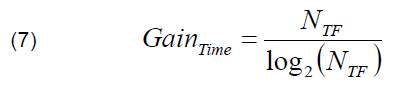
(iv) The loop impedance matrix is assembled in the absence of cable capacitances and capacitor banks to obtain Zold. Skin effect is accounted for by using (7) in computation of the resistance R of the cable at various discrete frequencies [5].

.

R1 – resistance of the cable at the fundamental frequency (v) The cable capacitances are subsequently added to the network using the π – equivalent model of a cable section. Dummy loops are created at each node where the shunt capacitances exist and assigned mesh numbers n+1, n+2,… n+m as indicated in Fig. 2. Extra rows and columns corresponding to the position of each dummy loop is added to the old impedance matrix to form a partitioned matrix as in (8).

.

n – number of network loops, m – number of dummy loops [A] – (n × m) matrix of branch impedances shared by each dummy loop and the actual loops adjacent to them [Q] – diagonal matrix of loop impedances of the respective dummy loops.

For a p-th dummy loop formed by parallel connection of the shunt capacitance Cp across a branch impedance Zp preceeding the actual loop k,

.

where p =1, 2, … , m and p=k

The entries are zero elsewhere in the matrices A and Q. ω – the fundamental frequency in radian/s

(vi) The dummy loops are eliminated from the network individual. For each dummy loop, the matrix old Z is expanded to include an (n+1)th row and (n+1)th column whose entries are obtained from the p-th column of matrix [A] as shown in (12). The p-th dummy loop is subsequently eliminated by a modified kron-reduction process described in (13) – (17) to obtain the updated matrix ZLoop .

.
.

where: b=p-1

(vii) The ZLoop obtained from (12) – (17) is then considered as the current Zold in another cycle of expansion and subsequent kron-reduction to reflect the inclusion of the next dummy loop as described in steps (v) and (vi) above. The iterative process continues until all dummy loops are considered. The dummy loops connected across the voltage sources are avoided in this paper. The margin of error caused by this action is insignificant when dealing with aggregate sources.

The inverse matrix of ZLoop forms the loop admittance matrix whose diagonal elements are selected as self admittances needed for the frequency plot (admittance scan).

(viii) The admittance scan is the plot of self-admittances of all meshes against the harmonic orders. The peak frequencies in the curves constitute the series resonant modes of the network. They indicate the frequencies at which the amplification of mesh currents by resonance is possible. In the case study, the admittance scan was repeated for two different conditions namely: firstly by considering the effect of cable capacitance, and secondly by considering the effect of cable capacitance and skin effect.

(ix) The mesh analysis in harmonic frequency domain are also carried out using equation (18). The mesh current vector are calculated at the power frequency and repeated at each harmonic generated frequency, h (per unit)

.

The root-mean-square value of mesh currents, Total Harmonic Distortion (THD) and the corresponding amplification factor at each mesh, k, are computed using (19), (20) and (21) respectively

.

Current amplification or amplification factor at k-th mesh is

.

Current amplification or amplification factor at k-th mesh is

.

The exact sequence of the described algorithm is represented in Fig. 3. The process was applied to the sample network and implemented with a Matlab Script. The de-rating factors to be applied on the current rating of the network elements in order to withstand the impact of resonance is the same as the amplification factor at the corresponding meshes.

Fig.3. Algorithm for series resonance analysis of a power network

Model Verification

The efficacy of the proposed method was verified using the Matlab Simulink as simulation software. The Simulink model of the equivalent circuit used for the simulation is shown in Fig. 4 with the harmonic generating load represented as a current source in parallel with a resistive load. The harmonic Simulation was carried out for five seconds to capture only the steady state values of the fundamental and harmonic components of the branch current and bus voltages. The simulations were iterated for each harmonic order generated by that load as they appear in Table 2. The amplified current, THD and amplification factors were the computed using (19) and (21).

Fig.4. Simulink model diagram used in the simulation of the sample network.

Results and Discussions

The analysis of the sample network has revealed the desired tuning frequencies of the harmonic filter as well as the most suitable location of the filter in the network. The peaks of the curves in Fig. 5 and Fig.6 indicate the network resonant modes: representing the frequencies at which the mesh currents are subject to amplification. The results of the admittance scan on the sample network indicate the occurrence of resonant peaks at the various meshes M1 – M6. For instance the series resonant peaks for M1 occurred at h =13, 32 and 44 per unit with loop admittances 0.18, 0.54 and 0.19 respectively. The resonant peaks for M2 occurred at h =13 and 60 per unit while that of M3 is at h =13, 80 and 90 per unit. All these cannot amount to anything unless there are harmonic voltages generated at such frequencies. It is the peak frequencies which coincide with the dominant harmonic frequencies generated from the non-linear load that constitute the desired tuning frequencies of the harmonic filter to be deployed in the resonance mitigation. The curves in Fig. 6 portray the damping tendency of the skin effect in cables. These results affirm the position that only the cable capacitance contributes immensely to the shifting of resonant frequencies while the skin effect only reduces the magnitude of loop admittance but widens the frequency curve. Hence, in the evaluation of the resonance peaks, the contribution of skin effect can be neglected.

Comparing these results with the generated frequencies presented in Table 2 indicates that only two harmonics actually require some mitigation – these are h=11, and 13. They serve as the tuning frequencies of the harmonic filter. Hence, the deployment of a harmonic filter tuned to the frequencies 11p.u. (550Hz) and 13 p.u. (650Hz) is enough to mitigate any series resonance. The most appropriate location for this filter is between M1 and M2 which is also affirmed by the THD values in Table 3. The best choice is therefore M2. This decision is also affirmed by the magnitude of harmonic currents in Tables 3. Another alternative in the choice of the tuning frequencies of the harmonic filter is by selecting the frequencies of the harmonic mesh currents that are of significant magnitude. However, the application of the harmonic filter to achieve the attenuation of the dominant resonant frequencies is outside the scope of this study.

The purpose of this study is also to determine the derating factors which could be applied to the current rating of the cables in order to complement the effort of the harmonic filter in withstanding the impact of the residual harmonics. The rms value of the amplified current in the cable sections M1 – M6 were computed for this purpose as shown in Table 3. The rms value of the mesh currents and their respective amplification factors are shown in Table 3.

Fig.5. Admittance scan results considering the cable capacitance

Fig.6. Admittance scan results considering the cable capacitance and skin effect

It is clearly indicated that all the meshes susceptible to series resonance could be sighted judging from the value of the Total Harmonic Distortion in the mesh currents. Although the consideration of skin effect in the calculations could mean a reduction in the resonant currents, but the increased bandwidth of resonance curves implies the greater chance of current amplification occurring within the neighbourhood of the resonant peaks. This necessitates its consideration when evaluating the harmonic mesh currents and the associated parameters. This idea is affirmed by the increased values of mesh currents and total harmonic distortions in Table 3. The amplification factors presented is a guide on locating the sections of the network that require de-rating of equipment.

The results reveal that the transformers supplying the Foundry W/Shop and Electroplating unit and the distribution cables within their vicinity are seriously under threat and therefore require adequate correction in the desired amperage ratings. Computation of branch and mesh currents enables determination of de-rating factor for these cables, transformers and their insulators in order to withstand the effect of resonance. The amplification of cable currents are mostly higher in the vicinity of the harmonic generating source. The information displayed in Table 3 is also sufficient in affirming the efficacy the proposed technique. Comparing the cable currents and their corresponding THD values with the values obtained from Simulink simulation, it was observed that the two set of values are closely matched.

Table 3. Comparison between simulation results and that of the proposed method in respect of the amplification effect of series resonance on mesh currents, while considering cable capacitance and skin effect of power cables.

.
Conclusion

This paper has described the process of conducting admittance scan and mesh current analysis in harmonic domain as appropriate tools for the determination of indices for series resonance solution in distribution networks containing aggregate harmonic sources. It has also verified these tools using a typical case study by comparing the results obtained from the proposed method with those of the simulation in Simulink environment. The unique achievement in this study is the determination of series resonant frequencies of the network by a modified loop admittance scan, where dummy loops are created to treat independently the connection of shunt capacitors of power cables. The modified admittance scan captures all the dominant frequencies involved in series resonance with greater accuracy. This study will enable professional engineers involved in the design of the harmonic filter to determine the required tuning frequencies by selecting the resonant frequencies that coincide with any of the harmonic frequencies generated by the non-linear load, or the frequencies of the harmonic mesh currents that are of significant magnitude.

Notably, the study was restricted to radial networks. Another limitation is that the power supply network was reduced to its Thevenin equivalent with the internal impedance approximated at all harmonic frequencies. For small consumer networks the analysis can adequately produce the desired results to acceptable degree of accuracy. For large consumer premises the error margin may increase. Furthermore, the neglect of dummy loops created across voltage sources in mesh analysis is inconsequential in the case of aggregate sources under consideration. Further research shall explore ways of including such dummy loops when dealing with distributed harmonic sources.

REFERENCES

[1] K. Md Hasan, K. Rauma, A. Luna, J. Candela, and P. Rodriguez, “Harmonic Resonance Study for Wind Power Plant”, International Conference on Renewable Energies and Power Quality, ICREPQ (2012), Santiago de Compostela, Spain, 8th to 30th March 2012.
[2] K. Nisak, I. Candela, K. Rauma, J. R. Hermoso and A. Luna, “An Overview of Harmonic Analysis and Resonances of a Large Wind Power Plant”, Annual Conference of the IEEE IndustrialNHK Electronics Society,IECON (2011), 7–10 November 2011.
[3] C. Yang, K. Liu and D. Wang, “Harmonic resonance circuit’s modeling and simulation”, Power and Energy Engineering Conference, APPEEC 2009, ISBN: 978-1-4244-2486-3, Wuhan, China, 27–31 March (2009), pp. 1–5.
[4] Z. Huang, Y. Cui and W. Xu, “Application of Modal Sensitivity for Power System Harmonic Resonance Analysis”, IEEE Trans. on Power Systems, Vol: 22, No.1, Feb. (2007), pp. 222 – 231.
[5] C. Yang, K. Liu and Q. Zhang, “An Improved Modal Analysis Method for Harmonic Resonance Analysis”, IEEE International Conference on Industrial Technology,ICIT (2008), ISBN: 978-1- 4244-1705-6, Chengdu, China, pp.1–5.
[6] H. ZHOU, Y. WU, S. LOU and X. XIONG, “Power System Series Harmonic Resonance Assessment based on Improved Modal Analysis”, Journal Of Electrical & Electronics Engineering, Istanbul University, vol.7, No2, (2007), pp. 423 – 430.
[7] F. O. Kalunta and F. N. Okafor, “Power System Series Resonance Studies by Modified Admittance Scan”, Proceedings of the Joint IEEE International Symposium on Electromagnetic Compatibility and EMC Europe, Dresden Germany, August 16 – 22, 2015.
[8] F. O. Kalunta and F. N. Okafor, “ Harmonic Analysis of Power Networks Supplying Nonlinear Loads”, International Conference on Innovations in Engineering and Technology, IET (2011), Faculty of Engineering, University of Lagos, Nigeria, 8th – 10th August 2011, pp. 568 – 577.


Authors: Dr. Felix Okwudiri Kalunta, Project Development and Design Department, Federal Institute of Industrial Research, Oshodi, Lagos, Nigeria, E-mail:felka3@yahoo.co.uk; Dr. Tolulope Akinbulire, Electrical/Electronic Engineering Department, University of Lagos, Nigeria. Prof. Frank Nwoye Okafor;Electrical/Electronic Engineering Department, University of Lagos, Nigeria; E-mail:cfrankok@yahoo.com


Source & Publisher Item Identifier: PRZEGLĄD ELEKTROTECHNICZNY, ISSN 0033-2097, R. 98 NR 5/2022. doi:10.15199/48.2022.05.17

Bridges to Nowhere: Poor Power Quality Prevents Growth

Published by Civian Kiki Massa and Jay Taneja STIMA Lab, University of Massachusetts, Amherst, USA July 2023


Summary: Access to electricity continues to expand worldwide, but even where people are connected to the power grid, they often face challenges including frequent power outages and, less visibly, intermittent periods where electricity is available but only with poor power quality.

Poor power quality — characterized by fluctuations and/or persistently low or high voltages — has far-reaching consequences and should receive much more attention. Like lack of access, poor power quality holds back economic growth. But it is much harder to track and its prevalence is unknown because systems to measure it are not in place. We installed sensors across Nigeria to assess power quality and its impacts on people and economic activity.

Why power quality matters:

Current investment is short-sighted: The primary metric of global energy poverty targets like Sustainable Development Goal 7 (SDG7) is the electricity access rate. This has led to increased investment and research focused on expanding the number of on-grid and off-grid connections (see the U.S. Power Africa program as an example). However, billions of electricity customers, many of them newly connected, face challenges in effectively using their connections due to frequent and unpredictable power outages and intermittent and sustained periods of unsafe or unusable electricity, ultimately stifling consumption and economic growth.
The extent of the problem is underestimated: While power outages are well understood to be a significant problem for electricity users in developing regions, poor power quality may be even more widespread. The scale and depth of poor power quality are often underestimated by utilities, policymakers, researchers, and key stakeholders in the electricity sector, which hinders effective measures to address it.

Unseen quality issues can seriously undermine development efforts: Poor power quality results in a range of problems from demand suppression and appliance damage to decreased productivity and safety hazards or health risks. These issues are widespread in developing economies such as those across sub-Saharan Africa, where the aging grid infrastructure is capacity constrained. These power quality issues impact multiple industries, stifling economic and social development.

There is no coherent effort to address this issue: Utilities and policymakers do not have the appropriate tools or policies to identify and improve power quality issues. An essential first step is to ensure consistent and universal power quality measurements to assess the scale and extent of the problem. Even with better sensing, the extent towhich poor power quality suppresses demand (for example, if it discourages people from investing in electric appliances and consuming electricity) remains unseen, and may be even more challenging to effectively measure, calling for surveys and historical case studies. Persistently poor quality prevents widespread use of electricity for productive purposes and serves as a drag on economic growth and equitable development.

Case study:

Nigeria Nigeria is the largest economy in Africa and on track to becoming the third most populated country in the world by 2047. Yet, as in many other developing economies, inadequate power supply is a significant barrier to economic progress. e-GUIDE carried out an energy audit in 74 commercial markets across the six regions of Nigeria where we installed nline’s PowerWatch sensors to monitor power quality and grid reliability. We found:

Power quality and reliability: Across the 74 markets, only 1 out of every 4 voltage readings were in an “acceptable” range (within 10% of the standard grid voltage). While outages were present in 1 out of every 3 samples, extremely low voltages were more prevalent (roughly 2 out of 5 samples — see Figure 1).

Impact of poor quality on appliances: Appliances in these markets operate on extremely low voltages most of the time. This leads to damage, reduced lifespans, and unreliable performance – and forces businesses to either deal with the subpar operation or buy replacements, reducing profits in either case.

Demand suppression: Businesses are not operating to their full potential due to suppressed demand. For example, a saloon owner had to return a second A/C unit because the voltage worsened when multiple appliances were in use. Another business owner highlighted that customers on a shared line often can’t run appliances like heaters, refrigerators, or fans without knocking out the power. These restrictions hamper growth and are difficult to account for in grid planning processes.

Effect on Behavior: As a result of poor quality and unreliable power supply, businesses resort to incurring extra costs by relying on other sources of energy. For example, 23% of grid-connected businesses also had personal/shared generators, which not only add additional costs but also present enormous environmental concerns. 1 In addition, businesses are compelled to invest in protective systems like surge guards and voltage stabilizers.

Figure 1: Percent of measured voltage by hour of day

Bottom Line: Power Quality Challenges Have Broad Effects on Developing Regions

These findings from Nigeria are consistent with measurements taken in informal settlements of Uganda, rural communities in Kenya, and cities across India, among others. As the world strives to meet SDG7 and achieve universal access to affordable, reliable, sustainable, and modern energy, it is crucial that we take a longer-term view and think beyond electricity access. Utilities need investments to ensure more widespread and frequent measurements, policymakers and regulators need to ask questions about electricity customer experience, and governments, donors, and investors need to recognize that poor power quality is a priority issue that endangers the societal impact and financial value of their investments in electricity infrastructure. In short: poor power quality is a crucial impediment to sustainable economic development — and we need to pay it more attention.

Endnotes

1. “Sustainability implications of electricity outages in sub-Saharan Africa.” Farquharson, D., Jaramillo, P., and Samaras, C. Nature Sustainability. 2018. https://www.nature.com/articles/s41893-018-0151-8
2. Fobi et al. (2018) A longitudinal study of electricity consumption growth in Kenya, Energy Policy: https://www.sciencedirect.com/science/article/abs/pii/S0301421518305949
3. nLine reports and publications on power quality and reliability measurements https://nline.io/publications.html
4. e-GUIDE is leading energy audit and power quality monitoring in Nigeria with support from REA and the Energizing Economies Initiative (EEI)
5. Power quality in Nigeria: https://www.sinalda.com/world-voltages/africa/voltage-nigeria/
6. An academic consortium led by the University of California, Berkeley, includes Arizona State University, University of Massachusetts Amherst, University College London, and Makerere University, with NGO partners ACTogether Uganda
7. World population review: Nigeria population 2023
8. The fraction of time spent in outage vs voltage states are preliminary results. The brief, rotating deployments used in this project pose particular data analysis challenges due to sampling rate jitter and reporting gaps which can slightly impact the calculated proportion of time in each state but are unlikely to alter the overall scale and trends of power quality issues shared here. In follow-up work, we will nevertheless develop techniques to mitigate these impacts to further refine our results.


Source URL: https://energyforgrowth.org/wp-content/uploads/2023/07/Bridges-to-Nowhere_Poor-Power-Quality-Prevents-Growth.pdf

High Efficiency Flywheel Motor Generator Model with Frequency Converter Controlled

Published by 1. M.S. ALI 1,2, 2. Mahidur R SARKER 3, 3. Ahmad ASRUL IBRAHIM 1, 4. Ramizi MOHAMED1, 1Faculty of Engineering and Built Environment, Universiti Kebangsaan Malaysia, Bangi 43600, Malaysia; 2Electrical Engineering Department, German-Malaysian Institute , Jalan Ilmiah, Taman Universiti,43000, Kajang, Selangor, Malaysia; 3Institute of IR 4.0, Universiti Kebangsaan Malaysia, 43600 UKM Bangi, Selangor, Malaysia. ORCID. 1. 0000-0001-7142-7755, 2. 0000-0002-5363-6219, 3. 0000-0003-4997-3578, 4. 0000-0003-1534-6760


Abstract. Flywheel motor generator (FMG) system or normally called a flywheel energy storage system (FESS) becomes the main consideration in power stability of micro-grid, transportation, portable power supply, and renewable energy power station such a solar or wind. Its contribution in stabilizing power production and reducing power consumption is undeniable. High power consumption in the small-scale industry especially sprays dryer factory become a major issue due to high-cost production. Load such a heating element needs more power consumption to operate and achieve the desired temperature. High-efficiency FMG can be an alternative power backup to reduce power consumption by serving a separate supply to the load (heater). This paper is focused on modeling and simulation of the FMG system. The simulation result shows that the system proposed can provide very high efficiency with stable output power and also can reduce the cost of production due to power consumption reduction.

Streszczenie. System silnika generatora z kołem zamachowym (FMG) lub zwykle nazywany systemem magazynowania energii koła zamachowego (FESS) staje się głównym czynnikiem stabilności energetycznej mikrosieci, transportu, przenośnego źródła zasilania i elektrowni energii odnawialnej, takiej jak energia słoneczna lub wiatrowa. Jego wkład w stabilizację produkcji energii i zmniejszenie zużycia energii jest niezaprzeczalny. Wysokie zużycie energii w przemyśle na małą skalę, zwłaszcza w fabryce suszarek rozpyłowych, staje się poważnym problemem ze względu na wysokie koszty produkcji. Obciążenie takiego elementu grzejnego wymaga większego zużycia energii do działania i osiągnięcia pożądanej temperatury. Wysokowydajny FMG może być alternatywnym zasilaniem awaryjnym w celu zmniejszenia zużycia energii poprzez dostarczanie oddzielnego zasilania do obciążenia (grzałki). Artykuł koncentruje się na modelowaniu i symulacji systemu FMG. Wyniki symulacji pokazują, że proponowany system może zapewnić bardzo wysoką sprawność przy stabilnej mocy wyjściowej, a także może obniżyć koszty produkcji dzięki zmniejszeniu zużycia energii. (Wysokowydajny model generatora silnika z kołem zamachowym ze sterowaniem przemiennikiem częstotliwości)

Keywords: Simulation, modelling, flywheel, motor generator, power consumption, voltage stability, frequency stability.
Słowa kluczowe: silnik z kołem zamachowym,.zasobnik energii

Introduction

The increase in the use of electric power has led to high monthly electricity bill rates which is a major issue for domestic and small-scale industry [1][2]. Typically, this occurs when a heater or air conditioning load is used for a long period of time. Especially in the food industry that converted liquid to powder which uses high temperature [3][4]. The high cost of electricity causes the profit to be very low. Extremely hot weather conditions in public buildings such as mosques or others invite high electricity consumption. This is due to the use of air conditioners in proportion to the attendance of many guests. This has caused public houses to have difficulty paying their monthly electricity bills. Therefore, this problem needs to be resolved immediately to reduce the rate of electricity consumption at the rate that consumers can afford.

This study aims to produce an electricity generation system that can reduce electricity bills. This means that with the use of a separate electricity generating system, the electricity consumption can be reduced [5]. Basically, the motor will drive the generator, and the generator will generate electricity. The addition of flywheels to the generating system will cause the mechanical energy generated from the motor and generator rounds to be stored and converted to electrical power [6][7]. The inertia effect of the motor flywheel and generator will be delayed even when the power supply to the motor is disconnected. Here, electricity can be saved apart from the use of low-speed generators that generate electricity with a low- speed motor.

In [8], the author obtained that more electrical output can be produced by using a flywheel. This system of FMG can give extra electrical power without the use of any extra equipment and offer environmentally friendly and nonhazardous. The system FMG can be used in various applications especially household, industrial and it increases the efficiency of traditional electrical systems [9]. In [10], the author studied flywheel energy storage system powered by wind turbine and diesel generator in isolated micro-grid to improve the power quality of the system. The topology of the hybrid system consists of a simulated winddiesel power system and flywheel energy storage system [11][12]. In this study, an asynchronous machine is used to drive the flywheel in order to attain robustness and offered low cost. The bidirectional power converter is used to control the speed of the electrical machine when acting as a motor, then controlled the output voltage when in generator mode. The bidirectional power converter is also known as back to back converter [13]. DC link in the circuit is purposely to stabilize the voltage. This bidirectional power converter is controlled by pulse width modulation (PWM) in the voltage source inverter (VSI) [14][15]. The flywheel coupling is direct to the electrical machine store mechanical energy when an electrical machine in motor mode, then convert to electrical energy when electrical energy in generator mode [16]. As result, by actuation of the flywheel in the system make improvement in power quality.

In [17], the author stated that the flywheel system stores energy at 5kWh within a speed range of 10,000-20,000 rpm and an accelerating torque of 6.7Nm. The passive magnetic bearing has been used to reduce the run-down losses of the system. By enclosing the flywheel in a vacuum chamber can be mitigated the rotor drag losses. This study analysed that the fluctuation of the DC-bus voltage due to load instabilities is limited to 3% and recovered within 40-45 ms. In [18], the author addressed that an asymmetrical six-phase induction motor that has been used to drive a flywheel can improve system reliability while supporting critical loads. Under the disconnection phase, the machine can function properly proved by simulation and experiment results. The rating of the switching device has been reduced compared to applying a normal three-phase motor. This system is suitable for medium voltage applications.

In [19], the author studied losses in flywheel energy storage systems. The system consists of the flywheel, an electrical machine, and a bidirectional converter/controller. The losses in this system were recognised as mechanical losses (drag, bearing friction), electrical losses (hysteresis, eddy current, copper) and power converter losses (switching, conduction) which is the magnitude of each loss depends on the operating conditions such as motor speed, dc bus voltage, switching frequency and load current. This study proved that the bearing friction loss in the flywheel and hysteresis loss in the machine is proportional to speed. Meanwhile, the drag loss in the flywheel and eddy current loss in the machine are proportional to the square of the speed. All these losses can be reduced by improving the efficiency of the system by the usage of a two-pole machine apply vacuum enclosure for rotating part and usage of ZVT/ZCT technique to reduce switching losses in power converter.

In [20], the author designed the flywheel energy storage system for space application. There are two regions in the orbital path of the satellite which are the dark and bright regions. The bright region can use a solar panel to provide energy but the dark region needs a flywheel energy storage system to maintain the power. In this study, brushless DC (BLDC) was used to drive flywheel due to high efficiency, high reliability, low weight, high power density, and high speed. However, there is a dramatic increased of current due to mechanical resonance will cause damage to the power system. Therefore, PI control was used to control the speed of BLDC with an effective current reference method to prevent the current spike occurred during mechanical resonance which BLDC runs at 20krpm in the vacuum condition. This experiment proved that the PI control can protect the power system from damage due to a short time current spike.

In [21], the author indicated that the combination of high temperature superconducting magnetic suspension with the integrated design of flywheel energy storage system can provide high efficiency and no additional losses. High temperature superconducting magnetic suspension is consists of a YBaCuO cylinder with axial anisotropy (external diameter – 31 mm, internal diameter – 25 mm, height 30 mm) as stator and disk-shaped nonmagnetic hull with three fixed rings FeNdB permanent magnet with axial magnetization as a rotor. This proposed design can be used on wind power stations, in the power supply systems for industry and transportation. Integration development of this system provides a stable levitation of the flywheel, allows to non-contact regulate the force of magnetic thrust bearing in a vacuum chamber, to perform an initial centering of the flywheel, and to put into operation a safety bearing in case of accidents. The main objective of this design is to create no additional losses due to magnetic hysteresis, no reactive moments, small winding inductance, and high specific power indicators due to the large value of the magnetic induction in the gap. The result of this experiment shows that there are no additional energy losses in storage mode and an electromagnetic time constant is low.

System configuration and mathematical model

The general system configuration of the FMG System studied in this paper is as shown in Fig. 1. The flywheel is coupling directly with an asynchronous motor and synchronous generator. This coupling makes the flywheel, motor, and generator run synchronously at the same speed. A frequency inverter controls the speed of the flywheel, motor, and generator. A frequency inverter is to maintain the speed of the flywheel, motor and generator at the optimum value needed to maintain the generator voltage. Data acquisition used to get data from the generator and motor. An asynchronous motor is a Squirrel Cage motor type which is three phases induction motor that can provide high speed and torque. The synchronous generator is a high-efficiency generator that can give constant voltage with different torque. Here, the flywheel integrated with the motor and generator to support the electrical energy conversion. The flywheel still continues to rotate even the motor already swift off.

Fig.1. System configuration for flywheel motor generator with speed controlled.

A simplified topology of the FMG connected to an electrical supply shown in Fig. 2. This studied topology is lab scale specification. The three phases supply 450V/50Hz is a power supply connected to breaker and transformer 240V/50Hz. The transformer secondary is in star connection. The frequency inverter connected to the life and neutral of a transformer. The frequency inverter 0.3kW used to control the speed of squirrel cage motor o.5hp/400V/50Hz with the nominal speed at 2800rpm. The flywheel parameter is setting together with the motor parameter which is 60cm for radius and 2kg/8kg for mass at 0.178kgm2/0.356kgm2. The frequency inverter can provide ramp mode and control the speed of a motor by changing frequency. This frequency inverter circuit consists of a full-wave rectifier and three phases full-bridge inverter. So, the incoming the frequency inverter is a single phase and the output is three-phase.

Fig.2. Simulink model asynchronous motor, synchronous generator and flywheel synchronization controlled by Frequency Inverter.

Table 1 shows the simulation parameter of an asynchronous induction three-phase motor and synchronous generator. An asynchronous motor used for this study can operate at 0.373kW and nominal speed at 2800rpm. An asynchronous motor selected for this experiment because cheaper compare with a permanent magnet motor which is very expensive. Therefore, the frequency inverter used to serve this motor must be higher than 300W. Whereby the synchronous generator used can generate a high voltage at low rpm with nominal power at 299kW and 0.8 power factor. Two different weights of flywheel user in this study are 2kg and 8kg with the same diameter. The inertia of the flywheel calculated by using the formula:

.

where I is Inertia, ½ is constant for solid cylinder flywheel, m is the mass of flywheel, r is the radius of flywheel.

Table 1. Parameter of asynchronous motor, synchronous generator and flywheel

.

The testing circuit diagram as shown in Fig 3 is used to analysis the system. From this testing circuit, the effect of the flywheel with different sizes and weights can be analyzed [22]. From this testing circuit also, the synchronization of the motor and generator can be measure. All the data measurements of the motor and generator such as stator current, torque, speed, input, and output voltage are being measured as shown in this figure. All measurements consist of a multi-meter to display the root mean square (RMS) value and the scope to plot the graph. The voltage supply also can be set according to the motor specification by changing the parameter of the supply relay three-phase.

Fig.3. Testing circuit diagram.

The detailed Simulink model for a synchronous generator as shown in Fig 4 used to generate voltage. This model is referring to mathematical model formula:

.

where R is a diagonal matrix ( nState, nState) of winding resistances in d q axis, L is the matrix ( nState, nState) of winding self, and mutual inductances in d q axis.

W is matrix (nState, nState) depending on rotor speed wr, all zero except W (1, 2) = wr,W (2, 1) = –wr
v is voltage vector = [ vq vd vfd vkd vkq (vkq2) ],
phi is flux linkage vector = [ phiq phid phifd phikd phikq1 (phikq2) ], (state variable)
i is current vector = [ iq id ifd ikd ikq1 (ikq2) ],
if RotorType = Salient-Pole, nState = 5
if RotorType = Round, nState = 6

Fig.4. Detail Simulink model for synchronous generator.

Fig.5. Detail Simulink model for asynchronous motor (Squirrel Cage).

The detailed Simulink model for Asynchronous Motor as shown in Fig 5 used to drive the generator and flywheel. This model is referring to the mathematical model formula:

.

where: R is diagonal matrix ( nState, nState) of winding resistances in d q axis

L is matrix ( nState, nState ) of winding self and mutual inductances in d q axis
W is matrix (nState, nState) depending on rotor speed wr, all zero except W (1, 2) = wr,W (2, 1) = -wr
v is voltage vector = [ vq vd vfd vkd vkq1 (vkq2) ],
phi is flux linkage vector = [ phiq phid phifd phikd phikq1 (phikq2) ], (state variable)
i is current vector = [ iq id ifd ikd ikq1 (ikq2) ],
if RotorType = Salient-Pole, nState = 5
if RotorType = Round, nState = 6

Results and discussion

The graphs in Fig 6(a) and Fig 6(b) are showing the relationship between the weights of the flywheel with time. The green and red lines in the graph show that an asynchronous motor and synchronous generator run at synchronous speed. This is because motor, generator, and flywheel are coupling directly without any pulley or belting. The frequency converter controlled the speed of motor.

Fig 6(a) shows the graph with 60cm diameter and 2kg flywheel. After 3 seconds, the speed of the motor and generator is at a stable state. After 8 seconds, the power supply of the motor cut off to OFF mode. At OFF mode, the generator was running with support by the flywheel. With 60cm diameter and 2kg flywheel at 0.178kgm2 inertia will take about 8 seconds to stop the generator. By increasing the weight of the flywheel, the times took for the generator to stop running also increase. With 60cm diameter and 8kg flywheel at inertia 0.356 kgm2, the speed of the motor will stable at 5s and take about 15 seconds to stop the generator after cutting off the power supply.

Fig.6(a). Graph speed vs time with 2kg flywheel.

Fig 6(b) shows the graph for flywheel with 60cm diameter and 8kg. The diameter of the flywheel also affects the time of generator stop delay. Since the diameter of the flywheel affects the torque. Increasing in radius will increase the torque. Low mass, higher diameter flywheel is preferred to higher mass low diameter flywheel. This gives better efficiency of the system for given energy storage.

Fig.6(b). Graph speed vs time with 8kg flywheel.

The waveform of output voltage generated by a synchronous generator in Fig 7 shows that the generator still running after the motor OFF mode at time 2s. If the motor and generator were coupling with a 2kg flywheel, the voltage of the generator will decrease slowly in 5 seconds. Initially, the generator takes about 1 second to become stable. When the motor OFF mode at time 2s, the flywheel will make the generator continuously run from time 2s to 7s.

Fig. 7. Output voltage waveform of synchronous generator with 2kg flywheel.

The waveform in Fig 8(a) and Fig 8(b) shows the pattern of generator voltage waveform when the motor is under ON/OFF controlled. The voltage of the generator is in ranges from 1000V to 230V. This range of voltage can fulfill the required voltage of the load. With ON/OFF control in Fig 8(a) with inertia 0.178kgm2, we can see that the output voltage of this synchronous generator still under the voltage range at 240V after two seconds of motor OFF mode. ON/OFF control was applied to the system by active the breaker every two seconds. During OFF mode, the generator was driven by the flywheel. The duration of the generator voltage can sustain was depend on the inertia of the flywheel. Meanwhile, with inertia 0.356 kgm2 can prolong the duration of the generator to stop and the voltage generator at 240V after three seconds motor OFF mode. Fig 8(b) shows the waveform of generator voltage with the inertia of the flywheel at 0.356 kgm2.

Fig.8(a). Waveform output generator with ON/OFF control for inertia 0.178kgm2.

Fig.8(b). Waveform output generator with ON/OFF control for inertia 0.356 kgm.

Table 2 shows that the efficiency of the system is very high above 100%. This is because the output power of the system is greater than the input power. Vin is the line voltage of the three-phase supply regulated from 100V to 400V. From this simulation, the highest efficiency of the system is at line voltage 200V achieved at 261% of power efficiency. When increasing the input voltage, the efficiency of the system decreasing from 261% to 108%. This is because the nominal voltage of the generator and motor is the only 400V. If the line voltage is 300V, then the supply voltage of the motor is bigger than 400V. The system becomes unstable when the supply voltage greater than the nominal voltage. The efficiency of the system calculated by using formula:

.

Table 2. Efficiency of the system

.

Fig 9 shows that the current of the output generator was stable after half seconds of operation. The output current is about 20A. There is no current spike that occurs at any time of system operation. This is because the asynchronous motor derived the synchronous generator without any jerk or unstable speed. Not like permanent magnet motor, always has jerked during operation will cause a current spike.

Fig.9. Waveform output current of generator.

Fig 10 shows that the frequency output voltage of the generator is at a stable state after three seconds of system operation. The frequency is maintained at almost 50Hz. This graph proves that the synchronous generator can provide constant frequency at any load of the system.

Fig.10. Graph frequency output voltage of generator vs time.

Conclusions

The effects of a flywheel on the motor-generator system were investigated. The flywheel in this system makes a reduction in power consumption with an act as energy storage to convert mechanical energy to electrical energy after the power supply off. With ON/OFF control by the frequency inverter, the power consumption will reduce. The load such a heater still can function to maintain the temperature. Besides that, a synchronous generator also provides high efficiency to the system. With 1600rpm, the efficiency of the system achieves 200% with supply voltage 200V. This is possible because this modelling used a low-speed high voltage synchronous generator then give more output power compare with input power. This calculation of power can be referred to the formula 6. Therefore, from this investigation can conclude that the flywheel motor generator system proposed in this study offer higher efficiency which can solve the problem in power consumption issue. In the future, this study will continue with additional element to improve the system with a hybrid flywheel.

Acknowledgment: Universiti Kebangsaan Malaysia for funding the research under Grant Code GGPM-2019-031.

REFERENCES

1. Islam, S.; Ponnambalam, S.G.; Lam, H.L. Energy management strategy for industries integrating small scale waste-to-energy and energy storage system under variable electricity pricing. J. Clean. Prod. 127(2016), 352–362.
2. Sarker, M.R., Mohamed, A., Mohamed, R. Performance evaluation modeling a Microelectromechanical system based Finite Element piezoelectric shear actuated beam. Prz. Elektrotechniczny 2015, 91.
3. Nadaleti, W.C. Utilization of residues from rice parboiling industries in southern Brazil for biogas and hydrogen-syngas generation: Heat, electricity and energy planning. Renew. Energy. 131(2019), 55–72.
4. Sarker, M.R., Mohamed, R. A Batteryless low input voltage micro-scale thermoelectric based energy harvesting interface circuit with 100mV start-up voltage. Prz. Elektrotechniczny 2014, 90.
5. Gilbert, B., Graff Zivin, J. Dynamic salience with intermittent billing: Evidence from smart electricity meters. J. Econ. Behav. Organ. 107(2014), 176–190.
6. Wu, Y.; Bingham, C.M.; Peel, D.J.; Howe, D. Active magnetic bearings for a flywheel peak power buffer for electric vehicles. Int. J. Appl. Electromagn. Mech. 2001, 15, 201–206.
7. Mohamed, R., Sarker, M.R., Mohamed, A. An optimization of rectangular shape piezoelectric energy harvesting cantilever beam for micro devices. Int. J. Appl. Electromagn. Mech. 50(2016), 537–548.
8. Sebastián, R., Peña-Alzola, R. Control and simulation of a flywheel energy storage for a wind diesel power system. Int. J. Electr. Power Energy Syst. 64(2015), 1049–1056.
9. Brühl, J., Smith, G., Visser, M. Simple is good: Redesigning utility bills to reduce complexity and increase understanding. Util. Policy. 60(2019), 100934.
10. Thakre, S.B., Zode, S.H., Singh, A.S., Ingole, S.R. Self Generator Free Energy Flywheel. Int. Res. J. Eng. Technol. 2018, 1062–1065.
11. Zhang, C., Tseng, K.J., Nguyen, T.D., Zhao, G. Stiffness analysis and levitation force control of active magnetic bearing for a partially-self-bearing flywheel system. Int. J. Appl. Electromagn. Mech. 36(2011), 229–242.
12. Hedlund, M., Abrahamsson, J., Pérez-Loya, J.J., Lundin, J., Bernhoff, H. Eddy currents in a passive magnetic axial thrust bearing for a flywheel energy storage system. Int. J. Appl. Electromagn. Mech. 54(2017), 389–404.
13. Nagaya, K., Kanno, K., Hayashi, N. Control of flywheel system with high-Tc superconducting bearings. Int. J. Appl. Electromagn. Mech. 10(1999), 237–247.
14. Jin, Z., Sun, X., Yang, Z., Wang, S., Chen, L., Li, K. A novel four degree-of-freedoms bearingless permanent magnet machine using modified cross feedback control scheme for flywheel energy storage systems. Int. J. Appl. Electromagn. Mech. 60(2019), 379–392.
15. Sarker, M.R., Mohamed, A., Mohamed, R. Implementation of non-controlled rectifier circuit based on vibration utilizing piezoelectric bending generator. Int. J. Appl. Electromagn. Mech. 2017, 54.
16. Soomro, A., Amiryar, M.E., Pullen, K.R., Nankoo, D. Comparison of Performance and Controlling Schemes of Synchronous and Induction Machines Used in Flywheel Energy Storage Systems. Energy Procedia. 151(2018), 100–110.
17. Amiryar, M., Pullen, K., Nankoo, D. Development of a HighFidelity Model for an Electrically Driven Energy Storage Flywheel Suitable for Small Scale Residential Applications. Appl. Sci. 8(2018), 453.
18. Daoud, M.I., Abdel-Khalik, A.S., Massoud, A., Ahmed, S. An asymmetrical six phase induction machine for flywheel energy storage drive systems. In Proceedings of the Proceedings – 2014 International Conference on Electrical Machines, ICEM 2014; Institute of Electrical and Electronics Engineers Inc., 2014; 692–698.
19. Gurumurthy, S.R., Sharma, A., Sarkar, S., Agarwal, V. Apportioning and mitigation of losses in a Flywheel Energy Storage system. In Proceedings of the 2013 4th IEEE International Symposium on Power Electronics for Distributed Generation Systems, PEDG 2013 – Conference Proceedings; IEEE Computer Society, 2013.
20. Çelikel, R., Özdemir, M., Aydoǧmuş, Ö. Implementation of a flywheel energy storage system for space applications. Turkish J. Electr. Eng. Comput. Sci. 25(2017), 1197–1210.
21. Dergachev, P.; Kosterin, A.; Kurbatova, E.; Kurbatov, P. Flywheel energy storage system with magnetic hts suspension and embedded in the flywheel motor-generator. In Proceedings of the Proceedings – 2016 IEEE International Power Electronics and Motion Control Conference, PEMC 2016; Institute of Electrical and Electronics Engineers Inc., 2016; 574–579.
22. Caruso, J.F.; Coday, M.A.; Davidson, M.E.; Riner, R.D.; Borgsmiller, J.A.; Olson, N.M.; Taylor, S.T.; McLagan, J.R. The effect of flywheel-based resistive exercise workouts on testosterone/cortisol ratios. Isokinet. Exerc. Sci. 20(2012), 51–60.


Authors: M.S. ALI is a PhD student at the Department of Electrical, Electronic and Systems Engineering, Universiti Kebangsaan Malaysia (UKM), E-mail: mohdshamsul@gmi.edu.my
Dr. Mahidur R. Sarker is currently working as Research Fellow to the Institute of IR 4.0, Universiti Kebangsaan Malaysia (UKM). Email:mahidursarker@ukm.edu.my.
Dr. Ahmad Asrul Ibrahim is currently working as Senior Lecturer of Department of Electrical, Electronic and Systems Engineering, Universiti Kebangsaan Malaysia (UKM), E-mail: ahmadasrul@ukm.edu.my.
Dr. Ramizi Mohamed is an associate professor of Department of Electrical, Electronic and Systems Engineering, Universiti Kebangsaan Malaysia (UKM), E-mail: ramizi@ukm.my.


Source & Publisher Item Identifier: PRZEGLĄD ELEKTROTECHNICZNY, ISSN 0033-2097, R. 97 NR 11/2021. doi:10.15199/48.2021.11.34

An Analysis of Remote Voltage Measurement in the Medium Voltage Cable Networks

Published by 1. Jacek KOZYRA1, 2. Zbigniew ŁUKASIK1, 3. Aldona KUŚMIŃSKA-FIJAŁKOWSKA1, 4. Paweł KASZUBA2, Kazimierz Pulaski University of Technology and Humanities in Radom, (1), Volta Instalacje (2) ORCID: 1. 0000-0002-6660-6713, 2. 0000-0002-7403-8760, 3. 0000-0002-9466-1031, 4. 0000-0003-1120-5901


Abstract. Due to changes occurring both in industrial area and in private consumers, availability of modern electric and electronic devices more sensitive to the level of supply voltage, supplying electric energy of appropriate parameters to the consumers has become a significant issue. These changes cause the necessity of modernization of energy networks, changing their functions from supplying energy to the end consumer into energy flow from the consumer towards energy network, which is connected with growing number of the sources of energy installed also in the consumers. The development of measuring technology, transferring data to long distances, complex IT systems allow to control connectors inside the network, as well as monitor and archive measuring data not only in the power supply points, but also inside the network. The main goal of this article was to present a problem of remote voltage measurement in the medium voltage distribution networks in terms of assessment of infrastructural changes resulting from the necessity to obtain data about load state and changing configuration of the lines. Based on actual measuring data of medium voltage cable line, monitoring of operation of a network was presented.

Streszczenie. Wobec zachodzących zmian zarówno w obszarze przemysłowym jak i prywatnym odbiorców, dostępności nowoczesnych urządzeń elektrycznych i elektronicznych bardziej wrażliwych na poziom napięcia zasilającego, istotną kwestią stało się dostarczenie energii elektrycznej do odbiorcy o właściwych parametrach. Zmiany te powodują konieczność modernizacji sieci energetycznych, zmiany ich funkcji, jakie pełniły do tej pory czyli dostarczenia energii do odbiorcy końcowego, na przepływ energii również od odbiorcy w kierunku sieci energetycznej co związane jest coraz szerszym instalowaniem źródeł energii również u odbiorców. Współczesny rozwój techniki pomiarowej, przesyłania danych na duże odległości, rozbudowane systemy informatyczne pozwalają sterować łącznikami w głębi sieci, a także monitorować i archiwizować dane pomiarowo nie tylko w punktach zasilania ale także w głębi sieci. Głównym celem niniejszej publikacji jest przedstawienie problemu zdalnego pomiaru napięcia w sieciach dystrybucyjnych SN pod kontem oceny zmian infrastrukturalnych wynikających z konieczności uzyskania danych o stanie obciążenia i zmieniającej się konfiguracji linii. Na podstawie rzeczywistych danych pomiarowych linii kablowej SN przedstawiono monitorowanie pracy sieci. (Analiza zdalnego pomiaru napięcia w sieciach kablowych SN).Abstract. Due to changes occurring both in industrial area and in private consumers, availability of modern electric and electronic devices more sensitive to the level of supply voltage, supplying electric energy of appropriate parameters to the consumers has become a significant issue. These changes cause the necessity of modernization of energy networks, changing their functions from supplying energy to the end consumer into energy flow from the consumer towards energy network, which is connected with growing number of the sources of energy installed also in the consumers. The development of measuring technology, transferring data to long distances, complex IT systems allow to control connectors inside the network, as well as monitor and archive measuring data not only in the power supply points, but also inside the network. The main goal of this article was to present a problem of remote voltage measurement in the medium voltage distribution networks in terms of assessment of infrastructural changes resulting from the necessity to obtain data about load state and changing configuration of the lines. Based on actual measuring data of medium voltage cable line, monitoring of operation of a network was presented. Streszczenie. Wobec zachodzących zmian zarówno w obszarze przemysłowym jak i prywatnym odbiorców, dostępności nowoczesnych urządzeń elektrycznych i elektronicznych bardziej wrażliwych na poziom napięcia zasilającego, istotną kwestią stało się dostarczenie energii elektrycznej do odbiorcy o właściwych parametrach. Zmiany te powodują konieczność modernizacji sieci energetycznych, zmiany ich funkcji, jakie pełniły do tej pory czyli dostarczenia energii do odbiorcy końcowego, na przepływ energii również od odbiorcy w kierunku sieci energetycznej co związane jest coraz szerszym instalowaniem źródeł energii również u odbiorców. Współczesny rozwój techniki pomiarowej, przesyłania danych na duże odległości, rozbudowane systemy informatyczne pozwalają sterować łącznikami w głębi sieci, a także monitorować i archiwizować dane pomiarowo nie tylko w punktach zasilania ale także w głębi sieci. Głównym celem niniejszej publikacji jest przedstawienie problemu zdalnego pomiaru napięcia w sieciach dystrybucyjnych SN pod kontem oceny zmian infrastrukturalnych wynikających z konieczności uzyskania danych o stanie obciążenia i zmieniającej się konfiguracji linii. Na podstawie rzeczywistych danych pomiarowych linii kablowej SN przedstawiono monitorowanie pracy sieci. (Analiza zdalnego pomiaru napięcia w sieciach kablowych SN).

Keywords: DSO, PV installation, E-mobility energy consumption point.
Słowa kluczowe: OSD, Instalacja PV, Punkt poboru energii e-mobility.

Introduction

In recent years, we have observed sudden growth of dispersed sources such as wind farms and photovoltaic power plants that cooperate with low-, medium- and high voltage lines. The location of the sources inside the network changes current traditional model of electricity grids from current flow from the source to the consumer, to the network of bidirectional current flow depending on generation of sources and power demand in specific points of a network. These changes make it necessary to invest in conversion of existing electricity grids, that is, to extend diameters of the wires in existing circuits, which is often also connected with replacement of the poles, or replacement of the transformers of higher rated power. Therefore, it is necessary to build shorter sections of a low voltage network, that is, to build additional stations in order to divide existing long circuits, which can’t face up to new reality, cooperation with many dispersed sources in specific circuits supplied from medium voltage/low voltage stations [1,2].

It happens in field overhead lines and urban cable lines. Observed changes of functions of consumer connection points, which can be large sources of energy, but also places of consumption of large amount of power in the form of electric vehicle charging stations affect voltage stability locally. New developing configuration of distribution networks makes it necessary to precisely and frequently monitor the parameters of supplying consumers in order to comply with standards of quality available in energy lines. Meeting these requirements forces distribution system operators to adapt the number and places of measuring points to obtain actual data concerning division of energy and information about actual load state changing configuration of an overhead or cable line. Available measuring capabilities, which were unknown in traditional networks, in the form of energy meters with remote reading, AMI system (Advanced Metering Infrastructure), monitoring of voltage and load in the medium voltage networks allows not only monitor voltage in the power supply points, that is, transformer/switching station, but also inside the network and in specific consumers [3,4,13].

Observed growth of the number of disconnection points makes it easier to measure and archive measuring data from key places of distribution networks [5-8,10,21]. Recent years have brought many new measuring products such as sensors, small in size and having low power consumption, which makes them easy to assemble and integrate with a medium voltage network through cooperation with measuring gears installed in the disconnection points, medium voltage/low voltage stations and cable connectors. Due to ensuing problems with keeping voltage within the limits specified by legislator and connected with distributed generation, Distribution System Operators are trying to find various solutions to the problem.

An innovation implemented by the Distribution System Operators are 15/0,4 kV transformers with On-Load Tap Changer made in SVR/FBVR technology. An idea of SVR (Smart Voltage Regulation) plays a regulating role and it is prepared to connect distributed generation in a medium voltage network. Whereas, FBVR (Frequency Based Voltage Regulation) is a tool to balance distribution system due to change of voltage in a low voltage network, when PV distributed generation and e-mobility charging points emerge.

The authors of this article presented the issue and analysis of voltage measurement in the medium voltage distribution networks in terms of assessment of their changes in order to find future methods and supporting tools necessary as a response to variable generation and variability of loads in the low voltage networks.

Based on accepted medium voltage cable line sequence consisting of a few medium voltage/low voltage stations, monitoring of operation of a distribution network was analysed and assessed.

The actions taken in order to improve the functioning of distribution networks

Dynamic growth and popularity of photovoltaic systems results in the necessity to adapt energy networks to a new situation and forces fitters of devices and the very prosumers to be responsible. Large number of systems connected to the network affects occurrence of asymmetry and increasing the voltage level [16-18]. If it exceeds permissible limits, there are problems not only with continuity of operation of the photovoltaic systems causing its shutdown, but it is also threat to receivers of remaining consumers supplied from the same circuit. Automatic shutdown of photovoltaic systems should start working when voltage increases above the value permitted by law. Therefore, voltage value should be within deviation range ±10% of rated voltage, that is:

– for voltage of 230 V, value within range 207 V ÷ 253 V,
– for voltage of 400 V, value within range 360 V ÷ 440 V.

Voltage level of a medium voltage network is usually set in a transformer/switching station to 110/15 kV with automatic voltage regulation of constant value and small toleration to delay with sudden, short voltage changes. Conducted analyses and measurements showed that the prosumers usually do not consume generated energy at the same time, which due to high saturation of generation sources causes inflow of energy and increase of voltage level. One of recommended methods limiting shutdown of PV devices is increasing energy consumption from the system for one’s own needs, which forces to change current practices of the consumers and increases their awareness of better use of energy generated by their sources for their own needs, and not energy generation towards electricity grid. It happens when devices at home work while system generates the highest amount of energy. Another solution, more and more promoted and supported by subsidizing programs is construction of energy storage systems directly in the consumers who would accumulate energy during the highest generation and use it when generation of source decreases, for example, in the evening hours.

Another action taken in order to increase capability of connected sources to the distribution networks is monitoring of operation of a distribution network. The operators use analysers of parameters of energy and remote reading meters. Based on that, the companies conduct technical analyses to assess qualitative parameters of distributed energy and degree of load of specific elements of a network. Such knowledge is used to make decisions about the possibility of connecting additional sources of energy or the scope of necessary investment actions. Therefore, operational actions (mainly temporary) are also taken, among others, voltage regulation in medium voltage/low voltage transformer stations [9,12].

Depending on saturation of low voltage circuits of photovoltaic systems and structure of existing networks, distribution companies are trying to improve and adapt network conditions to renewable sources of energy [19,20]. It takes places through classic actions that include, among others, replacement of medium voltage/low voltage transformers with the units of higher power, replacement of wires or addition of new medium voltage/ low voltage stations. Future solution will be voltage regulation deep inside low voltage network through implementation of voltage controllers.

Big challenge to photovoltaic systems is storage of energy surplus during production period when the prosumers do not consume it systematically. Distribution network is not a physical energy storage system and stores energy only when the consumers start consuming it. The solution can be prosumers who shall use generated energy or store it in the home energy storage systems. Thanks to such storage systems, operation of the systems will not depend on energy demand in the operator network, and prosumers will increase their energy independence. It will also enable further development of local sources of renewable energy sources and will affect stabilization of voltage in low voltage lines. There is high interest in energy storage through emerging energy clusters creating local areas of balancing. Energy enterprises, connected with capital groups of Distribution Companies are planning market actions with the use of energy storage.

Applied new solutions must necessarily cooperate with system users for the purpose of optimal network management. Such state forces to implement new management tools and develop regulations considering the principle of two-way direction of a network, ability to manage the systems of the prosumers and vehicle charging stations and energy of energy storage systems, as well as consider implementation of technological and system methods of local balancing of electric energy.

An analysis of remote measurements illustrated with an example of a selected medium voltage cable line

Within the area of examined DSO department works a few energy areas of different territorial structure and location of the consumers in rural and urban areas. As an example of remote measurement, the authors presented an analysis for 15 kV cable line supplying the centre of a city with population of 100 thousand. Thanks to application of new technological solutions in the form of voltage sensors, modern solutions of medium voltage switching station of small sizes, as well as broad options of communication in GPRS system (General Packet Radio Service) and TETRA (TErrestrial Trunked Radio), it is possible to control devices and monitor voltage and current inside the network [14,15].

For the examined example, cable linear sequence consisting of 20 medium voltage/ low voltage stations was analysed, in which remote measurements make it possible to monitor operation of a distribution network. Topology of analysed medium voltage linear sequence was presented on figure 1., whereas, actual technical data of 20 medium voltage / low voltage stations, including names, type of a station and power of the transformers are presented in table 1.

Table 1. Technical data of 15/0,4 kV medium voltage station of linear sequence

.
Fig.1. Fragment of topology of linear sequence along with medium voltage/low voltage stations from SYNDIS software

Fig.2. Diagram of a medium voltage network of the analysed cable run

Fig.2 below presents the diagram of described cable run of a medium voltage line, the stations marked with blue colour allow to read voltage and current, the stations marked with red colour allow only to read current, division of a network was marked with blue brackets, in which, where necessary, the whole or part of described cable run can be supplied from adjacent lines.

In traditional networks, voltage and current load of specific lines could be tracked in the power supply points, that is, in the transformer/switching station at the beginning of a line.

At present, we can track and archive voltage and load of selected medium voltage linear sequence inside the network, which was presented on below example of voltage tracking of the phase L1, for seven-day period of registration.

Fig.3. Measurement of voltage of the phase L1 in a transformer/switching station at the beginning of a line

At the beginning of examined cable line, we can read voltage in the section tracks supplying cable run from the area of voltage measurement of 110/15 kV transformer / switching station, where registered measurement of voltage of the phase L1 was presented on fig.3.

Another voltage measuring point is measurement in MSt. 4 station in the field direction towards MSt. 3 station. MSt. 4 station in SCADA system was presented on fig.4. In normal network layout, switch in this field is open, in the so-called “network division”, which can be closed when there is a need of planned switches in order to relieve the cable in linear sequence in a different section or damage to a cable and the use of voltage application during failure after elimination of a damaged cable.

Fig.4. MSt 4 station in SCADA system

Measurement of voltage presented on fig.5 was taken at the end of examined cable run, and its value shows the voltage in open switch. Comparing this value with the value presented above in an incoming feeder of a different cable run, we obtain knowledge of voltage value on both sides of an open switch. Such information is useful for DSO service before closing live switch to the ring and connection of two cable runs. Measurement of voltage in MSt. 4 presented below shows voltage of the phase L1 at a distance of 3610 m from the transformer/switching station supplying a cable run. The next point in an examined cable run is MSt. 7 station presented on fig.6., which is 1018 meters away from the transformer/switching station.

In this station, we can monitor voltage in an incoming feeder and two outgoing bays from the station. The measurements were presented on fig.7 and 8.

The last voltage measuring point in the examined cable run is MSt 14 station at the end of linear sequence, in which read voltage value is voltage at the end of a cable run, but also a voltage in the medium voltage/ low voltage transformer on the medium voltage side. It results from network scheduled layout, where switches in the outgoing bays in normal network layout are in open condition. MSt. 14 station in SCADA system was presented on fig.9. Measurement of voltage of the phase L1 in MSt 14 station was presented on fig.10.

Fig.5. Measurement of voltage of the phase L1 in MSt. 4 on the switch in division, marked with blue colour

Fig.6. MSt. 7 in SCADA system

Fig.7. Measurement of voltage of the phase L1 on inflow to MSt. 7 station, towards MSt

Fig.8. Measurement of voltage of the phase L1 on outflow of MSt. 7 station, towards MSt. 11

In this case, voltage value in open switches in the feeder bays is also necessary information about presence of voltage at the ends of adjacent cable runs and also its value and comparison with voltage in the inflow of the station, which is an important information before closing live switch to the ring.

Above measurements were enabled by development of technology connected with transformers and voltage and current sensors, as well as modern medium voltage switchgears with built-in devices making remote control by the Dispatcher possible and development of remote communication such as GPRS or TETRA.

The remote measurements in the cable lines are taken in internal stations, using transformers for measurement of and current and voltage value, as well as voltage allocators and current sensors [3], which are more and more often applied in modern solutions of medium voltage switchgears. Fig.11 and 12 present physical view and equivalent diagram of a voltage sensor.

Fig.9. MSt. 14 station in SCADA system

Voltage sensor acts as a resistance divider that consists of two resistance elements that divide input signal so as to obtain normalized output signal. Thanks to surge arresters built in a sensor, connected measuring devices were secured.

Fig. 13 below presents a diagram of connection of the sensors, whereas, fig.14. presents supply systems of the connectors built in the station marked on the diagram as – MSt. 7.

Fig.10. Measurement of voltage of the phase L1 in MSt 14 station, the end of a cable run

The measurement from voltage sensors in a specific feeder bay is sent through transmitter in a cabinet with a plant controller through antenna via transmission through GPRS and TETRA to telemechanic controller in a supervision centre [11,13].

Fig.11. Voltage sensor [22]

Fig.12. Schematic diagram of a voltage sensor [22]

Conclusions

Modern energy networks, thanks to their measuring capabilities, data collection, visualization of energy system participants, including producers, transmission, distribution and end consumers allow to integrate all participants and contribute to improvement of reliability of supplying electric energy of appropriate parameters and also largely increase energy efficiency. The functions of the energy networks mentioned above allow to define them as smart networks [4,7].

The replacement of traditional networks with smart networks is a complex and long-term process. These changes are caused by the change of power industry environment in the form of availability by the consumers of the devices of increased requirements when it comes to supply of energy of appropriate parameters, but also broadly developing activity connected with production of energy by the consumers. Constant growth of sources of energy inside the network causes changeable dynamics of changes of network operating conditions, depending on the amount of available sources of energy and power demand in a system.

Fig.13. Diagram in a supply system in MSt. 7 station

Fig.14. Cabinet with a controller and remote communication system

Moving measuring points inside the network makes network more observable due to an option of tracking of voltage value and current flow in specific sections, which is significant during work of dispatching service, which has information before changing planned network layout. Such option of reacting through switches of specific network sections, or sensitive consumers due to the parameters of delivered energy and quicker reaction through change of network configuration and switching the consumer to a section, in which does not occur, for example, voltage changes during failure location.

Measurement of voltage in a station in the connector, which is in division that voltage from both different cable runs comes to, gives the Dispatcher access to voltage value on both sides of a switch before closing it to the ring, the example was described above. In traditional networks, in which the Dispatcher had not access to voltage value on both sides of a switch, they worked intuitively comparing voltage in the power supply points and considering their length.

Different use of current measuring capabilities in the energy networks allows to compare voltage in the power supply points and at the end of linear sequence. A significant and practical feature of modern energy networks is the possibility of archiving of voltage measurements for further analysis in many network points due to generation through dispersed sources connected to a specific cable run. In view of growing legal awareness among the consumers of the quality and values that delivered energy should have, as well as potential claims from the consumers concerning inappropriate parameters, the possibility of analysis of measuring data both in the power supply points and inside the network, as well as in the very consumers is becoming increasingly significant for the Distribution System Operators.

According to the authors, constant development of dispersed sources in various network points will force the Distribution System Operators to develop smart networks, with growing capabilities of controlling particular elements, which affects power stoppages, but also construction of measuring points allowing to track the dynamics of voltage changes and network load. Archived data will also be significant, allowing to analyse the parameters of electric energy in various network points, in order to determine the possibility of connecting additional sources of energy or making a decision about the necessity of doing investment works connected, for example, with expansion of a network.

REFERENCES

[1] Bignucolo F., Caldon R., Prandoni V., Radial MV networks voltage regulation with distribution management system coordinated controller, Electric Power Systems Research, 78(4) (2008), 634-645, ISSN 0378-7796, https://doi.org/10.1016/j.epsr.2007.05.007
[2] Stojanović D., Korunović L., Milanović J., Dynamic load modelling based on measurements in medium voltage distribution network, Electric Power Systems Research, 78(2) (2008), 228-238, ISSN 0378-7796, https://doi.org/10.1016/j.epsr.2007.02.003
[3] Babś A., Kajda Ł., Nowe rozwiązania pomiarów napięć i prądów w sieciach inteligentnych. Wiadomości Elektrotechniczne, (2017), No. 9, 28-31
[4] Babś A., Automatyzacja sieci rozdzielczych jako podstawowy element sieci inteligentnych, Automatyka, Elektryka, Zakłócenia, 4 (2013), No. 1(12), 22-28
[5] Cataliotti A., Daidone A., Tine G., Power Line Communication in Medium Voltage Systems: Characterization of MV Cables, IEEE Transactions on Power Delivery, 23 (2008), No. 4, 1896-1902, https://doi.org/10.1109/TPWRD.2008.919048
[6] Al-Wakeel A., Wu J., Jenkins N., State estimation of medium voltage distribution networks using smart meter measurements, Applied Energy, 184 (2016), 207-218, ISSN 0306-2619, https://doi.org/10.1016/j.apenergy.2016.10.010
[7] Wizja wdrożenia sieci inteligentnej w ENERGA-OPERATOR SA w perspektywie do 2020 roku, (2011), Gdańsk
[8] Ożadowicz A., Mikoś Z., Grela J., Zintegrowane zdalne systemy pomiaru zużycia i jakości energii elektrycznej – technologiczne case study platformy Smart Metering. Napędy i Sterowanie, (2014), No. 6, 109-114
[9] Kryonidis G., Demoulias C., Papagiannis G., A new voltage control scheme for active medium-voltage (MV) networks, Electric Power Systems Research, 169, (2019), 53-64, ISSN 0378-7796, https://doi.org/10.1016/j.epsr.2018.12.014
[10] Brenna M., et al., Automatic Distributed Voltage Control Algorithm in Smart Grids Applications, IEEE Transactions on Smart Grid, 4 (2013), No. 2, 877-885, https://doi.org/10.1109/TSG.2012.2206412
[11] Mazierski M., Czarnobaj A., Automatyzacja sieci i innowacyjne systemy dyspozytorskie a niezawodność dostaw energii elektrycznej, Energia Elektryczna, 11 (2014)
[12] Dib M., Ramzi M., Nejmi A., Voltage regulation in the medium voltage distribution grid in the presence of renewable energy sources, Materials Today: Proceedings, 13(3) (2019), 739-745, ISSN 2214-7853, https://doi.org/10.1016/j.matpr.2019.04.035
[13] Dobrzyński K., Lubośny Z., Kluczni J., Noskie S., Falkowski D., Wykorzystanie infrastruktury systemu AMI w monitorowaniu i sterowaniu sieciami niskiego napięcia. Zeszyty Naukowe Wydziału Elektrotechniki i Automatyki Politechniki Gdańskiej, 53 (2017), 133-136, ISSN 2353-1290
[14] Świderski J., Dopierała P., Świniarski M., Bezpieczeństwo cybernetyczne transmisji danych pomiędzy systemami nadrzędnymi a telemetrycznymi sterownikami obiektowymi na potrzeby energetyki w świetle wymagań normy IEC 62351. Wiadomości Elektrotechniczne, 87 (2019), No.6, 4-9
[15] Neagu B., Grigoras G., Optimal Voltage Control in Power Distribution Networks Using an Adaptive On-Load Tap Changer Transformers Techniques, 2019 International Conference on Electromechanical and Energy Systems (SIELMEN), (2019), 1-6, https://doi.org/10.1109/SIELMEN.2019.8905904
[16] Kacejko P., Adamek S., Wancerz M., Jędrychowski R., Ocena możliwości opanowania podskoków napięcia w sieci nN o dużym nasyceniu mikroinstalacjami fotowoltaicznymi, Wiadomości elektrotechniczne, 85 (2017), No.9, 20-26
[17] Nakhodchi N., Busatto T., Bollen M., Measurements of Harmonic Voltages at Multiple Locations in LV and MV Networks, 2020 19th International Conference on Harmonics and Quality of Power (ICHQP), (2020), 1-5, https://doi.org/10.1109/ICHQP46026.2020.9177926
[18] Bolognani S., Bof N., Michelotti D., Muraro R., Schenato L., Identification of power distribution network topology via voltage correlation analysis, 52nd IEEE Conference on Decision and Control, (2013), 1659-1664, https://doi.org/10.1109/CDC.2013.6760120
[19] Abeysinghe S., Wu J., Sooriyabandara M., Abeysekera M., Xu T., Wang C., Topological properties of medium voltage electricity distribution networks, Applied Energy, 210 (2018), 1101-1112, ISSN 0306-2619, https://doi.org/10.1016/j.apenergy.2017.06.113
[20] Gao X., De Carne G., Liserre M., Vournas C., Voltage control by means of smart transformer in medium voltage feeder with distribution generation, 2017 IEEE Manchester PowerTech, (2017), 1-6, https://doi.org/10.1109/PTC.2017.7981001
[21] Łukasik Z., Kozyra J., Kuśmińska-Fijałkowska A., Monitoring of low voltage grids with the use of SAIDI indexes, Przegląd Elektrotechniczny, 93 (2017), No. 9,146-150, ISSN 0033-2097
[22] Sensory napięciowe i prądowe dla inteligentnych rozdzielnic średniego napięcia: http://www.zelisko.at


Authors: dr hab. inż. Jacek Kozyra, prof. UTH Rad., Uniwersytet Technologiczno-Humanistyczny im. Kazimierza Pułaskiego w Radomiu, Wydział Transportu, Elektrotechniki i Informatyki, ul. Malczewskiego 29, 26-600 Radom, E-mail: j.kozyra@uthrad.pl.; prof. dr hab. inż. Zbigniew Łukasik, Uniwersytet Technologiczno-Humanistyczny im. Kazimierza Pułaskiego w Radomiu, Wydział Transportu, Elektrotechniki i Informatyki, ul. Malczewskiego 29, 26-600 Radom, E-mail: z.lukasik@uthrad.pl; dr hab. inż. Aldona Kuśmińska-Fijałkowska, prof. UTH Rad., Uniwersytet Technologiczno-Humanistyczny im. Kazimierza Pułaskiego w Radomiu, Wydział Transportu, Elektrotechniki i Informatyki, ul. Malczewskiego 29, 26-600 Radom, E-mail:a.kusminska@uthrad.pl; mgr inż. Paweł Kaszuba, Volta Instalacje, Waldowo Szlacheckie, E-mail: pawel.kaszuba@vp.pl .


Source & Publisher Item Identifier: PRZEGLĄD ELEKTROTECHNICZNY, ISSN 0033-2097, R. 98 NR 10/2022. doi:10.15199/48.2022.10.67

Analysis of the Impact of Wind Turbine Power Characteristics on the Amount of Generated Energy

Published by Damian GŁUCHY1, Grzegorz TRZMIEL2, Poznan University of Technology
ORCID: 1. 0000-0003-2725-2614; 2. 0000-0002-3622-8889


Abstract. In the following article the impact of power characteristics of wind turbines on the total amount of generated power is introduced. The review of scientific literature suggested the need of further analysis of this issue. In order to do so, the performance parameters of eight wind turbines, 3kW each, were catalogued, their operational characteristics modeled, with the inclusion of sample measurements of essential environmental parameters, which were taken in exemplary location in Poland. Thanks to the gathered data, not only the wind speed histograms were made, but also the average wind speeds in particular months were calculated. Then, simulation studies were carried out to determine the most optimal wind turbine for a given location. The annual maximum amount of generated power served as the main criterion in the selection process. (Analiza wpływu charakterystyk mocy turbin wiatrowych na ilość wytwarzanej energii)

Streszczenie. W artykule przedstawiono wpływ charakterystyk mocy turbin wiatrowych na całkowitą ilość wytwarzanej mocy. Przegląd literatury naukowej wskazywał na potrzebę dalszej analizy tego zagadnienia. W tym celu skatalogowano parametry pracy ośmiu turbin wiatrowych o mocy 3kW każda, zamodelowano ich charakterystyki eksploatacyjne, uwzględniając przykładowe pomiary istotnych parametrów środowiskowych, które wykonano w przykładowej lokalizacji na terenie Polski. Dzięki zebranym danym wykonano nie tylko histogramy prędkości wiatru, ale również obliczono średnie prędkości wiatru w poszczególnych miesiącach. Następnie zrealizowano badania symulacyjne, które przeprowadzono w celu określenia najbardziej optymalnej turbiny wiatrowej dla danej lokalizacji. Głównym kryterium w procesie selekcji była roczna maksymalna ilość wytworzonej mocy.

Keywords: Wind turbine; Power characteristics modeling; Wind speed histogram; Wind turbine simulation.
Słowa kluczowe: turbina wiatrowa; modelowanie charakterystyk mocy; histogram prędkości wiatru; symulacja turbiny wiatrowej.

Introduction

Wind turbines, commonly referred to as wind generators are the type of the device which allows to transform the kinetic energy of wind into mechanical movement of turbine blades of the generator, creating electric energy as a result. Even though, the wind energy might seem to be wildly available, not every single corner of the Earth offers optimal conditions for the effective production of electric energy. Its total amount highly depends on various technical, performance parameters of the wind turbine and environmental conditions of the location, where the wind generator is placed. Only the proper analysis and mutual correlation of these factors can assure the quick return of incurred costs of the investment. This is especially important in the context of the use of wind turbines in distributed systems with energy storage, where implementation costs are significant. By appropriately matching the analyzed turbines to the location, the payback time for investment costs decreases, which allows to improve the profitability of the investment. In the case of investments in which energy storage and flexibly integrated renewable energy sources are used, it is the optimal selection of wind turbines that can bring the greatest savings to the overall economic balance. The best possible current use of electricity generated by wind turbines allows to limit the required capacity of energy storage, thus reducing investment and service costs. This is why the authors take up this problem as an important element of designing larger distributed systems for generating energy from RES with the possibility of its storage.

Many scientists try to precisely determine the performance parameters of the currently applied solutions worldwide [1-3], in terms of their cost-effectiveness in the field of wind energetics. Some e.g. [4, 21] tackle issues of strictly mechanical nature like selecting optimal machinery and the optimal adjustment of its parameters. Different solutions or propositions of update of the wind turbinecontrolled systems can be found in various publications [5- 10]. Nowadays, scientific research [11, 12] is more attentive to the problem of dispersion and diversification of wind sources in relation to maintaining stability and safety of the system designed to generate electric energy, as well as the need for analysis of potential damage of individual parts of the system e.g. planetary gears [13] or turbine blades [14, 15]. Ongoing tests of various [16, 17] with propositions for optimal energy storage solutions [18-20, 23]. It is worth noting that in the analyzes of the operation of wind turbines in specific wind conditions, histograms of wind speed and / or directions are often used [41, 43, 45, 46, 50]. A popular mathematical tool used to analyze the histograms of wind speed and generated energy is the Weibull distribution [42, 45, 46, 50, 51, 52, 53, 54, 55]. As can be seen, it is used for a variety of analytical tasks aimed at calculating current parameters, but also in modeling and predicting the operation of wind turbines and their components, often taking into account the stochastic nature of the processes taking place [52, 54, 55]. Histograms are also used e.g. in the analysis of vibrations of components of wind turbines, eg blades, in search of failure causes [44, 49] and in the modeling of wind conditions [47, 48]. All these actions are aimed to improve electric efficiency of the wind turbine system, its profitability and the reduction of time, necessary to return incurred costs of the investment.

The authors reviewed, among others of the abovementioned scientific articles, selectively used the tools and mathematical methods used there, and proposed an original procedure for solving the problem covered in the topic of the article for an example location in Poland. The authors of the following article decided to investigate the problem of selection of optimal wind turbines with different characteristics of power, currently available in retail. In order to maximize the amount of generated electric energy, various location types were taken into account, as shown in [22], not to mention the overall stability of wind conditions in a particular area. These aspects had to be taken into account to obtain accurate calculations regarding the maximum amount of generated energy [22] especially if such external factors always have the impact on the total amount of generated energy. Therefore, proper methodology to investigate the problem of optimization further were introduced, along with results of simulation research. The conducted research allowed to make the most optimal choice of specific solutions in different work conditions.

Generation of energy in wind turbines
1.1. Location conditions

Before any wind turbine is considered as a viable source of electric energy, first of all the location conditions had to be analyzed with a great caution due to their impact scale on the entire investment e.g. wind speed and its stability, because they are going to affect the performance of every wind turbine. Such analysis needs to include not only atmospheric conditions and latitude, but also factors which are not directly connected with climate, nor latitude. One of those factors is the ability to generation of heat and its later dissipation by seas and lands. It impacts the creation and movement of air masses. Topographic relief is important as well and must not be overlooked, due to its involvement in various orographic changes; e.g. mountain ranges, valleys or rivers. Vegetation might not be an orographic factor, but it has to be taken into the equation, because of its impact on the strength of wind. For instance, forest landscapes cause air distortions in the movement of air masses, while areas with less greenery do not exhibit create such distortions. The latitude itself determines so-called “latitude class”, which significantly impacts the amount of generated energy by wind turbines.

The characteristics of wind conditions of a particular locations can be achieved by measuring the speed and the direction of wind in specified time, it is highly advised to not take shorter period than one year in calculations. It allows to estimate the average wind speed and its stability in general. One must remember that these type of calculations must be conducted on 10 meters above the sea level. The wind speed differs, depending on the attitude where measurements are taken, therefore, all calculations are described by the function [24], where the measurement of the attitude hp in relation to the ground level must be conducted in a direct correlation to attitude of the turbine rotor ht.

.

where: α – latitude[-], vp – wind speed, where the measurement takes place hp [m/s], vt – wind speed on the attitude ht [m/s].

The change of wind speed is stochastic and its value heavily depends on atmospheric conditions, which makes the momentum difficult to utilize efficiently on a large scale. Even the analysis of multiple, annual measurements does not allow to make accurate estimation of average wind speed in later time periods with sufficient precise, Therefore, in the process of making the characteristics of energetic properties of wind, the Weibull distribution is used as a density function, which allows for the “probable” estimation of wind speed [25]:

.

where: pp(vw) – probable density [-], k – dimensionless shape factor (k>0) [-], c – scale factor (c>0) [-], γw – shift factor (in case of wind speed – γw=0)[-]).

The stochastic nature of generation of electric energy from wind turbines practically prohibits the effective utilization of wind energy in autonomous sources, connected to the receiver. It is a result of the lack of correlation between the energy demand and its later utilization. Therefore, wind turbines are often used with electro energy system, allowing to minimize the instability of power generation if the ratio of generated power by the wind turbine between the power of electro energy system is miniscule [26]. Alternatively, it is possible to assume the cooperation of wind farms with energy storage and optionally with other renewable energy sources, which is more and more common with distributed generation of electricity. In this case, the idea presented by the authors of this article does not change, namely the optimal use of the energy generated on a regular basis by the power plants allows to reduce the target capacity of the designed energy storage. Due to the complexity of this issue, this topic is beyond the scope of this publication. However, it should be remembered that the topic proposed by the authors is important both in systems without and with energy storage. Apart from its stochastic nature, wind energy also has a deterministic component related to periodic changes: day, seasons of the year and multi-year period. The first two cases can be considered by analyzing the measurements of wind energy resources separately for the spring-summer and autumn-winter periods, and by determining the average difference in wind energy for night and day. The multiple annual period is the most difficult to take into account due to the need to have detailed speed measurements for a specific location from many years. Regardless of the type of the determined deterministic component, the measurements must always be performed with a frequency sufficient to analyze the dynamics of wind energy changes.

1.2. Technical parameters of wind turbines

The performance parameters of the wind turbine define the final shape of the characteristics of power generation and its high dependence on the wind speed. Its nonlinear operation is a result of partial suppression of the flow of the stream of air which decreases energy generation and the speed of the wind; described in the following equation [27]:

.

where: Pt – mechanical power of the wind turbine [W], Pw – the power in the stream of air [W], cp(λ) – Betz factor, which serves as sort of correction of the theoretical value – tip-speed ratio. λ [-].

The power of the air stream can be described with the following equation [28]:

.

where:, ρ – density of air [kg/m3], A – the surface area with the inclusion of blade coverage surface of the wind turbine [m2], vw – wind speed [m/s]. The tip-speed can be described with the following equation [29]:

.

where: ω – angular velocity of the turbine rotor [rad/s], R – the rotor radius [m].

The Betz factor in the function describes the tip speed for various wind turbine rotors is shown in Figure I. Its maximal value never exceeds 0.6, which is caused by various states of aerodynamic, based on the construction of the particular wind turbine e.g. number of blades or shape of the rotor itself.

The above values are strictly theoretical, therefore, it is advised to use the characteristics provided by the manufacturer of the wind turbine which should be included in catalog in the form of a table. It is a result of the measurements conducted on an actual location.

Fig.1. The changes of aerodynamic state of the rotor in the function of tip-speed [30]

2. The analysis of wind conditions of a selected location regarding the usage of wind turbines

The analysis of a selected location was started 30 kilometers from the Rzeszow city in Poland, and naturally all kinds of orographic conditions had been taken into account in order to accurately determine wind conditions within the selected area. The measurements are taken from the database of the private owner of the wind turbines who agreed to use it in the publication. To do so, the average wind speed for each month had to be measured with a time step of 47 seconds (one year, 2011). The research was conducted in an ongoing manner on the height of 10 meters, allowing the creation of the detailed database, which included many useful parameters such as: date, time, average speed, atmospheric pressure or wind direction and its temperature. The gathered information was further analyzed, which was crucial to obtain accurate calculations regarding the average wind speed for every month of the year (shown in Figure 2), not to mention the average wind speed for as a whole, which equaled 5.7 m/s.

Fig.2. The average wind speed for every month in 2011

These analysis allow for the perinatal determination of wind conditions (capabilities) of the selected area, however, they do not provide any kind of feedback about the turbine type, which would be optimal for a desired area. Therefore, the next step was to pinpoint the frequency distribution of the particular wind speed. It was achieved by making a histogram, which is the density of probability of particular wind speed to occur – created by summing up 47 second wind events of particular strength e.g. for 1 m/s, the range between 0.5 to 1.4 m/s was taken into the equation.

Instead of a detailed showcase of the database of wind speed which is not only quite vast, but also difficult to analyze, it is better to describe wind conditions by a histogram. Such approach allows to select the optimal type of wind turbine much quicker. In order to make the whole process of modeling wind conditions even more effective, the Weibull function can be used to reduce the necessary calculations [31]. Such calculations were made for the histogram of wind speed, which was based on individual calculations, done by the authors of the following article; as shown in Figure 3.

Fig.3. The histogram of wind speed, based on the Weibull distribution of wind speed

3. Modeling of selected wind turbines

The determination of the wind turbine models was performed in the MS Visual Studio environment. It involved the implementation of eight wind turbines from different manufacturers with a power of 3 kW each, in table form with a time step for every 1 m/s. The following information was obtained from catalog notes from the websites of individual producers [32 – 39]. Visualization of individual power characteristics is presented in Figure 4.

Fig.4. Power characteristics for eight wind turbines modeled in the MS Visual Studio environment with 3 kW rated power [own source]

The selected cases for the database include both turbines with vertical and horizontal rotor axis of rotation. At the same time, it is important to emphasize the confusing “diversity” in terms of interpretation of technical parameters by the manufactures of wind turbines. The rated power of the turbine is usually the maximum power achieved at a certain wind speed, kept to the cutout speed, as shown in various scientific publications. However, most manufactures give only approximate values. In all investigated cases, the value of generated power by the turbine was much higher than the one given by the manufacturer (3 kW). (by several, or even several dozen percent). In addition, in their catalog notes focus on presenting the slope of the characteristic of power rise, ignoring the behavior of the generator when it exceeds the rated power speed. In this area, turbines are often subjected to decelerate artificially. The generated power decreases when the wind power is increasing.

Power characteristics are given by manufacturers usually in a tabular form, with a wind speed step every 1 m / s. In order to obtain continuity of these characteristics, the least approximation of squares was used with the exponential function [40]. This allowed to achieve the so-called “golden mean” between the accuracy of calculations and the time necessary to obtain them.

4. Simulation of work of modeled wind turbines in the conditions of the tested location

The simulation of modeled wind turbines was performed by using two methods: based on a wind speed histogram and directly using wind speed measurements from a database. In both cases, it was necessary to take the height of the mast into account, which was made by using the vertical wind profile [22,24] described in formula 1.

The simulation based on the wind histogram was performed by searching for the best possible correlation between the production characteristics and the wind speed histogram. The generator is selected in a way that its characteristics of Pel=f(vw), could coincide with the most common wind speeds. From the simulation point of view, an algorithm was created, which showed the percentage annual share of rated power of the turbine, based on the wind histogram and modeled characteristics of wind turbine. On its basis, the average annual amount of produced energy was determined. Both of these values for individual wind turbines are presented in Table 1 (column 3 and 4). The highest value of generated energy indicates the best adjustment of the turbine parameters in relation to wind conditions in a particular location. At the same time, it should be noted that selecting the most optimal solution is burdened by the potential error, which is a result of rounding the numbers used to create the histogram. In case of the application created by the authors to determine the probability of speed occurrence, e.g. 1 m/s, all cases of speed occurrence in the range from 0.5 m/s to 1.4 m/s inclusive are included.

A much more accurate value of energy obtained from a wind turbine can be obtained by using the power characteristics and wind speed samples in the simulation. Accuracy can be additionally increased if the averaging time ΔtTW for one sample is as short as possible. The amount of ATW electricity generated by a specific type of wind turbine was determined from the dependence 6. The results of the simulation were also presented in Table 1 (column 2).

.

where: N – number of measurement samples, PTW(vw) – wind turbine power for the n-th measurement sample (wind speed is equal to vw)[W], ΔtTW – time step for measuring wind speed [s].

Table 1. Average annual energy value generated on the basis of power characteristics by wind turbines of various manufacturers [own study]

.

From the analysis of the results presented in Table 1, it can be concluded that the average annual energy yields obtained by the two simulation methods described above are very similar. This means that for a given location, the turbine which generates the highest power can be selected, based on the wind speed measurement and the histogram. The second of these methods is much simpler to implement, due to the use of wind speed probability distribution rather than an extensive measurement database. From the point of view of the algorithm, it is also much faster due to the smaller number of operations performed. In the presented location, the best in 2011 would be BOF-V turbine with its power of approx. 30%, provides a satisfactory result.

In extreme cases: the best and worst correlation between wind power and speed characteristics shows a 60% difference in terms of generated electricity. The reason for such a large discrepancy in annual energy yields can be presented in the form of a graph of the amount of energy generated annually in given wind speed ranges, as shown in Figure 5. This disproportion indicates the importance of earlier analysis of wind conditions in correlation with the characteristics of wind turbines.

Fig.5. Characteristics of the amount of energy generated during the year from individual windiness ranges for the TypBr-V and BOF-V turbines [own source]

5. Conclusions

Based on the research, modeling and simulation carried out, the authors analyzed the impact of wind turbine power characteristics on the amount of energy generated in a given location. The result is an unequivocal demonstration of the need to gather information about windiness and the environmental parameters of a particular location before investing in wind turbines. Such archived information should be saved in the form of a database or histogram of wind speed, for later processing with the participation of wind turbine power characteristics. Irrespective of the simulation method chosen from the two used by the authors, the amount of energy generated from each of the considered wind turbines can be obtained. Appropriate selection of wind turbines for the location allows to reduce the capacity of the designed energy storage in distributed generation systems containing integrated RES, thus reducing investment and service costs. Thus, the proposed subject of the article is universal, regardless of the target concept of a distribution network, including any generation systems and, optionally, energy storage.

Funding: This research was funded by Polish Government, grant number [0212/SPAD/0512].
Conflicts of Interest: The authors declare no conflict of interests.

REFERENCES
[1] Pfaffel S., Faulstich S., Kurt R., Performance and reliability of wind turbines: A review, Energies 10.11 (2017): 1904, https://doi.org/10.3390/en10111904
[2] Hyeonwu K., Bumsuk K., Wind resource assessment and comparative economic analysis using AMOS data on a 30 MW wind farm at Yulchon district in Korea, Renewable Energy 85 (2016): 96- 103, https://doi.org/10.1016/j.renene.2015.06.039
[3] Garcia-Sanz M., A Metric Space with LCOE Isolines for Research Guidance in wind and hydrokinetic energy systems, Wind Energy 23.2 (2020): 291-311, https://doi.org/10.1002/we.2429
[4] Tafticht, T., et al., Output power maximization of a permanent magnet synchronous generator based stand-alone wind turbine, 2006 IEEE International Symposium on Industrial Electronics. Vol. 3. IEEE, 2006
[5] Morimoto S., et al., Sensorless output maximization control for variable-speed wind generation system using IPMSG, IEEE Transactions on Industry Applications 41.1 (2005): 60-67
[6] Errami Y., Ouassaid M., Maarouf M., Control of a PMSG based wind energy generation system for power maximization and grid fault conditions, Energy Procedia 42 (2013): 220-229
[7] Corradini M.L., Letizia M., Ippoliti G., Orlando G., Fully sensorless robust control of variable-speed wind turbines for efficiency maximization, Automatica 49.10 (2013): 3023-3031
[8] Yaramasu V., Wu B., Predictive control of a three-level boost converter and an NPC inverter for high-power PMSG-based medium voltage wind energy conversion systems, IEEE Transactions on Power Electronics 29.10 (2013): 5308-5322
[9] Gebraad P., et al., Maximization of the annual energy production of wind power plants by optimization of layout and yaw-based wake control, Wind Energy 20.1 (2017): 97-107
[10] Park J., Law K.H.. Bayesian ascent: A data-driven optimization scheme for real-time control with application to wind farm power maximization, IEEE Transactions on Control Systems Technology 24.5 (2016): 1655-1668
[11] Li X., Diversification and localization of energy systems for sustainable development and energy security, Energy policy 33.17 (2005): 2237-2243
[12] Liljenfeldt J., Pettersson O., Distributional justice in Swedish wind power development – An odds ratio analysis of windmill localization and local residents’ socio-economic characteristics, Energy Policy 105 (2017): 648-657
[13] Zhang Y., Lu W., Chu F., Planet gear fault localization for wind turbine gearbox using acoustic emission signals, Renewable Energy 109 (2017): 449-460
[14] Arnold P., et al., Radar-based structural health monitoring of wind turbine blades: The case of damage localization, Wind Energy 21.8 (2018): 676-680
[15] Park B., et al., Delamination localization in wind turbine blades based on adaptive time-of-flight analysis of noncontact laser ultrasonic signals, Nondestructive Testing and Evaluation 32.1 (2017): 1-20
[16] Campagnolo F., et al., Wind tunnel testing of a closed-loop wake deflection controller for wind farm power maximization, Journal of Physics: Conference Series. Vol. 753. No. 3. IOP Publishing, 2016
[17] Campagnolo, F., et al., Wind tunnel testing of power maximization control strategies applied to a multi-turbine floating wind power platform, The 26th International Ocean and Polar Engineering Conference. International Society of Offshore and Polar Engineers (2016)
[18] Tomczewski A., Kasprzyk L., Nadolny Z., Reduction of power production costs in a wind power plant–flywheel energy storage system arrangement, Energies 12.10 (2019): 1942
[19] Tomczewski A., Kasprzyk L., Optimisation of the structure of a wind farm—Kinetic energy storage for improving the reliability of electricity supplies, Applied Sciences 8.9 (2018): 1439
[20] Hemmati R., Technical and economic analysis of home energy management system incorporating small-scale wind turbine and battery energy storage system, Journal of Cleaner Production 159 (2017): 106-118
[21] Śliwiński A., Wróbel K., Tomczewski K., Tomczewski A., Impact of winding parameters of a switched reluctance generator on energy efficiency of a wind turbine, SME (2018), https://ieeexplore.ieee.org/document/8442592, DOI: 10.1109/ISEM.2018.8442592
[22] Wrobel K., Tomczewski K., Sliwinski A., Tomczewski A., The Impact of a Wind Turbine Characteristics on the Annual Energy Performance at Given Wind Speed Distribution, PTZE (2018), https://ieeexplore.ieee.org/document/8503230, DOI: 10.1109/PTZE.2018.8503230
[23] Kasprzyk L., Tomczewski, A., Bednarek K., Bugała A., Minimisation of the LCOE for the hybrid power supply system with the lead-acid battery, In E3S Web of Conferences (Vol. 19, p. 01030). EDP Sciences, EEMS (2017), DOI: 10.1051/e3sconf/20171901030
[24] Błasiński W.. Simulator low-power wind turbine (in Polish), Przegląd Elektrotechniczny No. 12 (2017): 263-265
[25] Patel M.R.. Wind and Solar Power Systems: Design, Analysis, and Operation. Second Edition, Taylor & Francis Group (2006)
[26] Malko J., Prediction of wind farm generation capacity (in Polish), Przegląd Elektrotechniczny No.9 (2008): 65-67
[27] Uracz P., Karolewski B., Modeling of wind turbines with the use of power factor characteristics (in Polish), Prace Naukowe Instytutu Maszyn, Napędów i Pomiarów Elektrycznych 59 (2006), Wrocław: Wydawnictwo Politechniki Wrocławskiej
[28] Soliński I., Energy and economic aspects of the use of wind energy (In Polish), Wyd. Inst. Gospodarki Surowcami Mineralnymi i Energią PAN (1999), Krakow
[29] Jarek G., Jeleń M., Gierlotka K., Wind turbine simulator based on a DC motor (in Polish), Przegląd Elektrotechniczny (6), 2014
[30] Numerical Investigation of the Savonius Vertical Axis Wind Turbine and Evaluation of the Effect of the Overlap Parameter in Both Horizontal and Vertical Directions on Its Performance, https://www.mdpi.com/2073-8994/11/6/821/xml
[31] Kumar D., Chatterjee K., A review of conventional and advanced MPPT algorithms for wind energy systems, Renewable and sustainable energy reviews (2016): 957-970
[32] https://www.brasit.pl/turbina-wiatrowa-typbr-v-3kw/ (accessed 21.05.2020)
[33] https://www.brasit.pl/aeolos-v-3000w/ (accessed 21.05.2020)
[34] https://www.brasit.pl/pionowa-elektrownia-wiatrowa-buf-v-3kw/ (accessed 21.05.2020)
[35] https://www.brasit.pl/pionowa-elektrownia-wiatrowa-saw-v-3kw/ (accessed 21.05.2020)
[36] https://www.brasit.pl/elektrownia-wiatrowa-turbina-hy-h-3kw/ (accessed 21.05.2020)
[37] https://www.brasit.pl/elektrownia-wiatrowa-turbina-humbr-h-3kw/ (accessed 21.05.2020)
[38] https://ekotaniej.pl/media/wysiwyg/karta-turbina.pdf (accessed 21.05.2020)
[39] http://hipar.pl/ecorote-2800/ (accessed 21.05.2020)
[40] Thapar V., Agnihotri G., Sethi V.K., Critical analysis of methods for mathematical modelling of wind turbines, Renewable Energy, vol. 36 (2011), no. 11, pp. 3166-3177
[41] Paulsen B.M., Schroeder J.L., An examination of tropical and extratropical gust factors and the associated wind speed histograms, Journal of Applied Meteorology 44.2 (2005): 270-280
[42] Carta J.A., Ramirez P., Velazquez S., A review of wind speed probability distributions used in wind energy analysis: Case studies in the Canary Islands, Renewable and sustainable energy reviews 13.5 (2009): 933-955
[43] Sohoni V., Gupta S, Nema R., A comparative analysis of wind speed probability distributions for wind power assessment of four sites, Turkish Journal of Electrical Engineering & Computer Sciences 24.6 (2016): 4724-4735
[44] Joshuva A., Sugumaran V., A study of various blade fault conditions on a wind turbine using vibration signals through histogram features, Journal of Engineering Science and Technology 13.1 (2018): 102-121
[45] Sarkar A., Gugliani G., Deep S., Weibull model for wind speed data analysis of different locations in India, KSCE Journal of Civil engineering 21.7 (2017): 2764-2776
[46] Gugliani G. K., et al., New methods to assess wind resources in terms of wind speed, load, power and direction, Renewable Energy 129 (2018): 168-182
[47] Zárate-Miñano R., Anghel M., Milano F., Continuous wind speed models based on stochastic differential equations, Applied Energy 104 (2013): 42-49
[48] Chen X., Huang W., Yao G., Wind speed estimation from X-band marine radar images using support vector regression method, IEEE Geoscience and Remote Sensing Letters 15.9 (2018): 1312-1316
[49] Yu Y., et al., Image-based damage recognition of wind turbine blades, 2017 2nd International Conference on Advanced Robotics and Mechatronics (ICARM), IEEE
[50] El-Asha S., Zhan L., Iungo G.V., Quantification of power losses due to wind turbine wake interactions through SCADA, meteorological and wind LiDAR data, Wind Energy 20.11 (2017): 1823-1839
[51] Sedaghat A., et al., Determination of rated wind speed for maximum annual energy production of variable speed wind turbines, Applied energy 205 (2017): 781-789
[52] Seo S., Si-Doek O., Ho-Young K., Wind turbine power curve modeling using maximum likelihood estimation method, Renewable energy 136 (2019): 1164-1169
[53] Soulouknga M. H., et al., Analysis of wind speed data and wind energy potential in Faya-Largeau, Chad, using Weibull distribution, Renewable energy 121 (2018): 1-8
[54] Asghar A.B., Liu X., Estimation of wind speed probability distribution and wind energy potential using adaptive neuro-fuzzy methodology, Neurocomputing 287 (2018): 58-67
[55] Horn J.T., Leira B.J., Fatigue reliability assessment of offshore wind turbines with stochastic availability, Reliability Engineering & System Safety 191 (2019): 106550


Authors: dr inż. GrzegorzTrzmiel, Politechnika Poznańska, Instytut Elektrotechniki i Elektroniki Przemysłowej, ul. Piotrowo 3a, 60-965 Poznań, E-mail: Grzegorz.Trzmiel@put.poznan.pl; mgr inż. Damian Głuchy, Politechnika Poznańska, Instytut Elektrotechniki i Elektroniki Przemysłowej, ul. Piotrowo 3a, 60-965 Poznań, E-mail: Damian.Gluchy@put.poznan.pl.


Source & Publisher Item Identifier: PRZEGLĄD ELEKTROTECHNICZNY, ISSN 0033-2097, R. 98 NR 11/2022. doi:10.15199/48.2022.11.60

A Photovoltaic System Maximum Power Point Tracking by using Artificial Neural Network

Published by KARRI HEMANTH KUMAR1, GADI VENKATA SIVA KRISHNA RAO2, Department of Electrical Engineering, Andhra university college of Engineering (A), Andhra university, Vishakhapatnam, India. ORCID: 1. 0000-0001-6198-999X. ORCID: 2. 0000-0003-4314-4816


Abstract: The electrical energy from the sun can be extracted using solar photovoltaic (PV) modules. This energy can be maximized if the connected load resistance matches that of the PV panel. In search of the optimum matching between the PV and the load resistance, the maximum power point tracking (MPPT) technique offers considerable potential. This paper aims to show how the modelling process of an efficient PV system with a DC load can be achieved using an artificial neural network (ANN) controller. This is applied via an innovative methodology, which senses the irradiance and temperature of the PV panel and produces an optimal value of duty ration for the boost converter to obtain the MPPT. The coefficients of this controller have been refined based upon previous data sets using the irradiance and temperature. A gradient descent algorithm is employed to improve the parameters of the ANN controller to achieve an optimal response. The validity of the PV system using the MPPT technique based on the ANN controller is further demonstrated via a series of experimental tests at different ambient conditions. The simulation results show how the MPPT technique based on the ANN controller is more effective in maintaining the optimal power values compared with conventional techniques.

Streszczenie. Energia elektryczna ze słońca może być pozyskiwana za pomocą modułów fotowoltaicznych (PV). Energię tę można zmaksymalizować, jeśli rezystancja podłączonego obciążenia jest zgodna z rezystancją panelu fotowoltaicznego. W poszukiwaniu optymalnego dopasowania między PV a rezystancją obciążenia, technika śledzenia punktu maksymalnej mocy (MPPT) oferuje znaczny potencjał. Niniejszy artykuł ma na celu pokazanie, w jaki sposób można osiągnąć proces modelowania wydajnego systemu fotowoltaicznego z obciążeniem DC przy użyciu kontrolera sztucznej sieci neuronowej (ANN). Jest to stosowane za pomocą innowacyjnej metodologii, która wykrywa natężenie promieniowania i temperaturę panelu fotowoltaicznego i wytwarza optymalną wartość współczynnika wypełnienia dla konwertera doładowania w celu uzyskania MPPT. Współczynniki tego kontrolera zostały udoskonalone w oparciu o poprzednie zestawy danych z wykorzystaniem natężenia promieniowania i temperatury. Algorytm opadania gradientu jest wykorzystywany do poprawy parametrów kontrolera ANN w celu uzyskania optymalnej odpowiedzi. Ważność systemu fotowoltaicznego wykorzystującego technikę MPPT opartą na sterowniku ANN jest dalej demonstrowana w serii testów eksperymentalnych w różnych warunkach otoczenia. Wyniki symulacji pokazują, w jaki sposób technika MPPT oparta na sterowniku ANN skuteczniej utrzymuje optymalne wartości mocy w porównaniu z technikami konwencjonalnymi. (Śledzenie maksymalnego punktu mocy systemu fotowoltaicznego za pomocą sztucznej sieci neuronowej)

Key words: Photovoltaic System, Maximum Power Point Tracking, Artificial Neural Network.
Słowa kluczowe: Saystem fotowoltaiczny, śledzenie maksymalnej mocy, sieć neuronowa

Introduction

Increasing the energy demand around the world has focused attention on the need to develop renewable sustainable sources with minimal environmental impact. Of all the potential renewable sources of energy, that derived from solar power continues to grow in prominence as it can be utilized to generate electrical power without pollution and is readily available around the globe. Most significantly, although the cost of installation is still prohibitive [1,2], once operational, the cost of the operation and maintenance is relatively low and commercially competitive with other available power sources. A key aspect of the solar cell is that it is a not-fixed voltage or current source, and thus depends upon the variation in irradiation, temperature, and load. Therefore, the overall efficiency of the solar array can be considerably low due to these variations. In order to ameliorate the efficiency of the solar cells, the maximum power point tracking (MPPT) technique is utilized to enhance the output. This technique is able to obtain the maximum possible power from a varying source by using a controlled DC-DC converter with a unique tracking algorithm introduced between the photovoltaic (PV) array the load [2].

Many MPPT techniques have been presented in the literature [1, 3, 4] including: Incremental Conductance (IC), Perturb and Observe (P and O), and the Feedback Linearization Method. However, most of them have limitations due to the non-linear characteristics of PV cells. More recently, intelligent techniques employing neural network and fuzzy logic are presented as an effective approach to trace the maximum power from the PV cells commensurate with changing atmospheric conditions [5–8]. Such intelligent techniques based on MPPT provide the facility to achieve a faster response with greater accuracy compared with conventional techniques. In this paper, a fuzzy neural network (FNN) controller based on the MPPT technique has been designed and implemented to control the duty cycle of a boost converter and to elicit the maximum power from the PV cells. The integrating of fuzzy logic with a neural network is more convenient for MPPT compared with conventional controllers by overcoming the limitations of the individual techniques. In particular, this offers higher accuracy with the non-linear behaviour of PV cells. The parameters of the FNN controller are also refined using a gradient descent-based back-propagation algorithm to obtain the optimal results.

Fig.1. Single diode model

PV cell

A PV cell mutates solar energy into DC electrical power via a physical operation known as the photoelectric elect. A PV array is composed of a number of PV cells connected in series and parallel to increment the voltage and current in the array. There are several variations of PV cell models [5,7,9] available to potential users. The classifications of these models depend on many factors, like the irradiation, temperature, elect of shadow, and the cell deviation from the diode operation [8,10]. In this paper, an approach has been adopted to use a single-diode model to represent the PV cell. This can then be modelled by a current source in anti-parallel circuit with a diode. In addition, parallel and series resistances are also included due to leakage current and resistances, as depicted in

.

where, 𝐈𝐃 is Diode Current; 𝐈𝐏𝐇 is Photon Current; 𝐈𝐩 is Current through Resistance 𝑹𝑺𝒉 ; 𝐈𝐩𝐯 is Photo Voltaic Current; 𝑹𝑺𝒉 is Shunt resistance; 𝑹𝑺 is Series resistance; 𝐈𝐩𝐯 is Photo Voltaic Voltage; 𝑰𝒐 Diode Saturation Current; 𝑽𝑫 is Diode Voltage; 𝜶 is Boltzmen’s Constant; 𝑽𝑻 is Terminal Voltage

Below mentioned diagrams Fig (2), Fig (3) shows the P-V curve and I-V curve of PV cell respectively.

Fig.2. P-V curve of PV cell
Fig.3. I-V curve of PV cell
Boost converter

The core of the MPPT strategy is a DC-DC converter. A DC-DC converter is utilized to transfer the maximum power of solar array to the load side, ensuring that maximum power has been transferred. In this work, the boost converter is utilized to vary the output voltage by adjusting the duty cycle to elicit the maximum power from the solar array, as depicted in Fig.4. The duty cycle of the boost converter is controlled by using the MPPT algorithm. This converter can be designed and modelled to operate at current-continuous mode (CCM) using the following equations.

Fig.4. Boost Converter where: 𝑉in is Input Voltage; L is Inductance; C is Capacitance; 𝑉out is output Voltage; 𝑖o is output Current

MPPT technique

The MPPT technique is utilized to obtain the maximum power and efficiency from the solar panel. This consists of a DC-DC converter that interconnects between the PV panel and the load and controller. The photovoltaic modules are not fixed electrical sources and the I–V characteristics are non-linear. This makes it more difficult for utilizing to provide the energy to any load. This is achieved by utilizing a boost converter which can be controlled by varying the duty cycle through an MPPT algorithm [1, 4, 9]. The MPPT controller changes the resistance, as seen from the PV panel, changing the duty cycle of the boost converter, and hence compels the PV panel to extract MPP to the load. In recent years, several techniques have been developed which can effectively track the MPPT.

Fuzzy Neural Network (FNN)

Controller The combination between fuzzy logic and the neural network over the advantages of both networks (human-like IF-THEN rules thinking, ease of incorporating expert knowledge, learning abilities, optimization abilities, and connectionist structures). For the present work, the fuzzy neural network controller is utilized to overcome the drawbacks of the individual techniques and control the PV output power to extract MPP. The FNN can thus be considered as a hybrid form of the neural network, with similarities to the general structure, but having special connections and node operations within the network. The FNN controller consists of a four-layer neural network based on fuzzy logic with an optimization algorithm for learning the neural network. The basic function of each layer is described.

Simulation results MPPT PV control system with artificial neural network

ANN technique is used with MPPT to optimize the response of the MPPT, in order to increase the efficiency of PV module. The structure of the system which is utilized in this paper is presented in Fig.5.

Fig.5. The proposed PV control system Where: T is Temperature; Ir is Solar Irradiance; L is Inductance; C is Capacitance

Modelling booster converter

The output DC voltage of the boost converter is greater than the input DC voltage. Consequently, from the equations were shown in previous sections, a DC-DC boost converter model is designed and applied using MATLAB/SIMULINK.

The design specifications of boost converter are shown in table 1. The specifications are for a variable value of the input voltage of the boost converter where the input voltage comes from the renewable source and the output voltage of boost converter is fixed to 45V DC.

Table 1. Specification of Boost Controller.

.
PV control system using ANN

The output characteristics of the two cases of PV module are nonlinear; moreover, the solar irradiance is changed continuously and unpredictable, so the maximum power point varied continuously, as seen in Fig.6.

Fig.6. Varying of MPP of PV module under different radiation and temperature

Fig.7. ANN architecture

In this paper, it can implement an ANN technique for tracking the maximum output power of the PV modules by commanding the boost converter. The architecture of ANN was shown in Fig.7. It is having Solar Irradiance, Temperature as input and Pulse input to IGBT as output. To design an ANN model, firstly according to the “nnstart” or “nntool” functions is used to create the ANN model. The proposed ANN in this paper is a multilayer feed forward back propagation NN, which consist of two layers which are hidden layer and output layer. Inputs on this design are irradiance and temperature also the output of the ANN model is a voltage at maximum power. Neurons number in each layer and structure of multilayer feed forward propagation NN are mostly variable and thus determined by experience and trial and error. So many of the trials are implemented until reaching the best design. And the final design consists of hidden layer constructed of 5 neurons whose activation function is a tangent sigmoid and the output layer has 1 neuron which activation function is a pure linear transfer function. The “trainlm” tool at MATLAB is used to train the ANN using Levenberg-Marquardt, so the ANN is trained to discover the relationship between inputs (irradiation and temperature) and the output (maximum voltage) as shown in Fig.8.

Fig.8. Training neural network
Fig.9. Training result of ANN block
Fig.10. The plot training state for ANN

Three kinds of samples are implemented on the ANN model training samples, validation samples for measuring NN generalization and testing samples for measuring the performance of the NN. Where the samples almost divide into 70 % training, 15 % validation and 15 % testing. Mean Squared Error is the average squared variance between outputs and targets set. Lower values are generally better. Regression R Values measured the correlation between outputs and targets. MSE with different epochs, training state plot and the R plot are presented in the next Fig.9. and fig.10. respectively.

Directly connected PV with load

In this section the PV directly connected with load without using any controller techniques. MPPT technique does not employ. The model was tested with nominal operating conditions (25oC and 1KW/m2 ), Fig.11. shows output power with no controller.

Fig.11. Output power at (1 kW/m2) and (25˚C) without using MPPT controller
Fig.12. Variable irradiation at constant temperature 25˚C
Fig.13. Output Power with variable irradiation and constant temperature 25˚C without using MPPT controller

To test the designed ANN MPPT technique and compare its performance against the direct method, they were implemented in MATLAB/SIMULINK with a resistive load. The simulation was performed under rapidly varying and sudden change in solar irradiation levels starting at 400W/m2, then increased to 600W/m2 then further increased to 800 W/m2 then became 1000W/m2 thereafter drop to 200W/m2 as shown in Fig.11. The Fig.12, 13, 14 and 15 show the results of the PV module with no controller which show the output power for variable radiation and constant temperature, variable temperature and constant irradiance and variable irradiation and variable temperature respectively.

Fig.14. Output Power with variable temperature and constant radiation (1KW/m2) without using MPPT techniques
Fig.15. Output Power with variable irradiation and variable temperature without using MPPT controller

In fig.15. due to sudden change in irradiance the negative power was established, but it vanishes and came back to original positive power in fraction of seconds.

The PV system with ANN MPPT controller

This yields an indication that, the DCS is working far from the maximum power point all the time. Thus, when the radiation varies the ANN model controller calibrates the duty cycle, to get the operating points where the power is at the maximum value (MPP), and that happened by decreasing the PV current operating point and increase the PV voltage operating.

CASE A: Output voltage and output power at (1 kW/m2) and (25˚C) are illustrated in Fig.16. and Fig.17.

Fig.16. The output voltage at (1 kW/m2) and (25˚C) for MPPT system with ANN network
Fig.17. Output Power at (1 kW/m2) and (25˚C) for MPPT system with ANN network

CASE B: Output power is shown for variable irradiation 400W/m2, 600W/m2, 800W/m2, 1kW/m2, and 200W/m2 and constant temperature 25˚C at Fig.18.

Fig.18. Output Power for MPPT system with ANN network with variable irradiation and constant temperature (25˚C)

CASE C: Output power is shown for constant irradiation (1KW/m2) and different temperatures 25˚, 50˚, 75˚and 100˚ C in Fig.19.

Fig.19. Output Power for MPPT system with ANN network with variable temperature and constant irradiation 1KW/m2

CASE D: Output power is shown for variable irradiation and variable temperature at Fig.20.

Fig.20. Output Power for MPPT system with ANN network with variable temperature and variable irradiation

Fig.21. PV system with (a) the direct connected system compared with (b) ANN MPPT controller with variable irradiation and constant temperature
Fig.22. PV system with (a) the direct connected system compared with (b) ANN MPPT Controller with variable irradiation and variable temperature
Fig.23. PV system with (a) ANN MPPT controller compared with (b) the direct connected system at 1KW/m2 and 25˚C

At the direct connected system without ANN MPPT controller is working with more disturbances, in ANN MPPT the disturbances are less compared direct connected MPPT. This can be clearly observed in fig.23.

In addition, the ANN MPPT technology shows the ability to adapt rapidly to the rapid change in radiation and to avert the accompanying deviation from the maximum power point. Finally, we can say in general that the ANN controller, which is applied to MPPT technique is effective to track the maximum power point and this technique can increase the efficiency of the PV module when rapid change in radiation and temperature occur.

Conclusion

Recently, solar energy has become increasingly and effectively used worldwide because of the increasing demand for energy Because of the relatively high cost of the solar system, the overall efficiency of the solar cell system should be increased to reduce the use of a large amount of solar panels; so MPPT technology has been used to improve the efficiency of the solar cell system. An artificial intelligent maximum power point tracking technique using neural networks is proposed, which predicts the appropriate duty cycle for which the DC-DC converter can operate with and thus maximum power can be obtained from the PV system. The system comprises of PV module, DC-DC boost converter and ANN controller to get MPPT. Each component is simulated and discussed in details using MATLAB/SIMULINK software. The PV model was verified and it gave almost typical results like the ones supplied by the manufacturer data sheet. The ANN MPPT method is designed and developed and it is compared with the direct method without MPPT system. Also, DC-DC boost converter model is simulated which is the key for changing the PV’s terminal voltage to track the maximum power. The system is tested with the artificial neural network MPPT method under sudden irradiance and variable temperature, and the ANN method gave very fast and accurate response. Where an ANN MPPT controller has been designed and implemented; the designed system increased the overall efficiency of the solar system by more than 14%.

REFERENCES

1. A. Costa, De Souza, F. Cardoso Melo, T. Lima Oliveira and C. Eduardo Tavares, “Performance Analysis of the Computational Implementation of a Simplified PV Model and MPPT Algorithm”, IEEE Latin AmericaTransactions, vol. 14, no. 2, pp. 792-798, Feb. 2016.
2. L. An and D. D. C. Lu, “Design of a Single-Switch DC/DC Converter for a PV-Battery-Powered Pump System With PFM+PWM Control”, IEEE Transactions on Industrial Electronics, vol. 62, no. 2, pp. 910-921, Feb. 2015.
3. Barnam Jyoti Saharia, Munish Manas and Bani Kanta Talukdar, “Comparative Evaluation of Photovoltaic MPP Trackers: A Simulated Approach”, Cogent Engineering Taylor and Francis Inc., vol. 3, pp. 1-17, 2016.
4. Zaheeruddin and Munish Manas, “Analysis of Design of technologies tariff Structures and regulatory policies for sustainable growth of the Smart grid” in Taylor and Francis’s Energy Technology and Policy”, Journal, vol. 2, no. 1, pp. 28-38, 2015.
5. A. Montecucco and A. R. Knox, “Maximum Power Point Tracking Converter Based on the Open-Circuit Voltage Method for Thermoelectric Generators”, IEEE Transactions on Power Electronics, vol. 30, no. 2, pp. 828-839, Feb. 2015.
6. Munish Manas, “Development of preferential regulations transmission tariffs and critical technological components for the promotion of smart grid globally”, Economics and Policy of Energy and the Environment Franco Angeli Inc (SCI Indexed), vol. 75, no. 2, pp. 107-130, 2015.
7. K. Ding, X. Bian, H. Liu and T. Peng, “A MATLAB-SimulinkBased PV Module Model and Its Application Under Conditions of Non-uniform Insolation”, IEEE Transactions on Energy Conversion, vol. 27, no. 4, pp. 864-872, Dec. 2012.
8. T. F. Wu, C. L. Kuo, K. H. Sun, Y. K. Chen, Y. R. Chang and Y. D. Lee, “Integration and Operation of a Single-Phase Bidirectional Inverter with Two Buck/Boost MPPTs for DCDistribution Applications”, IEEE Transactions on Power Electronics, vol. 28, no. 11, pp. 5098-5106, Nov. 2013.
9. M. Rizwan, M. Jamil and D. P. Kothari, “Generalized Neural Network Approach for Global Solar Energy Estimation in India”, IEEE Transactions on Sustainable Energy, vol. 3, no. 3, pp. 576-584, July 2012.
10. R. Y. Kim and J. S. Lai, “A Seamless Mode Transfer Maximum Power Point Tracking Controller for Thermoelectric Generator Applications”, IEEE Transactions on Power Electronics, vol. 23, no. 5, pp. 2310-2318, Sept. 2008.


Authors: Mr. Karri Hemanth Kumar, Department of Electrical Engineering, Andhra university college of Engineering (A), Andhra university, Vishakhapatnam, India. Email: sowji212@gmail.com
Prof. Gadi Venkata Siva Krishna Rao, Department of Electrical Engineering, Andhra university college of Engineering (A), Andhra university, Vishakhapatnam, India. Email: gvskrishna_rao@yahoo.com


Source & Publisher Item Identifier: PRZEGLĄD ELEKTROTECHNICZNY, ISSN 0033-2097, R. 98 NR 2/2022. doi:10.15199/48.2022.02.07

An Analysis of Power Quality Problems and its Mitigation

Published by Shafqat Mughal, Neeten Sharma, Pankhuri Kishore


Abstract—Power Quality is a major concern of our modern industries and other consumers. Poor quality of supply will affect the performance of customer equipment such as computers, microprocessors adjustable speed drives, power electronic devices, life saving equipment in hospitals, etc. and result in heavy financial losses to customers due to loss of production or breakdown in industries or loss of life in a hospital. The quality of the electric power available to the end user is a matter of increasing concern to the power systems engineer. This paper aims to analyse the effect of power quality problems on the end user. Besides listing the causes behind power quality problems, this paper discusses the various mitigation techniques used to eradicate the power quality problems.

Index Terms—Harmonics, Interruption, Mitigation of Harmonics, Transients

INTRODUCTION

Power quality is a term used to describe electric power that motivates an electrical load and the load’s ability to function properly with that electric power. Without the proper power, an electrical device (or load) may malfunction, fail prematurely or not operate at all. There are many ways in which electric power can be of poor quality and many more causes of such poor quality power. Power quality is certainly a major concern in the present era it becomes especially important with the introduction of sophisticated devices, whose performance is very sensitive to the quality of power supply. Modern industrial processes are based a large amount of electronic devices such as programmable logic controllers and adjustable speed drives. The electronic devices are very sensitive to disturbances [1] and thus industrial loads become less tolerant to power quality problems such as voltage dips, voltage swells, and harmonics. Voltage dips are considered one of the most severe disturbances to the industrial equipment. A paper machine can be affected by disturbances of 10% voltage drop lasting for 100ms. A voltage dip of 75% (of the nominal voltage) with duration shorter than 100ms can result in material loss in the range of thousands of US dollars for the semiconductors industry [2]. Swells and over voltages can cause over heating tripping or even destruction of industrial equipment such as motor drives. Electronic equipments are very sensitive loads against harmonics because their control depends on either the peak value or the zero crossing of the supplied voltage, which are all influenced by the harmonic distortion. The electric power industry is in the business of electricity generation (AC power), electric power transmission and ultimately electricity distribution to a point often located near the electricity meter of the end user of the electric power. The electricity then moves through the distribution and wiring system of the end user until it reaches the load. The complexity of the system to move electric energy from the point of production to the point of consumption combined with variations in weather, electricity demand and other factors provide many opportunities for the quality of power delivered to be compromised. While “power quality” is a convenient term for many, it is actually the quality of the voltage, rather than power or current that is actual topic described by the term. Power is simply the flow of energy and the current demanded by a load is largely uncontrollable. Nevertheless the relationship between the concepts of “voltage quality” and energy quality is unknown.

HOW POWER QUALITY PROBLEMS DEVELOP

It’s always been a question that how the power quality problem develops in a system. Three elements are needed to produce a problematic power line disturbance:

• A source
• A coupling channel
• A receptor

If a receptor that is adversely affected by a power line deviation is not present, no power quality problem is experienced.

Figure 1. Elements of a Power Quality Problem

The primary coupling methods are:

1. Conductive coupling A disturbance is conducted through the power lines into the equipment.

2. Coupling through common impedance Occurs when currents from two different circuits flow through common impedance such as a common ground The voltage drop across the impedance for each circuit is influenced by the other.

3. Inductive and Capacitive Coupling Radiated electromagnetic fields (EMF) occur during the operation of arc welders, intermittent switching of contacts lightning and/or by intentional radiation from broadcast antennas and radar transmitters. When the EMF couples through the air it does so either capacitively or inductively. If it leads to the improper operation of equipment it is known as Electromagnetic Interference (EMI) or Radio Frequency Interference (RFI). Unshielded power cables can act like receiving antennas.

Once a disturbance is coupled into a system as a voltage deviation it can be transported to a receptor in two basic ways:

1) A normal or transverse mode disturbance is an unwanted potential difference between two current-carrying circuit conductors. In a single-phase circuit it occurs between the phase or ―hot‖ conductor and the neutral conductor.

2) A common mode disturbance is an unwanted potential difference between all of the current-carrying conductors and the grounding conductor. Common mode disturbances include impulses and EMI/RFI noise with respect to ground.

The switch mode power supplies in computers and ancillary equipment can also be a source of power quality problems. The severity of any power line disturbance depends on the relative change in magnitude of the voltage, the duration and the repetition rate of the disturbance, as well as the nature of the electrical load it is impacting.

I. POWER QUALITY PROBLEMS

It is often useful to think of power quality as a compatibility problem: is the equipment connected to the grid compatible with the events on the grid, and is the power delivered by the grid, including the events, compatible with the equipment that is connected? Compatibility problems always have at least two solutions: in this case, either clean up the power, or make the equipment tougher. Ideally electric power would be supplied as a sine wave with the amplitude and frequency given by national standards (in the case of mains) or system specifications (in the case of a power feed not directly attached to the mains) with an impedance of zero ohms at all frequencies. No real life power feed will ever meet this ideal. It can deviate from it in the following ways (among others):

• Variations in the peak or RMS voltage are both important to different types of equipment.

• When the RMS voltage exceeds the nominal voltage by 10 to 80% for 0.5 cycle to 1 minute, the event is called a “swell”.

• A “dip” (in British English) or ―sag” (in American English – the two terms are equivalent) is the opposite situation: the RMS voltage is below the nominal voltage by 10 to 90% for 0.5 cycle to 1 minute.

• Random or repetitive variations in the RMS voltage between 90 and 110% of nominal can produce phenomena known as “flicker” in lighting equipment. Flicker is the impression of unsteadiness of visual sensation induced by a light stimulus on the human eye. A precise definition of such voltage fluctuations that produce flickers have been subject to ongoing debate in more than one scientific community for many years.

• Abrupt, very brief increases in voltage, called “spikes”, “impulses”, or “surges”, generally caused by large inductive loads being turned off, or more severely by lightning.

• “Under voltage” occurs when the nominal voltage drops below 90% for more than 1 minute. The term “brownout” is an apt description for voltage drops somewhere between full power (bright lights) and a blackout (no power – no light). It comes from the noticeable to significant dimming of regular incandescent lights, during system faults or overloading etc., when insufficient power is available to achieve full brightness in (usually) domestic lighting. This term is in common usage has no formal definition but is commonly used to describe a reduction in system voltage by the utility or system operator to decrease demand or to increase system operating margins.

• “Overvoltage” occurs when the nominal voltage rises above 110% for more than 1 minute. Variations in the frequency

• Variations in the wave shape – usually described as harmonics

• Nonzero low-frequency impedance (when a load draws more power, the voltage drops)

• Nonzero high-frequency impedance (when a load demands a large amount of current, then stops demanding it suddenly, there will be a dip or spike in the voltage due to the inductances in the power supply line)

II. CAUSES AND CONSEQUENCES OF POWER QUALITY

The causes and consequences of Power Quality problem can be traced to a specific type of Electrical disturbance. By analyzing the waveform of the disturbance, power quality engineers can determine what problems your facility has and what the optimal solution is

For comparison purposes, a normal voltage waveform is 60 cycles per second – at most plus or minus ten percent of nominal voltage.

Power disturbances can be classified into five categories, each varying in effect, duration and intensity

Normal voltage

1) Voltage fluctuations

Voltage fluctuations are changes or swings in the steady-state voltage above or below the designated input range for a piece of equipment. Fluctuations include both sags and swells

Voltage fluctuation

• Causes: Large equipment start-up or shut down; sudden change in load; improper wiring; or grounding; utility protection devices

• Vulnerable equipment: Computers; fax machines; variable frequency drives; CNC machines; extruders; motors

• Effects: Data errors; memory loss; equipment shutdown; flickering lights; motors stalling/stopping; reduced motor life

2) Transients

Transient

Transients, commonly called “surges,” are sub-cycle disturbances of very short duration that vary greatly in magnitude.

When transient occur, thousands of voltage can be generated into the electrical system, causing problems for equipment down the line.

• Causes: Lighting; normal operation of utility equipment; equipment start-up and shutdown; welding equipment.

• Vulnerable equipment: Phone systems; computers; fax machines; digital scales; gas pump controls; fire/security systems; variable frequency drives; CNC machines; PLCs.

• Effects: Processing errors; computer lock-up; burned circuit boards; degradation of electrical insulation; equipment damage.

3) Electrical noise

Electrical noise

Electrical noise is high-frequency interference caused by a number of factors, including arc welding or the operation of some electric motors.

• Causes: Lighting; normal operation of utility equipment; equipment start-up and shutdown; welding equipment.

• Vulnerable equipment: Phone systems; computers; fax machines; digital scales; gas pump controls; fire/security systems; variable frequency drives; CNC machines; PLCs.

• Effects: Processing errors; computer lock-up; burned circuit boards; degradation of electrical insulation; equipment damage.

4) Harmonics

Harmonics

Harmonics are the periodic steady-state distortions of the sine wave due to equipment generating a frequency other than the standard 60 cycles per second

• Causes: Electronic ballasts; non-linear loads; variable frequency drives.

• Vulnerable equipment: Transformers; circuit breakers; phone systems; capacitor banks; motors.

• Effects: Overheating of electrical equipment; random breakers tripping; hot neutrals.

5) Power outages

Power outage

Power outages are total interruptions of electrical supply. Utilities have installed protection equipment that briefly interrupts power to allow time for a disturbance to dissipate. For example, if lightning strikes a power line, a large voltage is instantly induced into the lines. The protection equipment momentarily interrupts power, allowing time for the surge to dissipate.

• Causes: Ice storms; lightning; wind; utility equipment failure.

• Vulnerable equipment: All electrical equipment.

• Effects: Complete disruption of operation.

III. IDENTIFICATION OF ROOT CAUSES AND ASSESSING SYMPTOMS

Power quality technologists employ technical instrumentation. This instrumentation can range from simple digital multi-metering through to sophisticated waveform analysis instruments. True power quality monitoring requires fulltime monitoring so that steady state effects can be trended and infrequent events can be captured as they occur. A variety of electronic meters are now available for permanent monitoring that offer numerous features at moderate prices. A trained PQ specialist can also employ a portable instrument, or groups of instruments, to diagnose power quality for fixed periods of time. It should be emphasized that power quality monitoring is a highly technical and potentially dangerous skill; even many trained electricians are completely unfamiliar with the details of how power quality measurement is properly carried out. Do not attempt to undertake a power quality measurement exercise without the help of a professional practitioner in the field.

One of the first things that should be carried out before monitoring begins is a check of the effectiveness, safety and operational characteristics of the wiring in the facility. This will ensure that problems like bad grounding, poor terminations and improperly connected loads are not masking other problems or are, in fact, not mistaken for other types of issues.

Some of the elements that might be tracked by a PQ professional are:

• RMS (Root – Mean – Square) Measurements
• Average Measurements
• Peak Measurements
• Harmonic Analysis
• Power Line Event Logging

IV. SOLUTIONS TO POWER QUALITY PROBLEMS

Power quality is an issue that has generated much interest to both electric utilities and customers today. With the increased use of complex and sensitive electronic circuitry, any slight variation in magnitude, frequency or purity of the waveform can often affect and lead to expensive failures of equipment. The performance and operation of these equipments may unavoidably cost customers in lost time and revenue. There are two approaches to the mitigation of power quality problems. The solution to the power quality can be done from customer side or from utility side [4]. First approach is called load conditioning, which ensures that the equipment is less sensitive to power disturbances, allowing the operation even under significant voltage distortion. The other solution is to install line conditioning systems that suppress or counteracts the power system disturbances. Following are important solutions for power quality problems:

A. Lightening and Surge Arresters:

Arresters are designed for lightening protection of transformers, but are not sufficiently voltage limiting for protecting sensitive electronic control circuits from voltage surges.

B. Thyristor Based Static Switches:

The static switch is a versatile device for switching a new element into the circuit when the voltage support is needed. It has a dynamic response time of about one cycle. To correct quickly for voltage spikes, sags or interruptions, the static switch can used to switch one or more of devices such as capacitor, filter, alternate power line, energy storage systems etc. The static switch can be used in the alternate power line applications. T his scheme requires two independent power lines from the utility or could be from utility and localized power generation like those in case of distributed generating systems [4]. Such a scheme can protect up to about 85 % of interruptions and voltage sags.

C. Isolation Transformers

Isolation transformers consist of two coils (primary and secondary) intentionally coupled together, on a magnetic core.

They have two primary functions:

a) They provide isolation between two circuits, by converting electrical energy to magnetic energy and back to electrical energy, thus acting as a new power source.

b) They provide a level of common mode shielding between two circuits.

Since the ability of a transformer to pass high frequency noise varies directly with capacitance, isolation transformers should be designed to minimize the coupling capacitance between primary and secondary sides, while increasing the coupling to ground. Isolation transformers have no direct current path between primary and secondary windings. This feature is not characteristic of an auto-transformer, and therefore an auto-transformer cannot be used as isolation transformer. Unshielded isolation transformers can only attenuate low frequency common mode noise.

High frequency normal mode noise can be attenuated by specially designed and shielded isolation transformers, although it is not frequently required (consult with your electrical system expert).

D. Energy Storage Systems:

Storage systems can be used to protect sensitive production equipments from shutdowns caused by voltage sags or momentary interruptions. These are usually DC storage systems such as UPS, batteries, superconducting magnet energy storage (SMES), storage capacitors or even fly wheels driving DC generators [6]. The output of these devices can be supplied to the system through an inverter on a momentary basis by a fast acting electronic switch. Enough energy is fed to the system to compensate for the energy that would be lost by the voltage sag or interruption. In case of utility supply backed by a localized generation this can be even better accomplished.

E. Electronic tap changing transformer:

A voltage-regulating transformer with an electronic load tap changer can be used with a single line from the utility. It can regulate the voltage drops up to 50% and requires a stiff system (short circuit power to load ratio of 10:1 or better). It can have the provision of coarse or smooth steps intended for occasional voltage variations.

F. Harmonic Filters

Filters are used in some instances to effectively reduce or eliminate certain harmonics [7]. If possible, it is always preferable to use a 12-pluse or higher transformer connection, rather than a filter. Tuned harmonic filters should be used with caution and avoided when possible. Usually, multiple filters are needed, each tuned to a separate harmonic. Each filter causes a parallel resonance as well as a series resonance, and each filter slightly changes the resonances of other filters.

G. Constant-Voltage Transformers:

For many power quality studies, it is possible to greatly improve the sag and momentary interruption tolerance of a facility by protecting control circuits. Constant voltage transformer (CVTs) can be used [6] on control circuits to provide constant voltage with three cycle ride through, or relays and ac contactors can be provided with electronic coil hold-in devices to prevent mis-operation from either low or interrupted voltage.

H. Digital-Electronic and Intelligent Controllers for Load-Frequency Control:

Frequency of the supply power is one of the major determinants of power quality, which affects the equipment performance very drastically. Even the major system components such as Turbine life and interconnected-grid control are directly affected by power frequency. Load frequency controller used specifically for governing power frequency under varying loads must be fast enough to make adjustments against any deviation. In countries like India and other countries of developing world, still use the controllers which are based either or mechanical or electrical devices with inherent dead time and delays and at times also suffer from ageing and associated effects. In future perspective, such controllers can be replaced by their Digital-electronic counterparts.

V. CONCLUSION

In many ways most of electric power engineering has been devoted to the enhancement of the quality of the power supply since the beginning of the use of electricity as a primary source of energy. However, in recent times, the proliferation of a wide variety of microelectronic devices into the electric power system has caused the issue of power quality to become one of critical importance to both the supplier and the user of electricity. This is true because many of the electronic devices in common use today are extremely sensitive to the quality of the electric power that is available.

VI. REFERENCES
[1] H. Hingorani ―Introducing custom power‖ IEEE spectrum, vol.32 no.6 June 1995 p 41-48
[2] Ray Arnold ―Solutions to Power Quality Problems‖ power engineering Journal 2001 pages: 65-73.
[3] John Stones and Alan Collinsion ―Introduction to Power Quality‖ power engineering journal 2001 pages: 58 -64.
[4] Gregory F. Reed, Masatoshi Takeda, “Improved power quality solutions using advanced solid-state switching and static compensation technologies,” Power Engineering Society 1999 Winter Meeting, IEEE
[5] D. S. Dorr, M. B. Hughes, T. M. Gruzs, R. E. Jurewicz, and J. L. Mc- Claine, ―”Interpreting recent power quality surveys to define the electrical Environment,” IEEE Trans. Industry Applications, vol. 33, no. 6,
[6] pp. 1480–1487, Nov./Dec. 1997.
[7] N.G. Hingorani and L. Gyugyi, ―Understanding FACTS: Concepts and Technology of Flexible AC Transmission Systems‖, 1st edition, The Institute of Electrical and Electronics Engineers, 2000.
[8] A. von Jouanne and B. B. Banerjee, ―Voltage unbalance: Power quality Issues, related standards and mitigation techniques,‖ Electric Power Research Institute, Palo Alto, CA, EPRI Final Rep., May 2000.
[9] M. H. J. Bollen, ―Understanding Power Quality Problems—Voltage Sags and Interruptions‖ Piscataway, New York: IEEE Press, 2000.


Source URL: https://www.researchgate.net/publication/319877517

Mini Hydro Power Plant Connected to 20 kV Network as a Replacement of Diesel Power Plant

Published by Ikhlas KITTA1, Salama MANJANG1, Ida RACHMANIAR1, Wahyu SANTOSO1, Makmur SAINI2, Hasanuddin University (1), State Polytechnic of Ujung Pandang (2), Indonesia


Abstract. Renewable energy power plants such as Mini Hydro Power Plants are currently being developed in Indonesia to fulfill electrical energy. Generally, the location of the Mini Hydro Power Plant (MHPP) far from the load center, and it requires a long electricity network so it is necessary to know the optimal position when connecting to a 20 kV distribution system. The technical and economic approach is carried out on the interconnection of the MHPP to the 20 kV distribution system. One thing that needs to be added to the selection of connection point locations is the environmental criteria that are intended to reduce GHG emissions by reducing the use of oil-fired plants such as Diesel Power Plants. Because sometimes the decision to choose the location of the generator connection point is technically and economically more optimal than other locations, but from an environmental perspective it is less than optimal compared to other locations. As explained in the decision making of the Rongkong MHPP which is directly connected to Masamba which can reduce the power capacity of the Cakaruddu Diesel Power Plant (Diesel-PP) maximally, even though the connection investment costs are more expensive than the closest location to the Diesel-PP.

Streszczenie. W Indonezji trwają prace nad budową elektrowni wykorzystujących energię odnawialną, takich jak mini elektrownie wodne, które mają dostarczać energię elektryczną. Generalnie lokalizacja Mini-Elektrowni Wodnej (MHPP) z dala od centrum obciążenia wymaga długiej sieci elektroenergetycznej, dlatego konieczna jest znajomość optymalnego położenia przy podłączaniu do systemu dystrybucyjnego 20 kV. Do wyboru lokalizacji przyłącza należy dodać kryteria środowiskowe, które mają na celu redukcję emisji gazów cieplarnianych poprzez ograniczenie wykorzystania elektrowni opalanych olejem, takich jak elektrownie Diesla. Czasami decyzja o wyborze lokalizacji punktu przyłączenia generatora jest technicznie i ekonomicznie bardziej optymalna niż inne lokalizacje, ale z punktu widzenia ochrony środowiska jest mniej niż optymalna w porównaniu z innymi lokalizacjami. Jak wyjaśniono w procesie decyzyjnym Rongkong MHPP, który jest bezpośrednio połączony z Masamba, co może maksymalnie zmniejszyć moc elektrowni Diesla Cakaruddu (Diesel-PP), mimo że koszty inwestycji w przyłączenie są wyższe niż lokalizacja najbliższa Diesel-PP. (Mini elektrownia wodna dołączona do sieci 20 kV jako alternatywa dla generatora Diesla)

Keywords: Renewable energy, Mini Hydro Power Plant, 20 kV distribution system
Słowa kluczowe: Energia odnawialna, Mini Elektrownia Wodna, dystrybucja 20 kV

1. Introduction

Energy plays an important role in humans, especially in modern life like today, humans cannot live without energy [1]. Human activity is highly dependent on the availability of energy for various purposes, namely transportation, electricity, household needs, and the needs of Mini and macro industries. Energy is very broad when viewed from its source, the most common of which is fossil energy in the form of oil, natural gas, and coal but recently there are new and renewable energies.

In 2015, Indonesia’s need for 166 MTOE fulfilled its needs by using petroleum (oil) as the main source. Fig. 1 concerning Indonesia’s National Energy Mix in 2015 shows that new and renewable energy (NRE) has been used as much as 5% of the total national energy mix [2]. The installed capacity of the Renewable Energy power plant in 2015 was recorded at 8215 MW of the total potential of 443208 MW, in other words, only 1.9% of the total potential of Renewable Energy in Indonesia has been successfully utilized.

Fig.1. Indonesial energy mix in 2015

With reference of National Energy Policy (NEP) as stipulated in the Government Regulation of the Republic of Indonesia No.79 of 2014, the realization of the use of Renewable Energy in the national energy mix is targeted to reach 23% in 2025 and 31.2% in 2050.

Hydropower is a very large potential source of renewable energy, but the utilization is still far below its potential. The potential for hydropower in the South Sulawesi area (one of the provinces in Indonesia located on the island of Sulawesi) is estimated at around 3709 MW [3].

Renewable energy power plants in the form of Mini Hydro Power Plant (MHPP) are generally located in suburban areas far from the load center [4]. To make use of it, the Mini hydro power plant is interconnected in the electricity system, especially in the 20 kV electric power distribution system. Long distances will result in reduced power that reaches the load due to power losses.

When connecting the MHPP to the 20 kV power distribution system, it will have a positive and negative impact on technical and economic parameters [5]. There are several kinds of sources of electrical energy supply in the distribution network, namely: (a) a network whose source is directly supplied from Substation, (b) there is a system supplied by a substation and a conventional energy power plant in the form of a Diesel Power Plant (Diesel-PP), (c) there are those from substations and renewable energy power plants such as Mini Hydro Power Plants, (d) and those supplied from substations and a mixture of Renewable Energy (MHPP) and conventional power plants (Diesel-PP).

One of the objectives of developing a renewable energy power plant in the form of a MHPP is to reduce energy consumption from petroleum, where this petroleum energy will produce carbon dioxide (CO2) which has an impact on the increase in emissions of the Greenhouse Gasses (GHG) [6]. Therefore, in this paper, it is explained how the interconnection process of a MHPP in a 20 kV distribution system which is supplied from the Grid, MHPP and Diesel- PP. This interconnection study is approached technically, economically, and environmentally. An environmental approach is carried out by reducing as much as possible the power capacity of the Diesel Power Plant when the MHPP is connected to the system.

2. Methodology Object analysis

The object of analysis in this paper is the Rongkong MHPP in the North Luwu area. North Luwu Regency has a population of 290365 people consisting of 146312 men and 144053 women. With an annual population growth rate of 0.98%. The population growth continues to increase every year should be the government’s attention in development planning in the area. The total population is divided into 68904 households, where the average number of household members is 4 people.

In the area of North Luwu Regency, there are 8 (eight) large rivers that cross the area, and the longest river is the Rongkong River with a length of about 108 km. Based on the hydrological flow system in North Luwu Regency, it shows that the movement of water (surface water and groundwater) both moves towards the sea. The condition of clear surface water is an opportunity for the development of a Hydro Power Plant.

In the area of North Luwu Regency, there are 8 (eight) large rivers that cross the area, and the longest river is the Rongkong River (Fig. 2) with a length of about 108 km. Based on the hydrological flow system in North Luwu Regency, it shows that the movement of water (surface water and groundwater) both moves towards the sea. The condition of clear / clear surface water is an opportunity for the development of a Hydro Power Plant.

Fig.2. The flow of the Rongkong river’s

The supply of electrical energy to North Luwu Regency is an important infrastructure that should have adequate reliability, quality, security and economic characteristics in line with the function and role of the electricity sector in the Regency. Capacity development and expansion of the 20 kV medium voltage distribution network that will consistently meet the electricity needs of industry and other customers in North Luwu Regency, require correct handling in terms of selecting supply so that load centers in the area are served, so that a service system is obtained that is optimal. The electricity load in North Luwu Regency is 12786 kW, mostly in the Sabbang and Masamba areas.

Before the evaluation is carried out, it is necessary to provide data that will be used in the analysis process. Primary data is obtained from field measurements of the length of the network, the type and dimensions of the cable/conductor, as well as the distance between nodes/points (between distribution substations and between branches) in the distribution network of the Palopo Substation (SS), Cakaruddu Connecting Substation (SSC) to the location of the Rongkong MHPP powerhouse plan as shown in Fig. 3.

Fig.3. Location of Rongkong MHPP and Tandipau Feeder

Connection Scenarios

Near the location of the Rongkong MHPP, there is a 20 kV medium voltage network, namely the Tandipau feeder (outgoing Palopo SS), if you draw a distance of 40 km from the planned location of the Rongkong MHPP 7600 kW as shown in Fig. 3 and Fig. 4. Cakaruddu SSC with a 70 km long Rongkong MHPP. The distance of the Palopo SS to the Rongkong MHPP is 99 km.

Fig.4. Single line diagram of the Palopo System

The plan for the distribution of electrical energy from the Rongkong MHPP to the load center which are Sabbang Distribution Substation and Masamba Distribution Substation which will use the 20 kV Medium Voltage Network connected to the Tandipau feeder. Besides being able to pass through the Tandipau feeder, the electrical energy from Rongkong MHPP can also be directly connected to Cakaruddu SSC using an express feeder. And also go directly to the Palopo SS. So that this distribution plan will be analyzed in 4 models/scenarios (Fig. 5), which are:

Fig.5. Four (4) scenarios for connecting the Rongkong MHPP

1. Scenario 1: Rongkong MHPP is connected to the South Sulawesi system via an express feeder using an A3CS 240 mm2 conductor with a line length of 99 km by connecting to the Palopo SS in Palopo City.

2. Scenario 2: Rongkong MHPP is connected to the Palopo distribution system via a 40 km sub feeder using an A3CS conductor with type 240 mm2 by connecting to a 20 kV Medium Voltage Network power pole in Sabbang to the Tandipau feeder at the LHAJ distribution substation pole.

4. Scenario 3: Rongkong MHPP is connected to a Tandipau Feeder with a 20 kV voltage at one of the distribution substations in Masamba City. Electrical energy will be channeled using an A3CS 240 mm2 conductor along 57 km.

5. Scenario 4: In this scenario, the Rongkong MHPP is connected to the Cakaruddu SSC via a sub feeder using an A3CS 240 mm2 conductor along 70 km.

Calculation

To determine the value of the operational parameters of the 20 kV distribution system, a power flow analysis is performed. This power flow study will determine the voltage, voltage phase angle, current, active power, and reactive power found at various points in an electrical network under normal operating conditions, both currently running and those expected to occur in the future. The Newton-Raphson method is used in this study report.

This method has good results for large systems. The small number of iterations required to solve a problem based on the size of the system. The Newton-Raphson method [7][8] is formulated in the following equation:

.

Notes : ΔP and ΔQ is the real power and the reactive power. Δδ and ΔV is the phase angle and the bus voltage value. For J1, J2, J3, and J4 is a Jacobian matrix.

The operational limitation of the power system consists of the limitation of the power generated by the power plant, the power produced by the generator must be the same as the load power itself plus the data transmitted to other buses with losses in the line. Where is the active power equation on the bus i is PGij PDijPLij = 0. The defined stress inequality ViminVi Vimax. And the inequality of generating capacity is PGimin PGi PGimax.

The things that will be considered in the analysis for these four scenarios are as follows:

Effect of Rongkong MHPP on network losses.
Change in voltage at the distribution substation by looking at the voltage drop.
Additional network investment costs.
Reduction of the power capacity of the Diesel-PP to maximize the function of the MHPP as renewable energy in the electricity system.

3. Result and Discussion

Results of Power Supply and Losses for Diesel-PP 5000 kW

Table 1 and Table 2 below are the results of simulation calculations when the Rongkong MHPP 7600 kW is connected to the Tandipau feeder, where the Simbuang MHPP 3000 kW, the Siteba MHPP 6000 kW, and the Cakaruddu Diesel-PP 5000 kW (maximum operates).

Table 1 shows the calculation results of the generation of each source in the existing conditions, scenario 1, scenario 2, scenario 3, and scenario 4. Table 1 is showing the impact of connecting the Rongkong MHPP to the 20 kV distribution system.

Table 1. Palopo System Profile when supplying 5000 kW from Cakaruddu Diesel-PP

.

The power supply from the Palopo SS is urgently needed before the Rongkong MHPP is connected to the Palopo system so that the table shows a positive value or direction towards the Tandipau Feeder. Likewise, if the Rongkong MHPP is connected to the electrical system, the direction of the power flow is negative because there is excess power in the Tandipau feeder.

Table 1 also shows the conditions for losses before and after the Rongkong MHPP is connected to the electrical system. And the 3rd row of table 1 also shows the investment costs for the 20 kV Rongkong MHPP network. For the next, the results of the calculation of the stress value for each scenario are shown in Table 2.

Table 2. Voltages in all scenarios

.
The results of power supply and losses for reduced Diesel-PP

Based on the voltage limitation in the power system, the power capacity of the Cakaruddu Diesel-PP can be reduced due to the operating effectiveness of the Rongkong MHPP which is renewable energy, where the purpose of being operated by the Rongkong MHPP is to reduce the operation of the Cakaruddu Diesel-PP.

By maintaining the voltage at Cakaruddu SSC of 19.02 kV according to the existing voltage, it can be seen in Table 3 that the power of the Cakaruddu Diesel-PP can be reduced to 3400 kW in scenario 2, 2685 kW in scenario 3, and 3040 kW in scenario 4.

Table 3. Palopo System Profile when Cakaruddu Diesel-PP supply is reduced

.
Discussion

The electric power system in the Tandipau Feeder is based at the Palopo SS, there is the Simbuang MHPP with a capacity of 3000 kW, the Siteba MHPP with a capacity of 6000 kW, the Cakaruddu Diesel-PP 5000 kW which serves a load of 12786 kW.

The results of the simulation on the Palopo / Masamba system and the South Sulawesi system, it was found that when the existing conditions, the voltage of Cakaruddu SSC in the existing conditions was 19.02 kV and at the bus the closest point to the LHAJ distribution substation (Sabbang) which is the connection point for Rongkong MHPP on the Tandipau feeder equal to 17.12 kV.

Scenario 1 shows that there is no voltage change in the Palopo / Masamba system due to the interconnection of the Rongkong MHPP at the Palopo SS power transformer. Meanwhile, power losses increased due to power losses along the express feeder of the 99 km-long Rongkong MHPP. Based on International Energy Agency (IEA) statistical data, the average energy loss during distribution and transmission in a centralized electricity generation system is the range between 8 and 15% [9]. This is evidenced by the change in losses from 2189 kW to 4066 kW. The Rongkong MHPP can only sell its electric power of 5723 kW. The investment cost that must be provided due to the addition of the 20 kV network along the 99 km is 94.38 billion rupiah.

Scenario 2 is a scenario for the connection of the Rongkong MHPP with a capacity of 7600 kW to the Palopo / Masamba system via the Tandipau feeder. The impact of connecting the Rongkong MHPP to the Tandipau feeder is that the voltage at Cakaruddu SSC changes to 20 kV, this is due to the reduced voltage drop on the Tandipau feeder due to the reduced electric current flowing from the Simbuang MHPP and Siteba MHPP towards Sabbang and Masamba. This is also supported by changes in power losses in the system from 2189 kW to 2013 kW. This power loss includes power losses in an additional 40 km line. The investment cost in scenario 2 is IDR 38.92 billion.

Table 1 and Table 2 show the conditions when the Rongkong MHPP is connected to the Masamba system to be precise at the LMCT distribution substation (Masamba City) as far as 57 km through a medium voltage network of 20 kV with a 240 mm2 cross-section. When Rongkong MHPP is connected, the voltage at the LMCT distribution substation changes from 17.90 kV to 19.46 kV. This is also supported by changes in power losses in the Masamba system from 2189 kW to 2201 kW. And it can be concluded that if scenario 3 is realized, then Rongkong MHPP with a capacity of 7600 kW will improve the voltage of the Masamba system but increase the losses. The investment cost required to build a network of 57 km is 54.90 billion Rupiahs.

Scenario 4 shows an improvement in voltage due to the integration of the Rongkong MHPP in the Palopo / Masamba system through the Cakaruddu SSC, where the working voltage of the Cakaruddu SSC is 20 kV, which was previously 19.02 kV. For the number of power losses, there is an increase in power losses when the Rongkong MHPP is connected to the Cakaruddu SSC, from 2189 kW to 2665 kW. The investment cost in this scenario is IDR 67.12 billion.

Of the 4 (four) scenarios, technically and economically (voltage drop, power losses, and investment) the scenario chosen for the connection of the Rongkong MHPP is scenario 2. Of the 4 scenarios, interconnection has been described by maximizing the use of Cakaruddu Diesel Power Plant by 5000 kW.

This section explains the selection of the connection location based on the use of the smallest capacity of the Diesel Power Plant by limiting the busbar working voltage of the Cakaruddu SSC by 19.02 kV (based on the existing voltage conditions of the Cakaruddu SSC). The results of the voltage limitation are shown in Table 3. Scenario 3 gets the smallest Cakaruddu Diesel-PP, which is 2695 kW which means a decrease of 2305 kW.

Scenario 1 cannot reduce the power at the Cakaruddu Diesel Power Plant because it is the same as the existing condition. Furthermore, in scenario 2 the capacity of the Cakaruddu Diesel-PP becomes 3400 kW, and the voltage on the Masamba Distribution Substation becomes 18.41 kV. Likewise, the loss value is 2266 kW.

The selection of scenarios for the connection of the Rongkong MHPP is focused on scenario 2 and scenario 3, the interconnection of the Rongkong MHPP is carried out so it can be seen in terms of investment and reduction of thermal generators. Then back to the renewable energy development plan, the choice of integration falls into scenario 3.

4. Conclusion

With an explanation of the results and discussion, the conclusions are:

1. Rongkong MHPP is a power plant using renewable energy in the form water emergy converted into electrical energy which is currently the goal of Indonesia’s national energy development.

2. In addition to assessing the limits of losses, voltages, and investment costs of the electric power system in the process of selecting a location for connecting a Mini Hydro Power Plant (MHPP) or renewable energy generator, a reduction in the power capacity of a Diesel Power Plant or conventional (thermal) energy generator must also be used for this assessment.

3. Technically and economically, scenario 2 is preferable to be used as a scenario for connecting the Rongkong MHPP, but in reducing the power of Diesel Power Plant (Diesel-PP) which is conventional energy using diesel fuel, scenario 3 is superior than scenario 2.

Acknowledgment – The authors gratefully acknowledge Indonesia Government of ministry of national education for financial support of this research.

REFERENCES

[1] Dolf G, Francisco B, Deger S, Morgan D.B, Nicholas W, and Ricardo G, The role of renewable energy in the global energy transformation, Energy Strategy Reviews, Vol. 24, April 2019, pp. 38-50
[2] Indonesia Energy Outlook, 2016
[3] ESDM Ministry (Indonesia), 2019 PLN electric power supply business plan for 2019 – 2028, Jakarta
[4] Jahidul IR, Riasat SI, Rezaul H, Samiul H, and Fokhrul I, A Comprehensive Study of Micro-Hydropower Plant and Its Potential in Bangladesh, International Scholarly Research Notices, Volume 2012, No. 635396
[5] Ikhlas K, Salama M, and Wahyu S, The technical and economic approach to the connection of the MHPP in the distribution network, Przegląd Elektrotechniczny, No. 2 (2020), pp. 209-213
[6] Lamiaa A. and Tarek ES, Reducing Carbon Dioxide Emissions from Electricity Sector Using Smart Electric Grid Applications, Journal of Engineering, Volume 2013, No. 845051
[7] Tanmay S and Rajesh S, Impact of Slack Bus Inclusion in Newton Raphson Load Flow Studies: A Review, International Journal of Innovative Science And Research Technology, Vol.2, Issue 7, July – 2017, pp. 124-126
[8] M.A. Haq, Syafii, H.D. Laksono, and G. Hidayat, Voltage profile evaluation based on power flow analysis using Newton Raphson method: Central and South Sumatera Subsystem, IOP Conference Series: Materials Science and Engineering, Vol. 602 (2019), pp. 012012
[9] Salama M, and Yuli AM, Distributed photovoltaic integration as complementary energy: consideration of solutions for power loss and load demand growth problems, Przegląd Elektrotechniczny, No. 9 (2020), pp. 56-61.


Source & Publisher Item Identifier: PRZEGLĄD ELEKTROTECHNICZNY, ISSN 0033-2097, R. 97 NR 6/2021. doi:10.15199/48.2021.06.21

Stand-alone Hybrid System for Extracting Maximum Power and Constant Voltage under Load Variation

Published by Hana’ A. Rabab’ah 1, Yaser N. Anagreh2, Al-Ahliyya Amman University (1), Yarmouk University (2) ORCID: 1. 0000-0002-1581-7721; 2. 0000-0002-3826-9262


Abstract. This paper presents an integrated stand-alone wind / Photovoltaic (PV) system enhanced with storage system and the required controllers. The proposed scheme concerned with maximum electrical power extracting from the two renewable energy resources to maintain the DC bus with a fixed voltage, under different levels of wind speed and solar irradiation irrespective of the battery state of charge (SOC). To approach full utilization of the system components, proper power management strategy is implemented. The validity of the proposed scheme is confirmed through extensive simulation results under different operating conditions.

Streszczenie. W artykule przedstawiono zintegrowany, autonomiczny system wiatrowy / fotowoltaiczny (PV) wzbogacony o system magazynowania i wymagane sterowniki. Proponowany schemat dotyczył maksymalnej mocy elektrycznej wydobywanej z dwóch ´zródeł energii odnawialnej w celu utrzymania stałego napi˛ecia na szynie DC, przy ró˙znych poziomach pr˛edko´sci wiatru i napromieniowania słonecznego, niezale˙znie od stanu naładowania akumulatora (SOC). Aby zbli˙zy´c si˛e do pełnego wykorzystania elementów systemu, wdra˙zana jest wła´sciwa strategia zarz ˛adzania energi ˛a. Trafno´s´c proponowanego schematu jest potwierdzona wynikami szeroko zakrojonych symulacji w ró˙znych warunkach eksploatacyjnych. (Samodzielny system hybrydowy do pozyskiwania maksymalnej mocy i stałego napi˛ecia przy wahaniach obci ˛a˙zenia).)

Keywords: Battery Storage System, Integrated System, Maximum Power Point Tracker, Solar Energy, Wind Energy
Słowa kluczowe: system hybrydowy, ´sledzenie maksymalnej mocy, zasobnik energii

Introduction

Currently, there is an increasing interest in implementing renewable energy resources for electric power generation, especially in remote areas [1-6]. This is because the conventional energy resources, like gas and oil, will deplete, increase pollution to the environment and their price is affected by different factors [4, 5, 7-9]. Renewable energy (RE) resources, on the other hand, are abundantly freely available, environmentally friendly and they offer an efficient solution for both global warming and fluctuation in conventional fuel cost [4, 7, 9-12]. In addition, it is expected that the capital cost of installing RE systems will decrease due to the fast advances in the technologies concern with renewable energy and the growing demand for RE components, such as wind turbines and photovoltaic arrays [12-14]. Stand-alone RE systems could be installed using a single RE source, like wind only scheme [7], or combining two (or more) resources such as hybrid wind/solar system [1, 8]. Single source based RE system is subjected to discontinuous output power depending on the availability of this resource, like wind gusts or solar insolation [3, 15].

Integrated RE system equipped with a suitable backup storage system, like storage battery bank, will lead to more efficient, robust, and reliable system [2-5, 7-9, 12]. The backup storage system feeds the load demand when RE resources fail to generate the needed electric power. Wind turbines’ drive train determines the turbine classification; direct drive (DD); operating without a gear box or gear drive (GD) which is equipped with a gearbox [14]. Squirrel cage or double fed induction generators operated using GD type but the permanent magnet synchronous generators (PMSGs) are drived with DD type [14, 16, 17, 18]. PMSGs have been utilized in various stand-alone renewable energy conversion schemes due to their features over other generator types including reduced losses, lower maintenance requirement, higher reliability, higher efficiency, and low moment of inertia [2, 16, 18-21]. Photovoltaic (PV) technology is based on the conversion of solar energy into DC electric power using solar cells [8]. An array with the desired voltage and current can be obtained by connecting solar cells in series and parallel combinations [22]. A solar array provides electric power without noise or mechanical moving parts [22].

The generated output power of the photovoltaic arrays can be directly fed to DC loads, supplying AC loads via inverters, or stored in batteries to be used later [9, 22]. An integrated stand-alone renewable energy system comprising wind driven PMSG and PV generator, equipped with storage batteries and dump load, is proposed in the presents research work. The main goals of the proposed configuration are the extraction of maximum power from the renewable energy resources, providing reliable DC voltage source and fixed voltage fixed frequency AC source, and attaining full system utilization, under different environmental and loading conditions. Maximum power tracking from the PV array is achieved by implementing the PO algorithm. Extracting maximum power from the WT is accomplished by adjusting the boost chopper switching using two PI controllers. The system reliability in supplying the load demand and maintaining the output voltage fixed, under the variations in both wind speed and solar irradiation, is attained by combining the system with storage batteries and dump load, equipped with their needed controllers. To approach full utilization for the system components, appropriate power management system is implemented.

SYSTEM MODELING AND CONTROL
System Configuration

The schematic diagram of the proposed scheme is shown in Fig. 1. The two main power sources are the wind driven PMSG and PV generator. Two converters are utilized in the WECS and PV system at the DC link to feed the DC motor driving a water pump and to extract the maximum power from the two renewable energy resources. The battery bank is connected through the DC link, which is used to enhance the system reliability in feeding the load demand. Also, the DC link may supply the two three phase AC loads, through the three-phase inverter, when the generated power exceeds the load demand of the pump. The DC link may supply the two three phase AC loads, through the three-phase inverter, when the generated power exceeds the load demand of the pump. The Simulink model of the proposed system is shown in Fig. 2. The designed power management strategy organizing the system operation properly towards full utilization of the system components. The system operation can be categorized into four modes depending on the battery bank SOC and the RE resources availability regarding the wind speed and solar irradiation. WT only, PV generator only, WT and PV generator, and battery only mode.

Fig.1. Schematic diagram of the proposed system

Controllers Design

The proposed system objectives are achieved by adjusting the operation of the system elements through seven controllers. Two PI controllers are used to extract maximum power from WT, PO based controller for MPPT of the PV array, PI and hysteresis controllers for charging / discharging the battery bank, ON/OFF controller to maintain constant voltage at the DC link (dump load control), and PI-controller to adjust the speed of the DC motor. The following subsections explain the operation of the implemented controllers.

Maximum Power Point tracker of WT

The configuration of the MPPT controller used to track maximum power from the utilized variable speed WT at each wind speed is presented in Fig. 2. The implementation of this tracker can be summarized in the following steps: – Find the reference speed from the measured wind speed (Vw) using the following equation:

.

The measured speed (ωr) is subtracted from the reference speed (ω) to find the error signal, which is fed to the PI speed controller. – The output control signal of the PI speed controller represents the reference load current of the PI current controller. This signal is compared with the actual load current to obtain the error signal fed to the PI current controller. The output of the current controller represents the switching command for the boost DC chopper.

Fig.2. The control approach of the MPPT from the WT

Maximum Power Point Tracker of PV Array

Perturb and Observe (P&O) method, which is commonly used to extract maximum power from the PV array due to its simplicity, is implemented to extract the maximum power from the implemented PV array for each solar irradiation level. In P&O approach the electric current or the terminal voltage of the PV array is perturbed at regular intervals which is illustrated in the flow chart shown in Fig. 3. The output from the P&O algorithm represents the command to adjust the DC chopper duty cycle resulting in extracting maximum output power from the PV array.

Battery Bank Charging / Discharging Control

Charging and discharging process of the storage batteries are accomplished using a bidirectional buck-boost DC chopper, as presented in Fig. 4. The error between the actual DC voltage and the reference set value is supplied to the PI controller. The output control signal of the PI-controller represents the reference signal of the current feeding the battery. This signal is then compared with the actual electric current to provide the hysteresis controller with the error signal. The control signal from the hysteresis controller represents the switching command (duty cycle) for switch S1 or/and switch S2 of the DC chopper, depending on the SOC of the battery.

Fig.3. Flow chart of P&O algorithm
Fig.4. Control of charging and discharging processes of the battery bank
DC Dump Load Control

The DC dump load is represented by a resistor which is controlled via a power electronic switch as shown in Fig. 5. When the total generated power from the wind driven PMSG and the PV generator is greater than the load demand and at the same time the SOC of the storage batteries approaches 80%, the power electronic switch is turned on and the excessive generated power is supplied to the dump load. When the SOC of the battery bank becomes greater than the upper limit (80%), the duty cycle of the switch is adjusted as a function of the over voltage in the DC bus.

Fig.5. Dump load control
DC-Motor Control

The closed loop PI speed control of the DC motor is shown in Fig. 6. The actual rotational speed is subtracted from the reference set speed to provide the error supplied to the controller. The output control signal (u) is compared with the saw-tooth repeating signal to generate the PWM signal. The later signal performs the switching sequence of the DC chopper switch to provide the motor with the required armature voltage to match the reference speed.

Fig.6. DC motor speed control

Power Management Strategy

The proposed power management strategy is presented in Fig. 7. It performs the appropriate function based on the generated power from two main power supplies (wind driven PMSG and PV generator), the state of charge of the battery bank and the required power to feed the main load (water pump coupled to DC motor). To achieve full utilization for the generated power, a two three-phase AC loads in addition to a DC dump load are considered in the proposed system. The total generated power from wind-driven PMSG and PV generator is compared with the needed power from the main load (5 hp DC motor driving water pump).

Fig.7. Flow chart of the power management strategy

If the extracted power is higher than the needed power, the excess amount of power is used to charge the storage batteries. Once the SOC of the batteries attains 80%, load 1 is supplied. If the remaining excessive power, after feeding load 1, is high enough Load 2 will be supplied. If the wind speed and solar insolation are not enough to generate the power needed by the main load, the battery bank takes over to cover the load demand, if its SOC is greater than 80%, otherwise the motor is disconnected from the system. Results and Discussion The Simulink simulation model of the investigated system, including all system components, is shown in Fig. 8. The model includes variable speed wind turbine and surface mounted PMSG with their MPPT controllers, battery bank and dump load with the controllers, power conditioners (three phase diode rectifier, DC choppers, three-phase voltage source inverter), separately excited DC motor as a dynamic DC load, with its speed controller, two three-phase static AC secondary loads and power management scheme. Fig. 9 and Fig. 10 show wind speed and solar irradiation profiles, respectively. These profiles are used to assess the proposed system performance under the changes in the atmospheric conditions. The generated electrical output power from wind driven PMSG, PV-array and the storage battery bank are shown in Fig. 11, Fig. 12 and Fig. 13, respectively. It can be noticed that the variations in the atmospheric conditions; wind speed and solar irradiation, play an important role in the generated output power from the two renewable energy sources. In other words, the curve for the results of the generated output power from each source follows the same manner of its considered profile. The maximum and minimum generated power from the two main power sources, during the considered profiles, are 10.39 kW and 5.607 kW, respectively. This is sufficient to meet the main load demand (DC motor driving water pump) for the complete considered period. Due to insufficient wind speed or / and solar irradiation during certain intervals the total generated power from the two sources could not meet the load demand of AC load 2 of 5 kW, or even AC load 1 of 2.kW. Enhancing the generated power with the battery bank output power, which is shown in Fig. 13, enables the system to cover the load demand of AC load 1 for nearly the whole considered period. The remaining power is not enough to supply the additional AC load 2 of 5 kW as can be noticed in Fig. 14.

Fig.8. Simulink model of the proposed system
Fig.9. Wind speed profile
Fig.10. Solar irradiation profile
Fig.11. The generated output power from the WT equipped with PMSG
Fig.12. The generated output power from the PV array
Fig.13. The generated output power from the battery bank
Fig.14. The states of the additional AC loads 1, and 2
Fig.15. The ON/OFF states of the dump load
Fig.16. The response of the DC link voltage
Fig.17. Zoom for the obtained three phase voltages and currents: (a) AC voltages, (b) AC currents
Fig.18. DC motor speed response for different reference set speed values
Fig.19. The output DC voltage of the system when the storage batteries and dump load are excluded
Fig.20. The states of the additional AC loads when the storage batteries and dump load are excluded

Fig. 15 shows the dump load ON/OFF states. The ON state presents the case when the DC link voltage is greater than the reference value and the battery bank SOC is above 80%. The dump load remains OFF as along as the DC link voltage below the reference value or the battery bank SOC is below 80%. As a result of controlling the states of the dump load, the DC bus voltage remains constant at the prescribed value. The response of the DC bus voltage during the considered profiles is shown in Fig. 16. It can be noticed that the DC link voltage has a fast response with very small percentage overshoot before is settled down to its final value of 500 V. Moreover, the voltage response has approximately zero steady-state error. The waveforms for the three-phase voltages and three-phase currents obtained from the inverter are shown in Fig. 17. It can be seen that the inverter provides fixed voltage and frequency supply. The speed response of the DC motor for different values of reference set speeds is shown in Fig. 18. It can be noticed that high performance speed control is achieved. The speed characteristic has a fast-dynamic response with nearly no overshoot and approximately zero steady state error. Fig. 19 presents the obtained output DC voltage for the profiles of Fig. 9 and Fig. 10, when storage batteries and dump load are excluded from the proposed configuration. It can be seen that the DC voltage is not fixed, but it is varying in response to the environmental condition (changes in wind speed and/or solar irradiation). The reduction in the DC voltage below certain limit will badly affecting the DC motor speed control. Moreover, the exclusion of the storage batteries will extend the shortage period in feeding the load demand. This can be observed in Fig. 20 where the two AC loads are OFF for the complete considered period. These results validate the importance of enhancing the system with a storage battery bank and dump load incorporated with their needed controllers.

Conclusion

The performance of the proposed off-grid integrated wind driven PMSG / PV system, enhanced with storage batteries and dump load, have been assessed. The obtained results demonstrate the capability of the system in extracting maximum power to provide fixed DC voltage source as well as fixed voltage fixed frequency three phase AC supply, under different environmental and loading conditions. Moreover, the results confirm the ability of the implemented power management strategy in approaching efficient utilization of the system components, under varying atmospheric conditions.

REFERENCES

[1] CA. Chatterjeea, A. Brenta, R. Rayudua, and P. Vermaa, ” Microgrids for rural schools: an energy-education accord to curb societal challenges for sustainable rural developments”, Int. Journal of Renewable Energy Development, vol. 18, no 3, pp. 231-241, October 2019.
[2] Priya, Ramalingam Adikesavan, Devaraj Dhanasekaran, and Parasurama Chandrasekaran Kishoreraja. “Performance analysis of PMSG based wind energy conversion system using two stage matrix converter.” Przeglad Elektrotechniczny 2 (2019).
[3] Y. Abu Eldahab, N. Saad, and A. Zekry, ” Enhancing the energy utilization of hybrid renewable energy systems”, Int. Journal of Renewable Energy Research, vol.10, no 4, December 2020.
[4] S. Omran, and R. Broadwater, “Grid integration of a renewable energy system: modeling and analysis”, Int. Journal of Renewable Energy Research, vol.10, no 3, September 2020.
[5] Y. Nassar, M. Abdunnabi, M. Sbeta, A. Hafez, K. Amer, A. Ahmed, and B. Belgasim, ” Dynamic analysis and sizing optimization of a pumped hydroelectric storage integrated hybrid PV/wind system: A case study”, Energy Conversion and Management, vol. 229, December 2020.
[6] M. Azaroual, M. Ouassaid, and M. Maaroufi, “An optimal energy management of grid-connected residential photovoltaicwind-battery system under step-rate and time-of-use tariffs”’, Int. Journal of Renewable Energy Research, vol. 10, no 4, pp.1829-1843, December 2020.
[7] B. Sun, ” A multi-objective optimization model for fast electric vehicle charging stations with wind, PV power and energy storage”, Journal of Cleaner Production, Accepted for publication in December 2020.
[8] R. Putri, M. Rifa’i, I. Syamsiana, and F. Ronilaya, ” Control of PMSG stand-alone wind turbine system based on multiobjective PSO”, Int. Journal of Renewable Energy Research, vol.10, no 2, pp. 998-1004, June 2020.
[9] A. Masih, and H. Verma, “Optimization and reliability evaluation of hybrid solar-wind energy systems for remote areas”, Int. Journal of Renewable Energy Research, vol.10, no 4, pp. 1696-1707, December 2020.
[10] Y. Anagreh, A. Alnassan, and A. Radaideh, ” High performance mppt approach for off-line pv system equipped with storage batteries and electrolyzer”, Int. Journal of Renewable Energy Development, vol. 10, no 3, pp. 507-515, February 2021.
[11] S. Marih, L. Ghomri, and B. Bekkouche, “Evaluation of the Wind Potential and Optimal Design of a Wind Farm in the Arzew Industrial Zone in Western Algeria”, Int. Journal of Renewable Energy Development, vol. 9, no 2, pp. 177-187, May 2020.
[12] P. Nema, R. Nema, and S. Rangnekar, “A current and future state of art development of hybrid energy system using wind and PV-solar: A review”, Renewable and Sustainable Energy Review, Vol. 13, no 8, pp. 2096–2103, October 2009.
[13] B. Bhandari, S. Poudel, K. Lee, S. Ahn, “Mathematical modeling of hybrid renewable energy system: A review on small hydrosolar-wind power generation”. Int Journal of precision Enginering and Manufactoring- Green Technology. vol. 1, pp. 157–173, April 2014.
[14] A. Tawfiq, M. Abed El-Raouf, A. El- Gawad, and M. Farahat, “Analysis the impact of renewable energy based-wind farms installed with electrical power generation system on reliability assessment”, Int. Journal of Renewable Energy Research”, vol.10, no 4, pp. 1595-1607, December 2020.
[15] S. Bisoyi, R. Jarial, and R Gupta, “Modeling and Analysis of Variable Speed Wind Turbine equipped with PMSG”. Int. Journal of Current Engineering Technology, vol. 2, pp. 421–426, February 2014.
[16] A. Chouaib, H. Messaoud, and M. Salim, “Sizing and optimization for hybrid central in south Algeria based on three different generators”, Int. Journal of Renewable Energy Development, vol. 6, no 3, pp. 263-272, September 2017.
[17] F. Blaabjerg, and K. Ma, “Wind energy systems”. Proceedings of IEEE, vol. 105, no 11, pp. 2116–2131, May 2017.
[18] M. Khan, J. Wang, L. Xiong, and M. Ma, ” Fractional Order Sliding Mode Control of PMSG-Wind Turbine Exploiting Clean Energy Resource”, Int. Journal of Renewable Energy Development, vol. 8, no 1, pp. 81-89, January 2019.
[19] O. Anaya-Lara, N. Jenkins, J. Ekanayake, P. Cartwright, and M. Hughes, Wind Energy Generation: Modelling and Control, John Wiley and Sons, 2009.
[20] ELmorshedy M., S. M. Allam S., and Rashad E., “Load voltage control and maximum power extraction of a stand-alone wind-driven PMSG including unbalanced operating conditions”, Eighteenth International Middle East Power Systems Conference (MEPCON), 27-29 Dec. 2016
[21] K. Hasan, Control of power electronic interfaces for photovoltaic power systems, M.Sc. Thesis, Univresity of Tasmania, Australia, August 2009.
[22] M. Husain, and A. Tariq, “Modeling and study of a standalone PMSG wind generation system using Matlab/Simulink”, Universal Journal of Electrical and Electronic Engineering, vol. 2, no 7, pp. 270–277, 2014.


Authors: M. Sc. Hana’ A. Rabab’ah, Al-Ahliyya Amman Univeristy, Faculty of Engineering, Amman, Jordan, email: han.rababah@ammanu.edu.jo, Prof. Yaser N. Anagreh, Yarmouk University,Hijjawi Faculty of Engineering Technology, Irbid, Jordan, email: y.anagreh@yu.edu.jo


Source & Publisher Item Identifier: PRZEGL ˛ AD ELEKTROTECHNICZNY, ISSN 0033-2097, R. 98 NR 7/2022. doi:10.15199/48.2022.07.13

Novel Fault Current Limiter for Voltage Sag Compensation of Point of Common Coupling

Published by SARAGADAM HEMANTH KUMAR, SH SURESH KUMAR BUDI, Dept. of EEE, Gokul Group of Institutions, Piridi, Bobbili, AP, India.


Abstract: Voltage sag is one of the most common power quality disturbances in electrical networks. Voltage sags are incidents that reduce the voltage amplitude for a short time. Voltage Sags are caused by abrupt increases in loads such as short circuits or faults, motor starting, or electric heaters turning on, or they are caused by abrupt increases in source impedance, typically caused by a loose connection, so the power quality reduces. To prevent these voltage sags a new topology of Fault Current Limiter (FCL) is proposed for the voltage sag and the phase-angle jump mitigation of the substation Point of Common Coupling (PCC) after fault occurrence. This structure has a simple control method. By using the semiconductor switch in the dc current path instead of two numbers of thyristors at the bridge branches, the FCL has high speed and consequently, the dc reactor value is reduced to a lower value. Using the dc voltage source in the proposed structure compensates the voltage drop on the powerelectronic devices and the small dc reactor resistance. In addition, the dc voltage source placed in the proposed FCL structure reduces its Total Harmonic Distortion (THD) and ac losses in normal operation. In general, this type of FCL, with the simple control circuit and low cost, is useful for the voltage-quality improvement because of voltage sag and phase-angle jump mitigating and low harmonic distortion in distribution systems. So it reduces the THD of the voltage waveform on load voltage and it has low ac losses in normal operation. In this project voltage sag compensation by using FCL is designed in MATLAB/Simulink software and simulation results are presented. In this project single phase and three phase with and without FCL Simulink models are proposed and their behaviors are observed.

Keywords: Fault Current Limiter (FCL), Point of Common Coupling (PCC), Total Harmonic Distortion (THD).

I. INTRODUCTION

In an effort to prevent damage to existing power-system equipment and to reduce customer downtime, protection engineers and utility planners have developed elaborate schemes to detect fault currents and activate isolation devices (circuit breakers) that interrupt the over-current sufficiently rapidly to avoid damage to parts of the power grid. While these traditional protection methods are effective, the ever-increasing levels of fault current will soon exceed the interruption capabilities of existing devices. Shunt reactors (inductors) are used in many cases to decrease fault current. These devices have a fixed impedance so they introduce a continuous load, which reduces system efficiency and in some cases can impair system stability. Fault current limiters (FCLs) and fault current controllers (FCCs) with the capability of rapidly increasing their impedance, and thus limiting high fault currents are being developed. These devices have the promise of controlling fault currents to levels where conventional protection equipment can operate safely. A significant advantage of proposed FCL technologies is the ability to remain virtually invisible to the grid under nominal operation, introducing negligible impedance in the power system until a fault event occurs. Ideally, once the limiting action is no longer needed, an FCL quickly returns to its nominal low impedance state.

Fig.1. Diagram of the test system.

Fig.1 shows the diagram of a test system used in this paper. The low voltage side of the substation transformer is Y-connected and is grounded by means of a reactor of 0.01 per phase. This grounding system limits over currents caused by single-phase-to-ground faults. The high voltage side of the substation transformer is _- connected. At MV and LV sides of transformer, single phase- to-ground fault (LG), two-phase- to-ground fault (2LG), two-phase fault (2L) and three-phase fault (3L) will be examined and the results can be evaluated. The probabilities of each type of faults are as follows: LG = 75%, 2LG = 17%, 3LG = 3%, 2L = 3%, 3L = 2%.

Thus, single-phase-to-ground fault and two-phase-to ground fault will be considered further. The results (voltage-time curve) are shown in Fig.2. to 2.8 The results of operations performed by the procedure implemented in MATLAB can be summarized as follows.

• The retained voltage during a three-phase fault at the secondary of the substation can be approximated by means of the following expression:

.

Where ZS and ZTR are, respectively the impedances of the high-voltage (HV) equivalent and the substation transformer; Rf is the fault resistance, while V(pre-sag) and V(sag) are the voltages prior and during the fault, respectively. This formula shows that if the impedance of substation transformer is large enough, with a low fault resistance, not many equipment trips should be caused by three-phase faults (Math and Bollen, 1996; Caldron et al., 2000).

• If customer equipment is installed only at the low voltage side, as assumed in this work, the percentage of trips due to single-phase-to-ground faults will significantly decrease.

• Depending on the distribution voltage level and the transformer grounding system, only those faults originating not far from the substation terminals will cause severe voltage sags.

• Type of transformer influence on type of voltage sag at MV side of transformer is significant and can increase or decrease the voltage of different phases during the fault.

Fig.2. Origin of fault positions that cause sags experienced by an LV customer.

According to IEEE standard 1159-1995, a voltage sag is defined as a decrease to between 0.1 and 0.9 p.u. in root mean square (rms) voltage at the power frequency for durations of 0.5 cycle to 1 min [1]. Voltage sags have always been present in power systems, but only during the past decades have customers become more aware of the inconvenience caused by them. A power system fault is a typical cause of a voltage sag [2]. Faults occur in transmission (EHV), sub transmission (HV), medium-voltage (MV), and low-voltage (LV) systems, and the sags propagate throughout the power system. The sag distribution experienced by a low-voltage customer includes all these sags of different origin. It is not essential that all power system areas are modeled and included in voltage sag distribution calculations. This issue is studied in this paper. In addition, voltage sag distributions are calculated for two urban and two rural power system areas. The sag propagation throughout the power system and the probabilities of different fault types at each voltage level are taken into account in the calculations. Voltage sags can generally be characterized by sag magnitude, duration, and frequency [3]. Network impedances determine the sag magnitude. When considering sags caused by faults, the protection practices specify the sag duration, and the fault frequencies determine the number of voltage sags.

II. PROPOSED METHOD

Electric power quality (PQ) can be defined as the capacity of an electric power system to supply electric energy of a load in an acceptable quality. Many problems can result from poor PQ, especially in today’s complex power systems, such as the false operation of modern control systems. Voltage sag is an important PQ problem because of sensitive loads growth. Worldwide experience has show that short-circuit faults are the main origin of voltage sags and, therefore, there is a loss of voltage quality. This problem appears especially in buses which are connected to radial feeders. The most common compensator for voltage sag is the dynamic voltage restorer (DVR). The basic operation of the DVR is based on injection of a compensation voltage with required magnitude, phase angle, and frequency in series with the sensitive electric distribution feeder. The voltage sag during the fault is proportional to the short circuit current value. An effective approach to prevent expected voltage sag and improve the voltage quality of point of common coupling (PCC) is fault current limitation by means of a device connected at the beginning of most exposed radial feeders. Superconducting fault current limiter (SFCL) structures have proper characteristics to control the fault current levels due to their variable impedance in the normal and fault conditions. However, because of high technology and cost of superconductors, these devices are not commercially available. Therefore, by replacing the superconducting coil with a non superconducting one in the FCL, it is possible to make it simpler and much cheaper.

It is important to note that the main drawback of the non superconductor is a power loss which is negligible in comparison with the total power, provided by the distribution feeder. The other structures which are introduced and have two numbers of thyristor switches in the ac branch of the diode bridge. When the fault occurs, after fault detection, the thyristor switch turns off at first zero crossing and the fault current is limited to an acceptable value. These structures have switching power loss and a complicated control circuit because of thyristor switching in the normal operation. In addition, we know that thyristor operation delay (turn off at first zero crossing) causes interruptions on structure performance. So, to limit the fault current between the fault occurrence instant and thyristors turn off instant, a large reactor in the dc route is used. Due to voltage drop, harmonic distortion, and power losses, this large value of dc reactor is unfavorable. Fig. 3 shows the single-line diagram of the power system. This figure shows a substation with only two feeders F1 and F2. However, the presented analysis can be easily extended to any number of feeders, The F1 supplies a sensitive load. With a fault in the F2, the voltage sag occurs in the substation PCC. The positive-sequence equivalent circuit of such a system is shown in Fig. 4. To calculate the voltage sag, the simple voltage divider method is introduced. In the normal state, the voltage magnitude and its phase angle in the substation PCC can be expressed as follows:

.
Fig.3. Single-line diagram of the power system.

Fig.4. Positive-sequence equivalent circuit of the case study system in the fault condition.

.
III. DESIGN CONSIDERATIONS

As mentioned previously, Ldc is placed in series with the semiconductor switch to protect it against severe di/dt at the beginning of fault occurrence. So its value can be chosen, considering current characteristics of the semiconductor switch. For designing shunt branch parameters, it is possible to consider the following conditions. In the ideal case, shunt branch impedance is equal to load impedance. In this condition, when a fault occurs in the protected feeder, the voltage sag at the PCC will be zero. However, it is difficult to equate these impedances exactly because of the load variation on distribution feeders. So it is difficult to estimate the best value for Lsh and Rsh. From a practical point of view, parameters of the shunt branch can be determined by using the history of load measurements at the protected feeder. It is obvious that the feeder’s power and, consequently, its current change. For the calculation of Lsh and Rsh values, average impedance of the protected feeder is calculated. So Lsh and Rsh are chosen to be equal to its inductance and resistance. It is evident that it is possible to decrease the resistance of the shunt branch (without changing the magnitude of its impedance) in a wide range without any considerable phase-angle jump during fault. Decreasing Rsh decreases the power loss of the shunt branch during the short-circuit interval. So its design becomes simpler.

IV. RESULTS AND DISCUSSIONS

Results of this paper is as shown in bellow Figs.5 to 7.

A. Three Phase Line with FCL

Fig.5. SIMULINK Model of Three Phase Line with FCL.

Fig.6. PCC voltage with FCL.

Fig.7. Power Wave Form.

V. CONCLUSION

Voltage sag compensation, phase-angle jump mitigation, and fault current limiting operation due to the control method were analyzed. The proposed FCL is capable of mitigating voltage sag and phase-angle jump to acceptable levels. By using the semiconductor switch in the dc current path instead of two numbers of thyristors at the bridge branches, the proposed FCL has high speed and, consequently, the dc reactor value is reduced to a lower value. Note that the control system of this structure is simpler than previous ones. In addition, the dc voltage source placed in the proposed FCL structure reduces its THD and ac losses in normal operation. In general, this type of FCL, with the simple control circuit and low cost, is useful for the voltage-quality improvement because of voltage sag and phase-angle jump mitigating and low harmonic distortion in distribution systems. In addition to that single phase and three phase power systems are developed with and without the FCL. Their behaviors are observed.

VI. REFERENCES
[1] J. V. Milanovic and Y. Zhang, “Modeling of FACTS devices for voltage sag mitigation studies in large power systems,” IEEE Trans. Power Del., vol. 25, no. 4, pp. 3044–3052, Oct. 2010.
[2] T. J. Browne and G. T. Heydt, “Power quality as an educational opportunity,” IEEE Trans. Power Del., vol. 23, no. 2, pp. 814–815, May 2008.
[3] N. Ertugrul, A. M. Gargoom, and W. L. Soong, “Automatic classification and characterization of power quality events,” IEEE Trans. Power Del., vol. 23, no. 4, pp. 2417–2425, Oct. 2008.
[4] M. Abapour, S. H. Hosseini, and M. T. Hagh, “Power quality improvement by use of a new topology of fault current limiter,” in Proc. ECTICON, 2007, pp. 305–308.
[5] M. Brenna, R. Faranda, and E. Tironi, “A new proposal for power quality and custom power improvement: Open UPQC,” IEEE Trans. Power Del., vol. 24, no. 4, pp. 2107–2116, Oct. 2009.
[6] W. M. Fei, Y. Zhang, and Z. Lü, “Novel bridge-type FCL based on self turnoff devices for three-phase power systems,” IEEE Trans. Power Del., vol. 23, no. 4, pp. 2068–2078, Oct. 2008.
[7] E. Babaei, M. F. Kangarlu, and M. Sabahi, “Mitigation of voltage disturbances using dynamic voltage restorer based on direct converters,” IEEE Trans. Power Del., vol. 25, no. 4, pp. 2676–2683, Oct. 2010.
[8] M. Moradlou and H. R. Karshenas, “Design strategy for optimum ratingselection of interline DVR,” IEEE Trans. Power Del., vol. 26, no. 1, pp. 242–249, Jan. 2011.
[9] S. Quaia and F. Tosato, “Reducing voltage sags through fault current limitation,” IEEE Trans. Power Del., vol. 16, no. 1, pp. 12–17, Jan. 2001.
[10] L. Chen, Y. Tang, Z. Li, L. Ren, J. Shi, and S. Cheng, “Current limiting characteristics of a novel flux-coupling type superconducting fault current limiter,” IEEE Trans. Appl. Supercond., vol. 20, no. 3, pp. 1143–1146, Jun. 2010.


Source & Publisher Item Identifier: International Journal of Scientific Engineering and Technology Research
Volume.05, IssueNo.17, July-2016, Pages: 3586-3589. https://ijsetr.com/uploads/153462IJSETR10198-644.pdf