Harmonics Generated from the Source

Published by Dranetz – BMI Case Studies


The subject company manufactures meat products such as sausage, salami, and bologna. Most of their load consists of HVAC and refrigeration as they have about 6000 sq. ft. of cold room storage. They also have machinery such as grinders, slicers, and presses. The facility is served by a 120/240V through a utility-owned 500 kVA High-Leg Delta transformer that they share with another factory.

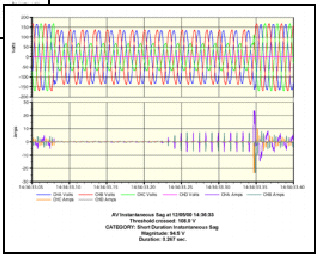
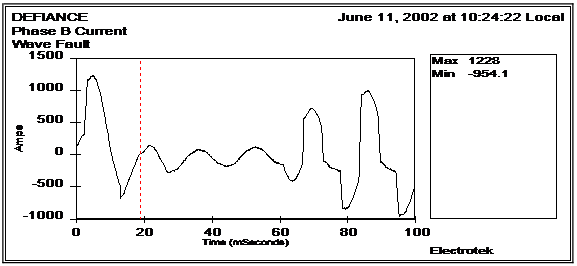
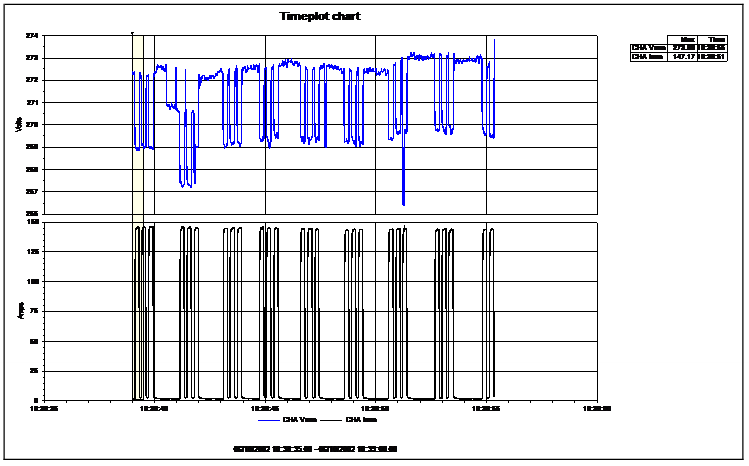
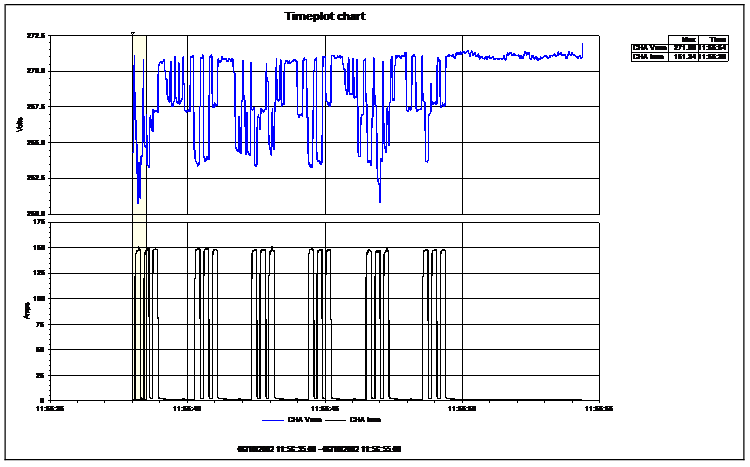
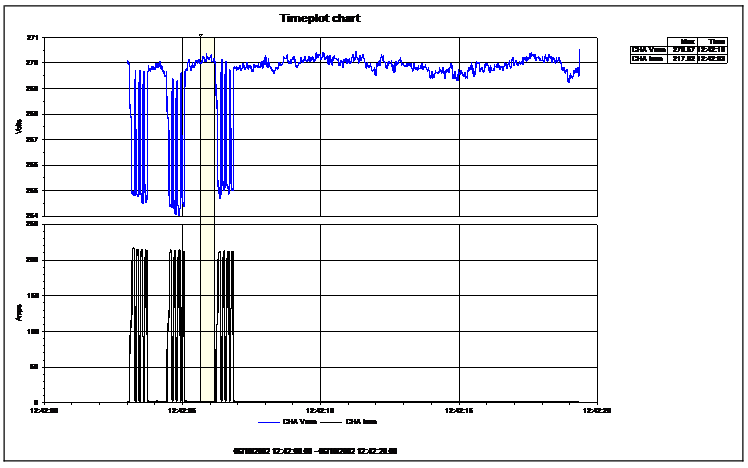
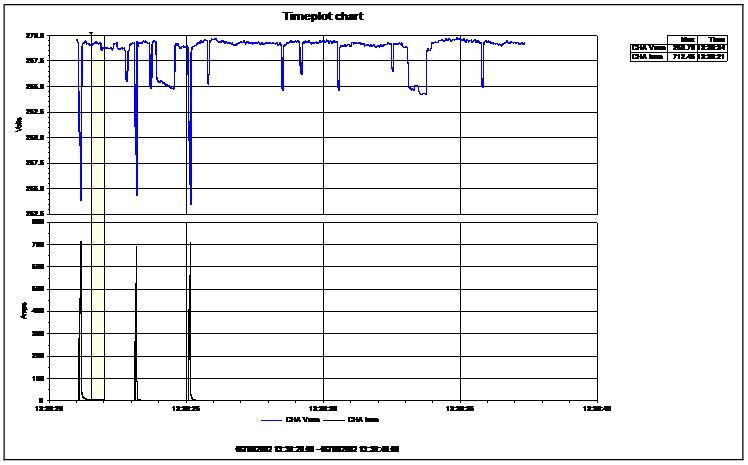
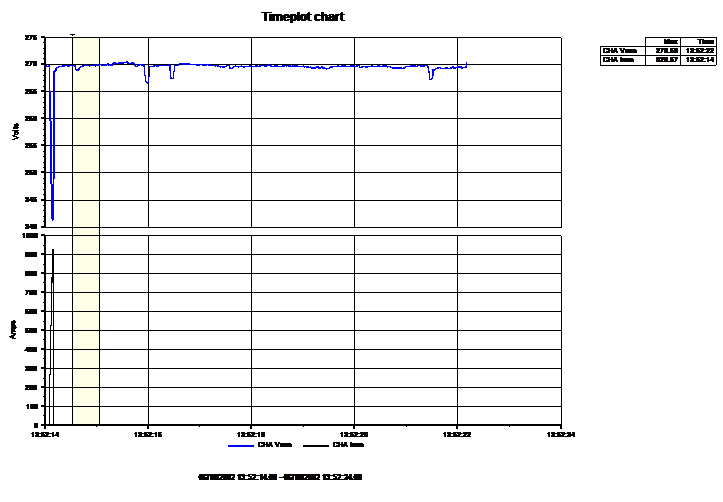
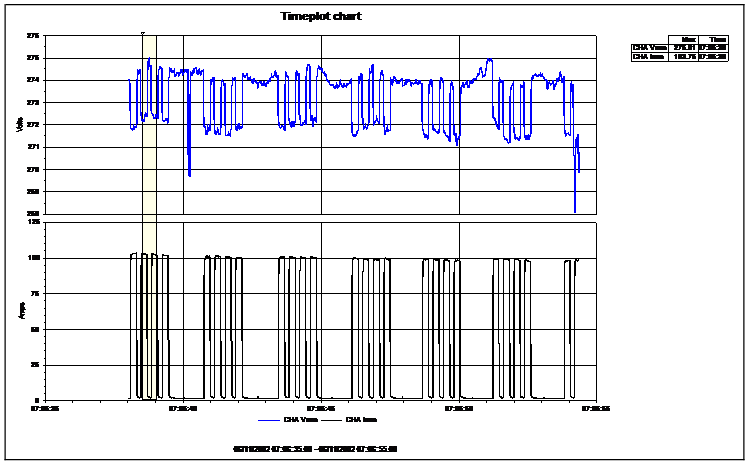
Interruptions occurred when a main 1200 amps circuit breaker was tripped frequently. The events occurred often and sometimes several times a day. Previous measurements had not shown the reason for the events as the highest measurement of current shown was 760 amps, which was not enough to cause the breaker to trip.

From the recordings, the following was noted:

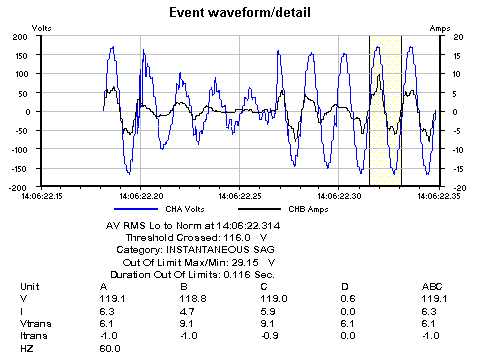
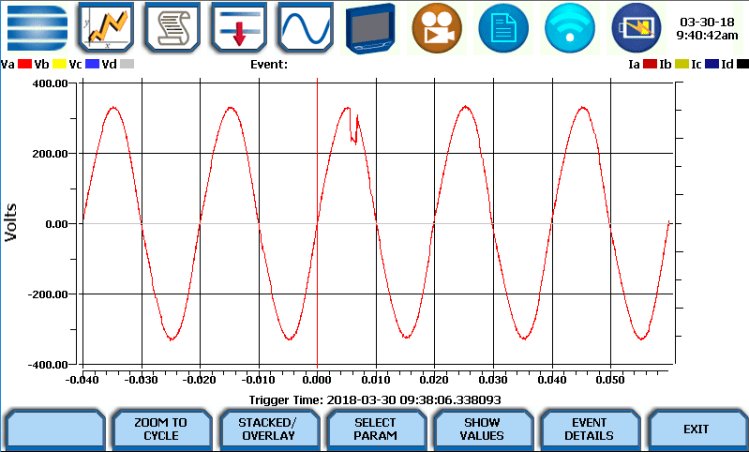
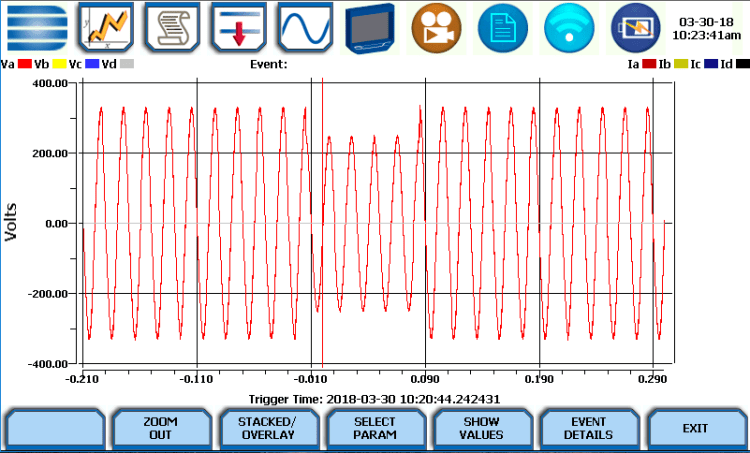
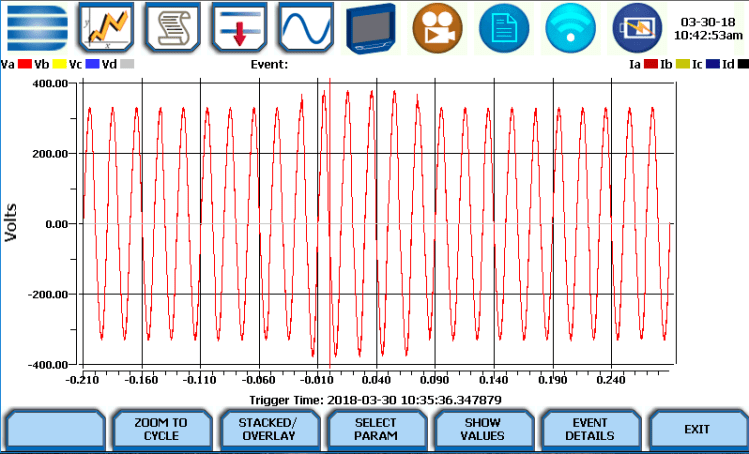
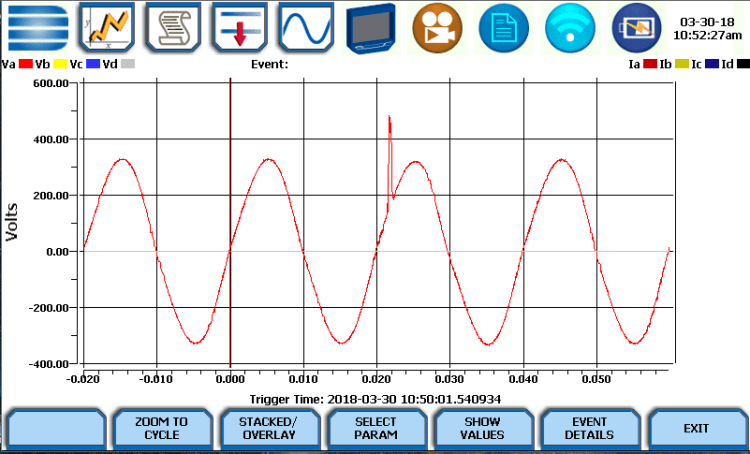
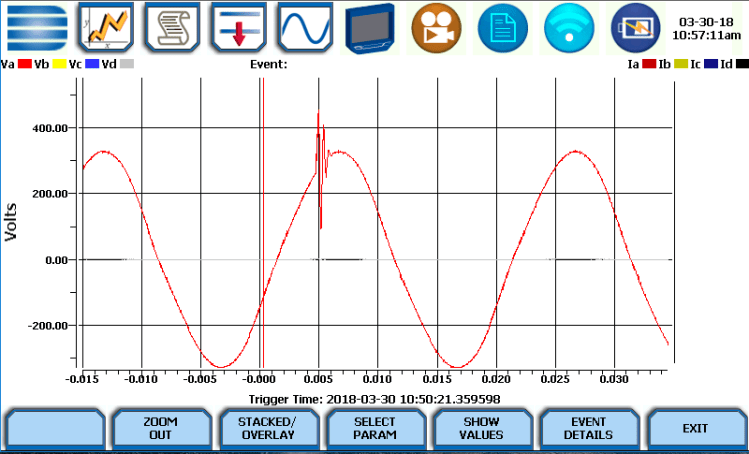
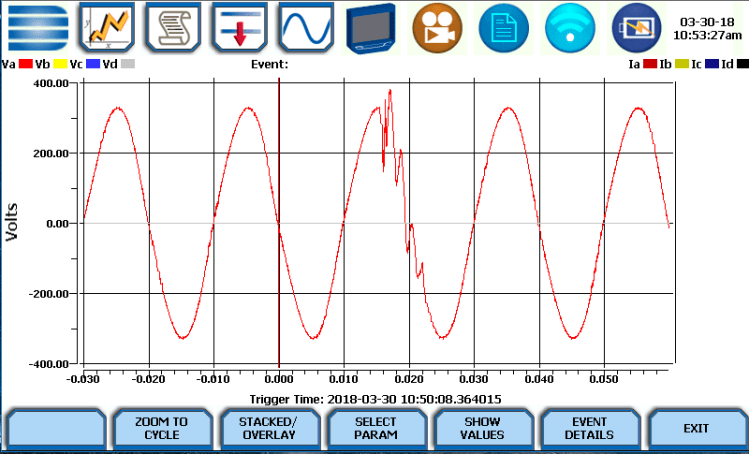
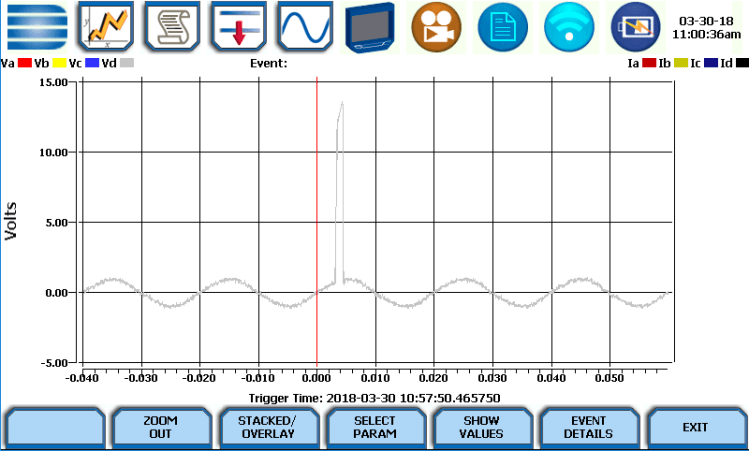
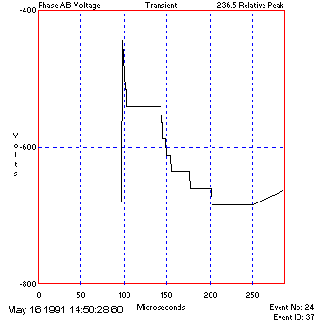
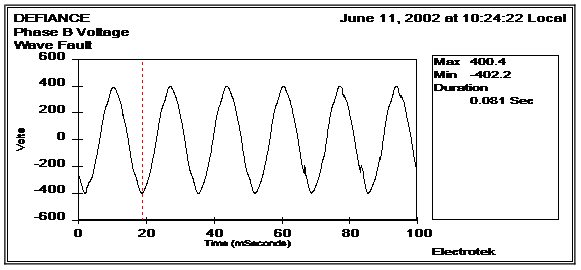
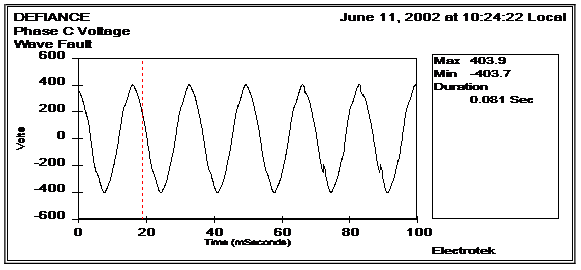
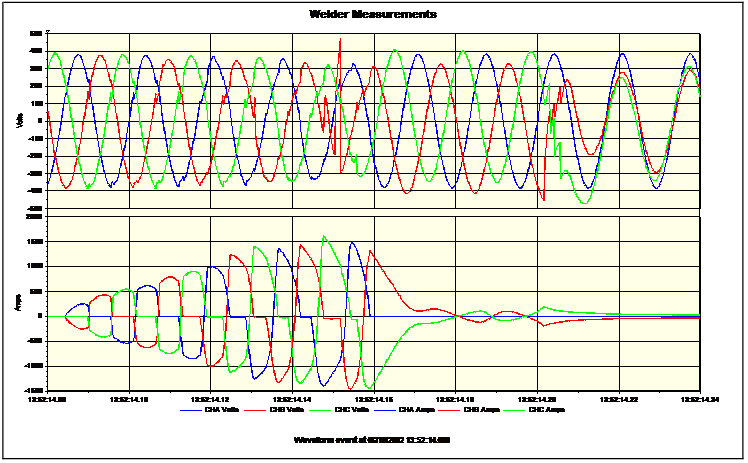
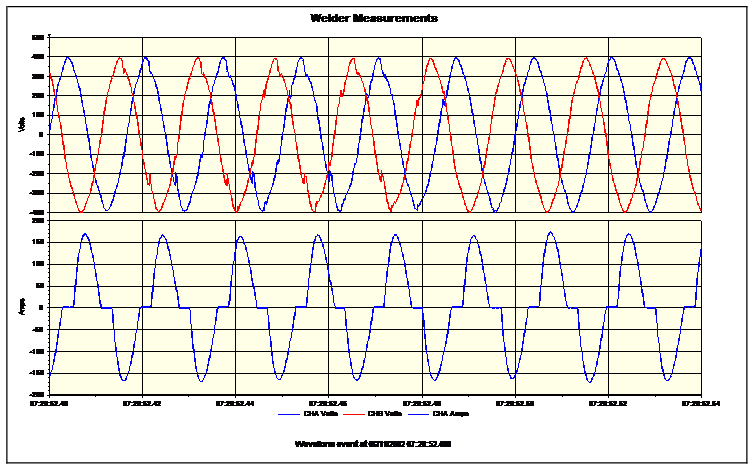
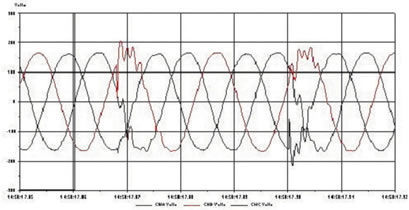
At times the peak current exceeded the 1200A breaker rating without tripping the breaker. An interruption that was tied to such a peak current was detected only once during the measurement period. Further investigation from the wave forms captured determined that the voltages were distorted during such times. This distortion caused nuisance tripping of other breakers and caused the capacitor banks to fry.

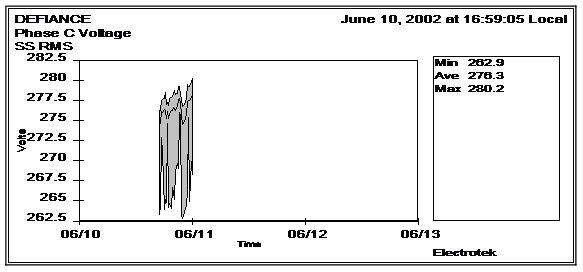
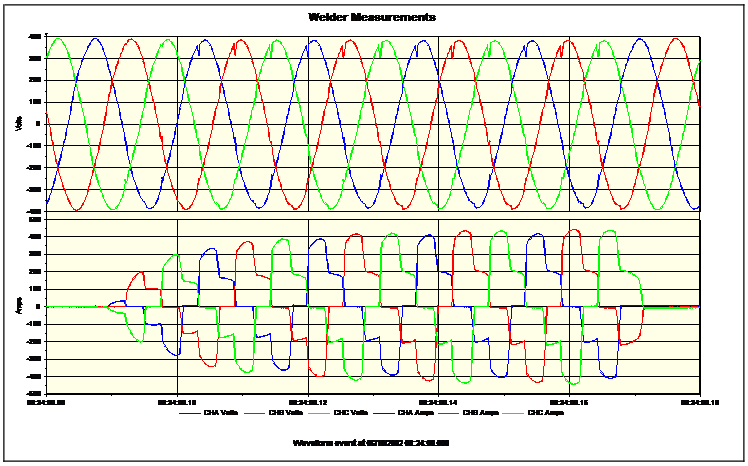
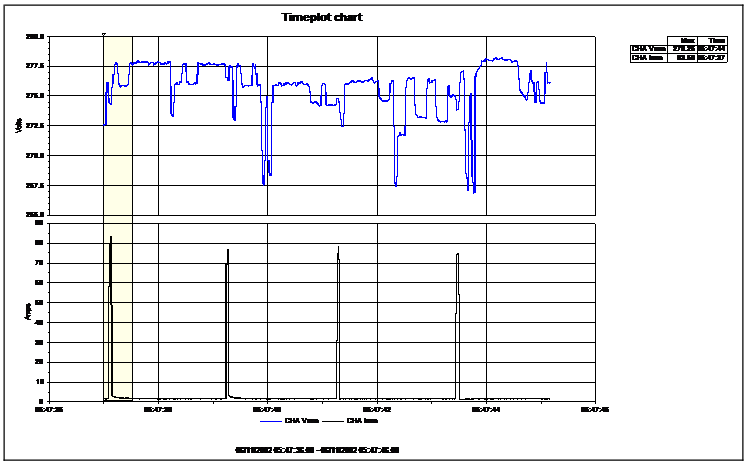
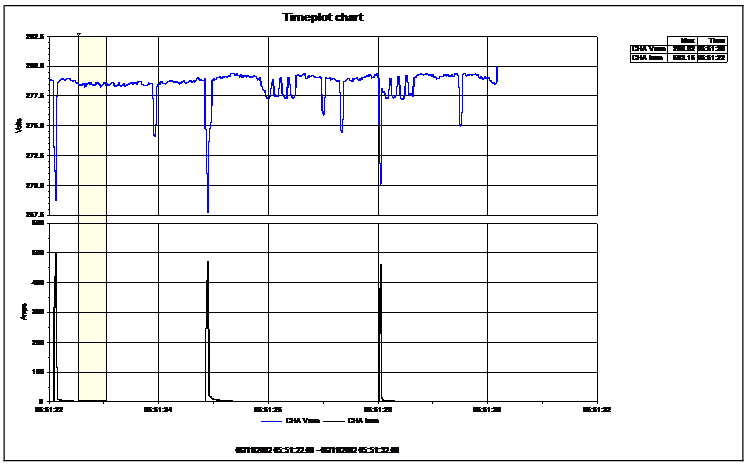
A long-term measurement showed that the capacity of the breaker could be reached when a combination of tasks occurred at the same time.

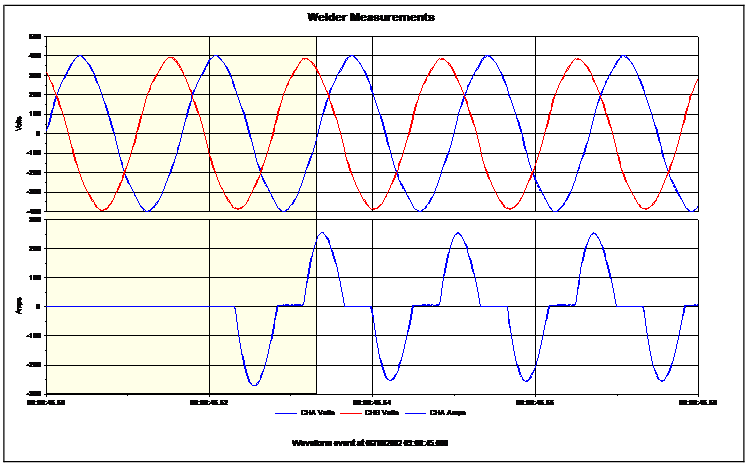
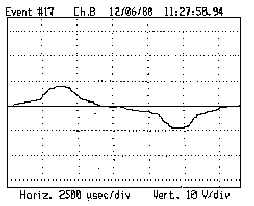
Since most of the load at this site is linear, no harmonics are generated from within the facility. When we looked outside the factory, the cause of the distortion was traced to faulty power transformer.

Harmonics Generated from the Source figure1

Harmonics Generated from the Source figure2

The utility replaced the transformer and enabled the factory to increase capacity and production. 

IEC 61000-4-30 Class A Edition 3

The IEC 61000-4-30 Class A standard defines the measurement methods, time aggregation, accuracy, and evaluation, for each power quality parameter to obtain reliable, repeatable and comparable results between various brands and models of PQ instruments and systems.

IEC 61000-3-30 Class A Edition 2

IEC 6100-4-30 Class A Edition 2 standardizes the measurements of:

  • Power frequency
  • Supply voltage magnitude
  • Flicker (by reference to IEC 61000-4-15)
  • Voltage dips/sags and swells
  • Voltage interruptions
  • Supply voltage unbalance
  • Voltage harmonics, and interharmonics (referenced to IEC 61000-4-7)
  • Mains signaling voltage
  • Rapid voltage changes
  • Magnitude of current
  • Current harmonics and interharmonics (referenced to IEC 61000-4-7)
  • Current unbalance


IEC 61000-4-30 Edition 3 Introduced new measurements definitions and PQ parameters.

“This third edition cancels and replaces the second edition published in 2008. This edition constitutes a technical revision”.

  • Rapid voltage changes
  • Flicker class F1
  • Magnitude of the current
  • Current unbalance
  • Current harmonics (by reference to IEC 61000-4-7)
  • Current interharmonics (by reference to IEC 61000-4-7)

Additional changes in harmonic parameters from IEEE 519 2014

The number of harmonics to be evaluated. In many application, 50 harmonics are not enough and modern DC to AC inverters used in Wind and Solar generation have significate harmonic component up to the 100th.


Recording resolution – the latest edition of the IEEE 519 requires a daily and weekly harmonic evaluation of both voltage and current at 150/180 cycles (~3sec) resolution per phase. An edition 3 compliant instrument must record this data and prepare a report from the instrument.

Why these revised standards are important to electric utilities?

1. Rapid Voltage Change (RVC) parameter captures voltage changes (sags) that can be disruptive to some loads without exceeding the standard of +/- 5% voltage change limit. An instrument that does not make RVC measurements will miss these events. So a utility may receive customer complaints (most common is light flickers) and not have any data to find the source of the complaint. (most common is large motor starts or other sudden load or distributed generation switching. (tripping)

2. The Edition 3 revision transfers the responsibility for measurement methods continue in this standard, but responsibility for influence quantities, performance, and test procedures are transferred to IEC 62586 -1 and -2.

Part 1, namely IEC 62586-1, was constructed to define a comprehensive PQ device product standard, coined within as PQIs. The standard outlines safety, electromagnetic compatibility (EMC), climatic, and mechanical requirements, and refers to IEC 62586-2 for functional aspects. These requirements serve to ensure the instrument’s robustness will be suitable for its installation within the severe environments of a power station or substation.

Part 2, IEC 62586-24, defines the functional tests cited in the first part of the series. These tests are intended to comprehensively verify the PQ measurement methods outlined in 4-30. This chapter was established to provide traceable and repeatable procedures to verify the compliance of each PQ metric outlined in 4-30. This firstly addresses the main shortcoming of 4-30 and ensures better method adherence between PQ meter manufacturers. Additionally, the standard allows regulatory laboratories adhering to ISO/IEC 170255 to issue conformance reports and certificates according to IEC 62586-1 or IEC 62586-2 (with compliance to IEC 62586-2 meaning compliance to IEC 61000-4-30). The latter provides PQ meter manufacturers a way to provide internationally recognized compliance for the entire scope of PQI requirements.

3. To help ensure accurate PQ metrics in the harsh installation environment of a power station or substation, a number of electromagnetic compatibility (EMC) and influence quantity tests were also added to the scope of the IEC 62586 series.

“IEC 62586-2:2013 specifies functional tests and uncertainty requirements for instruments whose functions include measuring, recording, and possibly monitoring power quality parameters in power supply systems, and whose measuring methods (class A or class S) are defined in IEC 61000-4-30. This standard applies to power quality instruments complying with IEC 62586-1. This standard may also be referred to by other product standards (e.g. digital fault recorders, revenue meters, MV or HV protection relays) specifying devices embedding class A or class S power quality functions according to IEC 61000-4-30. These requirements are applicable in single, dual- (split phase) and 3-phase a.c. power supply systems at 50 Hz or 60 Hz.”

4. Environmental impact on the instrument from a laboratory environment. (25 Degrees C to a substation environment 40 Degrees C + ) is now part of the requirement of this standard. Detailed measurement procedures for Harmonics including to the 100th are included. Reporting of the harmonics to IEEE 519-2014 with harmonic limits specified for 1 and 1 week are included.

5. Detailed measurement procedures for Harmonics including to the 100th are included.

6. Reporting of the harmonics to IEEE 519-2014 with harmonic limits specified for 1 and 1 week are included.

All of these issues can be defined as IEC 61000-4-30 Class A, Edition 3 compliant.