Published by Karstein Brekke, Norwegian Water Resources and Energy Directorate, Norway
Conference: CIRED – The 20th International Conference and Exhibition on Electricity Distribution, Prague, 8-11 June 2009


Published by Karstein Brekke, Norwegian Water Resources and Energy Directorate, Norway
Conference: CIRED – The 20th International Conference and Exhibition on Electricity Distribution, Prague, 8-11 June 2009


Published by Bożena E. MATUSIAK, Jerzy S. ZIELIŃSKI, University of Lodz
Abstract. The aim of the paper are selected problems resulting from Renewable Energy Sources (RES) intrusion into Smart Grids (SG) presentation. Upon considerations there are: wind turbines influence on power system operation, RES and microgrids operation with a Power System, new Energy Market for islanded and connected to power system microgrid, Energy Management System and ICT after intrusion RES. Conclusion presents perspective of RES development.
Streszczenie. Celem artykułu jest przedstawienie wybranych problemów spowodowanych dołączeniem odnawialnych źródeł energii (OZE) do sieci inteligentnej. Rozważono: wpływ turbin wiatrowych ma eksploatację systemu elektroenergetycznego, Współpracę OZE I mikrosieci z tym systemem, nowy rynek energii dla pracy wyspowej i mikrosieci współpracującej z systemem, Energy Management System i ICT po dołączeniu OZE. W zakończeniu przedstawiono perspektywy rozwoju OZE. (Wybrane problemy spowodowane dołączeniem odnawialnych źródeł energii (OZE) do sieci inteligentnej)
Keywords: Renewable Energy Resources (RES), Smart Grid (SG), Energy Market, Microgrid.
Słowa kluczowe: Odnawialne Źródła Energii (OZE), Rynek Energii, Sieci inteligentne.
According to the fifth property of Smart Grid (SG) [1]: “It accommodates all generation and storage options” all existing renewable energy sources (RES) have to be connected to the SG. Before consideration problems resulting from different RES intrusion into SG it is necessary to pay some attention to more general issues.
Distributed generation can positively or negatively affect the Smart Distribution Grids. For example [2], in radial distribution networks, distributed generators can cause bidirectional power flows, alter the existing voltage profiles, affect the operation and coordination of the existing protection devices such as relays, reclosers etc. and compromise safety. In particular they can cause energized electric islands within the host networks which can form due either to faults causing an upstream feeder breaker to open automatically, or to inadvertent opening of the breaker for maintenance operations.1
V. Hamidi et al. [3] composed the following list of barriers when implementing the SG technologies:
In addition to the above list it has to remember that connection RES to weak distribution grid (MV or LV) sometimes it is not possible in result aging lines, too low thermal limitation and voltage rise effect [2]; the problem is especially important for wind farms.
1 The IEEE and other organizations have identified anti-islanding standards. As such number of anti islanding techniques have already been adopted commercially.
Significant wind generation growth in coming decade assure it’s dominating position among RES and implies challenges in power system operation due to intermittent nature of wind. Wind generators are increasingly connected to an electrical grid through power electronic based converters and differ significantly from conventional synchronous generators particularly in terms of their impact on the electromechanical stability of the grid. The inertia of synchronous machines is stabilizing the grid frequency during transients and it is important to design technologies improving the stabilizing effect of the wind generators [4]. In that paper the Authors consider addition of a control loop that would feed (draw) active power in response to a decline (rise) in the time derivative frequency, thereby seeking to mimic the inherent inertial response of conventional synchronous generator.
The idea of inertial emulation neglects two important limitations in bandwidths and in the magnitude of power change that can be applied. In order to overcome these limitations, a work being actively considered is to supplement the control available from energy storage devices such as batteries. Typically energy storage devices offer fast control action (high bandwidth) while having narrow limits on the magnitude of power and energy that can be absorbed or supplied. On the other hand, varying the mechanical input power to a wind turbine through changes in its blade pitch is a relatively slow control action (low bandwidth) but one which can have broad limits before saturation reached [4].
Another type of challenges arise with the offshore wind farms located a long distance from the coast. For decreasing high losses accompanying AC transmission, High Voltage Direct Current (HVDC) cables with Voltage Source Converters (VSC) are to be applied. Multi terminal VSC-HVDC consisting of more than two converters has following benefits: bulk power transmission, AC network interconnection over a long or medium distance, and economical advantages2 [5].
Great capacity of wind farms results that the traditional “fit and forget” approach where all technical limitations are satisfied in many credible operational scenarios has significantly reduced the ability of certain networks to integrate more generation capacity as the extra costs are not viable for most wind farm developers. In this context, it is envisaged that the true potential of distribution networks to accommodate large renewable generation capacities will only be realized by applying active management schemes. In [7] it is proposed the innovative use of synchrophasor technology to actively manage wind power generation output in congested distribution networks, resulting in the connection of more capacity and hence, the delivery of more energy as opposed to the “fit and forget” approach. This is achieved by applying an angle-based constraint that is determined according to the network characteristics (i.e. a proxy the thermal limits, voltage limits etc.) and using minimal communication. Results from a radial test feeder considering two wind farms demonstrate the effectiveness of the technique in exporting more energy, although at expense of smaller capacity factors, whilst keeping the system secure.
2 The idea of the VSC-HVDC application has been used also in [6].
According to [1] development of RES (except of wind farms) in Poland is a result of private activity what results in number of generators dispersed (DGs) in region. Each of these DGs ought to be connected to distribution network and realize its private schedule what means that DGs belong to Virtual Power Plant (VPP).
Individual DGs, partners in virtual power plants, with different technical characteristics connected to the distribution network implies serious technical – as well as organizational problems depending on their number, capacity, schedules etc. Introduction of controlling interface between DGs and distribution network will be valuable solution simplifying a distribution network operation. Of course the interface between separate DG and distribution network is too expensive and it is necessary to group together number of DGs located not far one from the another. When we can collect several DGs with suitable location we can compose them in Microgrid3.
Microgrid – it is interconnection of small modular generation4 to Low- or Medium- voltage distribution systems. Microgrids can be connected to the main power network or be operating islanded, in a coordinated, controlled way5. Microgrid connected to the distribution network (in future smart distribution grid) needs creation of Active Distribution Network (ADN) passing following stages:
ADN operation implies necessity of application one of two different strategy: microgrids or virtual consumers. Concept of virtual consumer [1,12] is adaptation of a model similar to information and business ability of Internet. Electrical energy bought from conventional generators, RES or storage devices, according to demand is delivered to agreed nodes. The system would use new ICT technologies as well as advance power electronics and storing devices.
Diversity of RES and storage devices as well as architecture and collaboration with power system implies necessity to define control strategy in operation.
“Building Network “ strategy emulate “vacillatory source” in islanded network. DER unit realizing this strategy controls voltage in the connection with the system node setting up the system frequency.
Power and energy management strategy is very important in islanded microgrid and it is more critical than in power system because of specific characteristics of the microgrid. It is worth of mention that according chapter 1 microgrid is one of important part of smart grids.
Microgrid being consortium of private owners is more convenient for distribution grid nevertheless it is still part of virtual power plant.
3 The same opinion concerning role of the microgrid in RES intrusion into the grid one can find in [8]
4 It is worth of mention that to RES are included also all types of storage devices including also Electric Vehicles [9] and optimal integration of the energy storage systems in smart distribution grids has been considered in [10]
5 Process of reconnection from Islanded state to connection with distribution network is considered in [11].
The main question for a new shape of EM with microgrids is: What kind of business models would support the implementation of Energy Efficiency (EE) and dissemination of implementation RES and creation DER? The business models on which the European thematic projects works last year were focused are those which concern the aggregator of Demand Response (DR), Distributed Generation (DG) and Distributed energy Storages (DS), which have been together called – Distributed Energy Resources (DER). Aggregation functions can be taken care of by an independent organization or an existing market participant, e.g. an electricity supplier (retailer) other forms of selling activities or virtual Power Plants (VPP). In each case, these organizations have been called: the aggregators.
The aggregator is defined in the following brief way (according to the definition from SEESGEN_ICT European Project): The aggregator is a company who acts as a mediator between electricity end-users, who provide distributed energy resources, and those power system participants who wish to exploit these services [12,13] Nowadays, the aggregators for complex business models integration for DER management on the Energy Market have been needed.
The main aggregator’s job is to provide a link between the end-users, i.e., the providers of demand response, prosumers, DGs and the buyers. Where the consumer is alone to provide demand response, he should have a direct relationship with buyers of demand response services. Without an intermediary, this would lead to very many bilateral relationships between market participants. Their management is not in the interest of buyers of demand response services, such as TSO’s. For example, small consumers do not have access to electricity exchange and arranging the access could be expensive.
Not all consumers on the new energy market with islanded and connected microgrids can also provide DER in a cost-efficient way. For example, their load flexibility may be too small or cause too much inconvenience. Alternatively the consumer may offer flexibility at a time of day or year when it is of low value. The aggregator must evaluate the above-mentioned parameters based on information of what kind of appliances the consumer has, and what is their usage pattern.
ICT tools specifically for this purpose have been developed e.g. in the EU-DEEP project and in other similar European projects. Their usage constraints are sometimes born from the physical characteristics of the appliance, their costs and sometimes from the consumer’s desire of convenience. The aggregator will develop an understanding of the common usage constraints and time patterns of flexibility of different types of appliances over time and may agree about them individually with each consumer.
Signals in information area, like “above the market and energy grid” must be received, appliances controlled, and measurements sent in an automated manner using the new technology and ICT tools. The aggregator can take care of installing the proper control and communication equipment for whole system integration.
Smart meters along with their bidirectional communication and load control features can be exploited in mentioned functions of integration. However, these features have not been standardized. Also the measurement resolution may not be high enough and time delay of load control calls may not be low enough for the aggregator’s purposes. The aggregator collects together different realized and forecasted requests for distributed energy services, and evaluates his contractual position, taken into account forecast of consumption based on existing retail contracts and forecast of variable-output generation. He combines the different requests and identifies their whole synergies. He then calculates how to best respond to these requests by load control. The aggregator can take advantage of economies of scale in controlling a large group of consumers and acquire sophisticated optimization software to support the load control decisions.
The aggregator also makes sure that the load control decisions do not cause problems for the electrical network. One possibility is that he does this validation by consulting system operators (DSO’s and TSO). The aggregator sends his planned schedules for DER control to concerned DSO’s with information about the involved network nodes. The DSO’s then evaluate if power quality constraints will be violated by the load control actions, and send the validation result back to the aggregator.
Finally the aggregator must provide financial incentives to the consumers to participate in demand response provision. These could take many forms and there are many ways to set up the business. The consumers could be rewarded by being offered an availability payment, call payment (payment for flexibility energy provided), or percentage of the aggregator’s profits. The aggregator monitors the consumer’s performance and rewards him accordingly.
The idea of VPP is also useful for realization of Demand Response (DR) aggregator functionalities [14] (see also [15]).
The VPP can be defined as “an information and communication system with centralized control over an aggregation of distributed generation, controllable loads and storage devices”. Its main function is to control the supply and manage the electrical energy flow not only within the cluster (chosen local DER) , but also in exchange with the main grid. “It represents a single entity to the system operator and electricity markets and enables visibility and control over a cluster of distributed generation”. A VPP at a high-development stage can also offer ancillary system and power quality services. The VPP is thus a controlled operation of aggregated DG units. In such a VPP an active control is obtained through an ICT infrastructure which consists of intelligent devices and smart meters, wireless and cable connections, central control computer management system (CCCMS) and software applications see [13].
In present situation most DGs, controllable loads and storage devices are invisible to network and system operators. Their aggregation into a VPP will enable their visibility to the VPP operator (VPPO) in first place and finally to the network and system operator. At distribution level, the VPPO can be an independent system operator (ISO) or the distribution system operator (DSO). When more VPPs are developed in a service area of the transmission system operator (TSO), once again they can be aggregated by this TSO into a large scale virtual power plant (LSVPP) with central control computer system for coordination and management.
The control system of VPP of course involves huge data transfers between smart meters, agents and central ICT system in order to manage the available DG and deliver the contracted energy and services.
Recent developments like the broadband cable (glass fibre) or wireless (WMAX) communications can provide connections with enough speed and capacity to transfer the required data. With such an ICT system the VPP can be presented to the system operator as a single technical entity which is able to offer ancillary system services for all other market participants. In Poland, nowadays the Independent Operator of Measurement (IOM) has been established – it involves with high quality of data acquisition and data metering supported services for all market participants
The VPP represents all contracted DG units in the wholesale electricity markets as a single commercial entity. In order to participate in these markets, the VPPO needs to develop or make use of software applications that are able to forecast the power generation of the VPP.
In general, the VPP facilitates the visibility of the aggregated DG units and their impact on the distribution network to the VPPO as well as the DSO. In addition, the ICT infrastructure of VPP, which provides active control, can be employed to introduce active control to the passive distribution network.
In conclusion: mentioned new models of business – such can be the aggregator role on the energy market and special ICT for realization and work supporting is the main goal of planned shape construction of future, open and full competition energy market together with Smartgrid.
For ISO or TSO and Reliability Coordinators, the following areas of focus are the most representative of new functional needs related to the integration of RES [8]:
• Provide the operator a central repository with advanced data processing and alarming for renewable prediction conditions and forecast management (RES Forecast Plan).
• Provide an estimate of non-telemetered production (frequent in Distributed Generation) using flexible and field-proven up-scaling algorithms (RES Estimation).
• Enhanced Generation Control & Dispatch to automatically counteract renewable production power balance disturbances, optimize reserve calculations and provide curtailment facilities (RES Generation Control to Dispatch).
• Enhanced Security and Simulation: fed by RES production forecast inputs and taking into account forecast accuracies to support dispatcher training and asses multiple renewable production penetration scenarios (RES Network Security and Simulator).
• Advanced User Interface: data at user’s finger tips to help the operator efficiently assessing current and future renewable production and impacts (UI).
• Extended Historian: to support reporting and data archiving (Historian). These functional requirements match SCADA/EMS functions.
Several factors affect the viability of Active Management (AM) schemes in distribution systems with distributed generation. One of the critical factors is the control system reliability. While a lot of work has been done on the technical and economic aspects of active distribution network management, almost no attention has been paid to the impact of the reliability of control and communication systems on the expected benefits of active management strategies. Investigation the impact of control system reliability on the benefits of AM are presented in [14] (see also [16]).
Utilization of RES has been receiving considerable attention in recent years what implies increasing information system requirements. Specially the reliability information system is more important for implementing the smart grid. In [18] a Web Based Online Real-time Reliability Integrated Information System WORRIS Version 1.0 has been presented. This system yields the chance for customer to choose the electrical energy resource under environment of variety kind of resources in future.
Data delivery in the power grid today is, in the most part, hard-coded, tedious to implement and change, and does not provide any real end-to-end guarantees. Application have started to emerge that require real-time delivery in order to provide a wide-area assessment of the health of the power grid. In [18] two novel communication infrastructures that facilitate the delivery of power data to intended recipients has been presented.
Complexity of the SG development implies necessity to investigate new solutions enabling to limit some of the barriers.
For example, to support a high penetration of intermittent solar and wind power generation, many regions are planning to add new high capacity transmission lines strengthing grid synchronization but also increasing the grid’s short circuit capacity, and furthermore will be very costly. With a highly interconnected grid and variable RES, a small grid failure can easily star cascading outages resulting in large scale blackout.
In [19] has been presented “Digital Grid” where large synchronous grids are divided into smaller segmented grid which are connected asynchronously via multi-leg IP addressed ACs/DC/ACs converters called Digital Grid Routers. These routers communicate with each other and send power among the segmented grid through existing transmission lines which have been re-purposed to digital transmission lines. The Digital Grid can accept high penetration of renewable power, prevent cascading outages, accommodate identifiable tagged electricity flows, record these transaction and trade electricity as a commodity (see also [15]).
Interesting proposal of measures to integrate a city district with a high share of building integrated photovoltaic system into the electric grid has been presented in [20]. And the next issue: new business models of energy market activities with RES and islanded Microgrids – how to integrate and increase new functionalities of Smartgrids have been considered.
The above considerations enable a general conclusion that the SG development needs a very wide researches necessary for decreasing costs and efforts necessary for reaching success [21].
REFERENCES
Abbreviations: 2046363- number of paper presented the time of IEEE PES Conference on Innovative Smart Grid Technologies Europe, October 11-13, 2010, Gothenburg, Sweden, PWRS – IEEE Trans. on Power Systems
[1] Matusiak B.E., Zieliński J.S.: Renewable energy Resources – Partners in Virtual Energy Market. Rynek Energii, no. 1, 2011, 133-137.
[2] Chaitanya A., B., DeMarco Ch. L.: Observer-Based Distributed Control Design to Coordinate Wind Generation and Energy Storage. 2045144
[3] Hamidi V., Smith K.S.,Wilson R.C.: Smart Grid Technology Review within the Transmission and Distribution Sector. 2048005
[4] Kulmala A., Mutanen A., Koto A., Repo S. Järventausta P.: RTDS Verification of a Coordinated Voltage Control Implementation for Distribution Networks with Distributed Generation. 2018783
[5] da Silva R., Teodorescu R., Rodriguez P.: Power Delivery in Multiterminal VSC-HVDC Transmission System for Offshore Wind Power Applications. 2047365
[6] Zhang L., Harmefors L., Nee H.P.:Interconnection of To Very Weak AC Systems by VSC-HVDC Links Using Power-Synchronization Control. PWRS, vol. 26, No.1, 2011, 344-355.
[7] Kulmala A., Mutanen A., Koto A., Repo S. Järventausta P.: RTDS Verification of a Coordinated Voltage Control Implementation for Distribution Networks with Distributed Generation. 2018783
[8] Williams B., Gahagan M.: Using Microgrids to Integrate Distributed Renewables Into the Grid. 2048121
[9] Jabłońska M. R., Zieliński J.S.: Electric Vehicles’ Influence on Smart Grids, Aktualne Problemy w Elektroenergetyce, APE ’11, Jurata 8-10 czerwca 2011,t.II,137-142.
[10] Ma K., Mutale J.: Incorporating Control System Reliability in Active Management Distribution Systems with Dispersed Generation. 1986771.
[11] Laaksonen H., Kauhaniemi K.: Synchronized Re-Connection of Island Operated LV Microgrid Back to utility Grid. 2042721
[12] Matusiak B.E. , Pamuła A., Zieliński J.S.: Technologiczne i inne bariery dla wdrażania OZE i tworzenia nowych modeli biznesowych na krajowym rynku energii. Rynek Energii, no. 4, 2010, 31-35.
[13] Matusiak B, Pamula A; Barriers to DER Aggregation Business Related to Different ICT Tools –Two European Countries Review; ISIM Warszawa 2010; Information Systems in Management, Part VIII: Information and Communication, Technologies for e-Business; WULS Press Warsaw 2011; ISBN 978-83-7583-263-1 p. 70-80.
[14] Kucęba R, Struktura inteligentnego wspomagania zarządzania wirtualną elektrownią; Rynek energii nr1 luty 2011, 80-85 ISSN 1425-5960.
[15] Malko J; Sieci inteligentne jako czynnik kształtowania sektora energii elektrycznej; Rynek energii nr 2 kwiecień 2010 str 80-87 ISSN 1425-5960.
[16] El Bakari K., Kling W. L.; Virtual Power Plants: an Answer to Distributed Generation. 2047460
[16-6] Goutard E.: Renewable Energy Resources in Energy Management. 2046839.
[17] Choi J., Park J., Cho K., Song T., Cha J.: Web Based Online Realtime Information System for Reliability of Composite Power system including Wind Turbine Generators. 2047573.
[18] [Germanus D. Dionysiou I., Gjermundrod H., Suri N., Bakken D., Hauser C.: Leveraging the Next – Generation Power Grid: Data Sharing and Associated Partnerships. 2046994.
[19] Rikiya A., Hisso T.,., McQuilkin D.: Digital Grid: Communicative Electrical Grids of the Future. 2046363.
[20] Stifter M., Kathan J.: SunPowerCity – Innovative Measures to increase the Demand Coverage with Photovoltaics. 2048196.
[21] Matusiak B.E., Pamuła A., Zieliński J.S.: New Idea in Power Networks Development. Selected Problems. Przegląd Elektrotechniczny (Electrical Review), R. 87, 2/2011, 148-150.
[22] Darvishi A., Alimardani A., Hosseinian S.R.: Optimal Integration of Energy Storage System in Smart Distribution Grid. 2048297
[23] El-Khattam W., Yazdani A., Sidhu T.S., Seethapathy R.: Investigation of the Local Passive Anti-Islanding Scheme in a Distribution System Embedding a PMSG-Based Wind Farm. PWRD, vol. 26, No. 1, Jan. 2011, 42-52.
[24] [Germanus D. Dionysiou I., Gjermundrod H., Suri N., Bakken D., Hauser C.: Leveraging the Next – Generation Power Grid: Data Sharing and Associated Partnerships. 2046994
[26] http://seesgen-ict.rse-web.it/ European Project Proceedings
[27] Ochoa L.F., Wilson D.H.: Angle Constraint Active Management of Distribution Networks with Wind Power. 2047855
dr Bożena E. Matusiak, Uniwersytet Łódzki, Wydział Zarządzania, Katedra Informatyki. mail: bmatusiak@wzmail.uni.lodz.pl Prof. dr hab. inż. Jerzy S. Zieliński, kierownik Katedry Informatyki na Wydziale Zarządzania Uniwersytetu Łódzkiego, uczestnik projektów europejskich: EU DEEP, SYNERGY+, MORE MICROGRIDS, SEESGEN-ICT. mail: jzielinski@wzmail.uni.lodz.pl
Source & Publisher Item Identifier: PRZEGLĄD ELEKTROTECHNICZNY (Electrical Review), ISSN 0033-2097, R. 87 NR 9a/2011
Published by Jarosław ŁUSZCZ, Politechnika Gdańska, Wydział Elektrotechniki I Automatyki
Abstract. Voltage transformers are widely used in power quality monitoring systems in medium and high voltage grids. This paper presents accuracy problems related to voltage harmonics transfer through instrument transformers. A simplified lumped-parameters wideband circuit model of the voltage transformer is proposed and verified by simulation and experimental investigations. A number of voltage transformers have been tested in the frequency range up to 30 MHz. The obtained results prove that broadband voltage transfer characteristic of the voltage transformer usually exhibits various irregularities, especially in high frequency range, which are related to windings’ parasitic capacitances and cannot be neglected in accuracy analysis.
Streszczenie. Przekładniki napięciowe są powszechnie wykorzystywane do pomiarów parametrów jakości energii elektrycznej w sieciach średnich i wysokich napięć. W artykule przedstawiono problemy związane z dokładnością przenoszenia zniekształconych przebiegów napięć poprzez przekładniki napięciowe. Zaproponowano oraz zweryfikowano symulacyjnie i eksperymentalnie uproszczony szerokopasmowy model obwodowy przekładnika napięciowego. Weryfikację eksperymentalną przeprowadzono dla kilku typowych przekładników napięciowych stosowanych w sieciach średnich napięć w zakresie częstotliwości do 30 MHz. Przeprowadzone badania potwierdziły występowanie istotnych nieregularności charakterystyki częstotliwościowej przenoszenia związanych z wpływem pojemności pasożytniczych uzwojeń, które nie mogą być pomijane przy określaniu dokładności pomiarów. (Transformacja zniekształceń harmonicznych napięcia w przekładnikach napięciowych średnich napięć)
Keywords: voltage transformers, power quality, voltage harmonic distortions, overvoltages.
Słowa kluczowe: przekładniki napięciowe, jakość energii, zniekształcenia harmoniczne napięcia, przepięcia.
Voltage harmonic distortion level is one of the significant parameters of power quality in power system. Voltage distortion assessments, especially in medium voltage (MV) and high voltage (HV) grids, are usually based on measurements in which voltage transformers are commonly used. The transfer ratio of a voltage transformer fed by distorted primary voltage with harmonic components can be significantly different for frequencies higher then fundamental. During the last decades major problems related to voltage distortions have been usually encountered in frequency range up to 40th harmonic, mostly in LV grids. Nowadays, due to the evident increase of the overall power of nonlinear loads connected to grid and higher modulation frequencies widely used, distorted voltage propagates deeply into MV grids and goes evidently above frequency band of 2 kHz.
VTs are mostly used in MV and HV systems for separation of the measuring and protecting circuits from high voltage hazard. Rated primary voltages of VTs, typically used in power system, have to correspond to rated voltages of MV and HV transmission. Secondary rated voltage levels usually used in typical measuring and protection systems are: 100 V, 100/3 V, 100/√3 V which results with transformation ratios of the order from a few tenth up to few hundreds for MV VT and more than a thousand for HV VT. Such a high transformation ratio and low rated power of VT has significant influence on its specific parameters, especially related to performance in wide frequency range.
The classic equivalent circuit model of two windings transformer usually used for modelling VT for power frequency is presented in Fig.1. This model consists of leakage inductances of primary winding Lp and secondary winding Ls and magnetizing inductance Lm. Corresponding resistances represent VT losses in magnetic core Rm and windings Rp, Rs. Based on these parameters frequency dependant transfer characteristic for frequencies higher than the nominal (50 or 60 Hz) can be estimated. Theoretical wideband transfer characteristic of VT modelled by using classic circuit model is presented in Fig.1 where low corner frequency of pass band flow and high corner frequency of pass band fhigh can be defined based on 3 dB transfer ratio decrease margin assumption. Low and high frequency response of VT can be determined analytically based on VT classic circuit model parameters according to formula (1) and (2).


Concluding, low frequency response of VT is mostly dependant on ratio of leakage to magnetizing impedance which limits transfer characteristic in low frequency range, while high frequency response depends mainly on sum of leakage and load impedances.
Modelling of VT in a HF range using classic circuit model is usually not adequate enough because of existence of parasitic capacitances of windings and frequency dependant grid impedance and VT load impedance. Parasitic capacitances of VT windings are usually unwelcome and unluckily unavoidable; there are only various techniques used to reduce its values and distribution. Consequences of parasitic capacitances are especially significant for multilayer windings with high number of turns which is characteristic for high voltage and low power transformers like VT.
Identification of distributed partial parasitic capacitances for particular VT requires detailed specification of winding arrangement is extremely elaborative and usually does not provide adequate enough results. Difficulties of parasitic capacitances identification can be reduced by defining lumped equivalent capacitances which represent groups of partial capacitances related to entire winding or part of windings; for example single layer of winding. Lumped representation of parasitic capacitances allows reducing winding model complexity and consequently simplifies noticeably its parameters identification process. Winding model simplification level, which is possible to apply, should be closely correlated with the expected adequacy in a given frequency range and depends evidently on particular winding arrangement complexity. Commonly, three methods of winding parasitic capacitances circuit representations are used to model transformer windings:
• winding terminals related – where all defined lumped equivalent capacitances are connected to windings’ terminals only,
• partially distributed – lumped parasitic capacitances are specified for most representative internal parts of winding, like for example windings layers, winding shields,
• fully distributed – windings are modelled as a series and parallel combination of inductances and capacitances which form ladder circuit with irregular parameter distribution.
Generally, more detailed parasitic capacitance representation allows obtaining higher accuracy in wider frequency range. Nevertheless, the model complexity should be kept within reasonable limits to allow achieving higher usefulness because of parameters identification process simplification.

Voltage transformation ratio of VT in wide frequency rage is closely related to impedance – frequency characteristics of primary and secondary windings. Therefore, measurement results of VT magnetizing and leakage impedances within the investigated frequency range are the fundamental data resources for analysis its broadband behaviour and allow estimating circuit model parameters. Measurement of VT impedances can be done similarly to a typical no load and short circuit tests recommended for power frequency with use of sweep frequency excitation.
Distributed parasitic capacitances of VT windings are modelled by the lumped capacitances related to windings terminals only (Fig. 3). This assumption reduces noticeable model complexity and allows determining parasitic capacitances based on the measured windings impedances. In the analysed case primary and secondary windings of the investigated VT are one side grounded which limits furthermore the number of lumped capacitances necessary to be determined.
Detailed analysis of VT magnetizing and leakage impedance-frequency characteristics and identification of specific resonance frequencies allows estimating parameters of the VT circuit model presented in Fig. 3. The method of determination parasitic lumped capacitances is based on identification of resonance frequencies which are usually possible to determine by using the measured impedance characteristics [5].
The investigated circuit model of a VT can be examined by simulation in any PSpice compatible environment in the conducted disturbance propagation frequency range up to 30 MHz. The essential verification of VT model adequacy has been done by determining magnetizing and leakage impedance characteristics which allows verifying model representation adequacy of magnetic coupling between windings.
The developed VT circuit model can be used for simulation analysis of the influence of the VT parameters and its load on the voltage transfer ratio frequency characteristic. The exemplary simulation results of VT voltage transfer ratio characteristics calculated for different resistive loads are presented in Fig. 3. It can be noticed that the VT voltage transfer characteristic change essentially for frequencies higher than the main resonance frequency observed on the leakage impedance, which is about 100 kHz for the evaluated case. Above this frequency VT voltage transfer ratio depends mainly on winding parasitic capacitances and magnetic coupling between windings becomes less meaningful.
Simulation results demonstrate that in frequency range close to leakage impedance resonance VT load has the major influence on the VT transfer characteristic. Increase of resistive VT load reduces significantly VT voltage transfer ratio around this frequency. Obtained simulation results confirm that VT load has significant influence on VT performance in HF range.

Experimental investigations have been done for voltage transformers typically used in MV power system with primary and secondary windings grounded. Presented exemplary measurement results have been obtained for VT of 50 VA rated power and 20 kV/0.1 kV nominal transformation ratio. Parameters of the proposed VT circuit model for simulation have been identified by analysis of secondary windings impedance-frequency characteristics measured for no load and short circuit configuration. Measurements have been done in frequency range from 10 Hz up to 30 MHz, which is a range typically used for the analysis of conducted disturbances in power system. Particular attention has been paid to the frequency range below 10 kHz which is obligatory for power quality analysis, especially for analysis of power system voltage harmonics related phenomena.
Accurateness of voltage transfer characteristics (magnitude and phase) of VT is a fundamental aspect for identification and measurement of power quality related events in power system. For the investigated VT the voltage transfer ratio and voltage phase shift characteristics have been measured to reveal measurement accuracy problems of power quality assessment in MV systems. Magnitudes versus phase transfer characteristic of VT measured for frequency range typically used in power quality measurement systems (up to 9 kHz) are presented in Fig. 4.

Experimental investigations prove that magnitude and phase errors increase noticeably with frequency. In frequency range up to 2 kHz, the highest magnitude error of about 11 % and phase shift error almost 8o, have been obtained for frequency of 2 kHz. These results confirm that voltage harmonics measurement in MV grids by using VT can be not accurate enough in applications with noticeable harmonic content above approximately 1 kHz.
Magnitudes and phase inaccuracy of VT obtained in frequency range from 2 kHz up to 9 kHz are evidently larger and its frequency dependence is more complex, therefore more difficult to model using simplified circuit models. Magnitude errors in this frequency range reach almost 180% and phase shift error almost 80o, which cannot be accepted in power quality measurement applications.
The main problems with accurate modelling using circuit models are related to windings’ parasitic capacitances and especially identification of its unequal distribution along windings. In order to model the influence of parasitic capacitive couplings existing in a typical VT several simplifications should be considered. The method of VT parasitic capacitances analysis based on the lumped representation is often used and particularly rational, nevertheless, it limits the frequency range within which acceptable accuracy can be obtained.
Parameters of simplified circuit model can be determined based on wideband measurement of leakage and magnetizing impedances. Unfortunately such model can be successfully used only in the limited frequency range. For typical VT used in MV grids the uniform part of transfer characteristic can be obtained usually only up to a few kHz. Above this frequency VT usually exhibits a number of resonances which change evidently its transfer characteristic and cannot be expressed adequately by simplified circuit models. Wideband performance of VT in a particular application is also noticeably related to its load level and character (inductive or capacitive).
The use of VT in power quality monitoring systems in MV grids influences essentially measurement accuracy finally obtained. In power quality measurement applications where dominating harmonics emission is expected only in frequency range below 2 kHz VTs can provide sufficient accuracy in many applications, nevertheless its voltage transfer characteristic should be carefully verified with taking into account particular operating conditions. In the contemporary power grids, harmonics emission spectrum injected to the power system can be much wider than up to 2 kHz, especially by contemporary high power electronic applications. In the frequency range from 2 kHz up to 9 kHz, which is already well specified by harmonic emission standards, use of typical VT is not reliable enough. Measurement errors in frequency range up to 9 kHz are usually not acceptable, because of resonance effects which commonly appear and are difficult to predict.
REFERENCES
[1] Islam, S.M.; Coates, K.M.; Ledwich, G.; Identification of high frequency transformer equivalent circuit using Matlab from frequency domain data. Thirty-Second IAS Annual Meeting, IAS ’97., Conference Record of the 1997 IEEE Industry Applications Conference, 1997.
[2] Kaczmarek, M.; Nowicz, R.; Application of instrument transformers in power quality assessment. MEPS’10 Modern Electric Power Systems Symposium 2010, Page(s): 1 – 5.
[3] Kadar, L.; Hacksel, P.; Wikston, J.; The effect of current and voltage transformers accuracy on harmonic measurements in electric arc furnaces., IEEE Transactions on Industry Applications, Volume 33, Issue 3, May-June 1997 Page(s):780 – 783.
[4] Klatt, M.; Meyer, J.; Elst, M.; Schegner, P.; Frequency Responses of MV voltage transformers in the range of 50 Hz to 10 kHz. 14th International Conference on Harmonics and Quality of Power (ICHQP), 2010.
[5] Łuszcz J.; Iron Core Inductor High Frequency Circuit Model for EMC Application. Coil Winding International & Electrical Insulation Magazine. Volume 28, Issue 1, 2004.
[6] Mahesh, G.; George, B.; Jayashankar, V.; Kumar, V.J.; Instrument transformer performance under distorted-conditions. India Annual Conference, 2004. Proceedings of the IEEE INDICON 2004. Page(s): 468 – 471.
[7] Shibuya, Y.; Fujita, S.; High frequency model and transient response of transformer windings, Transmission and Distribution Conference 2002: 6-10 Oct. 2002
[8] Vermeulen, H.J.; Dann, L.R.; van Rooijen, J.; Equivalent circuit modelling of a capacitive voltage transformer for power system harmonic frequencies, IEEE Transactions on Power Delivery, Volume 10, Issue 4, Oct. 1995.
[9] Yao Xiao; Jun Fu; Bin Hu; Xiaoping Li; Chunnian Deng; Problems of voltage transducer in harmonic measurement., IEEE Transactions on Power Delivery, Volume 19, Issue 3, July 2004 Page(s):1483 – 1487.
Authors: dr inż. Jarosław Łuszcz, Gdansk University of Technology, Faculty of Electrical and Control Engineering ul. Sobieskiego 7, 80-216 Gdańsk, E-mail: jlusz@ely.pg.gda.pl
Source & Publisher Item Identifier: PRZEGLĄD ELEKTROTECHNICZNY (Electrical Review), ISSN 0033-2097, R. 88 NR 8/2012
Published by Electrotek Concepts, Inc., PQSoft Case Study: VCB Current Chopping Evaluation, Document ID: PQS1207, Date: June 1, 2012.
Abstract: This case study presents a customer vacuum circuit breaker (VCB) current chopping transient overvoltage evaluation. A high-frequency transient model was created to simulate vacuum circuit breaker opening and closing and the resulting transient overvoltages and arrester energy duties. Vacuum circuit breaker operations are one of the causes of high rate-of-rise (dv/dt) transients. The simulation results show that properly – designed R-C snubbers will reduce the initial rate-of-rise of the transient voltages, which may be beneficial because severe dv/dt transient voltages can damage the first few turns of insulation of dry-type transformers and motors or excite internal transformer resonances producing severe overvoltages.
A customer vacuum circuit breaker (VCB) current chopping transient overvoltage evaluation was completed for the system shown in Figure 1. The principal objectives of the case study were to determine transient overvoltages and evaluate mitigation alternatives during vacuum circuit breaker current chopping events. The power conditioning mitigation alternatives of MOV surge arresters and R-C snubbers were also evaluated.
The simulations for the case study were completed using the PSCAD® program. A high frequency transient model was created to simulate the vacuum circuit breaker current chopping transients and resulting overvoltages and arrester energy duties. A high frequency model was required to accurately represent the very high current chopping transient frequencies.
A high-frequency transient model of a portion of the customer facility and the adjacent power system was created using the PSCAD simulation program. The transient simulation model consisted of an equivalent source impedance at the 21kV service entrance, two 2,000 kVA step-down transformers, 21kV vacuum circuit breakers (BKR #1 and BKR #2), cable segments between the main 21kV substation bus and transformers, and equivalent secondary load representations.
Traditional inductive transformer models generally look like an open circuit to very high frequency transients. Therefore, the 60 Hz transformer model can be improved by adding capacitances between windings and from the windings to ground. This type of model will act as a capacitive voltage divider to transfer a portion of the surge from the primary to the secondary windings. Bushing and winding capacitance values for the substation and customer step-down transformers were assumed based on typical data. Other substation equipment, such as circuit breakers and instrument transformers, are represented by their stray capacitances to ground. Typical stray capacitance values of substation equipment are provided in Annex B of IEEE Std. C37.011.

Power system apparatus, such as transformers, switchgear, and cables may be exposed to various types of transients. IEEE Std. 1159 (Recommended Practice for Monitoring Electric Power Quality) defines the various transient power quality categories. Some of the categories include additional subcategories for a more accurate description of a particular power quality variation. High-frequency oscillatory transients have a principle frequency range of 0.5 – 5.0MHz, typical durations of 5μs, and typical voltage magnitudes of 0 – 4.0 per-unit.
High-frequency transients and very steep overvoltages may cause problems for electrical equipment because they can create local overstressing of the insulation system. Vacuum circuit breaker opening and closing operations are one of the causes of these high rate-of – rise (dv/dt) transients. Dry-type transformers and motors are often more vulnerable due to their lower insulation level (BIL) ratings.
Vacuum circuit breakers are understood to be capable of initiating a phenomena described as current chopping. The physics of the vacuum circuit breaker allow for a smaller space to be utilized in the interruption of current in a vacuum. It is well well-known that these devices can interrupt (chop) current. This is a different behavior than typical air circuit breakers, which normally allow current arcing following contact separation until a natural zero crossing occurs. Usually, the current chopping phenomenon is not troublesome. However, there are specific circuit configurations that can cause problems. The most common concern results from the use of vacuum interrupters to de-energize unloaded transformers or other highly inductive circuits. In this case, the inductive current to the transformer is interrupted, causing a transient overvoltage. The equivalent circuit for this condition is shown in Figure 2.

The transient overvoltage may be approximated by evaluating the energy transfer between the inductor and the stray system capacitance in the circuit:
Energy = 1/2*LmIc2 = 1/2*CV2
V = √(Lm/C)*Ic = Zs*Ic
Zs = √(Lm/C)
where:
Ic = chopping current level (A)
Lm = transformer magnetizing inductance (H)
C = stray system capacitance (transformer side of switch) (F)
R = transformer losses (Ω)
Zs = surge impedance (Ω)
V = transient switching surge voltage (V)
The factor Zs in the equation is termed surge impedance. The equation shows that the transient overvoltage reached is the product of the current chopped (amps) and the surge impedance (ohms). It is an interesting relationship because it is independent of the actual system operating voltage. Current chopping has the capability to cause overvoltages that are many multiples (per-unit) of the system voltage. The expressions also highlight the importance of the stray system capacitance. In other words, more capacitance results in lower transient overvoltages. Most vacuum circuit interrupters are only capable of chopping 2-10 amps of current, which means the current will arc across separating contacts until the value of instantaneous current is below that range.
Because of a vacuum’s dielectric characteristics, vacuum circuit breakers are somewhat more likely to interrupt high-frequency current components during pre-striking and current chopping events than other types of switches (e.g., oil, air, SF6). This is due to the high di/dt at the moment that the current passes through zero. Pre-striking during vacuum circuit breaker closing occurs relatively often. However, the resulting transient overvoltages are generally relatively low compared to de-energizing current chopping.
There are several mitigation alternatives for controlling the high-frequency transients and very steep overvoltages that can overstress the insulation system of the electrical equipment. The most popular protection method is MOV surge arresters connected at the terminals of transformers and switchgear. Surge arresters provide overvoltage protection; however, they may not adequately limit very high rate-of-rise (dv/dt) transient voltages. Surge arresters do not filter the high-frequency oscillations and they do not eliminate reflected waves.
In addition to surge arresters, there are several mitigation alternatives that can control the rate-of-rise of the transient voltages. This is beneficial because severe dv/dt transient voltages can damage the first few turns of insulation of dry-type transformers and motors. Additional mitigation options include surge capacitors, snubbers, and series inductances. Snubbers are R-C filter networks that include fuses, capacitors and resistors.
A high-frequency transient model of a portion of the customer facility was developed using the PSCAD simulation program. This model was used for the vacuum circuit breaker current chopping analysis. The model was based on oneline drawings and other information that is summarized in this section. The model was designed so transient voltages could be determined for various vacuum circuit breakers operating conditions. A oneline diagram of the transient model was previously shown in Figure 1. The accuracy of the simulation model at 60 Hz was determined using simulated short-circuit fault current magnitudes and other steady-state quantities.
The representation of the 60 Hz source equivalent at the service entrance under assumed normal system conditions included:
Three-phase (I3φ) fault current: 5,500 A, X/R = 11.4 (200.1 MVA)
Single-line-to-ground (IφG) fault current: 5,000 A, X/R = 11.4 (181.9 MVA)
Table 1 summarizes the results for the initial steady-state fault cases. The simulation model was also verified using a number of other steady-state quantities, such as bus voltages and transformer currents. The short-circuit equivalent at the service entrance bus represents a reduction of the entire utility system.
Table 1 – Steady-State 60Hz Short-Circuit Fault Comparison

The step-down transformers were modeled in PSCAD using the classical three-phase, two winding transformer model. The two transformers had winding voltage ratings of 21kV/480V and were connected delta/wye-ground. The transformer BIL ratings included 110kV for the high-side windings and 10kV for the low-side windings.
A summary of the transformer data included:
| Name | Rating | Ztx(%) | No Load Loss | Loss Load | Ie @ 100%V |
|---|---|---|---|---|---|
| TX #1 | 2,000kVA | 7.50% | 4,500W | 18,000W | 0.75% |
| TX #2 | 2,000kVA | 7.50% | 4,800W | 17,525W | 1.10% |
The nonlinear portion (saturation) of the transformer model was represented by specifying three parameters of the core saturation characteristic. The air core reactance of the transformers was assumed to be twice (2.0x) the leakage reactance (in per-unit), the knee voltage was assumed to be 1.2 per-unit, and the magnetizing currents were determined from the transformer test reports.
A traditional inductive transformer model generally looks like an open circuit to very high frequency transients. The 60 Hz transformer model can be improved by adding capacitances between windings and from the windings to ground. This type of model will act as a capacitive voltage divider to transfer a portion of the surge from the primary to the secondary windings. Capacitance values for the step-down transformers were based test report data. The capacitance values included in the transient model were CH = 200ρF, CL = 1,800ρF, and CHL = 1,200ρF.
Other substation equipment, such as circuit breakers and instrument transformers, were represented by their stray capacitances to ground. Typical stray capacitance values of substation equipment are provided in Annex B of IEEE Std. C37.011. When a range of values is given, the middle value was used. Based on the facility drawings, the relevant equipment was summarized and the equipment capacitances were totaled to determined effective values on the different segments of the 21kV apparatus. The values used in the simulation model included:
Effective Capacitance (segment between source and 200’ cable): 300ρF
Effective Capacitance (other elements on main switchgear bus): 1,200ρF
Effective Capacitance (between breaker #1 and transformer #1): 500ρF
Effective Capacitance (between breaker #2 and transformer #2): 500ρF
The MOV surge arrester was modeled in PSCAD using the built-in metal oxide surge arrestor model. This component models a gap-less metal oxide surge arrester, where the user may specify the I-V characteristic. The arrestor evaluated during the study included a Hubbell DynaVar PDV-100 for the step-down transformer primary winding.
The surge arrester ratings included:
Hubbell DynaVar PDV-100 (214222) Heavy Duty:
Rated Voltage (Duty Cycle): 27 kV
Maximum Continuous Operating Voltage (MCOV): 22 kV
Maximum Energy Discharge Capability: 2.2 kJ/kVrated MCOV
Maximum Energy Discharge Capability: 48.4 kJ
Maximum Switching Surge Protective Level (MSSPL): 58.0 kV (@ 500 A)
Maximum 0.5μs Discharge Voltage: 86.0 kV (@ 10kA)
Protective Characteristic (peak voltage – 8×20μsec discharge):
[1.5kA – 63.7kV, 3kA – 68.6kV, 5kA – 72.4kV, 10kA – 80.0kV, 20kA – 91.8kV, 40kA – 108.3kV]
The 21kV cable sections shown in Figure 1 were included in the transient model. Impedance data for the 60 Hz cables included:
Conductor: 500 kcmil
Positive sequence impedance (Z1): 0.1340 +j0.0970 Ω/1000’
Zero sequence impedance (Z0): 0.4420 +j0.3160 Ω/1000’
Capacitance (C1): 84.60ρF/ft
Conductor: 1/0 awg
Positive sequence impedance (Z1): 0.0350 +j0.0790 Ω/1000’
Zero sequence impedance (Z0): 0.3170 +j0.2170 Ω/1000’
Capacitance (C1): 51.35ρF/ft
A traveling wave model in PSCAD was used to represent each feeder segment for the high frequency vacuum circuit breaker switching analysis. The traveling wave model, which is based on the Bergeron method, is based on a distributed L-C parameter traveling wave line models, with lumped resistances. It represents the L and C elements of a PI section in a distributed manner. The program calculates the line constants for the cable segments before each simulation. The calculated surge impedance of the 500 kcmil conductor was approximately 55Ω and the calculated surge impedance of the 1/0 awg conductor was approximately 64Ω.
The initial simulation case (Case 1) included all of the components in Figure 1. Case 1 did not include any faults, vacuum circuit breaker operations, arresters, or other surge suppression devices. It was completed to assure that the desired steady-state voltages and power flow quantities were achieved before the current chopping cases were completed. The simulated steady-state 21kV bus voltage is shown in Figure 3. The simulation duration for Case 1 was 0.025 seconds (1.5 cycles) and the solution time step was 0.25μsec. It should be noted that a 1.0 per-unit peak line-to-ground voltage is 17.146kV (21kV*√2/√3). The step-down transformer secondary reactive load values were assumed to be 400kVAr, which results in a lightly loaded step-down transformer with approximately 10 amps rms current on the 21kV primary windings.

Opening a vacuum circuit breaker with no (0 amps) chopping current (ideal operation) produces relatively small transient voltages. Case 2 was completed to show the opening of the vacuum circuit breaker #1 (BRK1) with an ideal operation (no chopping current). The resulting transient voltages at the transformer 1 primary windings are shown in Figure 4.

Most vacuum circuit interrupters are only capable of chopping 2-10 amps of current, which means the current will arc across separating contacts until the value of instantaneous current is below that range. The current chopping value for the 21kV vacuum circuit breakers was assumed to be 8 amps.
Case 2 involved opening the vacuum circuit breaker #1 (BKR1) with an assumed chopping current of 8 amps. It should be noted that Case 2 did not include any arresters or other surge suppression devices. The timing for the circuit breaker contacts to open was 8.50msec.
Figure 5 shows the resulting three-phase circuit breaker #1 currents for Case 2. The figure highlights the phase currents being chopped at an 8 amp value. The current chopping produces the transient voltages at the transformer #1 primary winding that are shown in Figure 6. The magnitude of the transient overvoltage is the product of the current chopped (amps) and the surge impedance (ohms) of the circuit.
The peak transient voltage in Figure 6 was 118.601kV. This compares with a high-side transformer winding BIL rating of 110kV. The simulation case did not have any surge arresters included in the model. This case is used to show the worst-case voltages that would be present without any surge protection in-service. The time for the transient voltage to reach the 118.601kV value was approximately 110μsec.


Case 4 involved opening circuit breaker #1 with an assumed chopping current of 8 amps. Case 4 included a Hubbell DynaVar PDV-100 (27kV Rating, 22kV MCOV) arrester (three – phase set) connected to the transformer #1 primary windings.
Figure 7 shows the resulting three-phase transformer #1 primary winding voltages for Case 4. The peak transient voltage in Figure 7 was 44.551kV. This compares with a high-side winding BIL rating of 110kV. For comparison, the peak transient voltage without the surge arrester (Case 3) was 118.601kV for the 8 amp current chopping value.
The maximum simulated arrester energy duty was 0.12 kJ, which is approximately 0.25% of the assumed rated energy capability 48.4 kJ. The time for the transient voltage to reach the 44.551kV magnitude was approximately 70μsec. Case 4 shows how the surge arrester reduces the transient voltage magnitudes at the transformer primary terminals during the current chopping event.
Case 5 investigated opening circuit breaker #1 with a 8 amp chopping current and with an R-C snubber connected at the switchgear terminals. The snubber’s resistor value was 30Ω and the capacitor value was 0.25μF. Figure 8 shows the resulting three-phase transformer #1 primary winding voltages for Case
The peak transient voltage was 47.789kV. Case 5 shows how an R-C snubber affects the transient voltages at the transformer primary terminals during the current chopping event.


Figure 9 shows a comparison of the transformer #1 primary (Phase B) voltages for Cases 4 and 5. Case 4 included the arrester connected to the transformer #1 primary windings, while Case 5 included the R-C snubber connected at the switchgear terminals. Figure 9 emphasizes the fact that the rate-of-rise (dv/dt) for the case with the surge arresters is more severe. The comparison of the results shows that surge arresters provide overvoltage protection, but they may not limit high rate-of-rise (dv/dt) transient voltages. Properly – designed R-C snubbers should reduce the initial rate-of-rise of the transient voltages, which may be beneficial because severe dv/dt transient voltages can damage the first few turns of insulation of dry-type transformers or excite internal transformer resonances producing severe overvoltages.

This case study summarized a customer vacuum circuit breaker (VCB) current chopping transient overvoltage evaluation. A high-frequency transient model was created to simulate the current chopping transients and resulting overvoltages and arrester energy duties. A high-frequency model was required to accurately represent the current chopping phenomena. The simulation results show that properly designed R-C snubbers will reduce the initial rate-of-rise of the transient voltages, which may be beneficial because severe dv/dt transient voltages can damage the first few turns of insulation of dry-type transformers and motors or excite internal transformer resonances producing severe overvoltages.
REFERENCES
RELATED STANDARDS
IEEE Std. 1313.2, IEEE Std. C37.011
GLOSSARY AND ACRONYMS
BIL: Basic Impulse Level
MCOV: Maximum Continuous Operating Voltage
MOV: Metal Oxide Varistor
PSCAD: Power Systems Computer Aided Design
TVSS: Transient Voltage Surge Suppressor
VCB: Vacuum Circuit Breaker
Published by Jarosław WIATER, Białystok University of Technology
Abstract: Swimming during a thunderstorm is one of the most dangerous things that can be done. Lightning regularly strikes water, and since water conducts electricity, a nearby lightning strike could kill or injure human being. This paper will present simulation results of scalar potential distribution in water during lightning strike with respect to water conductivity. Lightning limitation buoy will be used for electric shock hazard reduction. All calculations results were obtained by CDEGS software.
Streszczenie. Kąpiel na otwartych akwenach w trakcie burzy jest jedną z najbardziej ryzykownych czynności, która może być wykonywana. Występujące wyładowania piorunowe w powierzchnie wody mogą spowodować obrażenia a nawet śmierć osób w niej się znajdujących. W tym artykule zaprezentowano wyniki obliczeń rozkładu potencjału w wodzie podczas bezpośredniego wyładowania piorunowego w wodę, w zależności od jej rezystywności. Zaproponowano wykorzystanie „boi piorunowej” dzięki, której uzyskano znaczące zmniejszenie zagrożenia porażenia prądem elektrycznym. (Minimalizacja zagrożenia porażeniem prądem elektrycznym w wodzie podczas wyładowań piorunowych).
Keywords: lightning, swimming, water, electric shock hazard, lightning buoy.
Słowa kluczowe: wyładowanie piorunowe, kąpiel, woda, porażenie prądem elektrycznym, boja piorunowa.
Swimmers sometimes get struck by lightning. For example in 2005 three people were struck while swimming in the ocean near Tampa, and four more were hit in waters off Chiba Prefecture, Japan. Two of them were seriously injured [1]. Swimming pools aren’t necessarily safer too. In July 2006 a 50-year-old men was dangling his feet in the pool at a rented villa in Italy when lightning struck the water, killing him and injuring a friend [1]. Even showers and tubs are dangerous during thunderstorm because current can be transferred through plumbing.
Looking at US government data collected between 1959 and 2005, we see that incidents involving boats and water account for 13 percent of all lightning fatalities nationwide (among cases where circumstances are known), coming in behind instances where victims were out in the open (28 percent) or under a tree (17 percent). In Florida, which ranks first among the states in lightning casualties, boating and other water-related incidents make up 25 percent of lightning deaths [1, 2].
The chances that someone is going to be struck by lightning while swimming are strictly correlated with it height above water level. A lightning strike certainly can cause a high surge current to pass through water. The lightning current may spread out in all directions and dissipate within few meters or so. It is crucial to minimize this distance. Electric shock hazard bet on how close the strike will be. Distance of influence depends also on water type – salt or fresh [1].
This paper will present simulation results of scalar potential distribution in water during lightning strike with respect to water conductivity. Lightning limitation buoy will be used for electric shock hazard reduction. All calculations results were obtained by CDEGS software.
Electrical resistivity is a measure of how strongly a material opposes the flow of electric current [3]. Electrical conductivity is the reciprocal quantity, and measures a material’s ability to conduct an electric current [3]. When we describe water propriety conductivity is used instead of resistivity. During the lightning strike conductivity of water is major factor which corresponds to water potential rise.
The conductivity of a solution of water is highly dependent on its concentration of dissolved salts, and other chemical species that ionize in the solution. Electrical conductivity of water samples is used as an indicator of how salt-free, ion-free, or impurity – free the sample is [3]. The purer the water corresponds to the lower the conductivity.
Conductivity measurements in water are often reported as specific conductance, relative to the conductivity of pure water at 25 °C [3]. Table 1 presents water conductivity for different type of it.
Table 1. Water resistivity and conductivity at 25 °C [3, 4]

This paper will consider electric shock hazard during lightning strike to water. Calculations were made for two different configurations. First one is typical case when swimmer is in the water alone. Second case is when swimmer is nearby “grounded” buoy. “Grounded” buoy is authors proposition to reduce lightning current influence on electric field in water. Scalar potential level is assumed as electric shock factor. Buoy were connected to 2m long copper wire with steel truss (1x1m) on it end. Proposed buoy could be a some kind of lightning protection system. It also protect against direct lightning strike to swimmer.

All calculations were performed for all described in table 1 river water types. It was assumed that water have got constant resistivity with respect to its depth. On figure 1 letter A reflect to assumed lightning strike point.
Numerical simulations were performed by MultiFields software package, which is a part of CDEGS package [5].
The numerical model includes an lightning channel (22m long), simple human body model (simple conductor with constant resistance equal 1kΩ) as well as simplified models of aboveground elements such as metallic buoy structure and simple steel truss on it end.
The computation methodology assumes frequency decomposition of the time domain current surge [5], frequency domain computations for a single harmonic unit current energization and superposition of the frequency domain computations modulated by the amplitude of the lightning current – shape 10/350μs, peak value 100kA [5].
(1) i(t) = I / η ( e-αt – e-βt )
where: t – time, a – reciprocal of time constant, b – reciprocal of time constant, I – peak current, η – correcting factor


Calculations were made for six different profiles. Distance between them were equal 20 meters. Figure 2 presents arrangement of the observations points. Calculated scalar potential were along X-Y axis on constant depth equal 10cm (average distance from human neck to heart level). Figure 3 and 4 presents scalar potential distribution along for two cases – without and with lightning protection buoy. All presented results were for one selected moment in time – t=10μs. In this specific time scalar potential reaches its maximal value. Without buoy voltage magnitude reaches up to 440kV. With lightning protection buoy voltage rise up to 146kV. It is three times lower scalar potential value with respect to case without it. According to calculation results safe distance for a human being from lightning strike point is about 30 meters (see figure 5). As a safe voltage level 985V were assumed according the IEEE Std 80-2002 (fault clearing time 0,1s and step voltage 985 V) [6,7,8,9].
In order to ensure the safety of people at a open area such a watering place during the lightning, it is necessary to ensure protection against fulguration. Statistical data shows that direct lighting strike causes majority deadly accidents. Many accidents happen when storm and rain don’t even started. The simulations allowed an evaluation of surface potential in open water area giving information about magnitude of crest value of scalar potential and the graphical distribution of it during lighting strike.
Proposed lighting protection buoy reduces probability of direct lightning strike. It also reduces scalar voltage level tree times. It is no difference in author opinion if buoy reach ground or not. The most important is scalar potential shaping and reduction hazard level nearby a water surface. Range of protection against direct lightning strike depends strictly to buoy height.
This work was co-funded by the European Union under the European Social Fund.

REFERENCES
[1] http://www.straightdope.com/columns/read/2263/is-lightningreally-that-dangerous-to-swimmers
[2] National Climatic Data Center, U.S. Department of Commerce
[3] http://en.wikipedia.org/wiki/Electrical_resistivity
[4] http://corrosion-doctors.org/Water-Glossary/Glossary.htm
[5] “CDEGS Current Distribution, Electromagnetic Interference, Grounding and Soil Structure Analysis” Safe Engineering Services & Technologies Ltd., Montreal Canada.
[6] IEEE Std 80-2002: IEEE Guide for Safety in AC Substation Grounding.
[7] Augustyniak L.: Surge voltage portable generator generating 1.2/50 mu s test waveshape of peak value up to 4 kV. Przeglad Elektotechniczny. V: 83, Issue: 9, pp. 37-38, 2007.
[8] Wiater J.: Remote earth localization for lightning surge condition on the high voltage substation. Przeglad Elektrotechniczny, V:86, Issue: 3, pp. 96-97, 2010.
[9] Markowska R., Sowa A., Wiater J.:Simulation measurements of lightning risk of electronic systems. Przeglad Elektrotechniczny, V:86, Issue: 3, pp. 146-149, 2010.
Authors: dr inż. Jarosław Wiater, Bialystok University of Technology, Department of Telecommunications and Electronic Equipment, ul. Wiejska 45d, 15-351 Białystok, Poland. E-mail: jaroslawwiater@we.pb.edu.pl
Source & Publisher Item Identifier: PRZEGLĄD ELEKTROTECHNICZNY (Electrical Review), ISSN 0033-2097, R. 88 NR 8/2012
Published by Electrotek Concepts, Inc., PQSoft Case Study: Utility Capacitor Switching Trips Electronic Voltage Regulator, Document ID: PQS0301, Date: January 10, 2003.
Abstract: The application of utility capacitor banks has long been accepted as a necessary step in the efficient design of utility power systems. Also, capacitor switching is generally considered a normal operation for a utility system and the transients associated with these operations are generally not a problem for utility equipment. These low frequency transients, however, can cause problems for low voltage power electronic-based loads.
This case presents the results of measurements associated with capacitor switching on the utility system and the resulting problems for an industrial process facility. An electronic tap switching voltage regulator was affected by the transient voltages caused by capacitor switching on the utility system.
A semiconductor chip manufacturer was having problems with an electronic tap switching voltage regulator. The voltage regulator was used to supply “conditioned power” to sensitive electronic chip testers. Periodically, the regulator would trip, dropping the tester loads.
The monetary losses per event were calculated as follows:
5.7 production units lost x $3,228 per unit = $18,319 per event
The manufacturer replaced the internal boards of the power conditioner only to have the regulator trip again. The facility engineer stated during the initial site survey that most of the regulator trips occurred early in the morning.
Figure 1 – shows a one-line of the plant and the monitoring locations. The plant is supplied by a 12kV distribution feeder directly across the street from the substation. The utility has a 2100 kVAr capacitor bank at the substation.

The 480 volt bus supplying the sensitive equipment was monitored to determine if any events were originating on the utility system. The input and output of the voltage regulator were also monitored to characterize its performance.
Monitoring Results
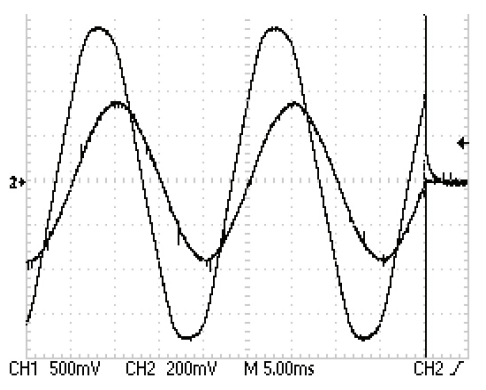
Monitoring results revealed that a capacitor switching transient occurred every day at 6:00 am. The 2100 kVAr bank at the substation was time-switched every morning to provide voltage support on the feeder. Figure 2 show an example of a capacitor switching transient voltage (phase-to-phase) measured at the service entrance.
The early morning capacitor switching transient passed through the voltage regulator input filters and arresters and caused the microprocessor control to trip itself, thereby dropping the load. Figure 3 shows the transient waveforms that were recorded on the input and output of the voltage regulator. Notice how, ½ cycle after the transient occurs, the output voltage collapses to zero, but voltage remains at the regulator input.

The voltage regulator was an electronic tap switching type (SCR gate driven) with a microprocessor control (shown in Figure 4). Tap switching regulators have very fast response time of approximately ½ cycle and are designed to filter input voltage variations. However, the regulators can trip when the output voltage exceeds 110% of nominal. This is generally done to protect the load from excessive overvoltage conditions.
This regulator was adversely affected by the transient caused by capacitor switching on the utility system.

Power conditioning devices should never be more sensitive than the load that they are protecting. In this case, the transient was not severe enough to cause any damage to the chip testers. The regulator was the weak link.
One solution would be to replace the voltage regulator with a regulator with better filtering or to take it out completely. Regulation of this type may not be warranted.
Another solution would be to contact the manufacturer to see if the output overvoltage trip setting could be increased.
REFERENCES
G. Hensley, T. Singh, M. Samotyj, M. McGranaghan, and T. Grebe, Impact of Utility Switched Capacitors on Customer Systems Part II – Adjustable Speed Drive Concerns, IEEE Transactions PWRD, pp. 1623-1628, October, 1991.
G. Hensley, T. Singh, M. Samotyj, M. McGranaghan, and R. Zavadil, Impact of Utility Switched Capacitors on Customer Systems – Magnification at Low Voltage Capacitors, IEEE Transactions PWRD, pp. 862-868, April, 1992.
Electrotek Concepts, Inc., Evaluation of Distribution Capacitor Switching Concerns, Final Report, EPRI TR-107332, October 1997.
RELATED STANDARDS
IEEE Standard 1036
IEEE Standard 1159
GLOSSARY AND ACRONYMS
ASD: Adjustable-Speed Drive
PWM: Pulse Width Modulation
MOV: Metal Oxide Varistor
SCR: Silicon Controlled Rectifier
TVSS: Transient Voltage Surge Suppressors
Published by Jarosław WIATER, Politechnika Białostocka, Wydział Elektryczny, Katedra Telekomunikacji i Aparatury Elektronicznej
Abstract. This paper presents a ground potential rise (GPR) and voltage difference measurement results. Measurements were made for a model of a pole installed in homogeneous ground. The test stand was built in high voltage lab. It allows safe high voltage testing of different types of ground systems. During measurements current and voltage surges were produced by the UCS 500M impulse generator. The prepared physical model makes it possible in the future to investigate different methods of reducing the value of touch and step voltages in the vicinity of earth systems.
Streszczenie. W artykule przestawiono wyniki pomiarów wzrostu potencjału ziemi i różnicy napięć dla modelu słupa zainstalowanego w jednorodnej ziemi. Specjalnie zbudowane stanowisko badawcze umieszczono w laboratorium wysokich napięć. Konstrukcja i lokalizacji umożliwiła prowadzenie badań różnych typów systemów uziomowych w sposób bezpieczny z wykorzystaniem generatorów prądów udarowych wysokiego napięcia. Podczas badań udary prądowo-napięciowej wytwarzał generator udarowy UCS 500M. Zbudowane stanowisko badawcze umożliwi w przyszłości badanie różnych metod ograniczania poziomów napięć krokowych i dotykowych w pobliżu elementów systemu uziomowego. Wyniki pomiarów wzrostu potencjału ziemi i różnicy napięć dla modelu słupa zainstalowanego w jednorodnej ziemi
Słowa kluczowe: wyładowanie piorunowe, napięcie krokowe, wzrost potencjału ziemi, wysokonapięciowe badania.
Keywords: lightning, step voltage, Ground Potential Rise (GPR), high voltage tests.
The basic requirements and features of an earthing system can be summarized as follows:
• Provides personnel safety and reduces fire hazard during fault conditions by maintaining low or zero potential difference between all conductive elements of a structure.
• Provides low impedance path for lightning current to earth and improves system tolerance to electrostatic energy discharge;
• Minimizes service interruptions and equipment damage under fault conditions;
• Facilitates equipment operation i.e. signaling with earth return by ensuring low impedance ground reference;
• Reduces radiated and conducted electromagnetic emissions and susceptibility of equipment.
Personnel safety in various objects under power fault conditions has been studied extensively [1] and is well defined in international standards [2]. A lot of technical publications related to transient lightning behavior of various ground grids are also available [3, 4, 5, 6]. However, they usually consider only an overall scalar potential distribution or Ground Potential Rise (GPR). Still not much information concerning the actual values of step and touch voltages that people can be exposed to during lightning strokes is provided [7]. Moreover, the analyses often relate to a single frequency (usually a low frequency), which does not give complete in-formation because of strong dependence of the behavior of ground grids on frequency. Furthermore, aboveground structures are also often neglected. These structures however, are very important be-cause on the one hand, a current distribution in aboveground structure is determined by the location and specific behavior of earth electrodes and on the other hand, a current distribution in buried electrodes depends on the geometry of the aerial part of the structure.
The main purpose of the article is to present the results of potential measurements in the closest vicinity of the pole to the earth system. Conducting measurements using high voltage generators is very risky in real conditions. Hence, the physical model of the pole in homogeneous soil was built in the laboratory. Such a test stand will allow for safe conduct of measurements using high-voltage surge generators.
Dissipation of the lightning current into the earth means that a good electrical connection to earth at zero potential reference i.e. remote ground should be provided. The impedance of this connection is not ideal due to the soil resistivity within which the grounding system is buried. Hence, the lightning current that flows through the earthing network to earth results in the local ground potential rise (GPR) with respect to remote ground. The GPR is a source of potential gradients within and around the earthing network area, which determine the values of step and touch voltages. An illustration of GPR, step and touch voltages is presented in figure 1.
The step voltage is defined as the potential difference between one’s outstretched feet, usually 1 m apart. The touch voltage is the potential difference between one’s outstretched hand touching an earthed structure and one’s feet. The maximum hand-reached distance of 1 m is usually assumed.
The figure presents also some special cases of touch voltages. The worst case of the touch voltage called a mesh voltage is defined as a potential difference between the centre of a given mesh and an earthed structure. The potential transferred for some distance via reference metallic conductor produces the transferred voltage.

Determining the level of shocks is essential for the safety of people near structures that can be struck by lightning. In order to be able to carry out safe measurements in the conditions closest to reality, a metal bathtub of 2.5 m wide, 2.5 m long and 0.5 m high was built (fig. 2). The metal bath was filled with a quartz decorative sand with a resistivity of 1500 Ωm (fig. 3). The sand was sifted and the grains were no larger than 1 mm. The voltage-current surge was brought to the top of the column structure. The column itself is made of metal truss 40x40x30 cm (width, depth, height). To the corners of the metal truss, a metal structure imitating the base earth was connected (fig. 4). The built-in structure is symmetrical.
Voltage-current surges were produced by the high-voltage impulse generator – UCS 500M6B. The UCS 500M6B cover transient and power fail requirement according to international standards with voltage capability of up to 6,6kV.
• voltage (open circuit) 250-6600V,
• pulse front time 1,2μs +/- 30%,
• pulse time to half value 50μs +/- 20%,
• current (short circuit) 125-3300A,
• direct output Via HV-coaxial connector, Zi=2Ω.


To measure output current of the generator TCP0150 Tektronix AC/DC current probe was used (DC to 20 MHz bandwidth, 500 A peak pulse current). Voltage and current waveforms were registered by Tektronix DPO 7254 digital oscilloscope.
Arrangements during step voltage measurements presents figure 4 and 5. The generator output terminal was connected to the column support structure. The generator ground terminal was connected to a metal tub. Additional electrodes for measuring the voltage distribution near the pole are pushed every 5 cm. The column is centrally located in a metal tub.


The depth of foundation of the additional voltage electrodes was set at 8 cm. For the purpose of analysis, the human foot is usually represented as a conducting metallic disc and the contact resistance of shoes, socks, etc., is neglected [4]. Traditionally, the metallic disc representing the foot is taken as a circular plate with a radius of 0,08 m. A value of 1000Ω were used as a resistance of a human body from one foot to the other foot [10]. During the measurements voltage electrodes dug on 0,08 m depth represents human foot.
Measurement results are shown in figures 7-10. Figure 7 shows generator output current for different capacitor charging voltages. Figure 8 and 9 shows the step and touch voltage waveforms depending on the capacitor charging voltage for point 1. The step voltage changes according to the distance from the pole are shown in figure 10. The results of the measurements are summarized in table 1 and 2.
Table 1. Step and touch voltage results


Table 2. Step voltage results depending on the distance

The measurements performed show a linear relationship between the generator’s charge voltage and the value of the step and touch voltages. Debatable issue from the point of view of the threat of living beings is the value of the spacing between the legs when measuring step and touch voltage. From the anatomical point of view, the distance of 1 meter between the legs is only possible during a quick walk. It is difficult to imagine a situation when someone is going quickly and simultaneously touching an element that may potentially be energized during an earth lightning strike. The author’s experience and press reports clearly indicate that an electric shock caused by a lightning strike occurs when the victim is standing under an object such as a tree. According to the author, in case of electric shock caused by lightning discharge, a new stand voltage definition should be introduced. Stand voltage it is potential difference on the ground surface at anatomical distance between the legs equal 5 cm.
Generally lightning strikes have got a sudden and unexpected nature. In present time when mass-media delivers information about electric shock caused by lightning strike without any delay de-tail knowledge about lighting safety is necessary. This also creates life fear in society. Unfortunately very often happens that those information’s are not true, not complete and not compliant with science knowledge. Medical aspects of news are simple. Victim survived or not. Unreliable information’s causes periodically and rapid increase attraction about lightning electric shock hazard. Most of questions concentrates on one subject. How to correctly behave during thunderstorm. This problem is not so easy as it seems to be. In our climate conditions there are up to several current strokes during cloud-to-earth lightning discharge [1,2,3]. It is difficult to estimate the actual number of consecutive components of lightning discharge. It is, however, possible to establish in safe way possible values of step, touch, stand voltages during lightning surge current excitation.
Electrical accidents caused by electric shocks occur during work, leisure and day-to-day operations. They always involve certain economic, human and social losses as well as the appearance of fear.
In order to reduce losses, it is necessary to use appropriate technical solutions supported by appropriate normative acts, which will reduce the number of catastrophic events and, in most cases, limit their effects.
Preventive measures should be based on the development and implementation of such technical solutions, which, in extreme situations, protect people from the effects of lightning strikes, irrespective of where they are located. One cannot forget about indirect prevention, which should include, first of all, various information measures promoting the use of lightning-resistant technical solutions. The carelessness and misbehavior of man largely leads to accidental injuries, so it is appropriate to educate young people from an early age. Another important but also important aspect is the minimization of the effects of electric shocks by spreading the rules of first aid at the scene of an accident. There is also a clear progress in the lightning protection of building constructions, resulting in changes in the approach to many safety issues during lightning discharges. It is therefore important to consider the introduction of legal regulations recommending participation in periodic lightning protection training for designers and lightning protection workers on new buildings: both public utilities, residential homes and industrial facilities.
The presented results of the measurements clearly indicate a high level of danger of step voltages caused by lightning discharges. The number of traumas causing injuries in people is growing, so it is important to continue research in this area.
Acknowledgment: The research was conducted within the project S/WE/1/2015, financially supported by Polish Ministry of Science and Higher Education.
REFERENCES
[1] J. B. M. van Waes, A. P. J. van Deuersen, M. J. M. van Riet, F. Provoost; Safety Aspects of GSM Systems on High-Voltage Towers: An Experimental Analysis; IEEE Transactions on Power Delivery, vol. 17, no. 2, April 2002; pp. 550–554.
[2] IEEE Std 80-2000: IEEE Guide for Safety in AC Substation Grounding.
[3] Grcev L. D.; Computer Analysis of Transient Voltages in Large Grounding Systems; IEEE Transactions on Power Delivery, vol. 11, no. 2, pp. 815–823, April 1996.
[4] Geri A.; Practical Design Criteria of Grounding Systems under Surge Conditions; 25th International Conference on Lightning Protection; Rhodes, Greece, 2000; Proc. 5.18.
[5] Lorenzou M. I., Hatziargyriou N. D.; Effective Dimensioning of Extended Grounding Systems for Lightning Protection; 25th International Conference on Lightning Protection; Rhodes, Greece, 2000; Proc. 5.9.
[6] Ma J., Dawalibi F. P.; Analysis of Grounding Systems in Soils with Cylindrical Soil Volumes; IEEE Transactions on Power Delivery, vol. 15, no. 3, July 2000; pp. 913–918.
[7] Ala G., Di Silvestre M. L.; A Simulation Model for Electromagnetic Transients in Lightning Protection Systems; IEEE Transactions on Electromagnetic Compatibility, vol. 44, no. 4, November 2002.
[8] Markowska R.; Rozkłady napięć na terenie stacji elektroenergetycznych przy przepływie prądów piorunowych w systemach uziomów; Urządzenia piorunochronne w projektowaniu i budowie; Kraków 26–27 October 2000, pp. 115–122.
[9] AC substation earthing tutorial–ERA Technology Ltd. [10] Electricity Association Technical Specification 41-24: Guidelines for the Design, Installation, Testing and Maintenance of Main Earthing Systems in Substations.
Auhtor: dr inż. Jarosław Wiater, Białystok Technical University, Department of Telecommunications and Electronic Equipment, ul. Wiejska 45d, 15-351 Białystok, Poland E-mail: jaroslawwiater@we.pb.edu.pl
Source & Publisher Item Identifier: PRZEGLĄD ELEKTROTECHNICZNY, ISSN 0033-2097, R. 93 NR 12/2017
Published by Electrotek Concepts, Inc., PQSoft Case Study: Utility Capacitor Switching Fails VAX Disk Drive, Document ID: PQS0408, Date: September 30, 2004.
Abstract: The application of utility capacitor banks has long been accepted as a necessary step in the efficient design of utility power systems. Also, capacitor switching is generally considered a normal operation for a utility system and the transients associated with these operations are generally not a problem for utility equipment. These low frequency transients, however, can cause problems for low voltage power electronic-based loads.
This case illustrates a situation where a power conditioning device was the weak link in an overall equipment protection scheme. The power conditioner, which was located near the sensitive equipment, was magnifying utility capacitor switching transients that were not very severe in magnitude.
A data processing company had a critical VAX (a computer-family of Digital Equipment Corporation) computer that had a disk drive failure about once a month. All data not backed up was lost, and the downtime associated with each failure was several hours.
The computer was supplied by a low impedance power conditioner (LIPC) that was designed to filter high frequency transients and to make a local neutral-to-ground bond. These types of power conditioners are specifically designed to interface with electronic equipment, especially computers.
Disturbance analyzers were brought in to monitor facility power quality. One monitor was installed at the service entrance 480 volt bus supplying the sensitive equipment. Another monitor was installed on the input and output of the low impedance power conditioner supplying the VAX computer to characterize its performance.
Initial monitoring results revealed that a capacitor switching transient occurred every morning at 8:00 am An example of this transient voltage is shown in Figure 1.

The monitor on the input and output of the low impedance power conditioner recorded some interesting waveforms as illustrated in Figure 2. A disturbance was triggered on the input, but as the waveform shows, it was not severe enough to cause any problems. However, the disturbance that was recorded on the output of the power conditioner shows that the transient voltage was magnified considerably.

Low impedance power conditioners are used primarily to interface with the switch-mode power supplies (SMPSs) commonly found in power-electronic equipment. These power conditioners have lower impedance than isolation transformers, and a filter as part of their design (shown in Figure 3). The filter is on the output side and protects against high-frequency transients. However, low-to-medium frequency transients (including utility capacitor switching transients) have been know to cause problems for these devices.

The VAX disk drive never seemed to fail as a direct result of the magnified transient. However, since the disk drives on older VAX machines such as this one are connected directly across the line with no internal protection, it was felt that over time this daily transient caused the disk drive to fail approximately once per month.
Power conditioning devices should not be the weak link in the overall equipment protection scheme. In this case, the power conditioner was magnifying a transient overvoltage, which was not very severe, near the location of the sensitive equipment.
Replacing the low impedance power conditioner with a standard isolation transformer provided enough impedance to sufficiently reduce the transient overvoltage while maintaining a neutral-to-ground bond.
REFERENCES
G. Hensley, T. Singh, M. Samotyj, M. McGranaghan, and T. Grebe, Impact of Utility Switched Capacitors on Customer Systems Part II – Adjustable Speed Drive Concerns, IEEE Transactions PWRD, pp. 1623-1628, October, 1991.
G. Hensley, T. Singh, M. Samotyj, M. McGranaghan, and R. Zavadil, Impact of Utility Switched Capacitors on Customer Systems – Magnification at Low Voltage Capacitors, IEEE Transactions PWRD, pp. 862-868, April, 1992.
Electrotek Concepts, Inc., Evaluation of Distribution Capacitor Switching Concerns, Final Report, EPRI TR-107332, October 1997.
RELATED STANDARDS
IEEE Std. 1036
IEEE Std. 1159
GLOSSARY AND ACRONYMS
ASD: Adjustable-Speed Drive
LIPC: Low Impedance Power Conditioner
MOV: Metal Oxide Varistor
PWM: Pulse Width Modulation
SMPS: Switch Mode Power Supply
TVSS: Transient Voltage Surge Suppressors
VAX: Virtual Address eXtension
Published by Yuriy VARETSKY1, Roman PAVLYSHYN2, Michał GAJDZICA1,
AGH University of Science and Technology (1), Lviv Polytechnic National University(2)
Abstract. This paper focuses on the features of power filter switching-off in industrial power supply systems. The filter switching-off behavior under a large amount of a harmonic current component has been analyzed. The effect of harmonic current content in interrupting current, filter order tuning and switching condition are considered in the analysis. Finally, several oscillograms of simulated cases are included to show main points of the investigation. (Harmonic current impact on transient overvoltages during filter switching-off)
Streszczenie. W artykule przedstawia sie charakterystyczne cechy wyłączenia filtrów mocy w sieciach zasilających zakłady przemysłowe. Przeprowadzono analizę przebiegu wyłączenia przy dużym udziale harmonicznych w prądach filtrów. W badaniach uwzględniono wpływ wartości prądów harmonicznych w przerywanym prądzie, rzędu strojenia filtru oraz warunków wyłączenia. Przedstawiono niektóre przebiegi symulacyjne charakteryzujące problem. (Wpływ harmonicznych prądu na generowanie przepięć w chwili wyłączania filtrów)
Słowa kluczowe: system zasilający, wyłącznik, filtr harmonicznych, przepięcie przejściowe, modelowanie.
Keywords: power supply system, circuit breaker, harmonic filter, transient overvoltage, simulation.
Rapid growth of nonlinear loads such as static power converters, welders, arc furnaces, voltage controllers and frequency converters has led to many harmonic problems in power systems. So their solutions have become a major concern for present day engineers. The harmonic filtering is one of the solutions to prevent the troublesome harmonics from entering the supply system. Single tuned filter is the most commonly used filter. It supplies some or all of the fundamental frequency reactive power required for power factor correction. The filter components may be tuned to provide a low impedance shunt path to a specific frequency. The quality factor of the inductor determines the sharpness of tuning.
In many applications the filters are often switched (on a daily basis or performance requirements basis). As a consequence, the filter circuit switching causes transient overvoltage across the individual components of the filter that exceed the voltage at the bus.
Transient oscillation between the lightly damped filters can likewise be much higher then expected. Traditional surge arresters connected to the bus, may be inadequate overvoltage protection because of the filter components are subjected to extra stresses. Certain switching operation can also present potentially hazardous overvoltage conditions, not only to the filters, but to other substation equipment such as circuit breakers and transformers. As known from experience [1, 2, 3], switching transients in some industrial power systems inclusive filter circuits can result in damages of its components and circuit breakers. It has been noted in [3] that transient overvoltages caused by system faults or normal switching operations are well documented and accounted for in the design of adequate surge protection devices, but application of SVCs may increase the potential for excessive overvoltages. As it has been registered from field tests and simulation [4], the greater a harmonic content in the switching-off filter current, the higher residual filter voltage after interrupting will be.
The paper presents studies on switching-off the filter containing large portion of a harmonic current. The study has been carried out with typical arc furnace power supply system containing a set of single tuned harmonic filters. The investigated power supply system example includes many common features of other industrial power systems. Electromagnetic Transient Program [5] was used to simulating transient behaviors under filter circuit switching-off.
The studies have shown that harmonic content in the filter circuit current causes to grow recovery voltage between the circuit breaker contacts and residual voltage at the filter circuit. Increase in harmonic content of interrupting current tends to the higher overvoltage magnitudes and effects the possibility of circuit breaker restrike.
The authors are hoping that the results of these studies will be useful for harmonic filters application planning and improve its operation reliability.
The examined power supply system shown in the Fig.1 involves 220 kV bus supplying 35 kV bus by means of step down wye-delta connected transformer TS of 160 MVA with the primary neutral solidly grounded. Couple of 50 MVA electric arc furnace (EAF) units is connected to the 35 kV bus. The SVC circuit is assembled from four single-tuned filters and thyristor controlled reactor unit and connected to the bus through the appropriate circuit breakers. The individual filters are sized to supply 25, 30, 17 and 20 MVAr for the 2nd, 3rd, 4th, and 5th harmonic filters respectively. The filters are connected to the 35 kV bus through cables by air blast circuit breakers Q2 – Q4, which have become commonly used to switch filter circuits and capacitor banks. Damping circuits are connected to the switched cable ends for limiting fast transient overvoltages.

As it have been shown in [6], switching-on ungrounded wye filters in the investigated power system results in transient overvoltage magnitudes approaching 1.5…1.7 p.u. on the substation bus.
In general, however, the overvoltages, associated with normal filters energizing in the presented system, are do not dangerous for the filter equipment and do not usually endanger substation equipment at the bus location. The peak currents in the filters are a few times higher than steady-state levels. The energizing of a filter generates steep fronted voltage waves on filter reactor which can result in high local overvoltages along reactor winding length. As a consequence of this phenomenon the adequate measures to prevent the reactor insulation dielectric failure must be provided.
If under filter switching-off there is successful interruption of the capacitor current at zero crossing and the switching device withstands the transient recovery voltage there are no significant transients on clearing a filter. The occurrence of reignitions during circuit breaker poles opening tends to cause adverse transient recovery voltage conditions.
To investigate switching-off transient overvoltages in the presented scheme the equivalent circuit shown in Fig.2 was constructed for the Electromagnetic Transient Program. The every source voltage uA, uB, uC was adjusted as a set of the system frequency and a harmonic frequency voltages to modeling required harmonic content in interrupting current. Circuit breaker Q in the equivalent circuit was modeled by typical air blast breaker voltage-second characteristic for switching-off load currents. Current distorted wave for each phase was interrupted by crossing zero, so after first interrupted phase current interruption in second and third phase occurs simultaneously in the presented system.
For example, Fig.3 shows voltages and current when circuit breaker interrupts the 3rd filter currents (without harmonic presence) following one and two restrikings. As it was noted, restriking of switching breaker under interrupting currents produces sufficiently higher overvoltage magnitudes in comparison with no breaker restriking. The transient voltages include oscillation in accordance with system natural frequency. Application of damping circuit CD , RD allows to limit magnitude and rate of rise of the transient recovery voltage across the opening breaker contacts.

As it can be observed from the oscillograms, current reigniting between circuit breaker contacts will produce transient voltages and currents significantly high in magnitude than those occurring during closing. Since restrikes can occur when there is a charge remaining on the filter capacitor bank it is possible for restrikes to generate transient overvoltages that are much higher in magnitude than on closing. The transient voltages on a filter and recovery voltages across a switching device can be reduced during restrikes by installing arresters on the filter side of the switching device.

Arresters connected phase-to-ground will limit the recovery voltage but do not necessarily limit the voltage trapped on filter capacitors during restrikes. Arresters are sometimes connected from phase to neutral to limit the trapped voltages to lower levels, thus reducing switch recovery voltage and minimizing the possibility of multiply restrikes [8].
If the circuit breaker is applied to filter circuit loaded a large amount of a harmonic, the behavior of the transient voltages will be different from described above. As it has been noted above, harmonic content in the interrupting current will influence on the transient behavior. Such a case can be observed in the power supply system described in the Fig.1. EAF generate significant harmonic currents that flow in SVC filter circuits. The harmonic currents vary randomly during EAF operating cycle. Magnitudes of individual harmonic currents may reach sufficient values. During EAF operating it is possible that a specific filter branch may be out of service. In the circumstances the filters in service will be overloaded due to possible resonances in supply system. It provokes activation of the filter overload protection and switching-off the filter.
Energizing arc furnace transformer in EAF supply system is a powerful harmonic disturbance. In the examined supply system arc furnace transformer (T) energizing occurs several times a day. When the transformer is energized, inrush current can be high in magnitude. The transformer inrush current consisting high harmonic content can be long duration (lasting several seconds). The harmonic content causes resonance in the filter circuit that extends the duration of the inrush transient and resonance. The resonance in the filter may cause the filter relay undesirable operation. So, the filter circuit breaker will be switched-off under high harmonic presence, increasing possibility of overvoltages.
As example let us consider for comparison the oscillograms shown in the Fig.4.

If the interrupted current contains harmonic component, the maximum recovery voltage between filter circuit breaker contacts increases giving rise to the possibility of restriking. When compared with the interruption of the current having no harmonic component the presence of harmonic current will also result in greater overvoltage magnitudes. Fig. 5 shows residual voltages on 2nd filter phases versus harmonic content in interrupted currents (phase A is first interrupted). Base voltage is crest value of nominal phase-to-ground voltage.


A close examination was conducted on the overvoltage magnitudes during reigniting circuit breaker current by Electromagnetic Transient Program simulating. The overvoltage magnitude depends on the order of the switching filter and harmonic current phase shift. As it has been observed from the experiments the most dangerous rise of the overvoltage magnitude versus harmonic takes place for the 2nd filter.
Let us consider transient behavior under restriking between a filter circuit breaker contacts. Fig.6 shows transient voltages during 2nd filter circuit breaker current reigniting.
The next investigation have been carried out is examination of the conditions where the maximum overvoltage magnitudes occur. If restriking occurs at the maximum recovery voltage, the great peaks are produced in other phases. In the certain circumstances the peak transient overvoltages may exceed withstand impulse voltage for substation insulation. The maximum values of transient voltage magnitudes on filters under restriking are shown in Table 1.
Table 1. Maximum filter overvoltages under restriking

As it can be observed from the Table 1 the restriking surges depend on the order of the filter and the value of harmonic current. When compared with the switching-off filter having no harmonic component it has been noted that presence of harmonic results not only higher recovery voltage in the first interrupted phase but also higher residual voltages of the second and third interrupted phases. Since overvoltage magnitudes under circuit breaker restriking is great it is necessary to evaluate its relationship to withstand impulse voltages. Therefore, if the restriking is observed for the filter circuit breaker, it should be necessary to evaluate possibility installing the surge protective devices.
A special case of transients which must be considered in the examined power supply system is analysis of the phenomenon under arc furnace transformer energizing. As it noted above inrush currents contain full range of harmonics beside their fundamental and dc components. Furthermore the inrush phenomenon can last many cycles and activate overvoltage and overload relays of SVC filter circuit causing trip a filter breaker under inrush condition. So, protection coordination studies should be implemented to remain SVC in service over the range of normal and transient conditions.
The paper presents the results of filter breaker switching-off phenomenon at an example of industrial power supply system consisting on EAF and SVC.
A general analysis shows that presence of harmonic content in the interrupting filter current increases both recovery voltages across the circuit breaker contacts and filter residual voltage. The greater harmonic content, the higher the voltage magnitudes, the more possibility of arc restrikes between the circuit breaker contacts.
Special considerations must be carried out for arc furnace power supply systems because of possible presence of great harmonic magnitudes in filter circuits and necessity of prevention of the filter protection misoperation.
Acknowledgments
The present work was supported by the Polish Ministry of Science (Grant AGH No. 11.11.210.198)
REFERENCES
[1] Bonner J.A. et al.: Selecting ratings for capacitors and reactors in applications involving multiple single-tuned filters. IEEE Trans. on Power Delivery, vol.10, no.1, 1995, pp. 547-555.
[2] Harder T.E. AC filter arrester application. IEEE Trans. on Power Delivery, vol.11, no.3, 1996, pp. 1355-1360.
[3] A Working Group of the Substation Protection Subcommittee of the IEEE Power System Relaying Committee: Static VAR compensator protection. IEEE Trans. on Power Delivery, vol.10, no.3, 1995, pp. 1224-1233.
[4] Nishikawa H., Yokokura K., Masuda S. et al. Harmonic current interruption phenomena in arc furnace filter circuits: IEEE Trans. on PAS, vol.103, no.10, 1984, pp. 3000-3006.
[5] Ravlyk A., Gretchyn T. Digital complex for modelling transient processes in electric circuits. Proc. of III Int. Symp. “Metody matematyczne w elektroenergetyce”, Zakopane, 1993, pp. 17-20.
[6] Varetsky Y. Exploitative characteristics of SVC filter circuits, Proc. of 6-th Int. Conf. Electrical power quality and utilization, Cracow, 2001, pp. 297-302.
[7] Varetsky Y. Transient overvoltages during filter circuit switching-off. Proc. of Int. Conf. on Modern Electric Power Systems, Wrocław, 2010, pp. 1-4.
[8] Working Group 3.4.17 of the IEEE Surge Protective Devices Committee: Impact of shunt capacitor banks on substation surge environment and surge arrester applications. IEEE Trans. on Power Delivery, vol.11, no.4, 1996, pp. 1798-1807.
Authors: prof. dr hab. inż. Yuriy VARETSKY, AGH – University of Science and Technology, Faculty of Energy and Fuels, Department of Fundamental Research in Energy in Energy Engineering, 30 Mickiewicza Ave,30-059 Krakow, Poland, E-mail: jwarecki@agh.edu.pl; mgr inż. Roman PAVLYSHYN, Lviv Polytechnic National University, Institute of Energy Engineering and Control Systems, Department of Power Systems and Grids, E-mail: pavlyshyn@gmail.com; mgr inż. Michał GAJDZICA, AGH – University of Science and Technology, Faculty of Energy and Fuels, Department of Fundamental Research in Energy in Energy Engineering,30 Mickiewicza Ave,30-059 Krakow, Poland, E-mail: michal.gajdzica@wp.pl.
Source & Publisher Item Identifier: PRZEGLĄD ELEKTROTECHNICZNY, ISSN 0033-2097, R. 89 NR 4/2013
Published by Algirdas BASKYS1, 2, Vytautas BLEIZGYS1, 2, Tadas LIPINSKIS1, 2
Center for Physical Sciences and Technology (1), Vilnius Gediminas Technical University (2)
Abstract. The overvoltage in the inverter that supplies the AC induction motor, which during the deceleration operates as a generator delivering current back into the inverter DC bus, has been investigated. The investigation was performed experimentally using a special test bench. The impact of the motor deceleration rate, motor load and initial rotation velocity, at which the deceleration starts, on the overvoltage was investigated and analyzed. The obtained results were employed for the development of the overvoltage fault protection of the inverter.
Streszczenie. W przekształtniku zasilającym silniki AC powstają przepięcia w czasie zwalniania silnika. Przeprowadzona badania tego zjawiska dla różnych: prędkości zwalniania, obciążeń silnika i prędkości obrotowej (Analiza przepięć w przekształtniku zasilającym silnik)
Keywords: inverter, overvoltage, AC induction motor, motor deceleration.
Słowa kluczowe: przekształtnik, przepięcia, sinlik AC.
The AC induction motor used in the variable speed drive based on the frequency converter can act as a generator under certain operating conditions. The inverter, which is the main block of the frequency converter, supplies the motor with the variable frequency variable amplitude three phase AC voltage. The motor rotation velocity is determined by the AC voltage frequency. If the frequency increases the motor accelerates, if it decreases – the motor decelerates. If the AC induction motor rotation velocity during the deceleration exceeds the synchronous velocity, it starts to operate as a generator delivering current back into the DC bus of the inverter through the transistors, which operate as switches of the inverter. Therefore, the capacitors of the DC bus are charged and voltage of the DC bus increases [1-3]. The maximal voltage value (overvoltage) depends on the motor deceleration rate, motor load and its inertness, capacitance of the DC bus capacitors and initial rotation velocity of the motor (rotation velocity, at which the deceleration starts). If the overvoltage of the DC bus exceeds the safe operation limits, the transistors of inverter switches, DC bus capacitors and other components used in the inverter can be damaged [3, 4]. Therefore, the problem of the overvoltage in the inverter, is topical [5]. There are lot of works, e.g. [6-9], dedicated to the investigation of the overvoltage in the inverter using simulation. However, during the frequency converter development process it is important to have accurate data, which can be obtained only experimentally. They are needed for the development of the overvoltage fault protection of the inverter.
The investigation of the overvoltage in the inverter caused by the AC induction motor deceleration was performed using a special test bench. The block diagram and picture of the test bench are given in Figs.1 and 2. It includes the 4 kW AC induction motor fed from the inverter of the experimental example of the developed frequency converter. The motor drives the 5.5 kW DC generator, which acts as the motor load and is characterized by the relatively high inertness. The test bench includes the motor load torque and rotation velocity sensors and appropriate circuits for conversion of sensor signals to standard signals, which are used for measurement.


The motor load torque is controlled by the variation of the DC generator rotor current and the generator electrical load. The transients of the inverter DC bus voltage (UDC), motor load torque (M) and motor rotation velocity (Vr) have been investigated. The measurements of transients were provided using the Tektronix digital oscilloscope TPS2024.
The following investigation technique has been used. Firstly, the appropriate frequency (fp) of the inverter output voltage and deceleration rate are preset and the motor is started. Secondly, the motor load torque is fixed by variation of the rotor current and electrical load of the DC generator. After this, the motor is stopped at the assigned deceleration rate and UDC, M, Vr transients are measured. The motor deceleration rate (D) is expressed by the decrease rate of the frequency of the inverter output voltage, i.e. D has the Hz/s dimension.
The two situations can be observed during the motor deceleration when the motor acts as a generator and the DC bus capacitors are charged. The first situation is when the DC bus voltage spike does not reach the overvoltage fault protection trigger level, the second one – when the voltage spike reaches this level. In the first case the motor is stopped at the preset deceleration rate. However, if the overvoltage fault protection is triggered, the transistors of inverter switches are closed and the motor does not provide the energy to the DC bus. Therefore, the rise of the DC bus voltage is stopped, the motor is not decelerated by the inverter and, as a consequence, the motor deceleration becomes uncontrolled.
The examples of the transients of the UDC, M and Vr for the case when the overvoltage fault protection is not triggered are presented in Fig. 3. It is seen that the motor deceleration causes the DC bus voltage spike and the motor load torque decreases and becomes negative during the deceleration. Additionally, the transient of the motor load torque has oscillations.
The DC bus voltage transient example for the case when the voltage spike reaches the overvoltage fault protection trigger level is given in Fig. 4. The rising edge steepness of the voltage spike in the analyzed case is about 1.5 V/ms. When the voltage reaches the fault protection trigger level, the transistors of inverter switches are closed by the protection circuit. Since the steepness of voltage spike is relatively low, the DC bus voltage practically is fixed at the value, which corresponds to the overvoltage fault protection trigger level even in the case when overvoltage fault protection circuit with the response time up to several hundreds of microseconds is employed. This fact allows us to use slow overvoltage protection circuit, i.e. circuit, witch has low sensitivity to electromagnetic disturbances produced by the inverter.


The shape of the falling edge of the voltage spike (Fig. 4) is determined by the slow discharge of the DC bus capacitors by the frequency converter circuitry, which is fed from the DC bus voltage.
The investigation was accomplished at various motor load torques for the different motor deceleration rate and initial motor rotation velocity, at which the deceleration starts. The results were obtained for DC bus capacitor capacitances C = 470 and 880 µF. During the investigation the duration of UDC spike (τ) and the maximal UDC value UDCm (overvoltage) (Fig. 3) were estimated. The results are presented in Figs. 5–7. The overvoltage depends on the motor load – it decreases if the motor load increases. This can be explained by the fact that the motor even during the deceleration supplies the energy to the load and only the excess energy of the motor is supplied to the DC bus. It is seen that the overvoltage increases when the motor deceleration rate and initial rotation velocity (initial inverter output voltage frequency) increase (Figs. 5 and 6). The increment of the capacitance of the DC bus capacitors allows us to reduce the overvoltage. However, the overvoltage decrement is slight even imperceptible (compare the dependences given in Fig. 5 with the corresponding dependences presented in Fig. 6). This can be explained by the fact that the capacitor voltage is proportional to the square root of energy (E) used for the capacitor charge. Knowing the nominal DC bus voltage UDCn (in the analyzed case UDCn≈540V), the DC bus capacitance C and the amount of energy, which is supplied by the motor to the DC bus during the motor deceleration, the DC bus voltage can be calculated using a well known equation UDC=[(2E/C) + U2DCn]1/2, where E is expressed in Joules, C – in Farads and the voltage − in Volts.


For example, if UDCn = 540V and the energy of 27.7 Joules is supplied to the 470µF DC bus capacitor, it is charged according to the given equation up to UDC = 650V. If the capacitance is increased up to 880 µF (by the 87%), the calculated voltage at the same amount of energy UDC = 595V, i.e. theoretically the voltage in the analyzed situation should decrease by 7.5% only.
The investigation of the UDC spike duration (Fig. 7) shows that it decreases when the motor initial rotation velocity (initial inverter output voltage frequency) decreases. However, the dependence of the spike duration on the deceleration rate is not monotonic. It has a peak, at which the spike duration reaches the maximal value. The location of the peak depends on the motor load. It is seen (Fig. 7) that in the analyzed case the dependences have the peak at D = 10Hz/s if the motor load is 3.25Nm, and at D = 17Hz/s when the motor load is 6.5Nm.

1.The rising edge steepness of the voltage spike caused by the motor deceleration is relatively low (about 1.5 V/ms). Therefore, the slow and, as a consequence, insensitive to electromagnetic disturbances overvoltage protection circuit with the response time up to several hundreds of microseconds can be employed.
2.The duration of the inverter DC bus voltage spike caused by the motor deceleration decreases when the motor initial rotation velocity decreases.
3.The dependence of the spike duration on the deceleration rate is not monotonic. It has a peak, at which the spike duration reaches the maximal value. The location of the peak depends on the motor load.
4.The increment of the capacitance of the inverter DC bus capacitors allows us to reduce the overvoltage slightly.
This work was supported by the Lithuanian State Science and Studies Foundation under High–tech development program project B-13/2007–2009 and by the Company “Ventmatika” under project U-2007/8.
REFERENCES
[1] Swamy M. M., Kume T.J., Fujii S., Yukihira Y., Sawamura M., A Novel Stopping Method for Induction Motors Operating from Variable Frequency Drives, IEEE Transactions on Power Electronics, 19 (2004), No. 4, 1100-1107
[2] Inoue K., Minamiyama M., Kato T., A design methodology of an optimal torque minimizing energy loss under torque limit for an induction motor, Proc of Energy Conversion Congress and Exposition, ECCE 2009, San Jose, USA, September 20–24, (2009), 163-167
[3] Li J., Tang T., Wang T., Yao G., Modeling and simulation for common dc bus multi-motor drive systems based on activity cycle diagrams, Proc of IEEE International Symposium on Industrial Electronics, ISIE 2010, Bari, Italy, July 4–7, (2010), 250–255
[4] Swiątek H., Michalski A., Flisowski Z., Pytlak A., Insulation co-ordination in power electronic devices at voltage stresses of external origin, Przegląd Elektrotechniczny, 79 (2003), nr 11, 798-805
[5] Hinkkanen, M., Luomi J., Braking Scheme for VectorControlled Induction Motor Drives Equipped with Diode Rectifier without Braking Resistor, IEEE Transactions on Industry Applications, 42 (2006), No. 5, 1257-1263
[6] Wang Y., Yang G., Hong T., Analysis and Implementation of AC Motor Braking Method without Energy Returning or Braking Unit, Proc 8-th Int. Conference on Electrical Machines and Systems, ICEMS 2005, Nanjing, China, September 27–29, (2005), 1447–1451
[7] Lehtla M., Laugis J., Computer models for Simulation and Control of a Traction Supply System, Proc 12-th Int. Conference on Power Electronics and Motion Control EPEPEMC 2006, Slovenia, August 30 Sepember 1, (2006), 1372-1377
[8] Hairik H.A., Thejel R.H., Kadhem W.A., Proposed scheme for plugging three-phase induction motor, Proc 15-th IEEE Mediterranean Electrotechnical Conference MELECON 2010, April 26–28, (2010), Valletta, Malta, 1–5
[9] Baskys A., Rinkeviciene R., Petrovas A., Overvoltage Limitation in Variable Speed Drive with Inverter, Proc 17-th Int. Conference on Electromagnetic Disturbances, EMD 2007, Bialystok, Poland, September 19–21, (2007), 2.3-1–2.3-4
Authors: prof. dr Algirdas Baskys, M. S. Vytautas Bleizgys, M. S. Tadas Lipinskis, Center for Physical Sciences and Technology, A. Gostauto str. 11, 01108 Vilnius, Lithuania, Email: mel@pfi.lt and Vilnius Gediminas Technical University, Naugarduko str. 41, 03227 Vilnius, Lithuania, E-mail: algirdas.baskys@vgtu.lt.
Source & Publisher Item Identifier: PRZEGLĄD ELEKTROTECHNICZNY (Electrical Review), ISSN 0033-2097, R. 87 NR 5/2011