Published by Rakesh Kumar, EE Power – Technical Articles: 6 Critical Design Challenges in DC Fast Chargers, February 09, 2023.
DC fast chargers pose significant challenges to a power grid. Know the six challenges while designing a DC fast charger to overcome the various power quality challenges.
The design of a DC fast charger is based on several internally running and externally connected control loops of a power grid. Some of the controller loops are the phase-locked loop (PLL), current control (CC) loop, and direct voltage control (DVC) loop. Additionally, the design of an EMI filter and the modulator that controls the PWM signals is also important.
Figure 1 shows a comprehensive view of the interconnection of different controller loops of a DC fast charger. Each of these loops is further discussed in this article with their design challenges that must be taken care of to address the power quality issues of a power grid.
DC Fast Charger Startup Scheme
A DC fast charger handles a large amount of power to charge an electric vehicle. This means that an abrupt charging or discharging of an electric vehicle can suddenly disrupt a power system. The case is particularly severe when multiple such electric vehicles are connected. In such a scenario, the power handled is quite large, which can lead to flickering. Therefore, a good startup scheme is necessary for smoothly handling the large power of a fleet of electric vehicles.
A possible solution is to follow a ramp-type start-up of an electric vehicle charging. A ramp-type approach refers to a linearly charging way of electric vehicles, and it has many benefits compared to a step-type charging of the electric vehicle. An energy storage system such as a battery can help alleviate power quality issues for such a smooth power-building. Using an energy storage system offers the necessary bandwidth of the controller to achieve ramp-type charging of the electric vehicle. The power rate at which an electric vehicle is charged also depends on the command issued by a distribution system operator.
Phase Lock Loop
A feedback control system known as a PLL block is responsible for automatically adjusting the phase of a locally generated signal to match the phase of an input signal. A converter’s impedance is impacted due to the PLL, mainly when the frequency range is low. Negative damping may be injected into a power system when the PLL leads to negative resistance at some frequencies. The negative resistance also causes harmonics and inter-harmonics in the power grid to increase. This is because of the weakening damping of frequencies that are dependent on the negative resistance. Such a situation, when unchecked, can potentially lead to complete harmonic instability.
A possible solution to this phenomenon is to check for PLL’s bandwidth. It is suggested that the PLL’s bandwidth be kept at low frequencies in the range of a few Hz. Therefore, the negative resistance offered by a PLL can be taken care of. Flickering can also occur due to PLL issues if inter-harmonics have less than double the fundamental frequency. Therefore, PLL dynamics and frequency bandwidth are important to DC fast chargers.
Direct Voltage Control
The DVC loop takes in the dc voltage and a reference dc voltage to generate a reference current signal. The signal forms a basis for the following current control block. The bandwidth of the DVC loop is also narrow, and it resembles the bandwidth of PLL. When the grid conditions are weaker, it decreases the stability of the DVC loop. The stability of the DVC loop is also dependent on other factors, such as the input power of the voltage source converter. The DC fast charger is another factor that determines the stability of the DVC loop.
As discussed with the PLL, negative damping is also introduced by the DVC loop for the low-frequency range. Hence, negative damping leads to issues such as flicker and harmonics. A good DC fast charger should take into account the design of DVC to mitigate the power quality challenges arising. The DVC loop should respond well to weaker grid conditions, and it is important that it can synchronize with other control loops in the system.
Current Control
The CC loop is at the heart of the controller design because its inputs its signals from the DVC and PLL loops. Unlike the previous two cases, the CC loop deals with higher frequencies. If the interaction between the PLL and CC loop is not synchronized with each other, it again leads to the system’s instability. This problem can be further addressed by keeping a check on the bandwidth of PLL and keeping it to a low range.
Resonant controllers are also a good solution to operate with the CC loop. When the need arises to eliminate particular harmonics, resonant controllers can achieve the same. Another way a power grid can slip into instability is the effect of multiple CC loops operating together. When multiple electric vehicles are charged together in a DC fast charger station, the parallel operation of multiple such converters can cause instability of the power system.
Input Filter
The ripple injected into the grid can be attenuated with the help of input filters. The switching frequencies of such ripple can vary from 2 kHz to 150 kHz. The input filters are usually in the form of an L-type or LCL-type filter. When the inductances used in both filters are the same, it is observed that the LCL-type filter tends to perform better. But an LCL-type filter poses additional zeros and poles, which becomes a cause of concern from the system stability point of view. But the LCL-type filter is still considered the optimal solution because of its matured technology.
The grid impedance condition is unique to each type of grid; therefore, the design of a DC fast charger is also unique to the specific grid it is built upon. When a DC fast charger is connected to a grid with a different grid impedance, it will change the resonance peak of the LC filter employed. If the CC loop is designed, so the bandwidth is high, it can still lead to system stability because of the change in grid impedance. One way to minimize instability risk is to employ active damping methods.
Modulator and EMI Filter
The modulator is an essential component of a DC fast charger responsible for managing the charging current and voltage provided to the battery. This is accomplished by modulating the signal sent from the charger to the battery. The modulator will normally use a DC-DC converter to adjust the voltage of the charging current according to the system’s requirements. Additionally, it may use pulse width modulation (PWM) or other control methods to regulate the charging current. Sideband frequency oscillations in the range of 2 to 150 kHz can be induced if the proper PWM synchronization design is not properly taken care of.
EMI filters perform their function by obstructing or dampening the transmission of high-frequency signals produced by the charger. These signals are often created by switching power transistors or switching the DC-DC converter that is used to step up or down the voltage of the charging current. Both of these processes are employed to step the charging current voltage up or down. EMI filters are normally located either at the input or output of the charger, and they can either be passive or active.
Figure 2 summarizes and illustrates the different design challenges, their related issues, and the frequency range for which the design challenges are relevant.
• When it comes to recharging an electric vehicle, a DC fast charger is capable of handling significant amounts of power. Using a system for energy storage provides the controller with the necessary bandwidth to accomplish ramp-type charging of the electric vehicle.
• Another element that plays a role in determining the DVC loop’s degree of stability is the DC fast charger. A suitable DC fast charger should consider the DVC design to help reduce the power quality difficulties that may arise.
• With input filters’ assistance, the ripple pumped into the grid can reduce its volume. Typically, the input filters take the shape of an L-type or LCL-type filter. The resonance peak of the LC filter used will shift if a DC fast charger is connected to a grid with a varied grid impedance.
• The transmission of high-frequency signals produced by the charger is impeded or dampened by EMI filters, which allows the filters to fulfill their intended purpose. Either the input or output of the charger is the typical location for EMI filters, and these filters can either be passive or active.
Author: Rakesh Kumar holds a Ph.D. in Electrical Engineering with a specialization in Power Electronics from Vellore Institute of Technology, India. He is a Senior Member of IEEE, Class of 2021, and a member of the IEEE Power Electronics Society (PELS). Rakesh is a committee member of the IEEE PELS Education Steering Committee. He is passionate about writing high-quality technical articles of high interest to readers of the EE Power Community. You can email him at rakesh.a@ieee.org.
Published by Andrzej ERD1, Józef STOKLOSA2, University of Technology and Humanities In Radom(1), University of Economics and Innovation in Lublin(2)
Abstract. The purpose of the publication is to indicate activities aimed at improving the reliability of electric vehicles. The starting point is the analysis of the most common failures of both assemblies and their components. On this basis, the most common reasons for their appearance have been identified for each group. The work indicates suggested steps aimed at reducing the intensity of damage to the systems that are part of electric vehicles.
Streszczenie. Celem publikacji jest wskazanie działań mających na celu poprawę niezawodności pojazdów elektrycznych. Punktem wyjścia jest analiza najczęściej występujących uszkodzeń zarówno zespołów jak i ich elementów. Na tej podstawie zostały wyodrębnione dla każdej z grup najczęstsze przyczyny ich pojawiania się. W pracy wskazano sugerowane kroki zmierzające od zmniejszenia intensywności uszkodzeń systemów wchodzących w skład pojazdów elektrycznych. (Czynniki wpływające na powstawanie uszkodzeń elementów i układów elektronicznych w pojazdach elektrycznych oraz działania mające na celu zmniejszenie ich znaczenia)
Keywords: failures of electronic circuits, electronic components, electric vehicle, improvement of quality electronic systems Słowa kluczowe: uszkodzenia układów elektronicznych, elementy elektroniczne, pojazdy elektryczne, poprawa jakości systemów elektronic
Introduction
The intensive development of electric cars started in the 20th century caused a dynamic increase in the number of electronic components and systems installed in the vehicle.
While in the initial period the number of electronic components was relatively small and mainly electromechanical components dominated, at the moment the majority of control functions are supported by electronic systems. Unfortunately, most systems are unreliable and damage occurs, sometimes even resulting in tragic events. With time, the quality of the components has improved, as a result of which both the span of time until the first damage and the span of time between failures in reference to both individual elements and systems have increased.
The degree of complexity of the systems has increased enormously over time. New layout functions have been created, including support and optimization of mechanical components, initially such as ABS and electronic ignition. Slightly later, ASR or ESP traction control systems appeared.
Active and passive safety systems such as LDW (Lane Departure Warning), PD (Pedestrian Detection), or PCAM (Pedestrian Crash Avoidance / Mitigation), RSR (Road Sign Recognition) and FCW (Forward Collision Warning). The peak achievements at the present time include navigation systems or autonomous pilot systems being tested. The emergence of hybrid (HV) and fully electric (EV) cars forced the introduction of high-power and high-voltage electric motor control systems into vehicles. The occurrence of high voltage on the car carries the risk of electrical shock [1].
Damage to Electronic Systems
Damage to electronic systems can be divided into catastrophic and non-catastrophic. Catastrophic are those in which the device stops working completely. Non-catastrophic damage [2,3] occurs when the device is still electrically functioning but the parameters change and the functionality is reduced. Depending on the duration, permanent damage is distinguished, ie. the device degrades permanently. The second group is transient damage, ie. the change of the leading parameter characterizing the error of operation occurs in a random manner in time. As stated in [3] causes of transient failures can be divided into:
• Design errors • Manufacturing errors in the production phase • Temporary short circuits • Disappearing connections • Interference with other systems • Wear or corrosion on connections • Temporary short circuits
The above-mentioned causes of transient failures, in the paper [3] refer to the connections of electronic circuits.
System connectors are one of the most sensitive elements of vehicles. Other combinations of cover materials should also be explored. A compromise is therefore needed between good electrical and mechanical properties on the one hand, and reasonable prices on the other.
While examining complete systems, this list of causes should be complemented with:
• Defects and damage to components • Changes in the parameters of internal components beyond the limits provided for in the construction. • Occurrence of working conditions not provided for in the construction.
The first two factors mentioned above may be caused either by an internal defect not revealed during the final quality control of the elements, or by aging and change of the internal structure. The last of them is related to the construction assumptions, in some cases enforced by international standards, in others to the emergence of an unlikely external situation.
Damage detection is a separate and widely studied issue [4,5,6,7,8]. It is easier in the case of devices with many internal signals, and based on their measurements it is possible to observe changes in the technical condition up to the degradation of the device, inclusive The general practice with regard to car systems is to register the occurrence of operating errors reported by their controllers to the Powertrain Control Module(PCM) of the vehicle. The operation of the PCM module is complemented by Body Control Module (BCM) whose task is to control the windows, wipers, air conditioning, seat settings, central locking, internal and external lighting. The division due to the place of damage to electric vehicles shows that they most often appear in the systems indicated in Table below.
Table 1. Percentage structure of damages in vehicles electronics systems [6]
.
It is worth noting that critical damages in the engine group and steering for vehicle movement are relatively less frequent than eg. in the Audio group.
Knowledge of the system responsible for damage is important from the point of view of the service because it usually exchanges entire modules for repair without repairing them. However, the knowledge of how the single components of modules are damaged, allows to draw conclusions about the methods of improving the reliability of systems and vehicles.
Damages to Electronics Components
The range of elements used in car electronics is very wide. In the paper [8] an example is given that in a premium car there are more than 800 integrated circuits. Thus, a detailed analysis, broken down into individual groups of elements, will be omitted due to the size of the issue, only important conclusions will be cited. The factors influencing the change of the technical condition of the elements are particularly important.
Passive elements are generally durable, however, as the authors of the paper [9] indicate, an increase in the resistor temperature of 35°C causes a double increase in the intensity of damage (ID). Similarly for capacitors, the temperature increase of 15°C results in the ID also being doubled. In addition, an increase in temperature, especially in electrolytic capacitors. Particularly dangerous are the changes in capacitance of capacitors in drive controllers for EV drive motors, then the switching conditions of the IGBT transistor change.
Low-voltage inductive components are not very susceptible to damage due to the increase in temperature, in contrast to high-voltage induction components found, for example, in battery charging modules. For glass-epoxy laminates, an increase in temperature from 25 to 70 °C results in a drop in vertical resistance of over 14 times.
Damages to Semiconductors
Semiconductor components are also very susceptible to temperature changes. Depending on the temperature range conduction phenomena have different character. In the lower temperature range, the ionisation of the dopants is exponentially dependent on the temperature, hence the conductivity increases exponentially, in the middle range most of the dopants are ionized and the changes depend only on the mobility of the carriers. In the upper temperature range, an intense generation of an electron-hole pair occurs, depending on the temperature exponentially. This causes a rapid increase in the thermal leakage current.
In addition to changes in conductivity of the semiconductor, there are also changes in the voltage of the conductivity of the PN junction and the amount of backbreaking voltage. The critical temperature values depend on the material. In the paper [10], it was indicated that in semiconductor devices the deviations from the norm may appear suddenly or be predicted. Sudden changes in the technical condition are caused by overvoltages, mechanical damage or a puncture of the insulation inside the system. Progressive degradation is the result of drift of electrical parameters, electromagnetic interaction. Detection of systems with deteriorated properties takes place during testing. Finding the right boundary value that classifies systems as fit / unfit is a matter of a compromise between high parameters and high losses in the production process.
Damages to MEMS
A relatively new group of elements are MEMS (Micro Electro Mechanical System). They are used as sensors (accelerometers, gyroscopes, vibration sensors, pressure meters), and actuators. Due to their structure, they have some characteristic types of damage, caused by:
Exceeding the limit value of static friction force – Static friction (in English literature term Stiction, derived from Static Friction) is the mutual attraction force that occurs between two very close bodies when they do not move relative to each other. As long as the static friction force balances the external force affecting the body, the body remains motionless. The static friction force increases as the value of the external force increases until it reaches its maximum value.
As a result of changes in the internal structure of the system, the static friction force may increase and the device is not able to start correct operation. To prevent this, designers use elements that prevent excessive approach.
Mechanical shocks – they are an element accompanying the operation of vehicles and their occurrence is inevitable, however, the impact on the elements of electronic equipment must be minimized. With respect to MEMS elements, temporary acceleration of the delay exceeding the permissible value may be destructive for them and cause the structure to detach from the ground, jamming of moving elements. This is particularly important due to the fact that MEMS elements are often components found in both passive and active safety systems.
Electrostatic discharges – (ESD – Electrostatic Discharge) The presence of moving parts is associated with jumps of electric charge and this is part of the normal operation of the system, however, their repeated occurrence can lead to local melting of the contacts, or in the event of additional external voltages to breaking through the structures of semiconductor systems or internal insulation e.g. of capacitors.
Micro-Contamination – This is a phenomenon related to the occurrence of undesirable particles inside the housing. Although the production of MEMS elements takes place in a clean atmosphere, and after its completion, these elements are tested, however, in particular cases individual particles may not be detected.
It is also possible for gas particles to get inside the MEMS housing, This can lead to a change in the surface properties of internal structures.
Reduction of internal friction and contamination is only possible during the production phase. The impact of vibrations during operation should be kept to a minimum and the condition of their use in the vehicle is to place them in places that allow them to survive in the event of a collision.
The protection of MEMS systems against ESD damage is not significantly different from other electronic systems. It is necessary to take care of proper storage conditions before and during assembly, as well as to maintain at the design stage, appropriate track spacing and appropriate width of high-current tracks.
Directions of Improvement of Reliability Parameters
Elimination of most external exposures occurring in vehicles such as temperature, vibrations, strong electromagnetic fields is impossible. However, it is possible to limit their influence by design measures/constructional treatments.
Analysis of transient failures indicates that the occurrence of many of them is the result of malfunctioning joints. Among the design measures that can bring a definite improvement, we should mention: anti-vibration designs of electronic boards, making connectors, in particular those in contact with the environment in a hermetic manner. The use of cables with increased insulation; the use of double insulation cables in high voltage systems; shielding electrical machines and their power cords to limit electromagnetic interference; proper selection of components.
Batteries and Battery Management Systems (BMS)
The electric cells used in batteries even though they were invented more than 100 years ago are far from perfect. Disadvantages of the cells, such as a long charging time, a large mass necessary to accumulate enough energy to move, the content of heavy metals can hardly be considered damage. However, the cells age with time which causes, inter alia, a decrease in the capacity and increase in series resistance.
At present, in electric vehicles the main power source is composed of modules in which individual cells are connected in parallel, and these in turn are combined into packages. (Battery Pack). A dozen of these types of elements are usually connected in series into a complete power supply system. Single cells have a large number of limit parameters, the exceeding of which may affect [12]
• Design errors • Manufacturing errors in the production phase • Exceeding the permissible operating temperature. • Reduction of cell life. • Destruction of the cell • Self-ignition and threat to the safety of entire vehicle.
The basic parameters that cannot be exceeded are presented in [12]. In view of such a limited area of correct work, it is necessary to carry out supervision over loading and unloading, which is the role of Battery Management Systems (BMS). Each Battery pack has its own BMS called slave here, and these in turn communicate with the master BMS related directly to the MCU (Master Control Unit). BMS systems, in addition to the current supervision over the control flowing through the cells, still have several prognostic tasks. In particular, they must provide the main control unit of the vehicle with information on the stored and possible to consume quantities of energy and the forecasted lifetime of the battery’s.
The algorithms for this purpose are based on the determination of SOC – State of Charge and SoH-State of Health indicators, which are currently determined by BMS.. SoH is of a diagnostic nature and is used to determine if the batteries are fit for further use, and what their degree of wear is. SoH strongly depends on the number of charging cycles and also on the SoC value at which recharging was initiated [14]. The method of determining the size of SoH is not standardized [13].
It should be added that SoC significantly depends on the temperature of the cell [18] and on the way of loading. The state of battery consumption is understood as the level of degradation of the battery, which allows you to recover at full charge up to 80% of the energy that was recovered in the initial state. It follows that the battery is not completely useless but still it has deteriorated parameters.
This kind of approach on the one hand allows for more reliable short-term operation, but on the other hand indicates the need to replace the battery, despite the fact that it still has a significant operational potential. As shown in [13], the consumption of individual cells in the module may be uneven and over time the discrepancy of parameters becomes deeper.
Batteries are usually made as non-removable not only by the user but also by car services. However, after dismantling, it turns out that the cells are connected in modules in a parallel manner without elements that align the currents between them. BMS controls the operation of the entire module supposedly of identical cells connected in such a way. So differences in the properties of cells that are immeasurable in the initial period can become visible over time and result in:
Reduced ability to load the module, by prior signalising of reaching the final charging voltage by the less capacious cells.
Crossing the discharge current for less used cells with lower internal resistance (with higher capacity) during loading.
Improvement of Functional Battery
Parameters In connection with this, the following postulates are suggested that may significantly affect the battery life extension.
• Constructing cells with the largest unit capacity to reduce their total number in the power supply system. • BMS supervision of each individual cell, not just cell assemblies connected in parallel. • Making batteries demountable with the possibility of exchanging individual cells or their groups in the service. • Building algorithms for battery charging in a differentiated way for individual component cells. • Strengthening and stiffening the structure of the floor panel covering the batteries.
The first postulate is related to the general progress in the construction and production of cells, but it allows to reduce the number of BMS in the vehicle supply system, and thus reduces the amount of information collected and processed, and further reduces the cost of the supply system, with the same total capacity.
The second postulate reduces the possibility of uncontrolled uneven operation of the cells and prevents, above all, overcurrent. When constructing a power supply system as being composed of several thousand elementary cells, it is difficult for practical and economic reasons to include each of them with the supervision of local BMS and separate balancing. A compromise is necessary and is currently achieved by selecting the number of cells connected in parallel and jointly supervised by one BMS. The number of cells connected in parallel should be as low as possible according to the postulate 1. If necessary, it is possible for the BMS to turn off a heavily used cell and work in a parallel module with a reduced number but in a wider range of capacity cells. Then the work will not be limited by a damaged cell.
Knowledge of the degradation status of each individual cell in the package would allow for the removal of the most worn out cells and inserting in their place cells with characteristics similar to the others, in this way the module would regain a significant potential for exploitation, but this is possible when fulfilling postulate 3.
BMS systems have the ability to supervise the temperature, therefore the central BMS system would have the possibility to load cells with lower temperature more (at high ambient temperatures) and the ability to load coldest cells less at low temperatures, and this approach would result in extended life of individual cells.
A series of vehicle fires following a fairly long period of time after severe damage prompted car manufacturers to recommend discharging lithium-ion batteries after serious failures. However, completely discharging the vehicle’s battery for safety reasons permanently damages the battery and makes it worthless. Self-discharge and parasitic electronic load on the battery management system can also irreversibly discharge the battery[19].
The production of elements and assemblies of electric vehicles is subject to many international arrangements, including those conducted under the direction of the Automotive Electronics Council. First of all, the endurance tests were standardized. Depending on the element groups, additional aging tests are being carried out. The list of tests includes [20].
In addition, there are many standards by the International Organization for Standardization. It would be advisable to introduce a normative requirement for the manufacturer to explicitly provide electronic components and systems indicators of damage reported as warranty and as replacement parts.
REFERENCES
[1] Fres chi F,Mi tolo M. , Tommasini R. Electrical Safety of electric vehicles 2017 IEEE/IAS 53rd Industrial and Commercial Power Systems Technical Conference (I&CPS) Niagara Falls ON, 2017, pp. 1-5. [2] Ahmad W.,Perrinpanayagam S.,Jennions I.,Khan S. Study on Intermittent Faults and Electrical Continuity. 3rd International Conference on Through-life Engineering Services Nov 2014, pp 71- 75. [3] Correcher E., Garcia E., Morant F., E. Quiles, L. Rodriguez , Diagnosis of Intermittent Faults and its dynamics. First Publication: 2008 IEEE International Conference on Emerging Technologies and Factory Automation. [4] Gandoman F., Ahmadi A, Van den Bossche P, Van Mierlo J. Omar J., Nezhad A, Mavalizadeh H, Mayet C. , Status and future perspectives of reliability assessment for electric vehicles. Reliability Engineering & System Safety Volume 183, 2019, pp. 1-16. [5] Cui J . , Faults Classification of Power Electronic Circuits based on a Support Vector Data Description Method Metrol. Measurement. Systems., Vol. XXII (2015), No. 2, pp. 205–220. [6] Leeman S., Joris K, Latent Reliability Defects in Automotive Chip Packages Automotive Electronics Council Reliability Workshop 2018. [7] Lewitsching H, Electrical Drift of Electronic Devices. 20th Automotive Electronic Consuil Reliability Workshop. Detroit 2018. [8] Drobnik J., Praveen J. Electric and Hybrid Vehicle Power Electronics Efficiency, Testing and Reliability. International Battery, Hybrid and Fuel Cell Electric Vehicle Symposium EVS27 Barcelona 2013, pp. 1-12. [9] Ćwirko J, Ćwi r ko R. , „Badania temperaturowe modułów elektronicznych”. Biuletyn WAT Vol. LVII, NR 2, 2008, pp. 134-142. [10] Lewitsching H. Electrical Drift of Electronic Devices. 20th Automotive Electronic Concuil Reliability Workshop. Detroit 2018. [11] Erd A. ,Stoklosa J . , “Main Design Guidelines for Battery Management Systems for Traction Purposes”. 2018 XI International Science-Technical Conference Automotive Safety, pp. 4. [12] Andrea D. , “Battery Management Systems for Large Lithium-Ion Battery Packs” Artech House 2010 ISBN:9781608071043. [13] Nuhic P,, Bergdolt J, Spier P.,Buchholz M., Dietmayer K. , “Battery Health Monitoring and Degradation Prognosis in Fleet Management Systems” World Electric Vehicle Journal. Vol 2018 (9), pp. 39. [14] Remmlinger J., Buchholz M., Mei ler M., Bernreuter P. , Dietmayer K. , “ State-of-health monitoring of lithium-ion batteries in electric vehicles by onboard internal resistance estimation” J. Power Source 2011, 196, pp. 5357–5363. [15] Tippmann S., Walper D.1. , Balboa L. , Spier B. , Bes sler W. , “Low-temperature charging of lithium-ion cells part I: Electrochemical modeling and experimental investigation of degradation behavior”. J. Power Source 2014, pp. 252, 305–316. [16] S.J. Moura, N.A. Chaturvedi, M. Krstic , “Adaptive PDE Observer for Battery SOC/SOH Estimation via an Electrochemical Model”. ASME J. Dyn. Syst. Meas. Control 2013, 136, pp. 101–110. [17] Nuhic, T. Terzimehic, T. Soczka-Guth, M. Buchholz , K. Dietmayer , “ Health Diagnosis and Remaining Useful Life Prognostics of Lithium-Ion Batteries Using Data-Driven Methods” . J. Power Source 2013, 239, pp.680–688. [18] Remmlinger J . , Tippmann S., Buchholz M. , Dietmayer K. , “Low-temperature charging of lithium-ion cells Part II: Model reduction and application” J. Power Source 2014, 254, pp. 268–276. [19] Erd A., Stoklosa J.,”Failures of electronic systems and elements in electric vehicles and guidelines for reducing their intensity”. 2019 Applications of Electromagnetics in Modern Engineering and Medicine, PTZE 2019. [20] http: //www.aecouncil.com/AEC/Documents.html
Authors: Dr inż. Andrzej Erd University of Technology and Humanities in Radom. Faculty of Transport and Electrical Engineering Radom Poland a.erd@uthrad.pl; Józef Stokłosa University of Economics and Innovation in Lublin Faculty of Transport and Computer Science. Lublin, Poland jozef.stoklosa@wsei.lublin.pl
Source & Publisher Item Identifier: PRZEGLĄD ELEKTROTECHNICZNY, ISSN 0033-2097, R. 95 NR 12/2019. doi:10.15199/48.2019.12.23
Published by Ali BAGHERI, Mohsen ALIZADEH, Department of Electrical Engineering, Yadegar -e- Imam Khomeini (RAH) Shahre Rey Branch, Islamic Azad University, Tehran, Iran
Abstract. One of the most important indices of power quality in distribution grids is the harmonic distortion, which can affect the reliability of the micro-grid. On the other hand, the growth of power electronic devices and the emergence of modern industries in distribution grid can led to harmonic distortion emission in the distribution networks. Hence, harmonic analysis of distribution networks has particular importance. Therefore, in the current paper a new method for designing a passive filter is proposed to reduce the harmonics emitted by power electronic devices in a hybrid micro-grid network including nonlinear load, energy storage, wind turbine and solar cell. To do this, a sample harmonic micro-grid is provided in ETAP software which the information needed to design the passive filter is extracted. Then, according to the micro-grid structure and obtained results, the parameters values of the passive filter are determined. Finally, simulation results provided by ETAP software confirm the efficiency of the passive filters as well as the improvement of power quality indices in the micro-grid.
Streszczenie. W artykule zaprezentowano nową metodę projektowania pasywnych filtrów stosowanych do redukcji harmonicznych w sieciach typu micro-grid. Sieć może być obciążona nieliniowym odbiornikiem, zasobnikiem energii I w jej skład może wchodzić turbina wiatrowa oraz panbel fotowoltaiczny. Projektowanie filtrów pasywnych do redukcji harmonicznych w hybrydowej sieci typu micro-grid zawierającej turbinę wiatrową, panel fotowoltaiczny i nieliniowy odbiornik
Keywords: Micro-grid, Power quality, Renewable energy, Passive filters Słowa kluczowee: micro-grid, redukcja harmonicznych, filtyr pasywny
Introduction
Given the current environmental problems caused by the fossil-fuel power plants all over the world [1], the governments is obliged to devote a specific percent of development for its plants to renewable energies such as wind turbines and solar cells [2]. Accordingly, since these plants usually use an inverter in order to connect to the network as well as existing the nonlinear loads current, the injected power by these units are non-sinusoid [3]. For instance, electric arc furnace and photovoltaic are now producing a high amount of harmonic loads [4], [5]. This should be taken into account more seriously when talking about a micro-grid which is a weak electrical system with low short-circuit power. Because the micro-grid cannot bear mentioned issue in contrast to the large power systems. The power quality indices in power systems are:
1) steady state voltage (under- or over-voltage), 2) steady state voltage unbalance, 3) Harmonics, 4) Voltage fluctuations, 5) short-term interruption (sag or swell), 6) Transient events (impulsive or oscillatory).
However, the most important issue among the mentioned power quality phenomenon for the hybrid micro-grid based on renewable energies is harmonic distortion [6].
Factors and methods of improving power quality in micro-grids have been published in some of the previous studies [7]. However, a few studies have proposed an efficient and practical method to mitigate harmonics at micro-grids. The authors in [8] considered application of passive filters for the power system. However, the mentioned paper is not appropriate for the microgrid. Moreover, in the last decade, authors have proposed to optimize the sizing of harmonic filters using many factors such as cost of filter, power factor, THD, and energy savings [9]. Additionally, although advanced controller such as selective harmonic compensation techniques and the cascaded PR controllers can be used to mitigate the voltage distortion in micro-grids, the main drawback for practical application is complexity of controllers [10]. Harmonic distortions cause serious problems in power micro-grids including lack of proper performance in equipment and also reduced life and efficiency of devices [11]. However, it can be concluded from the aforementioned survey that there have been a few studies published on the harmonic distortion improvement of micro-grid with the presence of high percentage of renewable energies [12].
The major contributions of the current article are:
1- harmonic analysis of a hybrid micro-grid including nonlinear load, energy storage, wind turbine and solar cell, 2- design of a shunt passive filter to comply the requirements of the related standards, 3- the best installation location of passive filter is investigated.
Therefore, the rest of the paper is presented in the following order. Harmonic sources in the micro-grids and the different passive filter are considered in Section 2 and Section 3, respectively. In Section 3, also, harmonic analysis of a hybrid micro-grid is presented. Section 4 considers some scenarios to analysis passive filter application to reduce the harmonics in the micro-grid. In this section, simulation results approve the improvement in power quality parameters related to the harmonics. Finally, discussion and suggestion for future studies are presented.
Harmonics in Micro-grid
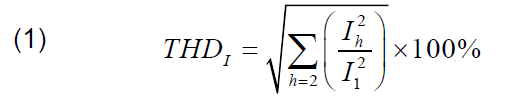
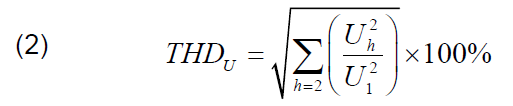
The main reason for generating harmonic in the power grids is non-linear loads such as power electronic devices. There are some numerical criteria for showing the amount of harmonics in a signal. THD is one of the most well-known indices for power quality requirement. The permitted limit of current harmonic changes based on the short-circuit level at the point of common coupling (PCC) of the load and maximum load demand, so that the voltage harmonic at distribution grid for PCC must not exceed a maximum value; for instance, as determined in, maximum value of individual harmonic and THD for low voltage levels are 3 and 8%, respectively [13]. On the other hand, the percentage of total harmonic distortion (THD) can be written in two forms; first, as a percentage of the fundamental component (defined by IEEE standard), and second, as a percentage of rms (defined by IEC standard). THD for current and voltage are defined based on Eq. (1)- (2), respectively:
.
.
where, I1 and U1 are the first component of non-sinusoid current and voltage, respectively. Also, Ih and Uh are the hth component of non-sinusoid current and voltage, respectively.
Micro-grids
Micro-grid is a small power system which can act either grid connection or island mode. Also, a micro-grid technology makes it possible to use the power system at decentralized control mode. Hybrid AC/DC micro-grids, which AC and DC buses are connected with power electronic converters, are increasingly used in recent years. On one hand, advantages of AC and DC are independently preserved and, on the other hand, simultaneous quick access to AC and DC is possible, which improves the efficiency and power loss with higher economic advantages [14].
Fig. 1: AC/DC hybrid micro-grids
Diagram of an AC/DC micro-grid is shown in Figure 1. As it is observed, DC loads, including solar and battery cells, are connected to the DC buses, and Ac loads, including wind and gas turbines are connected to AC bus. These two buses are connected by the power electronic converter.
Solutions to restrain harmonic at the micro-grid
Electric filters are used in a micro-grid to restrain harmonics with a specific frequencies, which are normally composed of three elements including resistor, inductor and capacitator. There are various types of filters such as active filter, passive filter, and hybrid filter.
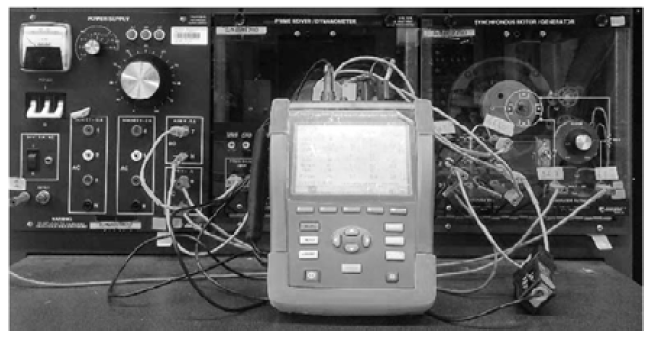
Fig. 2: Power quality analyzer
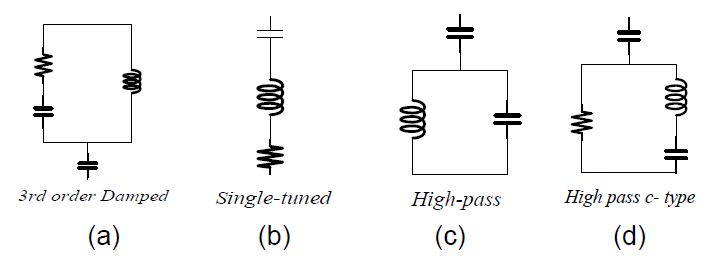
As it was mentioned before, one simple and costeffective way to eliminate harmonics in the micro-grid is to use passive filters. The primary purpose of a passive filter is to reduce the amplitude of one or multiple voltage harmonic components or current in the grid. If this filter is designed to remove a certain frequency component of the micro-grid, one can use a series passive single-tuned passive filter (STPF). Series filter is formed of a capacitor and inductor which provides high impedance path at frequency of the harmonic. However, a parallel passive filter can create shunt path, and also at the same time harmonics are led to the path with low impedance for related frequencies, to prevent harmonic current flowing into the grid. All passive filter types which available in library of ETAP are as following.
1) single-element filter 2) High-pass filter 3) High-pass type C filter 4) 3rd degree damped filter
Fig. 3: Various types of passive filters, (a) single tuned, (b) high pass, (c) high pass c-type, (d) 3rd order damped [15].
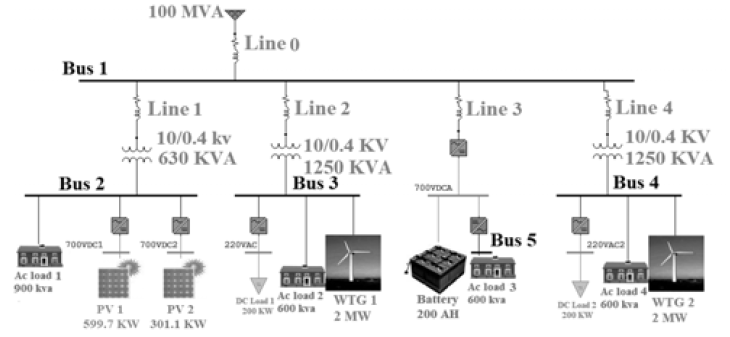
Fig. 4: Single line diagram of hybrid AC-DC micro-grid
Single-tuned passive filter
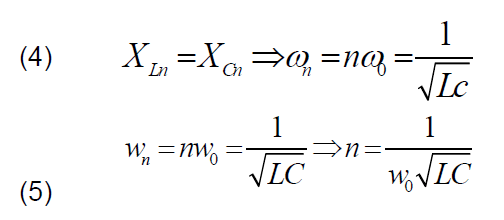
One type of passive filters is the STPF, which has many applications in the power grid. As shown in Figure 2, a series of resistors, inductors, and capacitors can be connected parallel to the grid. Reactance of the capacitor is equal to the inductor for a STPF at a specified frequency (ωn), so the impedance of the filter will be purely resistive as follows:
.
where Z, R, L, and C impedance, resistance, inductance, and capacitance of the filter, respectively. Also, ωn is the resonant frequency of the filter [15], [16].
.
where ω0 is fundamental frequency of the system. XLn and XCn are the inductor and capacitator reactance of the filter in the intensified frequency. Furthermore, n is the harmonic order.
For the optimal performance of the passive filter in the micro-grid, the exact computation of the resistance, inductor, and capacitor are required to operate at a certain harmonic frequency for reducing the corresponding harmonic. In this paper, to eliminate each order of the harmonic in the circuit, a STPF with the equal resonant frequency with the harmonic frequency that is intended to be eliminated. In a single-element passive filter at the desired harmonic frequency, the filter circuit is resonated, resulting in its impedance being very small and guiding the desired harmonic frequency to the ground [17].
Quality factor of Single-element passive filter
Quality factor (QF) of a STPF is a parameter that determines the frequency-impedance characteristics of the filter. Filters with high QF are only designed for elimination of a specific harmonic. On the other hand, if filter has a low QF coefficient, it can weaken the neighbor harmonic components in addition to set frequencies. The QF of STPF is defined as the ratio of the inductor impedance of the filter to the resistance in intensified frequency. However, since the inductor and capacitor reactance of the filter in harmonic frequency are equal, QF can be defined as capacitator impedance to the filter resistance [18], [19]. The QF coefficient is obtained from Eq. (5):
.
where Q is QF. It should be noted that STPFs have higher quality coefficient compared to low-pass filters [19].
Injection reactive power by single-tuned passive filter
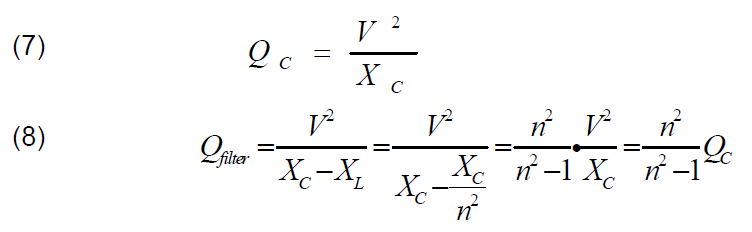
The most important parameter of a passive filter, which determines the filter size, is the injected reactive power amount at the fundamental frequency. Given the filter impedance feature, it can be concluded that the capacitor impedance of the main frequency will be greater than inductor impedance. That is, the filter can act as a capacitor bank at the fundamental frequency. Generating reactive power of filter at the main frequency are obtained based on Eqs. (7) – (8) [20].
.
where QC is the reactive capacitor generating power, Qfilter is the filter generating reactive power, and V is voltage of the filter.
Simulation
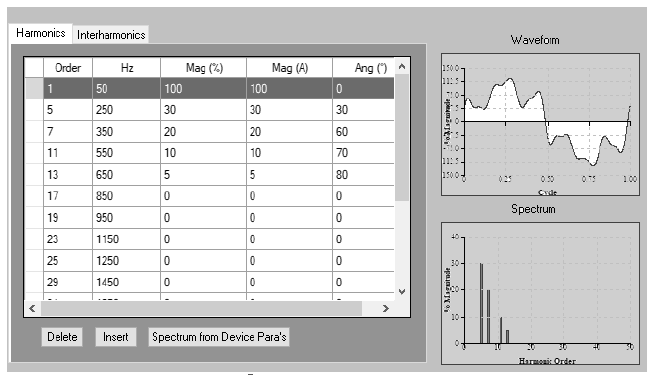
Electrical Power System Analysis (ETAP) is a software for analysis of power system with a perfect graphics connector. This program includes many functions and a comprehensive library. Harmonic analysis at ETAP software is done at two parts; harmonic load and frequency response. This study uses ETAP to analysis a harmonic grid and its frequency response. Figure 4 is the single line diagram of under study micro-grid. This hybrid micro-grid includes AC and DC buses, wind turbine, solar cell, battery, linear loads, and non-linear loads. As shown in Figure 4, three non-linear loads, two solar cell and two wind turbines are considered in buses 2, 3, and 4, respectively. The parameters of these harmonic resources are manually entered into the software, as shown in Figure 5 [21]. Moreover, four scenarios are considered for analysis of harmonic load effect on THD index of micro-grid.
Scenario 1: Using of two solar cells and a non-linear load at bus 2 (measurement at bus 2). Scenario 2: Using of wind turbine and nonlinear loads at bus 3 with a line length of 1 km for grid connection (measurement at bus 3). Scenario 3: Using of wind turbine and non-linear load at bus 4 with a line length of 6 km for grid connection (measurement at bus 4). Scenario 4: Using all the devices as shown in Figure 4.
Fig. 5: Harmonic source in ETAP software editor
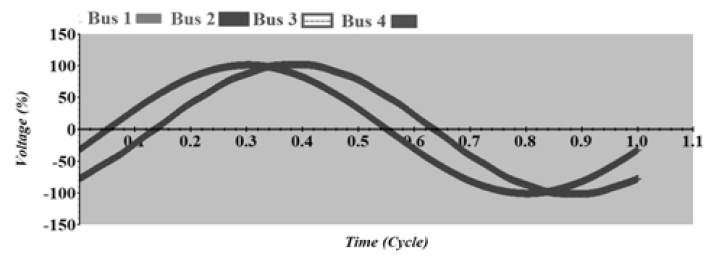
Results of voltage waveform of the micro-grid at buses 1, 2, 3, and 4 is shown in figure 6.
Fig. 6: Voltage waveform at different buses of the micro-grid without installing STPF
Table 1. Different buses THD Value of the micro-grid
.
Fig. 7: STPF parameters in ETAP
Fig. 8: Voltage waveform at different buses of the micro-grid with installing STPF
Different buses THD value of the micro-grid are listed in Table 1. As listed in Table 1, bus 2 has the highest THD value due to the presence of solar cell and power electronic device, which leads to changes in waveform as shown in Figure 6. Moreover, as it is obvious, bus 4 has higher harmonic value due to the presence of longer line length comparing to bus 3. It should also be noted that bus DC has been considered ideally in simulations. That is, voltage oscillation is ignored in case of installing a good controller. Now, with designing a STPF, as described in Section 3, it is aimed to reduce the harmonics of different busses within limitations defined in corresponding standards [13]. Designed parameters value of the STPF are shown in Figure 7. Wave form of micro-grids is voltage shown in Figure 8.
Figure 7 shows the designed passive filter editor in ETAP software. As it is shown in Table 1 and figure 6, the voltage quality of micro-grids have been mostly improved. Furthermore, prior to filter installation, THD at buses 1, 2, 3, and 4 are 5.43, 12.76, 7.61 and 8.37, respectively, which have been reduced to 2.54, 0.81, 1.18 and 1.29, respectively, after the filter installation. It should also be noted that installation of filters at micro-grid is costly and economic concerns should be taken into account in studying the filter installation, which is out of the scope of this study.
Table 2. THD values of different buses in the harmonic micro-grid
.
Conclusion
This paper studies a harmonic micro-grid including wind turbine, solar cell and nonlinear load using ETAP software. Given under study micro-grid, a passive filter was designed and installed for meeting the power quality requirement of the standard. Furthermore, four scenarios were examined to install the filter at micro-grids. The following conclusions can be drawn.
1) Different designs were considered in micro-grid harmonic analysis, in which harmonic increased based on the capacity of solar cell, wind turbine, transformer, cable length and nonlinear load.
2) It was also observed that total harmonic distortion (THD) differed on various buses of the micro-grid using different generators (solar cell or wind turbine).
3) The STPF was designed and used to eliminate the harmonic distortions by the solar cell. The frequency response of the micro-grid approved the improvements.
4) It was observed that the destructive effect of harmonics on voltage appears at the grid which can destruct the insulation of devices.
5) Grid connection line length for the wind turbine can be an essential role in THD, so that by increasing the line length, the THD increases.
Finally, it is suggested to have further studies on economic analysis and also using higher-order filters at distribution grids.
REFERENCES
[1] M. A. Bidgoli, H. A. Mohammadpour, and S. M. T. Bathaee, “Advanced vector control design for DFIM-based hydro power storage for fault ride-through enhancement,” IEEE Trans. Energy Convers., vol. 30, no. 4, pp. 1449–1459, 2015. [2] P. Mazurek, “Selected aspects of electrical equipment operation with respect to power quality and EMC,” Prz. Elektrotechniczny, vol. 93, no. 1, pp. 21–24, 2017. [3] N. Eghtedarpour and E. Farjah, “Power control and management in a hybrid AC/DC microgrid,” IEEE Trans. Smart Grid, vol. 5, no. 3, pp. 1494–1505, 2014. [4] M. Gała and A. J\kaderko, “Assessment of the impact of photovoltaic system on the power quality in the distribution network,” Prz. Elektrotechniczny, vol. 94, 2018. [5] R. Belaidi and A. Haddouche, “A multi-function grid-connected PV system based on fuzzy logic controller for power quality improvement,” Prz. Elektrotechniczny, vol. 93, 2017. [6] A. Saim, A. Houari, J. M. Guerrero, A. Djerioui, M. Machmoum, and M. Ait-Ahmed, “Stability Analysis and Robust Damping of Multi-Resonances in Distributed Generation based Islanded Microgrids,” IEEE Trans. Ind. Electron., 2019. [7] M. Azizi, A. Fatemi, M. Mohamadian, and A. Y. Varjani, “Integrated solution for microgrid power quality assurance,” IEEE Trans. Energy Convers., vol. 27, no. 4, pp. 992–1001, 2012. [8] J. C. Das, “Passive filters-potentialities and limitations,” IEEE Trans. Ind. Appl., vol. 40, no. 1, pp. 232–241, 2004. [9] M. M. Elkholy, M. A. El-Hameed, and A. A. El-Fergany, “Harmonic analysis of hybrid renewable microgrids comprising optimal design of passive filters and uncertainties,” Electr. Power Syst. Res., vol. 163, pp. 491–501, 2018. [10] S. Yang, P. Wang, Y. Tang, and L. Zhang, “Explicit phase lead filter design in repetitive control for voltage harmonic mitigation of VSI-based islanded microgrids,” IEEE Trans. Ind. Electron., vol. 64, no. 1, pp. 817–826, 2017. [11] J. Arrillaga and N. R. Watson, Power system harmonics. John Wiley & Sons, 2004. [12] Y. Liu, H. A. Mantooth, J. C. Balda, and C. Farnell, “A Variable Inductor BasedLCLFilter for Large-Scale Microgrid Application,” IEEE Trans. Power Electron., vol. 33, no. 9, pp. 7338–7348, 2018. [13] R. Langella, A. Testa, and E. Alii, “Ieee recommended practice and requirements for harmonic control in electric power systems,” 2014. [14] X. Wu, L. Chen, C. Shen, Y. Xu, J. He, and C. Fang, “Distributed optimal operation of hierarchically controlled microgrids,” IET Gener. Transm. Distrib., vol. 12, no. 18, pp. 4142–4152, 2018. [15] S. P. Diwan, H. P. Inamdar, and A. P. Vaidya, “Simulation Studies of Shunt Passive Harmonic Filters: Six Pulse Rectifier Load-Power Factor Improvement and Harmonic Control,” ACEEE Int. J. Electr. Power Eng., vol. 2, no. 1, pp. 1–6, 2011. [16] C. L. Anooja and N. Leena, “Passive Filter For Harmonic Mitigation Of Power Diode Rectifier And SCR Rectifier Fed Loads,” Int. J. Sci. Eng. Res., vol. 4, no. 6, 2013. [17] O. Anaya-Lara and E. Acha, “Modeling and analysis of custom power systems by PSCAD/EMTDC,” IEEE Trans. power Deliv., vol. 17, no. 1, pp. 266–272, 2002. [18] K. K. Srivastava, S. Shakil, and A. V. Pandey, “Harmonics & its mitigation technique by passive shunt filter,” Int. J. Soft Comput. Eng. ISSN, pp. 2231–2307, 2013. [19] Y.-S. Cho and H. Cha, “Single-tuned passive harmonic filter design considering variances of tuning and quality factor,” J. Int. Counc. Electr. Eng., vol. 1, no. 1, pp. 7–13, 2011. [20] T. M. Bloom and D. J. Carnovale, “Harmonic convergence,” IEEE Ind. Appl. Mag., vol. 13, no. 1, pp. 21–27, 2007. [21] X. Chen and G. Zhang, “Harmonic analysis of AC-DC hybrid microgrid based on ETAP,” in 2016 IEEE 8th International Power Electronics and Motion Control Conference (IPEMCECCE Asia), 2016, pp. 685–689.
Authors: Mohsen Alizadeh Bidgoli as corresponding author (Ph.D.), Email: m.alizadeh.b@gmail.com, Ali Bagheri (M.Sc.) Email: bagheriiali1374@gmail.com, Department of Electrical Engineering, Yadegar -e- Imam Khomeini (RAH) Shahre Rey Branch, Islamic Azad University, Tehran, Iran *Corresponding author: M.Alizadeh Bidgoli
Source & Publisher Item Identifier: PRZEGLĄD ELEKTROTECHNICZNY, ISSN 0033-2097, R. 95 NR 12/2019. doi:10.15199/48.2019.12.02
Published by Rakesh Kumar, EE Power – Technical Articles: Applications of Grid-connected Battery Energy Storage Systems, February 17, 2023.
Grid operators, distributed generator plant owners, energy retailers, and consumers may receive various services from grid-connected battery energy storage systems. Learn more about the applications here.
Battery energy storage systems (BESSes) act as reserve energy that can complement the existing grid to serve several different purposes. Potential grid applications are listed in Figure 1 and categorized as either power or energy-intensive, i.e., requiring a large energy reserve or high power capability. They can also be classified according to the deployment time scale, which ranges from milliseconds to hours. A general understanding of the services is helpful before analyzing how storage has been used for delivery.
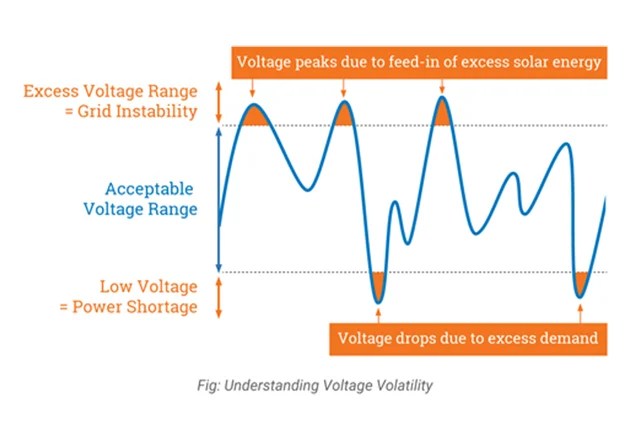
Power quality indices are used to measure how much the voltage and current waveforms differ from a perfect sinusoidal waveform. Distortions can be temporary, like when loads or generators are turned on or off, or they can be constant at steady states, like when non-linear loads or power electronic interfaced generators are running. Energy storage has been looked into for this purpose and has been shown to be a good answer.
Power fluctuation
The rise of intermittent power sources has also brought up the problem of power fluctuations in the network. Solar irradiation and changes in wind speed can cause distributed generation (DG) plants to change power quickly and in large amounts, which can hurt the network. In this situation, energy storage can be added to the DG plant to help smooth out the short-term changes in power. When BESS is used this way, it adds an extra cost to the RES plant, lowering the system’s income. In this case, one way to compensate for the lost money could be to give the plant owners financial incentives to reduce power fluctuations.
Battery energy storage system. Image used courtesy of Adobe Stock
Continuity of Service
In addition to measuring the voltage waveform and the changes in output power, the continuity of service is also kept an eye on. System average interruption frequency index (SAIFI) and system average interruption duration index (SAIDI) are used to figure out the Distribution System Operator’s (DSO) bonus pay. Also, national grid codes can require DSOs to pay fines or make payments to users if service is interrupted. To improve service reliability on distribution grids, energy storage systems can be put in place to make black start procedures easier and let the distribution feeder work on its own.
Both of these problems happen when one or more faults cause a part of a distribution network to stop working with the main transmission grid. In the case of blackouts, storage systems could be added to plans for fixing the grid, making the process of getting power back on faster. Also, a lot of DG and storage systems could make it possible to run safely even when the islanding isn’t planned. In a hypothetical islanding procedure, BESSes will be needed to monitor and reduce the fault-caused transient and sudden load-generation imbalance so that the switch from being connected to the grid to being off the grid is smooth.
Voltage Control
Several devices, such as tap changers, capacitor banks, voltage regulators, and static VAR compensators, can change the voltage in distribution grids. BESSes can help shape the future of voltage management by adding flexibility to distribution grid management. The use of storage units in the voltage control scheme has been shown to work well from a technical point of view.
Figure 2 shows the voltage profiles of one of the two main feeders of the IEEE European test network. These profiles are evaluated and plotted in Figure 3(a), showing the voltage profiles before and after the addition of PV generators. This lets anyone see how the PV generators can cause overvoltages at the network’s end. Figure 3(b) shows how BESS could help reduce overvoltages. The colored lines show the voltage profiles when the BESS system is turned on to reduce the overvoltage. The different colors show where the energy storage is located in the network. In each case, a star is placed on the node where the BESS is located.
Figure 2. IEEE European Test Feeder schematic—highlighted with a star the three nodes considered for locating the energy storage units in the analysis of Figure 3. Image used courtesy of IEEE Open Journal of the Industrial Electronics Society
Figure 3. Voltage Profiles along the network: (a) with and without PV generation and (b) with PV generation and with storage units used to reduce the overvoltage; the storage units are located in the node marked with a star—the nodes numbers are referred to the numeration of Figure 2. Image used courtesy of IEEE Open Journal of the Industrial Electronics Society
To limit how much DGs affect the grid voltage, national and international energy regulators have made it a requirement for DGs connected to distribution grids to follow Q(V) or cos(V) droop curves. In the most recent versions of the national technical standards, such as the Italian standards CEI 0-16 and CEI 0-21 and the German standards VDE-AR-N 4110 and VDE-AR-N 4105, these requirements have also been added for energy storage systems. This service must be done automatically and simultaneously as the main function. It helps to balance out the overvoltage in the distribution network feeders by taking in reactive power and balancing out the undervoltage by putting out reactive power.
Peak Shaving and Load Smoothing
Peak shaving and load smoothing involve making the generation and load profiles flatter so that the grid sees less power at its highest point. In real-time, this scheme can help solve network congestion by preventing the conductors from being overloaded by the peak power of both the generator and the load. Also, in a planning horizon, network improvements like rewiring a feeder or replacing a transformer could be avoided or put off by installing energy storage systems.
In this case, energy storage could be a good idea because DSOs are required to ensure that the network infrastructure is good enough to handle both the load’s nominal power and the connected generators’ nominal power. Along with putting off the upgrade, peak shaving and load smoothing may also help reduce network losses. In this way, BESS operation can further reduce system losses by making the load and local generation more similar in shape.
Frequency Control
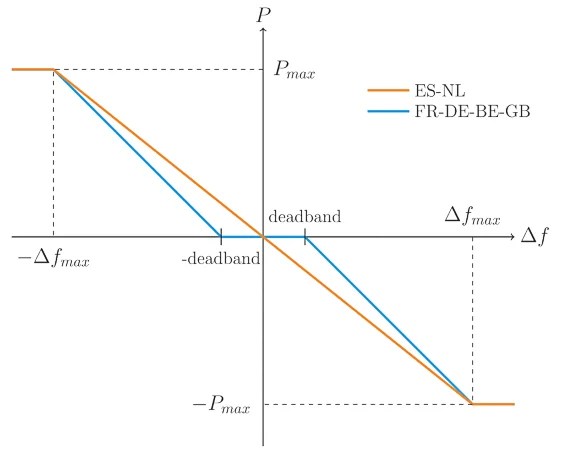
In the ancillary service market, generators connected to the transmission networks offer frequency control as a paid service. In recent years, this service has also been offered by generators and energy storage systems connected to the distribution network. Generators and BESS use a droop control that watches for frequency imbalances and responds to them by changing the power output. Table 1 shows the main parameters for some European countries’ primary frequency control logic.
Figure 4 demonstrates how the droop control logic works. Frequency control is a valuable feature of energy storage systems. Energy storage systems might be limited by their maximum and minimum state of charge (SoC). Several ways to control the SoC have been suggested to solve this problem. Depending on the country, the droop logic is set up with different parameters that define or don’t define the deadband and change the amount of droop. The way people get paid is often through tenders, where they bid on regulating power and the price that is needed.
Table 1. Primary Control Parameters in Some European Countries
.
Figure 4. Example of P-f curves for primary frequency control—the curves are made according to the data in Table 1. Image used courtesy of IEEE Open Journal of the Industrial Electronics Society
Energy Arbitrage
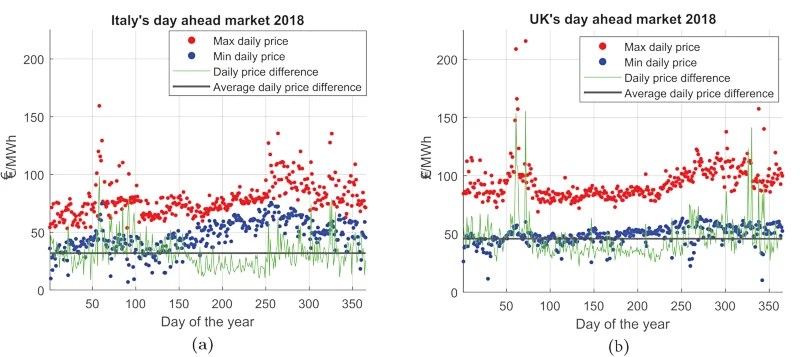
Energy arbitrage is buying and selling energy on the spot energy market. Since the electricity sector is separated in most countries, energy arbitrage can only be done by a business user. This can be done with a BESS+DG or BESS+load system, where the storage unit moves the energy production or generation to make the most of price changes in the energy market. Energy arbitrage could be used to create a business case, but the prices on the central European spot market may not be high enough if that is the only source of income.
Considering the day-ahead-market price data for Italy and the UK in 2018, the lowest and highest daily prices are found. These are shown in Figure 5, along with the biggest daily price difference and the average difference over the year. The average daily price difference can be less than 50 €/MWh.
Figure 5. Analysis of day-ahead market prices of the year 2018 for Italy (a) and the UK (b). Image used courtesy of IEEE Open Journal of the Industrial Electronics Society
Key Takeaways of Grid-connected BESS
This article has discussed the various applications of grid-connected battery energy storage systems. Some of the takeaways follow.
• Grid applications of BESS can be categorized by energy use and implementation speed. Energy storage in the DG plant can also reduce power fluctuations.
• Energy storage systems can simplify black start procedures and let the distribution feeder function independently, improving distribution grid reliability.
• BESSes can shape voltage management by adding flexibility to distribution grid management, which has been shown to work technically.
• Technical, economic, and regulatory research may examine how to combine multiple services effectively. Research should focus on optimizing battery features and providing complementary services.
• Flattening generation and load profiles reduces network congestion. Energy storage systems avoid feeder rewiring and transformer replacement.
• Generators and energy storage systems connected to the distribution network can ignore paid frequency control.
• Energy arbitrage—buying and selling energy on the spot energy market and moving energy production or generation to take advantage of price fluctuations—can be done with a BESS+DG or BESS+load system.
• Research should demonstrate how to best use the battery’s characteristics by creating a comprehensive service delivery plan.
• Combining multiple services may be studied in the future. Multiple stakeholders also improve business case success.
Author: Rakesh Kumar holds a Ph.D. in Electrical Engineering with a specialization in Power Electronics from Vellore Institute of Technology, India. He is a Senior Member of IEEE, Class of 2021, and a member of the IEEE Power Electronics Society (PELS). Rakesh is a committee member of the IEEE PELS Education Steering Committee. He is passionate about writing high-quality technical articles of high interest to readers of the EE Power Community. You can email him at rakesh.a@ieee.org.
Published by Wojciech MATELSKI1, Electrotechnical Institute, Warsaw
Abstract. The article describes a practical implementation of the induction motor (IM) drive system powered from photovoltaic (PV) panels. The system incorporates an energy storage device, in form of a supercapacitor bank, and enables an AC grid connection. Two system concepts are considered, thus a discussion about the favorable solution is given. A model installation was developed, and the chosen system components are described. Laboratory tests have been conducted and the results are presented.
Streszczenie. W artykule opisano praktyczną implementację napędu z silnikiem indukcyjnym (IM) zasilanym z paneli fotowoltaicznych (PV). System zawiera zasobnik energii, w formie baterii superkondensatorów, oraz posiada możliwość podłączenia do sieci AC. W pracy rozpatrzono dwie koncepcje realizacji systemu oraz przedstawiono dyskusję dotyczącą korzystniejszego rozwiązania. Opracowano instalację modelową oraz opisano wybrane komponenty systemu. Praca zawiera wyniki wstępnych badań laboratoryjnych (Układ zasilania napędu indukcyjnego z baterii fotowoltaicznej z magazynem energii – model eksperymentalny).
Keywords: induction motors; photovoltaic systems; supercapacitors; variable speed drives. Słowa kluczowe: silniki indukcyjne, systemy fotowoltaiczne, superkondensatory, napędy z regulowaną prędkością.
Introduction
Solar energy is considered as the most environment friendly renewable energy source. Comparing to other renewables, converting solar radiation into electricity pollutes the environment to the smallest extent. As technology advances, the efficiency of solar panel systems is increasing, and in recent years, the price per kilowatt peak power is dropping with a steady rate. Despite this fact, solar panel systems are still costly, and large solar power plants are economically justified in areas of appropriate insolation. Even though, there are several applications, where due to other considerations, solar power appears to be a reasonable solution.
Very often water pumps, used in agriculture for field irrigation, are installed in remote or rural areas, where the industrial power grid is not available. In literature several concepts of solar energy-based water pumping are described [1 – 8]. Water flow is forced by the work of pumps driven by DC [2] or AC motors [1, 5 – 9]. Thanks to their robustness, simple structure and low cost, induction motors are a common solution [1, 5 – 7].
Power generation from solar panels strongly depends on the current weather conditions. In a straight forward approach, when the solar radiation is sufficient, the pumping system can operate, providing fresh water on the field. The drive works intermittently. To make the system more cost effective, electrical energy storage devices are avoided [1, 5 – 8]. In this way, the system level of complexity is reduced. In reference [1] a small power, mobile pump system for water filtration purposes is presented. In exchange for the lack of electrical energy storage, water tanks can be applied, so that water is gathered for later use. Even though, the power rating of the solar panel has to be large enough, to enable motor start and satisfy the load demand. In such systems motor stall is possible.
On the other hand, incorporation of a battery pack [2 – 4] makes the installation independent from solar radiation and expands the functionality of the solar water pump system. For example, remote control through GSM network can be implemented [2 – 4]. Reference [3] presents an automated irrigation system for optimization of water use for agricultural crops. Field tests were carried out and water savings up to 90% were achieved in comparison with traditional irrigation practices on the test agricultural zone. What is more, thanks to energy storage devices, the power rating of the solar panels can be lowered, and the risk of motor stall is reduced. Even under low insolation conditions, the energy can be cumulated in order to enable short-time higher power values, which is perfect for intermittent mode of motor operation.
Solar panels operate with the best efficiency at a specific load current and output voltage. This is achieved through implementation of a maximum power point tracking algorithm MPPT. In batteryless systems the load demand is regulated. Considering solar pump drives, the speed of the motor can be adapted according to insolation sensor readings [6] or various perturb and observe algorithms [1, 5, 7]. The command speed depends on load conditions. Thus the control possibilities of the drive are reduced. A battery pack enables independent speed control (when the stored energy is sufficient) of the motor. MPPT is usually provided by an additional DC/DC battery charging converter.
Reference [9] describes a batteryless AC drive system, powered from solar panels, supported from the electrical grid. The power rating of the photovoltaic battery can be lower, and thus the system costs can be reduced. This solution is completely independent from current weather conditions.
Solar panel generation units are also a reasonable solution in elevator applications. The presence of an auxiliary source of power, supporting the AC grid, improves the reliability of the drive system. Together with an energy storage device, the system can provide some additional safety features, which is crucial in elevator applications. For example, in case of power failure, the stored energy is used to supply the traction motor in order to move the cabin to the nearest floor, open the door and enable the evacuation of the passengers. In [10 – 12] elevator systems, powered from a DC microgrid with solar panels and energy storage units and an AC grid connection, are presented. The main focus of the research was the elaboration of energy management algorithms to optimize the operation of the elevator drive system, and reduce the power consumption from the AC grid.
This article describes a practical implementation of the induction motor IM drive system supplied from photovoltaic PV panels. The system incorporates an energy storage device, in form of a supercapacitor bank, and enables an optional AC grid connection. Two system concepts are considered, thus a discussion about the favorable solution is given. A model installation was developed, and the chosen system components are described. Laboratory tests have been conducted and the results in form of selected waveforms are presented.
Solar powered drive with energy storage
The presented in this article drive system consists of an induction motor, powered from a solar panel array. The general concept of the system, in form of a block diagram, is depicted in Figure 1. Considering the moderate irradiation conditions in Poland, the solution incorporating an energy storage device has been adopted. The system can be used in applications characterized by intermittent operation, like water pumps for field irrigation or elevator systems.
Fig.1. IM drive system supplied from PV panels block diagram
For energy storage purposes supercapacitors SC were chosen. Even if their energy density is not comparable to that of conventional electrochemical accumulators, like the commonly used lead-acid batteries, their high power density, large number of charge and discharge cycles (approximately 1 million), shorter charging times and the possible amount of stored energy, makes them compatible with many industrial applications [13], like for example elevator systems [9 – 13]. What is more, lead-acid battery banks are heavy and expensive and their lifetime is estimated to be one fifth of the lifetime of a solar panel [5].
As can be seen from Figure 1, the system does include an optional industrial low voltage three phase grid connection. In this way, the system becomes a more reliable power source, so the operation of the load can be ensured for example in emergency situations. In cases of poor weather conditions, energy can be drawn from the grid in order, if necessary, to fed the load, or it can be stored in the SC, when the prices are low, for example at night.
The power flow is controlled by the means of power electronic converters, and in the block scheme from Figure 1, they are contained in the block denoted as PES. This structure will be discussed in detail in the next section.
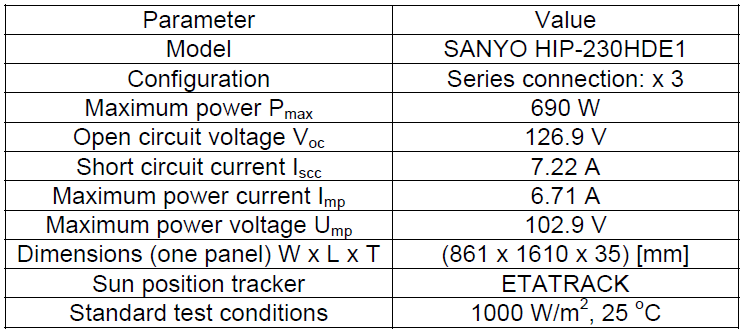
For the purpose of this research, an existing 690 W solar panel system, installed at the parking lot of the Electrotechnical Institute, was used. The solar panels are presented in Figure 2, and their parameters are listed in Table 1.
Table 1. Photovoltaic panels system parameters
.
Having regard to the intermittent operation of the drive system, thanks to the presence of the supercapacitor as an integral part of the installation, the power rating of the motor can be larger than the nominal power generated by the solar panels. In situations of cloudy weather, a small power level can be achieved, but with the energy stored over a longer period of time, the supercapacitor can deliver power sufficient to start even a larger motor.
System structure considerations
The type and configuration of the power electronic converters in the solar drive system determine its performance and capabilities. For further research two system structures were analyzed. The configurations are presented in Figure 3 and Figure 4, and were denoted as CONFIG 1 and CONFIG 2 respectively.
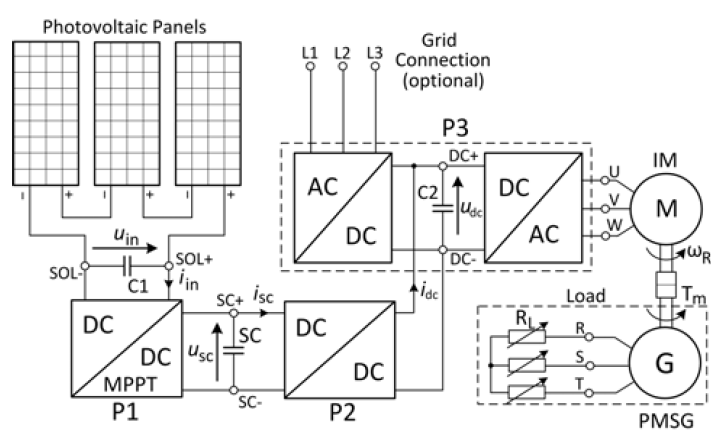
The IM is powered through a variable frequency converter, in Figure 3 and Figure 4 denoted as P3, and controlled by its inverter DC/AC part. The electrical energy from the solar panels can be supplied via the DC link terminals DC+, DC- of converter P3.
Fig.2. Solar panels installation used in research
The main aspect distinguishing CONFIG 1 from CONFIG 2 is the location of the SC in the structure, which in consequence strongly affects the function and requirements for converter P2 in the system. This feature also has influence on the principle of operation of converter P1.
Fig.3. IM drive system supplied from PV panels with energy storage – CONFIG 1
The adopted motor is a 400 V (phase to phase RMS) machine. To ensure proper operation, the DC link voltage udcof converter P3 needs to be sustained on a high enough level. In both configurations an optional connection to the industrial electricity grid is assumed. The drive can be powered solely by the solar panels when udc is kept higher than the rectified three phase grid voltage provided by the AC/DC part (three phase bridge diode rectifier) of converter P3. In this way, the energy consumption from the grid is disabled. This principle of operation, together with the relatively low voltage output level generated by the solar panels (cf. Tab. 2), enforces the boost character of converters P1 and P2 regarding CONFIG 1, and converter P2 as for CONFIG 2.
Fig.4. IM drive system supplied from PV panels with energy storage – CONFIG 2
The level of insolation, at which photovoltaic cells are exposed, determines the power they produce. The U-I characteristics of solar panels are non-linear. The efficiency of the conversion of sunlight into electricity reaches its best performance at a specific output voltage. Several techniques are described and applied in order to keep this voltage on a desired level. In this way, maximum power point tracking MPPT is achieved. Considering CONFIG 1, in order to perform MPPT, converter P1 has to cooperate either with converter P2, or with the inverter part of P3, or together with both converters. In the first case, the drive has to be stopped, and the energy is stored in the SC. In situations when the IM needs to operate, but the SC is fully charged, MPPT can be realized by adapting the output voltage frequency command of converter P3, so that the power consumption of the IM is altered. At last, when uSC doesn’t exceed its maximum value, the surplus energy is used to charge the SC, thus enabling independent control of the drive. As for CONFIG 2, if the SC is not fully charged, MPPT can be realized solely by P1.
Comparing CONFIG 1 and CONFIG 2 it can be seen, that for the same modes of operation, the power flows through a different number of conversion stages, i.e. converters. Each conversion stage is associated with power losses. The main modes of operation, together with the number of conversion stages, are listed in Table 2.
From Table 2, in modes 2, 3 and 4 the number of converters taking part in the operation of the system for CONFIG 1 and CONFIG 2 is equal.
Considering mode 5, when powering the drive only by the solar panels (the SC is fully charged or discharged) CONFIG 1 has the advantage, because the operation is associated with a smaller number of converters, than for CONFIG 2. CONFIG 1 is more suitable for systems where the nominal power of the solar panels is equal to the power demand of the drive.
Mode 1 has to be analyzed together with mode 3. In this case CONFIG 2 is more efficient. This solution is applicable for systems characterized by intermittent operation, where the motor power exceeds the power generation of the solar panels, and the lack is covered by the energy stored in the supercapacitor.
Table 2. Main modes of system operation and the corresponding power conversion levels
.
Experimental setup
In order to perform laboratory tests, the system presented in Figure 1 has been built. In the establishment, components from former projects have been utilized and are listed in Table 3.
The power of the adopted induction motor IM (cf. Tab. 3) equals 3 kW and is greater than the 690 W of the solar panels (cf. Tab. 1). Therefore CONFIG 2, presented in Figure 4, has been chosen for further laboratory tests.
Table 3. Laboratory model system description
.
Converter P1 is used to charge the SC and ensure MPPT of solar panels. The scheme of converter P1 is presented in Figure 5a. Converter P2 serves to boost the voltage of the SC to the requirements of the DC link of converter P3, which equals approximately 600 V. The converter scheme is presented in Figure 5b. The structure of P2 enables bidirectional power flow. In this way, when the drive operates in generator mode, energy recuperation is possible. Converters P1 and P2 have been realized in interleaved technology. This solution consists of a parallel connection of identical converters (legs), which can give a number of advantages. The effective output voltage frequency is higher. As a result the load current pulsations are decreased. What is more, converter reliability is improved, and the power ratings of necessary components can be reduced [14, 15]. P3 is a commercial LG LS 5,5 kW variable frequency drive and its structure is presented in Figure 5c. The DC/AC part is a two-level three phase bridge inverter operated with the volt/hertz control principle. The AC/DC part is a three phase diode bridge rectifier. The terminals U, V, W are used to connect the IM. The motor is directly coupled with a 3 kVA permanent magnet synchronous generator PMSG. The drive test bench includes an incremental encoder for speed measurements and a torque sensor and is described in [16]. The PMSG is connected to a variable resistance load RL. The built solar drive laboratory model installation is presented in Figure 6 and Figure 7.
Fig.5. Converter structures: a) 2-leg interleaved buck converter (P1); b) 3-leg interleaved bidirectional buck-boost converter (P2); c) variable frequency converter (P3)
Fig.6. Solar powered drive test bench (including: converter P3 and its DSP control board, motor IM, generator PMSG)
The converters P1 and P2 are run by a control board, incorporating a DSP TI TMS320F28335 microcontroller together with a FPGA ALTERA CYCLONE III unit. The P3 converter is controlled by DSP TI TMS320F2812 unit.
Fig.7. Solar powered drive test bench (including: converters P1, P2 and their DSP control board, supercapacitor SC, variable resistance load RL)
Laboratory results
The proposed system is still under development. Some first laboratory tests have been conducted, including a part of the model installation. The results in form of selected waveforms are depicted in Figure 8 and Figure 9.
During the test, the grid was disconnected. The solar panels and converter P1 also did not take part at this stage of research. The SC has been precharged before the experiment started (cf. Fig. 8a). The waveforms have been registered by RejDiag application, developed in the Electrotechnical Institute. This program is operated from a PC and it enables the communications with the DSP control boards. The measuring points were as presented in Figure 4. The PMSG was loaded with a constant resistance RL of 67 Ω per phase.
In the experiment the command output voltage frequency signal fe of converter P3 was changed, to adjust the rotational speed nR of the IM (cf. Fig. 9b), so that it should resemble an elevator moving from one floor to another. After about 1s fe was increased from 0 Hz to 30 Hz, during a 1s interval, so the motor started and accelerated with a steady rate. The DC link voltage udc, presented in Figure 8c, decreased and when it dropped under the trigger value of 530 V, converter P2 turned on, in order to discharge the SC and maintain udc on the reference value. After fe reached 30 Hz (t = 2s) the IM started constant speed operation. The developed torque Tm also remains constant (cf. Fig. 9c). In this way, the mechanical power demand Pm (cf. Fig. 9d), calculated as:
.
also remains constant. Converter P2 delivers power Pdc, presented in Figure 9a, calculated as:
.
where: idc – output current of converter P2 [A],
to the DC link of converter P3. The SC is being discharged, so that the supercapacitor voltage usc, presented in Figure 8a, decreases. In order to deliver constant power Psc, presented in Figure 9a, calculated as:
.
the input current for converter P2 isc drawn from the SC has to increase, which can be seen in Figure 8b. At t = 11s, fe starts decreasing to reach 0 Hz, after another 1s. The motor decelerates operating in generator mode, thus udc increases exceeding its reference value. Therefore converter P2 regulates the current drawn from the SC to 0 A.
From the beginning of the test, the supercapacitor voltage was deliberately set below the half of its nominal value (cf. Tab. 3). Converter P2 needs to boost this voltage to the level of the DC link voltage udc, so the boost factor varies from about 10 at the start of the test, to almost 17 at the end of constant speed operation. Converter P2 has difficulties in maintaining udc on the reference value 540 V. But despite those harsh conditions, the motor is still operational, and the efficiency of converter P2 is satisfactory: at t = 2s it equals 92%, and at t = 11s drops to 88% (cf. Fig. 9a). The voltage of the SC decreases, so in order to deliver constant power to the drive, the current drawn from the SC is increasing, thus the power losses in the system also increase. This can be observed in Figure 9a, where Pdc is on a steady level (constant speed region), while Psc is increasing. The supercapacitor has to cover for rising power losses due to the increasing discharge current.
Fig.8. Solar powered drive test results: a) supercapacitor voltage uSC, b) supercapacitor current iSC, c) converter P3 DC link voltage udc, d) converter P2 output current idc
Fig.9. Solar powered drive test results: a) power drawn from the SC Psc, converter P2 output power Pdc, b) IM shaft rotational speed nR, c) mechanical load torque Tm, d) mechanical power at shaft Pm
Conclusion
The solar powered induction motor drive system, with energy storage in form of a supercapacitor and possible grid connection, has been presented. The system is meant for application with field irrigation water pumps and especially elevator installations.
In the article two system structures have been described and compared. The relationship between the power of the solar panels and the power of the drive determines the more favorable solution. A model for laboratory tests, including a 690 W solar installation and a 3 kW induction motor drive system has been developed. Some first laboratory tests including a part of the model installation were conducted. The supercapacitor supplies the drive with sufficient power, even in states of high depth of discharge. The applied converter is able to boost the voltage according to the requirements of the DC link of the inverter. Although due to the high current drawn from the SC, the efficiency of the boost converter gets affected. Therefore it is wise not to let the SC get discharged under the half of its nominal voltage. Besides, at that point there is only 25% energy left.
The system is still under research. Further tests, including all components of the model, such as power and efficiency measurements on each stage of power conversion, need to be carried out.
Projekt finansowany ze środków NCBiR w ramach programu INNOMOTO: “Wielofunkcyjny system ‘inteligentnych’ sprzężeń multilateralnych (WSISM) pojazdów elektrycznych z siecią dystrybucyjną, zasobnikami i odnawialnymi źródłami energii”. Aplikacja no.: POIR.01.02.00-00-0277/16.
REFERENCES
[1] Chualin J., Wei J., Design of a digital controlled solar water pump drive system for a nano-filtration system, Ninth International IEEE Conference on Power Electronics and Drive Systems (PEDS), (2011), 982-986 [2] Ganesh K., Girisha S., Embedded controller in farmers pump by solar energy (automation of solarised water pump), IEEE International Conference on Recent Advancements in Electrical, Electronics and Control Engineering (2011), 226-229 [3] Gutierrez J., Villa-Medina J.F., Nieto-Garibay A. Porta-Gandara M.A., Automated irrigation system using a wireless sensor network and GPRS module, IEEE Transactions on Instrumentation and Measurement, Vol. 63 (2014), No. 1, 166-176 [4] Alex G., Janakiranimanthi M., Solar based plant irrigation system, International Conference on Advances in Electrical, Electronics, Information, Communication and Bio-Informatics (AEEICB16), IEEE, (2016) [5] Vitorino M.A., de Rossiter Correa M.B, Jacobina C.B., Lima A.M.N, An Effective Induction Motor Control for Photovoltaic Pumping, IEEE Transactions on Industrial Electronics, Vol. 58 (2011), No. 4, 1162-1170 [6] Kolano K., Kolano J., Praktyczna realizacja układów napędowych z trójfazowym silnikiem indukcyjnym zasilanym z baterii ogniw fotowoltaicznych, Zeszyty Problemowe – Maszyny Elektryczne, Nr 77 (2007), 5-10 [7] Kusio M., Maksymalizacja mocy układu napędowego klimatyzacji zasilanego z generator PV, Prace Instytutu Elektrotechniki, Zeszyt 236 (2008), 76-86 [8] Singh B., Mishra A.K., Kumar R., Solar powered water pumping system employing switched reluctance motor drive, IEEE Transactions on Industry Applications, Vol. 52 (2016), No.5, 3949-3957 [9] Kolano K., Układ napędowy zasilany z baterii ogniw fotowoltaicznych współpracujący z siecią elektroenergetyczną, Napędy i Sterowanie, Nr 2 (2011), 80-84 [10] Lin Y., Liu Y., Simulation and experiment research on a new elevator system with solar energy and super capacitor, Journal of Software Engineering, 9 (3), (2015), 534-547 [11] Pham T.H., Prodan I., Genon-Catalot D., Lefevre L., Efficient energy management for an elevator system under a constrained optimization framework, 19th International Conference on System Theory, Control and Computing (ICSTCC), October 14-16, Cheile Gradistei, Romania, IEEE (2015), 613-618 [12] Nikolić T.R., Nikolić G.S., Petrović B.D., Sojcev M.K., Elevator system with dual power supply, Facta Universitatis, Automatic Control and Robotics, Vol. 14 (2015), No. 3, 159-172 [13] Rufer A., Barrade P., A supercapacitor-based energy storage system for elevators with soft commutated interface, IEEE Transactions on Industry Applications, Vol. 38 (2002), No. 5, 1151-1159 [14] Matelski W., Low power DC/DC converter from 3 kV to 300 V: simulation analysis, IAPGOŚ, Vol. 6 (2016), No. 2, 44-47 [15] Matelski W., Wolski L., Abramik S., Dwukierunkowa przetwornica DC/DC z wykorzystaniem elementów SiC, IAPGOŚ, Vol. 6 (2016), No. 3, 64-69 [16] Matelski W., Łowiec E., Abramik S., Symulator małej turbiny wiatrowej, Prace Instytutu Elektrotechniki, Zeszyt 273 (2016), 63-77
Authors: mgr inż. Wojciech Matelski, Instytut Elektrotechniki, Bałtycka Pracownia Technologii Energoelektronicznych (BaPTE), ul. Chechosłowacka 3, Park Konstruktorów, 81-336 Gdynia, E-mail: wojciech.matelski@iel.pl.
Source & Publisher Item Identifier: PRZEGLĄD ELEKTROTECHNICZNY, ISSN 0033-2097, R. 94 NR 2/2018. doi:10.15199/48.2018.02.42
Published by Marek P. MICHALAK1, Monika E. SZAFRAŃSKA2, National Institute of Telecommunications (1), Wroclaw University of Science and Technology (2)
Abstract. The Internet of Things (IoT) is fast growing part of the market that becomes one of the biggest challenges of contemporary and future electromagnetic compatibility researches. The paper presents discussion on the subject of EMC testing of IoT related equipment. The authors considered different, alternative to classical, approaches to equipment testing for electromagnetic compatibility including those using new technical developments of FFT use in EMC testing. PCB-like testing approach and system approach are also discussed and taken into consideration.
Streszczenie. W artykule przedstawiono dyskusję nad tematyka związaną z badaniami EMC urządzeń tzw. Interrnetu Rzeczy (Internet of Things – IoT), stanowiącego szybko rozwijającą się gałąź rynku teleinformatycznego. Autorzy uwzględnili różne podejścia do zagadnienia badań kompatybilności urządzeń w tym wykorzystujące nowe zdobycze techniki w zakresie badań z wykorzystaniem FFT. Pod dyskusję poddane zostały również podejścia badawcze zbliżone do rozwiązań stosowanych w przypadku PCB oraz podejście systemowe. (EMC w świecie IoT).
Keywords: IoT, EMC, test setup Słowa kluczowe: Internet Rzeczy, kompatybilność elektromagnetyczna, stanowisko badawcze
Introduction
In the last years the number of smartphones, tablets and “wearable” equipment significantly increased. In 2011 Cisco [1] provided estimation that in 2020 there will be 50 billion Internet of Things (IoT) related equipment in the world. This means a huge number of equipment that must coexist.
Together with the increase of transfer rates the use of wireless communication also increased. That brings questions if the increasing number of wireless devices will influence the rise of problems with Electromagnetic Compatibility (EMC) and if today’s industry is ready for EMC problems connected with IoT development. The statistics alone show that the more equipment influence and interact with each other (what is a basic presumption of IoT), the more electromagnetic compatibility problems can be expected, especially when EMC parameters of the equipment will be left on today’s level.
The problems mentioned above are being razed on international level, the subject is very up to date and in coming years it will undoubtedly be major EMC issue.
How to test the IoT equipment against the EMC?
The dynamic development of IoT equipment contributes to the fact that this equipment is quickly introduced to the market and mass production, what in turn generates the need for testing of this equipment. In most cases the EMC standards fall behind as far as new solutions are concerned. And even if that can be achieved the new problem arises. Most of IoT intended equipment is meant to work in “crowds” – we face the accumulation of equipment in direct proximity. And here another issue arises – very often that equipment was tested according to different standards, therefore in some cases even if on the basis of performed tests single equipment meets the appropriate requirements, the coexistence of the same equipment in specific conditions becomes impossible or generates interactions that influence the integrity and correctness of data transferred by that equipment. Furthermore, if we take into account that IoT equipment works in very close proximity the other issues arise that were not so much important before as far as EMC testing is concerned. Even if since lately it is taken into consideration that electronics is being smaller all the time, in case of IoT equipment we face it in every single issue. For typical equipment for which the influence of devices working in close proximity was observed in the last years, not long ago the IEC 61000-4-39 [2] standard was positively voted for introduction. The solutions proposed in above mentioned standard may introduce some kind of transposition of IoT equipment coexistence into area of the tests. However, if we take into account the time usually needed for introduction of standards we can expect that before the testing methods described in IEC 61000-4-39 are introduced to the product standards it might take several years.
It should be noted here, that because of possible equipment classification and purpose, that equipment may be the subject of different requirement, both emission and immunity. Significantly different may be also the interpretation of these requirements. For example, when we consider gas measurement equipment, especially in case of gases that are dangerous to people, the tolerance for incorrect data is single numbers in percentage, while in cases where the measurement or transmission can be repeated and the measured value is not critical in decision making process, the allowed error level can be even as high as 50%. Off course most of manufacturers that like to be seen as reliable and reputable state much higher requirements for their products. Whichever the case is, there are some (mostly low cost) products that are available in the market that not only do not work properly (in clients opinion) but also do not even comply with basic requirements. It is not possible to avoid situations where non-compliant products are introduced to the market. Even with thorough control and market surveillance this scenario needs to be taken into account.
The other fact that must be noted here is that very often the same level of ignorance of the developers of some solutions can cause significant problems with their products or systems compatibility. Commonly known rule is that even if you use components that are standards compliant it does not guarantee that you end up with the resulting compatible product. The same is still true (and even in higher scale) in the IoT world. Full integration of equipment together with dimensions requirements for IoT devices causes very small (read: almost non-existent) separation between the components (especially when compared with wave lengths).
The question is, how to test IoT equipment against the EMC requirements? Do we test them:
• With classical approach – like other equipment before, according to EN 55022, EN 55024 or EN 55032? • With real time measurements? • Like components (or PCBs)? • Like whole systems (from over a dozen to several hundreds of elements?
Classical approach
The most well-established and current approach on the market for many years has been to test IoT or similar devices according to standards and requirements for typical IT equipment (until recently it were mainly EN 55022 standard [3] for emission measurements and EN 55024 standard [4] for immunity measurements), and in recent times for multimedia equipment (i.e. EN 55032 standard [5], superseding the EN 55022 and some other standards, and waiting for publication is EN 55035 standard which will cover the immunity requirements for multimedia equipments, and among others will supersede the EN 55024 standard – the CISPR 35 Publication is already published, so we probably will not wait for EN 55025 for too long). Using this approach is the closest one to regulatory requirements for introduction to the market of new equipment according to Radio Equipment Directive (RED) [6] or ElectroMagnetic Compatibility Directive (EMCD) [7].
In the case of testing according to the requirements of the above mentioned Directives harmonized standards [3, 4, 5], the tests are performed in tests set-ups strictly defined in the standard. This means that all the set-ups of every single part of equipment are made according to those standards. However, there is always the question whether the measuring system corresponds to the basic need of an IoT device under test, whereby, in principle, those devices have at least a few, a dozen or several hundred components in their basic functionality, each of which may, according to the Directives [6, 7] requires testing as a single item because of being also marketed as a single item.
In a typical tests performed in accordance with the guidelines and requirements of the abovementioned standards, the measuring/testing system is assembled in the way in which there may be multiple components of the device and the auxiliary/associated equipment. An example of such a system prepared for testing with the distinction of individual components is shown in Figure 1.
In the case of most IoT devices we mainly deal with low power devices and most of them are battery powered, so the most interesting scenario for the measurements, and closest to the practical applications of these devices and the most representative of the entire product group are the IoT devices tests in the typical case of radiated disturbances emissions measurements, as most of these devices are not equipped with external wiring that could be potential sources of reception and generation (radiation) of disturbances.
Fig.1. Example of a host system with different types of modules [5]
A typical, standard dictated set-up of several larger systems of devices during radiated emission testing is shown in Figure 2. Such placement of individual test objects can generate problems for devices that require multiple cooperating auxiliaries for their correct operation or consist of multiple modules, linked together. Case studies and divagations on this subject are discussed later in this article.
Fig.2. Typical test set-up for radiated emission tests [5]
The immunity standard for multimedia devices, which would indicate the direction of the test as EN 55032, has not yet been introduced in Europe (although CISPR 35 Publication which does just that, as it was mentioned before, is already published – it is difficult to say what slows down the introduction of it in Europe, especially when it is taken into account, that both CISPR 32 and CISR 35 were always meant as complementary publications/standards). The EN 55032 standard is significantly is far more sensitive to problems with complex equipment and their modular design when compared to EN 55022, which it replaced. Looking at the construction of EN 55032 standard and its preparation for the commonality of certain fragments with the expected EN 55035 standard for the immunity of multimedia equipment, it is to be expected that the latter one (still awaiting the unification with the European Norms requirements) will also take into account the complexity and multi-module construction of contemporary (and probably future) devices. On the other hand, it should not be expected that all the issues related to the internal compatibility of multi-modular devices (and systems) or interactions between elements of the system will be satisfactorily addressed. Meanwhile, it is clear today that these issues may be the biggest challenge in the of IoT devices world.
It must be remembered, that the EU Directives essential requirements (and consequently Directives harmonized standards) put main impact at electromagnetic spectrum protection and protection of the systems that make use of that spectrum, especially (historically) radio diffusion systems, against the interfering effects of disturbances generated by devices that are newly introduced to the market. The second essential requirement of EU Directives should theoretically ensure, that those newly introduced to the market devices are adequately secured against intentionally generated electromagnetic fields. Meanwhile in the case of IoT devices, being mostly low power devices, the main problem may be to ensure the compatibility (read: undisturbed cooperation) between the devices. It is true that meeting the two basic objectives (essential requirements) of the Directives should theoretically also ensure that the coexistence of equipment meets the essential requirements of the Directives. However, in the case of IoTs, it may be that, due to their specific location (often direct proximity), for the devices working in the proximity of other devices (in addition to constantly changing their mutual position) the current (classical) approach and the standards theoretically “safeguarded” by the appropriate allowed emission limits and required levels of immunity combined with measurement methods that measure distance distances that do not correspond to actual distances between devices in the IoT world will simply be insufficient.
The first steps to take into account the actual conditions of modern devices coexistence (including those that already can be regarded as IoT devices), as already mentioned, have been made in the IEC 61000-4-39 standard [2]. This March 2017 published international standard (just published as the EN 61000-4-39 on June 9th 2017) is intended to refer to the immunity testing of devices in the immediate proximity of other electromagnetic field generating devices and is related to the problem that has been observed by placing various types of mobile devices and RFID devices close together. Taking these issues into account, IEC 61000-4-39 and its research methods can be a good step towards addressing the challenges we face with the Internet of Things. Unfortunately, it should be taken into account that adoption of standards is quite time-consuming and even after the introduction of this standard, it may take some time before it finds its references in general standards and product standards.
Real time tests approach
The new FFT (Fast Fourier Transform) powered fast receiver solutions, recently emerging in the market for measuring equipment, enable accurate and more complete information about the measured device disturbances that sometimes switch at the nanosecond level. Devices with such short switching times produce very broad electromagnetic spectrum. The use of FFT-equipped receivers allows us to judge the distributed spectrum of signals and at the same time gives us the opportunity to indicate possible electromagnetic compatibility problems resulting from the generation of disturbances over a very wide frequency range.
It is important to note that IoTs often operate in such a way that most of the time they are in standby mode and their period of activity and communication between them occurs sporadically and takes relatively short time – those times range from several milliseconds to single seconds. The types of disturbances produced in such work cycles are very difficult to detect with conventional measurement methods, unless multiple frequency sweeps using the MaxHold function are used, which is very time consuming, but first and foremost it does not guarantee that all emissions (including unwanted or spurious emissions) from the device will be recorded. With the ability to analyse the emissions in real time and thus simultaneously measure for a relatively wide frequency range (instead of stepwise scanning), it is possible to record all events and consequently evaluate the device with a much greater degree of confidence than in the classical approach.
The FFT based EMI receivers can become an element that will significantly enhance classical, CISPR’s requirements based tests with the additional capabilities of using such “fast”, Real Time Analysis using receivers. All the more so, since these types of solutions are slowly being allowed to be used in some CISPR Publications – for the time being mainly only as the support for existing solutions, but in the future the importance of these measurement techniques will most probably increase significantly.
PCBs approach
The issues related to the IoT devices electromagnetic compatibility verification can also be approached in similar way as for the integrated circuits (PCBs) measurements. In most cases speaking of IoT devices we are talking about relatively small components. Most of these devices are designed as integrated circuits which are then integrated on a common plate. Thus it seems that also for such solutions, methods similar to those described in EN 61967-x [8] and EN 62132-x series [9] could be used. On the basis of such or similar solutions, the problem approach used by many R & D designers can be applied. One of the first articles that linked IoT and EMC issues from the engineer point of view [10] shows some considerations on the applicability of this type of measurement techniques to IoT systems and devices.
Fig.3. Measurement system for pin current and pin voltage [10]
Among the main issues that need to be mentioned here, one of the most important ones seems to be the ability to test for EMC in the very early stages of element development. It is very important since the one of the principals of a well-designed EMC layout is to think about EMC issues that have already existed from the very beginning of the product’s life – from the prototype design phase right to the final product. In fact, only this approach provides the right and the best possible EMC design – in the world of IoT, it is equally, or even more, true.
It should be borne in mind, however, that such an approach, if misapplied, may also involve some risk. In most cases, the device will not meet the requirements and conditions of its typical operation. Yes, tests at this level allow for special signals or device software to approximate the worst working conditions (worst case scenario), but this will not always correspond to the final application of the device and its co-operation with other devices.
System approach
Another possible approach to the IoT devices electromagnetic compatibility is to test these devices as whole integrated systems comprising dozens or even hundreds of components (despite it is a significant departure from the approach adopted in the EU Directives [6, 7] because the Directives look at these components as separate devices – mainly because they are marketed separately, neglecting the fact that they work together). In particular, during immunity testing, such systems may exhibit significantly lower susceptibility to the disturbances than single components. This is due to the fact that IoT devices in most cases are able to transfer their functions to other devices, and thanks to that the impact made by the disturbance on a single device does not cause errors in the operation of the entire system. This system approach is therefore much closer to the “real world” IoT applications.
There are known cases of large installations with multiple devices (for example, sensors) in which due to the one component (or the small group of components) lack of immunity the whole system, due to redundancy discussed above, does not react negatively to the disturbances. Of course, this does not apply to cases in which an incorrectly functioning system component is a key element, which then causes the whole system to crash. In complex systems (and we must remember that in most applications when talking about IoT systems we will deal with complex systems), it may be that not only the vulnerabilities of the devices themselves (hardware susceptibility level), but also software susceptibility level may increase or decrease immunity to disturbances and errors caused by them.
On the other hand, it can (and must) be said that mutual interactions of equipment can also contribute to the increased emission of electromagnetic disturbances of the whole system.
It must be borne in mind that the accumulation of a large number of devices in a small space can cause that even though individual devices are able to meet the emission standards, all systems may no longer be able to maintain this capability.
Summary
Every IoT device that is to be introduced to the market must be able to boast positive results of EMC tests. Currently applied classical approach to electromagnetic tests may, due to being time consuming and costly, not be enough to keep up with the fast-growing technology.
It seems that with the further intensive development of electronics (and with that the IoT devices intensive development), it will be necessary to use complex (hybrid) EMC test methods to ensure the proper operation of systems consisting of so many components. What might be interesting as a “bonus” with such an approach – we can simultaneously get significant reduction of the research, development and test costs.
Even already today measuring devices and standards using the latest measurement techniques are being developed and used to provide real-time measuring capabilities, not just the current practice and the classical emission testing approach, performed only by frequency scanning. This approach, combined with classical (possibly modified) measurement methods and test settings, covers not only individual devices but also entire systems, allowing for better, more reliable EMC testing of IoT devices equipped mainly with ultra-fast processors.
In this paper, the authors took the attempt to gather and present the broadest possible spectrum of ideas and suggestions for how to deal with the massive increase in the number of collaborating or co-existing high-tech electronic devices due to the increased development of IoT devices.
REFERENCES
[1] http://www.cisco.com/c/dam/en_us/about/ac79/docs/innov/IoT_IBSG_0411FINAL.pdf [2] IEC 61000-4-39 Electromagnetic compatibility (EMC) – Part 4-39: Testing and measurement techniques – Radiated fields in close proximity – Immunity test [3] EN 55022 Information technology equipment– Radio disturbance characteristics– Limits and methods of measurement [4] EN 55024 Information technology equipment – Immunity characteristics – Limits and methods of measurement [5] EN 55032 Electromagnetic compatibility of multimedia equipment – Emission requirements [6] DIRECTIVE 2014/53/EU OF THE EUROPEAN PARLIAMENT AND OF THE COUNCIL of 16 April 2014 on the harmonisation of the laws of the Member States relating to the making available on the market of radio equipment and repealing Directive 1999/5/EC [7] DIRECTIVE 2014/30/EU OF THE EUROPEAN PARLIAMENT AND OF THE COUNCIL of 26 February 2014 on the harmonisation of the laws of the Member States relating to electromagnetic compatibility [8] EN 61967-x Integrated circuits – Measurement of electromagnetic emissions – Part x:… (series of standards) [9] EN 62132-x Integrated circuits – Measurement of electromagnetic immunity – Part x:… (series of standards) [10] Langer G., Is EMC prepared to handle the challanges of the Internet of Things, Interference technology 2016, ITEM 28 April 2016
Authors: mgr inż. Marek P. Michalak, Instytut Łączności – Państwowy Instytut Badawczy, Zakład Kompatybilności Elektromagnetycznej, ul. Swojczycka 38, 51-501 Wrocław, e-mail: M.Michalak@itl.waw.pl; mgr inż. Monika E. Szafrańska, Politechnika Wrocławska, Wydział Elektroniki, ul. Janiszewskiego 11/17, 50-372 Wrocław, e-mail: monika.szafranska@pwr.edu.pl
Source & Publisher Item Identifier: PRZEGLĄD ELEKTROTECHNICZNY, ISSN 0033-2097, R. 94 NR 2/2018. doi:10.15199/48.2018.02.12
Published by Pietro Tumino, EE Power – Technical Articles: An Overview of Energy Storage Systems and Their Applications, September 18, 2020.
This article will describe the main applications of energy storage systems and the benefits of each application.
The continuous growth of renewable energy sources (RES) had drastically changed the paradigm of large, centralized electric energy generators and distributed loads along the entire electrical system.
Nowadays, there are many renewable energy resources located much closer to industrial, commercial, or residential areas. This is called “distributed generation.” It is estimated that in the years to come, distributed generation will become more and more evident.
Energy sources like sun and wind are not predictable and subject to sudden changes, furthermore, their integration with current thermoelectric plants is not easy. Considering the continuous increase of renewable energy sources, large-scale thermoelectric plants may reduce their operating power.
Methods of managing the electrical system will need to be modified in response to changes introduced by renewable energy generation.
An energy storage system can provide relevant support to the electrical system for the integration of renewable energy sources.
Main Applications for Energy Storage Systems
Energy Time Shift
This application is quite common and it is one of the main applications already operated by traditional pumped-storage hydroelectric plants. It consists of “buying” energy when the market price is low (by absorbing energy from the grid, ie: charging the batteries or moving the water on the top reservoir in case of hydroelectric pumping) and selling it when the market price is higher.
The benefits of this application are not strictly related to the economic advantages of selling energy at higher prices. Indeed this “energy moving” contributes to increasing the energy demand when it is lower and decreasing it when higher. This leads to so-called “peak shaving,” reducing the impact of the peaks in both generation curve and load curve, resulting in a “smooth” curve shape. This is then easier to predict and easier to manage.
Figure 1. An example of Peak shaving.
A similar application would be to compensate for the energy fluctuations of renewable generators, due to intermittence of the primary source, in order to achieve a more regular generation profile easier to predict.
Voltage Support
Voltage control is a crucial point of an electrical energy system, usually achieved by the reactive power regulation on each generator. This service could be performed by an energy storage system. The voltage control performed by the energy storage system can also fall into the application category of “power quality” as it is very useful to increase the quality of the service provided by the distributor system operator.
Figure 2. An example of Voltage variation out of standard range. Image courtesy of Planetarkpower.
Frequency Regulation (primary, secondary, and tertiary)
Frequency fluctuations can occur when an electrical system’s generation is not matched to the load. These variations are mitigated by a complex control system in which energy storage systems can easily operate, particularly those with a quick response time such as pumped-storage hydroelectric systems or electrochemical systems.
Congestion Management
When network portions subject to power transfer are close to their maximum power limit, the energy storage system can be operated to “cushion” this power transfer, without stopping generators and with no need to apply further investment on the electrical network.
Black Start
For the portions of a network subject to a possible blackout, the inconveniences arising from it can be reduced by using an energy storage system, which could supply enough power to the users affected by the black-out. The ESS could be also used in case of a general blackout for the re-starting of the entire electrical system.
Battery Energy Storage Systems
As mentioned above, there are many applications for energy storage systems and several benefits for the electrical system where an energy storage system is present.
The type of energy storage system that has the most growth potential over the next several years is the battery energy storage system.
The benefits of a battery energy storage system include:
• Useful for both high-power and high-energy applications • Small size in relation to other energy storage systems • Can be integrated into existing power plants • Ease of installation • The price of batteries decreases with continued adoption and availability
Despite technological progress, storing electrical energy in a universally inexpensive way is an ongoing issue. In terms of cost, storing electrical energy remains quite expensive and the main price reductions are related to economy scale due to the market expanding.
Author: Pietro Tumino received his MSEE from the University of Catania in March 2012. His great passion for renewable energies brought him to join Enel Green Power, where he has worked since November 2015, starting at Solar Centre of Excellence in the Solar Design unit/Engineering and now as Project Engineer. He focuses on the design of photovoltaic plants, planning and coordinating photovoltaic projects in the development and execution phases. Previously he worked at Enel Distribuzione, focusing on network technology unit/remote controls and automation systems and helping the development and testing of solutions for smart grids. In his downtime, he loves football, playing guitar, and rock music.
Published by Bilal Asad 1,2,* , Hadi Ashraf Raja 2 , Toomas Vaimann 2 , Ants Kallaste 2 , Raimondas Pomarnacki 3 and Van Khang Hyunh 4
Abstract: An algorithm to improve the resolution of the frequency spectrum by detecting the number of complete cycles, removing any fractional components of the signal, signal discontinuities, and interpolating the signal for fault diagnostics of electrical machines using low-power data acquisition cards is proposed in this paper. Smart sensor-based low-power data acquisition and processing devices such as Arduino cards are becoming common due to the growing trend of the Internet of Things (IoT), cloud computation, and other Industry 4.0 standards. For predictive maintenance, the fault representing frequencies at the incipient stage are very difficult to detect due to their small amplitude and the leakage of powerful frequency components into other parts of the spectrum. For this purpose, offline advanced signal processing techniques are used that cannot be performed in small signal processing devices due to the required computational time, complexity, and memory. Hence, in this paper, an algorithm is proposed that can improve the spectrum resolution without complex advanced signal processing techniques and is suitable for low-power signal processing devices. The results both from the simulation and practical environment are presented.
Keywords: electrical machine; machine learning; data acquisition; FEM; signal processing; Arduino; artificial intelligence
1. Introduction
The research in the predictive maintenance of electrical machines is touching new horizons. Cloud computation and distributed low-cost sensors are integral for Industry 4.0 standards. They can also be considered a paradigm shift in the predictive maintenance of electrical machines. Low-cost data acquisition sensors are becoming essential as electrical machines are becoming increasingly popular in small and medium-range electric vehicles. The research in the field of condition monitoring of electrical machines using stator currents [1–3], stator voltages [4–6], speed and torque ripples [7,8], stray flux [9–14], vibration analysis [15–19], thermal analysis [20–23], acoustic analysis [24–27], work in the steady-state interval [28], or transient regime [9,29–32] can be considered as mature enough after over a century of research. The research path started with conventional signal processing and harmonic estimation-based techniques. Here, the fundamental rule was to discover the fault-based new frequency components in the machine’s global signal. The signal processing techniques were explored by researchers extensively to secure or protect the tiny, sensitive, fragile, and load-dependent fault-based information. For this purpose, the improvement in the spectrum resolution both in stationary and transient regimes was the common point of interest. To remove the spectral leakage, the best practice both in IEEE and industry standards is to obtain the coherent sampling to the maximum extent [33,34]. A variety of other methods have also been explored in the literature, such as filter banks [35], adaptive filters [36,37], 2D feature [38], optimization of truncating windows [39,40], singular value decomposition [41–43], orthogonal matching pursuit [44–46], interpolated DFT techniques [47], Taylor Fourier transforms [48], multiple signal classification (MUSIC) [49,50], fault estimation using weighted iterative learning [51], auxiliary classifier generative adversarial network [52], and estimation of signal parameters via rotational invariance technique (ESPIRIT) [53]. The complexity of the required memory and calculation time are, however, problems that can limit their application in low-power data processing devices. The next major research domain is the mathematical modelling of electrical machines, as those are essential for the design, control, analysis, and fault-based simulations of electrical machines. The main task on which researchers put a lot of focus is to reduce the approximations and the simulation time of the fault simulation-compatible mathematical models. A large amount of research can be found in literature, ranging from finite element method (FEM) [54] to analytical models such as modified winding function analysis (MWFA) [55–57], reluctance network-based [58], and hybrid models [59,60]. As these models should be detailed and able to simulate every kind of fault, the simulation time and complexity are a big issue. The extended simulation time for fault diagnostics is not acceptable, as in the most advanced diagnostic techniques the simulation should run in parallel with the actual hardware, such as digital twin and hardware in the loop. A considerable research effort regarding the minimization of the simulation time both in FEM and analytical techniques can be found in literature, where [61] used piece-wise polynomial function for model order reduction, [62] used Loewner matrix interpolation, [63,64] used proper orthogonal decomposition, [65] used Krylov subspace techniques, etc. The development of these models opened new research directions where they can be used in the hardware in the loop environment [66], parameters estimation [67,68], digital twin [69], and inverse problem theory [70]. The research in these domains is complicated though due to the complex mathematical models, coupling effects in the motor variables, multiple solution points of the same problem, etc. These problems then opened the field, such as optimization theory [71], probability and stochastic analysis [72], non-linear control theory [73], and statistical analysis [74] of the global signals for the predictive maintenance of electrical machines. The development of these models paved the way towards another more advanced field, artificial intelligence [75]. A significant number of AI-based research articles can be seen in the literature and the number is increasing by leaps and bounds. The accuracy and maturity of AI algorithms depends on the data size and its variety under different loading and faulty conditions. Thanks to the research in the field of mathematical modelling, data collection under different faulty and loading conditions for a variety of different machines is possible using simulations. Moreover, data storage on the cloud can increase the training data set every day. The common point in all conventional and advanced techniques is the input signal. Mostly, the global signals remain the same for all types of machines as the state variables of all machines are almost the same. Now there is a paradigm shift in the measurement of all those signals using low-cost data acquisition devices such as Arduino cards and sending the data in the database without loss or any additional infiltrations such as noise.
In this paper, an algorithm is proposed that can improve the spectral resolution with the help of the following contributions.
1. The integral number of cycles and the signal’s length whose prime factors are appropriate are calculated first. The fractional parts of the signal in the start and end reduce the spectrum’s resolution, and an inappropriate length of the signal with a large number or size of prime factors decreases FFT’s efficiency by increasing the complexity, required memory, and calculation time.
2. The low sampling frequency is the main problem when the data acquisition devices are not very powerful and are intended to work online with systems such as Arduino. In Industry 4.0, those low-cost devices can have significant importance because of Internet of Things (IoT), distributed smart sensors, and cloud computation. The low sampling frequency leads to poor frequency resolution and increased spectral leakage. The main reason for this is sharp changes in the acquired signal. Hence, those sharp changes are proposed to be removed using data interpolation. This step is also important when the diagnostic algorithms depend on the mathematical model of the system. The most accurate models are the finite element method (FEM), based which the computational complexity is always a challenge. By using data interpolation, only the minimum number of steps can be simulated, and the rest of the values can be approximated.
3. Detecting any data discontinuity and removing it. In low power smart sensors, the chances of data loss cannot be neglected. This data loss can happen during its transmission from card to cloud due to network issues, due to some clock issues in the data acquisition card itself, or due to limited memory to save the signal before its transmission. This data loss is fatal for FFT-based spectrum analysis. This is due to the resultant data discontinuities in the acquired signals. So, a method is devised to remove data discontinuity, if any.
4. Repeating the cycles for the improvement in the resolution with minimal discontinuity. The increased number of signal cycles lead to a better frequency resolution. As the current and voltage cycles of the electrical machines working under steady state regime are periodic, they can be repeated to increase the signal’s length. This repetition of the signal should not be random, which can make the resolution worse. Hence, a technique is proposed to repeat the cycles before frequency analysis if necessary.
2. The Theoretical Background
Almost all kinds of faults modulate the machine’s global variables with a particular set of frequencies. The number and the amplitude of those frequency components are a function of the fault type and severity. During the early stages of fault, these harmonics are tiny in amplitude and difficult to detect. They tend to hide themselves under the frequency lobe of the powerful neighboring frequency component. The strength of any diagnostic algorithm is determined from its ability to detect those harmonics at the early stage of the fault. For this purpose, the resolution of the frequency spectrum is of significant importance, which increases with the decrease in the spectral leakage of the powerful frequency components. To reduce the spectral leakage, a variety of advanced signal processing techniques are available in the literature, but at the cost of increased computational time and complexity. It makes those algorithms less suitable for low power signal processing and controller boards. For low power smart sensor-based data acquisition and processing devices, the following fundamental precautionary measures should be accounted for.
5. The signal frequency and sampling frequency must follow conditions of coherency. The perfect coherent data is very difficult to obtain because of measurement equipment limitations and noise. This non-coherency can be avoided by windowing techniques [76]. However, the clever selection of the window is very important to obtain a narrower main lobe with less leakage energy inside the lobes. So, specialized knowledge about the windowing function and its impact on the spectrum is needed to deal with the problems, which cannot be a very easy solution. The drawback of FFT is that any mismatch between the sampling frequency and signal frequency can cause spectral leakage.
6. The signal should have an integer number of cycles. The fractional parts of the signal in the start or end increase the spectral leakage and increase the requirement of windowing function. This approach will increase the efficiency of FFT, will reduce the dependency on windowing function, and will reduce spectral leakage, even if the signal is noisy or its frequency is near the Nyquist rate. The quality of the frequency spectrum can be checked by measuring the signal to noise ratio (SNR), total harmonic distortion (THD), spurious free dynamic range (SFDR), signal to noise and distortion ratio (SNDR), effective number of bits (ENOF), etc. The number of cycles in a signal can be calculated as
.
In this equation, J is the total number of cycles, fin is the frequency of the fundamental component of the near sinusoid signal, fs is the sampling frequency, M is the recorded signal’s length, Jint are the integral number of signal cycles, and Δ is the fractional part. The non-zero Δ leads to the spectral leakage.
A signal from time domain to discrete domain can be represented as
.
where hh represents the higher order harmonics and can be defined as follows: anand bnare the Fourier coefficients.
.
In squirrel cage induction machines, the main causes of these higher order harmonics are the non-sinusoidal winding distributions, changing airgap reluctance due to rotor and stator slot openings, inherent eccentricity, material saturation, harmonics coming from the supply, and any fault if present in the machine. However, all these harmonics are tiny in comparison with the fundamental component and the overall current signal remains near sinusoidal. The initial purpose is to calculate Jint in the acquired signal and discard the fractional part Δ.
The integer number of cycles are calculated in the way that all values greater than the RMS value both on positive and negative half cycle are marked as +1 and −1. All elements are merged into one if the adjacent sign is the same to make a new signal say w[m]. We merge adjacent same values into one element and take the absolute value.
3. The Effect of Discontinuities in the Signal
Although FFT is a very powerful tool that is extensively used in the field of signal processing, for smooth, periodic, uniformly sampled points and long signals, FFT no doubt gives accurate results. However, the results become significantly erroneous if there are singularities or discontinuities in the signals. Thanks to the symmetrical and sinusoidal distributed design and performance parameters of electrical machines, almost all global signals such as current, voltage, and flux are periodic. The data discontinuities are however possible due to the limitations of the data acquisition devices, particularly if those are low power cards. This can be because of network limitations such as delay or loss of data transfer from the device to cloud. Because of the high sample rate, there is a high chance of data loss while data is being transferred from sensors to the low power cards. This is mostly because of the delay in the clearance of the buffers when data are being transmitted for a long time, i.e., a couple of days to weeks. An example of such a data acquisition system is shown in Figure 1.
Figure 1. The schematic diagram of data acquisition and transmission to the cloud using IoT.
Data loss can occur in two scenarios for the above data acquisition setup, while the data are being transferred from sensors to the low powered cards and the other while the data are being transferred from the cards to cloud. The protocols used for data transmission have their own limitations too. The loss of data during transmission can be due to the limitation of network or delay/loss of network while transferring. Another reason might be due to the buffers being overloaded and not being properly cleared up before the next data come in, which can result in a loss of data while in transmission. These sharp changes in the signal are the potential cause of hiding the low power fault-based frequencies due to the increased spectral leakage of significant harmonics. It also decreases the computational time of FFT, decreases its efficiency, and increases the need for increased data length. The experimental setup used to recreate such scenario is shown in Figure 2.
Figure 2. Experimental setup for data collection.
The induction motor is used to collect current signals for all three phases, and it is then transmitted to the cloud using Arduino (low powered card). This is the most common approach used for the data acquisition system when using a low powered card. There are alternate systems that have been proposed that further consider data losses with a local backup of collected data at a node [ref], but the following approach is still widely used. The flow chart of the setup used for data collection for this experiment is shown in Figure 3.
Figure 3. Flow chart for the data acquisition setup.
The setup was run continuously for multiple days with different sampling rates to generate data losses. At higher sampling rates, the data losses occurred more often as the buffer became overloaded. Because of the limitation of the processing power of Arduino (low powered cards), data loss became inevitable in these cases. This is why the sampling rate tended to be on the lower side in most cases, but this also resulted in the samples being too low and similar data loss issues could occur if it kept running for a more extended period. The other scenario was also created by interrupting the network connection. In this case, wi-fi was used to transmit data from Arduino to the cloud database. Upon interruption of the network, as no data were transmitted, this resulted in data being lost. For some protocols, it could result in a delay at the receiving end, but this will still have components lost for the received signal. The setup was used to obtain signals with data discontinuity to check the result of the proposed algorithm.
The data discontinuities were detected by making a moving subtraction filter. The amplitude difference of every two consecutive samples defined the magnitude of discontinuity in them. For example, in Figure 4, nine discontinuities along with their amplitude are discovered that need correction.
.
Figure 4. (a) The acquired stator current, (b) the result of moving subtraction filter for the detection of discontinuities, and (c) after the correction of discontinuous samples.
For correction, the discontinuous sample is replaced with the average value of the samples x [n − 1] and x [n + 1]:
.
The integer number of cycles can be calculated using zero cross detection, but, in that case, wrong computation can occur if there is any data discontinuity in the signal. If there are more than one consecutive missing data samples then there are some possible methods of correction. Replace the missing samples with the samples from the same location of the subsequent cycle. The other way is that the samples will be replaced by random values, depending on the amplitude of the available samples at the start and end of the missing segment and the amplitude will be iteratively corrected. The third way is that if the cycles are affected in a worse manner, then it can be totally replaced with the healthy one from the signal. This paper at the moment deals with only one discontinuity between two healthy samples.
4. Counting the Integral Number of Cycles and Removing the Fractional Parts
The integral number of cycles are calculated in the following steps.
A. The samples of the acquired stator current are compared with the RMS value. The samples with a magnitude greater than the RMS value for both the positive and negative side are replaced with one, while all of the other samples are replaced with zero as shown in the equation below and Figure 5b.
.
Figure 5. (a) The stator current with red line representing the RMS value, (b) the samples validating the conditions given in b, (c) the shifting of negative samples towards positive side by taking modulus, and (d) merging the consecutive samples of same value in one.
B. The modulus of the resultant vector is taken to shift the negative-sided samples to the positive side, as shown in Figure 5c.
C. The consecutive samples with same magnitude are merged into one and represented in Figure 5d. The final number of samples on the zero or unity axis are equal to the number of signal cycles.
After counting the number of cycles, the data are saved until the index of steric completing the integral number of cycles in Figure 5d. Now, two types of discontinuities may still persist in the signal: the minor discontinuity due to low sampling frequency, as shown in Figure 6, and the possible discontinuity at te starting and ending time.
Figure 6. The estimation of intermediate solutions using data interpolation.
Both problems can be solved by signal interpolation. It will not only improve the smoothness of the signal, but also refine the zero crossing points, as shown in Figure 7.
Figure 7. (a) The stator current and approximate zero crossings at a sampling frequency of 4 kHz, (b) the corresponding envelope shifted across zero line with approximate zero crossings, (c) the signal with improved sampling frequency and approximate zero crossings, and (d) the corresponding envelope shifted across zero line with approximate zero crossings.
5. Algorithm
The proposed algorithm is shown in Figure 8. Its main parts include the removal of DC offset which decreases the possibility of a frequency bin at 0Hz in the spectrum, detection and correction of data discontinuities which increase the spectral leakage, removal of starting and ending fractional parts and the repetition of the signal if necessary.
Figure 8. The algorithm for counting the integral number of cycles, removal of signal discontinuities and fractional parts of the signal, data interpolation, and repetition, if necessary.
6. Results
6.1. Simulation Results
The motor’s stator current harmonics can be broadly classified into three major categories: the winding and supply-based odd multiples of the fundamental component, the slotting harmonics, and the fault generated harmonics. The mathematical description of these harmonics is given in Table 1. The fault and slotting harmonics are the function of slip and tend to move in the spectrum as the load varies, while the winding MMF and the supply harmonics retain their position in the spectrum. Electrical machine simulations are necessary for several reasons, such as design, control, analysis, and training of the fault diagnostic algorithms, creation of digital twin, inverse problem theory, hardware in the loop environment, and parameters estimation. However, the biggest drawback of finite element method (FEM) models of electrical machines is the computational complexity and the required simulation time. Moreover, the small step size and the simulation of complete geometry is required for better resolution of the spectrum because for predictive maintenance, the importance of wideband harmonics cannot be denied. For this purpose, the algorithm is first implemented on FEM-based simulation signals with a low sampling frequency. In Figure 9, it can be seen that even at a high step size with a sampling frequency of 4 kHz, the spectrum counting the integral number of cycles increases the resolution significantly without the need for any truncating window. Moreover, the effect of communication channel-based data discontinuities and their correction is shown in Figure 10.
Table 1. Fault definition frequencies.
.
Figure 9. The simulated stator current spectrum showing stator winding and slotting harmonics before and after counting integral number of cycles (INOC).
Figure 10. The effect of signal discontinuities on the spectrum resolution.
6.2. Practical Results
For practical investigations, two similar machines were connected back-to-back. One machine works as a loading machine, while the other was used as a testing motor where the healthy and broken rotor bar carrying rotor were tested. Table 2 shows the nominal parameters of the machine under investigation. Figures 11 and 12 show the improvement in the spectrum resolution by removing the fractional parts of the signal and data discontinuities without any truncating window. The tiny broken rotor bar harmonics near the strong supply and spatial harmonics became well legible.
Table 2. The machine specifications.
.
Figure 11. The practical stator current spectrum showing stator winding, slotting, and broken rotor bar-based harmonics before and after counting the integral number of cycles (INOC).
Figure 12. The practical stator current spectrum showing stator winding, slotting, and broken rotor bar-based harmonics with and without discontinuities.
The frequency of slotting harmonics in the current spectrum in comparison with their expected frequency according to the equations given in Table 1 as a function of slip is shown in Table 3. It is clear that the amplitude of those harmonics decreases with the decreasing slip, which makes their detection difficult when the machine is working under low or no-load conditions.
Table 3. The rotor slot harmonics (RSH).
.
7. Conclusions
Low sampling frequency, fractional parts of the signal at starting and ending, and data discontinuities in the time domain can lead to spectral leakage in the frequency domain when applying the FFT (Fast Fourier Transform) algorithm. Spectral leakage refers to the effect where energy from a signal at one frequency “leaks” into other nearby frequencies, creating artifacts in the spectrum that are not present in the original signal. There can also be interruptions between the transmitted signals due to limitations of the hardware used or because of a loss of network. This can also lead to data loss or the receiving signal missing some harmonics and having some junk values in between. This can further lead to an incorrect analysis of the collected signal, and, in some cases, it might even be more fatal, i.e., could lead to the machine being damaged if the issue occurs in the case of monitoring an electrical machine.
One way to mitigate these effects is by applying a window function to the data before performing the FFT. A window function can smooth out the signal at the edges of the analysis window, reducing the abrupt changes and thus the spectral leakage. However, even with a window function, some level of spectral leakage may still be present, depending on the characteristics of the signal and the choice of window function. Moreover, the application of advanced signal processing techniques makes it computationally complex for low power data acquisition and processing devices.
This paper shows how a simple algorithm can improve the spectrum resolution by removing the above-mentioned problems.
References
1. Skarmoutsos, G.A.; Gyftakis, K.N.; Mueller, A.M. Analytical Prediction of the MCSA Signatures Under Dynamic Eccentricity in PM Machines with Concentrated Non-OverlappingWindings. IEEE Trans. Energy Convers. 2021, 37, 1011–1019. [CrossRef] 2. Garcia-Bracamonte, J.E.; Ramirez-Cortes, J.M.; de Jesus Rangel-Magdaleno, J.; Gomez-Gil, P.; Peregrina-Barreto, H.; Alarcon-Aquino, V. An Approach on MCSA-Based Fault Detection Using Independent Component Analysis and Neural Networks. IEEE Trans. Instrum. Meas.2019, 68, 1353–1361. [CrossRef] 3. Asad, B.; Vaimann, T.; Belahcen, A.; Kallaste, A.; Rassõlkin, A.; Iqbal, M.N. Broken rotor bar fault detection of the grid and inverter-fed induction motor by effective attenuation of the fundamental component. IET Electr. Power Appl. 2019, 13, 2005–2014.[CrossRef] 4. Hang, J.; Hu, Q.; Sun,W.; Ren, X.; Ding, S.; Huang, Y.; Hua,W. A Voltage-Distortion-Based Method for Robust Detection and Location of Interturn Fault in Permanent Magnet Synchronous Machine. IEEE Trans. Power Electron.2022, 37, 11174–11186.[CrossRef] 5. Hu, R.; Wang, J.; Mills, A.R.; Chong, E.; Sun, Z. High-Frequency Voltage Injection Based Stator Interturn Fault Detection in Permanent Magnet Machines. IEEE Trans. Power Electron.2020, 36, 785–794. [CrossRef] 6. Irhoumah, M.; Pusca, R.; Lefevre, E.; Mercier, D.; Romary, R. Detection of the Stator Winding Inter-Turn Faults in Asynchronous and Synchronous Machines Through the Correlation Between Harmonics of the Voltage of Two Magnetic Flux Sensors. IEEE Trans. Ind. Appl.2019, 55, 2682–2689. [CrossRef] 7. Yang, M.; Chai, N.; Liu, Z.; Ren, B.; Xu, D. Motor Speed Signature Analysis for Local Bearing Fault Detection with Noise Cancellation Based on Improved Drive Algorithm. IEEE Trans. Ind. Electron. 2019, 67, 4172–4182. [CrossRef] 8. Hu, K.; Liu, Z.; Tasiu, I.A.; Chen, T. Fault Diagnosis and Tolerance with Low Torque Ripple for Open-Switch Fault of IM Drives. IEEE Trans. Transp. Electrif. 2020, 7, 133–146. [CrossRef] 9. Tian, P.; Antonino-Daviu, J.A.; Platero, C.A.; Dunai, L.D. Detection of Field Winding Faults in Synchronous Motors via Analysis of Transient Stray Fluxes and Currents. IEEE Trans. Energy Convers.2020, 36, 2330–2338. [CrossRef] 10. Gurusamy, V.; Baruti, K.H.; Zafarani, M.; Lee, W.; Akin, B. Effect of Magnets Asymmetry on Stray Magnetic Flux Based Bearing Damage Detection in PMSM. IEEE Access 2021, 9, 68849–68860. [CrossRef] 11. Filho, P.C.M.L.; Baccarini, L.M.R.; Batista, F.B.; Araujo, A.C. Orbit Analysis froma Stray Flux Full Spectrum for Induction Machine Fault Detection. IEEE Sensors J. 2021, 21, 16152–16161. [CrossRef] 12. Liu, X.; Miao, W.; Xu, Q.; Cao, L.; Liu, C.; Pong, P.W.T. Inter-Turn Short-Circuit Fault Detection Approach for Permanent Magnet Synchronous Machines Through Stray Magnetic Field Sensing. IEEE Sensors J. 2019, 19, 7884–7895. [CrossRef] 13. Gurusamy, V.; Bostanci, E.; Li, C.; Qi, Y.; Akin, B. A Stray Magnetic Flux-Based Robust Diagnosis Method for Detection and Location of Interturn Short Circuit Fault in PMSM. IEEE Trans. Instrum. Meas.2020, 70, 6045–6057. [CrossRef] 14. Park, Y.; Choi, H.; Bin Lee, S.; Gyftakis, K.N. Search Coil-Based Detection of Nonadjacent Rotor Bar Damage in Squirrel Cage Induction Motors. IEEE Trans. Ind. Appl. 2020, 56, 4748–4757. [CrossRef] 15. Reda, K.; Yan, Y. Vibration Measurement of an Unbalanced Metallic Shaft Using Electrostatic Sensors. IEEE Trans. Instrum. Meas.2018, 68, 1467–1476. [CrossRef] 16. Song, L.;Wang, H.; Chen, P. Vibration-Based Intelligent Fault Diagnosis for Roller Bearings in Low-Speed Rotating Machinery. IEEE Trans. Instrum. Meas. 2018, 67, 1887–1899. [CrossRef] 17. Samanta, A.K.; Routray, A.; Khare, S.R.; Naha, A. Minimum Distance-Based Detection of Incipient Induction Motor Faults Using Rayleigh Quotient Spectrum of Conditioned Vibration Signal. IEEE Trans. Instrum. Meas.2021, 70, 1–11. [CrossRef] 18. Rafaq, M.S.; Lee, H.; Park, Y.; Bin Lee, S.; Fernandez, D.; Diaz-Reigosa, D.; Briz, F. A Simple Method for Identifying Mass Unbalance Using Vibration Measurement in Permanent Magnet Synchronous Motors. IEEE Trans. Ind. Electron. 2021, 69, 6441–6444. [CrossRef] 19. Kudelina, K.; Asad, B.; Vaimann, T.; Belahcen, A.; Rassõlkin, A.; Kallaste, A.; Lukichev, D.V. Bearing Fault Analysis of BLDC Motor for Electric Scooter Application. Designs2020, 4, 42. [CrossRef] 20. Choudhary, A.; Goyal, D.; Letha, S.S. Infrared Thermography-Based Fault Diagnosis of Induction Motor Bearings Using Machine Learning. IEEE Sensors J. 2020, 21, 1727–1734. [CrossRef] 21. Mohammed, A.; Melecio, J.I.; Djurovic, S. Open-Circuit Fault Detection in Stranded PMSM Windings Using Embedded FBG Thermal Sensors. IEEE Sensors J. 2019, 19, 3358–3367. [CrossRef] 22. Shi, Y.; Wang, J.; Hu, R.; Wang, B. Electromagnetic and Thermal Behavior of a Triple Redundant 9-Phase PMASynRM with Insulation Deterioration Fault. IEEE Trans. Ind. Appl.2020, 56, 6374–6383. [CrossRef] 23. Mohammed, A.; Melecio, J.I.; Djurovic, S. Stator Winding Fault Thermal Signature Monitoring and Analysis by In Situ FBG Sensors. IEEE Trans. Ind. Electron. 2018, 66, 8082–8092. [CrossRef] 24. Lucas, G.B.; de Castro, B.A.; Rocha, M.A.; Andreoli, A.L. A New Acoustic Emission-Based Approach for Supply Disturbances Evaluation in Three-Phase Induction Motors. IEEE Trans. Instrum. Meas.2020, 70, 1–10. [CrossRef] 25. Parvathi Sangeetha, B.; Hemamalini, S. Rational-Dilation Wavelet Transform Based Torque Estimation from Acoustic Signals for Fault Diagnosis in a Three-Phase Induction Motor. IEEE Trans. Ind. Inform.2018, 15, 3492–3501. [CrossRef] 26. Liu, F.;Wu, R.; Teng, F.; Liu, Y.; Lu, S.; Ju, B.; Cao, Z. A Two-Stage Learning Model for Track-Side Acoustic Bearing Fault Diagnosis. IEEE Trans. Instrum. Meas.2021, 70, 1–12. [CrossRef] 27. Liu, Z.; Yang, B.; Wang, X.; Zhang, L. Acoustic Emission Analysis for Wind Turbine Blade Bearing Fault Detection Under Time-Varying Low-Speed and Heavy Blade Load Conditions. IEEE Trans. Ind. Appl.2021, 57, 2791–2800. [CrossRef] 28. Sun, C.; Liu, W.; Han, X.; Zhang, X.; Jiao, N.; Mao, S.; Wang, R.; Guan, Y. High-Frequency Voltage Injection-Based Fault Detection of a Rotating Rectifier for aWound-Rotor Synchronous Starter/Generator in the Stationary State. IEEE Trans. Power Electron.2021, 36, 13423–13433. [CrossRef] 29. Zamudio-Ramirez, I.; Ramirez-Nunez, J.A.; Antonino-Daviu, J.; Osornio-Rios, R.A.; Quijano-Lopez, A.; Razik, H.; Romero- Troncoso, R.J. Automatic diagnosis of electromechanical faults in induction motors based on the transient analysis of the stray flux via MUSIC methods. IEEE Trans. Ind. Appl. 2020, 56, 3604–3613. [CrossRef] 30. Gyftakis, K.N. A Comparative Investigation of Interturn Faults in Induction Motors Suggesting a Novel Transient Diagnostic Method Based on the Goerges Phenomenon. IEEE Trans. Ind. Appl.2021, 58, 304–313. [CrossRef] 31. Park, Y.; Choi, H.; Shin, J.; Park, J.; Bin Lee, S.; Jo, H. Airgap Flux Based Detection and Classification of Induction Motor Rotor and Load Defects During the Starting Transient. IEEE Trans. Ind. Electron.2020, 67, 10075–10084. [CrossRef] 32. Asad, B.; Vaimann, T.; Belahcen, A.; Kallaste, A.; Rassõlkin, A.; Ghafarokhi, P.; Kudelina, K. Transient Modeling and Recovery of Non-Stationary Fault Signature for Condition Monitoring of Induction Motors. Appl. Sci. 2021, 11, 2806. [CrossRef] 33. IEEE Std 1658-2011; IEEE Standard for Terminology and Test Methods of Digital-to-Analog Converter Devices. IEEE: Pisataway, NJ, USA, 2012. [CrossRef] 34. P1057TM/D8; IEEE Standard for DigitizingWaveform Recorders. IEEE: New York, NY, USA, 2018. 35. Li, R.; Zhuang, L.; Li, Y.; Shen, C. Intelligent Bearing Fault Diagnosis Based on Scaled Ramanujan Filter Banks in Noisy Environments. IEEE Trans. Instrum. Meas.2021, 70, 1–13. [CrossRef] 36. Gao, M.; Yu, G.; Wang, T. Impulsive Gear Fault Diagnosis Using Adaptive Morlet Wavelet Filter Based on Alpha-Stable Distribution and Kurtogram. IEEE Access 2019, 7, 72283–72296. [CrossRef] 37. Atta, M.E.E.-D.; Ibrahim, D.K.; Gilany, M.I. Broken Bar Faults Detection Under Induction Motor Starting Conditions Using the Optimized Stockwell Transform and Adaptive Time–Frequency Filter. IEEE Trans. Instrum. Meas. 2021, 70, 1–10. [CrossRef] 38. Gong, W.; Chen, H.; Zhang, Z.; Zhang, M.; Gao, H. A Data-Driven-Based Fault Diagnosis Approach for Electrical Power DC-DC Inverter by Using Modified Convolutional Neural Network with Global Average Pooling and 2-D Feature Image. IEEE Access2020, 8, 73677–73697. [CrossRef] 39. Hou, B.;Wang, D.; Chen, Y.;Wang, H.; Peng, Z.; Tsui, K.-L. Interpretable online updated weights: Optimized square envelope spectrum for machine condition monitoring and fault diagnosis. Mech. Syst. Signal Process. 2022, 169, 108779. [CrossRef] 40. Burriel-Valencia, J.; Puche-Panadero, R.; Martinez-Roman, J.; Sapena-Bano, A.; Pineda-Sanchez, M. Fault Diagnosis of Induction Machines in a Transient Regime Using Current Sensors with an Optimized SlepianWindow. Sensors2018, 18, 146. [CrossRef] 41. Cong, F.; Chen, J.; Dong, G.; Zhao, F. Short-time matrix series based singular value decomposition for rolling bearing fault diagnosis. Mech. Syst. Signal Process.2013, 34, 218–230. [CrossRef] 42. Kang, M.; Kim, J.-M. Singular value decomposition based feature extraction approaches for classifying faults of induction motors. Mech. Syst. Signal Process. 2013, 41, 348–356. [CrossRef] 43. Li, H.; Liu, T.; Wu, X.; Chen, Q. A Bearing Fault Diagnosis Method Based on Enhanced Singular Value Decomposition. IEEE Trans. Ind. Inform.2020, 17, 3220–3230. [CrossRef] 44. Yi, C.; Ran, L.; Tang, J.; Jin, H.; Zhuang, Z.; Zhou, Q.; Lin, J. An Improved Sparse Representation Based on Local Orthogonal Matching Pursuit for Bearing Compound Fault Diagnosis. IEEE Sens. J. 2022, 22, 21911–21923. [CrossRef] 45. Morales-Perez, C.; Rangel-Magdaleno, J.; Peregrina-Barreto, H.; Amezquita-Sanchez, J.P.; Valtierra-Rodriguez, M. Incipient Broken Rotor Bar Detection in Induction Motors Using Vibration Signals and the Orthogonal Matching Pursuit Algorithm. IEEE Trans. Instrum. Meas.2018, 67, 2058–2068. [CrossRef] 46. Wang, L.; Cai, G.; You,W.; Huang,W.; Zhu, Z. Transients Extraction Based on Averaged Random Orthogonal Matching Pursuit Algorithm for Machinery Fault Diagnosis. IEEE Trans. Instrum. Meas. 2017, 66, 3237–3248. [CrossRef] 47. El Bouchikhi, E.H.; Choqueuse, V.; Benbouzid, M. Induction machine faults detection using stator current parametric spectral estimation. Mech. Syst. Signal Process. 2015, 52–53, 447–464. [CrossRef] 48. Avalos, G.; Aguayo, S.; Rangel-Magdaleno, J.; Paternina, M. Bearing fault detection in induction motors using digital Taylor- Fourier transform. In Proceedings of the 2022 International Conference on Electrical Machines (ICEM), Valencia, Spain, 5–8 September 2022; pp. 1830–1835. [CrossRef] 49. Boudinar, A.H.; Benouzza, N.; Bendiabdellah, A.; Khodja, M.-E. Induction Motor Bearing Fault Analysis Using a Root-MUSIC Method. IEEE Trans. Ind. Appl.2016, 52, 3851–3860. [CrossRef] 50. Elbouchikhi, E.; Choqueuse, V.; Benbouzid, M. Induction machine bearing faults detection based on a multi-dimensional MUSIC algorithm and maximum likelihood estimation. ISA Trans.2016, 63, 413–424. [CrossRef] 51. Xu, S.; Dai, H.; Feng, L.; Chen, H.; Chai, Y.; Zheng,W.X. Fault Estimation for Switched Interconnected Nonlinear Systems with External Disturbances via Variable Weighted Iterative Learning. IEEE Trans. Circuits Syst. II Express Briefs2023. [CrossRef] 52. Huang, N.; Chen, Q.; Cai, G.; Xu, D.; Zhang, L.; Zhao, W. Fault Diagnosis of Bearing in Wind Turbine Gearbox Under Actual Operating Conditions Driven by Limited Data with Noise Labels. IEEE Trans. Instrum. Meas. 2020, 70, 1–10. [CrossRef] 53. Xu, B.; Sun, L.; Xu, L.; Xu, G. Improvement of the Hilbert Method via ESPRIT for Detecting Rotor Fault in Induction Motors at Low Slip. IEEE Trans. Energy Convers. 2013, 28, 225–233. [CrossRef] 54. Liang, X.; Ali, M.Z.; Zhang, H. Induction Motors Fault Diagnosis Using Finite Element Method: A Review. IEEE Trans. Ind. Appl.2019, 56, 1205–1217. [CrossRef] 55. Marfoli, A.; Bolognesi, P.; Papini, L.; Gerada, C. Mid-Complexity Circuital Model of Induction Motor with Rotor Cage: A Numerical Resolution. In Proceedings of the 2018 XIII International Conference on Electrical Machines (ICEM), Alexandroupoli, Greece, 3–6 September 2018; IEEE: Piscataway, NJ, USA, 2018; pp. 277–283. [CrossRef] 56. Faiz, J.; Ojaghi, M. Unified winding function approach for dynamic simulation of different kinds of eccentricity faults in cage induction machines. IET Electr. Power Appl.2009, 3, 461–470. [CrossRef] 57. Asad, B.; Vaimann, T.; Belahcen, A.; Kallaste, A.; Rassõlkin, A.; Iqbal, M.N. Modified winding function-based model of squirrel cage induction motor for fault diagnostics. IET Electr. Power Appl.2020, 14, 1722–1734. [CrossRef] 58. Li, C.; Wang, X.; Liu, F.; Ren, J.; Xing, Z.; Gu, X. Analysis of Permanent Magnet-assisted Synchronous Reluctance Motor Based on Equivalent Reluctance Network Model. CES Trans. Electr. Mach. Syst.2022, 6, 135–144. [CrossRef] 59. Shen, M.; Pfister, P.-D.; Tang, C.; Fang, Y. A Hybrid Model of Permanent-Magnet Machines Combining Fourier Analytical Model with Finite Element Method, Taking Magnetic Saturation into Account. IEEE Trans. Magn.2020, 57, 1–5. [CrossRef] 60. Asad, B.; Vaimann, T.; Belahcen, A.; Kallaste, A.; Rassõlkin, A.; Iqbal, M. The Cluster Computation-Based Hybrid FEM–Analytical Model of Induction Motor for Fault Diagnostics. Appl. Sci. 2020, 10, 7572. [CrossRef] 61. Dong, N.; Roychowdhury, J. General-Purpose Nonlinear Model-Order Reduction Using Piecewise-Polynomial Representations. IEEE Trans. Comput. Des. Integr. Circuits Syst.2008, 27, 249–264. [CrossRef] 62. Kassis, M.T.; Kabir, M.; Xiao, Y.Q.; Khazaka, R. Passive Reduced Order Macromodeling Based on Loewner Matrix Interpolation. IEEE Trans. Microw. Theory Tech.2016, 64, 2423–2432. [CrossRef] 63. Zhai, Y.; Vu-Quoc, L. Analysis of Power Magnetic Components with Nonlinear Static Hysteresis: Proper Orthogonal Decomposition and Model Reduction. IEEE Trans. Magn.2007, 43, 1888–1897. [CrossRef] 64. Far, M.F.; Martin, F.; Belahcen, A.; Montier, L.; Henneron, T. Orthogonal Interpolation Method for Order Reduction of a Synchronous Machine Model. IEEE Trans. Magn.2017, 54, 1–6. [CrossRef] 65. Bai, Z. Krylov subspace techniques for reduced-order modeling of large-scale dynamical systems. Appl. Numer. Math.2002, 43, 9–44. [CrossRef] 66. Huang, S.; Tan, K.K. Fault Simulator Based on a Hardware-in-the-Loop Technique. IEEE Trans. Syst. Man Cybern. Part C Appl. Rev.2012, 42, 1135–1139. [CrossRef] 67. Nadarajan, S.; Panda, S.K.; Bhangu, B.; Gupta, A.K. Online Model-Based Condition Monitoring for Brushless Wound-Field Synchronous Generator to Detect and Diagnose Stator Windings Turn-to-Turn Shorts Using Extended Kalman Filter. IEEE Trans. Ind. Electron.2016, 63, 3228–3241. [CrossRef] 68. Bachir, S.; Tnani, S.; Trigeassou, J.-C.; Champenois, G. Diagnosis by parameter estimation of stator and rotor faults occurring in induction machines. IEEE Trans. Ind. Electron. 2006, 53, 963–973. [CrossRef] 69. Zhang, S.; Dong, H.; Maschek, U.; Song, H. A digital-twin-assisted fault diagnosis of railway point machine. In Proceedings of the 2021 IEEE 1st International Conference on Digital Twins and Parallel Intelligence (DTPI), IEEE, DTPI, Beijing, China, 15 July–15 August 2021; pp. 430–433. [CrossRef] 70. Bui, V.P.; Chadebec, O.; Rouve, L.-L.; Coulomb, J.-L. Noninvasive Fault Monitoring of Electrical Machines by Solving the Steady-State Magnetic Inverse Problem. IEEE Trans. Magn.2008, 44, 1050–1053. [CrossRef] 71. Huang, Y.; Zhao, M.; Zhang, J.; Lu, M. The Hall Sensors Fault-Tolerant for PMSM Based on Switching Sensorless Control with PI Parameters Optimization. IEEE Access2022, 10, 114048–114059. [CrossRef] 72. Zarch, M.G.; Alipouri, Y.; Poshtan, J. Fault Detection Based on Online Probability Density Function Estimation. Asian J. Control. 2016, 18, 2193–2202. [CrossRef] 73. Guo, J.; Queval, L.; Roucaries, B.; Vido, L.; Liu, L.; Trillaud, F.; Berriaud, C. Nonlinear Current Sheet Model of Electrical Machines. IEEE Trans. Magn.2019, 56, 1–4. [CrossRef] 74. Frosini, L.; Harlisca, C.; Szabo, L. Induction Machine Bearing Fault Detection by Means of Statistical Processing of the Stray Flux Measurement. IEEE Trans. Ind. Electron.2014, 62, 1846–1854. [CrossRef] 75. Lang,W.; Hu, Y.; Gong, C.; Zhang, X.; Xu, H.; Deng, J. Artificial Intelligence-Based Technique for Fault Detection and Diagnosis of EV Motors: A Review. IEEE Trans. Transp. Electrif. 2021, 8, 384–406. [CrossRef] 76. Wu, M.; Chen, D.; Chen, G. New Spectral Leakage-Removing Method for Spectral Testing of Approximate Sinusoidal Signals. IEEE Trans. Instrum. Meas. 2012, 61, 1296–1306. [CrossRef]
Author Contributions: Conceptualization, B.A., H.A.R. and T.V.; methodology, B.A. and H.A.R.; software, B.A. and H.A.R.; validation, T.V., A.K. and R.P.; formal analysis, V.K.H.; investigation, B.A.; resources, T.V.; data curation, B.A.; writing—original draft preparation, B.A. and H.A.R.; writing— review and editing, T.V.; visualization, A.K.; supervision, V.K.H.; project administration, V.K.H. and T.V.; funding acquisition, T.V. and V.K.H. All authors have read and agreed to the published version of the manuscript.
Funding: The “Industrial Internet methods for electrical energy conversion systems monitoring and diagnostics” benefits from a 993.000€ grant from Iceland, Liechtenstein, and Norway, through the EEA Grants. The aim of the project is to provide research in the field of energy conversion systems and to develop artificial intelligence and virtual emulator-based prognostic and diagnostic methodologies for these systems. Project contract with the Research Council of Lithuania (LMTLT) No is S-BMT-21-5 (LT08-2-LMT-K-01-040). Institutional Review Board Statement: Not applicable. Informed Consent Statement: Not applicable. Data Availability Statement: The data presented in this study are available within the article. Conflicts of Interest: The authors declare no conflict of interest.
Disclaimer/Publisher’s Note: The statements, opinions and data contained in all publications are solely those of the individual author(s) and contributor(s) and not of MDPI and/or the editor(s). MDPI and/or the editor(s) disclaim responsibility for any injury to people or property resulting from any ideas, methods, instructions or products referred to in the content.
Authors: 1 Department of Electrical Power Engineering, The Islamia University of Bahawalpur, Bahawalpur 63100, Pakistan 2 Department of Electrical Power Engineering and Mechatronics, Tallinn University of Technology, 12616 Tallinn, Estonia; hadi.raja@taltech.ee (H.A.R.); toomas.vaimann@taltech.ee (T.V.); ants.kallaste@taltech.ee (A.K.) 3 Department of Electronic Systems, Vilnius Gediminas Technical University, 10223 Vilnius, Lithuania; raimondas.pomarnacki@vilniustech.lt 4 Department of Engineering Sciences, University of Agder, 4879 Grimstad, Norway; huynh.khang@uia.no * Correspondence: bilal.asad@taltech.ee
Published by Chokkuea W1, Pattanasethanon S2, Suwapaet N3 and Saengprajak A4, Mahasarakham University
Abstract. Availability of solar energy is crucial for most technological solar applications. The objective of this study is to predict monthly average and global solar radiation patterns on Maha Sarakham horizontal surface of Thailand. Two correlation equations have been successfully developed, one from Angstrom model and the other from Liu-Jordan model, with the minimum and maximum clearness index 0.45 and 0.65 for the equation derived from Angstrom model and 0.30 and 0.95 for the equation derived from Liu-Jordan model. Data of sunshine hours as well as global and diffuse solar radiation was collected at the location and was predicted using equations developed from corresponding models. After validation procedure was conducted, the empirical data was then compared to predicted data. It can be concluded that the developed equations can be used to estimate the diffuse and global solar radiation and also indicate the solar energy availability at Maha Sarakham of Thailand with satisfactory level. This obtained knowledge and information can be applied to other locations with the same geographical conditions as well as used in further researches.
Streszczenie. Celem artykułu jest prognozowanie przeciętnych miesięcznych i globalnych możliwości systemu solarnego w Tajlandii w miejscowości Maha Sarakham. Opracowano równania korelacyjne bazujące na modelach Angstroma i Liu-Jordana z indeksem przejrzystości powietrza 0.45 – 0.65 (Angstrom) i 0.30 – 0.95 (Liu-Jordan). Otrzymane równania pozwalają na prognozowanie wydajno sci systemów słonecznych także w innych geograficznych warunkach. Analiza i prognozowanie możliwości systemu solarnego w Maha Sarakham w Tajlandii
Keywords: Solar radiation, Correlation equations, Sunshine hours. Słowa kluczowe: systemy solarne, równanie korelacyjne, prognozowanie.
1. Introduction
Solar energy is a major world’s renewable energy resource. It is considered as a vital energy for not the other living things on Earth, but also human. From prehistoric time, ancient people have discovered how to utilize sunlight and its heat to improve their daily life activities. To date, emerging of various innovative solar energy technologies (e.g. photovoltaic electrification system, solar thermal process for heating and cooling systems, solar lighting) promotes the solar energy utilization widely spread to any parts of the world. Moreover, these technologies have been proved that they can also serve environmental protection purposes as preventing the environment from many critical problems concerning the fossil fuel utilization. Availability of solar energy depends on circumstance factors which are different according to geographical variations and time periods. Thus, these factors need to be carefully considered in solar energy system designs and installations.
Solar irradiation is a fundamental parameter in solar energy availability and needed in solar energy system design. Like any other circumstance factors, the solar irradiation associates with geographical variations and time periods (day and night times, seasons, and local climates). Specific solar irradiation patterns (local manner) must be exactly known by world’s designers and manufacturers before crating the best solar equipments which meet the market demands. Understanding the global solar radiation patterns or distributions requires a collection of radiation data from various countries [1]. Direct measurement, using pyranometer and data loggers, is the best way to collect the desire data which the relationship between the solar radiation and sunshine hours can be pointed out by proper statistical procedures to obtain the average solar radiation pattern throughout the global ground surface. In general, raw data should be transformed to be non-dimensional data before use to estimate the solar radiation pattern since it usually gives higher correlation than the previous one.
The solar radiation which passes through the atmosphere and reaches the ground surface is known to be diminished by scattering, reflection, and absorption along its way due to gaseous molecules, aerosols, water vapor, ozone and clouds. During its way to the earth surface, a majority of sunlight energy reduction is from the reflection by clouds [2, 3].
A number of correlation equations involving global solar radiation and sunshine hours in different locations have been proposed by various workers. Among these, Angstrom model is the most popular principal which is derived by worldwide researchers. Hirunlabh J. et al. (1994), for example, developed a correlation with solar radiation using sunshine hours for; Bangkok (monthly during 1982-1992) with the regression coefficients a = 0.3224 and b = 0.3697, Chiang Mai (monthly during 1982- 1988) with the regression coefficients a = 0.3302 and b = 0.4087, Hat Yai (monthly during 1981-1987) with the regression coefficients a = 0.2978 and b = 0.3826, and Ubon Ratchathani (monthly during 1982-1988) with the regression coefficients a = 0.3009 and b = 0.4076 [4].
Located in the center of the region as shown in Figures 1, Maha Sarakham is considered as a good representative of 19 Northeast Thailand provinces. Thus, it is feasible that the availability of solar energy studied here can be surely used with other northeastern Thailand provinces for future researches.
Fig 1. The location of Maha Sarakham province,Thailand [5]
2. Methodology
2.1 Station and daylight availability
The daily solar radiation data during sunshine hours were collected from a daylight measuring station on a flat roof of five-story building at Faculty of Engineering, Mahasarakham University (MSU), Mahasarakham province, Thailand (latitude 16o14’N, longtitude 103o15’E) as shown in Figure 2. This meteological station is classified as a general station in accordance with International Daylight Measurement Program (IDMP) of the Commission International de l’ Eclairage (CIE). It is located near the center of northeastern Thailand (latigude 16o11’N, longtitude 103o04’E) [6]. Data collecting period in this study covers last five year duration (2005-2009).
Fig 2. The location of daylight measuring station
2.2 Horizontal solar radiation modeling
2.2.1 Data analysis
Several types of proposed relationships that can be used to predict by monthly mean daily global solar radiation, as a function of readily measured climatic data [7, 8]. Among the existing relationships, the simplest one is Angstrom-Prescott regression equation which combines the monthly mean daily global solar radiation to the number of light time hours. In addition, this equation can also predict the global solar radiation in several other location types with greater extent [9]. The equation is of the form:
.
where H̅ is the measured monthly mean daily global solar radiation on a horizontal surface, n̅ is the monthly mean daily bright sunshine hours, N̅ is the maximum possible daily sunshine hours or day length, n̅/N̅ is the fraction of sunshine hours, H̅0 is the monthly mean extraterrestrial solar radiation on horizontal surface, given by Igbal (1983) [7] as follows:
.
where Isc is the solar constant, Eo is the eccentricity correction factor, ϕ is the latitude, δ is the solar angle of declination and can be approximately given by:
.
where DN is defined as the number of day elapsed in given year up to a particular data collecting period [10]. ωs is the sunset hour angle given by:
.
The relationship between monthly-average values of diffuse and global irradiation was first developed by Liu and Jordan (1960) using regression method form which D̅/H̅ as a function of K̅T, where D̅ is monthly average daily diffuse radiation pattern on horizontal [11], K̅D is diffuse ratio and K̅T is clearness index.
.
2.2.2 Mathematical analysis
Two most widely used statistical indicators in dealing with evaluation of solar radiation estimating models are root-mean-square-deviation (RMSDS) and mean bias deviation (MBD) [12-15] which are orderly defined as:
.
where Emean is the mean of dependent variable testing data, Emodel is the predicted dependent variable from the same independent variable set as mentioned above (obtained from the model), Emeas is the measured value of dependent variable corresponding to particular independent variable set and N is the number of data records in the testing set. In order to gain more accuracy and precision, some statistical indicators also need to be defined as follow:
.
where R2 is the determination coefficient
Prepared monthly average daily bright sunshine hours, clearness index and diffuse ration data to figure out the correlation are shown in and Figure 3, Figure 4 and table 1.
Fig 3. Relationship between clearness index and sunshine fraction: a) data of monthly average, b) data of daily
Figure 3 shows the relationship between clearness index and sunshine fraction. In figure 3(a), the obtained correlation properly fit to the monthly average daily data. The correlation is:
.
Table 1. Monthly-averaged daily bright sunshine hours, clearness index and diffuse ratio for MSU
.
From the results, the correlation coefficient at 0.8862 indicates high positive relationship between the measured monthly mean daily fraction of sunshine hours and the monthly mean daily clearness indexes while the determination coefficient at 0.9414 implies that a 94.14% clearness index can be achieved by using sunshine fraction data. In figure 3(b), the result from regression analysis, the following correlation shows that it properly fit to the daily data
.
where, KT is daily clearness index. The correlation coefficient is 0.7546 and determination coefficient at 0.8687 implies that a 86.87% clearness index can be achieved by using the sunshine fraction data.
Fig 4. Relationship between diffuse ratio and clearness index: a) data of monthly average, b) data of daily
Figure 4 shows the relationship between diffuse ratio and clearness index. In figure 4(a), result from the regression analysis, the following correlation shows that it properly fit to the monthly average daily data. (13)
.
The minimum and maximum clearness indexes of monthly average daily are 0.45 and 0.65, respectively with the correlation coefficient at 0.8711 indicates highly positive correlation between the measured daily sunshine hour fraction and the daily clearness index while the determination coefficient at 0.9333 implies that a 93.33% clearness index can be achieved by using the sunshine fraction data.
In figure 4(b), result from the regression analysis, the following correlation shows that it properly fit to the daily data.
.
The minimum and maximum daily diffuse are 0.30 and 0.95, respectively. The correlation coefficient at 0.7435 indicates that there is an intermediate positive relationship within this correlation while the determination coefficient at 0.8623 implies that a 86.23% clearness index can be achieved by using the sunshine fraction data.
Fig 5. Measured versus calculated clearness indexes of monthly average daily
Fig 6. Measured versus calculated diffuse ratios of monthly average daily
Fig 7. Measured versus calculated clearness indexes of daily
Fig 8. Measured versus calculated diffuse ratios of daily
The figure 5 and 6 respectively illustrate the measured vs. calculated clearness index and measured vs. calculated diffuse ratio plotting in term of monthly average daily while the figure 7 and 8 respectively illustrate the same plotting in term of daily. The best trend line fit to the data in figure 5, 6, 7 and 8 are shown in table 2.
Table 2. Statistical indicators of regression equations
.
From Table 2, the regression analysis between the clearness index and sunshine fraction gives 0.2693% MBD and 0.0697% RMSD for monthly average data and 0.7809% MDB and 0.1176% RMSD for daily data while the regression analysis between the diffuse ratio and clearness index gives 1.8876% MBD and 0.2444% RMSD for monthly average data and 1.9613% MBD and 0.2467% RMSD for daily data, respectively.
3. Conclusion
This study mainly focuses in developing some proper equations from the relationship between the monthly average daily global and diffuse irradiation pattern in order to predict the availability of solar energy on horizontal ground surface around Maha Sarakham, Thailand. It can be concluded that the following equation is the most suitable for solar energy availability estimation with minimum and maximum clearness index of 0.45 and 0.65, respectively.
.
The following equation is the second acceptably one with minimum and maximum clearness index of 0.30 and 0.95, respectively.
.
The calculated values obtained from each equation are comparable to the empirical measuring values at acceptable level. Moreover, the a and b values obtained from the proposed equation (the first one) appear to be considerably close to the values previously reported by Hirunlabh . et al. [4]. The developed equations as well as the obtained information from the study can benefit designers and manufacturers in producing the best solar energy utilization equipments that fit to local conditions and benefit to any researchers in this field to use as guideline in future works.
REFERENCES
[1] Ibrahim SMA. Predicted and measured global solar radiation in Egypt. Solar Energy 35(2):185-188, 1985. [2] Exell RHB. The intensity of solar radiation. King Mongkut’s University of Technology Press,Thornburi: 549-554, 2000. [3] Angstrom,A.S.,Solar and Terrestrial radiation. Meteo-rological Society. 50:.121-126, 1924. [4] Hirunlabh, J., Santisirisomboon, J. and Namprakai, P., Assessment of Solar Radiation for Thailand. Proceedings of International Workshop: Calculation Methods for Solar Energy Systems, 29-30.09, University of Parpignan, France,1994. [5] Laosuwan,T., Pattanasethanon,S., and Sa-Ngiamvibool W., Using GIS, RS for soil erosion mapping. Available from: http ://geospatialworld.net/Regions/ArticleView.aspx?aid=30407#sthash.j9E5Cqqp.dpuf [Last accessed on 2014 June 12]. [6] Pattanasethanon S, Lertsatithanakorn C, Atthajari yakul S, Soponrpnnarit S., All sky modeling daylight availability and illuminance/irradiance on horizontal plane for Mahasarakham, Thailand. Energy conver-sion and Management,48(5):1601- 1614, 2007. [7] Igbal M., An introduction to solar radiation. Academy press. New yoke: 6-51,1983. [8] Klein, S.A., Calculation of Monthly Average isolations on Tilted Surfaces, Solar Energy. 19: 307-311, 1977. [9] De Cario, F., Groppi, C., Festa, R., and Rao, C.F.R., A procedure to Obtain Global Solar Radiation Maps from Sunshine Duration at isolated Stations in a Region with a Complex Orography, Solar Energy, 37: 91-108, 1986. [10] Laosuwan, T., Pattanasethanon, S., Sa-ngiamvibool, W., Automated Cloud Detection of Satellite Imagery Using Spatial Modeler Language and ERDAS Macro Language. IETE Technical Review, 30: 183-90, 2013 [11] Liu, B.Y.H. and Jordan, R.C. The interrelationship and characteristic distribution of direct, diffuse and total solar radiation. Solar Energy 4, (1),1960. [12] Enrique R, Solar Alfonso, Robledo Luis. Statistical assessment of a model for global illuminanec on inclined surface from horizontalglobal illuminance. Energy Convers Manage,43: 693-708, 2002. [13] Kjaersgaard, J.H., Plauborg, F.L., and Hansen, S., Comparison of models for calculating daytime long-wave irradiance using long term data set. Agricultural and Forest Meteorology 143:49–63, 2006. [14] Gueymard C.A. and Myers D.R., Solar radiation measurement: Progress in radiometry for improved modeling, in Modeling Solar Radiation at the Earth Surface, V. Badescu, Ed., Springer, 2008. [15] Anusasananan, P., Masiri, I., Janjai, S., Comparison of clear sky models for estimating downward longwave radiation in Thailand. 5th International Conference on Sustainable Energy and Environment (SEE 2014): Science, Technology and Innovation for ASEAN Green Growth, Bangkok, Thailand, 2014.
The correspondence address is: Wutthisat Chokkuea, Faculty of Engineering, Mahasarakham University Khamriang, Kantharawichai, Maha Sarakham 44150 Thailand e-mail: wutthisat.c@msu.ac.th
Source & Publisher Item Identifier: PRZEGLĄD ELEKTROTECHNICZNY, ISSN 0033-2097, R. 91 NR 8/2015. doi:10.15199/48.2015.08.28
Published by Lorenzo Mari, EE Power – Technical Articles: Understanding the Interaction between Lightning and Power Transmission Lines, November 21, 2020.
Learn about the impact lightning strikes have on transmission lines and proper grounding’s role in lowering the chances of irreversible damage to a power system.
Lightning disturbances are usually a significant issue for transmission lines up to the highest voltages. Over time, there have been numerous studies on the impact that lightning strikes have on transmission lines’ performance to increase the knowledge about the subject and reduce service interruptions.
This article looks at those studies and explores how lightning affects the performance of transmission lines.
Closing the Electric Circuit from Earth to Cloud
The current from the impact of an atmospheric discharge from a cloud must dissipate toward the earth. But how does the electrical circuit close to allow the current to go back to the cloud Assuming that the cloud and the ground form a huge capacitor discharged through the lightning, the return would be through the electric field’s displacement current, shown in Figure 1.
Figure 1. A lightning strike from the cloud to earth and the return current.
This diagram, which represents the lightning path as if it were a solid cable, significantly oversimplifies the phenomenon. A more complete representation must take into account the leader strike and the prestrike. Various studies have analyzed this problem.
The Potential Gradient at Ground
When a charged cloud passes over the Earth, it produces an accumulation of charge on the ground and on objects on the ground below the cloud, such as transmission lines. Figure 2 shows the hypothetical potential gradient over the ground surface, assuming the cloud has a positive charge at the top, a negative charge at the bottom, and a small but dense region of positive charge near the bottom.
Figure 2. Potential gradient induced at the ground by a cloud. Simpson and Scrase, 1937.
When the charges within the cloud move, so do the charges on the ground. This movement represents a current flow, so momentary potential differences appear between points on the ground. The movement of charges within the cloud is a gradual process unless a discharge occurs, so the ground currents are small.
When the stepped leader gets close to the ground, it drops charge from the cloud. Swift, sudden movements appear in the charges induced on the ground, which become more concentrated as the leader approaches the ground. Still, the currents in the ground, due to charge motion, are small.
Lightning Strikes to the Transmission Line
The lightning strike injects a current into the power system when it hits a transmission line. The magnitude of the generated voltages depends on the current waveform and the impedances through which it flows. The steepness of the voltage wave governs the insulation flashover.
Most critical elements in the analysis of lightning phenomena disappear in a few microseconds. The charge on the leader’s head, its potential, or capacitance are such that they generate the flow of tens or hundreds of thousands of amperes when impacting the power line. Through impedances on the order of hundreds of ohms, these high currents create voltages of megavolts or tens of megavolts. For example, a tower with a surge impedance of 125 Ω, in parallel with two ground wires, might have an effective surge impedance of 75 Ω. A current of 50 kA would produce a voltage on the order of 4 MV.
Once the stepped leader establishes a channel to the ground, the return strike represents a progressive process of neutralizing that channel’s charges. The neutralizing front moves up the channel with a speed of approximately one-third the speed of light. This rate, together with the amount and configurations of the charge to be neutralized, determines the current wave’s magnitude and shape. For example, if the channel contains 1 mC/m and the strike travels at a speed of 100 m/µs, the current would be 10⁵ A.
Suppose that in the initial stages of the lightning strike, not all the neutralizing charge flows from the impacted line. It also comes from the charge in the air adjacent to the prestrike channel. In that case, the initial rate of rise of the current in the return strike through the line may not be as fast as we might think.
Lightning can hit the phase conductor, a ground wire, or the top of the steel tower.
When striking a phase conductor on a highly insulated line without overhead ground wire, the lightning’s voltage could build up to enormous values.
If lightning strikes the ground wire, the impedance through which the current acts is much lower, and flashover requires a higher current. When the strike is in midspan, the current divides and flows toward both towers; the current divides again at the tower, moving between it and the outgoing ground wire.
If lightning strikes the top of a tower, the tower and ground impedances are the most important factors that influence the lightning-induced voltage. The voltage drop originating in the tower appears across the insulation of the line. If this voltage is excessive, it will create an insulation flashover and generate a fault in the system.
A portion of the current impacting the tower’s top flows through the ground wires, and the remainder goes down the tower towards the earth. The tower’s impedance appears in parallel with the ground wires’ surge impedance, reducing the total impedance and, consequently, lowering the voltage at the top.
When the tower impedance and tower footing resistance are low and the strike is moderate in terms of current magnitude and rate of rise, the current flowing down the tower passes harmlessly towards the ground. But if the impedance is high or the strike is more severe, the current flow through the tower produces a voltage that may be high enough to initiate an insulation flashover from the tower to one or more phase conductors.
Midspan flashovers rarely occur. Usually, the breakdowns are through the insulators on the towers.
Also, keep in mind the substantial electric and magnetic couplings between the ground wires and phase conductors, which limit the voltage between them and reduce the likelihood of flashover.
There is no problem if the voltage at the top of the tower is high as long as it also increases in the phase conductors at the same rate.
Current and Voltage as Traveling Waves
When lightning strikes the ground wires or phase conductors, the current splits in both directions and the lightning current meets the wire’s and conductor’s surge impedances, producing a voltage. Both current and voltage flow as traveling waves along the wire.
A tower represents a discontinuity to the traveling waves of current and voltage circulating through the ground wires, whereby these waves are reflected and refracted.
The reflected wave returns towards the point where the lightning struck. There are two refracted waves — one refracted wave travels to the next span of the ground wire while the other travels down the tower toward the ground.
If the refracted wave going down the tower encounters a low impedance in the ground, it will reflect upwards with opposite polarity, canceling the incident wave’s potential and reducing the possibility of flashovers. But if the incident wave encounters a high impedance to ground, it will be reflected with the same polarity reinforcing the incident wave and increasing the possibility of flashover.
When the lightning current propagates in both directions along the ground wire, it induces traveling waves in the phase conductors. For ground wires to be useful, the potential difference built between them and the phase conductors must not be large enough to cause flashover between them. If this occurs, it will generate a line-to-ground fault to be cleared by the switches at the end of the line, producing an outage.
A multitude of quickly generated waves complicates the analytical study of the problem. The line behavior analysis requires sophisticated computer software and physical scale models of lines.
The traveling waves flowing along the phase conductors eventually reach a terminal point where they impact the electrical devices connected to the line. The attenuation through the line has an important role, such that only impacts close to electrical equipment may cause damage. Surge-protection devices also provide protection.
The speed of the traveling waves is close to the speed of light. If the lines were lossless, the speed would equal that of light. Rough calculations may use a speed of 300 m/µs.
The magnitude of the voltage is equal to the current multiplied by the surge impedance. The surge impedance of an overhead transmission line is 300 Ω to 400 Ω and is almost purely resistive. Ultra-high-voltage (UHV) lines with bundled conductors may have lower surge impedance.
Electrostatically and Electromagnetically Induced Charges
As mentioned above, a passing charged cloud produces an accumulation of charges on the ground. If there is a transmission line in the electric field between cloud and earth, it induces opposite polarity charges on the line conductors and ground wires. These bound charges accumulate on the phase conductors by leakage over the insulators and traveling in from the conductors beyond the cloud’s influence. Charges accumulate more easily on the ground wire by direct migration up the towers from the ground.
Figure 3. Cloud electric field and bound charge on the ground and transmission line.
If a lightning strike occurs from the cloud to ground near the transmission line, the cloud field collapses and releases the bound charges traveling in both directions. The phase conductors’ bound charges move as traveling waves and the ones from the ground wires move as straight discharge currents.
The charge on the ground wires goes down the adjacent towers and the charge on the phase conductors travels along the conductors and dissipates gradually in corona and resistance loss. These electrostatically induced lightning surges are relatively harmless.
The severe surges to worry about are the electromagnetically induced ones resulting from lightning strikes impacting near the line without directly hitting it. These surges are capable of producing flashovers.
Factors for Good Line Design
It is fundamental to understand the factors that influence the line performance to reduce lightning strike risk. The purpose of good line design is to minimize the faults caused by lightning strikes.
The design is a compromise as needs in one area frequently conflict with other requirements, including economics. For instance, underground lines are immune to lightning strikes. However, it is not economically feasible to build all lines underground.
A lightning strike to a transmission line is a statistical event, and lightning events can vary widely from year to year. Determining the real lightning performance of the line requires many years of exposure.
The first step in a line design is to minimize the incidence of lightning strikes on the line and the effects of the strikes that reach it. The incidence of lightning in the areas where the line passes is significant.
Experience shows that lightning mainly strikes tall objects, so towers are more vulnerable than poles. However, adequate clearance cannot be maintained with low structures without reducing the span, increasing the number of required structures and the cost.
The method of installing ground wires to reduce outages works quite well as long as they are correctly located relative to the phase conductors and have adequate clearance from the phase conductor — not only at the towers but also throughout the span. Their position strongly affects the degree of protection.
Overhead ground wires perform three functions:
• Intercepting the direct strike and keeping it off the phase conductor (i.e., shielding) • Distributing the current in several paths, reducing the voltage drop • Reducing the voltage induced on the conductors from nearby strikes
According to Lacey (1949), the ground wires adequately protect the phase conductors below a quarter of the circle drawn with its center at the ground wire’s height and a radius equal to the ground wire’s height above the ground.
If installing two or more ground wires, the vulnerable area between two adjacent wires is the semicircle whose diameter connects the two ground wires, as shown in Figure 4.
Figure 4. Protection provided by ground wires. Lacey, 1949.
Ground wires increase the number of strikes that terminate somewhere on the lines without increasing the number of outages.
Ground wires suitably situated may intercept more than 95% of the strikes which would otherwise reach a phase conductor. But lightning doesn’t always follow a straight vertical path to the ground and may pass the ground wire and hit the phase conductor. This event’s likelihood increases during thunderstorms when high winds would blow the phase conductor out beyond the zone of protection of the ground wire.
If tower footing resistances are too high, they must be lowered to a reasonable value with counterpoises or driven rods (Figure 5).
Figure 5. Suspension tower with ground wires and counterpoise.
The system voltage also plays an essential role in the incidence of lightning problems in transmission lines. Generally, the failure rate decreases as the voltage increases due to the larger amount of insulation.
Quantitative results of lightning phenomena analysis are not always accurate due to data uncertainty. Still, such research also generates useful qualitative results for designing the line, such as:
• There is no way to control lightning currents with a high rate of rise, which are more formidable because they produce devastating voltages before attenuation by the reflected waves.
• Avoid high surge impedances in the ground wires and steel tower structure and high ground impedance or tower footing resistance – they increase voltage and outages for a particular lightning exposure.
• Look for a close coupling between the ground wires and phase conductors – it minimizes the voltage between them.
Reviewing the Interaction between Lightning and Transmission Lines
Moving charged clouds lead to an accumulation of charges of opposite polarity on the ground and objects below the cloud. Transmission lines may have bound charges, and electrostatically induced lightning surges occur when they are suddenly released. However, the impact on the power system is low.
Electromagnetically induced surges are the most severe.
Under direct strikes to the line, the voltage rises quickly at the contact point. Current and voltage propagate in the form of traveling waves in both directions. If the voltage exceeds the line-to-ground voltage of system insulation, it can produce an insulation flashover and an outage.
The primary purpose of ground wires is to shield phase conductors, capturing the lightning strikes. The degree of protection depends on the location of the ground wires relative to the phase conductors.
When lightning current travels in both directions along the ground wire, it induces traveling waves in the phase conductors. When a traveling wave reaches the ground through a high inductance tower and the footing resistance is high, a flashover may occur.
Author: Lorenzo Mari holds a Master of Science degree in Electric Power Engineering from Rensselaer Polytechnic Institute (RPI). He has been a university professor since 1982, teaching topics as electric circuit analysis, electric machinery, power system analysis, and power system grounding. As such, he has written many articles to be used by students as learning tools. He also created five courses to be taught to electrical engineers in career development programs, i.e., Electrical Installations in Hazardous Locations, National Electrical Code, Electric Machinery, Power and Electronic Grounding Systems and Electric Power Substations Design. As a professional engineer, Mari has written dozens of technical specifications and other documents regarding electrical equipment and installations for major oil, gas and petrochemical capital projects. He has been EPCC Project Manager for some large oil, gas & petrochemical capital projects where he wrote many managerial documents commonly used in this kind of works.