Analysis of Changes in Electrical Parameters of Photovoltaic Roof Tiles Depending on the Place of Shading and Connection Configuration

Published by Dariusz KURZ1, Ryszard NAWROWSKI2, Szczepan KAŁUŻA3, Politechnika Poznańska, Instytut Elektrotechniki i Elektroniki Przemysłowej (1)
ORCID: 1. 0000-0002-6737-0052; 2.0000-0003-0974-2935


Abstract. The paper presents the research on the influence of the connection configuration and the location of the PV cells shading on the output parameters of photovoltaic roof tiles. The problem of shading occurs in all photovoltaic installations, but in the case of solar tiles it can cause much greater power losses than in the case of traditional panels. The series, parallel and series-parallel configurations of photovoltaic roof tiles with different shading locations were tested. The values of roof tiles output parameters, current-voltage and power characteristics of the analyzed systems were presented.

Streszczenie. W pracy przedstawiono badania wpływu konfiguracji połączeń oraz lokalizacji zacienienia ogniw PV na parametry wyjściowe dachówek fotowoltaicznych. Problem zacienienia występuje we wszystkich instalacjach z fotowoltaicznymi, jednak w przypadku dachówek solarnych może on powodować znacznie większe straty mocy niż w przypadku tradycyjnych paneli. Przebadano konfiguracje szeregową, równoległą oraz szeregowo-równoległą dachówek fotowoltaicznym z różnymi miejscami wystąpienia zacienień. Przedstawiono wartości parametrów wyjściowych dachówek, charakterystyki prądowo-napięciowe oraz mocowe analizowanych układów. (Analiza zamiany parametrów elektrycznych dachówek fotowoltaicznych w zależności od miejsca zacienienia i konfiguracji połączeń).

Słowa kluczowe: dachówka fotowoltaiczna, zacienienie, punkt mocy maksymalnej, konfiguracja połączeń dachówek solarnych.
Keywords: photovoltaic roof tile, shading, maximum power point, configuration of photovoltaic roof tiles connection.

Introduction

Photovoltaic installations in Poland have been gaining popularity over the last few years. Types of photovoltaic cells (PV) used in panels change – in practice, polycrystalline cells have already been driven out of the market and replaced by monocrystalline cells with a higher photovoltaic conversion efficiency. Furthermore, also half-cell protected by three bypass diodes have become a standard nowadays. In addition to this, new technologies related to building-integrated photovoltaics (BIPV) have been gaining more and more popularity. These include photovoltaic roof tiles, skylights, windows, etc. During many years of operation of a photovoltaic installation, its output parameters change, however, there can also be temporary situations, which affect reductions in the value of generated power, such as, for instance, shadings of PV cells. The causes of PV cell shading on PV generators may be constant and periodical (as, e.g. structural elements of a building or landscape) or random (dirt, leaves, animals, birds and their droppings, etc.) The constant elements should be taken into account when designing installations and eliminated, however, the random shadings are unpredictable, therefore, various procedures which will minimise the related losses must be applied. In the case of traditional PV panels, the problem of shadings is widely described, analysed and studied in the literature. There are many publications regarding experimental studies [1-5], or mathematical and simulation analyses [6-9] discussing this problem.

In the case of BIPV elements, this problem may be more noticeable in view of their smaller area, lower values of electrical parameters and necessity of ensuring series-parallel connections in chains connected to a single inverter tracker input (MPPT).

In classic photovoltaic installations (especially prosumer ones), where traditional PV panels are used, a series connection to the input of the MPPT inverter is provided. The output parameters of the serial chain of panels match the input parameters of the inverter. The current generated by the panels is approx. 10-12 A, the inverter current protection is about 16 A at most. The PV chain voltage may be up to approx. 900 V, which is also within the range of operating voltages of the inverters. PV roof tiles analysed in this paper are characterised by lower values of currents and voltages, which necessitates the use of series-parallel connections in input chains to the inverters. The presence of PV cell shadings in mixed chains will cause different energy effects than in the case of serial chains, and this is not yet sufficiently explored in the literature and confirmed in experimental studies.

This publication presents results of tests of solar roof tiles operating in real conditions, connected in various configurations, with analysis of output electrical parameters caused by local shadings, located in different roof tile areas.

Subject of study

The study was performed using photovoltaic roof tiles of a Polish manufacturer, a company operating under the name Fotton. The view of the tile is presented in fig. 1 and its technical data is given in table 1.

Fig.1. Fotton FTDS52 solar tile [10]

Table 1. Technical data of FOTTON FTDS52 solar tile under STC conditions [10]

.

In order build an exemplary and most popular prosumer installation in Poland with a power of about 4.5 kW, it would be necessary to use 10 traditional PV panels with a power of 450 W, each connected into a single serial chain, whose output parameters would be about Im = 11 A and Um = 410 V. For the analysed solar roof tile, 86 tiles and two chains consisting of a row of 43 roof tiles would need to be used. Owing to this, a PV generator chain with approximate parameters of Im = 10.6 A and Um = 421 V would be obtained, that is, close to those of the panels. The inverter in both cases would operated with the same efficiency, and the other protective elements of the installation would be the same in both cases. The roof area covered with PV roof tiles would approx. be 34 m2 , and in the case of panels, just about 22 m2.

In order to check the impact of the configuration of connections and the locations of the PV roof tile shading, many measurements in different variants, on the test stand presented in figure 2a were carried out in accordance with the measurement diagram from figure 2b. During the measurements, environmental conditions were very stable, therefore, the accurate observation of relationships and the drawing of correct conclusions were possible.

Fig.2. Test stand: a) view of the stand; b) electrical diagram

Study of the impact of configuration of connections of unshaded PV roof tiles

The study of the impact of configuration of connections on electrical parameters of photovoltaic roof tiles was conducted within one day in July 2021. The value of radiation power density osciliated within 980 – 988 W/m2 during the measuring tests. The study covered a single PV roof tile and the connection of three roof tiles in a series, parallel and mixed configuration (one roof tile connected in series with tiles connected in parallel). Based on the obtained measuring data, current-voltage characteristics presented in figure 3 were plotted.

Fig.3. Comparison of characteristics of a single PV roof tile with characteristics of three PV roof tiles in different configurations of connections

When analysing the comparison of characteristics I = f(U) in different configurations of connections (fig. 3), it is possible to notice that the weather conditions were stable and the characteristics do not deviate from the norm. The compatibility of existing relationships – the sums of currents and voltages depending on the configuration – were confirmed. Visible “stepped” shape of the curve for the mixed configuration is caused by the uneven number of roof tiles. The values of currents from two roof tiles connected in parallel were aggregated and the voltages from the first roof tile and the group of parallel roof tiles were also aggregated. The output parameters of PV roof tile configurations were determined in accordance with the following equations [8,11]:

.

where: Pm – maximum power [W], Im – current at maximum power point [A], Isc – short-circuit current of a circuit [A], Um – voltage at maximum power point [V], Um – open circuit voltage [V], FF – fill factor [-], η – photovoltaic conversion efficiency [%], E – irradiance [W/m2], S – active surface of the PV roof tile [m2].

The value of the power generated by a single roof tile was 38 W, while the series, parallel and mixed configuration generated 109 W, 98 W and 81 W of electrical power respectively. It is possible to draw a conclusion that the type of configuration (series or parallel) had no significant effect on the value of generated power, which will, however, look completely different when the shading of PV cells of roof tiles occurs. The mixed configuration is characterised by a double increase in power in comparison with a single roof tile (instead of the triple increase), in view of the uneven number of (three) tiles. If this system consisted of two roof tiles in a parallel configuration and two in a series configuration, the value of generated power would be four times one. The detailed explanation of this situation was described when analysing the diagram from figure 10 and the characteristics plotted in figure 11.

Shading of a single PV roof tile

When investigating the impact of the shading on the operation of a single PV roof tile, one row (9 cells horizontally) and 4 columns of cells (4 columns vertically in 2 rows of cells) were obscured, as shown in figure 4. Measurements for these shading methods were performed, and then compared with the unshaded roof tile (fig. 5).

Fig.4. Configuration of the shading of a single photocell: a) with an obscured column, b) with obscured rows
Fig.5. Current-voltage characteristics of a single PV roof tile for different shading variants at E = 591 W/m2

When comparing graphs I = f(U) of a single PV roof tile for different cases of shading from figure 5, it is possible to observe a very high decrease in short-circuit current Isc for panel variants both with shaded columns (0.02 A) and in the obscured row of cells (0.05 A). The roof tile practically does not produce current (and thus also power). For a case with shaded columns (fig. 4b) the open circuit voltage Uoc is lower in comparison to the situation with the shaded row (fig. 4a) and amounts to 6.7 V and 9.4 V respectively. On the other hand, the unshaded roof tile generated open circuit voltage equal to 10.7 V and short-circuit current equal to 1.79 A at irradiance of E = 591 W/m2 , which results in the generation of power equal to 15.02 W.

Shading in the series connection

Other tests were carried out using a chain of three PV roof tiles connected in series with one whole shaded PV generator (fig. 6a) and with shaded halves of all roof tiles (fig. 6b). The obtained characteristics I = f(U) were compared with the characteristics of unshaded PV roof tiles (fig.7).

Fig.6. Configuration of the shading of three PV roof tiles connected in series: a) with one completely obscured generator, b) with obscured halves of all roof tiles

Fig.7. Current-voltage characteristics of three PV roof tiles connected in series for different shading variants at E = 981 W/m2

It is possible to notice that in the first case where one complete PV panel was shaded, the total voltage of the chain is the sum of voltages generated by two other PV generators (Uoc = 19.3 V instead of 30.3 V). The shaded roof tile does not generate current and was bypassed by a by-pass diode, owing to which the current in the configuration with the shading was 5.37 A, and in the case of the chain without the shading – 5.64 A. For all the three half-shaded PV roof tiles, it is possible to observe the lack of current generation (0.05 A) and the voltage is the sum of voltages of three shaded roof tiles (18.4 V), which is a confirmation of the data presented in fig. 5, where one roof tile generated voltage of 6.7 V. For a system with the obscured roof tile, the system generates the power of 68.78 W, while in the other case, only 0.1 W.

Shadings in the parallel connection

Similar forms of shading of PV roof tiles were used for their parallel connection (fig. 8) and the same comparison was plotted for current-voltage curves (fig. 9).

Fig.8. Configuration of the shading of three PV roof tiles in a parallel connection: a) with a single panel obscured completely, b) with obscured halves of all roof tiles

Fig.9. Current voltage characteristics of three PV roof tiles in a parallel connection for different shading variants at E = 981 W/m2

When analysing the graphs I = f(U) (fig. 9) of three PV roof tiles connected in parallel for different cases of shading, it is possible to observe a similar situation for the serial connection. When the panel is shaded completely (fig. 8a), the short-circuit current is obtained as the sum of currents generated by two other unshaded roof tiles, (10.48 A instead of 15.54 A) and the voltage of the open circuit equal to 9.65 V, which was reduced from 9.96 V by the shaded panel. A decrease in voltage on the bypass diode may range between 0.2 – 0.7 V, which was confirmed. With the shading of halves of all PV roof tiles, the open circuit voltage is equal to 6.78 V (just like in the case with figure 5) and the short-circuit current is 0.05 A. In the presented configurations, when the whole roof tile is obscured, the generated power is equal to 58.45 W, and when halves of roof tiles are shaded, it is 0.8 W.

Shadings in the series-parallel connection

In order to investigate the impact of the shading location on output parameters of a series-parallel chain of PV roof tiles, measurements were carried out for the configuration without shadings as in figure 10, owing to which base current-voltage characteristics were obtained for the purpose of further analysis (fig. 11). Respective currents and voltages in the series and parallel chain of the configuration were subject to measurements for the purpose of accurate representation of the propagation of currents and voltages in the respective parts of the circuit.

Fig.10. Schematic diagram of the measurement system to study the effect of shading on the performance of three PV roof tiles in a series-parallel connection

Fig.11. Current-voltage characteristics of three unshaded PV roof tiles in series-parallel connection at E = 961 W/m2

When analysing graphs I = f(U) of three unshaded PV roof tiles in a series-parallel connection, presented in figure 11, it is possible to notice that currents I_PV3 and I_PV2 are almost equal to each other, which means that the uniform propagation of current I takes place in the parallel chain. These roof tiles generate maximum short-circuit current at the given irradiance, which means that the resultant short-circuit current is equal to 10.14 A and flows through the PV1 roof tile connected in series. As the PV1 tile cannot operate at such a value of current (higher than the maximum current generated by it) a characteristic “curve” is noticeable as the voltage increases and its value is determined at the level of the short-circuit current of a single roof tile (about 5 A). This means that at the maximum power point, the PV1 tile determines the value of the current flowing in the circuit, dissipated to the two tiles from the parallel configuration (PV2 and PV3), which will be limited to about 50% of their power. Since there is no shading and all the tiles are uniformly illuminated, the voltages U_PV1 and U_PV2 are equal to each other (10.49 V and 10.67 V, respectively) and the total system voltage is their sum (21.15 V). The value of power generated at the maximum power point is equal to 81.55 W.

The following locations of shadings in the tested system were analysed:

• on half of two PV roof tiles in the parallel chain (fig. 12),
• on the whole roof tile from the parallel chain (fig. 14),
• on the entire roof tile connected in series to the group of two parallel ones (fig. 16),
• one row of cells of the roof tile from the parallel part of the connection (fig. 18),
• 4 columns from two rows of roof tiles, from the parallel part of the connection (fig. 20).

The following figures 12, 14, 16, 18 and 20 only present the variable fragment of the circuit from figure 10, also showing the place of occurrence of shadings for its accurate location. The remaining load-measuring part remained unchanged in each case.

The first shading case considered is the half-obscuration of the two PV roof tiles of the parallel chain (fig. 12).

Fig.12. Configuration of shading of three PV roof tiles in series-parallel connection with obscured halves of the parallel branch

Fig.13. Current-voltage characteristics of three PV roof tiles in series-parallel connection with obscured halves of roof tiles at E = 957 W/m2

When analysing characteristics of the three PV roof tiles in a series-parallel connection for the variant in which halves of roof tiles in the parallel chain from figure 13 are shaded, it is possible to observe that the parameters of the circuit are determined only by the PV1 roof tile from the series (current, voltage and I-U characteristics are similar to a single roof tile, and are described in fig. 3). PV2 and PV3 tiles generate 2.53 A and 2.75 A respectively when short-circuited, but they are disconnected from the circuit (bypassed) by the by-pass diodes, so they do not introduce any changes in the circuit. Maximum generated power is 28.61 W.

Next, the case for complete obscuration of one PV panel from the parallel branch was investigated (as shown in fig. 14).

Fig.14. Configuration of the shading of three PV roof tiles in a series-parallel connection with one panel in the parallel branch completely obscured

Fig.15. Current-voltage characteristic is of three PV roof tiles in series-parallel connection with a obscured roof tile of the parallel branch at E = 948 W/m2

When analysing the characteristics of three PV tiles in a series-parallel connection, for the case of complete obscuration of one roof tile in the parallel chain from figure 15, it can be noted that:

• the PV3 roof tile does not work because of the complete obscuration – it practically does not generate any current (0.29 A) and is omitted by the by-pass diode,

• the PV1 and PV2 roof tiles may function normally and generate higher values of currents and voltages, as they are not limited by PV3,

• the resultant voltage is the sum of voltages from the PV1 and PV2 tiles.

The above-mentioned situation is more advantageous than that related to the system presented in fig. 12, as the system generates more than twice the power (66.61 W), even though the shade area is identical, but located in a different way. The shade located on the entire single roof tile (and not on two halves) caused its disconnection from the circuit, without affecting the others in a negative way, which may work with the nominal power under the given conditions.

The shading variant analysed next is the complete obscuration of one PV generator connected in series to a parallel group of roof tiles (fig. 16). When analysing I-U characteristics of the presented system (fig. 17) it can be noted that the value of short-circuit current Isc of the system is the sum of currents generated by PV2 and PV3 tiles. The obscured PV1 roof tile was bypassed by a by-pass diode, owing to which the roof tiles from the parallel system may generate maximum values of currents and are not limited at 50%, as was the case in the system from figure 10. However, the bypassed series roof tile does not generate voltage in practice (only the by-pass diode voltage is visible), so the total voltage of the system is the sum of voltages of parallel roof tiles and voltage on the by-pass diode of the PV1 tile. In the circuit, the maximum value of power generated is 67.55 W.

Fig.16. Configuration of the shading of three PV roof tiles in a series-parallel connection, with a roof tile obscured in series

Fig.17. Current-voltage characteristics of three PV roof tiles in a series-parallel connection with a roof tile obscured in series at E = 964 W/m2

Then, the case of horizontal shading of the row of cells of a PV roof tile located in the parallel branch (fig. 18) was investigated.

Fig.18. Configuration of the shading of three PV roof tiles in a series-parallel connection with an obscured row of cells

Fig.19. Current-voltage characteristics of three PV roof tiles in a series-parallel connection with an obscured column of cells at E = 917 W/m2

When analysing the characteristics from figure 19, it is possible to notice a similar situation as that described in the configuration from figure 14. The shaded PV2 roof tile, in view of its obscuration was bypassed by a by-pass diode, so it does not limit the operation of the PV3 roof tile. Owing to this, the PV1 and PV2 may work with their maximum powers, and the output parameters of the system are: short circuit current – 5.54 A, open circuit voltage – 20 V and generated power – 73.87 W.

The last shading variant is the obscuration of a half of a PV roof tile from the parallel branch (4 columns in two rows, as presented in figure 20).

Fig.20. Configuration of the shading of three PV roof tiles in a series-parallel connection with obscured rows of cells

Fig.21. Current-voltage characteristics of three PV roof tiles in a series-parallel connection with obscured rows at E = 914 W/m2

When analysing the characteristics of the studied system, presented in figure 21, it is again possible to observe a similar situation to the one described previously. The shaded PV2 roof tile is bypassed by a by-pass diode, therefore, it does constitute not a load for the remaining part of the system. The output parameters are: short-circuit current – 5.52 A, open circuit voltage – 20.28 V, power – 68.66 W.

Summary

The studies allowed for the gaining of knowledge concerning the influence of the shading location on the output parameters of the installation composed of photovoltaic roof tiles. Based on the measurement data, the values of parameters characterising the process of energy generation from the system of PV tiles were determined, and the obtained results were presented in Table 2. The table header contains the numbers of figures of systems for which the studies were performed.

During the testing of the impact of the shading on the operation of three PV roof tiles in a series-parallel connection, also power-voltage characteristics were determined for different shading variants. When analysing the comparison of the characteristics P = f(U) from figure 22, it can be seen that the highest value of the generated maximum power Pm was achieved for the system in which no shading was present (for the system in figure 10, the obtained power was 81.54 W). On the other hand, the lowest value of generated power Pm = 28.61 W was obtained for the system in fig. 12, in which the halves of two PV roof tiles in the chain, where the generated power was reduced by as much as 65% were obscured. The reason for such a large decrease in the value of maximum power Pm can be observed along the characteristic curve I = f(U) from figure 13, where there was a simultaneous decrease in the value of the generated current and voltage of the system during the obscuration of the halves of the photovoltaic tiles, which were excluded from operation by the bypass diodes.

Table 2. List of values of parameters investigated in the analysed measuring systems

.
Fig.22. Comparison of characteristics P = f(U) of three PV roof tiles in a series-parallel connection, in different shading configurations

In the variants related to obscuration of the PV cell row or column, as well as to the total shading of the PV roof tile in the parallel branch, similar reductions in the maximum power Pm were observed in relation to the unshaded system. The output parameters of the systems presented in figures 14, 18 and 20 and the current-voltage characteristics (fig. 15, 19 and 21) carried out for them are very similar to each other, which is the best of the analysed situations, with the shading of the PV cells. The value of the generated power, in comparison with the system without shadings, was lower by about 9-17%. When analysing characteristics I = f(U) of individual cases from figures 15, 19 and 21, we can only observe a reduction in the value of short-circuit current Isc, at invariable open circuit voltage Uoc, in each of these cases, which is a good situation from the point of view of operation of a photovoltaic inverter. The value of power generated in these systems is similar to the one generated in the configuration from figure 16, however, a change in the value of currents and voltages is observed. This system is characterised by about twice the value of current and half the value of voltage in view of the operation of the parallel part of the system only, at complete shading, and thus, disconnection of the PV1 roof tile by the by-pass diode. The shading situation which causes the smallest losses of generated power is presented in fig. 16, when the horizontal row of PV cells was subject to obscuration. It was then that the open circuit voltage generated by the obscured roof tile was higher than in the case of obscuration of the columns. This translated into power losses in comparison with the system without shading by only 9%, and generation efficiency that was most similar to the operation of the system under unshaded conditions. The obtained fill factor FF of the unshaded system had a very low value, due to the odd number of roof tiles in the series part of the system.

To sum up, investors who decide to install the photovoltaic installation composed of solar roof tiles instead of traditional PV panels must reckon with a significant change in electrical parameters of the input chain to the inverter, as well as a change in conditions of its operation during the occurrence of local shading of PV cells. The apparent creation of a shadow with a given area on PV roof tiles may cause different losses of generated power due to its location (within one or more roof tiles) compared to photovoltaic panels.

REFERENCES

[1] Cardinale-Villalobos L., Meza C., Méndez-Porras A., MurilloSoto L.D., Quantitative Comparison of Infrared Thermography, Visual Inspection, and Electrical Analysis Techniques on Photovoltaic Modules: A Case Study, Energies 15 (2022), 1841. https://doi.org/10.3390/en15051841
[2] Al Mamun M.A., Hasanuzzaman M., Selvaraj J., Experimental investigation of the effect of partial shading on photovoltaic performance, IET Renew. Power Gener. 11 (2017), No. 7, 912-921, https://doi.org/10.1049/iet-rpg.2016.0902.
[3] Deline Ch., Meydbray J., Donovan M., Forrest J., Partial shade evaluation of distributed power electronics for photovoltaic systems, in: 38th IEEE Photovoltaic Specialists Conference (IEEE PVSC), 2012, Austin, Texas, 3-8.06.2012, 1627-1632, https://doi.org/10.1109/PVSC.2012.6317908
[4] Hamdi S., Saigaa D., Drif M., Modeling and simulation of photovoltaic array with different interconnection configurations under partial shading conditions for fill factor evaluation. International Renewable and Sustainable Energy Conference (IRSEC), 2014, 17-19 Oct. 2014, Ouarzazate, Morocco https://doi.org/10.1109/IRSEC.2014.7059896
[5] Jansson P.M., Whitten K., Schmalzel J.L., Photovoltaic module shading: smart grid impacts, in: Sensors Applications Symposium (SAS IEEE), 2011, San Antonio, Texas, 22- 24.02.2011, 323-328, https://doi.org/10.1109/SAS.2011.5739826
[6] Abdulkadir M., Yatim A.H.M., Yusuf S.T., An improved PSObased MPPT control Strategy for photovoltaic systems, Int. J. Photoenergy, 11 (2014), https://doi.org/10.1155/2014/818232.
[7] Nasiruddin I., Khatoon S., Jalil M.F., Bansal R.C., Shade diffusion of partial shaded PV array by using odd-even structure, Solar Energy, 181 (2019), 519-529, https://doi.org/10.1016/j.solener.2019.01.076
[8] Trzmiel G., Głuchy D., Kurz D., The impact of shading on the exploitation of photovoltaic installations, Renewable Energy, 153 (2020), 480-498, https://doi.org/10.1016/j.renene.2020.02.010
[9] Liqun L., Zhiyi S., Chunxia L., Wyjściowa charakterystyka matrycy fotowoltaicznej w warunkach częściowego zacienienia – zasada superpozycji napięć DC z wykorzystaniem pakietu Matlab, Przegląd Elektrotechniczny, 12a (2012), 284
[10] https://www.fotton.pl/produkt/dachowka-solarna-fotton/, access: 02.03.2022
[11] Szczerbowski R.: Instalacje fotowoltaiczne – aspekty techniczno-ekonomiczne, Przegląd Elektrotechniczny, 10 (2014), s. 31-36, https://doi:10.12915/pe.2014.10.08


Autorzy: dr inż. Dariusz Kurz, Politechnika Poznańska, Instytut Elektrotechniki i Elektroniki Przemysłowej, ul. Piotrowo 3a, 60-965 Poznań, E-mail: Dariusz.Kurz@put.poznan.pl; prof. dr hab. inż. Ryszard Nawrowski, Politechnika Poznańska, Instytut Elektrotechniki i Elektroniki Przemysłowej, ul. Piotrowo 3a, 60-965 Poznań, E-mail: Ryszard.Nawrowski@put.poznan.pl; inż. Szczepan Kałuża, Politechnika Poznańska, Instytut Elektrotechniki i Elektroniki Przemysłowej, ul. Piotrowo 3a, 60-965 Poznań, E-mail: Szczepan.Kaluza99@gmail.com.


Source & Publisher Item Identifier: PRZEGLĄD ELEKTROTECHNICZNY, ISSN 0033-2097, R. 98 NR 7/2022. doi:10.15199/48.2022.07.21

Optimization of the Reliability of Power Electric Distribution Grids MV with the use of Heuristic Algorithms

Published by Wojciech NITA1, Sylwester FILIPIAK2, PGE Dystrybucja S.A. Oddział Skarżysko-Kamienna (1), Politechnika Świętokrzyska (2)


Abstract — The article aims to present the application of selected heuristic algorithms to improve the reliability indices of MV distribution grids. Improving the reliability and efficiency of power distribution grids is currently a topical and important issue. The paper includes analyses of selected algorithms, in particular algorithms utilising heuristic methods for multicriteria optimisation of the scope of activities improving the reliability and efficiency of power electric distribution grids. Evolutionary algorithms were also used to determine the fronts of the Pareto optimal solutions sets.

Streszczenie. Celem artykułu jest przedstawienie zastosowania wybranych heurystycznych algorytmów populacyjnych do optymalizacji wskaźników niezawodności sieci dystrybucyjnych SN. Poprawa niezawodności i efektywności systemów dystrybucyjnych energii elektrycznej jest ważnym i aktualnym zagadnieniem. W artykule zastosowano wybrane algorytmy do wielokryterialnej optymalizacji zakresu przedsięwzięć poprawiających niezawodność i efektywność systemów dystrybucyjnych energii na przykładzie wybranej terenowej sieci elektroenergetycznej SN. Zastosowano również algorytmy ewolucyjne w celu wyznaczania frontów zbiorów rozwiązań Pareto – optymalnych (Optymalizacja niezawodności elektroenergetycznych sieci dystrybucyjnych SN z wykorzystaniem populacyjnych algorytmów heurystycznych).

Słowa kluczowe: optymalizacja, sieci elektroenergetyczne, metody ewolucyjne.
Keywords: optimization, power grids, evolutionary methods.

Introduction

The article is an extension of the analyzes presented in [15], which concerned optimization models for power distribution networks. Below is an extension of the methodology presented in [15, 16] with the possibility of including in the distribution network optimization models an extended range of measures to improve the reliability of power electric distribution networks.

The present paper presents the results of analyses aimed at determining efficient methods of optimising the projects implemented to improve the reliability and efficiency of power distribution grids, using as an example an MV power distribution grid. In particular, the purpose of the calculations is to determine which power line sections and power grid devices should be subjected to modernisation works. The problem of the location of devices and selected measures to improve the grid’s reliability was also analysed. Alternative plans for grid modernisation were determined for selected power line sections and power grid devices [14].

The alternative modernisation plans include changing the reliability parameters of specific devices and switching station bays resulting from taking into account the impact of modernisation of grid devices on the analysed MV distribution grid reliability indices. For this purpose, heuristic methods proved useful in solving computationally complex problems were adopted.

The measures and activities that increase the reliability of power grids include [2, 3, 9, 10]:

• installation of radio-controlled switches,
• use of sheathed conductors or change to cable lines,
• increasing the share of live-line operations,
• modernisation of the main power supply station (conversion to the H-5 system),
• shortening MV line sections,
• construction of new connections between the main lines,
• installation of FDIR (Fault Detection, Isolation and load Restoration) automatic systems and short-circuit current flow indicators with edition in the SCADA system,
• installation of an LV fuse burnout control system in MV/LV substations,

Modern technologies and power equipment make it possible to quickly restore the operation of power lines after failure. For this purpose, among others, short-circuit current flow indicators are used to detect the point where the earth fault or phase-to-phase fault occurs. The analysed variant modernisations of the grid selected measures to improve reliability were included [18].

In the analyzed possible variants of modernization of power distribution networks, actual data on the failure frequency of power network devices were taken into account.

The computational methodology used

Heuristic iterative search methods were used to analyse the problem because [1, 4, 11]:

• most of the practical tasks are NP-hard and conventional algorithms cannot be used to solve them,
• these methods do not process the decision variables directly, but their coded forms,
• these methods are gradient less methods – the value of the objective function derivative is not used, but the information about the value of the objective function is used,
• processing of the coded solutions is executed with the use of random procedures, although the entire process remains a deterministic process,
• the primary goal of the algorithm is to improve the current solution, and the optimal solution is the result of such correction.

As far as the heuristic methods are concerned, algorithms were developed based on the observation of nature and physical phenomena.

Such methods include inter alia [17, 19, 20, 21]:

• Simulated Annealing,
• Genetic Algorithm,
• Gases Brownian Motion Optimisation Algorithm,
• Artificial Swarm Intelligence.

The above-mentioned algorithms enable solving complex, multidimensional, discrete or not fully defined problems [1, 2]. Heuristic methods can be classified as local search methods and population search methods. In the second group, the entire population of solutions is processed. Examples of such algorithms are evolution and swarm algorithms. Population algorithms include inter alia [7, 12]:

• Genetic Algorithms,
• Evolutionary Strategies,
• Particle Swarm Optimisation,
• Moth-Flame Optimization

Based on the properties of these methods, it can be concluded that swarm optimisation algorithms, as well as genetic and evolutionary algorithms, can be useful in solving the problem analysed in the present paper. The issue discussed uses decision variables from discrete sets (selection of new devices localisation and modernisation of the existing devices) and continuous sets (modernisation of MV line sections along a selected line length). The analysed problem was considered using the approach that aggregates the criteria functions and a set of Pareto optimal solutions was determined.

The efficiency of the evolution algorithms based on the Pareto concept was confirmed for problems with three goals [6, 8]. As the number of goals increases, using these methods becomes less effective. The following problems can be distinguished when more than three goals are considered [7, 8]:

• the selection pressure based on Pareto dominance towards the Pareto front decreases as the number of goals increases. Almost all solutions in the population are not dominated when the number of goals is large,

• in order to bring the Pareto front closer, an exponential increase in the number of solutions is required.

In the algorithms based on the Pareto concept, new dominance relations are searched for to maintain the required selection pressure. This group of methods includes the NSGA-II, NSGA-III ( Nondominated Sorting Genetic Algorithm), SPEA2, evMOGA, MOGA/D and many other algorithms [6, 13].

The NSGA-III multi-criteria evolution algorithm that is in line with the NSGA-II structure is based on the reference benchmarks consideration [6]. This algorithm promotes population elements that are not dominated but are close to a set of benchmarks. The ev-MOGA algorithm is also very efficient. It is an elite, multitasking algorithm [13]. The above-mentioned algorithms were used to analyse the problem under consideration.

Computational models

The calculations take into account the values of power grid equipment reliability indices resulting from the modernisation measures implemented to MV distribution grids. The scope of the modernisation works included, inter alia, installation of better equipment, taking into account the radio-controlled switches and reclosers installed on the power lines systems.

The reliability indices that are crucial for the distribution grid are inter alia:

• expected number of disturbances (power outages),
• the average duration of a single disturbance,
• the expected value of disconnected power or undelivered electric energy.

One of the methods used in assessing the reliability of power grids is the partial intensity of disturbances method. This method is based on the knowledge of the disturbance intensity and the average disturbance time of the analysed structure elements [5 ,18].

For the system consisting of m number of elements connected in parallel, the following dependency can be used:

.

where: N – the average intensity of disturbances, taw – average duration of a single disturbance,

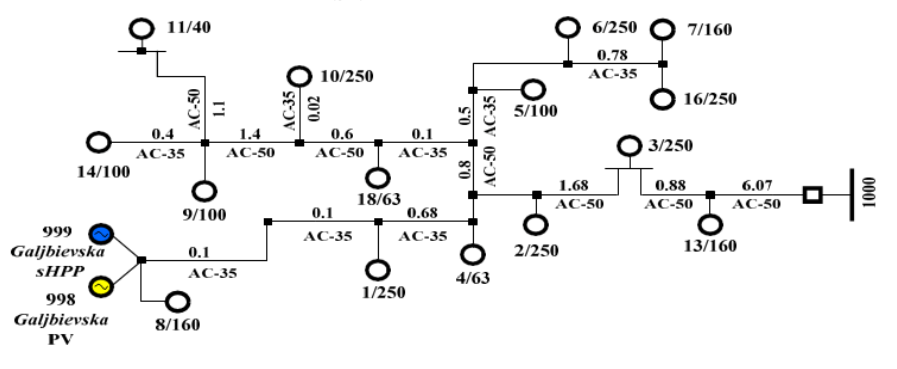
The MV power grid model that was modelled in the Matlab program and presented in Figures 1 and 2 was analysed.

Fig.1. Model diagram of the analysed MV grid

Fig.2. Model diagram of the main power supply station

There are several indices used in the world to assess the reliability (continuity) of the power supply. The most frequently used are [5, 12]:

• SAIFI (System Average Interruption Frequency Index) – a system index of the average number of power outages per end-user, defined as the ratio of all unplanned power outages during the year to the number of endusers connected to the grid. SAIFI does not include short power outages of less than 3 minutes [pcs/enduser].

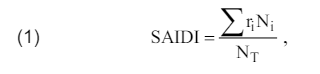
• SAIDI (System Average Interruption Duration Index) – a system index of the average annual total time of power outages, determined as the annual total time of all power outages divided by the total number of end-users connected to the grid [minutes/end-user].

• MAIFI (Momentary Average Interruption Frequency Index) – an index of the average number of temporary power outages for the end-users, determined as the average annual number of power outages shorter than 3 minutes or shorter than 1 minute that the end-user can expect. It is calculated as the quotient of the number of all short outages during the year to the number of endusers connected to the grid.

The tables below contain the values of reliability indices for the MV line sections before and after the analysed distribution grid MV modernisation. SAIFI, SAIDI, MAIFI reliability indices for grid devices were calculated taking into account the value of failure duration, failure intensity and other indices.

Table 1. Reliability indexes of the MV line section before and after modernisation

.

The following optimisation criteria were taken into account in the developed models of the analysed grid:

• reduction of the resultant SAIFI index (alternatively MAIFI),
• reduction of the resultant SAIDI index,
• reduction of expenditure on modernisation of the MV grid,
• reduction of grid technical losses,
• reduction of the MV grids operating costs.

For the analysed problem, the implementation of calculations with the use of an aggregating approach was adopted, as well as the methodology of multi-criteria calculations with the use of evolutionary algorithms, allowing to find sets of Pareto optimal solutions.

The solutions were sought taking into account the fulfilment of technical conditions regarding load capacity, throughput, voltage conditions and short-circuit parameters. The decision variables in the analysed task are the values of the decision variables (between 0.0 and 1.0) that determine the scope of modernisation of selected grid devices and the selection of grid elements to be modernised.

For the proposed coding method, operators changing the values of decision variables were used, keeping their values within the designated range to ensure the correctness of the solutions. The following vector objective function was adopted for the calculations:

.

f1(x) – minimisation of the resultant SAIFI index:

.

where: ni – number of unplanned outages at end-users in a given location, Li – number of end-users,

f2(x) – reduction of the resultant SAIDI index:

.

where: Ti – time of end-users power outage in the given location,

f3(x) – reduction of the resultant MAIFI index:

.

f4(x) – determines the energy effect of reducing energy loss in the lines of the analysed MV grid (longitudinal power losses in grid components were taken into account):

.

with: τi – duration of the largest load losses in the ith MV line, Rmi – resistance of the ith section of the line after modernisation,

For the analysed grid, the values of SAIFI, SAIDI and MAIFI reliability indices were determined for individual MV line sections. In these calculations, the values of failure intensity and failure duration were assumed, taking into account the length of the MV line section to be modernised and the technologies to be used for the modernisation [5,6].

Calculation example

During the calculation, an aggregated approach was used and the objective function taking into account the four adopted criteria.

The calculation procedure for determining solutions had the following stages of calculations:

• loading the technical and reliability data collected for the analysed grid system,

• decoding variants of solutions in which decision variables are taken from discrete sets (choice of location or modernisation of devices) continuous decision variables (modernisation of MV line sections along a selected line length).

• calculation of power flow in the analysed MV grid,

• calculation of the resultant reliability indices for the analysed MV grid,

• calculating the value of the aggregate objective function (or separately criterion functions for determining the set of Pareto optimal solutions).

The results of the calculations using the genetic algorithm are presented in Charts 3 and 4, while Charts 5 and 6 show the course of calculations using the swarm algorithm.

Fig.3. The course of calculations with the genetic algorithm

Fig.4. The second example of calculations using the genetic algorithm

Calculated solution describes of MV grid system with marked components of the analysed grid selected for modernisation and with marked locations of devices improving the failure rates of the analysed MV distribution grid.

Fig.5. The course of calculations with the use of the swarm algorithm

The performed analyses confirmed the usefulness of the algorithms used to optimise the scope of projects increasing the efficiency of MV distribution systems. The results of solutions with the use of selected heuristic algorithms include information on the selection of grid equipment to be modernised and the scope of the modernisation.

Tables 2 and 3 contain the calculated values of the criterion functions for the obtained solutions and the calculated values of the reliability indexes of the individual line sections of the analysed MV distribution grid.

Fig.6. The second example of calculations using the swarm algorithm

Table 2. Values of reliability indexes of MV line sections after modernisation

.

Table 3. Values of criterion functions for the obtained solutions

.

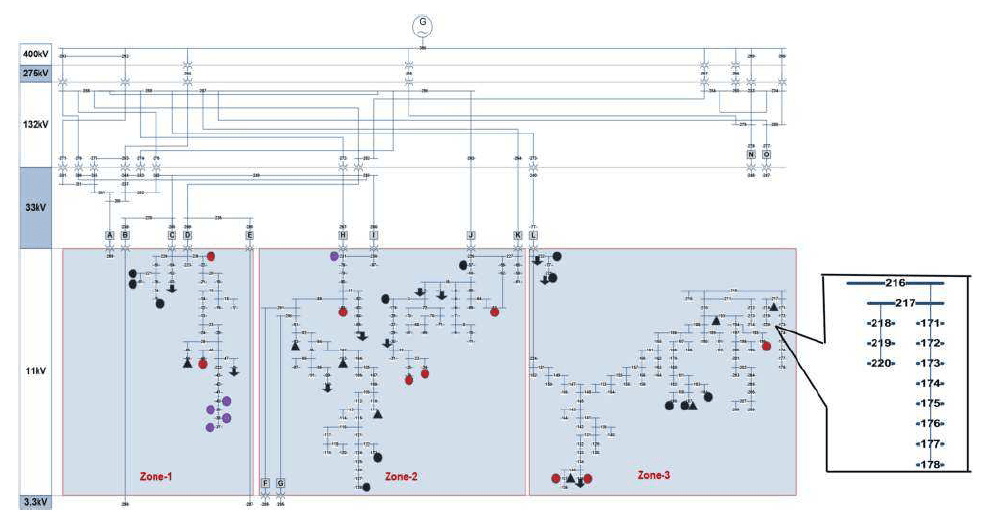
A graphic presentation of the designated solution is shown in Figure 7, which shows a diagram of the considered MV grid system with marked components of the analysed grid selected for modernisation and with marked locations of devices improving the failure rates of the analysed MV distribution grid.

As a result of the calculations, it was determined measures implemented to improve the reliability indices of the MV distribution grid. Among others, they include optimal locations for measures to improve grid efficiency in the form of, for example locations of radio-controlled switches. In table 4 contains a description of measures designated for the modernisation of individual MV lines.

Table 4. Description of measures designated for the modernisation

.
Fig.7. Model diagram of the power distribution network with marked possible sections of the line for modernization (rectangles symbolize the modernization of selected sections of the line MV, circles symbolize the location switch disconnectors of radio-controlled)

In this table, the calculated measures and devices to improve the grid reliability were determined for successive MV line sections in the form of appropriate switchgear and distribution equipment, or the conversion of lines using different technology. For the scope of the considered grid modernisation projects defined using discrete variables (location of new devices and modernisation of the existing ones) and continuous variables (modernisation of MV line sections along a selected length), criterion functions were calculated using the formulas given above.

An important part of these calculations are the dependencies and definitions used to calculate the reliability indices (including reliability coefficients, failure intensity and duration of failures and power outages) for individual analysed power line sections and the entire analysed fragment of the grid. Following the described definitions, SAIFI, SAIDI and MAIFI indices for individual MV line sections and the entire fragment of the distribution grid were then calculated.

In the further part of the paper, the problem with the use of selected multi-criteria evolution algorithms is analysed. NSGA II and III, SPEA2 and ev-MOGA algorithms were used for the calculations [2, 6]. These algorithms allow determining sets of Pareto optimal solutions. The chart below presents the Pareto optimal solutions fronts found using these algorithms.

In global optimisation, the quality of the algorithm can be evaluated based on the global optimum found, and e.g. through the number of objective function calls. In multicriteria optimisation, two categories of algorithm evaluation are distinguished [13]:

• performance related to the number of iterations, the number of objective function calls,
• efficiency, including the accuracy and convergence of the solutions found.

When assessing the effectiveness of the algorithm, one should evaluate how the found solution front is close to the real (or known) front and how the solutions are distributed along the front. In the analysed case, it was stated that the fronts of solutions that have been found using three different evolutionary algorithms coincide, which proves the convergence of the results obtained with different methods. In the following graphs (8 and 9), the calculated values of the criterion functions are described in relative units. A chart with the identified Pareto fronts and dotted solutions, obtained according to the aggregated approach is presented in Figure 9.

Fig.8. Identified Pareto optimal solutions fronts

After the analysis, it was discovered that the individual solutions found through the aggregated methodology were arranged along the identified front of solutions. It serves as a confirmation that the convergence of the results obtained with various methods, including the criteria aggregating methods and the independent adoption of individual criteria (when searching the Pareto optimal sets).

Fig.9. Chart with fronts and individual points resulting from the application of the aggregate approach
Fig.10. Set of Pareto optimal solutions (NSGA II algorithm)

Calculations were also made to determine a set of Pareto optimal solutions with the use of the NSGA II algorithm for three criteria: reduction of grid failure rates, reduction of technical losses and reduction of capital expenditure. The result of the calculations is shown in Figure 10.

As a result of further analyses, sets of solutions for those three criteria were obtained using three algorithms, NSGAII, SPEA2 and evMOGA, as shown in Figure 11.

Fig.11. A set of solutions for three criteria, obtained with three algorithms: NSGA-II, SPEA2 and evMOGA

Figure 12 shows the set of solutions obtained using the NSGA II algorithm for the three selected criteria. Whereas Charts 12 and 14 presents, apart from the information in Figure 12, individual points are marked representing solutions obtained using the aggregated approach.

Fig.12. The obtained set of Pareto optimal solutions – obtained using the NSGA II algorithm

Fig.13. The obtained set of Pareto optimal solution and the point (red colour) found using the aggregated approach

Fig.14. The obtained set of Pareto optimal solution and the point (red colour) found using the aggregated approach – additional view

The charts show a comparison of the obtained results. The performed analyses prove the reasonableness of using heuristic algorithms, including evolutionary algorithms, to determine measures to be implemented to increase the distribution grids reliability.

Conclusions

The article contains the results and conclusions of the analyses carried out in the field of optimisation calculations with selected algorithms for the analysed problem of determining the scope of modernisation projects for the selected power electric distribution grids. The application of selected evolutionary algorithms for the determination of Pareto optimal solutions and the determination of Pareto fronts for the optimisation problem of a selected MV power distribution grid was also analysed.

In addition, the proposed methodology of evolutionary calculations can be used in practice for optimisation and preparation of complex distribution grids modernisation schedules, including the grids with a very large number of elements. The obtained sets of Pareto optimal solutions contain alternative sets of solutions distributed along the obtained Pareto front, which allows for a detailed analysis of the most interesting range of solutions for the decisionmakers.

The calculations were performed using various heuristic methods and the calculations show a high level of convergence, allowing to review possible solutions for the analysed problem.

REFERENCES

[1] Abedini M., Moradi M.H.: A combination of genetic algorithm and particle swarm optimization for optimal DG location and sizing in distribution systems. International Journal of Electrical Power & Energy Systems. Volume 34, Issue 1, January 2012, pp. 66–74.
[2] Acharya N., Mahat P, Mithulananthan N.: An analytical approach for DG allocation in primary distribution network”, International Journal of Electrical Power & Energy Systems, vol. 28, 10, 2016, p.669-678.
[3] Banasik K., Chojnacki A. Ł.: Effects of unreliability of electricity distribution systems for municipal customers in urban and rural areas, Przegląd Elektrotechniczny Nr 05/2019, p. 179-183.
[4] Bobric E. C., Cartina G., Grigoras G.: Fuzzy Technique used for Energy Loss Determination in Medium and Low Voltage Networks. Electronics and Electrical Engineering. – Kaunas: Technologija, 2009. – No. 2(90). – P. 95–98.
[5] Chojnacki A.: Assessment of the Risk of Damage to 110 kV Overhead Lines Due to Wind. Energies, 2021, p. 1-14.
[6] Ciro G., Dugardin F., Yalaoui F., Kelly R.: A NSGA-II and NSGA-III comparison for solving an open shop scheduling problem with resource constraints. IFAC, International Federation of Automatic Control, 2016 s. 1272–1277.
[7] Delbem A. C. B., Carvalho A. C. P. L. F., Bretas N. G.: Main chain representation for evolutionary algorithms applied to distribution system reconfiguration. IEEE Trans. Power Systems, vol. 20, no. 1, Feb. 2015, pp. 425-436.
[8] Guohua Fang, Wei Guo, Xianfeng Huang, Xinyi Si, Fei Yang, Qian Luo, Ke Yan: A New Multi-objective Optimization Algorithm: MOAFSA and its Application. Przegląd Elektrotechniczny, R. 88 Nr 9b/2012, s. 172-176.
[9] Helt P., Parol M., Piotrowski P.: Metody sztucznej inteligencji – przykłady zastosowań w elektroenergetyce. Oficyna Wydawnicza Politechniki Warszawskiej, 2012.
[10] Hong Y. Y., Ho S. Y.: Determination of network configuration considering multiobjective in distribution systems using genetic algorithms. IEEE Trans. Power Systems, 2005. – Vol. 20. – No.2– p. 1062–1069.
[11] Kamrat W.: Metody oceny efektywności inwestowania w elektroenergetyce, Monografia Wydawnictwo PAN, Warszawa 2004.
[12] Khushalani S., Solanki, J.M., Schulz, N.N.: Optimized Restoration of Unbalanced Distribution Systems. IEEE Transactions on Power Systems, no. 22, Issue 2. 2017, p. 624- 630.
[13] Kumar Y., Das, B., Sharma, J.: Multiobjective, Multiconstraint Service Restoration of Electric Power Distribution System With Priority Customers. IEEE Transactions on Power Delivery, no. 23, Issue 1, 2008, p. 261-270.
[14] Marzecki J., Drab M.: Obciążenia i rozpływy mocy w sieci terenowej średniego napięcia-wybrane problemy. Przegląd Elektrotechniczny, R.91, pp. 192-195, luty, Nr 2, 2015.
[15] Nita W., Filipiak S.: Planowanie przebudowy terenowych sieci dystrybucyjnych SN metodami ewolucyjnymi. Przegląd Elektrotechniczny s. 92-98 Nr 4/2021.
[16] Nita W.: Optymalne planowanie przebudowy elektroenergetycznych terenowych sieci dystrybucyjnych SN za pomocą metod ewolucyjnych, Rozprawa Doktorska, Politechnika Świętokrzyska 2020.
[17] Ouyang, W.& Cheng, H.& Zhang, X.& Yao, L.& Bazargan, M.: Distribution network planning considering distributed generation by genetic algorithm combined with graph theory, Electric Power Components Systems, vol. 38, 3, 2019, p.325-339.
[18] Parol M: Analiza wskaźników dotyczących przerw w dostarczaniu energii elektrycznej na poziomie sieci dystrybucyjnych. Przegląd Elektrotechniczny s. 122-126 Nr 8/2014.
[19] Sowiński J.: Forecast of electricity supply using adaptive neurofuzzy inference system, May 2017, Conference: 2017 18th International Scientific Conference on Electric Power Engineering (EPE), DOI:10.1109/EPE.2017.7967248,
[20] Sowiński J.: Use of load volatility description in modelling of energy balance in the section “electricity supply”, January 2017, Rynek Energii 128, s. 35-39.
[21] Parol M., Baczyński D., Brożek J.: Optimisation of Urban MV Multi-Loop Electric Power Distribution Networks Structure by Means of Artificial Intelligence Methods, Control and Cybernetics, 2012, vol. 41 (2012), s.667-689.


Autorzy: dr inż. Wojciech Nita, PGE Dystrybucja S.A. Oddział Skarżysko-Kamienna, dr hab. inż. Sylwester Filipiak prof. PŚk, Politechnika Świętokrzyska w Kielcach, Katedra Elektrotechniki Przemysłowej i Automatyki, E-mail: filipiak@tu.kielce.pl


Source & Publisher Item Identifier: PRZEGLĄD ELEKTROTECHNICZNY, ISSN 0033-2097, R. 98 NR 6/2022. doi:10.15199/48.2022.06.09

Statistical Analysis and Modeling of the Reliability of Overhead Low Voltage Lines

Published by Łukasz GRĄKOWSKI, Andrzej Ł. CHOJNACKI, Katarzyna GĘBCZYK, Kornelia BANASIK Kielce University of Technology, Faculty of Electrical Engineering, Automatic Control and Computer Science


Abstract: The paper present a thorough analysis of seasonality and causes of failures of low voltage overhead lines. Such lines are mainly characteristic of rural areas. An average duration of failures, average duration of emergency shutdown and average duration of power supply interruptions were determined. Based on empirical data, probability density functions for the above-mentioned times were also determined.

Streszczenie: W artykule przedstawiona została wnikliwa analiza sezonowości oraz przyczyn awarii linii napowietrznych niskiego napięcia. Linie takie są charakterystyczne przede wszystkim dla terenów wiejskich. Wyznaczono średni czas trwania awarii, średni czas trwania wyłączenia awaryjnego oraz średni czas trwania przerw w zasilaniu odbiorców. Na podstawie danych empirycznych wyznaczono również funkcje gęstości prawdopodobieństwa dla ww. czasów. (Analiza statystyczna oraz modelowanie niezawodności linii elektroenergetycznych niskiego napięcia).

Keywords: overhead LV lines, reliability, power industry
Słowa kluczowe: linie napowietrzne nN, niezawodność, energetyka

Introduction

Modern electricity customers have very high demands regarding the quality and continuity of electricity supply. The total length of overhead LV lines and the number of customers connected to them is systematically increasing. Such a situation increases the risk of restrictions in the supply of electricity to customers in the event of a failure of the transmission system. This results in significant material damage and, in extreme cases, can lead to a risk to human health or life.

Over the last few years, in connection with, among others, Poland’s accession to the European Union, the interest in the problem of reliability of power systems has increased. The reason for this is the fact that even the shortest interruption results in dissatisfaction of electricity consumers and material losses. High reliability of operation of LV lines allows to reduce the time of interruptions in power supply to customers, and thus to minimize the costs of losses resulting from the lack of power supply to customers [5].

Low-voltage networks consist mainly of overhead lines, cable lines, cable and overhead connections, as well as all kinds of connectors. Overhead lines are used primarily in field networks, while cable lines are mostly used in urban networks. Overhead LV networks are usually built as radial systems, while cable networks are built as loop systems with partitions in the cable joint.

Low-voltage overhead lines are built in many different variants. In domestic distribution companies, aluminium wires are commonly used for the construction of overhead LV lines; copper wires are very rarely used and steel-aluminium wires are used in exceptional cases. Currently, mainly single-metal wires with cross-sections from 16 mm2 to even 120 mm2 are used.

In low-voltage overhead lines, insulated wires in the form of twisted pair solid wires or multiconductor insulated wires are increasingly used. The disadvantage of insulated wires is their high price. On the other hand, when using insulated wires, purchasing such components as insulators or crossbars is unnecessary. In such case, the total cost of construction is only slightly higher than the cost of construction of a line with bare conductors, with significant reduction in the amount of interferences (especially transient ones) during operation [1].

Insulators are used to separate (isolate) live line conductors from the supporting structures and from each other. LV lines mainly use single- or double-groove standing insulators. For dead-end and corner poles with significant tension forces, spool insulators are used. The material used for the construction of LV insulators is mainly porcelain [2].

The supporting structures of low-voltage lines are power poles. Depending on the function performed, the following types of poles are distinguished: straight-line poles, corner poles, resistance poles, corner resistance poles, dead-end poles and branch poles. Currently, reinforced concrete structures are used as the basic type of poles.

Class A surge arresters are instruments designed to protect devices installed in low-voltage overhead lines. They are adapted to be installed outside the protected building (pole connections).

The basic components of LV overhead line accessories include hooks, holders, connectors, clamps and ties [3, 7].

In his paper, the author presented the results of reliability tests of LV overhead lines operated in domestic distribution companies. The research concerned the causes of failures and seasonal variability in the frequency of defects. The author also conducted an analysis of the duration of failures, duration of emergency shutdowns and duration of interruptions in power supply to consumers. All the analyses were carried out at the level of significance α=0.05 [6, 8, 9, 10].

Analysis of seasonality and causes of failures

The monitoring of the failure rate of LV overhead lines covers a period of 10 years. During that time a total of 10458 failures occurred. The number of failures of individual groups of devices is presented in Table 1. Table 2 shows the failures of LV overhead lines in individual months. Figure 1 shows a histogram of the empirical frequency of failures in the subsequent months of the year and the approximation function.

Table. 1. Failures observed on LV overhead lines over 10 years of observation

.
Fig.1. Empirical values and approximation function of seasonal variability of failure frequency of LV overhead lines

The greatest number of failures was observed in summer months (May – August) and winter months (January – December). During the summer period, 4135 failures occurred, which makes up for 39.5% of all damages. During winter months, 1742 failures occurred, which makes up for 16.7% of all damages. In the remaining months, the failure rate of overhead LV lines is below the average damage intensity of 8.33%.

The seasonal variability in the frequency of failures over a year can be described by means of an approximation function in the following form:

(1) f(i) = a·i4 + b·i3 + c·i2 + d·i + e

where: i – consecutive month number, a, b, c, d, e – approximation function coefficients.

The coefficients of approximation function of seasonal variability of failure frequency of LV overhead lines are: a = 0.0103, b = – 0.2815, c = 2.5181, d = – 8.0493, e = 14.968. The correlation coefficient between empirical values and the approximation function is r = 0.92.

The percentage share of LV overhead lines failure causes is given in Table 3 and graphically presented in Figure 2. The percentage share of individual causes of failures in the total number of failures is shown in Figure 3.

Table. 2. Summary of the number of failures in each month

.

Table. 3. Causes of defects of LV overhead lines in each month

.
Fig.2. Causes of LV overhead line failures

The most frequent cause of LV overhead line failures are ageing processes, which caused about 22.83% of all damages. Other causes were trees/branches and wind, which caused 11.64% and 11.45% of all damages, respectively. Seasonal causes, but with a significant impact on the failure rate of LV overhead lines, are lightnings and ice/rime ice. They caused 10.95% and 6.70% of all damages, respectively.

Fig.3. Percentage share of causes of LV overhead line failures

Duration of failure

Duration of failure ta determines the transition of the device from failure state back to usability state. It is a very important parameter used to determine the extent of the failure, as well as its economic and business consequences [3, 4, 11, 13].

Statistics on the duration of LV overhead line failures include 10458 cases. On the basis of empirical data, a hypothesis on log-normal distribution of duration of failures was assumed. The empirical and theoretical course of LV overhead line failure duration is shown in Figure 4. The determined values of distribution parameters are as follows:

m = 1.88 and σ = 1.14. Parametric verification was also carried out. Obtained parameter values: a = 11.30 h, s = 13.29 h and confidence interval for an average value of 11.05 h < a < 11.56 h.
The average failure rate parameters of LV overhead lines obtained from the research are as follows: ¯λa = 62.3614 1/a·100km and qa = 74.45·10-3 1/100km.

Fig.4. Empirical and theoretical course of failure duration ta of LV overhead lines Duration of emergency shutdown

Duration of emergency shutdown

Duration of emergency shutdown twa is the time counted from the moment the object is shut down as a result of its damage to the moment the object is switched on after its repair [3]. Statistics on the duration of emergency shutdowns of LV overhead lines include 10344 cases. On the basis of empirical data, a hypothesis on log-normal distribution of duration of emergency shutdowns was assumed. The empirical and theoretical course of duration of emergency shutdowns of LV overhead lines is shown in Figure 5. The determined values of distribution parameters are as follows:

m = 1.73 and σ = 1.15. Parametric verification was also carried out. Obtained parameter values: wa = 9.68 h, s = 10.98 h and confidence interval for an average value of 9.47 h < twa < 9.90 h.

The average failure rate parameters of LV overhead lines obtained from the research are as follows: ¯λwa= 61.6816 1/a·100km and qwa = 63.81·10-3 1/100km.

Fig.5. Empirical and theoretical course of emergency shutdown duration twa of LV overhead lines

Duration of interruptions in power supply to consumers

The time of interruption in power supply to consumers tp is the time counted from the moment of the failure to the moment of restoring power supply to the consumer [12]. Therefore, it is the time when consumers have no access to electricity. Statistics on the duration of interruptions in power supply to consumers include 9983 cases. On the basis of empirical data, a hypothesis on log-normal distribution of the duration of interruptions in power supply was assumed.

The empirical and theoretical course of the duration of power supply interruptions is shown in Figure 6. The determined values of distribution parameters are as follows:

m = 0.95 and σ = 1.61. Parametric verification was also carried out. Obtained parameter values: p = 5.34 h, s = 7.54 h and confidence interval for an average value of 5.19 h < tp < 5.49 h.

The average failure rate parameters of LV overhead lines obtained from the research are as follows: ¯λp = 59.5289 1/a·100km and qp = 35.02·10-3 1/100km.

Fig.6. Empirical and theoretical course of the duration of power supply interruptions tp

Summary

LV overhead lines are the final element of the power distribution system (mainly in rural areas). Modern electricity customers (including rural ones) have very high demands regarding the quality and continuity of electricity supply. The reason for this is the fact that even the shortest interruption results in dissatisfaction of electricity consumers and material losses. High reliability of operation of LV overhead lines allows to reduce the time of interruptions in power supply to customers, and thus to minimize the costs of losses resulting from the lack of power supply to customers.

Due to their low energy consumption, rural networks have been treated for many years as distribution systems of minor importance. As a result of this, practically no research was conducted on the problem of the quality and reliability of electricity supply to consumers in rural areas. A significant increase in load in recent years has resulted in an increase in the number of failures in field LV networks. Therefore, it was necessary to conduct comprehensive reliability tests of these power systems in order to determine the methods of their operation.

Due to the limited size of this paper, only a fragment of the analysis concerning the durations of failures, durations of emergency shutdowns and durations of interruptions in power supply to consumers, as well as seasonality and causes of failures was presented. The determined values of the reliability parameters are as follows:

a = 11.30 h, ¯λa = 62.3614 1/a·100km, qa = 74.45·10-3 1/100km, wa = 9.68 h, ¯λwa= 61.6816 1/a·100km, qwa = 63.81·10-3 1/100km, p = 5.34 h, ¯λp = 59.5289 1/a·100km, qp = 35.02·10-3 1/100km.

The probability density functions of durations of failures, durations of emergency shutdowns and durations of interruptions in power supply to consumers were determined. The proposed probability distributions are log-normal distributions. An analysis of seasonality and causes of failures was performed. On its basis it can be concluded that inspections, repairs and measurements of LV overhead lines should be carried out in March, April and November, as the intensity of failure is the lowest in these months. The period of increased intensity of damage are the spring and summer months. The most common causes of failure were ageing processes, trees and branches, wind and lightnings. While we have no influence on the weather conditions, we can significantly improve the reliability of power grids by increasing the frequency of inspections and repairs.

REFERENCES

[1] S. Asgarpoor, H. Ge, Reliability Evaluation of Equipment and Substations With Fuzzy Markov Processes, IEEE Transactions On Power Systems, Vol. 25, No. 3, August 2010, p. 1319-1328
[2] J. T. Burnham, R. J. Waidelich, Gunshot damage to ceramic and nonceramic insulators. IEEE Trans. Power Delivery, Vol. 12, No. 4, 1997, p. 1651-1556
[3] A. Ł. Chojnacki, Analiza niezawodności eksploatacyjnej elektroenergetycznych sieci dystrybucyjnych, Rozprawa habilitacyjna, Kielce 2013.
[4] A. Ł. Chojnacki, Analiza niezawodności stacji elektroenergetycznych SN/nN w warunkach eksploatacji, Rozprawa doktorska, Kielce 2005.
[5] A. Ł. Chojnacki, Modelowanie niezawodności napowietrznych stacji transformatorowo-rozdzielczych SN, IV Konferencja Naukowa PTETiS „Modelowanie i Symulacja”, Kościelisko 2006, p. 93-102.
[6] Z. Kowalski, Niezawodność zasilania odbiorców energii elektrycznej, Wydawnictwo Politechniki Łódzkiej, Łódź 1992.
[7] S. Kujszczyk, Elektroenergetyczne sieci rozdzielcze, tom I, Wydawnictwo naukowe PWN, Warszawa 1994.
[8] S. Lesiński, Niezawodność urządzeń elektrycznych, Wydawnictwo Politechniki Łódzkiej, Łódź 1989.
[9] J. Paska, Niezawodność systemów elektroenergetycznych, Oficyna wydawnicza Politechniki Warszawskiej, Warszawa 2005.
[10] J. Popczyk, Modele probabilistyczne w sieciach elektroenergetycznych, Wydawnictwo Naukowo-Techniczne, Warszawa 1991.
[11] J. Sozański, Niezawodność zasilania energią elektryczną, Wydawnictwo Naukowo-Techniczne, Warszawa 1982.
[12] J. C. Stępień, Metody analizy i oceny niezawodności kablowych układów zasilających średnich napięć, Rozprawa habilitacyjna, Kielce 2011.
[13] A. Stobiecki, Analiza parametrów niezawodnościowych transformatorów rozdzielczych średnich napięć, Rozprawa doktorska, Kielce 2006.


Authors: M.Sc. Eng. Łukasz Grąkowski, PhD Eng. Andrzej Ł. Chojnacki, M.Sc. Eng. Katarzyna Gębczyk, M.Sc. Eng. Kornelia Banasik, Department of Energy Basics, Kielce University of Technology, Faculty of Electrical Engineering, Automatic Control and Computer Science Poland, lgrakowski@tu.kielce.pl, a.chojnacki@tu.kielce.pl, kgebczyk@tu.kielce.pl, k.banasik@tu.kielce.pl


Source & Publisher Item Identifier: PRZEGLĄD ELEKTROTECHNICZNY, ISSN 0033-2097, R. 95 NR 12/2019. doi:10.15199/48.2019.12.59

Switching Strategies of Single Stage Battery based Microgrid

Published by Sudhakiran Ponnuru1, Ashok Kumar R1, Jothi Swaroopan NM2, Annamalai University (1), RMK Engineering College (2), India

ORCID: 1. 0000-0002-5345-5709, 2. 0000-0001-6994-7591, 3. 0000-0001-7671-5190


Abstract. Renewable sources creates new opportunity when it is integrated with the microgrid increasing the energy efficiency of the system. This paper focuses on the adaptive control strategies which utilizes different energy management system for single stage PV based battery management system connected with the microgrid which operates on maximum power. The proposed system is carried in MATLAB/Simulink 2017B and its performance measures is demonstrated for different scenarios.

Streszczenie. Źródła odnawialne stwarzają nowe możliwości, gdy są zintegrowane z mikrosiecią zwiększając efektywność energetyczną systemu. Niniejszy artykuł koncentruje się na adaptacyjnych strategiach sterowania, które wykorzystują różne systemy zarządzania energią dla jednostopniowego systemu zarządzania baterią PV, połączonego z mikrosiecią, która działa z maksymalną mocą. Proponowany system jest realizowany w MATLAB/Simulink 2017B, a jego mierniki wydajności są demonstrowane dla różnych scenariuszy. (Strategie przełączania mikrosieci opartej na baterii jednoetapowej)

Keywords: Microgrid, Maximum Power Point Tracking, Battery, Voltage source converter.
Słowa kluczowe: mikrosieć, zarządzanie energią, baterias.

Introduction

The performance of the renewable system created major concern among the researchers to improve its functionality based on the available resources [1]. Due to fast depletion of the non-renewable resources [2], there needs a solution to move on with alternative sources of energy such as Wind Energy Systems (WES) [3], Fuel cellbased storage systems [4], Biomass Plants [5, 6], Solar Photovoltaic (SPV) systems [7-10] and Hybrid Power Plants [11]. The primary concern is to integrate microgrid [12] with these alternative distributed sources. These distributed sources are connected with the microgrid to supply power due to increasing demand which is a major concern in developing nations. Generally, microgrids are connected either in Standalone mode or Grid connected mode during operational condition [13]. Whenever distributed sources of energy are integrated with microgrid system, one has to ensure its reliability [3, 6] and adaptability [5] with the system until normal operation is carried out. Usage of power electronic devices across Point of Common Coupling (PCC) with the grid creates non-linear load. The quality of power delivered to the microgrid should be checked before it is connected. This can be attained by using different control strategies which are efficient for smooth functioning of the grid [14].

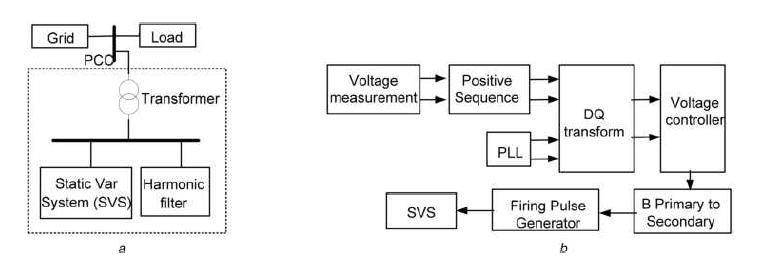
Fig.1. Grid Integrated System

Replacement of passive components with power electronic switches creates non-linearity in the system. This affects the quality of the power to be non-linear while delivering to the grid. Usually, the harmonic currents are generated using non-linear loads such as printers, Switched Mode Power Supply (SMPS) used in computers, electronic ballasts, refrigerators, Televisions and other switching devices. As per the latest regulation of IEEE standard 519- 2014 for Total Harmonic Distortion (THD) [15-17], when the operating bus voltage is around 69kV and below; the maximum individual harmonic component should be around 3% whereas the maximum THD should be around 5%. When the bus voltage is around 115kV and 161kV, then the maximum individual harmonic component should be around 1.5% whereas the maximum THD should be around 2.5%. When the operating bus voltage is above 161kV, then the maximum individual harmonic component should be around 1% whereas the maximum THD should be around 1.5%. These standards should be met in order to solve power quality problems while connecting with the grid.

Fig.2. Battery Storage System based microgrid

Another problem while integrating the renewable sources with the grid is output fluctuation. This is generally experienced in Wind Generation Systems (WGS) and Solar Photovoltaic System. Voltage fluctuation in WGS causes voltage swell and Sag during the switching operation of WGS. In SPV systems, the fluctuations are due to hotspots, irradiance and shading effect. Introduction of Battery storage system would reduce the problem of output fluctuations while connecting with the grid [18-20]. So, requirement of an adaptive control strategies using Battery Storage system would compensate the energy utilization to the grid [21]. These control strategies would help in maintaining stability of the grid. The performance of the grid is measured based on the two distinct modes of operation. The microgrid is generally operated either in Grid connected mode or Islanded connected mode [22]. When the microgrid is operated in grid connected mode, then it acts as a current controller which injects power based on the power generated to the main [23-25]. When the system has multiple distributed generators (DG) units are available in grid connected mode then droop control strategy is best suitable [26-28]. When the microgrid is operated in islanded connected mode, then it acts as a voltage controller where the voltage and frequency regulation of the system dominate by the microgrid during grid outage. Above Fig.1 provides the basic details of input sources connected with grid integrated system and Fig. 2 highlights the battery storage system based microgrid.

Performance and Control Strategies of Grid System

The performance analysis is carried based on the system behaviour under grid connected mode and islanded connected mode for different scenarios such as input variations, load variations, stability conditions, voltage ride through capability issues which are analysed by implementing it in MATLAB/ Simulink.

Grid connected mode

When the microgrid is operating in grid-connected mode, it acts as a current controller and feeds energy into the grid based on the energy generated. If the system has multiple DG’s available in online mode, it is best to adopt a voltage drop strategy. When the grid is available, an adaptive control of the grid and the battery will supply power to the load through the photovoltaic array. Voltage source converter uses photovoltaic cells to power the load, maintain network quality on the network side, and charge the battery. Maximum Power Point Tracking (MPPT) [29, 30] algorithm is used to monitor the changes in DC bus voltage across battery. When the photovoltaic output reaches below the threshold value, the remaining energy used to power the load will be obtained from the grid. when the overall power generation exceeds the load, the photovoltaic field starts to supply power to the grid and batteries.

Islanded connected mode

When the microgrid operates in islanded mode, it acts as a voltage controller. In the event of a grid interruption, the system voltage and frequency regulation will control the microgrid. In the islanded mode, the load is only borne by the photovoltaic field and the battery. The Point of Common Coupling (PCC) voltage and its frequency are maintained using voltage source converter. The battery is charging because the load is the same and the power generation has exceeded the load. Due to the corresponding change in the intermediate circuit voltage, the photovoltaic field operates in MPPT mode. Without changing the solar radiation, if the load is reduced to half of its value. If the power generation exceeds the load condition, then the intermediate circuit voltage will increase with time. However, the converter will start regulating constant current. As a result, the battery starts to absorb the excess energy, and the intermediate circuit voltage returns to its original value.

Simulation Results of Grid System

The proposed system uses control scheme which has the ability to operate the battery even during absence or presence of the grid. In this mode of operation, battery storage devices are used in order to maintain DC-link voltage constant. In case of battery storage devices are absent, then load follower can be used to operate under single stage PV based system. This paper focuses only the single stage battery based system. Incase if single stage PV based system is used, then MPPT algorithm is to be carried out using Perturb and Observe method (P&O) or any other optimization tools need to be used. In this case the battery voltage (Vbat) is ascertained and correlate with the measured DC link voltage (VDC).

Fig.3. Schematic approach of the system

The proposed system uses boost converter which is integrated with the voltage source converter (VSC) [31]. Pulse Width Modulation (PWM) technique [32] is used for control pulses for the boost converter. Proportional-Integral-Derivative (PID) controller [33] is used to obtain the current reference for the battery. The power quality issues across the grid side are controlled through VSC in grid connected mode. It also helps in battery charging during this mode. Point of common coupling voltage and frequency issues are controlled in Standalone mode. The availability of the grid is first checked by using passive method which is indicated in eq. (1)-(2)

.

During the availability of the grid, the grid voltage is sensed based on the templates generated by active and reactive power. Fig.3 indicates the schematic approach of the system and Fig. 4 provides the simulated diagram of the system. The proposed system uses Lease Mean Square (LMS) adaptive control algorithm in order to reduce power quality issues in the grid side. Voltage source converter are divided into two major subparts which as unit template estimation (ut) and terminal voltage estimation (Vt). Unit template estimation is calculated using template voltage (Vt) and grid voltage (vg) which is indicated in eq. (3)–(4).

.
Fig.4. Simulated diagram of the proposed system
Fig.5. Flowchart of MPPT algorithm

The flowchart of the MPPT algorithm is shown in Fig.5 which provides the switching operation of T1.The gating pulses for the switches S1-S4 for voltage source converter are generated by comparing the reference VSC current with actual VSC current.

Fig.6 indicates the simulated Phase-Locked Loop (PLL) circuitry done using MATLAB software and Fig.7 shows the simulated PID controller for tuning the system. Table 1 provides the information about the simulated specifications carried for the proposed system.

Fig.6. PLL circuitry of the simulated system

Table 1. System Specifications

.
Fig.7. PID controller values of simulated system
Fig.8. Simulated voltage and current response of Battery, Converter and Grid
Fig.9. Simulated results of grid voltage and current with active and reactive power components

The test results in Fig. 8 confirm the transmission of active energy from the battery side to the grid side. The test results include grid power (Pg), load power (PL) and photovoltaic solar energy. (Ppv), power supply VSC (Pvsc). The reactive power of the load is provided by the VSC, and the reactive power of the network is regarded as zero, so the system maintains a power factor of 1. As shown in Fig. 9, in the system under non-linear load, the THD of the line current is 5.2%, while the THD of the VSC current and the THD of the load current are 15.8% and 23.4%, respectively. Thus, the simulation results comply with power quality standard of IEEE 519.

An improved photovoltaic system with a single-phase grid based on the least squares method was implemented, and tests were conducted for various changes in solar radiation and load. The convergence speed of the proposed algorithm is higher than that of the standard LMS algorithm.

Conclusion

In the grid-connected mode and the islanded mode, the single-stage control of the micro-grid based on photovoltaic cells is introduced. The proposed control scheme makes it possible to control the photovoltaic field in the MPPT independently of the presence or absence of the network without using a special boost converter for the photovoltaic field. The analysis is only done in simulation from MATLAB/Simulink and the performance of the system looks to be satisfactory when connected with the grid.

REFERENCES

[1] K. M. Son, K. Lee, D. Lee, E. Nho, T. Chun and H. Kim, “Grid interfacing storage system for implementing microgrid”, 2009 Transmission & Distribution Conference & Exposition: Asia and Pacific, Seoul, Korea (South), (2009), 1-4
[2] Marcin KOPYT. “Power Flow Forecasts: A Status Quo Review. Part 1: RES Generation Prediction”, PRZEGLĄD ELEKTROTECHNICZNY, 96 (2020), No. 11, 1-4
[3] Bingbing Shao, Shuqiang Zhao, Yongheng Yang, Benfeng Gao, Frede Blaabjerg, “Sub-Synchronous Oscillation Characteristics and Analysis of Direct-Drive Wind Farms With VSC-HVDC Systems”, IEEE Transactions on Sustainable Energy, 12 (2021), No. 2, 1127-1140
[4] Chengshuai Wu, Jian Chen, Chenfeng Xu, Zhiyang Liu, “RealTime Adaptive Control of a Fuel Cell/Battery Hybrid Power System With Guaranteed Stability”, IEEE Transactions on Control Systems Technology, 25 (2017), No. 4, 1394-1405
[5] Hanyu Yang, Canbing Li, Mohammad Shahidehpour, Cong Zhang, Bin Zhou, Qiuwei Wu, Long Zhou, “Multistage Expansion Planning of Integrated Biogas and Electric Power Delivery System Considering the Regional Availability of Biomass”, IEEE Transactions on Sustainable Energy, 12 (2021), No.2, 920-930
[6] Zhijun Wang, Jian Xiong, Xiaoyu Wang, “Investigation of Frequency Oscillation caused False Trips for Biomass Distributed Generation”, IEEE Transactions on Smart Grid, 10 (2019), No. 6, 6092-6101
[7] Muhammad Naveed Akhter, Saad Mekhilef, Hazlie Mokhlis, Noraisyah Mohamed Shah, “Review on forecasting of photovoltaic power generation based on machine learning and metaheuristic technique”, IET Renewable Power Generation, 13 (2018), No. 7, 1009-1023
[8] Belgacem AIS,Tayeb ALLAOUI, Abdelkader CHAKER, Abderrahmane HEBIB, Belkacem BELABBAS, Lalia MERABET, “Contribution to the optimization and control of a Photovoltaic system connected to the Grid based a five levels inverter”, PRZEGLĄD ELEKTROTECHNICZNY, 96 (2021), No. 11, 70-74
[9] Andrzej LANGE1, Marian PASKO, “Selected aspects of photovoltaic power station operation in the power system”, PRZEGLĄD ELEKTROTECHNICZNY, 96 (2020), No. 5, 30-34
[10] Hari Agus Sujono, Riny Sulistyowati, Chairul Anam, Ariadi, Heri Suryoatmojo, “Quadratic Boost Converter with Proportional Integral Control in the Mini Photovoltaic System for Grid”, PRZEGLĄD ELEKTROTECHNICZNY, 96 (2020), No. 6, 47-53
[11] Shatakshi, B. Singh and S. Mishra, “Dual mode operational control of single stage PV-battery based microgrid,” 2018 IEEMA Engineer Infinite Conference (eTechNxT), New Delhi, India, (2018), 1-5
[12] Michal IVANČÁK, Michal KOLCUN, Zsolt ČONKA, Dušan MEDVED, “Modelling microgrid as the basis for creating a smart grid model”, PRZEGLĄD ELEKTROTECHNICZNY, 95 (2019), No. 8, 41-43
[13] B. Singh, K. Kant, A. Chandra and K. Al-Haddad, “Design and implementation of single voltage source converter based standalone microgrid”, 2014 IEEE PES General Meeting | Conference & Exposition, National Harbor, MD, USA, (2014), 1-5
[14] S. Kumar and B. Singh, “Optimum Filtering Theory Based Control for Grid Tied PV-Battery Microgrid System,” 2018 IEEE International Conference on Power Electronics, Drives and Energy Systems (PEDES), Chennai, India, (2018), 1-5
[15] V. Narayanan, S. Kewat and B. Singh, “Standalone PV-BESDG Based Microgrid with Power Quality Improvements”, 2019 IEEE International Conference on Environment and Electrical Engineering and 2019 IEEE Industrial and Commercial Power Systems Europe (EEEIC / I&CPS Europe), Genova, Italy, (2019), 1-6
[16] G. Wu, S. Ishida and H. Yin, “DC Voltage Stabilization in DC/AC Hybrid Microgrid by Cooperative Control of Multiple Energy Storages”, 2019 IEEE Third International Conference on DC Microgrids (ICDCM), Matsue, Japan, (2019), 1-5
[17] T. Lahlou, S. Ramakrishnan, M. Herzog, I. Bolvashenkov and H. Herzog, “A Fast-transient Current Control Strategy for Three-phase Four-wire Modular Multilevel Inverter in Grid-tied Battery Energy Storage System”, 2019 Fourteenth International Conference on Ecological Vehicles and Renewable Energies (EVER), Monte-Carlo, Monaco, (2019), 1-9
[18] S. D, J. G. R, P. K, N. A. A, S. D and N. S, “Symmetrical and Asymmetrical Multilevel Inverter with configurational parameters for power quality applications”, 2020 IEEE 7th Uttar Pradesh Section International Conference on Electrical, Electronics and Computer Engineering (UPCON), Prayagraj, India, (2020), 1-5
[19] R. Ramkumar, M. V. Kumar and D. Sivamani, “Fuzzy Logic based Soft Switched Active Clamped Boost Converter Charging Strategy for Electric Vehicles”, 2020 4th International Conference on Electronics, Communication and Aerospace Technology (ICECA), Coimbatore, India, (2020), 1334-1339
[20] X. Wang, Y. Zheng and Z. Lu, “Simulation Research on the Operation Characteristics of a DC Microgrid”, 2019 IEEE Third International Conference on DC Microgrids (ICDCM), Matsue, Japan, (2019), 1-4
[21] J. Hofer, B. Svetozarevic and A. Schlueter, “Hybrid AC/DC building microgrid for solar PV and battery storage integration”, 2017 IEEE Second International Conference on DC Microgrids (ICDCM), Nuremburg, Germany, (2017), 188-191
[22] B. Singh, B. K. Panigrahi and G. Pathak, “Control of windsolar microgrid for rural electrification,” 2016 IEEE 7th Power India International Conference (PIICON), Bikaner, India, (2016), 1-5
[23] V. Narayanan, Seema and B. Singh, “Solar PV-BES Based Microgrid System with Seamless Transition Capability”, 2018 2nd IEEE International Conference on Power Electronics, Intelligent Control and Energy Systems (ICPEICES), Delhi, India, (2018), 722-728
[24] S. Kumar, B. Singh, U. Kalla, S. Singh and A. Mittal, “Power Quality Control of Small Hydro-PV Array and Battery Storage Based Microgrid for Rural Areas”, 2021 International Conference on Sustainable Energy and Future Electric Transportation (SEFET), Hyderabad, India, (2021), 1-6
[25] Seema and B. Singh, “Intelligent control of SPV-battery-hydro based microgrid”, 2016 IEEE International Conference on Power Electronics, Drives and Energy Systems (PEDES), Trivandrum, India, (2016), 1-6
[26] Maitra and D. Debnath, “A Transformerless Doubly Boost DCDC Converter for grid connected solar photovoltaic systems”, 2018 8th IEEE India International Conference on Power Electronics (IICPE), (2018), 1-6
[27] T. Shanthi and N. Ammasai Gounden, “Power electronic interface for grid-connected PV array using boost converter and line-commutated inverter with MPPT”, 2007 International Conference on Intelligent and Advanced Systems, (2007), 882-886
[28] K. Tabaiya, W. Lenwari and C. Prapanavarat, “A SinglePhase Grid-Connected Inverter Using a Boost Two-Cell Switching Converter with Maximum Power Point Tracking Algorithm”, 2008 5th International Conference on Electrical Engineering/Electronics, Computer, Telecommunications and Information Technology, (2008), 1001-1004
[29] Said AZZOUZ, Sabir MESSALTI, Abdelghani HARRAG, “Innovative PID-GA MPPT Controller for Extraction of Maximum Power From Variable Wind Turbine”, PRZEGLĄD ELEKTROTECHNICZNY, 95 (2019), No. 8, 115-120
[30] Amina ECHCHAACHOUAI, Soumia EL HANI, Ahmed HAMMOUCH, “Comparison of three estimators used in a sensorless MPPT strategy for a wind energy conversion chain based on a PMSG”, PRZEGLĄD ELEKTROTECHNICZNY, 94 (2018), No. 3, 18-22
[31] Kanitphan BOONSOMCHUAE, Satean TUNYASRIRUT, “DSVPWM with Open-leg Switching State for Two-Level Three-Phase Voltage Source Inverters”, PRZEGLĄD ELEKTROTECHNICZNY, 96 (2020), No. 10, 25-31
[32] Priya R Krishnan, Remya Gopalakrishnan, R. Nishanth, Abin
John Joseph, Agath Martin, Nidhin Sani, “PSO-RBFNN based optimal PID controller and ANFIS based coupling for Fruits Drying System”, EAI Transactions on Energy Web, 8 (2021), No. 15, 1-9
[33] Safwan A. Hamoodi, Farah I. Hameed, Ali N. Hamoodi, “Pitch Angle Control of Wind Turbine Using Adaptive Fuzzy-PID Controller”, EAI Transactions on Energy Web, 7 (2020), No. 28, 1-8


Authors: Sudhakiran Ponnuru, Research Scholar, Department of Electrical Engineering, Annamalai University, Chidambaram, Tamilnadu, India, sudhakiran.pon.annamalai@gmail.com
Ashok Kumar R, Professor, Department of Electrical Engineering, Annamalai University, Chidambaram, Tamilnadu, India, ashokraj_7098@rediffmail.com
Jothi Swaroopan NM, Professor, Electronics and Instrumentation Engineering, RMK Engineering college, Chennai, Tamilnadu, India, jothi.eee@rmkec.ac.in


Source & Publisher Item Identifier: PRZEGLĄD ELEKTROTECHNICZNY, ISSN 0033-2097, R. 97 NR 9/2021. doi:10.15199/48.2021.09.26

Differential Relay Protection for Prototype Transformer

Published by Bashar M. SALIH, Mohammed A. IBRAHIM, Ali N. HAMOODI, Northern Technical University


Abstract. This paper represents the differential protection relay that used to protect the prototype-Terco power transformer. Matlab/Simulink is used to simulate the protection system. The power differential protection algorithm has been simulated and tested on a 2KVA power transformer under different faults. During normal operating conditions, current will flow through all phase of the power transformer within predesigned values which are appropriate to these elements rating and the faults can be classified as the flow of a massive current. the results signify suitable completion.

Streszczenie. W artykule przedstawiono zabezpieczenie różnicowe, które jest używane do ochrony transformatora mocy prototypu Terco. Algorytm zabezpieczenia różnicowego mocy został zasymulowany i przetestowany na transformatorze mocy o mocy 2 kVA przy różnych uszkodzeniach. W normalnych warunkach pracy prąd przepływa przez wszystkie fazy transformatora mocy w ramach wstępnie zaprojektowanych wartości, które są odpowiednie dla tych elementów znamionowych, a zwarcia można sklasyfikować jako przepływ prądu o dużej wartości. (Zabezpieczenie transformatora przy wykorzystaniu przekaźnika różnicowego)

Keywords: Power transformer, Differential protection, Fault conditions, Differential relay.
Słowa kluczowe: transformator mocy, zabezpppieczenie, przekażniki różnicowe

Introduction

Transformer protection methods are focused on differential protection and the attempts to improve the transformer protection, were based on a comparison between no fault and interior fault [1-2]. As the fault is occurred, transformer must be out of operating zone as fast as to prevent or to reduce potential destruction and coils harm. Repairing transformer damage associated cost is very high. Also, unplanned outage of a power transformer may be costly and economically useless. Accordingly, high demands are imposed on power transformer protection system. The differential protection wards the fault that happened in the protection zone can be determined by the differential protection and gives a correct action to disconnect the zone. Due to hefty sensitivity and austerely, these types of relays are used to protect the electrical equipment [3].

Differential protection technique which is basically consisting of differential relay depends on the fact that the input power of the transformer identical to the output power. At appropriate flow of the secondary currents, under standard conditions, there is no current running the coil of the relay. At each time of fault occurs, the currents equilibrium will not happen and the relay connections must be closed to give a trip order signal to activate the circuit breakers and separating the faulty mechanism [4].

The transformer is considered among the most main parts of electrical transmission system therefore, many types of prevention varieties and detecting arrangements must be established. The nature of the transformer function can not be isolated from the other equipment of electrical power transmission system. Therefore, the other parts and equipment and their functionality behave should be considered as it is in coupled and direct communicates with each other to prevent the overall transmission system from shut down or sever damage [5].

The researcher had chosen the Department Electrical Power Engineering Technology – Technical College of Engineering – Mosul / Northern Technical University (NTU), to apply a differential relay application in a laboratory prototype board.

Proposed methodology

The aim of this work is to study:

• Faults and classifications.
• Transformer protection.
• Select the protection zone.
• Discuss and compared the results for each type of faults.

Literature review

Raju and K. Ramamohan Reddy (2012), studied the reliability implement enhancement of power transformer based differential relay at internal and external fault. They applied Fourier series method for sine and cosine factors necessary for odd harmonics and fundamental. They concluded that the advanced scheme offers a good discrimination between the magnetizing and the inner fault currents [6].

The proposed method

The variance between the primary and secondary for (CTs) must be equal to zero, that means the transformer does not distinguish a fault. No lessees in the perfect power transformer, there for no operating current. Practically on eddy current and core losses appeared in the transformer [8-9].

Figure (1) illustrates single phase of a three-phase differential protection system (DPS). The protection equipment was enclosed by a couple of (CTs). Because of the (CTs) natural propensity, differential relay protection will not offer back up protection as a ratio to the rest of the system equipment, for this reason, this form of protection diagram is commonly favoring as a unit protection schedule. At no fault conditions, the current IP is similar to that get out from the protection equipment at each instant. When respecting the (CTs) A, the aviator wire of (CTs) A is lambing a current equal to:

(1) IAS = αA Ip – IAe

Also, for (CT) B, the equation as shown below:

(2) IBS = αB Ip – IBe

Fig.1. Differentials relay current at the time for out of zone.

Considering equal ratio of (CT) A and B, αA= αB=α, the Iop is:

(3) IAS = αA Ip – IAe

For out-of-zone, the operating current of the relay is extremely small, but doesn’t equal zero. When internally fault occurs (inside zone), the input current is differed from the output current and the differential relay send a trip to the circuit breaker as shown in figure (2) [10-12].

(4) Iop = α(IF1 + IF2) – IAe – IBe

Fig.2. Equivalent circuit of differential relay for single phase
Fig.3. Differential relay characteristics
Fig.4. Flowchart of the differential relay for single line

In terms of operation relay characteristics, its bias is used for power transformer protection. Figure (3) illustrates relationship between the differential current and the restring current (operation relay characteristics) [13].

When the ratio of the pickup is bigger than the bias setting therefor, this ratio value will fall in the tripping region (positive region), otherwise if this ratio is smaller than the bias setting then this ratio value located fall in the blocking region (negative reign) [14-15]. In the types of relay, the operation coil connected in parallel with restarting coils conflicting torque is obtained by the effect of restraining coils to the operating coils, when the faults occur out of zone, in this case the restraining torque so that the relay is not going to operate point. When fault occurs within the zone (internal fault), the operating torque will become higher than the bias torque and the relay will operate. The bias torque is adapted by conversion the number of turns on the restraining coils [16-17]. Figure (4) represents an algorithm of deferential relay protection for power transformer.

Materials and methods

Data for this work was taken from Sweden transformer company (terco company). A 2KVA power transformer as shown in figure (5) was depended in this work and its data are illustrated in table (1).

Fig.5. Terco-prototype 2KVA power transformer

Table 1. Terco power transformer (MV1915) specifications

.

The protection method that used for power transformer depends on the transformer ratings. Mechanical relays are widely used to protect the transformer. Differential protection provides the best overall protection. Biased current differential protection provides the best overall protection [18-19]. Matlab/Simulink environment is used to model the transformer protection system. The following components are the fault simulation model are given as:

• Three-phase source.
• Three-phase C.B.
• Three-phase transformer.
• Three-phase V-I measurement.
• Subsystem.
• RLC series branch.
• Scope
• Current measurement.
• Three-phase fault.

To design a relay protective scheme, a power transformer model is essential to produce the fault records that required adjusting the fault detection system [20-21]. The implementation is completed by using Matalb/Simulink environment.

Research method

Figure (6) shows the simulated conventional relay system. In which a 3-phase, 2KVA, 50 to 60 Hz, 230/2 * 66.5 V/phase transformer were used. The designated differential relay consists of two input signals Ip and Is, where, Ip and Is are the output currents of the measurements respectively. These two input signals would be distributed into three parallel paths in order to be analyzed. The second three signals of the secondary current will subtract from the first three signals at the primary current and the results obtained will be compared with the reference current by using comparator block [22- 23].

Fig.6. Modeling circuit of differential relay protection
Fig.7. Scheme of differential relay subsystem

After the comparator output signals go to the flip-flop latch, the output signals of the flip-flop latch will multiply by AND gate and the final signal send to circuit breaker. Figure (7) illustrates the contents of differential relay subsystem block [24-26].

Results and discussion

Case No.1: At no fault (normal operation):

The simulation results of voltages and currents for primary and secondary are shown in figures (8 – 11).

Fig.8. Primary voltage at no fault
Fig.9. Primary current at no fault
Fig.10. Secondary voltage at no fault
Fig.11. Secondary current at no fault

At normal cases, no fault occurred, the secondary voltage and current are at the designated operating values according to the transformer turn ration (2:1).

Case No. 2: External fault (out of zone):

The simulation results for differential relay output signal. At external fault occurs the primary and secondary currents are given in figures (12-14). A unit step function is applied to the three-phase fault icon.

Fig.12. Differential relay output signal
Fig.13. Primary current at external fault
Fig.14. Secondary current at external fault

At external fault, no trip signal sent from the differential relay to the circuit breaker because the fault occurred out of the transformer protected zone as the turn ratio is the same. This can be shown in figures (12-14).

Case No.3: Internal faults (inside zone):

The differential relay output signal when fault occurred at time 0.1 (sec) is given in figure (15).

Fig.15. Differential relay output signal

Line-to-ground fault:

The current signals of relay line-to-ground fault is shown in figure (16).

Fig.16. Current at line-to-ground fault

Line-to-line-to-ground fault:

The current signals of relay line-to-line-to-ground fault is shown in figure (17)

Fig.17. Current at line-to-line-to-ground fault

Triple-to-ground fault:

The current signals of relay triple-to-ground fault are shown in figure (18).

Fig.18. Current at three phase-to-ground fault

Line-to-line fault:

The current signals of relay line-to-line fault is displayed in figure (19).

Fig.19. Current at line-to- line fault

At internal fault, when fault occurred at 0.1sec as shown in figure (15), a trip signal delivered from the differential relay to operate the circuit breaker. As the circuit breaker be opened, the current will be zero after the fault time occurred. This can be shown in figures (16-19).

Conclusions

In this paper, the differential relay characteristics are simulated using Matlab/Simulink. The performance characteristics of differential relay were evaluated at a location with three phase faults, and also study the various faults that occur in the power transformer, such as L-G fault, L-L-G fault, L-L-L-G faults, L-L fault and L-L-L fault. MV1915 2KVA power transformer Sweden transformer company (terco company). The analysis and results demonstrate that the projected differential relay denotes a suitable solution. The proposed relay was capable to distinguish the no-fault and fault situations. From the results we conclude that the transient response for all type taken within same time and peak impulse value.

As shown from figures (13 and 14), when external (out of zone) fault occurred, the current wave form signals for the primary current are similar to that obtained from secondary current that due to no operation of relay and the crest value of the current in one phase reached approximately to 10A.

As shown from figures (18 and 19), the currents value in two phases after fault occurred in line-to-line-to-ground were equally (5A), but these values different in line-to-line case.

Acknowledgment: The authors would like to thank Northern Technical University -Technical College of Engineering / Mosul, to provide a simulation package for us to finish our work.

List of Symbols
CT: Current Transformer
αA: Ratio of (CT) A
IAe: Excitation current of secondary (CT) A
αB: Ratio of (CT) B
IBe: Excitation current of secondary (CT) B
Iop: Relay operating current
Id: Differential current
Ir: Restrain current
IF1: Primary fault current
IF2: Secondary fault current

REFERENCES

[1] Poljak, M., N. Kolibas, Computation of Current Transformer Transient Performance, IEEE Trans., vol. 3, no.4, pp. 1816, 2010.
[2] Usama Khaled, Mohamed Qais, Saad Alghuwainem, Abderrahmane Beroual, Security Enhancement of Differential Protection of Power Transformers Based on Second Order Harmonics, vol. 4, no. 1, 2017, pp. 9-15.
[3] P. N. Upadhayaya and V. H. Makwana, “Modelling & simulation of transformer biased differential protection scheme in laboratory environment,” 2017 Int. Conf. Intell. Comput. Instrum. Control Technol. ICICICT 2017, vol. 2018-Janua, pp. 68–73, 2018, doi: 10.1109/ICICICT1.2017.8342536.
[4] Ênio C. Segatto and Denis V. Coury, A Differential Relay for Power Transformers Using Intelligent Tools, IEEE Trans., vol. 21, no. 3, pp. 1154-1162, 2006.
[5] Ling Liu, Fault Detection Technology for Intelligent Boundary Switch, Archives of electrical engineering, vol. 68(3), pp. 657–666, 2019.
[6] Raju, K. Ramamohan Reddy, Differential Relay Reliability Implement Enhancement of Power Transformer, International journal of modern engineering Research, vol. 2, issue 5, pp. 3612-3618, 2012.
[7] Ihedioha Ahmed C., Differential Protection for Power Transformer Using Relay, International Journal of Trend in Research and Development, vol. 3(1), pp. 281-285, 2016.
[8] Mr. Jadhav Nilesh S., Prof. Thorat A. R., Design of a Differential Relay for 1000-kV Transmission Line using MATLAB, IEEE, pp. 1164-1168, 2013.
[9] Lubomir Sevov, Umar Khan Zhiying Zhang, Enhancing Power Transformer Differential Protection to Improve Security and Dependability, IEEE Transactions on Industry Applications, doi 10.1109/TIA.2017.2670525.
[10] Mladen Kezunovic, Yong Guo, Modeling and Simulation of the Power Transformer Faults and Related Protective Relay Behavior, IEEE Trans. on power delivery, vol. 15, no. 1, 2000.
[11] Armando Guzmán, Stan Zocholl, , Gabriel Benmouyal, Héctor J. Altuve, A Current-Based Solution for Transformer Differential Protection—Part I: Problem Statement, IEEE Trans. vol. 16, no. 4, 2001.
[12] Harjit Singh Kainth, Gagandeep Sharma, A New method for differential protection in Power transformer, Journal of Electrical and Electronics Engineering, vol. 9, Issue 2, ver. IV, 2014, PP 64-70.
[13] F. Namdari, S. Jamali, P.A. Crossley, Power differential based wide area protection, Electric Power Systems Research, 77 (2007) 1541–1551.
[14] Javad Azarakhsh, The Power Transformer Differential Protection Using Decision Tree, Bulletin de la Société Royale des Sciences de Liège, vol. 86, special edition, 2017, p. 726 – 738.
[15] Ashesh Mukeshbhai Shah, Bhavesh Bhalja, A New Adaptive Differential Protection Scheme for Tap Changing Power Transformer, International Journal of Emerging Electric Power Systems, doi: 10.1515/ijeeps-2015-0005, 2015.
[16] Abdulfetah Shobole, Mustafa Baysal, Mohammed Wadi, Mehmet Rida Tur, Protection Coordination in Electrical Substation Part-2 Unit Protections (Differential and Distance Protection) – Case Study of Siddik Kardesler Substation (SKS), Istanbul, Turkey, Journal of Science, GU J Sci 30(4): 163-178, 2017.
[17] M. Rasoulpoor, M. Banejad, A. Ahmadyfard, Discrimination between Inrush and Short Circuit Currents in Differential Protection of Power Transformer Based on Correlation Method Using the Wavelet Transform, doi: 10.5829/idosi.ijee.2011.02.04.3139.
[18] Fyodor Romanyuk, Ivan Novash, Mikhail Loman, Paweł Wegierek, Marek Szrot, Validation of Mathematical Model of Differential Protection, Przegland Elektrotechniczny, doi:10.12915/pe.2014.
[19] Taiying Zheng, Seung-Tae Cha, Yeon-Hee Kim, Peter A. Crossley, Sang Ho Lee, Yong Cheol Kang, Design and Evaluation of a Protection Relay for a Wind Generator Based on the Positive- and Negative-Sequence Fault Components, J Electr Eng Technol, vol. 8, no. 5, pp. 1029-1039, 2013.
[20] E. Ali, A. Helal, H. Desouki, K. Shebl, S. Abdelkader, O.P. Malik, Power transformer differential protection using current and voltage ratios, Electric Power Systems Research, doi: 10.1016/j.epsr.08.026 0378-7796, 2017.
[21] Bahman Bahmanifirouzi, Masoud Jabbari and Mehdi Nafar, A Sensitive Method for Identifying Winding Turn to Turn Faults in Power Transformer, Australian Journal of Basic and Applied Sciences, vol. 5(7), pp. 303-307, 2011.
[22] R. B. Dhumale, S. D. Lokhande, N. D. Thombare, M. P. Ghatule, Fault Detection and Diagnosis of High Speed Switching Devices in Power inverter. International Journal of Research in Engineering and Technology, vol: 04 issue: 02, pp. 253-257, 2015.
[23] Borivoje Nikolic, Vojin G. Oklobdzija, Vladimir Stojanovic, Wenyan Jia, Member, James Kar-Shing Chiu, Michael MingTak Leung, Improved Sense-Amplifier-Based Flip-Flop: Design and Measurements, IEEE Journal of Solid-State Circuits, vol. 35, no. 6, pp. 876-884, 2000.
[24] Burcu Sakallıoglu, Burak Esenboga, Tugçe Demirdelen, Mehmet Tümay, Performance evaluation of phase-shifting transformer for integration of renewable energy sources, Electrical Engineering, doi:10.1007/s00202-020-01011-9, 2020.
[25] Abdelkader Abdelmoumene, Rachid Bouderbala, and Hamid Bentarzi, Design and Evaluation of a DSP Based Differential Relay of Power Transformer, Algerian journal of signals and systems, vol. l, issue 1, pp. 69-78, 2016.
[26] Oluwagbade Z.V., Wara S.T, Adejumobi, I.A., Mustapha, A.O., Effect of Unified Power Flow Controller on Power System Performance: A Case Study of Maryland 132/33/11 kv Transmission Station, vol. 5, Issue 6, June 2015.


Authors: Bashar M. Salih, basharms_tecm@ntu.edu.iq. Mohammed A. Ibrahim, mohammed.a.ibrahim1981@ntu.edu.iq. Ali N. Hamoodi, ali_n_hamoodi74@ntu.edu.iq. Northern Technical University, Technical College of Engineering /Mosul.


Source & Publisher Item Identifier: PRZEGLĄD ELEKTROTECHNICZNY, ISSN 0033-2097, R. 97 NR 6/2021. doi:10.15199/48.2021.06.30

Residual Current Devices in Installations with PV Energy Sources

Published by Stanislaw CZAPP, Gdańsk University of Technology. ORCID: 0000-0002-1341-8276


Abstract. The paper presents the principles of residual current devices (RCDs) application in photovoltaic (PV) installations. Provisions of standards in this regard are commented on, in particular, attention is drawn to the lack of obligation to use of RCDs in PV installations. The issue of the shape of the earth fault current and the level of leakage currents in such installations are discussed. These factors influence the selection of RCDs in terms of their rated residual operating current as well as the type of tripping characteristic.

Streszczenie. W artykule przedstawiono zasady stosowania wyłączników różnicowoprądowych (RCDs) w instalacjach fotowoltaicznych (PV). Skomentowano zapisy norm w tym zakresie, w szczególności zwrócono uwagę na brak obowiązku stosowania takich zabezpieczeń w instalacjach PV. Omówiono problematykę kształtu prądu ziemnozwarciowego oraz poziom prądów upływowych charakteryzujący te instalacje – są to czynniki wpływające na dobór znamionowego prądu różnicowego oraz typu charakterystyki wyzwalania wyłączników różnicowoprądowych. (Wyłączniki różnicowoprądowe w instalacjach z fotowoltaicznymi źródłami energii).

Keywords: photovoltaic installations, protection against electric shock, residual current devices.
Słowa kluczowe: instalacje fotowoltaiczne, ochrona przed porażeniem elektrycznym, wyłączniki różnicowoprądowe.

Introduction

The principles of protection against electric shock in low-voltage installations are included in particular in standard PN-HD 60364-4-41:2017-09 [1]. When considering photovoltaic (PV) installations, the provisions of standards PN-HD 60364-7-712 [2-3] and IEC 60364-7-712:2017-04 [4] should also be taken into account. Standards [2-4] provide a guide for protective measures against electric shock to be used on the DC side and the AC side of installations containing PV energy sources. These standards also contain some guidelines on the use of residual current devices (RCDs). However, the guidelines are quite general and require more detailed comments. Based on the works related to high-frequency earth fault currents [5, 6] and especially waveforms with harmonics [7-10], as well as verification of RCDs [11], the proper operation of RCDs strongly depends on their correct matching to the expected shape of the earth fault current. This is one of the most important aspects that should be considered when selecting RCDs in PV installations.

Therefore, the provisions of standards relating to the protection against electric shock and selection of RCDs in PV installations are presented and commented on below. The problems of RCDs operation in such installations, when DC component in the earth fault current occurs, are also discussed.

Provisions of standards

A characteristic feature of PV installations is, among others, that they include both DC voltage and AC voltage circuits. The PN-HD 60364-7-712:2016-05 [3] standard defines permissible measures of protection against electric shock separately for the DC side and the AC side of the installation. Tabl. 1 specifies these measures of protection.

Comparison of the data in Tabl. 1 with the provisions of the standard PN-HD 60364-4-41:2017-09 [1] leads to the conclusion that in PV installations the use of the following protection measures is not allowed:

• for basic protection – obstacles, placing out of reach; (both on DC and AC sides),

• for protection in case of a fault – the automatic disconnection of supply on the DC side, electrical separation on the DC side, non-conducting location (both on DC and AC sides).

With reference to the RCDs’ application, the standard [3] delivers only short provisions in the following clauses:

712.53 Protection, isolation, switching, control and monitoring,
712.531 Devices for fault protection by automatic disconnection of supply,
712.532 Devices for protection against the risk of fire.

Therefore, RCDs may be used on the AC side of PV installations as part of the measure automatic disconnection of supply. They may also be used for protection against the risk of fire. In the aforementioned clauses it is stated that if the RCD is used, its type shall be of B, unless:

• at least a simple separation between the AC side and the DC side is provided by the inverter, or

• at least a simple separation between the RCD and the inverter by a transformer is provided, or

• the construction of the inverter ensures that B-type RCD is not necessary; it should be stated by the inverter’s manufacturer.

Table 1. Measures of protection against electric shock allowed in PV installations, according to PN-HD 60364-7-712:2016-05 [3]

.

Based on these provisions, it can be concluded that RCDs are not mandatory in PV installations. The point is that if the designer decided to use an RCD in a PV installation without simple separation (but there is no obligation to use RCDs), i.e., in practice in an installation without a transformer, then this RCD should be B-type. Such a type because there may be unidirectional residual currents of low pulsation and other residual current devices (except type B+, which has enhanced residual current detection capabilities in relation to B-type) will not respond to such currents. Examples of simplified earth-fault current waveforms that can be expected in photovoltaic installations are shown in Fig. 1.

Fig.1. Simplified earth fault current waveforms i(t) in case of the earth fault on the DC side in a PV installation; according to [12]. Waveforms containing: a) sinusoidal component and smooth DC, b) pulsating DC (half-wave) and smooth DC (both components of the same polarity), c) pulsating DC (half-wave) and smooth DC (components with opposite polarity)

Table 2. Types of RCDs due to the ability to detect a specific waveform shape of the residual current [13, 14] and their usefulness in PV installations

.

Tabl. 2 shows the types of RCDs and normative shapes of the residual current under which these RCDs are tested. Comments referring to their usefulness in PV installations are included in Tabl. 2 as well.

In the provision of the standard [3], the requirement concerning RCDs does not refer to the obligation to use RCDs in PV installations. It relates to the type of the RCD if it is decided to install it (type B is required to be used, not, for example, type A or type AC).

RCDs, if installed, are usually utilized to ensure the automatic disconnection of supply in case of an insulation fault. In the event of an earth fault in the point indicated in Fig. 2, a circuit-breaker MCB1 or an optional RCD has to disconnect the supply. There are no requirements as to the rated residual operating current of the RCD in a PV installation between the inverter and the busbars of the AC distribution board.

Fig.2. Sample installation with PV energy sources. RCD – residual current device, MCB – miniature circuit-breaker

In the TN system, the following condition of the effectiveness of protection against electric shock is to be fulfilled:

.

where: Zs – the earth fault loop impedance, Uo – the line-to-earth nominal voltage, Ia – the current giving disconnection of supply with the required time.

Moreover, the circuit with the inverter (Fig. 2) can be considered as a distribution circuit and the automatic disconnection of supply in a TN should occur within a time not exceeding 5s (not 0.4s as for final circuits). This circuit does not require additional protection in the case of direct contact, e.g., such as in typical socket-outlet circuits having a rated current In ≤ 16 A. Therefore, there is also no need to install RCDs of IΔn ≤ 30 mA. Such RCDs may trip unnecessarily due to the high natural leakage currents in the PV system and interrupt the power supply. According to the data included in [15], the leakage currents of a set of PV modules with a rated power of several kilowatts can be within the range 9–45 mA. For this reason, inverters’ manufacturers indicate in their manuals that the rated residual operating current of RCDs in PV installations should not be less than 100 mA or 300 mA. In the case of high-power PV installations, with three-phase inverters, the recommended rated residual operating current may even be higher than 300 mA [16].

If the designer of the electrical installation recommends the application of RCDs for fire protection purposes, then, in accordance with the standards PN-HD 60364-4-42 [17] and PN-HD 60364-5-53 [18], they shall have a rated residual operating current no higher than 300 mA, and shall be installed at the origin of the protected circuit.

It should also be noted that in TN and TT systems, according to PN-HD 60364-4-41 [1] and PN-HD 60364-5-53 [18], the following devices that ensure disconnection of the power supply in the event of a single fault may be used

• overcurrent protective devices (circuit-breakers, fuses),
• residual current devices.

Residual current monitors (RCMs), in principle, give only a signal and are not considered sufficient to provide single fault protection. The standard IEC 62020-1 [19], dedicated to RCM devices, states that the purpose of these devices is only to warn in the event of a residual current exceeding a certain level – they are not protective devices disconnecting the power supply. Monitoring devices (RCMs) embedded in PV inverters are therefore not sufficient for residual current protection if one is to be used in this installation for protection by automatic disconnection of supply. The embedded RCD can be considered a sufficient device and the inverter’s manufacturer should inform about its presence.

Testing of RCDs

If a DC component appears in the residual current waveform, it influences the tripping threshold of RCDs. For this reason, the standard [3] contains a provision that in some cases it is necessary to use B-type RCDs (as given in section ”Provisions of standards”).

Laboratory tests of tripping of RCDs at the residual current containing DC component have been performed. The RCDs have been tested in the presence of the following waveforms:

• AC sinusoidal with superimposed smooth DC component,
• pulsating DC (half-wave) with superimposed smooth DC component.

It was investigated how the tripping threshold of the RCDs changes if a smooth DC component of various values appears in the residual current. The DC component was adjusted to the following values: 0, 6, 15, 30, 60, 90, 150 mA. After adjusting one of the aforementioned values of the DC component, the other component of the residual current (AC sinusoidal or pulsating DC/half-wave) was increased to the point of tripping of the tested RCD.

Fig. 3 shows the results of tests of three A-type RCDs with a rated residual operating current of IΔn = 30 mA. In the cases presented in Fig. 3a, there is a noticeable influence of the DC component – the tripping threshold of RCDs increases, but each of the tested RCDs reacted. The best properties has the RCD2. The rms value of the sinusoidal component at which RCD2 tripped did not exceed 30 mA, even when the DC component was 90 mA. The test results presented in Fig. 3b show that the residual current waveform composed of a pulsating DC (half-wave) and a smooth DC component creates more difficult conditions for tripping of RCDs than in the case of a waveform with a sinusoidal component and a smooth DC component. The RCD3 tripped only when the smooth DC component did not exceed 60 mA, and its real tripping current at this value significantly exceeded IΔn. The RCD1 reacted only when the DC component did not exceed 30 mA.

Fig.3. The tripping current of three A-type RCDs of IΔn = 30 mA (RCD1, RCD2, RCD3) under the residual test current composed of: a) AC sinusoidal and smooth DC components, b) pulsating (halfwave) and smooth DC components. The smooth DC component has the following values: 0, 6, 15, 30, 60, 90, 150 mA

The results of similar tests of RCDs with a rated residual operating current of 300 mA show (Fig. 4) that the influence of the smooth DC component of the above-mentioned values is significantly lower on these RCDs (compared to the 30 mA RCDs). Their real tripping current did not exceed the value of IΔn = 300 mA, even for a DC component equal to 150 mA.

This is due to the fact that for RCDs with IΔn = 300 mA, the DC component 150 mA is only 50% of the rated value IΔn. In the case of RCDs of IΔn = 30 mA, it is as much as 500% (150 mA/30 mA = 5). So, for a given value of the DC component, an RCD with a relatively higher-rated residual operating current (e.g., 300 mA) will behave better than the one of IΔn = 30 mA.

The indicated rising of the RCD tripping threshold is related to the influence of the DC component on the induced voltage in the secondary winding of the current transformer of the RCD. In order for RCD to operate, the secondary current isec of a sufficiently high value has to flow through the relay RE (Fig. 5). This current depends on the induced voltage esec, and that in turn depends on the value, the shape of the residual iΔ (primary ipri) current and the properties of the iron core of the current transformer CT.

Fig.4. The tripping current of two A-type RCDs of IΔn = 300 mA (RCD4, RCD5) under the residual test current composed of: a) AC sinusoidal and smooth DC components, b) pulsating (half-wave) and smooth DC components. The smooth DC component has the following values: 0, 6, 15, 30, 60, 90, 150 mA

Fig.5. A simplified structure of the RCD. CT – current transformer, RE – relay, iΔ(ipri) – residual (primary) current, isec – secondary current, esec – induced secondary voltage

Figs 6-8 show the primary current ipri and induced voltage esec oscillograms when:

• there is no smooth DC component superimposed on the half-wave residual/primary waveform (Fig. 6),
• a constant component of 150 mA is superimposed on the half-wave residual/primary waveform (Fig. 7),
• a constant component of 300 mA is superimposed on the half-wave residual/primary waveform (Fig. 8).

Fig.6. Oscillogram of the primary current (half-wave) of the RCD’s current transformer and oscillogram of its induced secondary voltage. No smooth DC component superimposed on the halfwave. Current transformer from an RCD of A-type and IΔn = 300 mA

Fig.7. Oscillogram of the primary current (half-wave and superimposed smooth DC) of the RCD’s current transformer and oscillogram of its induced secondary voltage. Smooth DC component of value 150 mA. Current transformer from an RCD of A-type and IΔn = 300 mA

Fig.8. Oscillogram of the primary current (half-wave and superimposed smooth DC) of the RCD’s current transformer and oscillogram of its induced secondary voltage. Smooth DC component of value 300 mA. Current transformer from an RCD of A-type and IΔn = 300 mA

In the case of the last-mentioned composite waveform, a clear change in the shape of the induced voltage can be seen (Fig. 8). This voltage has the lowest value (compared to the waveforms shown in Fig. 6 and Fig. 7), which adversely affects the RCDs’ tripping threshold.

Conclusions

Residual current devices in PV installations are not mandatory equipment. However, if it has been decided to use RCDs, attention should be paid to recommendations of the inverters’ manufacturers regarding the value of the rated residual operating current of RCDs. This value must not be very low to prevent unnecessary disconnection of the PV system, due to leakage currents. The type and properties of the inverter should be analyzed, and the absence or presence of a transformer that galvanically separates the DC side from the AC side should be found, because it may have an influence on the type of the RCD to be used in the PV installation. As can be seen from the analysis presented in this paper, the selection of an RCD of an inappropriate type (e.g., A-type instead of B-type when the DC component has a high value) may result in the lack of effective protection against electric shock in the PV installation – the RCD may have an increased tripping threshold at a high DC component or it may not react at all.

REFERENCES

[1] PN-HD 60364-4-41:2017-09 Low-voltage electrical installations – Part 4-41: Protection for safety – Protection against electric shock
[2] PN-HD 60364-7-712:2006 Electrical installations of buildings – Part 7-712: Requirements for special installations or locations – Solar photovoltaic (PV) power supply systems
[3] PN-HD 60364-7-712:2016-05 Low-voltage electrical installations – Part 7-712: Requirements for special installations or locations – Photovoltaic (PV) systems
[4] IEC 60364-7-712:2017-04 Low-voltage electrical installations – Part 7-712: Requirements for special installations or locations – Solar photovoltaic (PV) power supply systems
[5] Czaja P., Examination of the impact of design of a residual current protective device on the release frequency range, Progress in Applied Electrical Engineering (PAEE), Koscielisko, Poland (2017)
[6] Slangen T. M. H., Lustenhouwer B. R. F., Ćuk V., Cobben J. F. G., The effects of high-frequency residual currents on the operation of residual current devices, 19th Int. Conf. on Renewable Energies and Power Quality (ICREPQ’21), Almeria, Spain (2021)
[7] Sutaria J., Espín-Delgado Á., Rönnberg S., Measurements and modeling of the frequency behavior of residual current devices- from 4 Hz to 40 kHz, Electric Power Systems Research, 209 (2022), 108052
[8] Czapp S., The effect of earth fault current harmonics on tripping of residual current devices, Przeglad Elektrotechniczny, 85 (2009), No. 1, 196-201
[9] Czapp S., The effect of PWM frequency on the effectiveness of protection against electric shock using residual current devices, International School on Nonsinusoidal Currents and Compensation (ISNCC), Lagow, Poland (2010), doi: 10.1109/ISNCC.2010.5524515
[10] Czapp S., Horiszny H., Simulation of residual current devices operation under high frequency residual current, Przeglad Elektrotechniczny, 88 (2012), No. 2, 242-247
[11] Czapp S., Fault loop impedance measurement in low voltage network with residual current devices, Elektronika ir Elektrotechnika, 122 (2012), No. 6, 109-112, doi: https://doi.org/10.5755/j01.eee.122.6.1833
[12] Davids S., Grünebast G., Residual Currents in Photovoltaic Installations, Version 1.1, 2011, Doepke Schaltgeräte
[13] PN-EN 61008-1:2013-05 Residual current operated circuitbreakers without integral overcurrent protection for household and similar uses (RCCBs) – Part 1: General rules
[14] PN-EN 62423:2013-06 Type F and type B residual current operated circuit-breakers with and without integral overcurrent protection for household and similar uses
[15] Leading Leakage Currents. Version 2.6, SMA Solar Technology AG, https://files.sma.de/downloads/Ableitstrom-TIen-26.pdf, accessed on: 24.02.2022
[16] RCD Selection for SolarEdge Inverters – Application Note. SolarEdge, March 2018
[17] PN-HD 60364-4-42:2011 Low-voltage electrical installations – Part 4-42: Protection for safety – Protection against thermal effects
[18] PN-HD 60364-5-53:2016-02 Low-voltage electrical installations – Part 5-53: Selection and erection of electrical equipment – Switchgear and controlgear
[19] IEC 62020-1:2020-04 Electrical accessories – Residual current monitors (RCMs) – Part 1: RCMs for household and similar uses


Author: dr hab. inż. Stanisław Czapp, prof. PG, Gdańsk University of Technology, Faculty of Electrical and Control Engineering, ul. G. Narutowicza 11/12, 80-233 Gdańsk, Poland, E-mail: stanislaw.czapp@pg.edu.pl


Source & Publisher Item Identifier: PRZEGLĄD ELEKTROTECHNICZNY, ISSN 0033-2097, R. 98 NR 12/2022. doi:10.15199/48.2022.12.25

Total Harmonic Distortion (THD) and Power Factor Calculation

Published by Alex Roderick, EE Power – Technical Articles: Total Harmonic Distortion (THD) and Power Factor Calculation, May 10, 2021.


In this article, we will discuss how to measure total harmonic distortion and the power factor calculations utilized.

Total harmonic distortion (THD) is the amount of harmonics on a line compared to the line fundamental frequency, e.g., 60Hz. The THD considers all of the harmonic frequencies on a line. THD can be related to either current harmonics or voltage harmonics, The following equation can be used to calculate the distortion of the line voltage: 

Figure 1. Total harmonic distortion (THD) should be measured at the transformer, not at the load.

where Vn_rms is the RMS voltage of the nth harmonic and Vfund_rms is the RMS voltage of the fundamental frequency. The THD of a pure sine waveform with no higher harmonics, such as the ideal voltage supply, is 0%. A value of THD greater than zero means the sine waveform has become distorted. THD is often given as a percentage, such as 5% or 50%. THD can be measured for current and voltage.

Current harmonics are caused by non-linear loads for example those that draw pulses of current. Voltage harmonics are caused by the harmonic currents flowing through different system impedances. The current flowing through a transformer causes a voltage drop across the coil. When current flows in pulses, the voltage will also be in pulses. High voltage distortion is a problem because voltage distortion becomes a carrier of harmonics to linear loads such as motors. Voltage harmonics cause problems (extra heat) in the power distribution system and to the loads connected to the system.

Measuring THD

When troubleshooting a circuit for harmonics, the voltage THD and the current THD should be measured. For best results, the voltage THD should not exceed 5%, and the current THD should not exceed 20% of the fundamental frequency. THD should be calculated at the transformer rather than at the harmonic-generating loads for an accurate calculation of THD in a system (see Figure 1). Measuring THD at the loads provides the highest THD reading because THD cancellation has not occurred along the system. 

Figure 1. Total harmonic distortion (THD) should be measured at the transformer, not at the load.

When THD current is measured during full load, the THD is approximately equal to the total demand distortion (TDD). Total demand distortion (TDD) is the ratio of the current harmonics to the maximum load current. A THD measurement is taken when testing or troubleshooting a system. The TDD is different from the THD because TDD is referenced to the maximum current measurement taken over time. The THD is a measurement of current on a power line only at the specific time of the measurement. The purpose of the TDD measurement is to account for situations where the THD is relatively high, but the total load is fairly low. In this type of situation, the TDD is relatively low, and overheating is minimized.

Power Factor

Power factor is the ratio of true power to apparent power in a circuit or distribution system. Any AC circuit consists of real, reactive, harmonic, and apparent (total) power. True power is the power, in W or kW, used by motors, lights, and other devices to produce useful work. Reactive power is the power, in VAR or kVAR, stored and released by inductors and capacitors. Reactive power shows up as a phase displacement between the current and voltage waveforms. Harmonic power is power, in VA or kVA, lost to harmonic distortion. Apparent power is the power, in VA or kVA, that is the vector sum of true power, reactive power, and harmonic power. Apparent power is not a simple summation but a vector summation.

The displacement power factor is the ratio of true power to apparent power due to the phase displacement between the current and voltage (see Figure 2). Capacitors can usually be added to a circuit or distribution system to correct the displacement power factor. The displacement power factor is calculated as follows:

PF = cos(θ)

where
PF = displacement power factor
θ = Difference between the phase of the voltage and the phase of the current (phase displacement) in degrees.
Note: DPF or PFD are sometimes used instead of PF to describe displacement power factor.

Figure 2. The displacement power factor can be used to calculate the amount of power that is actually available for a load.

The presence of harmonics complicates the discussion of the power factor. The distortion power factor is the ratio of true power to apparent power due to THD. Capacitors cannot be added to a circuit to compensate for the distortion power factor. The impedance of capacitors decreases with frequency. Therefore, a capacitor can become a sink for high-frequency harmonics. Special types of transformers or tuned harmonic filters consisting of capacitors and inductors are used to correct distortion power factor. The distortion power factor is calculated as follows:

.

where
PFTHD = distortion power factor
THD = total harmonic distortion

The total power factor is the product of the displacement power factor and the distortion power factor and is calculated as follows:

PFTot = PF × PFTHD

where
PFTot = total power factor
PF = displacement power factor
PFTHD = distortion power factor

For example, what is the total power factor when the displacement between voltage and current is 25°, and the THD is 49% (0.49)? The displacement power factor is calculated as follows:

PF = cos(θ)
PF = cos (25°)
PF = 0.906

The distortion power factor is calculated as follows:

.

The total power factor is calculated as follows:

PFTot = PF × PFTHD
PFTot = 0.906 × 0.898
PFTot = 0.814

It is important to know the total power factor because it relates to apparent power. Apparent power is used to size the elements of a power distribution system.

Current Crest Factor

The current crest factor is the peak value of a waveform divided by the rms value of the waveform. The purpose of a current crest factor is to give an idea of how much distortion is occurring in a waveform. The current crest factor is calculated as follows:

.

where
CCF = current crest factor
Ipeak = peak value (in A)
Irms = root mean square value (in A)

For example, what is the current crest value of a perfect sine waveform? In a perfect sine waveform with a peak value of 1, the rms value is 0.707.

.

A high current crest factor can cause overheating of circuits and devices. A typical distorted current waveform on a 120 V circuit supplying digital devices like computers may have a current crest factor of about 2 to 6 (see Figure 3). In general, a circuit with a higher current crest factor has more energy contained in the higher harmonics. 

A power source must be able to supply the maximum power required by the circuit at the required voltage and current. A typical backup power system, such as a computer uninterruptible power source, has the capability of supplying a current crest factor of 3 at full load but can exhibit higher crest factors at lower loads.

Figure 3. The current crest factor comparison

Source Impedance

Source impedance has an effect on the crest factor created by a non-linear load. Once the voltage rises to a predetermined point, the power supply starts charging a smoothing capacitor. The current drawn by the capacitor is high when the source impedance is low, and the charging cycle is short. Higher impedance limits the amount of current that can be drawn, extending the time it takes to charge the capacitor. The extended charge time has the effect of reducing the crest factor. The source impedance can be increased by adding line reactors or drive isolation transformers.


Author: Alex earned a master’s degree in electrical engineering with major emphasis in Power Systems from California State University, Sacramento, USA, with distinction. He is a seasoned Power Systems expert specializing in system protection, wide-area monitoring, and system stability. Currently, he is working as a Senior Electrical Engineer at a leading power transmission company.


Source URL: https://eepower.com/technical-articles/total-harmonic-distortion-thd-and-power-factor-calculation/

Short-Term Forecasting of Photovoltaic Power Generation

Published by Roman KORAB1, Tomasz KANDZIA2, Tomasz NACZYŃSKI3, Silesian University of Technology, Department of Power Systems and Control.

ORCID: 1. 0000-0002-6844-1342; 3. 0000-0001-6271-0516


Abstract. In this article, a method for short-term forecasting of photovoltaic (PV) generation was proposed. The proposed method belongs to the group of physical methods and is based on numerical weather forecasts. The generation forecast was determined using the PV source model in the OpenDSS software. The results of calculations were compared with the results of measurements from the operating PV micro-installations.

Streszczenie. W artykule zaproponowana została metoda krótkoterminowego prognozowania generacji źródła fotowoltaicznego (PV). Metoda ta należy do grupy tzw. metod fizycznych i bazuje na numerycznych prognozach pogody. Do wyznaczenia prognozy generacji zastosowano model źródła fotowoltaicznego wchodzący w skład pakietu OpenDSS. Wyniki prognoz zostały porównane w wynikami pomiarów pochodzących z działających mikroinstalacji PV. (Krótkoterminowe prognozowanie generacji źródła fotowoltaicznego)

Keywords: photovoltaic source, prosumer, generation forecasting, physical method, numerical weather forecast, OpenDSS
Słowa kluczowe: źródło fotowoltaiczne, prosument, prognozowanie generacji, metoda fizyczna, numeryczna prognoza pogody, OpenDSS

Introduction

The increasing power of renewable energy sources [1], especially prosumer photovoltaic (PV) micro-installations [2], changes the operating conditions of the power grid. Distribution system operators are increasingly reporting emerging problems in the operation of the low-voltage (LV) grid. These problems mainly concern an increase in voltage above the permissible limit, the appearance of the reverse power flow from the LV network to the medium-voltage (MV) network, an increase in voltage asymmetry, and a higher load of some network elements. The described phenomena occur locally, in places where a large number of PV micro-installations have been connected [3]. The risk of exceeding the normal operating conditions of the LV network increases as the power of PV sources increases [4].

Excessive power of PV sources connected locally to the LV grid also affects the situation of prosumers, especially during periods of high solar irradiation, when they produce the majority of the energy. Due to the low demand that usually occurs at this time, most of the energy produced is transmitted to the grid. This raises the voltage at the prosumer’s connection point. Once the voltage exceeds the permissible limit, the inverter turns off and no energy is produced despite favorable weather conditions. As a result, the prosumer suffers a measurable loss. The situation described is illustrated in Figure 1.

Fig.1. Phase voltages and power generated by a PV micro-installation belonging to one of the authors of the article (measurements from May 15, 2022; visible interruptions in production caused by switching off the inverter due to exceed the voltage limit)

The standard method to improve the operating conditions of the LV grid with connected PV micro-installations is its modernization. Modernization usually consists in increasing the power of the MV/LV transformer and the cross section of the conductors, as well as shortening the LV circuits [5]. However, this is a costly method and takes a long time to implement the investment. An alternative solution is to increase the consumption of energy at the place where it is generated, at the same time as this generation occurs, i.e., to increase self-consumption. This can be achieved by appropriate control of selected household electrical appliances owned by the prosumer and using energy storages, connected in the prosumer’s power supply system [6]. Proper determination of the operating schedule of these devices during the day requires a forecast of the generation of the PV source.

Numerous studies have reviewed various PV power forecasting methodologies [7-11]. These works classify PV power forecasting mainly depending on the forecasting horizon and methods used to forecast. The duration of time for which the forecasting of the PV power output is performed is called the forecasting horizon [8, 10]. Based on the time horizon, forecasting of PV power generation can be generally divided into three categories: long-term (done from one month to several years), medium-term (done for more than one week to one month), and short-term (done for one hour, several hours, one day or up to seven days). Long-term forecasts are used to plan the development of electricity generation, transmission, and distribution. Medium- term forecasts are important for planning the maintenance of power plants and networks in a cost-effective way. Short-term forecasts of PV generation are useful in unit commitment and dispatching of electrical power, as well as in scheduling of spinning reserves and demand response. These types of forecasts are also helpful in designing a PV integrated energy management system for buildings.

There are two main methods used for forecasting PV generation, namely statistical and physical [7, 9, 11]. Statistical approach consists in predicting the power output using historical data. Therefore, the quality of the data is essential for an accurate forecast. Statistical methods require a large historical dataset (meteorological and power measurements) to correctly define the correlation among them. The selection of a suitable training dataset becomes crucial for the accuracy. The statistical approach includes artificial neural networks, support vector machines, Markov chain, autoregressive, and regression models. Statistical models do not need any technical information from the PV system to model them. In contrast, the second approach, i.e., physical methods (also known as PV performance models), uses analytical equations and technical data to model the PV system. These methods use forecasted meteorological data to calculate PV production. The main advantage of physical methods over the statistical methods is that no historical data are needed. However, the major disadvantage of these models is the high dependence on weather forecast, especially the forecast of solar irradiance. Physical methods include numerical weather forecasts, sky imagery, and satellite-imaging models.

In this article, we propose a physical method for short-term forecasting of a PV generation, based on numerical weather forecasts. We determine the generation forecast using the PV source model in the OpenDSS software. We compare the results of the calculations with the results of measurements from the operating PV micro-installations.

Model of a PV source

The PV source model used by OpenDSS [12] is presented in Figure 2 [4]. To parameterize the model, we first define the rated power of the PV panels PrPV under standard test conditions. The power generated by the PV panels is determined for a given level of solar irradiance and is dependent upon the panel temperature, so the obtained power value must be corrected accordingly. The temperature of the PV panels is calculated using an external model based on ambient temperature, solar irradiance intensity, and wind speed. The DC power generated PDC is then converted according to the efficiency characteristic of the inverter, for which the rated power Sr, the rated voltage Ur, and the power factor pf are given. The active power P and the reactive power Q generated by the PV source are calculated at the output of the inverter.

Fig.2. The PV source model used by OpenDSS [4]

In the following part of the article, the PV source model will be validated using the measurements for the PV installation operating at the Silesian University of Technology.

The PV micro-installation at the Silesian University of Technology (SUT)

The SUT PV micro-installation is located on the roof of the building of the Faculty of Automatic Control, Electronics and Computer Science (Fig. 3). This building is equipped with three PV installations. Installation no. 3 was selected for the tests, because in the other two there was periodic shading of the PV panels by building elements. The selected installation is characterized by the same angle of inclination and orientation of all panels towards the cardinal directions. The installation consists of 66 NeMo 60 P modules with a rated power of 265 W, which gives a total installed power of 17.49 kW. It is based on the SolarEdge system, consisting of 33 power optimizers (P600) and an inverter (SE17K) with a rated power of 17 kVA.

Fig.3. PV installation on the roof of the building of the Faculty of Automatic Control, Electronics, and Computer Science of the Silesian University of Technology in Gliwice, Poland

Adjacent to the PV installation, there is a weather station measuring ambient temperature and wind speed. The weather station is also equipped with an external temperature sensor for PV temperature measurement. The solar irradiance is measured with a pyranometer. The PV installation is equipped with a SCADA (Supervisory Control And Data Acquisition) system that records the weather conditions and generated power with an one-minute resolution.

Weather conditions during the selected days

Two random days from 2021 were selected for the analysis. These days differed primarily in the intensity of solar irradiation. The first day, June 27, was a sunny day with temporary clouds. The second day, September 29, was cloudy with varying degrees of cloud cover. The weather conditions on selected days are illustrated in Figures 4 and 5. These figures also show the recorded temperature variability of the PV panels.

Fig.4. Solar irradiance, ambient temperature, PV module temperature
(a), and wind speed (b) on June 27, 2021
Fig.5. Solar irradiance, ambient temperature, PV module temperature
(a), and wind speed (b) on September 29, 2021
Correction of solar irradiance

Figures 4a and 5a show the measured intensity of solar irradiation falling on a horizontal surface. On this basis, the intensity of solar irradiation incident on the surface of PV modules, that are inclined to the horizontal at an angle of 12° and tilted from the north-south axis by 35° in the eastern direction, was determined. The calculations used a procedure according to PN-EN ISO 52010-1:2017-09, as described in the article [13]. Parameters that define the position of the sun relative to the PV panels were determined using the NOAA Solar Calculator [14]. Figures 6 and 7 compare the measured and corrected solar irradiance. The corrected solar irradiance will be used to calculate the generation of PV panels.

Fig.6. Solar irradiance on sloped surface (corrected) vs. solar irradiance on a horizontal surface (measured) on June 27, 2021
Fig.7. Solar irradiance on sloped surface (corrected) vs. solar irradiance on a horizontal surface (measured) on September 29, 2021

Estimation of the PV module temperature

The operating temperature of the PV panel has a direct influence on power output. As the temperature increases, power generation decreases. The power temperature coefficient for PV panels in considered micro-installation was equal to 0.42%/°C. This means that a 10°C increase in temperature results in a 4.2% reduction in generated power. In the article, a dynamic thermal model proposed in [15] was used to determine the temperature of PV panels. This model is based on the finite difference method and uses data on ambient temperature, solar irradiation, and wind speed. The measured and calculated daily variation of PV panels temperature is shown in Figures 8 and 9. The temperature estimation error did not exceed 9°C on June 27 and 5°C on September 29.

Fig.8. Temperature of a PV module calculated using the finite
difference model vs. measured temperature – atmospheric conditions
on June 27, 2021
Fig.9. Temperature of a PV module calculated using the finite
difference model vs. measured temperature – atmospheric conditions
on September 29, 2021
Validation of the PV source model

The PV source model was parameterized according to the technical data for the analyzed SUT PV micro-installation. Subsequently, corrected solar irradiance (Figures 6 and 7) and calculated PV panel temperature (Figures 8 and 9) were entered into the model. On this basis, the generation of the micro-installation was calculated for the two days analyzed. The results of the calculation were compared with the generation measured on those days. The results are presented in Figures 10 and 11.

Fig.10. Generation of PV installation calculated using the PV
source model vs. measured power – atmospheric conditions on
June 27, 2021
Fig.11. Generation of PV installation calculated using the PV
source model vs. measured power – atmospheric conditions on
September 29, 2021

Comparing the results obtained using the PV source model with the measurements (Figs. 10 and 11), a high accuracy of estimation of the PV generation can be observed. The quality of PV model can be evaluated applying the mean absolute percentage error (MAPE) defined as:

.

where: Pm(t) – measured PV generation at time interval t, in kW, Pc(t) – calculated PV generation at time interval t, in kW, n – the total number of time intervals in analyzed period (1440). The values of MAPE errors for both days analyzed, as well as the measured and calculated amount of a daily energy production, are given in Table 1.

Table 1. Daily energy production and MAPE

.

The applied model of the PV source turned out to be less accurate for a day with a higher level of solar irradiance. An in-depth analysis of the results allowed us to conclude that the largest difference between the measured and calculated PV generation occurs for the morning hours (up to 6.00) and the afternoon hours (after 16.00). If only hours from 6.00 to 16.00 are considered for the assessment of the model accuracy (approximately 90% of the daily energy is generated during this period), the error values are significantly smaller (see Table 2).

Table 2. Energy production and MAPE – hours from 6.00 to 16.00

.

The described model can also be used to determine the forecasted generation of the PV source. For this purpose, numerical weather forecasts should be used as input to the model.

Fig.12. Numerical weather forecast from the platform A for June
27, 2021 (hourly resolution)
Fig.13. Numerical weather forecast from the platform B for June
27, 2021 (hourly resolution)
Fig.14. Numerical weather forecast from the platform B for June
27, 2021 (5 minute resolution)
Fig.15. Numerical weather forecast from the platform A for September
29, 2021 (hourly resolution)
Fig.16. Numerical weather forecast from the platform B for September
29, 2021 (hourly resolution)
Fig.17. Numerical weather forecast from the platform B for September 29, 2021 (5 minute resolution)

Numerical weather forecasts

The numerical weather forecasts used in the calculations came from two internet platforms (A and B). Both platforms provide information about the forecasted ambient temperature, wind speed, and solar irradiation through the API (application programming interface). The geographic resolution for platform A is 4 km and for platform B is 2 km. Platform A allows to download data in hourly resolution, while platform B in hourly and five-minute resolution. The weather forecasts from both platforms for the two days analyzed in the article are shown in Figures 12-17.

PV generation forecasts

Using the procedure described in the previous sections, and based on the numerical weather forecasts presented in Figures 12-17, appropriate forecasts of the generation of the PV source with an installed capacity of 17.49 kW were determined. The calculation results are shown in Figures 18-23 and Table 3.

Fig.18. Forecast of PV generation based on the platform A weather
forecast (1 h) vs. measured power on June 27, 2021
Fig.19. Forecast of PV generation based on the platform B weather
forecast (1 h) vs. measured power on June 27, 2021
Fig.20. Forecast of PV generation based on the platform B weather
forecast (5 min) vs. measured power on June 27, 2021
Fig.21. Forecast of PV generation based on the platform A weather
forecast (1 h) vs. measured power on September 29, 2021
Fig.22. Forecast of PV generation based on the platform B weather
forecast (1 h) vs. measured power on September 29, 2021
Fig.23. Forecast of PV generation based on the platform B weather
forecast (5 min) vs. measured power on September 29, 2021

Table 3. Forecast of daily energy production and MAPE

.

The obtained generation forecasts differ from the actual production of the analyzed PV source. The accuracy of the forecasts is different for both the days considered and for different numerical weather forecasts. The forecasts obtained for the numerical weather forecasts from platform A are characterized by the lowest accuracy. The highest accuracy was obtained for platform B weather forecasts with a five-minute resolution. In the best case, the difference between the forecast and the actual generation was 3.6%, and the MAPE error did not exceed 27%.

In the following section, weather forecasts in five-minute resolution from platform B will be used to forecast the generation of prosumer micro-installations.

Generation forecast for a prosumer PV installations

The developed method was used to calculate the generation forecast for two prosumer micro-installations. The first is located in Koszęcin (Silesian Voivodeship). It is a household PV installation with an installed power of 7.32 kW. The installation consists of 24 IBC Solar PV panels with a power of 305 W and a Fronius Symo 6.0-3M inverter with a rated power of 6 kW. In the analyzed installation, the panels face south-west and are inclined at an angle of 35°. The forecast was developed using the numerical weather forecast for June 10, 2022 (Fig. 24). The results are shown in Figure 25 and Table 4.

Fig.24. Numerical weather forecast from the platform B for June
10, 2022 (5 minute resolution)
Fig.25. Forecast of PV generation based on the platform B weather
forecast (5 min) vs. measured power on June 10, 2022

Table 4. Daily energy production and MAPE

.

The second micro-installation is located in Łącza (Silesian Voivodeship). The installation consists of 20 LONGI Solar LR6-60PE modules with a rated power of 305 W, which gives a total power of 6.1 kW. The panels are connected to the Fronius Symo 5.0-3M inverter with a rated power of 5 kW. In the analyzed installation, the panels face south and are inclined at an angle of 15°. The forecast was prepared for June 16, 2022, also using the numerical weather forecast from platform B in a five-minute resolution (Fig. 26). The calculation results are shown in Figure 27 and Table 5.

Fig.26. Numerical weather forecast from the platform B for June
16, 2022 (5 minute resolution)
Fig.27. Forecast of PV generation based on the platform B weather
forecast (5 min) vs. measured power on June 10, 2022

Table 5. Daily energy production and MAPE

.
Conclusions

The article presents a method of forecasting the generation of a PV source using numerical weather forecasts including the forecast of solar irradiation, ambient temperature, and wind speed. The possibility of using hourly and five-minute weather forecasts from two meteorological platforms was analyzed. The results of the forecasts were compared with the actual generation of three operating PV micro-installations.

The accuracy of PV generation forecasts depends on the source of the numerical weather forecasts and their resolution, as well as on the nature of the weather on the analyzed day, in particular on the nature of cloud cover. In the article, days with highly variable cloudiness were selected for analysis. From the point of view of forecasting the generation of a PV source, these are days for which forecasting is very difficult. The analyzes performed indicate that much higher accuracy was obtained for weather forecasts with a five-minute resolution. This type of PV source generation forecast is characterized by sufficient accuracy to be used to determine the operating schedule of the selected household electrical appliances and energy storages owned by prosumers in order to increase the self-consumption of the produced energy.

LITERATURA

[1] pse.pl/dane-systemowe/funkcjonowanie-kse/raporty-roczne-zfunkcjonowania-kse-za-rok/raporty-za-rok-2021 (in Polish)
[2] ptpiree.pl/energetyka-w-polsce/energetyka-w-liczbach/mikroinstalacje-w-polsce (in Polish)
[3] Topolski Ł., Schab W., Flirt A., Piątek K.: Analysis of the impact of dispersed generation on selected aspects of power quality in a low-voltage electricity network located in the area of energy cluster Virtual Green Ochotnica Power Plant. Przegląd Elektrotechniczny, vol. 3 (96), 2020, doi: 10.15199/48.2020.03.05 (in Polish)
[4] Korab R., Połomski M., Smołka M.: Evaluating the Risk of Exceeding the Normal Operating Conditions of a Low-Voltage Distribution Network due to Photovoltaic Generation. Energies 2022, 15, 1969, doi:10.3390/en15061969
[5] Adamek S.: Methods to reduce adverse impact of prosumer microinstallations on LV distribution systems. Rynek Energii, vol. 6 (163), 2022 (in Polish)
[6] Naczyński T., Korab R.: Possibilities of forming the electricity balance of an individual customer equipped with a photovoltaic source. Przegląd Elektrotechniczny, vol. 11 (97), 2021, doi:10.15199/48.2021.11.38 (in Polish)
[7] Antonanzas J., Osorio N., Escobar R., Urraca R., Martinez-de-Pison F.J., Antonanzas-Torres F.: Review of photovoltaic power forecasting. Solar Energy, vol. 136, 2016, doi:10.1016/j.solener.2016.06.069
[8] Das U.K., Tey K.S., Seyedmahmoudian M., Mekhilef S., Idris M.Y.I., Van Deventer W., Horan B., Stojcevski A.: Forecasting of photovoltaic power generation and model optimization: A review, Renewable and Sustainable Energy Reviews, vol. 81, part 1, 2018, doi:10.1016/j.rser.2017.08.017
[9] Sobri S., Koohi-Kamali S., Rahim N.A.: Solar photovoltaic generation forecasting methods: A review. Energy Conversion and Management, vol. 156, 2018, doi:10.1016/j.enconman.2017.11.019
[10] Akhter M.N., Mekhilef S., Mokhlis H., Shah N.M.: Review on forecasting of photovoltaic power generation based on machine learning and metaheuristic techniques. IET Renewable Power Generation, 2019, 13, doi:10.1049/iet-rpg.2018.5649
[11] Wu Y.K., Huang C.L., Phan Q.T., Li Y.Y.: Completed Review of Various Solar Power Forecasting Techniques Considering Different Viewpoints. Energies 2022, 15, 3320, doi:10.3390/en15093320
[12] EPRI: OpenDSS PVSystem Element Model. Version 1. February 23, 2011. http://www.epri.com/pages/sa/opendss
[13] Michalak P.: Modelling of solar irradiance incident on building envelopes in Polish climatic conditions: the impact on energy performance indicators of residential buildings. Energies 2021, 14, 4371. https://doi.org/10.3390/en14144371
[14] NOAA Solar Calculator, gml.noaa.gov/grad/solcalc/index.html
[15] Korab R., Połomski M., Naczyński T., Kandzia T.: A dynamic thermal model for a photovoltaic module under varying atmospheric conditions. Energy Conversion and Management, vol. 280, 2023, doi.org/10.1016/j.enconman.2023.116773


Autorzy: dr hab. inż. Roman Korab prof. PŚ; E-mail: roman.korab@polsl.pl, Politechnika Śląska, Katedra Elektroenergetyki i Sterowania Układów, ul. B. Krzywoustego 2, 44- 100 Gliwice; mgr inż. Tomasz Kandzia, Politechnika Śląska, Wydział Elektryczny, absolwent 2022, E-mail: tomaszkandzia@protonmail.com; mgr inż. Tomasz Naczyński – Politechnika Śląska, Wspólna Szkoła Doktorów, doktorant; E-mail: tomasz.naczynski@polsl.pl;


Source & Publisher Item Identifier: PRZEGLĄD ELEKTROTECHNICZNY, ISSN 0033-2097, R. 99 NR 9/2023. doi:10.15199/48.2023.09.06

Impact of EV Charging Stations Integration on Power System Performance

Published by Wisam Mohamed Najem1, Shaker M. Khudher2, Omar Sh. Alyozbaky3, Department of Electrical Engineering, College of Engineering, University of Mosul, Iraq (1,2,3)

ORCID: 1.0000‐0002‐9611‐6416; 2.0000‐0003‐3158‐7900; 3.0000‐0002‐9735‐1469


Abstract. Electric vehicles partner with clean energy to prevent carbon emissions attributed to internal combustion engine-powered traditional vehicles, gas-based power plants, and other environmental pollution sources. At the same time, using electric vehicles adversely affects power infrastructure; hence, analytical research is crucial to assess such effects. This paper is based on several scenarios comprising a rising number of vehicles connected to the electrical system. The adverse effects of electric vehicle charging stations connected to the electrical infrastructure were diagnosed. MATLAB/Simulink was used for simulation and modelling to highlight any effects. Vehicle charging points and their impact on the electrical system’s total harmonic distortion were studied; a single-vehicle connected to the system added 2.44% to the THD, which increased to 12.69% when twelve vehicles were connected simultaneously. Moreover, charging operations breached the recommended voltage standards; a 0.95 P.U. voltage was recorded. Additionally, charging station integration reduced the power factor of the electrical system; this phenomenon was assessed.

Streszczenie. Pojazdy elektryczne współpracują z czystą energią, aby zapobiegać emisjom dwutlenku węgla przypisywanym tradycyjnym pojazdom napędzanym silnikami spalinowymi, elektrowniom gazowym i innym źródłom zanieczyszczenia środowiska. Jednocześnie korzystanie z pojazdów elektrycznych niekorzystnie wpływa na infrastrukturę energetyczną; stąd kluczowe znaczenie dla oceny takich efektów mają badania analityczne. Niniejszy artykuł opiera się na kilku scenariuszach obejmujących rosnącą liczbę pojazdów podłączonych do systemu elektrycznego. Zdiagnozowano niekorzystne skutki stacji ładowania pojazdów elektrycznych podłączonych do infrastruktury elektrycznej. MATLAB/Simulink został wykorzystany do symulacji i modelowania w celu podkreślenia wszelkich efektów. Zbadano punkty ładowania pojazdów i ich wpływ na całkowite zniekształcenia harmoniczne układu elektrycznego; pojedynczy pojazd podłączony do systemu dodał 2,44% do THD, które wzrosło do 12,69%, gdy dwanaście pojazdów było jednocześnie podłączonych. Ponadto operacje ładowania naruszyły zalecane normy napięcia; 0,95 j.m. rejestrowano napięcie. Dodatkowo integracja stacji ładowania zmniejszyła współczynnik mocy systemu elektrycznego; zjawisko to zostało ocenione. (Wpływ integracji stacji ładowania pojazdów elektrycznych na wydajność systemu zasilania)
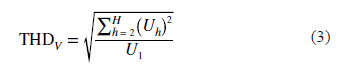
Keywords: Charging station; Electric Vehicles; Total Harmonic Distortion; Power System
Słowa kluczowe: Stacja ładowania; Pojazdy elektryczne; Całkowite zniekształcenia harmoniczne; System zasilania

Introduction

Presently, the transportation sector primarily relies on fossil fuels. It is a major emitter that significantly increases global [1]–[3] fuel-based vehicles at the individual level consume more than 50% of the energy used by the overall transportation system, causing significant emissions [4]. Hence, several nations have had a policy shift that focuses on newer technologies. Such shift includes electric vehicles entirely powered by batteries, hence designated battery-powered vehicles (Battery electric vehicles) or hybrid electric vehicles (Hybrid electric vehicles) that cause relatively less pollution and emissions [5]–[7]. Sectoral developments indicate that electric vehicle adoption will increase due to novel vehicle charging technologies and advancements in battery manufacturing, e.g., lithium batteries that can be charged numerous times [8]. Electric vehicles are powered by batteries recharged by power electronic devices that converting an alternating current to direct current [9].

Electric vehicles are advantageous from an environmental perspective because of lesser pollution and emission; moreover, these vehicles are moveable energy storage systems [10], [11]. However, the electrical system is adversely affected when such vehicles are connected for recharging. For instance, more electric vehicles charging from the network increase energy demand [12], [13]; these vehicles’ circuits are non-linear electrical loads that introduce harmonics in the electrical system, leading to decreased power factor [14], [15], higher voltage deviations [16], [17], and faster cable and transformer ageing [18]. An increase in total harmonic distortion reduces power quality due to suddenly voltage changes [19], causing improper functioning of protection relays [20], [21].

This research assesses the consequences of electric vehicle charging on the power infrastructure and discusses changes to voltage characteristics, power factor, and total harmonic distortion. This paper is structured as specified: the first section comprises an introduction, followed by the electric vehicle charging station configuration in section two. Research criticality is presented in section three, followed by system simulation, modelling, and analysis in section four. Lastly, section five presents the conclusions.

Vehicle charger configuration

Hybrid and battery-powered electric vehicles rely on rechargeable batteries as critical energy sources. Battery charging differs based on vehicle and battery types. Several researchers have expressed interest in devising advanced battery charging technologies. Battery chargers can be integrated with the vehicle (on-board charger), or external chargers can be used (off-board charger) [22]. Batteries are charged at specific voltages that can be produced using single- or three-phase rectifier diode-based configurations [23] and thyristor or IGBT-based controlled rectifiers [24].

Fig.1. depicts several charger categories

Power transfer direction is commonly used to classify electric vehicle charging stations, indicating whether the power electronics on the charger and electric vehicle can transfer current unidirectional or bidirectional. Unidirectional chargers may use diodes (valves); non-directional chargers have a straightforward and uncomplicated operation.

Bidirectional chargers require sophisticated control mechanisms that allow charging and discharging modes, helping the power system; however, such operations might cause battery deterioration [25]. Fig. 2, depicts charging station topology for directional and non-directional systems.

Fig.2. General topology for directional and non-directional charging systems.

This study intends to assess the consequences of integrating electric vehicles with the electrical infrastructure, considering the rapid increase in electric vehicles. Hence, it is critical to assess the challenges these vehicles may create. This data can be used to devise approaches to adapt and augment electrical systems to handle vehicle charging station integration. The objectives of this paper are listed below:

• Using MATLAB to simulate and model electric vehicle charging stations
• Assessing changes to total harmonic distortion due to electric vehicle charging
• Assessing changes to the power factor due to electric vehicle charging.

System modelling and simulation

Due to the extensive rise in electric vehicle use worldwide, electrical grids are under immense load. Some challenges include higher network harmonic distortion, higher power demand, lower power factor, and power quality challenges. Hence, researchers are trying to assess the consequences of connecting such charging systems to the electric network so that optimal approaches can be devised to reduce concerns. This research uses the model depicted using Fig. 3 [26]–[28].

Fig.3. The network model evaluated in this study

The model suggested in the Figure is created using MATLAB; the electrical loads are indicated below:

• The first load is a 560 kVA industrial load placed on the first bus

• The second load is a combined 112 kVA domestic load placed on the second bus

• Electric vehicle load is set at 34 kW, connected to the grid using an 11 kV/0.4 kV step-down transformer The electrical system is simulated as specified below:

• The system is evaluated without an electric vehicle charging load, and the power factor and harmonic distortion are specified.

• Electric vehicles are integrated to the proposed model, and the network is analysed.

Case study

This section discusses several simulations and network models to evaluate the adverse outcomes of connecting electric vehicles to the power system. This section is split into five cases, as specified below.

• Case A: The electrical system is assessed without electric vehicles to understand system characteristics in its initial state. The power network was simulated and modelled, as depicted in Fig. 4. System characteristics were set as indicated in section four.

Fig.4. Electrical network without electric vehicles

Case B: The system was assessed by adding one electric vehicle load amounting to 34 kW to the second bus added to the load as in the first scenario. This system comprises an electric vehicle configured to draw 75 amps at 450 volts, allowing its 300-volt 50 amp-hour battery to charge in the fast mode. This scenario is devised and simulated with one vehicle attached to the second bus, as depicted in Fig.5.

Fig.5. Network with one connected electric vehicle

Case C: This scenario considers a charging station connected to the electrical system; the station is configured with four electric vehicles. The station is attached to the second bus. System model and simulation are performed using the electric vehicles and charging stations, as depicted in Fig.6. This scenario used four electric vehicles to understand the consequences of higher vehicle loads on the electrical system.

Fig.6. A four-vehicle charging station

Case D: This scenario considers a higher electric vehicle load by connecting another charging station comprising four vehicles; hence, the electrical system powers eight electric vehicles. Here, the tow charging stations are connected on the second bus, and the model is created and simulated. This scenario provides data about the electrical system, voltages, harmonic distortion, and power factor when the system is under a more significant load.

Case E: The last scenario deals with twelve connected electric vehicles. The subsequent section presents the simulation outcomes for all specified cases. Simulation outcomes and discussion This section discusses the simulation outcomes for all scenarios described in the previous section.

A. First case

The first case was simulated using MATLAB, depicted using Fig. 4, and simulation outcomes are listed in Table 1.

Table 1. First case simulation outcomes

.

The standard conditions were assessed to record system voltages without electric vehicle load. As indicated in Table 1, the first and second bus voltage levels are within the recommended thresholds (0.95 < V < 1.05) [16]. The currents drawn from the system without electric vehicle loads are indicated in Table 1. It is noteworthy that this situation has zero total harmonic distortion owing to completely linear loading.

B. Second case

Fig. 5 depicts this scenario comprising one connected vehicle. Table 2. lists the simulation outcomes for this case. Table 2. indicates that this scenario has 2.435% total harmonic distortion compared to zero in the first case. Similarly, the second bus records 10.74% total harmonic distortion (THD). Power factor follows a similar trend, decreased to 0.8996 in this case, compared to 0.9039 for the first. The second bus follows similar trends due to nonlinear electrical loading by the vehicles, increasing system THD, and reducing the power factor, as specified in Table 2. When the electric vehicle is connected to the system, the second bus voltage reduces slightly, as specified in Table 2.

Table 2. Second case simulation results

.

A slight change is observed because a single electric vehicle is connected. In contrast, the vehicle load might introduce harmonics in the electrical system, as depicted in the first and second bus current waveforms in Fig.7.

Fig.7. Current values for phase A, buses 1 and 2

Fig. 7 highlights that the second bus current waveform is distorted due to the electric vehicle load connected to it. In contrast, their effect was relatively minor concerning the current in the first bus, which was mildly affected due to a one-vehicle load.

Fig. 8 presents instantaneous values of phase A current to ascertain the presence of harmonics introduced by the vehicle connected to the second bus.

Fig.8. Analysis of second bus current (instantaneous values)

Fig. 8 indicates that the second bus has 10.74% total harmonic distortion due to one vehicle’s current drawn from the second bus. The first harmonic is most significant, compared to the relatively minor seventh and eleventh. The vehicle load introduces harmonics in the system, reducing the overall power factor, and deteriorating power quality. C. Third case This scenario considers one charging station and four vehicles connected to the second bus. The model was created and simulated, and its outcomes are specified in Table 3.

Table 3. Third case simulation results

.

Table 3. indicates that this scenario has higher total harmonic distortion than the second scenario; the first bus records 7.394% THD compared to 2.435% in the previous case. The observations are similar for the second bus, where 21.2% THD is recorded.

Power factor also degrades, reducing from 0.8996 in the previous case to 0.8888 for the third case corresponding to the first bus. Similarly, the second bus also recorded a power factor reduction from 0.8743 to 0.849. Connecting a charging station reduces second bus voltage, corresponding to a final value of 0.9765 P.U. from 0.9867 P.U., as specified in Table (3,2).

D. Fourth case

Here, the second bus powered two charging stations; the system model and simulation outcomes are specified in Table 4.

Table 4. Fourth case simulation results

.

Table 4, indicates that total harmonic distortion degrades further, i.e., from 7.394% in case three to 10.87% for the first bus in the present case. The second bus has similar observations, where THD degrades to 23.66%, indicating higher total harmonic distortion as the connected electric vehicle load increases. The system power factor degrades to 0.8812 in the current scenario, from 0.8888 in the previous observation corresponding to the first bus. In the case of the second bus, we see that the distortion power factor deteriorated to 0.9731 in the fourth scenario from 0.9783 in the second. The higher power actual in the second case is attributed to the higher active power drawn by the system than the more reactive power drawn by the electric vehicle charger. In the second bus context, connecting the charging station reduced voltage to 0.9646 P.U. from 0.9765 P.U., as highlighted in Table (3,4).

E. Fifth case

This scenario considers twelve electric vehicle drawing power from the electrical network. This scenario was simulated, indicating the first bus total harmonic distortion to increase to 12.69%, compared to 10.87% in the previous scenario. Similarly, the power factor degraded to 0.8774 from 0.8812, indicating adverse effects on power factor and THD as more vehicles started charging on the network. Moreover, as more electric vehicles are connected to the system (penetration level), the acceptable voltage threshold is breached. The overall voltage delivered to the vehicle dropped to 0.95 P.U. These evaluated scenarios and observations indicate that electric vehicle connections introduce harmonics in the power network, adversely affecting the system and lowering the power factor. Moreover, higher use levels (penetration level) cause voltage deviations beyond acceptable thresholds, as indicated for load additions in Fig. 9.

Fig. 9, indicates that when no vehicles are being charged, the voltage levels on the electrical network are within acceptable limits. one-vehicle addition caused the voltage to reduce to 0.9867 P.U., while the voltage fell further to 0.9765 P.U. on the second bus as four electric vehicles were connected to the network. Moreover, voltage levels of 0.95 P.U. are observed when twelve vehicles charge using the power system; this is a critical measure that falls beyond the acceptable limit. Put differently, a higher number of connected vehicles cause a more significant voltage deviation, triggering unacceptable voltages.

Fig.9. Network voltage drop as more vehicles charge from the network

Fig. 10, depicts the relationship between total harmonic distortion of the network as a function of the number of vehicles charging on the network. An electrical system free from non-linear load does not create any harmonic distortion. One vehicle adds 2.44% THD, which increases to 7.39% for four vehicles, and further degrades to 12.69% for twelve vehicles. Hence, the harmonic distortion in the electrical network correlates directly with the number of connected vehicles.

Fig.10. Total harmonic distortion of the network as a function of the number of connected vehicles

Fig. 11, depicts the relationship between network power factor as a function of electric vehicle count. If the network is free of electric vehicles, a 0.9039 power factor is observed, which deteriorates to 0.8996 for a single connected vehicle. It reduced further to 0.8888 with more vehicles, while the overall power factor was 0.8774 when the maximum number of vehicles were connected. It suggests that a higher number of vehicles cause the power factor to drop.

Fig.11. Power factor as a function of electric vehicle count

A higher number of connected vehicles raises power demand; hence, the current requirement increases linearly. Fig. 12, depicts the current drawn as a function of the increase of connected vehicles. The second bus supplied a 5.812 A current without any electric vehicle on the network; however, a one vehicle addition increased current to 8.01 A, while 32.14 A was drawn when twelve vehicles were connected.

Fig.12. Current drawn (load) as a function of the electric vehicle count connected to the network

Conclusion

This paper evaluated several scenarios to understand power network characteristics with increasing electric vehicles. A higher number of connected vehicles introduced more significant total harmonic distortion that breached the acceptable threshold; the system power factor was also reduced. THD values were 2.44% and 12.69% for one and twelve vehicles. Voltage dropped to 0.95 P.U. when twelve vehicles were drawing power. Hence, the adverse effects of electric vehicle charging must be regulated using charging control mechanisms, organised charging approaches, limiting electric vehicle purchase in a particular area, and electrical network augmentation, including filtering systems that eliminate harmonics from the electrical network.

REFERENCES

[1] N. M. Prasit PHOOSOMMA, Tanes TANITTEERAPAN, Tanapon Tamrongkunanan, “Application of a Single Supercapacitor for Driving an Electric Vehicle,” Prz Elektrotechniczny, no. 8, pp. 34–40, 2022.
[2] N. O. Kapustin and D. A. Grushevenko, “Long-term electric vehicles outlook and their potential impact on electric grid,” Energy Policy, vol. 137, no. April, p. 103-111, 2020.
[3] S. Habib, M. Kamran, and U. Rashid, “Impact analysis of vehicle-to-grid technology and charging strategies of electric vehicles on distribution networks – A review,” J Power Sources, vol. 277, pp. 205–214, 2015.
[4] G. A. Putrus, P. Suwanapingkarl, D. Johnston, E. C. Bentley, and M. Narayana, “Impact of electric vehicles on power distribution networks,” 5th IEEE Veh Power Propuls Conf VPPC ’09, pp. 827–831, 2009.
[5] H. Morais, T. Sousa, Z. Vale, and P. Faria, “Evaluation of the electric vehicle impact in the power demand curve in a smart grid environment,” Energy Convers Manag, vol. 82, pp. 268–282, 2014.
[6] L. Liu, Y. Zhang, C. Da, Z. Huang, and M. Wang, “Optimal allocation of distributed generation and electric vehicle charging stations based on intelligent algorithm and bi-level programming,” Int Trans Electr Energy Syst, vol. 30, no. 6, pp.1–21, 2020.
[7] H. Yu and A. L. Stuart, “Impacts of compact growth and electric vehicles on future air quality and urban exposures may be mixed,” Sci Total Environ, vol. 576, pp. 148–158, 2017.
[8] Y. Miao, P. Hynan, A. Von Jouanne, and A. Yokochi, “Current li-ion battery technologies in electric vehicles and opportunities for advancements,” Energies, vol. 12, no. 6, pp. 1–20, 2019.
[9] A. K. Verma, B. Singh, and D. T. Shahani, “Grid to vehicle and vehicle to grid energy transfer using single-phase half bridge boost AC-DC converter and bidirectional DC – DC converter, Int J Eng Sci Technol, vol. 4, no. 1, pp. 46–54, 2018.
[10] F. M. Shakeel and O. P. Malik, “Vehicle-To-Grid Technology in a Micro-grid Using DC Fast Charging Architecture,” 2019 IEEE Can Conf Electr Comput Eng CCECE 2019, no. October, 2019.
[11] W. Zhong, R. Yu, S. Xie, Y. Zhang, and D. K. Y. Yau, “On Stability and Robustness of Demand Response in V2G Mobile Energy Networks,” IEEE Trans Smart Grid, vol. 9, no. 4, pp. 3203–3212, 2018.
[12] M. A. Sayed, R. Atallah, C. Assi, and M. Debbabi, “Electric vehicle attack impact on power grid operation,” Int J Electr Power Energy Syst, vol. 137, pp. 1–28, 2022.
[13] J. Wang, C. Liu, D. Ton, Y. Zhou, J. Kim, and A. Vyas, “Impact of plug-in hybrid electric vehicles on power systems with demand response and wind power,” Energy Policy, vol. 39, no.7, pp. 4016–4021, 2011.
[14] J. P. Trovão, P. G. Pereirinha, L. Trovão, and H. M. Jorge, “Electric vehicles chargers characterization: Load demand and harmonic distortion,” Proceeding Int Conf Electr Power Qual Util EPQU, pp. 694–700, 2011.
[15] H. F. Farahani, A. Rabiee, and M. Khalili, “Plug-in electric vehicles as a harmonic compensator into microgrids,” J Clean Prod, vol. 159, pp. 388–396, 2017.
[16] A. Abaspahic, M. Saric, J. Hivziefendic, and T. Konjic, “Impact of Complementary Integration of Electric Vehicle Charging Stations and Photovoltaics on Voltage Quality and Voltage Stability,” 2021 20th Int Symp INFOTEH-JAHORINA, INFOTEH 2021 – Proc, no. March, pp. 17–19, 2021.
[17] S. Aggarwal and A. K. Singh, “Impact analysis of electric vehicle charging station integration with distributed generators on power systems,” Int J Circuit Theory Appl, vol. 49, no. 6, pp. 1811–1827, 2021.
[18] A. Hilshey, P. Hines, P. Rezai, and J. Dowds, “Estimating the impact of electric vehicle smart charging on distribution transformer aging,” IEEE Trans Smart Grid, vol. 4, no. June, pp. 905–913, 2013.
[19] M. R. A. Ashish Kumar Karmaker, Sujit Roy, “Analysis of the impacts of Electric Vehicle Charging Station in Bangladesh,” ECCE, IEEE Conf, pp. 7–9, 2019.
[20] B. Marah, Y. R. Bhavanam, G. A. Taylor, and A. O. Ekwue, “Impact of electric vehicle charging systems on low voltage distribution networks,” Proc – 2016 51st Int Univ Power Eng Conf UPEC 2016, vol. 2017-Janua, pp. 1–6, 2016.
[21] C. Gong et al., “Research on influence and resolution of the relay protections with electric vehicle charging station integrating into distribution network,” Int J Hydrogen Energy, vol. 42, no. 29, pp. 18747–18753, 2017.
[22] L. Rubino, C. Capasso, and O. Veneri, “Review on plug-in electric vehicle charging architectures integrated with distributed energy sources for sustainable mobility,” Appl Energy, vol. 207, pp. 438–464, 2017.
[23] S. M. Khudher, I. Bin Aris, N. F. Mailah, and R. K. Sahbudin, “Analysis of AC – To – DC uncontrolled converters harmonics for electric vehicles applications,” Pertanika J Sci Technol, vol.25, no. S, pp. 283–290, 2017.
[24] M. Yilmaz and P. T. Krein, “Review of battery charger topologies, charging power levels, and infrastructure for plugin electric and hybrid vehicles,” IEEE Trans Power Electron, vol. 28, no. 5, pp. 2151–2169, 2013.
[25] H. S. Das, M. M. Rahman, S. Li, and C. W. Tan, “Electric vehicles standards, charging infrastructure, and impact on grid integration: A technological review,” Renew Sustain Energy Rev, vol. 120, 2020.
[26] A. M. Eltamaly, A. Y. Abdelaziz, and A. G. Abo-Khalil, Control and Operation of Grid-Connected Wind Energy Systems. 2021.
[27] M. Bilal, M. Rizwan, I. Alsaidan, and F. M. Almasoudi, “AIBased Approach for Optimal Placement of EVCS and DG with Reliability Analysis,” IEEE Access, vol. 9, pp. 154204–154224, 2021.
[28] D. M. Michał SIERSZYŃSKI, Łukasz CHEŁCHOWSKI, Bogdan KACZMARCZYK, Paweł MUSZYŃSKI, “Analiza wybranych przepisów i norm istotnych z punktu widzenia projektowania autobusów elektrycznych część 1,” Prz Elektrotechniczny, no. 8, pp. 158–162, 2022.


Source & Publisher Item Identifier: PRZEGLĄD ELEKTROTECHNICZNY, ISSN 0033-2097, R. 99 NR 3/2023. doi:10.15199/48.2023.03.40

Analysis of Faults on High Voltage Direct Current HVDC Transmissions System

Published by Alya Hamid AL-RIFAIE1, Sanabel Muhson ALHAJ ZBER2, Noha Abed-AL-Bary AL-JAWADY3, Ahmed A. Abdullah AL-KARAKCHI4, Northern Technical University, Iraq.

ORCID: 1. 0000-0002-7978-2193; 2. 0000-0003-0232-9064; 3. 0000-0002-0275-2527; 4. 0000-0003-1151-3015


Abstract. High Voltage Direct Current (HVDC) Transmission with Voltage Source Converters (VSC) is gaining substantial interest from several utilities for various applications as compared to traditional HVDC transmission rely on thyristor technique. The paper presents analysis of three-level VSC-HVDC system during faults on the AC part. The system model is simulated in MATLAB/Simulink, with various faults analysed, such as single line to ground, line to line and double line to ground fault. The results obtained show that the control system respond well to all fault conditions.

Streszczenie. Transmisja wysokiego napięcia prądu stałego (HVDC) za pomocą konwerterów źródła napięcia (VSC) zyskuje duże zainteresowanie ze strony kilku zakładów użyteczności publicznej do różnych zastosowań w porównaniu z tradycyjną transmisją HVDC opierającą się na technice tyrystorowej. W artykule przedstawiono analizę trójpoziomowego systemu VSC-HVDC podczas zwarć na części AC. Model systemu jest symulowany w programie MATLAB/Simulink, z analizowanymi różnymi zwarciami, takimi jak zwarcie pojedyncze linia-ziemia, linia-linia i podwójne zwarcie linia-ziemia. Uzyskane wyniki pokazują, że układ sterowania dobrze reaguje na wszystkie stany awaryjne. (Analiza błędów prądu stałego w systemie przesyłowym wysokiego napięcia HVDC)

Keywords: HVDC, PWM, IGBT and VSC.
Słowa kluczowe: sieci HVDC, błędy prądu, IGBT.

Introduction

The High voltage direct current (HVDC) transmission system has advanced and gained widespread acceptance. Technical progress is mainly due to high voltage converters and high voltage devices [1-3]. The use of HVDC over the past thirty years has become an available method for transmitting energies in large quantities over long distances. Today HVDC is recognized as effective method for transmitting large power on overhead lines. Since HVDC is such a massive power transmission system, short-term breakdowns might result in complete darkness in the supplied area [4, 5]. In some renewable energy sources, wind energy takes the advantages of HVDC technologies to transmit energy and improve system performance. There are two technologies for HVDC transmission system [6-8] :

1- The Line Commutated Converter (LCC) is a thyristor-based technology.

2- Pulse Width Modulation (PWM) technology is used in the Voltage Source Converter (VSC) technology, which is based on IGBT.

VSC based HVDC systems are the preferred technology for effective network. In addition to lower harmonic generation, this integral allows for rapid and precise control of real and reactive power across both ways. Which improves power goodness and system reliability [9, 10]. The division of converters into two categories must be distinguished by their principle of operation. To function, the first category requires an AC system. Point wave suppression can be investigated using controlled semiconductors such as thyristors, when the AC system voltage drives current to move from phase to phase. As a result, the converter may control the energy exchanged between the AC and DC systems [11]. The second category of converters does not require an AC power source to function. As a result, they are known as self-switching converters. This category can also be separated into converters of current and voltage (CSCs) (VSC), depending on the DC circuit’s design. The CSC uses DC current with a reactor, whereas the VSC uses a steady DC voltage given by storage capacity [12]. This work presents analysis of the demeanour of the 3-level VSC-HVDC during failures on the AC side. The selected model is simulated in MATLAB/Simulink, with various faults analysed, such as line-line fault, single-line to ground fault and double-line to ground fault at the AC side of the system.

Design of HVDC System

Figure (1) demonstrates the simulation’s HVDC transmission model, which contain the following main components:

1- Transformer: To achieve the best voltage conversion, a type of transformer (wye grounded/delta) has been used. The current winding configuration prevents (filters) the third harmonics produced by the converter. The transformer ratios are at the rectifier side (the transmitter side) 0.915 and 1.1015 from the inverter’s side (the receiving side). Because of the converter reactor and transformer leakage reactors, the VSC’s output voltage can fluctuate in magnitude and phase from the alternating current system. In addition, the converter’s active and reactive power outputs are controlled.

2- AC filer: AC filters are an essential part of the connection model, the filter components are connected in parallel, either the side of the alternating current system or the side of the converter transformer. Due to high arrangement of PWM, the harmonics will be increased. With simplified filter design, the unwanted harmonics caused by switching action will be removed.

3- DC capacitor: This is linked to the VCS terminals, as far as the DC voltage is concerned with minimal ripple, the DC capacitor through the converter terminal may remove this noise and result in steady DC voltage. The capacitor shouldn’t be too large when system is interrupted due to turbulence, when the system is disrupted owing to turbulence, this ensures reliable steady-state performance.

4- DC Filter: The third harmonic is controlled in the DC side filters that block the high frequency, which is the primary harmonic found in the anode and cathode voltages. DC harmonics represent zero-sequence harmonics (odd multiple) that are moved to the DC side to maintain balance on this side. The difference between the electrode voltage must be controlled and kept to zero.

Fig.1. Two terminal HVDC System [6].

VSC Control System

The VSC is connected to the main circuit as shown in Figure (2), the design of the converter 1 and converter 2 is same. The two controllers are separated, there is no connection among them. Every variant had two degrees of freedom, in our state this controller is utilized as follows:

1- Station 1 (rectifier): P&Q
2- Station 2 (inverter): Vdc &Q

Fig.2. Connection of the main circuit to the VSC control system.

In this model, the control strategy uses the PWM technicality. The rectifier and the inverter give a various control model, in which case the model ought ever to meet the energy equilibrium as shown in equation (1)

.

where IDC represents DC bus current and Icap is the DC capacitive current.

The AC system must pump enough power (Pac) to charge the DC capacitor until Vdc reaches the specific level. The power flow may be controlled via controlling the DC voltage through changing the phase shift, assigned into equation (2). This control mode is specified into the rectifier and Figure (3) illustrates the control strategy for both ends of HVDC system.

.

In terms of time, the total power is expressed in equation (3) [13,14].

.

and

.

Equation (4, 5) propose that if Vq = 0, then the components of real and reactive power are commensurate into id, iq respectively. This feature is vastly used into controlling the three-phase VSC system which connected to the grid, it shows that switching to the periodic coordinate system leads to the possibility of controlling the id, iq independently. Thus, real and reactive power may be separately controlled.

Fig.3. Control Strategy for both terminal HVDC System [10].

Dynamic Execution

The dynamic execution in the transmission system is proved via simulating and monitoring as:

1- Dynamic response into step variations used in the main regulator references, DC voltage and active/reactive power are examples.

2- Recuperating from small and large AC system disturbances.

Matlab/Simulink used to represent and analyse the transmission system as shown in Figure (4) that indicate a schematic exemplification of VSC-HVDC system for length of (175km) between AC system 1 and AC system 2.

Fig.4. A Schematic exemplification of VSC-HVDC System.

Steady-State and Step Response

The results indicated in figures (5, 6) represent the dynamic responses of VSC-HVDC.

Station 1, which controls an active power converter, is unlocked at t=0.3s, and the power must tardily increase by 3 p.u. . while station 2 converter that control the DC voltage is unlocked at t=0.1s. At approximate t=1.3s steady state is achieved at both stations. In addition, the DC voltage equal to 1.8 p.u. at station 2 and the power of station 1 is equal to 3 p.u. . The reactive power flow is equal -0.1 p.u. in station 1 and a null value in station 2 system that controlled by both converters.

After reaching steady state, a -0.3 p.u. step is applied to the reference active power to converter 1 at t=1.5s, followed by a -0.1 p.u. step to the reference reactive power at t=2s. The dynamic response of the regulators are spotted.

Fig.5. Start up and P&Q step responses in station 1.
Fig.6. Start up and Vdc step responses in station 2.

Approximately, stability time is equal 0.3s. Similarly, figures including reference control current Id.

AC Side Disturbances to ground

At station 2, a slight and significant disturbance occurs in the normal situation. Three types of faults were tested:

1- Single Line fault (S.L.G.)
2- Line- Line fault (L.L)
3- Double-Line to ground fault (D.L.G.)

The system retrieval from the disturbances would be fast and stable as explained below.

Single Line to Ground Fault

Figure (7) shows the S.L.G. fault, in which the DC power transferred is decreased by 50% and the DC voltage raised to 2.2 p.u. . As a result of this, the capacitance on the DC side has been overcharged. To sustain the DC voltage within a steady state, station 1’s controller controls the active power output. After the fault, the system is retrieval good after 1.3s. The reactive power shows damped fluctuations about 10Hz.

Fig.7. Single line to ground fault results.
Fig.8. Line to Line fault results.
.
Fig.9. Double Line to ground fault results
Line-Line fault

The L.L. fault is depicted in Figure (8). It’s important to note that the transferred DC power is decreased by 90% and the DC voltage raised toward (3 p.u.). The capacitance on the DC side has been overcharged as a result. As part of the active power control (at station 1), a special function called “DC Voltage Control Exceeds” attempts to keep the DC voltage within a certain range at all times. After 1.3 seconds, the system has been restored to full functionality. The reactive power shows damped fluctuations at 10 Hz.

Double-Line to Ground Fault

Figure (9) show the D.L.G. fault, It is worth noting that the L.L fault reduces the transmitted DC power by 90% while increasing the DC voltage to (2.3 p.u.). The capacitance on the DC side is being overcharged. The active power control (in station 1) has a function (DC Voltage Control Exceeds) that seeks to keep the DC voltage constant. After the fault, the system is retrieval good after 1.3s. In the reactive power, note the damped oscillations at 10Hz.

Conclusions

This paper presents the stable condition and dynamic performance of VSC in HVDC transmission systems over progressive variations of active and reactive powers. These analyses are performed under balance and unbalanced faults conditions. In each state, the suggested control strategy was found to satisfy dynamic responses of the suggested system. By simulation, it has been shown that VSC-HVDC can achieve fast response control of the bidirectional power transfer. It may also be noted that for S.L.G faults, the DC power transmitted is decreased by 50% while the DC voltage tend to rise. Also, during L.L. and D.L.G. faults, the DC power transmitted is decreased by 90% when the DC voltage rises. The system is fully recovered after the fault, within 1.3 s.

REFERENCES

[1] Mohammed A. Ibrahim, Waseem Kh Ibrahim, and Ali N. Hamoodi. “Design and Implementation of Overcurrent Relay to Protect the Transmission Line.” International Journal of Engineering Research and Technology 13.11 (2020).
[2] Ahmed M. T. Ibraheem, Mohammed A. Ibrahim, and Abdullah K. Shanshal. “PLC Based Overcurrent Protection of Threephase Transmission Line.” (2020).
[3] Bashar M. SALIH, Mohammed A. IBRAHIM, and Ali N. HAMOODI. “Differential Relay Protection for Prototype Transformer.”
[4] Polewaczyk, Mateusz, and Sylwester Robak. “Analiza interakcji w układach hybrydowych MIDC.” Przegląd Elektrotechniczny 95 (2019).
[5] POLEWACZYK, Mateusz, and Sylwester ROBAK. “Układy HVDC we współczesnych systemach elektroenergetycznych.” Organ 7 (2016): 16.
[6] Vasquez-Arnez, Ricardo L., Jose A. Jardini, and Marcos T. Bassini. “Dynamic Performance of Line Commutated Converter-Based Multiterminal HVDC Systems.” Przegląd Elektrotechniczny 91.9 (2015): 247-253.
[7] Ali M. ELTAMALY, Y. SAYED and AMER NASR A. ELGHAFFAR ,”HVDC SYSTEM OPERATION AND FAULT ANALYSIS” , ANNALS of Faculty Engineering HunedoaraInternational Journal of Engineering Tome xv 2017-Fascicule 4
[November].
[8] Raheel Muzzammel, Ali Raza, Mohammad Rashid Hussain and et. “MT-HVdc Systems Fault Classification and Location Methods Based on Traveling and Non-Traveling Waves—A Comprehensive Review” , Applied sciences,2019,9,4760.
[9] MUJIB J. PATHAN, Dr. V. AKULKARNI, “FAULT ANALYSIS OF HVDC TRANSMISSION SYSTEMS” , International Journal of Electrical Engineering & Technology(IJEET) , Volume 7, Issue3,May-June, 2016, pp.106-116, Article ID:
IJEET_07_03_009.
[10] Ashwini K. Khairnar, Dr. P. J. Shah, “ DC LINE-TO-LINE FAULT ANALYSIS FOR VSC BASED HVDC TRANSMISSION SYSTEM”, International Journal of Advance Research in Science and Engineering, Vol. NO.6,Issue No.07,July 2017.
[11] Dr. Adil Hameed Ahmed, Ahmed Saeed Abdul-Sada, “ HVDC Transmission Systems based Multi-level Voltage Source Converters for Iraqi Super Grid” , Eng.& Tech.Journal , Vol.32 , Part(A), No.7 , 2014.
[12] Ahmed A. Elserougi, Ayman S. Abdel-Khalik, A New Protection Scheme for HVDC Converters against DC-Side Faults with Current Suppression Capability, IEEE transactions on power delivery, 29(4), August 2014.
[13] Manickam KARTHIKEYAN, Yew Ming YEAP and Abhisek, “Simulation and Analysis of Faults in High Voltage DC (HVDC) Power Transmission” , Conference Paper, October 2014.
[14] Amirnaser Yazdani and Reza Iravani, “voltage-sourced converters in power system modeling, control, and applications”, John Wiley & Sons, Inc., 2010.


Authors: Alya Hamid Al-Rifaie1, E-mail: alya.hamid@ntu.edu.iq; Sanabel Muhson Alhaj Zber2, E-mail: sanabel.m.mohammed@ntu.edu.iq; Noha Abed-AL-Bary Aljawady3, E-mail: Noha.m.aljwady@ntu.edu.iq; Dr. Ahmed A. Abdullah Al-Karakchi4, E-mail: ahmedalkarakchi@ntu.edu.iq;


Source & Publisher Item Identifier: PRZEGLĄD ELEKTROTECHNICZNY, ISSN 0033-2097, R. 98 NR 2/2022. doi:10.15199/48.2022.02.10