PQSynergy™ Papers 2012

PQSynergy™ is an international forum to share experiences, requirements, questions, information, customer requirements, problems and solutions in the fast growth area of quality of supply requirements of sensitive loads, energy conservation and management and power quality monitoring and solutions.

For more information, you can visit the website: www.pqsynergy.com

View and download papers:

PQSynergy™ Papers Publishers
Advanced Biomass Gasification SolutionLim Keng Hock, COMINTEL
GREEN TECHNOLOGIES
Assessment Techniques for Evaluating Black Boxes TechnologiesBill Howe, PE, CEM, Program Manager, Power Quality Electric Power Research Institute (EPRI)
Considerations as to what’s going to happen with all the data from SmartGridWieslaw Jerry Olechiw, VP of International Sales and System Sales Dranetz and Electrotek Concepts
Dranetz Industry Leading Portable ProductsWieslaw Jerry Olechiw, Vice President of International Sales Dranetz and Electrotek Concepts
Moving from Risk Assessment to Asset Management to Asset OptimizationEric Stojkovich, Power Quality Thailand LTD
Sarawak Energy’s New Low Energy HQ BuildingGregers Reimann, MD IEN Consultants
The Evolution of System Protection Schemes for the Sarawak Power SystemVictor Wong, Sarawak Energy Berhad
The History of Power Quality MonitoringRobert Moore
Voltage Quality and Power loggers Power Quality Thailand LTD
Advances in Energy Efficiency Technologies and Impact on Power QualityTerry Chandler, Power Quality Inc USA/Power Quality Thailand LTD
Household Load Characteristic for Harmonic StudyPanida Boonyaritdachochai, Power Quality Thailand LTD
Introduce Some New Power Quality Situation or Update in ChinaQianlu Yan, Vice General Manager, Beijing Joint Harvest S&T Co., Ltd.
New Applications in Power Quality Monitoring and Analytics for T&D SystemDoug Dorr, Electric Power Research Institute, Manager r – Advanced Monitoring Applications Group
Power Quality in MeteringMing T. Cheng, Directory of Asian Operations
PQ for Equipment Assessment and Incipient FailureBill Howe, PE, CEM, Program Manager, EPRI Power Quality Manager, EPRI Industrial Center of Excellence
Transients and Power Quality Issues in Domestic UPS especially in IndiaA.D.Thirumoorthy, Member, APQI
Benchmarking PQ Performance in the Era of the Smart GridBill Howe, PE, Electric Power Research Institute Program Manager, Power Quality
New Technology for Stray and Contact Voltage Detection Doug Dorr, Electric Power Research Institute, Manager r – Advanced Monitoring Applications Group
Powering the Next Generation of Metering CommunicationsKerk See Gim, Power Automation
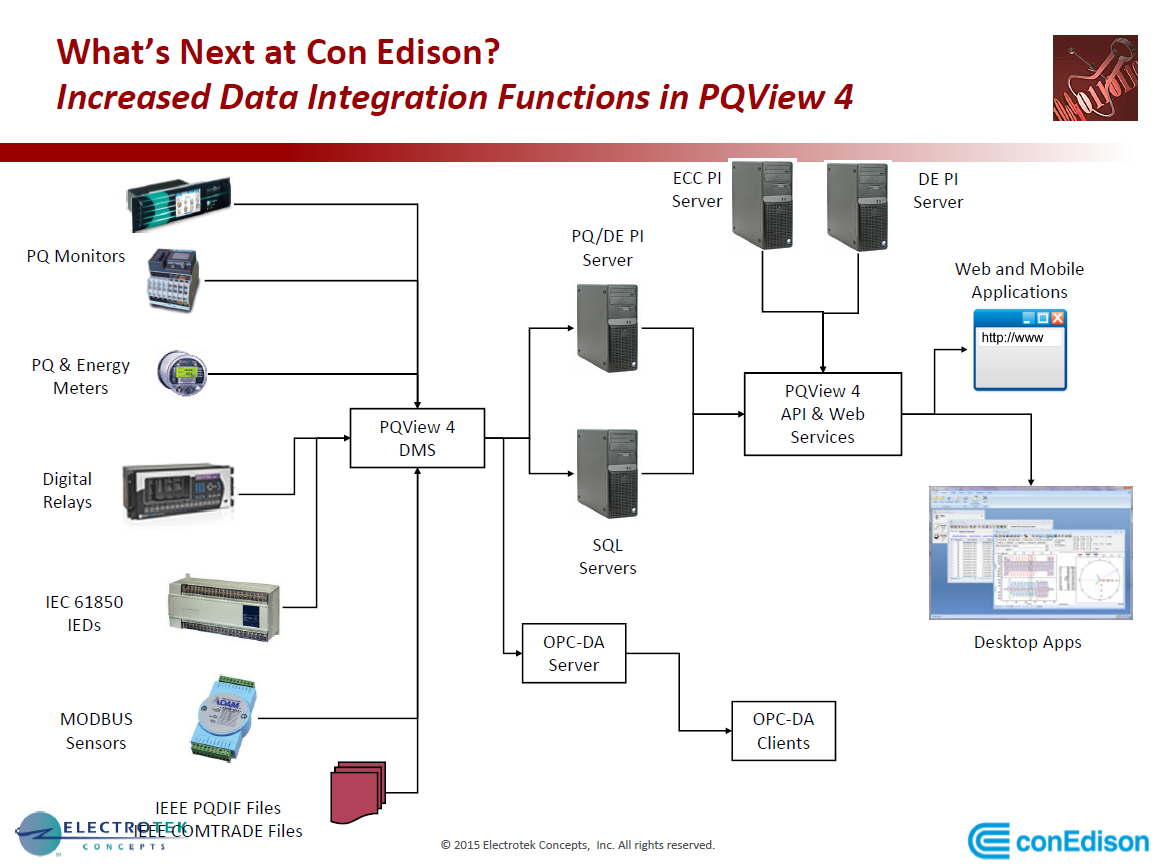
PQView Expanding into Grid Operations Wieslaw Jerry Olechiw, Vice President of International Sales Dranetz and Electrotek Concepts
The Architecture of System Protection Schemes (SPS) Implemented in the Sarawak Power SystemLing Lee Eng, Sarawak Energy Berhad
PQSynergy™ Papers 2012

Loose Bus Bar Bolts Cause Sags

Published by Dranetz – BMI Case Studies


An administration building in a government complex in New Jersey had a transformer with a 4KV primary, 120/208V wye, 800A secondary. The buss duct ran up to a second-floor panel, which supplied an office area.

Computer misoperations and lights flickering were occurring randomly for nearly two years. Emergency lighting was also flickering.

Three voltages and corresponding currents were monitored at the second-floor panel for three days. During this time, two types of power quality phenomena were observed: sags and voltage fluctuations. Figure 1 shows a time plot of several of the sags. What appears to be the first sag at 14:00 is a series of nine sags.

Loose Bus Bar Bolts Cause Sags figure1
Figure 1

The most severe sags were to 57 and 76 volts, both for 3 cycles. The voltage and current waveforms for the 57 V sag are shown in Figure 2. Note the RMS of the current reduced during the initial part of the sag, then swelled as the voltage returned to normal.

Loose Bus Bar Bolts Cause Sags figure2
Figure 2

The second sag shown on the time plot is a more severe sag, lasting seven cycles and having a minimum RMS value of 29 Vrms, as shown in Figure 3.

Loose Bus Bar Bolts Cause Sags figure3
Figure 3

The other PQ phenomena observed were RMS voltage fluctuations, as can be seen in Figure 4. If you connect the negative peaks of the voltage together (red line), you will see that it produces a low frequency curve of its own.


Loose Bus Bar Bolts Cause Sags figure4
Figure 4

Impedance Analysis

The source and load impedance calculations for Channel A shown in Table 1 did not show any abnormal results. Though the approximated source impedance was a little on the high side, the results were what one would expect in this type of environment.

Voltage

Current

Load Z

Delta Z

Delta I

Source Z

114.63

4.33

26.5

3.52

0.29

1.28

Table 1

Sag Analysis

Three of the sags observed during the monitoring period were significant enough to cause equipment misoperation (depending on the actual susceptibility of the equipment.) All three of the sags appear to be coming from the source, not the load, relative to the monitoring point. The source, in this case, was towards the electric utility: from the breaker panel, back down through the buss, to the transformer. This was determined because no large increase in current was noted when the sag began. In addition, the current decrease for the first couple cycles, followed by a slight swell. This would be consistent for loads of rectified-input, switched-mode power supplies (as found in most electronic equipment, such as PCs) and fluorescent lights found in an office complex.

Flicker Analysis

Figure 4 shows the variations of the voltage of channel A often referred to as voltage fluctuations. When the frequency of this modulation is below 30 Hz, the human eye can perceive such as light flicker, depending on the percent fluctuation. The 8% modulation of Channel A is around 10 Hz, and is very near the most perceptible point for the human eye (0.25%variation at 8.8 Hz).

Harmonic Analysis

The following harmonic analysis in Figure 5 is very similar to that for fluorescent lighting, where the third harmonic is the largest component, the 5th is half of the third, the 7th and 9th are one quarter of the third, and the 2nd is slightly smaller than the 7th.

Rectified-input, switched mode power supplies will also contribute significant odd harmonics, in a 1/h amplitude ratio (where ‘h’ is the harmonic number).


Loose Bus Bar Bolts Cause Sags figure5
Figure 5


PQSIM 200™

A Power Practitioner™ Training Tool

“A dedicated AC generator that produces voltage and current waveforms of the most common Power Quality disturbances”

PQSIM 200 was designed by Power Quality Experts with 30 years’ experience testing and documenting Power Quality. The PQSIM 200™ provides the user with the capability to select PQ events and their magnitude to test PQ instrument setups, capture capability with a repeatable and predictable voltage and current waveforms.

Features

  • User selectable PQ disturbances to train new PQ instrument users and engineers.
  • An automatic sequence steps through a series of PQ disturbances including phase to neutral of voltages sags, swells, and transients, and neutral to ground disturbance of voltage swells and transients. In addition, generating odd harmonics as well.
  • A dedicated AC function generator that produces voltage and current waveforms of the most common types of power quality disturbances.
  • A voltage waveform of 1.5Vrms representing current on BNC connector.
  • Cables adapters to fit meter input connectors available.

General Specification

  • Power Input: 12VDC Voltage
  • 0 to 1.5 VAC (Current signal to PQ Meter)
  • Output Phase Voltage 120~240 VAC, 50Hz / 60Hz

Selectable PQ Disturbances

Phase to NeutralNeutral to Ground
Sag/Dip
– Magnitude (10, 25, 50)%
– Duration (0.05, 0.5, 1, 5, 11) cycles

Voltage Swell
– Magnitude (Fixed +10%)
– Durations (0.05, 0.5, 1, 5, 11) cycles

Unipolar & Bipolar Transients
Decaying Ring wave Transients
Odd Harmonics
Voltage Swell
– Magnitude (Fixed +10%)
– Durations (0.05, 0.5, 1, 5, 11) cycles

Transient

Current Cable Options 

  • BNC to Dranetz TR connector
  • BNC to BNC (for PQ meters with BNC input connectors)
  • BNC to Pig tails (no connectors) customer supplies the connector to match their meters.

Generating PQ Disturbances Waveforms (Samples)

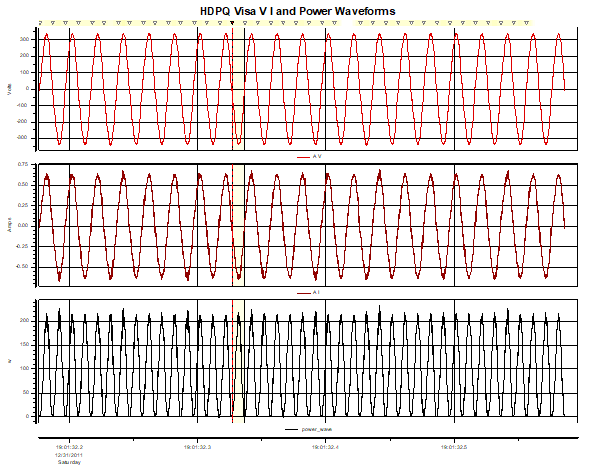
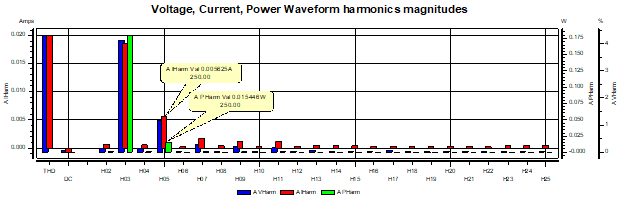
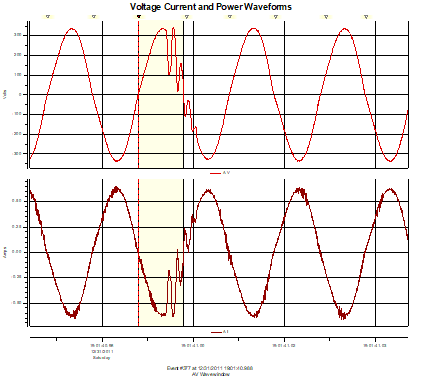
*Waveforms captured on Dranetz HDPQ


PQSIM 200™ with Dranetz HDPQ Xplorer Plus

Textile Industry Evaluation

Published by Dranetz – BMI Case Studies


Despite their differences, continuous-process industries share underlying characteristics: they maintain continuous operations in facilities that represent substantial start-up costs and time but can be interrupted or disrupted by seemingly minor fluctuations in power quality. If the product stream is disrupted, lost productivity and lost product can create a large financial burden. For example, a voltage sag in a paper mill can waste a whole day of production and inflict a $250,000 loss, while a 5-cycle interruption at a glass manufacturing facility can cost a minimum of $200,000.

Duke Energy is one of the most proactive utilities in providing power quality solutions for its customers. The company’s Power Quality Group goes beyond the electric meter, right into its customers’ plants, to help eliminate power quality problems.

To document the interaction of power quality and process quality for continuous-process industries, Duke Energy and Clemson University developed a Webstand simulator in the Power Quality Lab of Clemson University in South Carolina. The Webstand, a portable, process-level power quality research tool, models the winding/unwinding (web) processes typical of the textile industry. The Webstand incorporates the Signature System to monitor and model the interactions between power quality and process quality, enabling improvements to the system’s robustness without impacting the facility’s production. The Webstand was subjected to numerous dips of various magnitudes, durations, and combination of phases. The resulting data provided the information necessary to:

  • Determine sources of potential process interruptions
  • Validate control system models
  • Anticipate the correct output for a given duration based on the magnitude of a sag
  • Anticipate the speed of degradation for system components
  • Establish individual quality of process and quality of power supply requirements to maintain consistent product quality performance

Following the proof-of-concept, the Signature System configuration used at the Clemson Power Quality Lab was expanded for installation at a thin-film extrusion plant that operates with an allowable downtime of 4 hours per year. The resulting system is capable of monitoring critical points throughout the system, including the various winders/unwinders, laminators, infeed and accumulator load cells, metering roll, chill roll, fire alarm system and electric supply distribution system. Monitoring data can quickly identify whether a fault occurred on the distribution system or within the facility and the possible cause of the disturbance, along with correlating the effect in the production line.
Using the Signature System for quality of process monitoring helps ensure that critical process equipment is functioning properly, that industrial processes are not interrupted, and most important, that the quality of the final product consistently meets its specifications.

Textile Industry Evaluation

Thumping Sounds in the Closet

Published by Dranetz – BMI Case Studies


Elevator control panels for the lower zone mid-rise elevators were on the nineteenth floor of a forty-story office building in a large midwestern city. It was fed with 480V transformer on the same floor, with the feeders to the controls rated at 800A.

Excessive noise and vibration of the feeder wires and conduit were noticed on a number of upper floors.

Monitoring was done on at the service panels on the 19th, 25th and 37th floors. Different combinations of the three voltages and three currents were monitored for only a short duration before the source of the problem became evident.  Figure 1 and 2 below show the time plot of voltage and current, respectively, on one phase, which were representative of all the phases.

Thumping Sounds In the Closet figure1
Figure 1
Thumping Sounds In the Closet figure2
Figure 2

As the current values increase, a corresponding decrease in the RMS level of the voltage is observed. The maximum current is over 1200A on the 800A service.

The voltage transients during this 40 second window were nearly 300V. Closer examination of these transients can be seen in Figure 3 and 4. Notice how the voltage notches appear in the same position on the wave of each of the phases.

Thumping Sounds In the Closet figure3
Figure 3
Thumping Sounds In the Closet figure4
Figure 4

The overall RMS voltage values were observed to be fluctuating. Such fluctuations often result in light flicker, though none was reported at this location. Figures 5 and 6 shows the voltage fluctuations and the current during the startup of an elevator.

Thumping Sounds In the Closet figure5
Figure 5


Thumping Sounds In the Closet figure6
Figure 6

Analysis

During one 20 second measuring period, there were 77 transients recorded.

  • Amplitude: 236.5 volts.
  • Absolute amplitude (from zero crossing): -684.
  • Rise time: 1.0851 microseconds
  • Frequency (1/4*rise): 230.4 kilohertz.


Though there was no corresponding transient in the phase current to suggest the origin of the transient, the phase current was observed to be switching at the same time. The transient frequency was greater than 100 khz suggesting the origin of the transient was local to the monitoring location.

There were also a number of zero crossing errors observed on the voltage channels.
The worst zero crossing width was 277.6 microseconds and the worst zero crossing delta voltage was 28.5 volts.

Voltage Notch Analysis

Voltage notches were the most prevalent type of event observed. As noted, these occurred at the same phase position on all phases and corresponding to the current waveform. A one second monitoring period noted 3026 such notches, with a worst notch area of 0.42159 volt-seconds. The depth of the notch was most severe on the voltage phase corresponding to the current phase that had the step change in current.
Harmonic Analysis

The voltage channels’ total harmonic distortion was typically under 4%, varying under different loading. The fifth harmonic was the predominate one, at 2.4%. This corresponded to the current harmonics, as shown in Figure 8 for the current waveform in Figure 7.

Thumping Sounds In the Closet figure7
Figure 7


Thumping Sounds In the Closet figure8
Figure 8

Probable Cause

The voltage transients, whether appearing as notches, zero crossing errors, or just unipolar transients, were probably the resulting of the electronic switching load, such as in elevator controllers. While these were quite excessive, the amplitude and width did not seem to be severe enough to cause malfunction of the elevator controls. Continued operation in this manner may eventually lead to such failures. Notching can cause timing problems with phase controlled loads, trip protective relaying, stress power electronics, and cause excessive heat in motors and transformers. It often takes power conditioning devices , chokes or special filters to “fill in” the notches and smooth out the waveform

The voltage transients and the voltage fluctuations were caused by excessive current draw through the inadequately sized and supported service. This also produced the “thumping” sound, as the magnetic fields generated by the three phases tend to push the cables apart. A general rule of thumb is that the conductors will jump when the current is 120% of maximum rating. In this case, the current levels peaked at over 50% of rating, but were within the steady-state rating of the system.

The elevator manufacture recommended that the size of the feeders from the transformer should be increased by at least 50% for both of the elevator controllers. Caution should be used that the conduit has adequate size to accommodate such, in accordance with NEC. The utility engineer noted more correctly that the problem was the result of the conduit being inadequately supported to the walls.

Power Monitoring Products PQ3K & PQ5K

General Purpose Power Quality & Energy Monitoring

The PQ3K and PQ5K are cost effective meters that combine general purpose PQ detection (with waveform recording) and full 4 quadrant energy monitoring in one instrument. Wide-ranging applications include utility, facility, manufacturing, petrochemical, mission critical and more.

The PQ3K is housed in a 144mm x 144mm panel mounted enclosure that includes a high-resolution color TFT display.

The PQ5K is housed in a DIN mounted enclosure with an optional high resolution TFT color display.

Both are compliant with IEC 61000-4-30 Edition 3 Class A with a certification from an independent laboratory for trustworthy PQ measurements. These instruments detect and can record waveforms for sags/dips, swells, interruptions, as well as recording flicker, harmonics, RVC and more, all in parallel with complete energy metering capabilities. Digital I/O provides the ability to read alarms along with internal logic control to generate state/condition-based alarms. IEC 61850, Modbus and Profinet are available for remote communications with 3rd party SCADA and other monitoring systems.

Specifications:

PQ3KPQ5K

Inputs

Voltage
Channels: (4) AC
Nominal Voltage: 57.7 … 400 VLN, 100 … 693 VLL
Overload capacity: 480 VLN, 832 VLL (permanent)
Nominal frequency: 42 … 50 … 58 Hz, 50.5 … 60 … 69.5 Hz

Current
Channels: (4) AC
Nominal Current: 1 … 5 A (max. 7.5 A)
Overload capacity: 10 A (permanent), 100 A, 5×1 s, interval 300 s

Sampling rate: 18 kHz

 
Types of Connections
Single phase
Split phase
3 or 4-wire balanced load
3-wire balanced load [2U, 1I]
3-wire unbalanced load, Aron connection
3 or 4-wire unbalanced load
4-wire unbalanced load, Open-Y

I/O-Interfaces
DIGITAL INPUTS PASSIVE (standard)
Nominal voltage: 12/24 V DC (30 V max.)
DIGITAL INPUTS ACTIVE (optional)
Open circuit voltage: ≤ 15 V
RELAYS (optional)
Contacts: Changeover contact
Load capacity: 250 V AC, 2 A, 500 VA; 30 V DC, 2 A, 60 W
DIGITAL OUTPUTS 2 (standard)
Nominal voltage: 12/24 V DC (30 V max.)

ANALOG OUTPUTS (optional)
Linearization: Linear, kinked
Range: ± 20 mA (24 mA max.), bipolar
Accuracy: ± 0.2 % von 20 mA
Burden: ≤ 500 Ω (max. 10 V/20 mA)

FAULT CURRENT MONITORING For grounded systems (optional)
Number of meas. channels: 2 (2 measurement ranges each)
Measurement range :1 (1A) Earth current measurement
• Measuring transformer: 1/1 up to 1/1000 A
• Alarm limit: 30 mA up to 1000 A
Measurement range: 2 (2mA) RCM with connection monitoring
• Measuring transformer: Residual current transformer 500/1 up
to 1000/1 A
• Alarm limit: 30 mA up to 1 A

TEMPERATURE INPUTS (optional)
Number of channels: 2
Measurement sensor: Pt100 / PTC; 2-wire

 
Inputs

Voltage
Channels: (4) AC
Nominal Voltage: 57.7 … 400 VLN, 100 … 693 VLL
Overload capacity: 520 VLN, 900 VLL (permanent)
Nominal frequency: 42 … 50 … 58 Hz, 50.5 … 60 … 69.5 Hz

Current
Channels: (4) AC
Nominal Current: 1 … 5 A (max. 7.5 A)
Overload capacity: 10 A (permanent), 100 A, 5×1 s, interval 300 s

Sampling rate: 18 kHz

 
Types of Connections
Single phase
Split phase
3 or 4-wire balanced load
3-wire balanced load [2U, 1I]
3-wire unbalanced load, Aron connection
3 or 4-wire unbalanced load
4-wire unbalanced load, Open-Y

I/O-Interfaces
DIGITAL INPUTS PASSIVE (standard)
Nominal voltage: 12/24 V DC (30 V max.)
DIGITAL INPUTS ACTIVE (optional)
Open circuit voltage: ≤ 15 V
DIGITAL OUTPUTS 2 (standard)
Nominal voltage: 12/24 V DC (30 V max.)
RELAYS (optional)
Contacts: Changeover contact
Load capacity: 250 V AC, 2 A, 500 VA; 30 V DC, 2 A, 60 W

ANALOG OUTPUTS (optional)
Linearization: Linear, kinked
Range: ± 20 mA (24 mA max.), bipolar
Accuracy: ± 0.2 % von 20 mA
Burden: ≤ 500 Ω (max. 10 V/20 mA)

FAULT CURRENT MONITORING For grounded systems (optional)
Number of meas. channels: 2 (2 measurement ranges each)
Measurement range: 1 (1A) Earth current measurement
• Measuring transformer: 1/1 up to 1/1000 A
• Alarm limit: 30 mA up to 1000 A
Measurement range: 2 (2mA) RCM with connection monitoring
• Measuring transformer Residual current transformer 500/1 up
to 1000/1 A
• Alarm limit: 30 mA up to 1 A

TEMPERATURE INPUTS (optional)
Number of channels: 2
Measurement sensor: Pt100 / PTC; 2-wire


Instrument Power
Standard nominal voltage: 110…230 V AC, 130…230 V DC
Optional nominal voltage: 24 … 48 V DC
Optional nominal voltage: 110 … 200 V AC, 110 … 200 V DC
Consumption: ≤ 30 VA, ≤ 13 W

 
Basic Uncertainty According IEC/EN 60688
Voltage, current: ±0.1 %
Power: ±0.2 %
Power: factor ±0.1°
Frequency: ±0.01 Hz
Imbalance: U, I ±0.5 %
Harmonic: ±0.5 %
THD: V, I: ±0.5 %
Active energy: Class 0.5S (IEC/EN 62 053-22)
Reactive energy: Class 0.5S (IEC/EN 62 053-24)


Instrument Power
Standard nominal voltage: 100…230 V AC, 130…230 V DC
Optional nominal voltage: 24 … 48 V DC

Optional nominal voltage: 110 … 200 V AC, 110 … 200 V DC
Consumption: ≤ 27 VA, ≤ 12

Basic Uncertainty According IEC/EN 60688
Voltage, current: ±0.1 %
Power: ±0.2 %
Power factor: ±0.1°
Frequency: ±0.01 Hz
Imbalance: U, I ±0.5 %
Harmonic: ±0.5 %
THD: V, I ±0.5 %
Active energy: Class 0.5S (IEC/EN 62 053-22)
Reactive energy: Class 0.5S (IEC/EN 62 053-24)


Interfaces

ETHERNET (standard)
100Base TX; RJ45 socket
Mode: 10/100 MBit/s, full/half duplex, auto-negotiation
Protocols: Modbus/TCP, http, NTP (time synchronization)

IEC61850 (optional)
Ethernet 100BaseTX, RJ45 sockets, 2 ports
Mode: 10/100 Mbit/s, full/half duplex, auto-negotiation. Protocol: IEC61850, NTP

PROFINET IO (optional)
Conformance class: CC-B
100BaseTX, RJ45-Buchsen, 2 ports
Mode: 10/100 Mbit/s, full/half duplex, auto-negotiation
Protocol: PROFINET, LLDP, SNMP

MODBUS/RTU (optional)
RS-485, max. 1200 m (4000 ft)
Baud rate: 9.6 to 115.2 kBaud

TIME REFERENCE Internal clock
Clock accuracy: ± 2 minutes/month (15 to 30°C)
Synchronization via NTP server or GPS

Environmental Conditions, General Information

Operating temperature without UPS: –10 to +55 °C

Operating temperature with UPS: 0 to +35 °C
Storage temperature: –25 to +70 °C
Temperature influence: 0.5 x basic uncertainty per 10 K
Long-term drift: 0.5 x basic uncertainty per year
Others Application group II (IEC/EN 60 688)
Relative air humidity <95 % without condensation
Operating altitude: ≤2000 m above NN
Only to be used in buildings!
Mechanical Properties
Housing material: Polycarbonate (Makrolon)
Flammability: class V-0 according UL94, self-extinguishing, not dripping, free of halogen
Weight: 800 g

Safety
Current inputs are galvanically isolated from each other.
Protection class II (protective insulation, voltage inputs via protective impedance)
Pollution degree 2
Protection IP54 (front), IP30 (housing), IP20 (terminals)
Measurement category U: 600 V CAT III, I: 300 V CAT III
Interfaces

ETHERNET (standard)
100Base TX; RJ45 socket
Mode: 10/100 MBit/s, full/half duplex, auto-negotiation
Protocols: Modbus/TCP, http, NTP (time synchronization)

IEC61850 (optional)
Ethernet 100BaseTX, RJ45 sockets, 2 ports
Mode: 10/100 Mbit/s, full/half duplex, auto-negotiation. Protocol: IEC61850, NTP

PROFINET IO (optional)
Conformance: class CC-B
100BaseTX, RJ45-Buchsen, 2 ports
Mode: 10/100 Mbit/s, full/half duplex, auto-negotiation
Protocol: PROFINET, LLDP, SNMP

MODBUS/RTU (optional)
RS-485, max. 1200 m (4000 ft)
Baud rate: 9.6 to 115.2 kBaud

TIME REFERENCE Internal clock
Clock accuracy: ± 2 minutes/month (15 to 30°C)
Synchronization via NTP server or GPS

Environmental Conditions, General Information

Operating temperature without UPS: –10 to +55 °C

Operating temperature with UPS: 0 to +35 °C
Storage temperature: –25 to +70 °C
Temperature influence: 0.5 x basic uncertainty per 10 K
Long-term drift: 0.5 x basic uncertainty per year
Others: Application group II (IEC/EN 60 688)
Relative air humidity: <95 % without condensation
Operating altitude: ≤2000 m above NN
Only to be used in buildings!
Mechanical Properties
Housing material: Polycarbonate (Makrolon)
Flammability: class V-0 according UL94, self-extinguishing, not dripping, free of halogen
Weight: 800 g

Safety
Current inputs are galvanically isolated from each other.
Protection class II (protective insulation, voltage inputs via protective impedance)
Pollution degree 2
Protection IP54 (front), IP30 (housing), IP20 (terminals)
Measurement category U: 600 V CAT III, I: 300 V CAT III

The Case of the Missing Contact

Published by Dranetz – BMI Case Studies


Executive Summary

Defiance Metal Products Company contracted with Electrotek Concepts to perform field measurements of their welding operations, and to make recommendations for remediation of Power Quality problems at the facility.

The customer has been experiencing both major and minor electrical problems. The minor problems include occasional observable flicker in the overhead HID lighting system. The major problems include welder trip during operation and damage to protective MOVs.

Electrotek Concepts engineer installed a Dranetz 8020 PQ Node at the 2000 amps main service disconnect to monitor overall plant electrical power quality during the survey. Measurements were taken at individual spot welders using a Dranetz Power Platform PP1. The service voltage is 277/480 grounded wye.

The customer has upgraded the electrical service to the welding building from a 300 kVA transformer to a 1500 kVA unit. This action has achieved a very stable voltage waveform as seen by the various welders. Even with heavy current draws, the voltage waveform showed very little notching and no significant transients were detected. The only drawback to such a “stiff” service supply is the availability of greater fault current flow in case of short circuits or heavy welder loading. This high available fault current should be taken into consideration in the sizing and rating of fuses and circuit breakers.

The proper operation of the welding equipment is dependent not only upon the quality of the electrical power at the main service but also the quality of the electrical power in the main welder circuits. The high currents involved can cause premature deterioration and failure of any non-bolted electrical connections in the overall power circuit, such as the contacts in circuit breakers and electrical contactors and power relays. The electronic firing circuits will attempt to balance-out the problem of phase imbalance during the weld cycle, but extreme voltage excursions (as can happen with damaged electrical contacts) cannot be fully compensated for. The results will be occasional bad welds and system faults.

Some of the readings taken during welder operation did indicate the possibility of poor electrical conductivity in the welder circuit. This was later confirmed when the suspect circuit breaker was inspected and found to have severely burned contacts.

The report is organized with the following further observations:

Measurements – 8020 PQ Node.  These readings were taken at the main service entrance and profile the voltage and current for the entire welding operation. Charts are drawn to illustrate these profiles as well as noteworthy electrical disturbances that were triggered during the site visit.

Measurements – Power Platform PP1. These readings were taken at individual welder locations and the charts show the voltage and current variations during typical weld cycles.

Of special interest is Figure 32, which shows the voltage change as the circuit breaker on Welder 121-R is closed. Notice the voltage does not change smoothly, which is indicative of poor conductivity of the circuit breaker contacts. Also note Figures 36 and 38, which show voltage transients on Phase “B” during a welder fault. These voltage profiles also suggest a problem with electrical continuity on the center phase of the circuit breaker. Subsequent inspection of the circuit breaker proved this to be true.

Measurements – 8020 PQ Node

The Case of the Missing Contact figure1
Figure 01: Phase “A” Voltage – Min./Average/Max.
The Case of the Missing Contact figure2
Figure 02: Phase “B” Voltage – Min./Average/Max.
The Case of the Missing Contact figure3
Figure 03: Phase “C” Voltage – Min./Average/Max.
The Case of the Missing Contact figure4
Figure 04: Phase “A” Current – Min./Average/Max.
The Case of the Missing Contact figure5
Figure 05: Phase “B” Current – Min./Average/Max.
The Case of the Missing Contact figure6
Figure 06: Phase “C” Current – Min./Average/Max.
The Case of the Missing Contact figure7
Figure 07: Phase “A” Voltage – Wave Fault Trigger
The Case of the Missing Contact figure8
Figure 08: Phase “B” Voltage – Wave Fault Trigger


The Case of the Missing Contact figure9
Figure 09: Phase “C” Voltage – Wave Fault Trigger


The Case of the Missing Contact figure10
Figure 10: Phase “A” Current – Wave Fault Trigger
The Case of the Missing Contact figure11
Figure 11: Phase “B” Current – Wave Fault Trigger
The Case of the Missing Contact figure12
Figure 12: Phase “C” Current – Wave Fault Trigger

Measurements – Power Platform PP1

The Case of the Missing Contact figure13
Figure 13: 111-R Welder-Measurement Period Profile
The Case of the Missing Contact figure14
Figure 14: 111-R Weld Cycle – Tap 4 – 5 Cycles
The Case of the Missing Contact figure15
Figure 15: 111-R Welder-Measurement Period Profile
The Case of the Missing Contact figure16
Figure 16: 111-R Weld Cycle – Tap 11 – 3 Cycles
The Case of the Missing Contact figure17
Figure 17: 153-R Welder-Measurement Period Profile
The Case of the Missing Contact figure18
Figure 18: 153-R Weld Cycle – Tap 4 – 24 Cycles – 37%Heat – 3ph Welders Off
The Case of the Missing Contact figure19
Figure 19: 153-R Welder-Measurement Period Profile
The Case of the Missing Contact figure20
Figure 20: 153-R Weld Cycle – Tap 4 – 24 Cycles – 37%Heat – 3ph Welders On


The Case of the Missing Contact figure21
Figure 21: 153-R Welder-Measurement Period Profile
The Case of the Missing Contact figure22
Figure 22: 153-R Weld Cycle – Tap 4 – 24 Cycles – 37%Heat – 3ph Welders On
The Case of the Missing Contact figure23
Figure 23: 205-G Welder-Measurement Period Profile
The Case of the Missing Contact figure24
Figure 24: 205-G Weld Cycle – 12 Cycles – Welders 222-G and 223-G Off
The Case of the Missing Contact figure25
Figure 25: 205-G Welder-Measurement Period Profile
The Case of the Missing Contact figure26
Figure 26: 205-G Weld Cycle – 12 Cycles – Welders 222-G and 223-G On


The Case of the Missing Contact figure27
Figure 27: 210-G Welder-Measurement Period Profile
The Case of the Missing Contact figure28
Figure 28: 210-G Weld Cycle – 6 Cycles – 4 Imp – Welders 107-R and 108-R Off
The Case of the Missing Contact figure29
Figure 29: 210-G Welder-Measurement Period Profile
The Case of the Missing Contact figure30
Figure 30: 210-G Weld Cycle – 6 Cycles – 4 Imp – Welders 107-R and 108-R On
The Case of the Missing Contact figure31
Figure 31: 121-R Welder-Measurement Period Profile
The Case of the Missing Contact figure32
Figure 32: 121-R – No-Load Circuit Breaker Closing – “C” Phase Not Recorded
The Case of the Missing Contact figure33
Figure 33: 121-R Welder-Measurement Period Profile
The Case of the Missing Contact figure34
Figure 34: 121-R Weld Cycle – 1 Imp – 5 Cycles – 89%Heat – 1ph Readings
The Case of the Missing Contact figure35
Figure 35: 121-R Welder-Measurement Period Profile
The Case of the Missing Contact figure36
Figure 36: 121-R Weld Cycle – 1 Imp – 5 Cycles – 89%Heat – Fault Occurs
The Case of the Missing Contact figure37
Figure 37: 121-R Welder-Measurement Period Profile
The Case of the Missing Contact figure38
Figure 38: 121-R Weld Cycle – 1 Imp – 3 Cycles – 89%Heat – Fault Occurs
The Case of the Missing Contact figure39
Figure 39: 121-R Welder-Measurement Period Profile​
The Case of the Missing Contact figure40
Figure 40: 121-R Weld Cycle – 1 Imp – 3 Cycles – 25%Heat – No Faults
The Case of the Missing Contact figure41
Figure 41: 121-R Welder-Measurement Period Profile
The Case of the Missing Contact figure42
Figure 42: 121-R Weld Cycle – 1 Imp – 3 Cycles – 60%Heat – No Faults
The Case of the Missing Contact figure43
Figure 43: 121-R Welder-Measurement Period Profile
The Case of the Missing Contact figure44
Figure 44: 121-R Weld Cycle – 1 Imp – 3 Cycles – 85%Heat – No Faults
The Case of the Missing Contact figure45
Figure 45: 121-R Welder-Measurement Period Profile
The Case of the Missing Contact figure46
Figure 46: 121-R Weld Cycle – 1 Imp – 3 Cycles – 89%Heat – No Faults
The Case of the Missing Contact figure47
Figure 47: 121-R Welder-Measurement Period Profile
The Case of the Missing Contact figure48
​Figure 48: 121-R Weld Cycle – 1 Imp – 3 Cycles – 80%Heat – No Faults​
The Case of the Missing Contact figure49
Figure 49: 204-G Welder – Measurement Period Profile
The Case of the Missing Contact figure50
Figure 50: 204-G Weld Cycle – 3ph Welders Running – No Faults
The Case of the Missing Contact figure51
Figure 51: 204-G Welder-Measurement Period Profile
The Case of the Missing Contact figure52
Figure 52: 204-G Weld Cycle – 3ph Welders Running – Fault on 121-R

Conclusions and Recommendations

The electrical measurements on the 3-phase welder 121-R were made on the load side of the molded-case circuit breaker in the welder panel. A voltage transient was noted on the “B” phase that could not be fully explained unless one considered a break in the supply voltage to that phase. Examination of the circuit breaker revealed heavily burned contacts and, in essence, zero-conductivity in the center phase. These “cold” characteristics could easily change when the breaker is energized, and it seems it has been delivering at least partial power in the period before its failure. However, the damage to the circuit breaker contacts could easily explain why this particular welder experienced random failures.

This same logic could be used to explain problems occurring with other welders. At the time of the survey, it was not conclusive that all important electrical contacts in the other welders (especially circuit breakers and contactors) were in good shape. All should be considered under suspicion, and further considerations as to what could still be causing problems should be suspended until an analysis is made of existing circuit conditions. At a minimum, this would consist of cold-load ohmmeter measurements of conductivity and full-load tests of voltage drop across circuit breaker and contactor line and load terminals.

Computer on Shared Branch Circuit

Published by Dranetz – BMI Case Studies


Engineering laboratory adjacent to offices. A computer system used by laboratory personnel exhibited intermittent failures and data errors. Typically, these would start around 10 a.m. On some days there were no failures.

A power monitor was installed at the panelboard serving the computer system. The monitor was connected, line-to-neutral (Channel A) and neutral-to-ground (Channel B). The recorded line-to-neutral waveforms were relatively undistorted sine waves, which gave no clues as to the source of the line disturbances.

An event summary of the RMS voltage, Figure 1, revealed a pattern of repetitive sags in the RMS voltage, beginning just after 10 a.m. The regular nature of these sags, as well as corresponding swells on the neutral, were made even clearer by increasing the resolution to a few minutes, Figure 2.

Computer on Shared Branch Circuit figure1
Figure 1
Computer on Shared Branch Circuit figure2
Figure 2

The regular repetition of the voltage sags was a powerful clue, indicating automatic switching of another load on the circuit. The neutral-to-ground waveform, Figure 3, indicated the load was linear.

A little more detective work soon located a laser printer in one of the nearby offices whose print fusing heater switched on every minute or so. The high current demand and resulting potential developed on the neutral was causing the computer errors. The printer was usually powered up around 10 a.m., after the user had created text to be printed. Moving the printer to another branch circuit removed the source of computer interference.

Computer on Shared Branch Circuit figure3
Figure 3

Manufacturing Process Unexpectedly Halted

Published by Dranetz – BMI Case Studies


This medium-sized manufacturing facility, located in an industrial park that experienced an unexplained shutdown of several adjustable speed drives (ASDs) , wreaking havoc on key process equipment. Each day, at approximately 6 am, the utility-owned PF capacitor kicks on to improve the voltage of inductive loads prevalent in many of the park’s manufacturing facilities. The ASDs are conditioned to anticipate this expected power quality event and are typically able to ride through the problem. So when one of the ASDs closed down and interrupted the continuous stream manufacturing process, the facility manager needed to learn why, correct the problem, and prevent it from happening again.

As you can see from the attached screen capture (Figure 1), a second, unanticipated capacitor switching event occurred shortly after the first. This event was categorized by the Signature System Capacitor Switching Answer Module, enabling the facility manager to pinpoint the exact source of the problem. Further analysis showed that the ASD shutdown was the result of an overcurrent trip, which was quickly remedied preventing hours of downtime, at a loss of $10,000/hour.

Manufacturing Process Unexpectedly Halted
Figure 1

Utility Power Factor Capacitor Bank Switch Problem

Published by Dranetz – BMI Case Studies


A medical clinic in Las Vegas, Nevada, employing sensitive computed tomography (CT Scan) system. Power was brought to the system from a 480 volt service feeding a 480-to-208 volt isolation transformer.

CT Scan system was experiencing repeated computer lockups and component failures.

The medical equipment service company installed a power monitor on site to analyze the power to the system. A single day of monitoring was enough to identify the case of the failures. Figure 1 shows the disturbance on the line caused by a utility power factor correction capacitor bank located just one block away.

Utility Power Factor Capacitor Bank Switch Problem figure1
Figure 1

Figure 2 shows the attenuation effect of the isolation transformer, still not enough to protect the CT Scan system from such a severe transient.

Utility Power Factor Capacitor Bank Switch Problem figure2
Figure 2

Expansion of the waveform data, Figure 3, revealed the ringing frequency of the system, when energized by the capacitor bank, was between 1 kHz and 1.5 kHz. This allowed the specification of a treatment device to mitigate the problem.

Utility Power Factor Capacitor Bank Switch Problem figure3
Figure 3

The medical equipment company recommended the use of an active-tracking filter specifically designed for this type of disturbance around 1 kHz. The filter was installed on the 480-volt line to protect all of the downstream equipment. Figure 4 shows the difference between the input (Channel C) and output (Channel B) of the filter during a subsequent capacitor bank switching operation.

Utility Power Factor Capacitor Bank Switch Problem figure4
Figure 4 – Input (Channel C)
Utility Power Factor Capacitor Bank Switch Problem figure5
Figure 4 – Output (Channel B)