Published by 1. Jacek KOZYRA1, 2. Zbigniew ŁUKASIK1, 3. Aldona KUŚMIŃSKA-FIJAŁKOWSKA1, 4. Paweł KASZUBA2, Kazimierz Pulaski University of Technology and Humanities in Radom, (1), Volta Instalacje (2) ORCID: 1. 0000-0002-6660-6713, 2. 0000-0002-7403-8760, 3. 0000-0002-9466-1031, 4. 0000-0003-1120-5901
Abstract. Due to changes occurring both in industrial area and in private consumers, availability of modern electric and electronic devices more sensitive to the level of supply voltage, supplying electric energy of appropriate parameters to the consumers has become a significant issue. These changes cause the necessity of modernization of energy networks, changing their functions from supplying energy to the end consumer into energy flow from the consumer towards energy network, which is connected with growing number of the sources of energy installed also in the consumers. The development of measuring technology, transferring data to long distances, complex IT systems allow to control connectors inside the network, as well as monitor and archive measuring data not only in the power supply points, but also inside the network. The main goal of this article was to present a problem of remote voltage measurement in the medium voltage distribution networks in terms of assessment of infrastructural changes resulting from the necessity to obtain data about load state and changing configuration of the lines. Based on actual measuring data of medium voltage cable line, monitoring of operation of a network was presented.
Streszczenie. Wobec zachodzących zmian zarówno w obszarze przemysłowym jak i prywatnym odbiorców, dostępności nowoczesnych urządzeń elektrycznych i elektronicznych bardziej wrażliwych na poziom napięcia zasilającego, istotną kwestią stało się dostarczenie energii elektrycznej do odbiorcy o właściwych parametrach. Zmiany te powodują konieczność modernizacji sieci energetycznych, zmiany ich funkcji, jakie pełniły do tej pory czyli dostarczenia energii do odbiorcy końcowego, na przepływ energii również od odbiorcy w kierunku sieci energetycznej co związane jest coraz szerszym instalowaniem źródeł energii również u odbiorców. Współczesny rozwój techniki pomiarowej, przesyłania danych na duże odległości, rozbudowane systemy informatyczne pozwalają sterować łącznikami w głębi sieci, a także monitorować i archiwizować dane pomiarowo nie tylko w punktach zasilania ale także w głębi sieci. Głównym celem niniejszej publikacji jest przedstawienie problemu zdalnego pomiaru napięcia w sieciach dystrybucyjnych SN pod kontem oceny zmian infrastrukturalnych wynikających z konieczności uzyskania danych o stanie obciążenia i zmieniającej się konfiguracji linii. Na podstawie rzeczywistych danych pomiarowych linii kablowej SN przedstawiono monitorowanie pracy sieci. (Analiza zdalnego pomiaru napięcia w sieciach kablowych SN).Abstract. Due to changes occurring both in industrial area and in private consumers, availability of modern electric and electronic devices more sensitive to the level of supply voltage, supplying electric energy of appropriate parameters to the consumers has become a significant issue. These changes cause the necessity of modernization of energy networks, changing their functions from supplying energy to the end consumer into energy flow from the consumer towards energy network, which is connected with growing number of the sources of energy installed also in the consumers. The development of measuring technology, transferring data to long distances, complex IT systems allow to control connectors inside the network, as well as monitor and archive measuring data not only in the power supply points, but also inside the network. The main goal of this article was to present a problem of remote voltage measurement in the medium voltage distribution networks in terms of assessment of infrastructural changes resulting from the necessity to obtain data about load state and changing configuration of the lines. Based on actual measuring data of medium voltage cable line, monitoring of operation of a network was presented. Streszczenie. Wobec zachodzących zmian zarówno w obszarze przemysłowym jak i prywatnym odbiorców, dostępności nowoczesnych urządzeń elektrycznych i elektronicznych bardziej wrażliwych na poziom napięcia zasilającego, istotną kwestią stało się dostarczenie energii elektrycznej do odbiorcy o właściwych parametrach. Zmiany te powodują konieczność modernizacji sieci energetycznych, zmiany ich funkcji, jakie pełniły do tej pory czyli dostarczenia energii do odbiorcy końcowego, na przepływ energii również od odbiorcy w kierunku sieci energetycznej co związane jest coraz szerszym instalowaniem źródeł energii również u odbiorców. Współczesny rozwój techniki pomiarowej, przesyłania danych na duże odległości, rozbudowane systemy informatyczne pozwalają sterować łącznikami w głębi sieci, a także monitorować i archiwizować dane pomiarowo nie tylko w punktach zasilania ale także w głębi sieci. Głównym celem niniejszej publikacji jest przedstawienie problemu zdalnego pomiaru napięcia w sieciach dystrybucyjnych SN pod kontem oceny zmian infrastrukturalnych wynikających z konieczności uzyskania danych o stanie obciążenia i zmieniającej się konfiguracji linii. Na podstawie rzeczywistych danych pomiarowych linii kablowej SN przedstawiono monitorowanie pracy sieci. (Analiza zdalnego pomiaru napięcia w sieciach kablowych SN).
Keywords: DSO, PV installation, E-mobility energy consumption point.
Słowa kluczowe: OSD, Instalacja PV, Punkt poboru energii e-mobility.
Introduction
In recent years, we have observed sudden growth of dispersed sources such as wind farms and photovoltaic power plants that cooperate with low-, medium- and high voltage lines. The location of the sources inside the network changes current traditional model of electricity grids from current flow from the source to the consumer, to the network of bidirectional current flow depending on generation of sources and power demand in specific points of a network. These changes make it necessary to invest in conversion of existing electricity grids, that is, to extend diameters of the wires in existing circuits, which is often also connected with replacement of the poles, or replacement of the transformers of higher rated power. Therefore, it is necessary to build shorter sections of a low voltage network, that is, to build additional stations in order to divide existing long circuits, which can’t face up to new reality, cooperation with many dispersed sources in specific circuits supplied from medium voltage/low voltage stations [1,2].
It happens in field overhead lines and urban cable lines. Observed changes of functions of consumer connection points, which can be large sources of energy, but also places of consumption of large amount of power in the form of electric vehicle charging stations affect voltage stability locally. New developing configuration of distribution networks makes it necessary to precisely and frequently monitor the parameters of supplying consumers in order to comply with standards of quality available in energy lines. Meeting these requirements forces distribution system operators to adapt the number and places of measuring points to obtain actual data concerning division of energy and information about actual load state changing configuration of an overhead or cable line. Available measuring capabilities, which were unknown in traditional networks, in the form of energy meters with remote reading, AMI system (Advanced Metering Infrastructure), monitoring of voltage and load in the medium voltage networks allows not only monitor voltage in the power supply points, that is, transformer/switching station, but also inside the network and in specific consumers [3,4,13].
Observed growth of the number of disconnection points makes it easier to measure and archive measuring data from key places of distribution networks [5-8,10,21]. Recent years have brought many new measuring products such as sensors, small in size and having low power consumption, which makes them easy to assemble and integrate with a medium voltage network through cooperation with measuring gears installed in the disconnection points, medium voltage/low voltage stations and cable connectors. Due to ensuing problems with keeping voltage within the limits specified by legislator and connected with distributed generation, Distribution System Operators are trying to find various solutions to the problem.
An innovation implemented by the Distribution System Operators are 15/0,4 kV transformers with On-Load Tap Changer made in SVR/FBVR technology. An idea of SVR (Smart Voltage Regulation) plays a regulating role and it is prepared to connect distributed generation in a medium voltage network. Whereas, FBVR (Frequency Based Voltage Regulation) is a tool to balance distribution system due to change of voltage in a low voltage network, when PV distributed generation and e-mobility charging points emerge.
The authors of this article presented the issue and analysis of voltage measurement in the medium voltage distribution networks in terms of assessment of their changes in order to find future methods and supporting tools necessary as a response to variable generation and variability of loads in the low voltage networks.
Based on accepted medium voltage cable line sequence consisting of a few medium voltage/low voltage stations, monitoring of operation of a distribution network was analysed and assessed.
The actions taken in order to improve the functioning of distribution networks
Dynamic growth and popularity of photovoltaic systems results in the necessity to adapt energy networks to a new situation and forces fitters of devices and the very prosumers to be responsible. Large number of systems connected to the network affects occurrence of asymmetry and increasing the voltage level [16-18]. If it exceeds permissible limits, there are problems not only with continuity of operation of the photovoltaic systems causing its shutdown, but it is also threat to receivers of remaining consumers supplied from the same circuit. Automatic shutdown of photovoltaic systems should start working when voltage increases above the value permitted by law. Therefore, voltage value should be within deviation range ±10% of rated voltage, that is:
– for voltage of 230 V, value within range 207 V ÷ 253 V,
– for voltage of 400 V, value within range 360 V ÷ 440 V.
Voltage level of a medium voltage network is usually set in a transformer/switching station to 110/15 kV with automatic voltage regulation of constant value and small toleration to delay with sudden, short voltage changes. Conducted analyses and measurements showed that the prosumers usually do not consume generated energy at the same time, which due to high saturation of generation sources causes inflow of energy and increase of voltage level. One of recommended methods limiting shutdown of PV devices is increasing energy consumption from the system for one’s own needs, which forces to change current practices of the consumers and increases their awareness of better use of energy generated by their sources for their own needs, and not energy generation towards electricity grid. It happens when devices at home work while system generates the highest amount of energy. Another solution, more and more promoted and supported by subsidizing programs is construction of energy storage systems directly in the consumers who would accumulate energy during the highest generation and use it when generation of source decreases, for example, in the evening hours.
Another action taken in order to increase capability of connected sources to the distribution networks is monitoring of operation of a distribution network. The operators use analysers of parameters of energy and remote reading meters. Based on that, the companies conduct technical analyses to assess qualitative parameters of distributed energy and degree of load of specific elements of a network. Such knowledge is used to make decisions about the possibility of connecting additional sources of energy or the scope of necessary investment actions. Therefore, operational actions (mainly temporary) are also taken, among others, voltage regulation in medium voltage/low voltage transformer stations [9,12].
Depending on saturation of low voltage circuits of photovoltaic systems and structure of existing networks, distribution companies are trying to improve and adapt network conditions to renewable sources of energy [19,20]. It takes places through classic actions that include, among others, replacement of medium voltage/low voltage transformers with the units of higher power, replacement of wires or addition of new medium voltage/ low voltage stations. Future solution will be voltage regulation deep inside low voltage network through implementation of voltage controllers.
Big challenge to photovoltaic systems is storage of energy surplus during production period when the prosumers do not consume it systematically. Distribution network is not a physical energy storage system and stores energy only when the consumers start consuming it. The solution can be prosumers who shall use generated energy or store it in the home energy storage systems. Thanks to such storage systems, operation of the systems will not depend on energy demand in the operator network, and prosumers will increase their energy independence. It will also enable further development of local sources of renewable energy sources and will affect stabilization of voltage in low voltage lines. There is high interest in energy storage through emerging energy clusters creating local areas of balancing. Energy enterprises, connected with capital groups of Distribution Companies are planning market actions with the use of energy storage.
Applied new solutions must necessarily cooperate with system users for the purpose of optimal network management. Such state forces to implement new management tools and develop regulations considering the principle of two-way direction of a network, ability to manage the systems of the prosumers and vehicle charging stations and energy of energy storage systems, as well as consider implementation of technological and system methods of local balancing of electric energy.
An analysis of remote measurements illustrated with an example of a selected medium voltage cable line
Within the area of examined DSO department works a few energy areas of different territorial structure and location of the consumers in rural and urban areas. As an example of remote measurement, the authors presented an analysis for 15 kV cable line supplying the centre of a city with population of 100 thousand. Thanks to application of new technological solutions in the form of voltage sensors, modern solutions of medium voltage switching station of small sizes, as well as broad options of communication in GPRS system (General Packet Radio Service) and TETRA (TErrestrial Trunked Radio), it is possible to control devices and monitor voltage and current inside the network [14,15].
For the examined example, cable linear sequence consisting of 20 medium voltage/ low voltage stations was analysed, in which remote measurements make it possible to monitor operation of a distribution network. Topology of analysed medium voltage linear sequence was presented on figure 1., whereas, actual technical data of 20 medium voltage / low voltage stations, including names, type of a station and power of the transformers are presented in table 1.
Table 1. Technical data of 15/0,4 kV medium voltage station of linear sequence
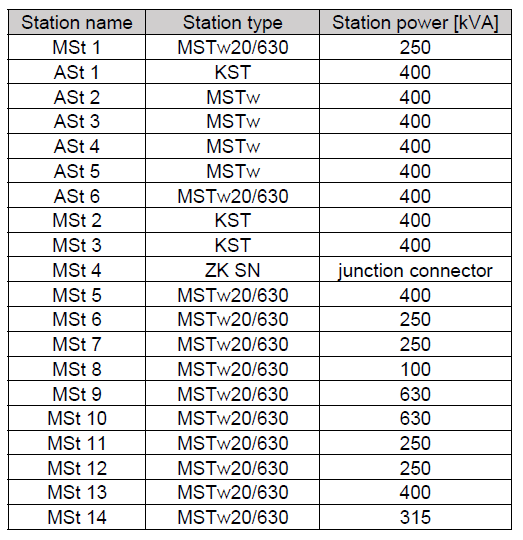
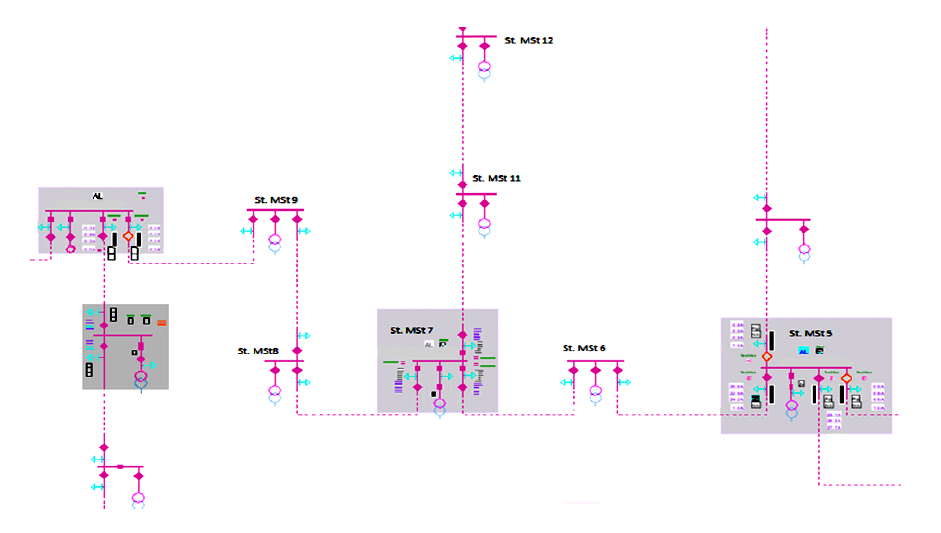
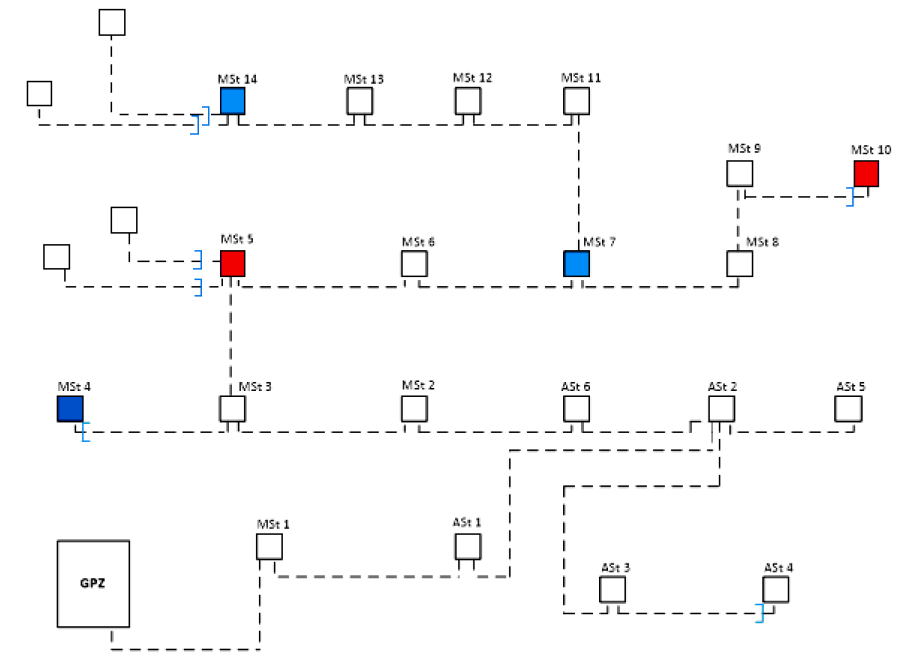
Fig.2 below presents the diagram of described cable run of a medium voltage line, the stations marked with blue colour allow to read voltage and current, the stations marked with red colour allow only to read current, division of a network was marked with blue brackets, in which, where necessary, the whole or part of described cable run can be supplied from adjacent lines.
In traditional networks, voltage and current load of specific lines could be tracked in the power supply points, that is, in the transformer/switching station at the beginning of a line.
At present, we can track and archive voltage and load of selected medium voltage linear sequence inside the network, which was presented on below example of voltage tracking of the phase L1, for seven-day period of registration.
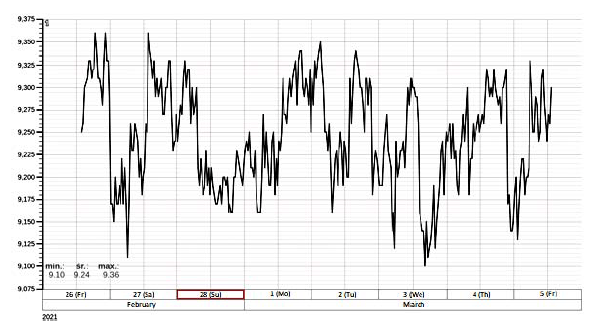
At the beginning of examined cable line, we can read voltage in the section tracks supplying cable run from the area of voltage measurement of 110/15 kV transformer / switching station, where registered measurement of voltage of the phase L1 was presented on fig.3.
Another voltage measuring point is measurement in MSt. 4 station in the field direction towards MSt. 3 station. MSt. 4 station in SCADA system was presented on fig.4. In normal network layout, switch in this field is open, in the so-called “network division”, which can be closed when there is a need of planned switches in order to relieve the cable in linear sequence in a different section or damage to a cable and the use of voltage application during failure after elimination of a damaged cable.
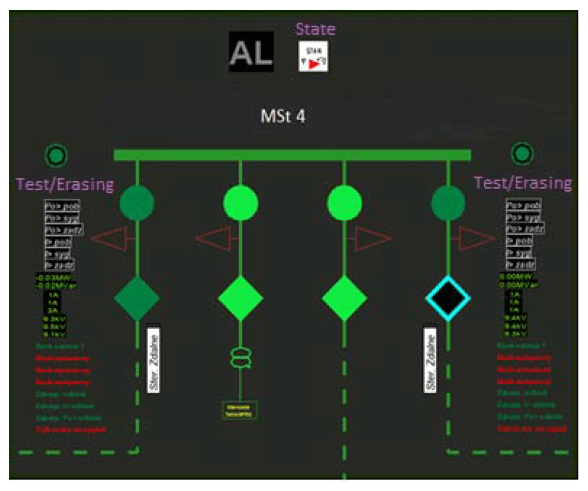
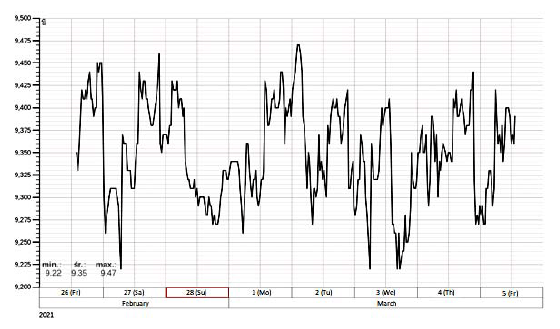
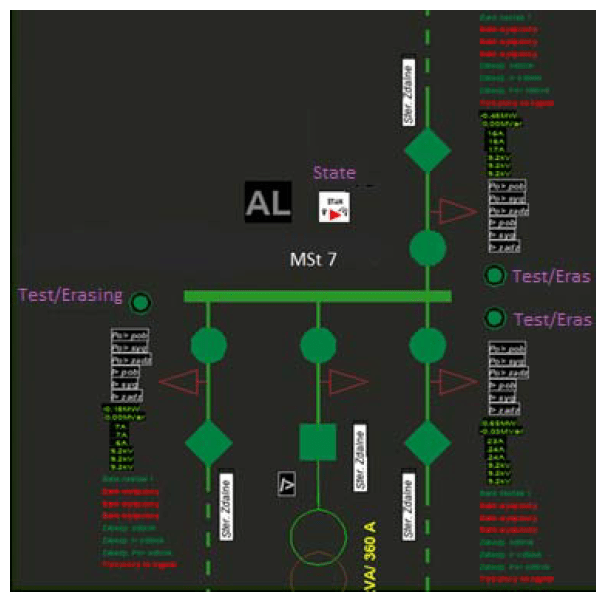
Measurement of voltage presented on fig.5 was taken at the end of examined cable run, and its value shows the voltage in open switch. Comparing this value with the value presented above in an incoming feeder of a different cable run, we obtain knowledge of voltage value on both sides of an open switch. Such information is useful for DSO service before closing live switch to the ring and connection of two cable runs. Measurement of voltage in MSt. 4 presented below shows voltage of the phase L1 at a distance of 3610 m from the transformer/switching station supplying a cable run. The next point in an examined cable run is MSt. 7 station presented on fig.6., which is 1018 meters away from the transformer/switching station.
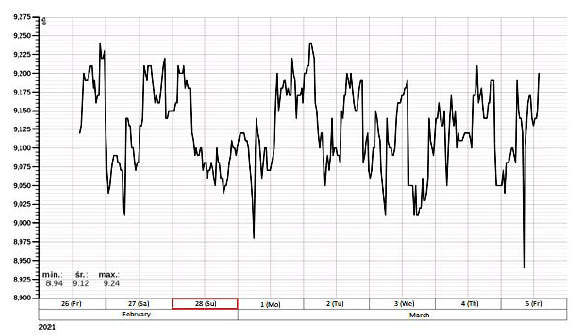
In this station, we can monitor voltage in an incoming feeder and two outgoing bays from the station. The measurements were presented on fig.7 and 8.
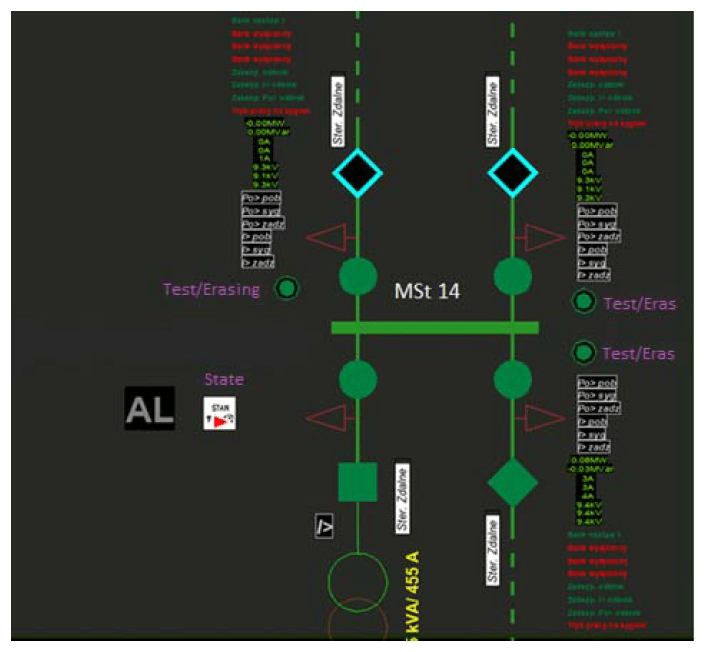
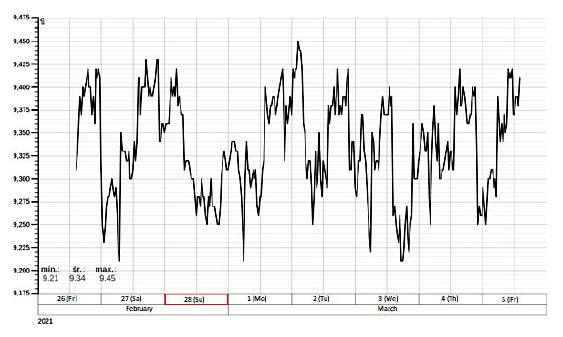
The last voltage measuring point in the examined cable run is MSt 14 station at the end of linear sequence, in which read voltage value is voltage at the end of a cable run, but also a voltage in the medium voltage/ low voltage transformer on the medium voltage side. It results from network scheduled layout, where switches in the outgoing bays in normal network layout are in open condition. MSt. 14 station in SCADA system was presented on fig.9. Measurement of voltage of the phase L1 in MSt 14 station was presented on fig.10.
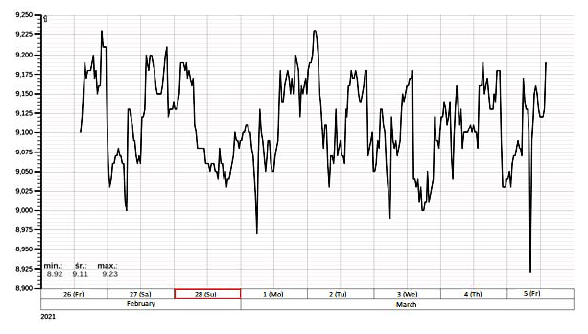
In this case, voltage value in open switches in the feeder bays is also necessary information about presence of voltage at the ends of adjacent cable runs and also its value and comparison with voltage in the inflow of the station, which is an important information before closing live switch to the ring.
Above measurements were enabled by development of technology connected with transformers and voltage and current sensors, as well as modern medium voltage switchgears with built-in devices making remote control by the Dispatcher possible and development of remote communication such as GPRS or TETRA.
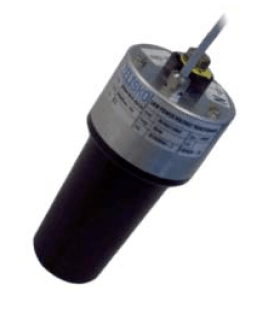
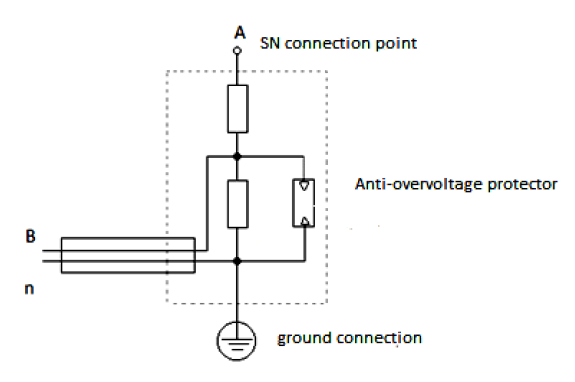
The remote measurements in the cable lines are taken in internal stations, using transformers for measurement of and current and voltage value, as well as voltage allocators and current sensors [3], which are more and more often applied in modern solutions of medium voltage switchgears. Fig.11 and 12 present physical view and equivalent diagram of a voltage sensor.
Voltage sensor acts as a resistance divider that consists of two resistance elements that divide input signal so as to obtain normalized output signal. Thanks to surge arresters built in a sensor, connected measuring devices were secured.
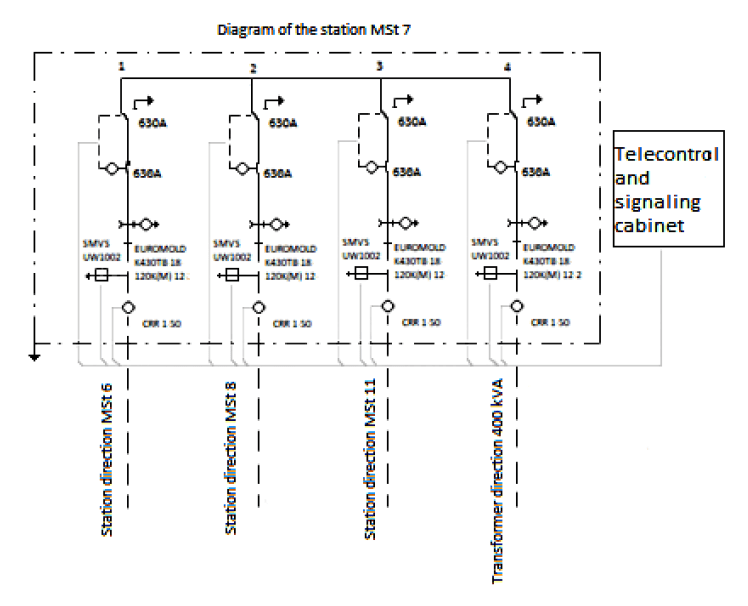
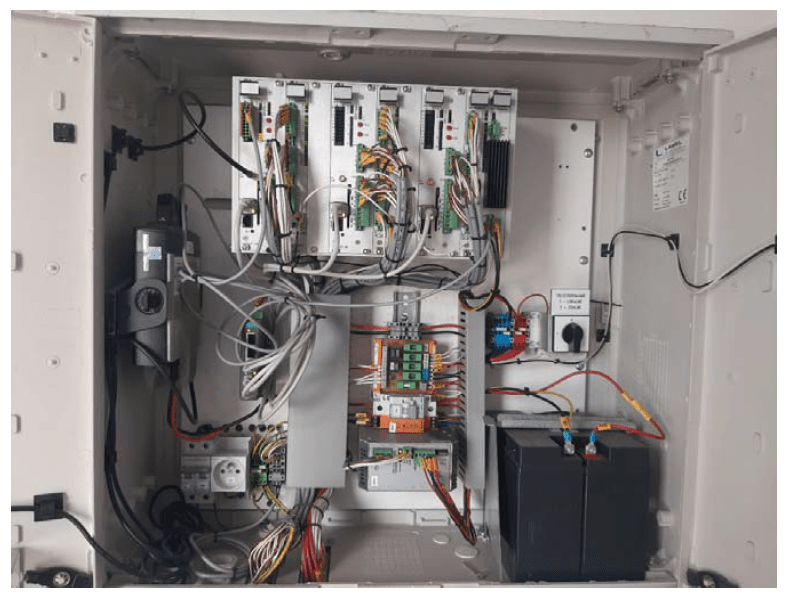
Fig. 13 below presents a diagram of connection of the sensors, whereas, fig.14. presents supply systems of the connectors built in the station marked on the diagram as – MSt. 7.
The measurement from voltage sensors in a specific feeder bay is sent through transmitter in a cabinet with a plant controller through antenna via transmission through GPRS and TETRA to telemechanic controller in a supervision centre [11,13].
Conclusions
Modern energy networks, thanks to their measuring capabilities, data collection, visualization of energy system participants, including producers, transmission, distribution and end consumers allow to integrate all participants and contribute to improvement of reliability of supplying electric energy of appropriate parameters and also largely increase energy efficiency. The functions of the energy networks mentioned above allow to define them as smart networks [4,7].
The replacement of traditional networks with smart networks is a complex and long-term process. These changes are caused by the change of power industry environment in the form of availability by the consumers of the devices of increased requirements when it comes to supply of energy of appropriate parameters, but also broadly developing activity connected with production of energy by the consumers. Constant growth of sources of energy inside the network causes changeable dynamics of changes of network operating conditions, depending on the amount of available sources of energy and power demand in a system.
Moving measuring points inside the network makes network more observable due to an option of tracking of voltage value and current flow in specific sections, which is significant during work of dispatching service, which has information before changing planned network layout. Such option of reacting through switches of specific network sections, or sensitive consumers due to the parameters of delivered energy and quicker reaction through change of network configuration and switching the consumer to a section, in which does not occur, for example, voltage changes during failure location.
Measurement of voltage in a station in the connector, which is in division that voltage from both different cable runs comes to, gives the Dispatcher access to voltage value on both sides of a switch before closing it to the ring, the example was described above. In traditional networks, in which the Dispatcher had not access to voltage value on both sides of a switch, they worked intuitively comparing voltage in the power supply points and considering their length.
Different use of current measuring capabilities in the energy networks allows to compare voltage in the power supply points and at the end of linear sequence. A significant and practical feature of modern energy networks is the possibility of archiving of voltage measurements for further analysis in many network points due to generation through dispersed sources connected to a specific cable run. In view of growing legal awareness among the consumers of the quality and values that delivered energy should have, as well as potential claims from the consumers concerning inappropriate parameters, the possibility of analysis of measuring data both in the power supply points and inside the network, as well as in the very consumers is becoming increasingly significant for the Distribution System Operators.
According to the authors, constant development of dispersed sources in various network points will force the Distribution System Operators to develop smart networks, with growing capabilities of controlling particular elements, which affects power stoppages, but also construction of measuring points allowing to track the dynamics of voltage changes and network load. Archived data will also be significant, allowing to analyse the parameters of electric energy in various network points, in order to determine the possibility of connecting additional sources of energy or making a decision about the necessity of doing investment works connected, for example, with expansion of a network.
REFERENCES
[1] Bignucolo F., Caldon R., Prandoni V., Radial MV networks voltage regulation with distribution management system coordinated controller, Electric Power Systems Research, 78(4) (2008), 634-645, ISSN 0378-7796, https://doi.org/10.1016/j.epsr.2007.05.007
[2] Stojanović D., Korunović L., Milanović J., Dynamic load modelling based on measurements in medium voltage distribution network, Electric Power Systems Research, 78(2) (2008), 228-238, ISSN 0378-7796, https://doi.org/10.1016/j.epsr.2007.02.003
[3] Babś A., Kajda Ł., Nowe rozwiązania pomiarów napięć i prądów w sieciach inteligentnych. Wiadomości Elektrotechniczne, (2017), No. 9, 28-31
[4] Babś A., Automatyzacja sieci rozdzielczych jako podstawowy element sieci inteligentnych, Automatyka, Elektryka, Zakłócenia, 4 (2013), No. 1(12), 22-28
[5] Cataliotti A., Daidone A., Tine G., Power Line Communication in Medium Voltage Systems: Characterization of MV Cables, IEEE Transactions on Power Delivery, 23 (2008), No. 4, 1896-1902, https://doi.org/10.1109/TPWRD.2008.919048
[6] Al-Wakeel A., Wu J., Jenkins N., State estimation of medium voltage distribution networks using smart meter measurements, Applied Energy, 184 (2016), 207-218, ISSN 0306-2619, https://doi.org/10.1016/j.apenergy.2016.10.010
[7] Wizja wdrożenia sieci inteligentnej w ENERGA-OPERATOR SA w perspektywie do 2020 roku, (2011), Gdańsk
[8] Ożadowicz A., Mikoś Z., Grela J., Zintegrowane zdalne systemy pomiaru zużycia i jakości energii elektrycznej – technologiczne case study platformy Smart Metering. Napędy i Sterowanie, (2014), No. 6, 109-114
[9] Kryonidis G., Demoulias C., Papagiannis G., A new voltage control scheme for active medium-voltage (MV) networks, Electric Power Systems Research, 169, (2019), 53-64, ISSN 0378-7796, https://doi.org/10.1016/j.epsr.2018.12.014
[10] Brenna M., et al., Automatic Distributed Voltage Control Algorithm in Smart Grids Applications, IEEE Transactions on Smart Grid, 4 (2013), No. 2, 877-885, https://doi.org/10.1109/TSG.2012.2206412
[11] Mazierski M., Czarnobaj A., Automatyzacja sieci i innowacyjne systemy dyspozytorskie a niezawodność dostaw energii elektrycznej, Energia Elektryczna, 11 (2014)
[12] Dib M., Ramzi M., Nejmi A., Voltage regulation in the medium voltage distribution grid in the presence of renewable energy sources, Materials Today: Proceedings, 13(3) (2019), 739-745, ISSN 2214-7853, https://doi.org/10.1016/j.matpr.2019.04.035
[13] Dobrzyński K., Lubośny Z., Kluczni J., Noskie S., Falkowski D., Wykorzystanie infrastruktury systemu AMI w monitorowaniu i sterowaniu sieciami niskiego napięcia. Zeszyty Naukowe Wydziału Elektrotechniki i Automatyki Politechniki Gdańskiej, 53 (2017), 133-136, ISSN 2353-1290
[14] Świderski J., Dopierała P., Świniarski M., Bezpieczeństwo cybernetyczne transmisji danych pomiędzy systemami nadrzędnymi a telemetrycznymi sterownikami obiektowymi na potrzeby energetyki w świetle wymagań normy IEC 62351. Wiadomości Elektrotechniczne, 87 (2019), No.6, 4-9
[15] Neagu B., Grigoras G., Optimal Voltage Control in Power Distribution Networks Using an Adaptive On-Load Tap Changer Transformers Techniques, 2019 International Conference on Electromechanical and Energy Systems (SIELMEN), (2019), 1-6, https://doi.org/10.1109/SIELMEN.2019.8905904
[16] Kacejko P., Adamek S., Wancerz M., Jędrychowski R., Ocena możliwości opanowania podskoków napięcia w sieci nN o dużym nasyceniu mikroinstalacjami fotowoltaicznymi, Wiadomości elektrotechniczne, 85 (2017), No.9, 20-26
[17] Nakhodchi N., Busatto T., Bollen M., Measurements of Harmonic Voltages at Multiple Locations in LV and MV Networks, 2020 19th International Conference on Harmonics and Quality of Power (ICHQP), (2020), 1-5, https://doi.org/10.1109/ICHQP46026.2020.9177926
[18] Bolognani S., Bof N., Michelotti D., Muraro R., Schenato L., Identification of power distribution network topology via voltage correlation analysis, 52nd IEEE Conference on Decision and Control, (2013), 1659-1664, https://doi.org/10.1109/CDC.2013.6760120
[19] Abeysinghe S., Wu J., Sooriyabandara M., Abeysekera M., Xu T., Wang C., Topological properties of medium voltage electricity distribution networks, Applied Energy, 210 (2018), 1101-1112, ISSN 0306-2619, https://doi.org/10.1016/j.apenergy.2017.06.113
[20] Gao X., De Carne G., Liserre M., Vournas C., Voltage control by means of smart transformer in medium voltage feeder with distribution generation, 2017 IEEE Manchester PowerTech, (2017), 1-6, https://doi.org/10.1109/PTC.2017.7981001
[21] Łukasik Z., Kozyra J., Kuśmińska-Fijałkowska A., Monitoring of low voltage grids with the use of SAIDI indexes, Przegląd Elektrotechniczny, 93 (2017), No. 9,146-150, ISSN 0033-2097
[22] Sensory napięciowe i prądowe dla inteligentnych rozdzielnic średniego napięcia: http://www.zelisko.at
Authors: dr hab. inż. Jacek Kozyra, prof. UTH Rad., Uniwersytet Technologiczno-Humanistyczny im. Kazimierza Pułaskiego w Radomiu, Wydział Transportu, Elektrotechniki i Informatyki, ul. Malczewskiego 29, 26-600 Radom, E-mail: j.kozyra@uthrad.pl.; prof. dr hab. inż. Zbigniew Łukasik, Uniwersytet Technologiczno-Humanistyczny im. Kazimierza Pułaskiego w Radomiu, Wydział Transportu, Elektrotechniki i Informatyki, ul. Malczewskiego 29, 26-600 Radom, E-mail: z.lukasik@uthrad.pl; dr hab. inż. Aldona Kuśmińska-Fijałkowska, prof. UTH Rad., Uniwersytet Technologiczno-Humanistyczny im. Kazimierza Pułaskiego w Radomiu, Wydział Transportu, Elektrotechniki i Informatyki, ul. Malczewskiego 29, 26-600 Radom, E-mail:a.kusminska@uthrad.pl; mgr inż. Paweł Kaszuba, Volta Instalacje, Waldowo Szlacheckie, E-mail: pawel.kaszuba@vp.pl .
Source & Publisher Item Identifier: PRZEGLĄD ELEKTROTECHNICZNY, ISSN 0033-2097, R. 98 NR 10/2022. doi:10.15199/48.2022.10.67

