March, 2007
Published by Terry Chandler Director of Engineering, Power Quality Thailand LTD/Power Quality Inc., USA. Emails: terryc@powerquality.org, terryc@powerquality.co.th
Accidental Death is REAL!!
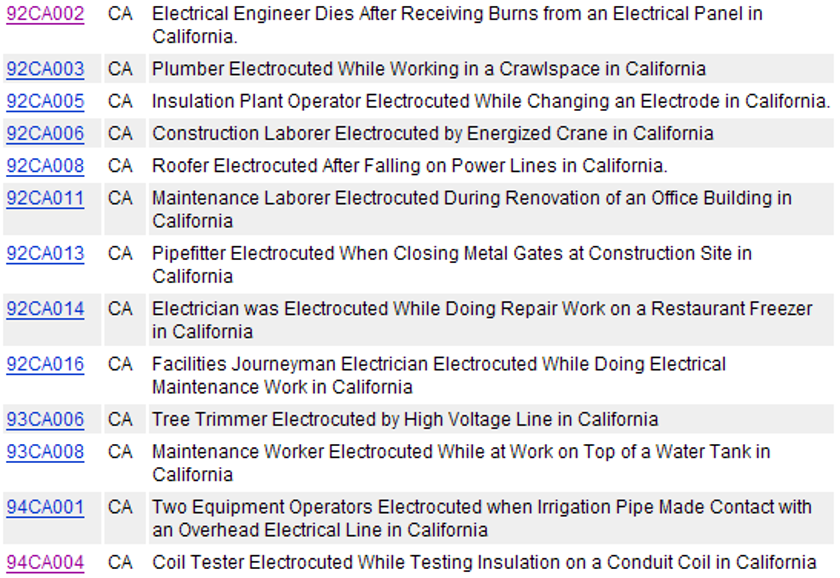
Electrical Shock Fatalities in the USA
- Electric shocks are responsible for about 1,000 deaths in the United States each year, or about 1% of all accidental deaths.
- Electric shocks cause death in 3-15% of cases. Many survivors require amputation or are disfigured by their burns.
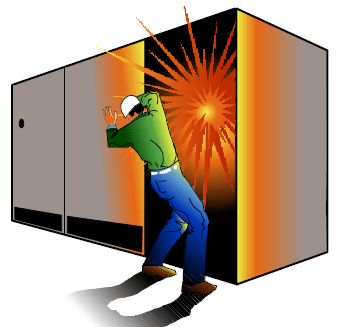
Electrical Injuries
- Electrical injuries can be caused by a wide range of voltages but the risk of injury is generally greater with higher voltages, and is dependent upon individual circumstances.
- Electric shock
- Electrical burns
- Loss of muscle control
- Thermal burns
Electrical Shock
- A voltage as low as 50 volts applied between two parts of the human body causes a current to flow that can block the electrical signals between the brain and the muscles.
- Stopping the heart beating properly
- Preventing the person from breathing
- Causing muscle spasms
Electrical Burns
- If an electrical current passes through the human body it heats the tissue along the length of the current flow. This results in deep burns that are permanently disabling.
- Burns are more common with higher voltages but may occur from low voltage.
Loss of Muscle Control
- An electric shock causes painful muscle spasms that can be strong enough to break bones or dislocate joints.
- This often means the person cannot ‘let go’ or escape the electric shock.
- The person may fall if they are working at height or be thrown into nearby machinery.
Burn Injury Survival
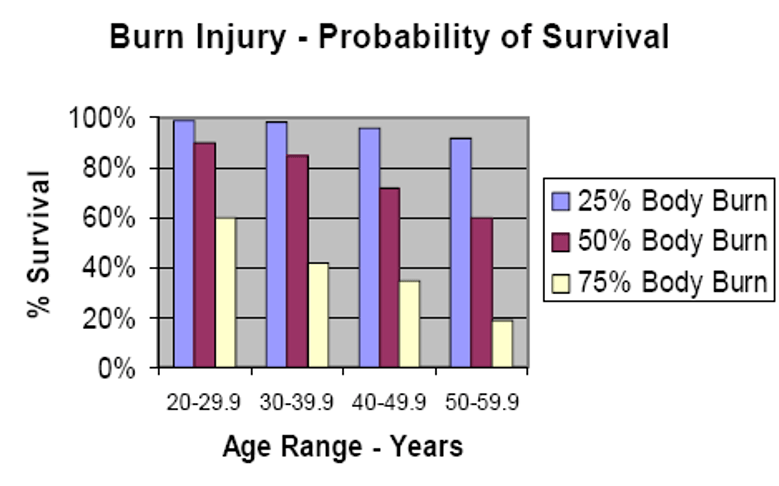
The Hazards of Electricity – Do You Know What They Are? by D. K. Neitzel
Thermal Burns
- Overloaded, faulty, incorrectly maintained, or short circuits get very hot.
- Even low voltage batteries (12V) can get hot and may explode if they are shorted out.
Arc Flash
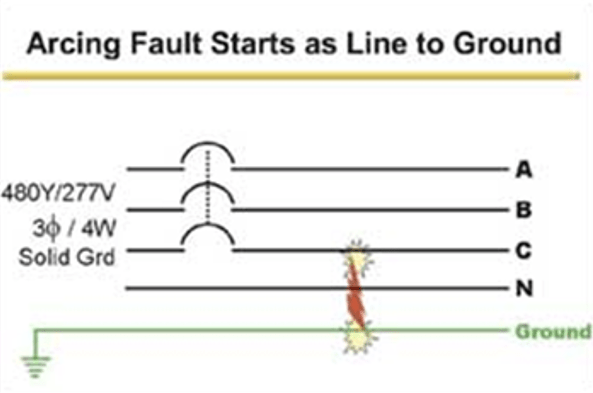
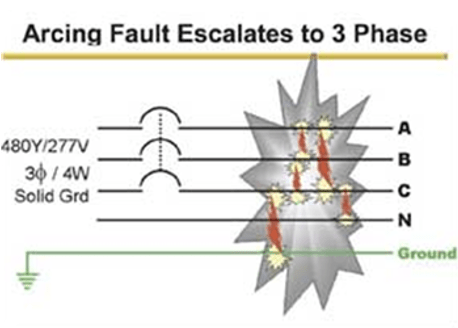
Arc Flash has 3 issues
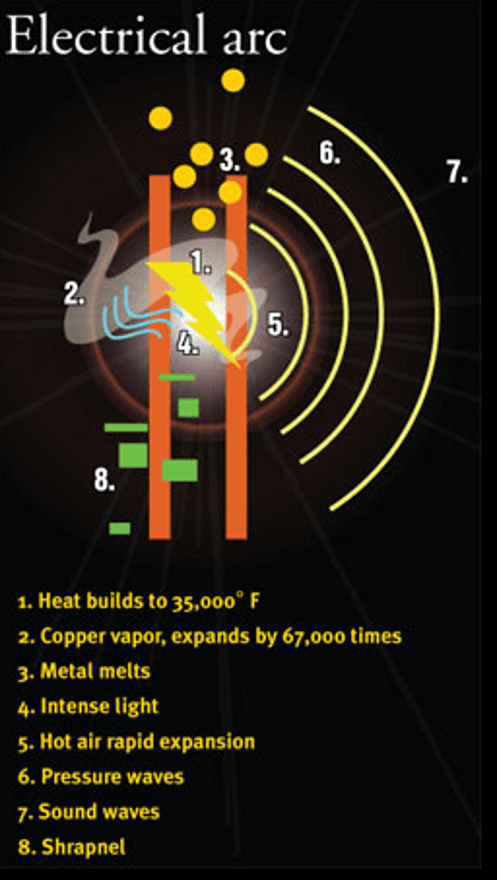
- The arc temperature
- The incident energy
- The pressure developed by the expanding gas
The main concern is the arc temperature and ignition of clothing.
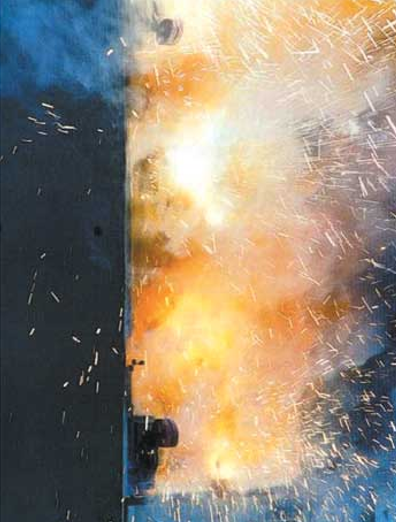
Arc Flash Test
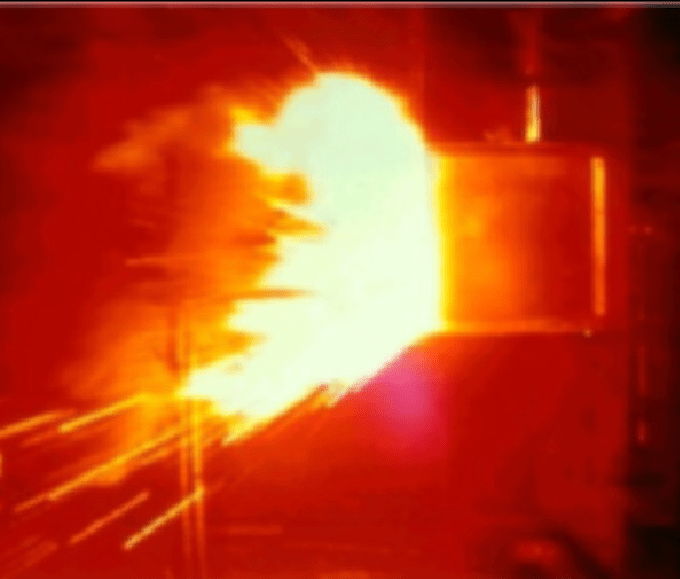
An arc flash test used a circuit adjusted to deliver 20,000 amperes at 480 V, 3 phase. The bright light is the arc.

Arc Flash Test 2
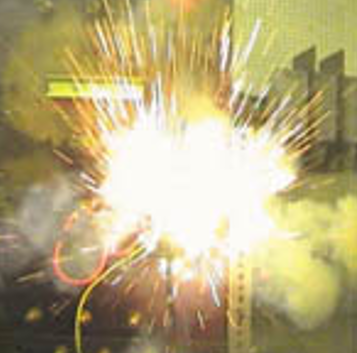
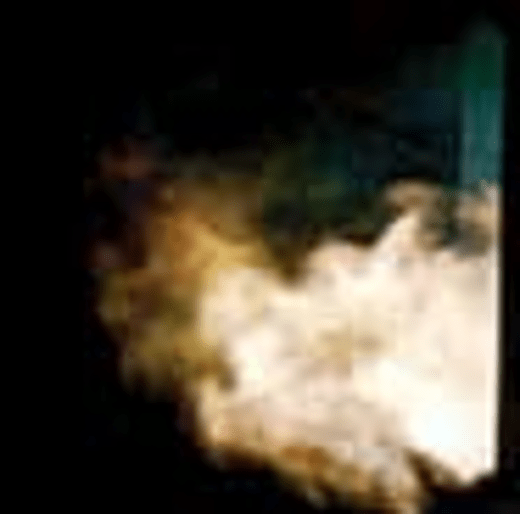
As the arc develops (second from top), it melts and vaporizes the metal of the electrodes and the box.
Arc Flash Test 3
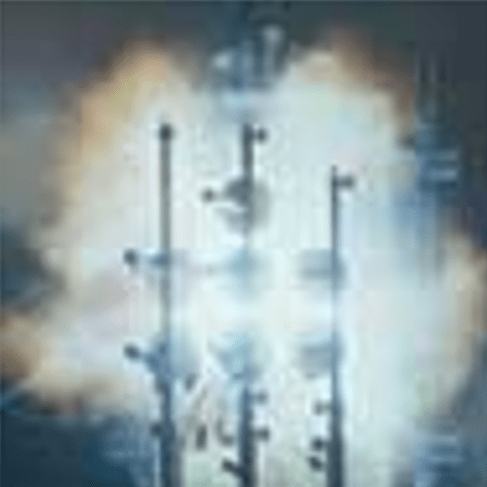
This vaporizing metal expands outward with the pressure wave, and the test stand is enveloped in the arc flash explosion.
Arc Flash Test 4
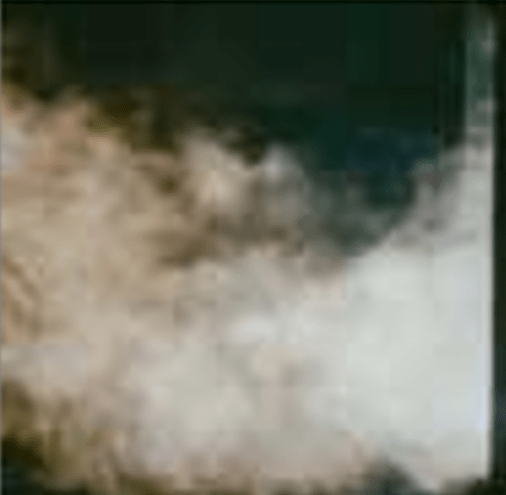
The duration of the arc was about 0.045 sec. The test was set up at the Square D High Power Lab in Cedar Rapids, IA.
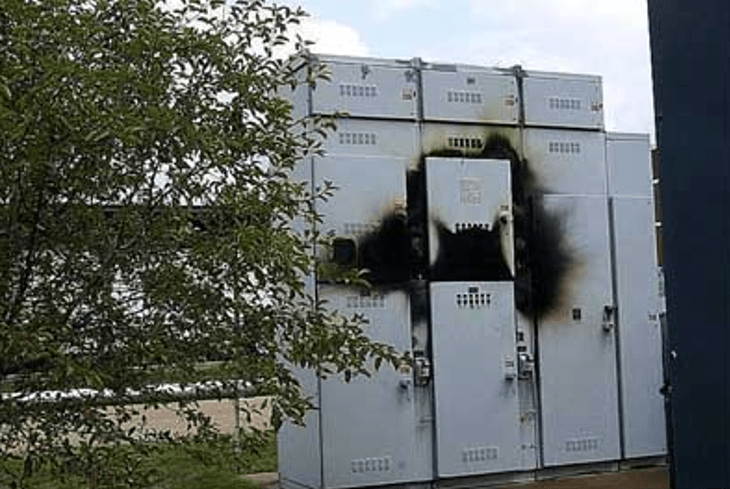
Arc Flash Result
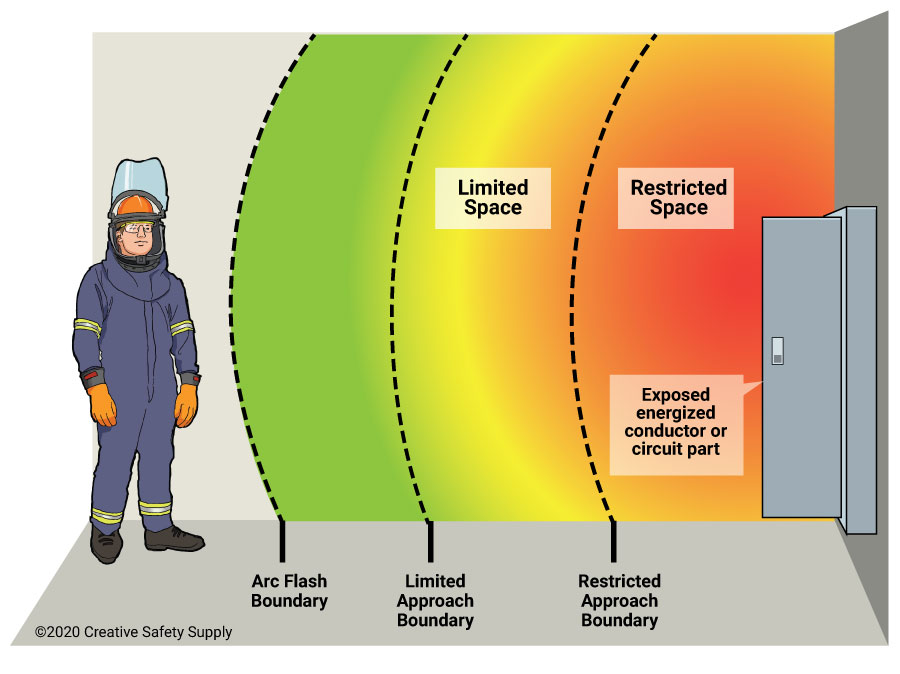
Approach to Energized Part
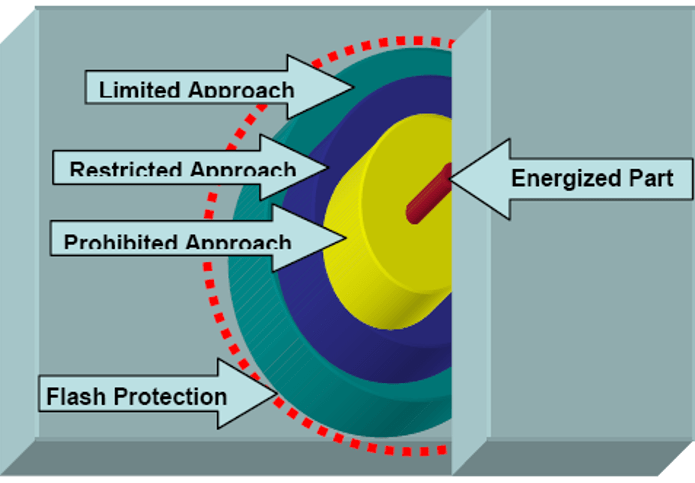
The Hazards of Electricity – Do You Know What They Are? by D. K. Neitzel
Safety Requirements by Category 0 to 4

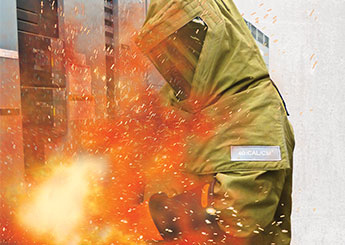
Arc Flash Protection

Dressed for Safety

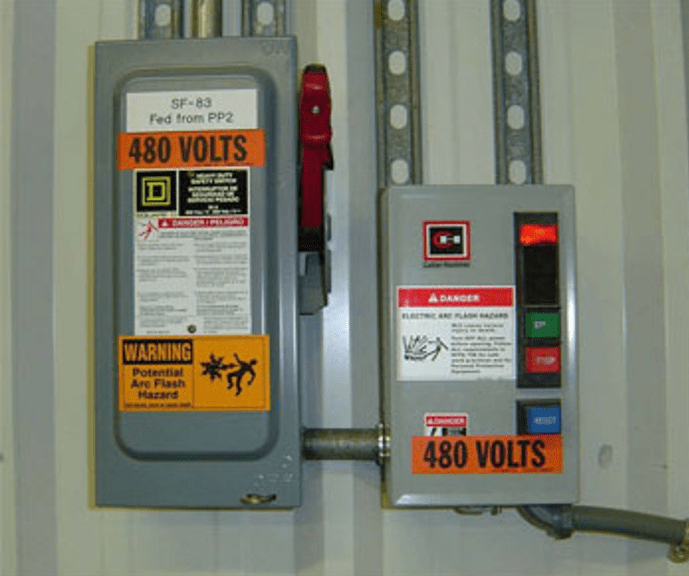
Arc Flash labeling in USA
Safety Review
- Shock hazard
- Burn hazard from electrical current
- Burn from thermal (hot wires)
- Explosions due to Arc Fault
Some Safety Tips
- Never work alone on electrical circuits.
- Use lock outs to prevent accidental circuit activation.
- Wear protective gloves, eye and face protection and clothing.
- Double check the expected voltage before work.
- Always deenergize circuits if at all possible.
- DO NOT ASS-U-ME the circuit is off.
- Always make sure the area around your feet is clear.
- If a ladder is necessary it should be fiberglass.
BE SAFE!!!

 Power Quality Blog
Good article! We will be linking to this great post on our website. Keep up the great writing.
LikeLike
It really interests me to read such articles, thanks for sharing Blogs like yours really helps me learn more day by day.
Visit our official website: https://www.tsca.com.ph/
+63 (082) 287-8205
LikeLike
Thank you for your valuable comments.
LikeLike
This is a powerful reminder that even low‑voltage boards aren’t benign. The arc‑flash and shock hazard sand the potentially catastrophic consequences—are sobering. The risk of deep burns, cardiac arrest, or permanent injury highlighted in this post emphasizes how critical proper protection, labeling, and safe maintenance practices really are. Thanks for raising awareness about these often-overlooked dangers.
LikeLiked by 1 person
This is a concise yet crucial reminder of how fatal mistakes can occur when working with low-voltage distribution boards. The personal-safety emphasis—such as never working alone, using lockouts, verifying voltage, and de-energising circuits—underscores best practices that too often get overlooked. Reinforcing protective gear, clean workspaces, and the right tools (like fiberglass ladders) is genuinely practical advice. Overall, the post does a solid job of blending cautionary tone with actionable steps—valuable guidance for anyone involved in electrical maintenance.
LikeLiked by 1 person
Really eye-opening post. It’s a strong reminder that “low voltage” doesn’t mean “no danger.” The arc-flash risks, burns, and even cardiac issues (especially if the body’s path includes the heart) are too often underestimated. I also appreciate the practical safety tips like using lock-outs, verifying voltage, and always wearing proper protective gear — those concrete steps make the advice actionable, not just theoretical. Thanks for raising awareness on something so often overlooked.
LikeLiked by 1 person
This is a well-written piece that underscores an often-underestimated danger: even low-voltage distribution boards can cause serious harm if safety is ignored. The author strikes a good balance between explaining technical risks—like electrical and thermal burns, arc flash, or shocks—and offering practical guidance (lockouts, gear, verifying circuits, etc.). It’s a timely reminder that in electrical work, caution, not complacency, must always lead.
LikeLiked by 1 person
Thank you for this clear and vital reminder that ‘low voltage’ doesn’t mean ‘low risk.’ Your discussion of arc flash, shock hazards, and practical safety practices really helps bridge theory and real-world awareness. Kudos for making electrical safety accessible and urgent.
LikeLiked by 1 person
This article does a great job reminding readers that even “low voltage” distribution boards can pose serious hazards like shocks, burns, and arc flashes if not respected and properly maintained.
LikeLiked by 1 person