Published by Anna ZIELIŃSKA, AGH University of Science and Technology, Faculty of Management
Abstract: The article describes the possibilities of using blockchain technology in the electromobility sector and in various areas of the autonomous vehicle sector. The aim of the article is to present the dynamics of the development of blockchain technology in markets such as electricity trading, tracking the supply of rare earth elements for the construction of batteries, tracking certificates of origin for energy, applications in cooperation with the power grid, and others. on the implementation of solutions based on blockchain technology in the process of charging electric vehicles and the use of blockchain as a platform for building smart city systems. The work also specifies forecasts for further development of the use of synergy of the blockchain environment, electromobility and autonomous vehicles.
Streszczenie: W artykule opisano możliwości zastosowania technologii blockchain w sektorze elektromobilności oraz w różnych obszarach sektora pojazdów autonomicznych. Celem artykułu jest przedstawienie dynamiki rozwoju technologii blockchain na rynkach takich jak handel energią elektryczną, śledzenie dostaw pochodzenia pierwiastków ziem rzadkich do budowy akumulatorów, śledzenie świadectw pochodzenia energii, zastosowania we współpracy z siecią elektroenergetyczną i in.. Opierając się na studiach literaturowych, skoncentrowano się również na implementacji rozwiązań bazujących na technologii blockchain w procesie rozliczania ładowania pojazdów elektrycznych i wykorzystania blockchain jako platformy do budowy systemów typu Smart City. W pracy określono również prognozy dalszego rozwoju wykorzystania synergii środowiska blockchain, elektromobilność i pojazdów autonomicznych. (Technologia Blockchain w elektromobilności i elektryfikacji transportu)
Keywords: electric vehicle, blockchain, blockchain technology, electromobility, development of electromobility, energy trade
Słowa kluczowe: samochód elektryczny, blockchain, technologia blockchain, elektromobilność, rozwój elektromobilności, handel energią
Introduction
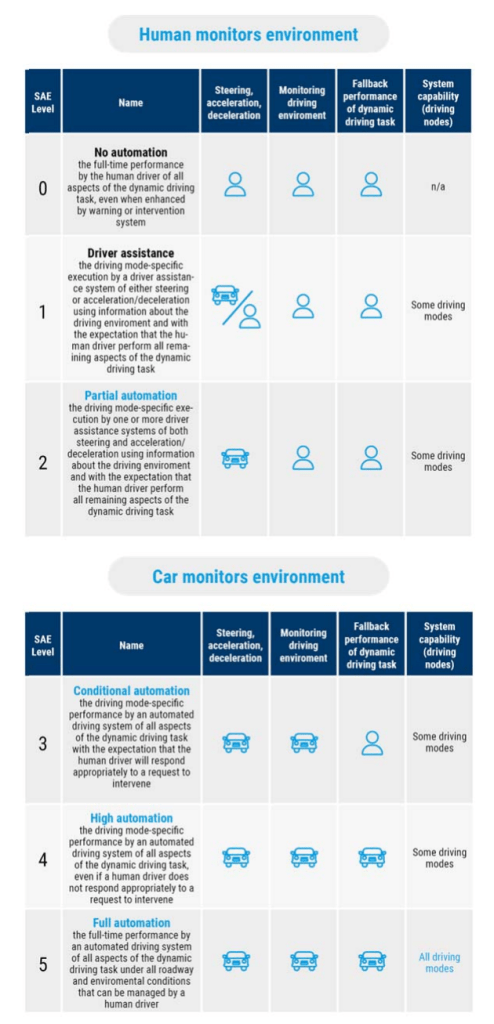
Blockchain technology is related to the security of storing and transmitting user data. Applies to transactions concluded on the Internet between users. We can say about blockchain technology that it consists of decentralized transaction registers, which are composed of a long chain of data blocks [1]. They are used to store and send data related to concluded transactions. The blockchain containing recorded data does not require the use of management systems, central computers and systems that verify operations. All transactions can take place without intermediaries and in almost real time. Similarly to issues related to blockchain, concepts such as electromobility, electric vehicle, autonomous vehicles, Smart Grid have been appearing in the area of economy for a long time and enjoy unflagging interest in scientific discourse, political debates and in the media. The development of this sector is strongly connected with social awareness, social and political changes [2]. Electromobility can be defined as all the issues related to the use of electric vehicles (EVs). As a branch of this issue, there is more and more talk about autonomous vehicles that are able to independently overcome designated routes, avoiding obstacles and performing other road tasks. Autonomous vehicles can be divided according to the function they perform into groups and levels proposed by SAE International (Society of Automotive Engineers), which determine what degree of human intervention is necessary to drive a given vehicle (Fig. 1.) [3].
Blockchain and batteries for EVs
Blockchain as a technology is increasingly being implemented in new sectors of the economy. The electromobility and autonomous transport sectors face similar challenges in some areas. Today, the most important tasks faced by producers of batteries used in EVs are to provide even greater protection during accidents, by securing the batteries, increasing the energy density and the ratio of the stored charge to the weight of the batteries (which translates directly into the range of the electric car), but also limiting the use of rare metals. Access to deposits of rare earth metals, which are a key component of lithium-ion batteries used in these vehicles, is becoming increasingly difficult [4]. Manufacturers face several hurdles, including: they must screen the sources of raw materials and use only those that meet international legal standards and those that strive to minimize the impact of mines on the natural environment. Thanks to blockchain technology, it is possible to take the next step towards ensuring full traceability of raw materials in the supply chain and minimizing any associated risks, in close cooperation with suppliers.
Rare earth metals are metals that occur in small amounts in the world – 17 elements stand out among them, widely used in new technologies, and even in military technology [5]. Unfortunately, these metals are found in few places in the world, mainly in those where the political and social situation is not the most friendly and stable – for example, the Democratic Republic of the Congo controls 60 percent. world’s cobalt deposits. Graphite mining is also highly centralized. Only nickel and manganese are common in the world and their extraction is not a major problem [6].
Blockchain is a digital distributed database containing a list of records linked together by a cryptography algorithm. Within supply chains, it creates records of transactions that cannot be changed, while imposing a common set of rules for recording this data. Transactions provide the opportunity to record and store data, which includes such information as the aforementioned origin of e.g. cobalt, manganese, graphite or nickel, weight and mass. In such transactions, information is also archived and made public that the metals suppliers comply with the Organization for Economic Cooperation and Development (OECD) Supply Chain Guidelines, which are specifically designed to help companies respect human rights and avoid conflicts through their decision-making and practices regarding the purchase of minerals [7].
Of course, RFID sensors are used all the time to track and manage the supply chain, but their use by individual organizations and the storage of data related to them within centralized systems is not a guarantee of their authenticity. In the case of a supply chain where a blockchain platform is used, there is no need to eliminate any of the participants, while an important change is that there is no need to rely on the IT infrastructure of any of the entities. Instead, one common platform with many owners can be created, which ensures the decentralization of information collected in it, guaranteeing its indisputability and quick replication between participants [8]. Tracking and identifying the sources of raw materials for the production of lithium-ion batteries is not so much a good will as an obligation of car manufacturers. It is hard to imagine that the drivers of electric cars, who identify themselves with the image of those who care about the environment, would accept the fact that the raw materials used to create the batteries were extracted in a manner contrary to ethics or ecology.
Blockchain and circular economy
Tracking and identifying the sources of raw materials using blockchain technology is closely related to the phenomenon of the so-called circular economy, i.e. the implementation of a circular economy [9]. It is a situation in which the consumption of natural resources is minimized, as well as the emission of exhaust gases and the amount of waste, thanks to the maximum and multiple use of raw materials [10]. Such an industrial symbiosis is the strategic goal of the countries associated in the European Union, as well as car manufacturers who sell cars in the EU.
One of Europe’s leading companies producing cars and electric vehicles, it strongly corresponds to the circular economy trend, which is why, for example, the dashboard of a car is made of materials from abandoned ropes and sea nets. Car mats and seat upholstery are made of fibers of plastic PET bottles, while the mats are enriched with material made of leftover materials from clothing manufacturers. The car manufacturer also emphasizes that the soundproofing of the engine compartment is made of soundproofing elements made from the seats of old models. The reuse of materials and raw materials for the production of new cars is one of the most important assumptions that allows to reduce the amount of waste, greenhouse gas emissions, and thus – to achieve the long-awaited climate neutrality [8]. One of the leading EU countries in this activity is Sweden. By 2025, at least 25% of the plastics used in every car from the Swedish manufacturer will come from recycled materials. This approach to production fits perfectly into the ideas of blockchain technology. It is also about tracking the use of materials as well as their purchase. Blockchain, thanks to the immutability of data stored on blocks, gives the possibility of full tracking and verification of materials used in production, but it is also a platform for concluding various types of transactions [11]. When purchasing secondary raw materials, one of the elements of blockchain technology, i.e. the idea of smart contracts, can be used.
A smart contract is a computer code containing a set of business rules agreed upon by the parties entering into the contract, run on the blockchain. The smart contract is saved on the blockchain, so it cannot be changed or revoked. When the predetermined conditions are met, the contract is automatically and irrevocably executed. Its formula contains the terms and conditions of benefits and services between the parties to the contract [12] . The smart contract is launched directly by requesting a recorded transaction, which is then independently and automatically executed in a specific manner on each node in the network, in accordance with the data contained in the file triggering the said transaction. Smart contracts are programs or scripts that can be implemented and run on the blockchain. Such transactions are the idea of modern business and the use of blockchain to secure transactions [13].
Blockchain and ecology
It is said that the modern automotive industry, both electric and autonomous, should be based on three pillars – new economy, ecology and ethics. In terms of ecology – blockchain can be used through smart contracts to better calculate, track and report carbon footprint reductions across the value chain. Documenting the source of electricity is another area where blockchain can play a vital role [8]. In such activities, blockchain can provide instant authentication, real-time data verification, and clear data records. More and more manufacturers of electric and autonomous vehicles strive to neutralize the impact on the natural environment in their factories, e.g. modifying the heating system or building photovoltaic installations. It also secures the plant’s energy needs by purchasing energy from renewable sources. Implementation of purchase contracts for renewable energy is also a large field for the use of blockchain technology [14]. Concluding transactions and their authentication is one of the basic ideas of technology.
Blockchain and energy trading
The electromobility and energy sectors are undergoing a transformation with the advent of peer-to-peer1 energy trading, which allows direct exchange of energy between individuals and companies. Blockchain technology and this decentralized method of exchanging information brings benefits such as increased efficiency, cost reduction, increased network resilience and the inclusion of renewable energy sources. It can therefore be said that blockchain plays a key role in revolutionizing the way energy is generated, used and traded [2].
The energy sector is a vast and complex network responsible for the production and distribution of energy. It covers a number of industries: oil and gas, electricity including renewable energy sources, and many others. Blockchain technology as a decentralized ledger system originally developed for cryptocurrencies is now used in various sectors, including energy. Its inherent qualities – transparency, security and immutability – make it an ideal choice for transforming traditional energy systems into more democratic and efficient models. In the context of the energy sector, blockchain can offer a radical shift from a centralized to a decentralized system. This technology enables energy trading in the peer-to-peer model, in which energy consumers can become prosumers – both producing and consuming energy [15]. They can generate their own energy from renewable sources such as solar panels and sell excess energy directly to neighbours or back into the grid. Transactions in this model are recorded on the blockchain, ensuring transparency, traceability and trust among users. Finally, the use of blockchain technology in peer-to-peer energy trading can empower consumers by giving them more control over energy consumption and costs. This can democratize the energy sector, giving consumers more choice and fostering competition between energy producers, potentially leading to lower energy prices. All this information is quite strongly related to electromobility, because it is electricity that powers the battery of an electric vehicle. The use of blockchain technology in energy trading taking into account the EV user is an extremely future-proof solution. The prosumer can generate energy and directly supply it to the car, not only at the place of generation but also receive it at other power points. This approach can revolutionize industries by increasing the consumption of energy produced from renewable sources. Peer-to-peer energy trading leads to familiar conventional purchasing models by allowing direct transactions between participants.
Research is already being conducted [16] and describes the concept of autonomous electricity price negotiations based on blockchain in order to select the most convenient charging station for electric vehicles. Based on e.g. route planning, car battery status, real-time traffic information and driver preferences, it describes how the car could manage charging offers from various stations along the route. Thus, execute blockchain-based smart contracts related to those charging stations that match all guidelines related to, among others, with the price of the energy offered or the distance. Research papers also describe more complex ideas, e.g. blockchain-based energy trading platforms for electric vehicles for the smart parking area [18]. They describe how electric vehicle owners can charge at a low price and/or sell at peak times at a higher price. Variants of cooperation of cars with the system are used here: G2V (Grid to Vehicle, simple car charging) and V2G (Vehicle to Grid, using the possibility of giving energy to the grid). The proposed system architecture consists of two layers: the physical infrastructure layer and the cybernetic infrastructure layer. The Blockchain technology described in the paper is a promising solution to facilitate the auditing and tracking of energy transactions between market participants.
1 P2P (Peer to Peer) – a type of network within which users send information directly to each other, without the need to use a central server [17].
Using blockchain technology, both individuals and companies can participate in decentralized energy trading and enjoy greater flexibility, transparency and autonomy. As a result, grid users can choose their preferred energy sources, negotiate prices and directly trade surplus energy with others. Peer-to-peer energy trading not only empowers consumers but also promotes the use of renewable energy and fosters a more resilient, sustainable energy ecosystem.
Blockchain and Smart City
In parallel with blockchain technology and electromobility, the technology of the fifth and sixth generation of the mobile network, known as 5G and 6G, is developing. It is already known that these technologies have many common areas of operation. Mobile networks are an indispensable element of life that is strongly correlated with a man as a driver. So more and more people and cars are constantly connected to the Internet, which is why you need a network that will ensure the appropriate speed of data transfer and responsiveness. We are talking about a high-performance mobile network and the car’s connectivity with the road infrastructure and other cars. Today, the development of so-called A whole lot of people are involved in Smart City, not only in the headquarters of car manufacturers, but also in ICT companies [19]. Support for traffic lights, street lighting, support for parking meters, methods of unloading traffic jams, communication between drivers and other road users, camera records are just some of the possibilities of correlation between the mobile network and blockchain technology. Data records, communication or reaction time are the areas where the need for cooperation and the possibility of complementing each other are most visible today [20]. Undoubtedly, this is due to the fact that there are more and more electric cars every year and the driver is more and more interested in the comfort of traveling.
Blockchain and charging stations
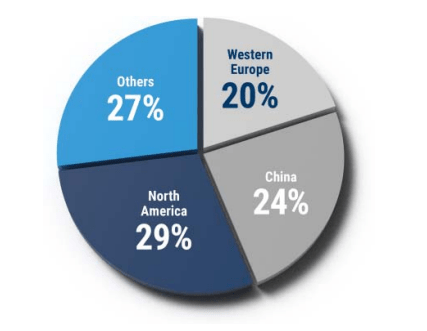
According to data from the end of April 2023, a total of 40,926 passenger and utility fully electric cars (BEV battery electric vehicle) were registered in Poland. For the first four months of this year their number increased by 7,201 units, i.e. 71% more than in the corresponding period of 2022. Parallel to the fleet of electric vehicles, the charging infrastructure is also developing. At the end of April 2023, there were 2,768 public charging stations for electric vehicles in Poland (5,440 points). These data show that the market will grow and follow global trends and forecasts (Fig.2) (21).
Speaking of the growing number of electric vehicles and charging infrastructure, an interesting solution is to use the possibilities of blockchain to operate charging stations. This issue is, of course, closely related to the electricity trade quoted above. Nevertheless, blockchain technology offers yet another functionality – the possibility of tokenizing the process – one of the solutions used in attempts to commercialize charging stations [2, 11]. The charger is managed by a system (application) which, in addition to cash or non-cash payments, uses the option of generating or burning tokens (a type of online currency available only in the charging process at stations belonging to the system). When the vehicle is connected to the charger, the EV user agrees to the charging conditions (e.g. energy price) and initiates the conclusion of a smart contract. Usually, the payment for such a process, in addition to the aforementioned cash, also involves e.g. tokens, tokens or vouchers related to the process and available on the market, which, when used in the process, generate e.g. a reduction in the price of energy available in the charger. The entire process in terms of the flow of electricity, both to the EV user and to the charger in the power grid, is recorded in blocks and billed according to the rules adopted in the contract. With the possibility of eliminating the central entity of trust, each party has maximum certainty as to the data and payment flows carried out in the process [23]. When using process tokenization, the user becomes a part of the process, has benefits from belonging to a given network and community that uses this method of settlement. Such a model of using blockchain is usually based on a mobile application to which users log in, saving their activities and thus taking advantage of privileges. All operations and activities are visible to the user on the screen of his phone, he can manage and analyze them. However, the road to such a future is not without obstacles. These are mainly regulatory hurdles, technological challenges and the need for further testing and development. In solutions using process tokenization, it will be important to have a legislative solution and that stakeholders – including regulators, energy suppliers and technology developers – work together to meet these challenges and create an environment that supports the development of blockchain in the energy sector.
Blockchain and the power grid
One of the key aspects where blockchain technology can contribute to optimizing energy grids is data management. Thanks to the use of blockchain, energy consumption and distribution data can be stored in a transparent, reliable and tamper-proof manner. As a result, all participants in the energy market, both energy suppliers and consumers, have access to the same, unchanging information, which can increase trust and cooperation between the parties.
Blockchain can also improve data exchange processes and energy distribution transactions. Thanks to the use of cryptography and consensus mechanisms, transactions are fast, secure and do not require intermediaries, which can lead to cost reduction and increase operational efficiency [11].
Thanks to the use of blockchain technology, it is possible to track and monitor energy consumption in real time by all market participants. Blockchain can also be used to automate and optimize energy distribution management processes. Based on data on energy consumption and available sources, this technology can help in determining optimal energy transmission paths, which contributes to reducing energy losses and ensuring more efficient distribution of resources [24].
However, it is worth noting the challenges and limitations related to the implementation of blockchain technology in the energy sector. Aspects such as scalability, energy costs related to the maintenance of the blockchain network, and issues of legal regulations and standards should be taken into account. The implementation of blockchain in the energy sector may also require changes in existing business models and corporate culture. It is worth noting that the success of the implementation of blockchain technology in the energy sector will largely depend on cooperation with other advanced technologies, such as the Internet of Things (IoT), artificial intelligence (AI) or energy storage. The synergy between these technologies can lead to the creation of innovative solutions that will contribute to the transformation of the energy sector [25].
Summary
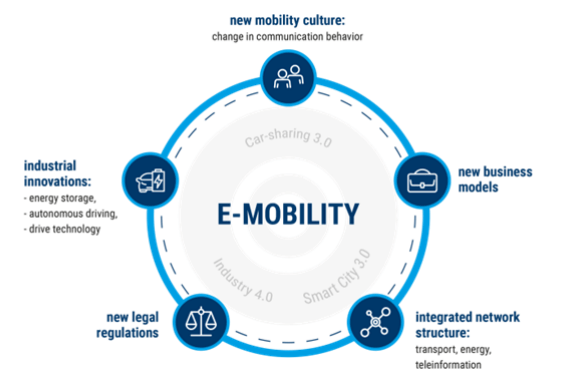
In the future, blockchain technology may be increasingly used in the electromobility sector, both in developed and developing countries. We are talking about energy trading and storage, network management, the use of tokenization and peer-to-peer networks, new business models, system integration, and transaction authentication and legal regulations (Fig. 3.). As this technology develops and energy markets open up to innovation, there is a chance that blockchain will become a key element of the future energy system, based on sustainable development, renewable energy production, greater decentralization and active participation of all market participants.
Many countries have already begun to pay attention to the regulation of the use of blockchain technology in the energy sector. For example, in the European Union, the legal framework for the use of blockchain in the energy sector is defined by the Renewable Energy Directive (RED II) and the Common Electricity Market Regulation. In the United States, regulations are set by individual states, leading to some fragmentation in regulations. Such legal and technical standards are necessary to ensure the interoperability and security of systems based on blockchain technology. Organizations such as the International Electrotechnical Commission (IEC) or the International Organization for Standardization (ISO) are working on developing standards for blockchain in the energy sector, which are intended to facilitate the implementation of this technology and support the development of innovation of each party involved in the process. Appropriate legal regulations and technical standards can significantly affect the development and implementation of blockchain technology in the energy sector. A transparent and predictable legal framework and technical standards may encourage investors to engage in projects related to blockchain in the energy sector, which will contribute to the growth of innovation and competition on the market [25].
Blockchain, although not without its flaws, is a mechanism that facilitates the creation of specialized, though still niche, systems for the energy market that is developing at a dizzying pace. The introduced improvements, such as increasing the speed of transactions, reducing the computing power required for their processing in blockchain network nodes, further increasing the security and reliability of blockchain mechanisms, will affect the wider use of blockchain as a distributed, multifunctional register used by systems and applications used in everyday life. life [26, 27]. From the point of view of users of such systems and applications, it is usually not important where and how their data is stored and processed, but what is important is their security, speed and continuity of access. Blockchain is a mechanism that has these features, and the implementation and development of energy ecosystems based on it is accelerating every day.
REFERENCES
[1] Piech K., „Leksykon pojęć na temat technologii blockchain i kryptowalut”, 2016
[2] Zielińska A., Application possibilities of blockchain technology in the energy sector, E3S Web Conf., 154 (2020), doi: 10.1051/e3sconf/202015407003K
[3] https://www.sae.org/ (z dnia 18.08.2023)
[4] Chudy A., Akumulatory litowo-jonowe w samochodach elektrycznych — regeneracja, zastosowanie wtórne i recykling, Problemy i wyzwania współczesnego rolnictwa oraz ochrony środowiska, 2020
[5] Wiejaczka D., Wilczyński W., Strategiczne znaczenie metali ziem rzadkich, Przegląd Geopolityczny, 36 (2021)
[6]https://volvocars.wp.pl/technologia-blockchain-zapewniprzejrzystosc-w-dostawach-surowcow (z dnia 18.08.2023)
[7]https://www.gov.pl/web/edukacja-i-nauka/oecd-organizacjawspolpracy-gospodarczej-i-rozwoju2 z dnia 18.08.2023)
[8] https://volvocars.wp.pl/przyszlosc-to-rowniez-samochodywykonane-z-odzyskanych-materialow (z dnia 18.08.2023)
[9] Basilea D., D’Adamo I., Gorettia V., Rosa P., Digitalizing Circular Economy through Blockchains: The Blockchain Circular Economy Index, Journal of Industrial and Production Engineering, 2023, https://doi.org/10.1080/21681015.2023.2173317
[10] Kamińska E., Modele biznesowe gospodarki o obiegu zamkniętym związane z zagospodarowaniem zużytych litowojonowych akumulatorów samochodowych, Gospodarka Materiałowa i Logistyka, 1 (2022)
[11] Miśkiewicz R., Matan K., Karnowski J., The Role of Crypto Trading in the Economy, Renewable Energy Consumption and Ecological Degradation, Energies, 2022, https://doi.org/10.3390/en15103805
[12] Mohanta B. K., Panda S. S., Jena D., An Overview of Smart Contract and Use Cases in Blockchain Technology, 2018 9th International Conference on Computing, Communication and Networking Technologies (ICCCNT), 2018, doi: 10.1109/ICCCNT.2018.8494045
[13] Bogacz R., Krupanek B., Wprowadzenie do 6G. Specyfikacja, technologie, wyzwania, Przegląd Elektrotechniczny, ISSN 0033-2097, 11 (2022), doi:10.15199/48.2022.11.32
[14] Mrowiec D., Sołtysik M., Przykładowe możliwości wykorzystania technologii blockchain w elektroenergetyce, Zeszyty Naukowe Instytutu Gospodarki Surowcami Mineralnymi i Energią PAN, 103 (2018), doi: 10.24425/123701
[15]https://nextrope.com/pl/handel-energia-peer-to-peerblockchain-w-sektorze-energetycznym/ (z dnia 18.08.2023)
[16] Pustisek M., Kos A., Sedlar U., Blockchain Based Autonomous Selection of Electric Vehicle Charging Station, 2016 International Conference on Identification, Information and Knowledge in the Internet of Things (IIKI), Beijing, 2016, doi: 10.1109/IIKI.2016.60.
[17] „Peer-to-peer”, Wikipedia, wolna encyklopedia. https://pl.wikipedia.org/wiki/Peer-to-peer (z dnia 07.10.2020)
[18] Silva F. C., Ahmed M. A., Martínez J.M., Kim Y. C., Design and Implementation of a Blockchain-Based Energy Trading Platform for Electric Vehicles in Smart Campus Parking Lots, Energies, t. 12, 24 (2019), doi: 10.3390/en12244814
[19]https://volvocars.wp.pl/lacznosc-5g-na-zawsze-zmieni-sposoba-jaki-korzystamy-z-samochodu (z dnia 18.08.2023)
[20] Bogacz R., Krupanek B., Wprowadzenie do 6G. Specyfikacja, technologie, wyzwania, Przegląd Elektrotechniczny, ISSN 0033-2097, 11 (2022), doi:10.15199/48.2022.11.32
[21] https://motofakty.pl/samochod-elektryczny-ile-aut-na-pradrejestruje-sie-w-polsce/ar/c4-17549473 (z dnia 20.08.2023)
[22] http://www.obserwatorfinansowy.pl z dnia 12.04.2023
[23] Nour, M., Said S., Ali A., Farkas C., Smart Charging of Electric Vehicles According to Electricity Price, International Conference on Innovative Trends in Computer Engineering (ITCE), 2019, doi:10.1109/ITCE.2019.8646425
[24] Kozar T., Dlaczego operatorzy sieci energetycznych boją się elektromobilności?, Nowa energia, 1 (2018)
[25]https://brandsit.pl/energetyka-2-0-blockchain-jako-klucz-dooptymalizacji-sieci-energetycznych-i handlu-zasobami/ (z dnia 2.08.2023)
[26] https://www.smart-grids.pl/technologie/2986-zastosowaniablockchain-w-energetyce (z dnia 21.08.2023)
[27] Mataczyńska E., Blockchain Technology Impact on the Energy Market Model. Energy Policy Studies. (1) 2017
Author: dr inż. Anna Zielińska, AGH University of Science and Technology, Faculty of Management, e-mail: azielinska@agh.edu.pl;
Source & Publisher Item Identifier: PRZEGLĄD ELEKTROTECHNICZNY, ISSN 0033-2097, R. 100 NR 1/2024. doi:10.15199/48.2024.01.54
 Power Quality Blog