Published by 1. Joanna MICHAŁOWSKA1, 2. Paweł TOMIŁO2, 3. Jarosław PYTKA2, 4. Łukasz PUZIO1, 5. Arkadiusz TOFIL1, The University College of Applied Science in Chelm (1), Lublin University of Technology (2) ORCID: 1.0000-0002-2353-6305, 2. 0000-0003-4461-3194, 3. 0000-0002-5474-3585, 4. 0000-0002-7116-8586, 5. 0000-0003-2392-6597
Abstract. The development of new technologies contributes to an increase in the value of the electromagnetic field. The article presents the identification of the electric field with the use of cluster analysis. The research on the value of the electric component of the electromagnetic field (EMF) was determined with the NHT3DL broadband meter from Microrad with the 01E measuring probe during training flights. The developed model for cluster analysis using the DBSCAN (density-based spatial clustering of applications with noise) algorithm is used to identify the electric field exposure value in the context of flight safety analysis.
Streszczenie Rozwój nowych technologii przyczynia się do wzrostu wartości pola elektromagnetycznego. W artykule przedstawiono identyfikacje pola elektrycznego określoną przy użyciu analizy skupień. Badania dotyczące wartości składowej elektrycznej pola elektromagnetycznego (EMF) wyznaczono miernikiem szerokopasmowym NHT3DL firmy Microrad z sondą pomiarową 01E podczas lotów szkoleniowych statkami powietrznymi. Opracowany model do analizy y skupień przy użyciu algorytmu DBSCAN (ang. density-based spatial clustering of applications with noise) służy do identyfikacji wartości ekspozycji pola elektrycznego w kontekście analizy bezpieczeństwa lotów (Identyfikacja natężenia pola elektrycznego w samolotach)
Keywords: electromagnetic field, aircraft, exposure, density-based spatial clustering of applications with noise (DBSCAN), cluster analysis
Słowa kluczowe: pole elektromagnetyczne, samoloty, narażenie, DBSCAN, analiza skupień.
Introduction
With the development of new technologies, there is growing concern among people about exposure to electromagnetic fields, both among passengers and aircraft maintenance. Due to advanced technologies related to the safety of aircraft flights, exposure to electromagnetic fields is constantly monitored and analyzed in particular, radio frequencies (RF-EMF) should be highlighted.
Electromagnetic radiation can be divided due to the frequency into ionizing and non-ionizing. As a result of ionizing radiation, chemical bonds can break, which can lead to changes in materials and biological tissues.[1-4] In the context of aircraft, ionizing radiation is natural and comes from space sources. It can be defined as cosmic or galactic rays, and the intensity of exposure during flights depends on the position of the aircraft, in particular latitude, flight altitude, as well as the length of exposure and the time of year. In the case of non-ionizing radiation, it causes thermal effects. There are few publications related to the exposure of the electromagnetic field during the flight as well as take-off and landing. Electromagnetic fields may cause effects not only related to the tissue heating effect, but also in the context of flight safety, however, some sources may interfere with devices, electronic equipment in the plane [5-8]. Research centers carry out measurements of electromagnetic field emissions in means of transport. Therefore, exposures to electromagnetic fields must be monitored and analyzed for both short-term and long-term exposure.
Method and Materials
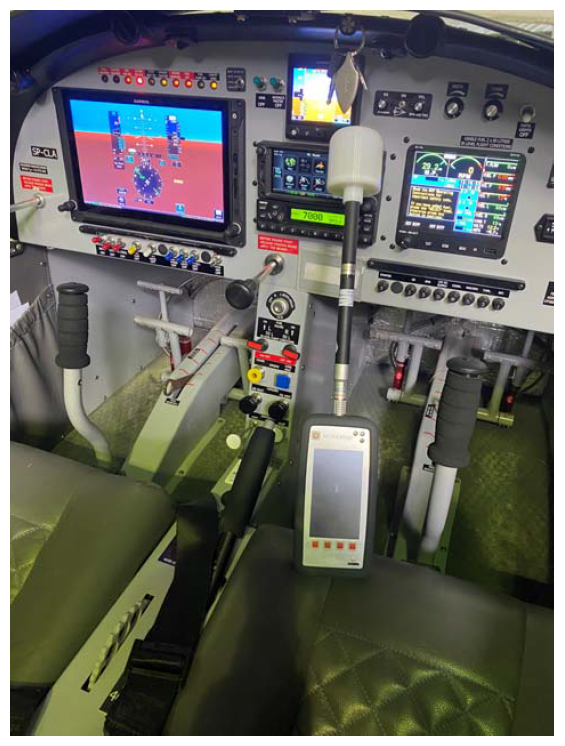
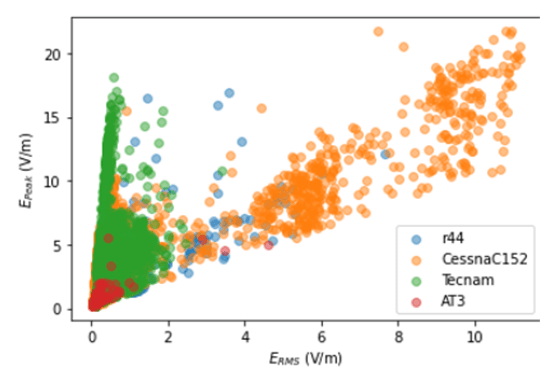
In order to determine the general impact of the electric field strength that affects humans and electronic devices during flight with a given type of aircraft, experimental measurements were made and then the obtained results were implemented in order to develop a model for cluster analysis using the DBSCAN algorithm [9]. The algorithm’s task is data mining, which consists of dividing a data set into groups in such a way that elements in the same group are similar to each other, and at the same time as different as possible from elements from other groups [10-13]. This solution allowed to filter out the results that occur with a lower frequency (Fig. 2). The analysis was carried out for the measurements of 4 types of aircrafts, such as: Aero AT3 R100, Cessna C152, Robinson R44 Raven, Tecnam P2006T, which constitute the didactic base of the Aviation Training Center of The University College of Applied Science in Chelm. This center conducts training for ATPL licenses for airplanes and helicopters as part of engineering studies. The research on the value of the electric component of the electromagnetic field (EM) determined with the use of the NHT3DL meter by Microrad was presented (Fig. 1)
The measurement data for each of the presented types of aircraft are presented in Fig. 2.
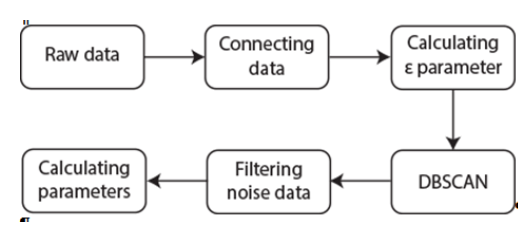
The DBSCAN algorithm (density-based spatial clustering of applications with noise) was used for the cluster analysis based on densities with the adaptive parameter ϵ. DBSCAN algorithm searches for neighbors of a given point at a distance of ϵ, in the next step central points are defined, i.e. those with minimum N neighbors [14 -17]. Observations that meet the above assumptions are combined into one group, points that are within the range N and are not central points are also switched to the existing groups [18-22]. Observations that have not been attached to any group become borderline observations. An example of the operation of the DBSCAN algorithm is shown in Figure 3.
The parameter ϵ determines the maximum distance between two samples to be considered as a group. For each group of measurements, the parameter ϵ for a given airplane type was determined by the equation
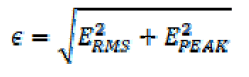
Where: ERMS and EPEAK is the mean value of the measurements
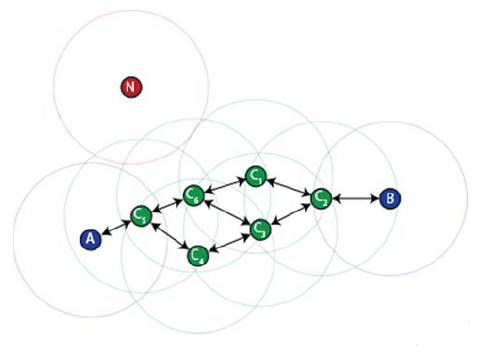
In the above figure (Fig. 3) the points C represent the focal points, and A and B are the border points, point N is the outlier. For each type of airplane, parameter ϵ was determined first, according to the formula (1). Then the DBSCAN algorithm was applied with the previously determined parameter ϵ for each group. The algorithm determined the clusters and data considered as noise (outliers). The noise was filtered out and the parameters presented in Table 1 were determined for the remaining data.
The minimum number of samples was set as static values and amounted to 60.
Result and discussion
The results of the collective analysis for each of the aircraft, without the use of cluster analysis, are presented in Table 1.
Table 1. Results of collective analysis for each of the aircraft
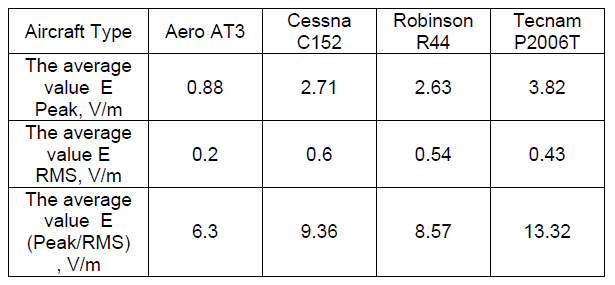
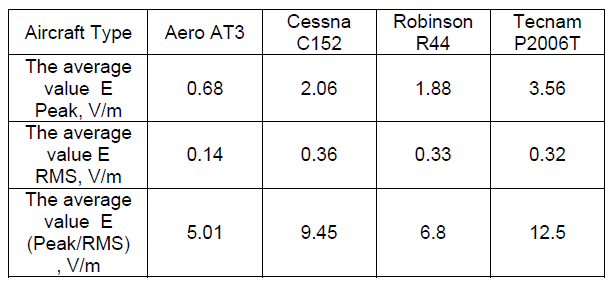
Table 2 presents the data after applying cluster analysis.
Table 2. The data after applying cluster analysis.
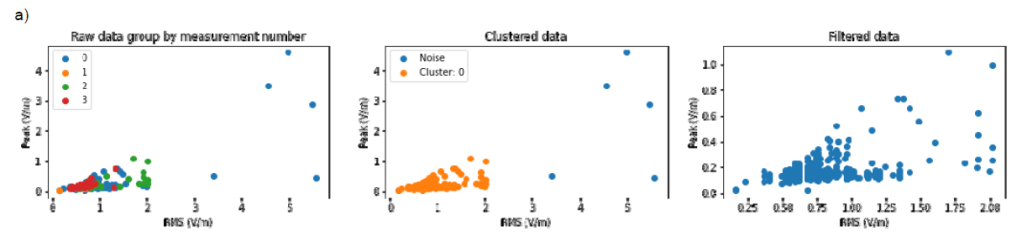
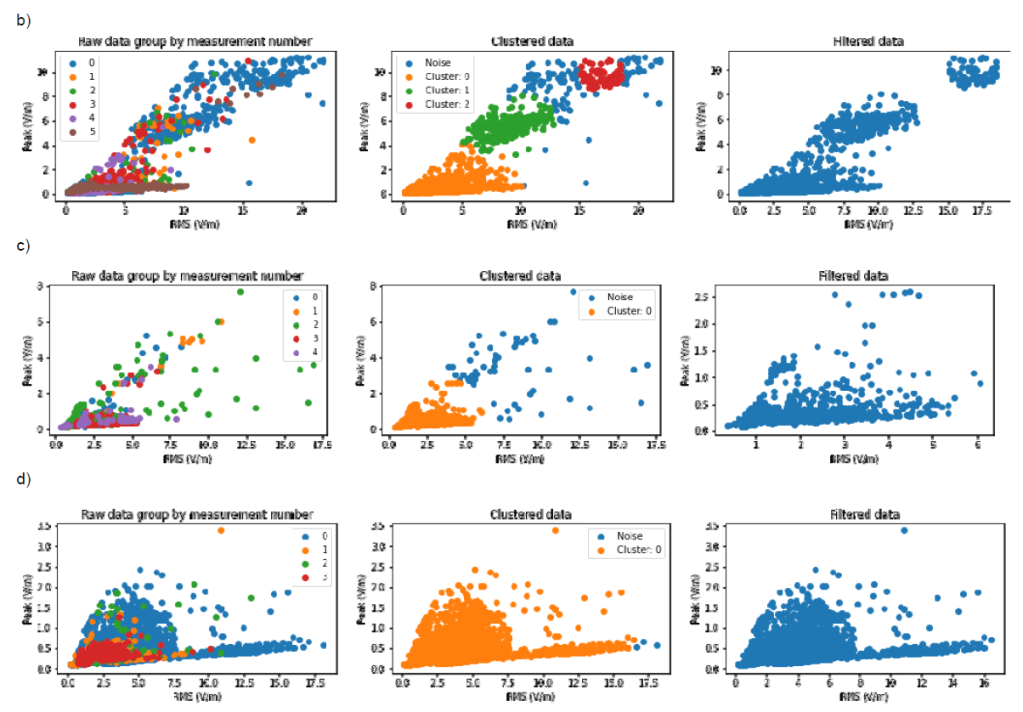
The results of the cluster analysis for measurements from a given type of training aircraft are shown in Figure 4
Conclusion
Cluster analysis made it possible to determine the generalized influence of the electric field on the user during air operations with a given type of aircraft. The highest average value of E RMS = 0.36 V/m occurs in the Cessna C152 type airplane, and the highest ratio of the instantaneous values of E Peak to the average values of E RMS, 12.5 V/m was recorded during the flight with the Tecnam P2006T airplane. On the other hand, the lowest values of the electric field are recorded in the Aero AT3 for all three parameters and they range from 0.14 to 5.01 V/m. Only in the case of the Cessna C152 aircraft, the algorithm grouped the data into 3 clusters, in the remaining cases there was 1 cluster. The identification of exposure to RFEMF has the potential to determine in which type of aircraft the lowest electric electromagnetic field scale values are present. The obtained results were compared with the permissible limit values: Directive 2013/35 / EU, with the applicable regulations of the Minister of Health of 17 December 2019 on permissible levels of electromagnetic fields in the environment, with the regulation of the Minister of Family, Labor and Social Policy of 12 June 2018 on occupational health and safety in works related to exposure to electromagnetic whether electromagnetic field normative values were not exceeded.
REFERENCES
[1] C e l a y a – E c h a r r i M . , e t a l ., 5G Spatial Modeling of Personal RF-EMF Assessment within Aircrafts Cabin, IEEE Acces, 10:78860 – 78874, (2022), Doi: 10.1109/ACCESS.2022.3193681
[2] P i c a l l o I . , e t a l . , Deterministic Wireless Channel Characterization towards the Integration of Communication Capabilities to Enable Context Aware Industrial Internet of Thing Environments, Springer, (2022), Doi: 10.1007/s11036-022-01993-9
[3] Gas P., Temperature inside Tumor as Time Function in RF Hyperthermia, Przeglad Elektrotechniczny, (2010), vol. 86, no.12, 42 – 45.
[ 3 ] M i c h a ł o w s k a J . , e t a l . , Assessment of Training Aircraft Crew Exposure to Electromagnetic Field caused by Radio Navigation Devices, Energies, (2021), vol. 14, no. 1
[4] M i c h a ł o w s k a J . , e t a l ., Monitoring the Risk of the Electric Component Imposed on a Pilot During Light Aircraft Operations in a High-Frequency Electromagnetic Field, Sensors, (2019), vol.19, no. 24,
[5] K i e l i s z e k J . , e t . a l ., Assessment of the Electromagnetic Field Exposure during the Use of Portable Radios in the Context of Potential Health Effects, Energies, (2020), vol. 13, no. 23,
[6] M i c h a ł o w s k a J . , e t a l ., Monitoring of the Specific Absorption Rate in Terms of Electromagnetic Hazards, Journal of Ecological Engineering, vol. 21, issue. 1, (2020)
[7] S a r m a A . , e t a l ., An Exact Scalable DBSCAN Algorithm for Big Data Exploiting Spatial Locality, IEEE International Conference on Cluster Computing (CLUSTER), (2019) Doi: 10.1109/CLUSTER.2019.8891020
[8] K r a w c z y k A . , e t . a l ., Electromagnetic Field in Social Perception – Myths and Conspiracy Theories, (2020), IEEE Problems of Automated Electrodrive. Theory and Practice (PAEP), Doi: 10.1109/PAEP49887.2020.9240831
[9] E s t e r M . , e t . a l .,. A Density-Based Algorithm for Discovering Clusters in Large Spatial Databases with Noise, Institute for Computer Science, University of Munich. Proceedings of 2nd International Conference on Knowledge Discovery and Data Mining (KDD-96), (1996)
[10] International Commission on Non-Ionizing Radiation Protection (ICNIRP). Guidelines for Limiting Exposure to Electromagnetic Fields (100 kHz to 300 GHz). Health Phys. 2020, 118, 483–524
[11] Zubrzak B., et.al Methods for controlling the levels of electromagnetic fields in the environment. Przegląd Elektrotechniczny, (2019), 96, 94–99
[12] Michałowska J., et al., Aviation training safety assessment in the context of electromagnetic field exposure, Przegląd Elektrotechniczny, (2021), R. 97 NR 12/2021, doi:10.15199/48.2021.12.27
[13] Pytka, J., Budzyński P., Tomiło P., Michałowska J., Gnapowski E., Błażejczak D., Łukaszewicz A., IMUMETER—A convolution neural network-based sensor for measurement of aircraft ground performance, Sensors, (2021), 21(14), 4726
[14] Michałowska J., et al., Identification of the Electromagnetic Field Strength in Public Spaces and During Travel,. Applications of Electromagnetics in Modern Engineering and Medicine (PTZE), (2019), 121-124
[15] Mazurek P., et al., The intensity of the electromagnetic fields in the coverage of GSM 900, GSM 1800 DECT, UMTS, WLAN in built-up areas, Applications of Electromagnetics in Modern Engineering and Medicine (PTZE), (2018), 159-162
[16] Jun S., et al., Thermocouples with built-in self-testing, International journal of thermophysics, 37(4), 1-9, (2016)
[17] Pater Z.,Tofil A., Fem Simulation Of The Tube Rolling Process In Diescher’s Mill, Advances In Science And Technologi-Research Journal, (2014), Volume 8 ,Issue 22, 51-55, DOI10.12913/22998624.1105165
[18] Xu, H., et al,. A combination strategy of feature selection based on an integrated optimization algorithm and weighted k-nearest neighbor to improve the performance of network intrusion detection, Electronics, (2020), 9(8 ), 1206.
[19] Mazurek P., et al., The intensity of electromagnetic fields in the range of GSM 900, GSM 1800 DECT, UMTS, WLAN in built-up areas, Przeglad Elektrotechniczny, (2018), Volume 94, Issue 12, 202 – 205, doi: 10.15199/48.2018.12.45
[20] Pytka J., Measurement of Aircraft Ground Roll Distance During Takeoff and Landing on a Grass Runway, Measurement (2022), doi: doi.org/10.1016/j.measurement.2022.111130
[21] K o c h a n O . , e t . a l , Ad-hoc temperature measurements using a thermistor, Proceedings of the 12th International Conference on Measurement, MEASUREMENT, (2019), 228 – 231, doi: 10.23919/measurement47340.2019.8780010
[22] Pytka J., Wheel dynamometer system for aircraft landing gear testing, Measurement, (2019), vol. 148, doi:10.1016/j.measurement.2019.106918
Authors: Dr inż. Joanna Michałowska, The Institute of Technical Sciences and Aviation, The University College of Applied Science in Chelm, Pocztowa 54, 22-100 Chełm, e-mail: jmichalowska@panschelm.edu.pl,. mgr inż. Paweł Tomiło, University of Technology, Faculty of Management, Nadbystrzycka 38, 20-618 Lublin, e-mail: p.tomilo@pollub.pl, dr hab. inż. Arkadiusz Tofil, The Institute of Technical Sciences and Aviation, The University College of Applied Science in Chelm, Pocztowa 54, 22-100 Chełm, e-mail: atofil@panschelm.edu.pl, mgr inż. Łukasz Puzio, Aviation Center, The State School of Higher Education in Chełm, Pocztowa 54, 22-100 Chełm, e-mail: lpuzio@panschelm.edu.pl, dr. hab. inż. Jarosław Pytka, Department of Automotive Vehicles, Lublin University of Technology, Nadbystrzycka 36, 20-618 Lublin, email: j.pytka@pollub.pl
Source & Publisher Item Identifier: PRZEGLĄD ELEKTROTECHNICZNY, ISSN 0033-2097, R. 99 NR 2/2023. doi:10.15199/48.2023.02.43

