Published by Sabrije OSMANAJ1, Bukurie HOXHA2, Rexhep SELIMAJ2*
1Faculty of Electrical and Computer Engineering, , 2Faculty of Mechanical Engineering, University of Pristina, Republic of Kosovo
Abstract. In Kosovo, 97% of energy is generated from lignite-fired power plants. Apart from the energy generation, the combustion process emits around 8000 ktCO2/yr and 1.5 Mt of ash in the form of the fly and bottom ash. In Kosovo there is no MWh power generated from wind energy, i.e. this energy source is not utilized. Here, a proposed project for one location in Kosovo has been analysed in detail with the aim of installing the thirteen wind generators. The wind farm has successfully passed the testing period as foreseen by law. The wind farm is located near to Kamenica region. The wind measurements are carried out by the potential investor, wind speed at the installed site gives very promising wind data. In this issue, we have given different of power given in different highness of the wind turbine. After all, we conclude that based on the average wind speed from a wind turbine (60 m highness) we will have 1015.371kW which turns out to be satisfactory when it is multiplied by the number of turbines to be placed (thirteen) equal to 13,199 MWh, that will significantly reduce energy consumption from fossil fuels.
Streszczenie. Przedstawiono projekt farmy wiatrowej zlokalizowanej w Kosowie (w miejscowości Kamenica) wykorzystującej trzynaście generatorów. Analizowano wwpływ wysokości trubin wiatrowych – wybrano wysokość 60 m. Uzyskano moc rzędu 1015 kW. System trzynastu turbin generuje energię rzędu 13 MWh. Analiza eksperymentalna danych na przykładzie farmy wiatrowej w Kosowie
Keywords: Energy, Wind turbines, Wind Efficiency, Electric Power, Renewable Energy.
Słowa kluczowe: trubina wiatrowa, energia odnwaiualna, farma wiatrowa
Introduction
We have been harnessing the wind’s energy [1, 2] for hundreds of years. From old Holland to farms in the United States, windmills have been used for pumping water or grinding grain. Today, the windmill’s modern equivalent – a wind turbine – can use the wind’s energy to generate electricity.
Wind turbines [3, 4, 5], like windmills, are mounted on a tower to capture the most energy. At 30 meters or more aboveground, they can take advantage of the faster and less turbulent wind. Turbines catch the wind’s energy with their propeller-like blades. Usually, two or three blades are mounted on a shaft to form a rotor.
A blade acts much like an airplane wing. When the wind blows, a pocket of low-pressure air forms on the downwind side of the blade. The low-pressure air pocket then pulls the blade toward it, causing the rotor to turn. This is called lift. The force of the lift is actually much stronger than the wind’s force against the front side of the blade, which is called drag. The combination of lift and drag causes the rotor to spin like a propeller, and the turning shaft spins a generator to make electricity.
Wind turbines can be used as stand-alone applications, or they can be connected to a utility power grid [6, 7, 8] or even combined with a photovoltaic (solar cell) system. For utility-scale sources of wind energy, a large number of wind turbines are usually built close together to form a wind plant. Several electricity providers today use wind plants to supply power to their customers.
Stand-alone wind turbines are typically used for water pumping or communications. However, homeowners, farmers, and ranchers in windy areas can also use wind turbines as a way to cut their electric bills.
Small wind systems also have potential as distributed energy resources. Distributed energy resources refer to a variety of small, modular power-generating technologies that can be combined to improve the operation of the electricity delivery system.
A wind farm is a group of wind turbines in the same location used for the production of electric power. A large wind farm [9, 10, 11] may consist of several hundred individual wind turbines, and cover an extended area of hundreds of square miles. A wind farm may also be located offshore.
The turbines in a wind farm are connected so the electricity can travel from the wind farm to the power grid. Once wind energy is on the main power grid, electric utilities or power operators will deliver the electricity where it is needed. Smaller transmission lines called distribution lines will collect the electricity generated at the wind project site and transport it to larger “network” transmission lines where the electricity can travel across long distances to the locations where it is needed, when finally the smaller “distribution lines” deliver electricity directly to your town and home.
To calculate the amount of energy obtained from a turbine located at the aforementioned location, the analytical path is used, recognizing the strength of the wind and the mechanical strength obtained from it.
Accelerated and sustainable economic development of Kosovo will substantially depend on the implementation of adequate economic and structural policies and reforms which will ensure rational utilization of natural and human resources in Kosovo [12, 13]. The government of Kosovo (GoK) has designated the energy sector as one of the key standing pillars of sustainable economic and social development of the country. Restructuring of the energy sector to attract private investment and developing new power generation capacities – based on rational utilization of abundant lignite resources – to cover increasing domestic demand for electricity and also to export, which are two priority goals of the GoK. These goals are also the cornerstones of this Strategy.
Security of supply, promotion of investments in the sector, preserving of the environment and further Development of the energy market are the main strategic goals of the new European strategy for the EU energy sector. A number of important objectives derive from these goals, including the so-called 20% – 20% – 20%.
Kosovo aims for EU integration as early as possible. This will require also the implementation of the objectives of the EU plan 20-20-20 for the energy sector requiring member countries that by 2020.
Reduce green gas emissions by 20%, Increase renewable energy share of final energy consumption to 20, and improve energy efficiency by 20%. The energy sector in Kosovo will require significant investment, both financial, and in terms of capacity support, irrespective of what energy plan is pursued.
A critical component of any sustainable development strategy for Kosovo is the continued transparent dialog between donors and the national government, particularly because international resources will be needed under any pro-growth, pro-environment agenda in Kosovo and the region. One power plant aside, the rest of the energy gap in Kosovo can easily be met from renewable energy sources, as their potential is substantial. Unfortunately, the policymaking has been in a mindset of lignite coal only and it has been falsely stated that Kosovo does not have renewable energy potential. However, by 2013 when National Renewable Energy Action Plan (NREAP) was adopted, it turned out that Kosovo had great deal more renewables’ potential than previously thought. Yet, even NREAP has left much of the renewable utilization capacity out and this must be addressed.
On the other hand, though it is not yet published, a study by Deutsche Gesellschaft für Internationale Zusammenarbeit (GIZ) concludes that Kosovo has wind potential of as much as 300 MW. Kosovo does not have a wind atlas or similar sources that could be used for advancing the use of wind energy. Thus, the wind energy potentials shown in this study are based on already conducted studies, respectively probable specific analyzes that have been carried out, and they are presented on the map (figure 1).
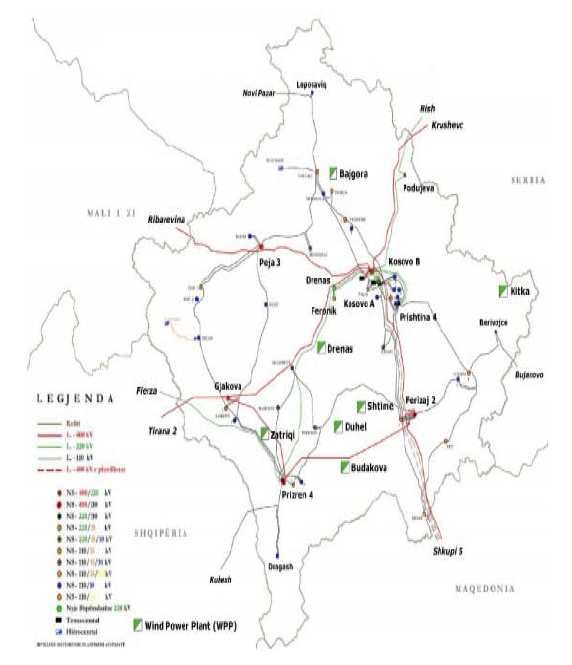
The energy source from wind is still a new field for Kosovo, as the wind was previously used only for mechanical work (e.g. windmills). Nowadays, in particular, wind energy is one of the fastest growing, cost-effective, lightweight, high efficiency and the environmentally accepted mean of electric power generation. Kitka (latitude: 42° 39′ 56″ (42.6656°) north, longitude: 21° 39′ 36″ (21.66°) east) is a mountain within Kosovo and is nearby to Lisacka and Hurugljica. In Kitka is planned to install 13 wind turbines but our study will help in the most accurate implementation of wind turbines so in this paper is compared the power of one of them in different highness: 84m, 80m, 60m, 40m, which is installed in Kitka mountain, in Kosovo.
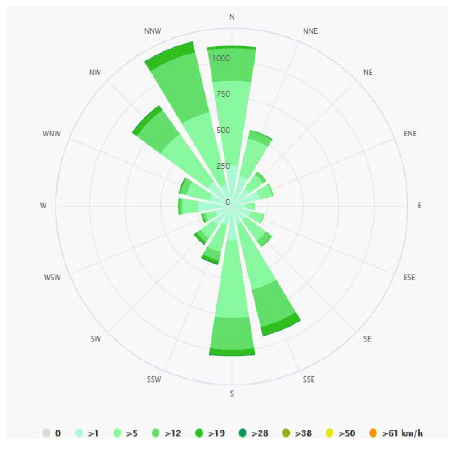
Wind Data
Wind data average monthly wind speed and annual [in m/sec] as measured by the potential investors are presented in Table 1 and Table 2 for months from May to December. It is, therefore, necessary to measure the wind data ate the exact location where wind generators [14, 15, 16] are going to be installed.
Table 1. Wind data for Kitka between May to December 2016
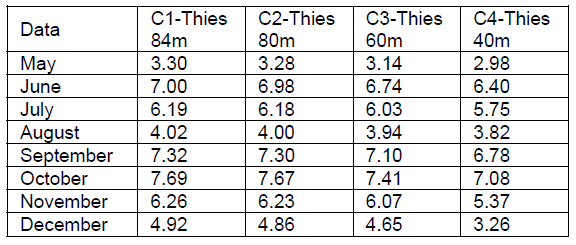
Those data are very useful for us taking into account that we have metering data for different height of erection of wind turbines. To use as much wind power, wind turbines should have large rotor diameters and be placed in an area with high wind speeds. Wind turbines are designed to start working at wind speeds between 3 and 5 m/s. Also, the turbine is designed to stop working at high wind speeds (about 25 m/s), so that there is no damage to the turbine itself and the turbine environment.
In figure 3, given graphic descriptions for wind data at different altitudes.
Table 2. The average speed of the year based on the data of wind for months MAY – DECEMBER

Research Method and Results
To use wind as a source of energy, the first element that is needed to know is wind speed. Power output given by the ‘Amperax’ wind turbine is calculated by using the producer diagram given in the figure below. The wind turbine is measured by the power curve and CP curves. The power curve is the relation between the power out and the average speed of the wind turbine which is presented in figure.4.
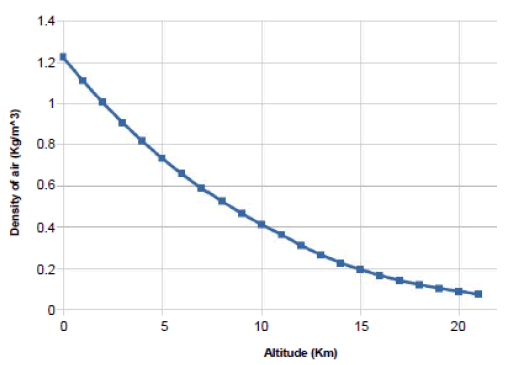
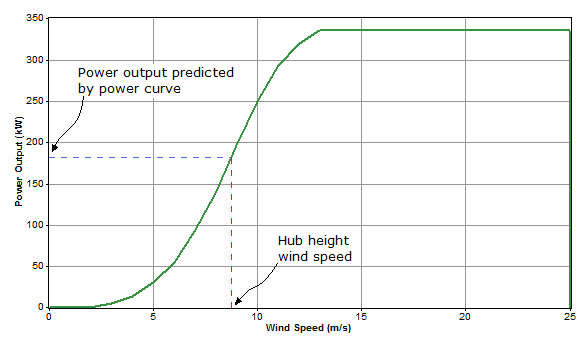
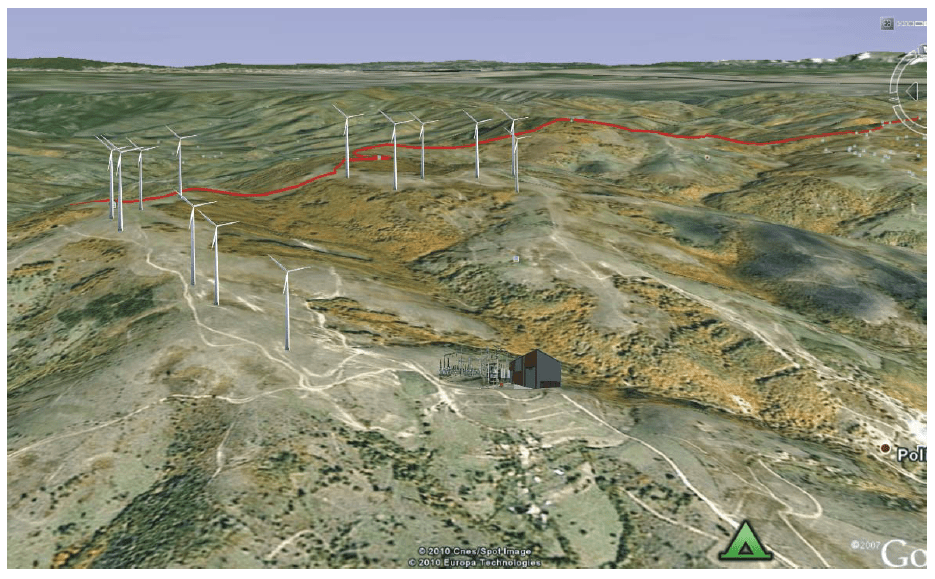
Figure 5, Shows how this wind turbine farm consisting of 13 will be realized.
As we show in the Table 1, the air density for 84m, 80m, 60m, 40m, altitudes is nearly same, so in the all of the study cases, we give it 1.22 kg/m3.
In the laboratory conditions given by producer the power of those wind turbines is nearly 3000kW, but in real conditions, those results below, we can see the difference of them, and rapport of those powers in laboratory conditions or maximum power and the real power [11], based on air power give us the performance of switch the wind power into electricity. Thus, it has been found out that same turbine with same installed capacity gives the different outcome.
The measurement is done for 4th cases including different altitudes: 84m, 80m, 60m, 40m.
1st case
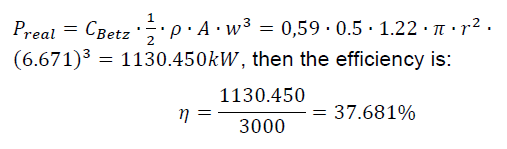
-the average wind speed per year is 6.671, Based on the installed capacity the efficiency is calculated as below:
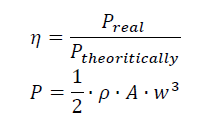
CBetz– maximum of wind energy that can use by blades of turbine (16/27).
ρ – air density
A – Turbine area
w – Wind speed
2nd case
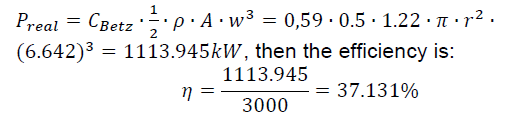
-the average wind speed per year is 6.642 m/s,
3rd case
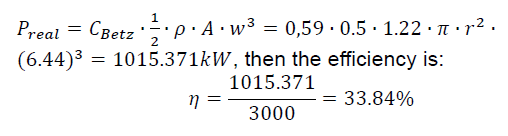
-the average wind speed per year is 6.44 m/s, Based on the installed capacity the efficiency is calculated as below:
4th case
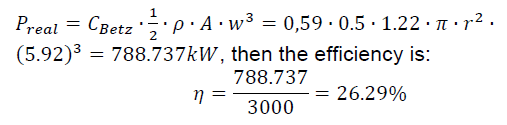
-the average wind speed per year is 5.92 m/s,
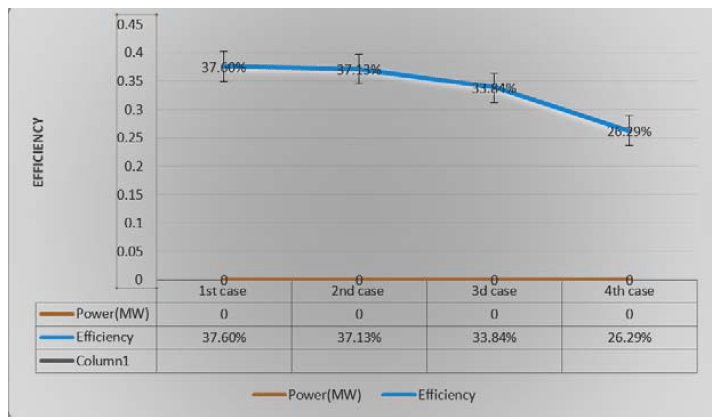
In figure 6, are explain the graphic results from those analytical expressions which describe the wind energy for a specified area.
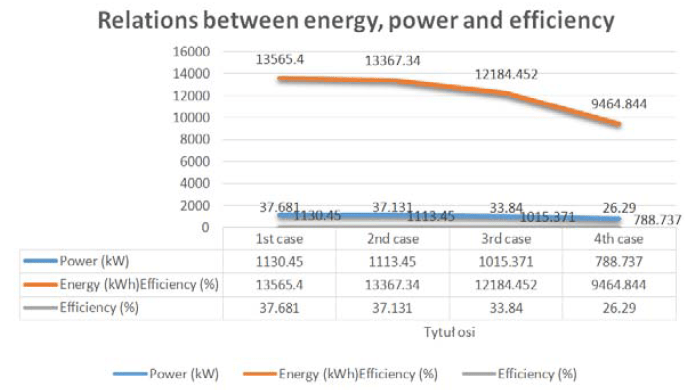
When we considering the generation of electricity from such a wind turbine during one day, taking into account the fact that the optimum working time will be 12 hours per day, we will have the following results:
1st case: E = P ∙ τ = 1130.450 ∙ 12 = 13565,4 kWh
2nd case: E = P ∙ τ = 1113.945 ∙ 12 = 13367.34 kWh
3rd case: E = P ∙ τ = 1015.371 ∙ 12 = 12184.452 kWh
4th case: E = P ∙ τ = 788.737 ∙ 12 = 9464.844 kWh
Figure 7, graphically illustrates the relationship between power efficiency and energy produced by a turbine set in these conditions if it is considered that the optimal turbine operation during a day will be accomplished for 12 hours during the day.
Results and discussions
From the above calculations, it can be seen that at higher altitudes the speed, as well as the power generated by the turbines, will be greater, for power of 1130.450 kW (the 1st case) maximum efficiency can be 37.60%, while for the 2nd case where the different altitude is 4m, the generated power is 1113.945 kW, thus for 16.505 kW.
In a 3rd case which is thought to be the average height, the power generated is 1015.371 kW, with an optimum efficiency from 33.84%, and the last case studied presents the case with the lowest power and efficiency achieved.
Taking into account the amount of energy needed to produce in Kosovo that is brought to a maximum of 710 MW, it can be seen that when the project in the word will achieve the installation of all thirteen wind turbines then referring to the case with suitable for the cost as well as the environmental effects (3rd case) it can be seen that taking into account the power of a wind turbine installed in that place of 1015.371kW, which force on the number of turbines of 13 will be equal to 13.199 MW which will to significantly mitigate energy consumption from fossil fuels.
Conclusion
This paper analyzes and measurements are made for wind speeds in a Kamenica region called Kitka, as a potential for wind power exploitation. We can conclude that when the turbine is most upper from the earth the power produced is the biggest and the efficiency too. In the end we can see that the most energy is produced when the wind turbine is upper of the earth but performing of turbine in this highness consider a lot of risk for the people or animals around this place, so the best way to put them is the highness of 60 m, and the important of this is that the power about of 1.01 MW (which was planned) is when the wind speed is upper than 6.44m/s.
REFERENCES
[1] Burton, Tony, et al. Wind energy handbook. John Wiley & Sons, 2011.
[2] Manwell, James F., Jon G. McGowan, and Anthony L. Rogers. Wind energy explained: theory, design, and application. John Wiley & Sons, 2010.
[3] Eggleston, David M., and Forrest Stoddard. “Wind turbine engineering design.” (1987).
[4] Arulampalam, Atputharajah, et al. “Power quality and stability improvement of a wind farm using STATCOM supported with hybrid battery energy storage.” IEE Proceedings-Generation, Transmission and Distribution 153.6 (2006): 701-710.
[5] Ahmad, Nadeem Tareq. “Improving Electrical Power Grid of Jordan and Control the Voltage of Wind Turbines Using Smart Grid Techniques.” International Journal of Applied Power Engineering (IJAPE) 2.1 (2013): 39-44.
[6] Vidhya, B., and K. N. Srinivas. “Small Scale Wind Generation System: Part I–Experimental Verification of Flux Reversal Generator Block.” International Journal of Applied Power Engineering (IJAPE) 6.1 (2017).
[7] Markovski, Blagoja, et al. “Transient performance of interconnected wind turbine grounding systems.” Przegląd Elektrotechniczny 91.6 (2015): 72-75.
[8]Marek, G. A. Ł. A. “Praca Turbin wiatrowych w systemie elektroenergetycznym oraz ich wpływ na jakość energii elektrycznej.” (2017).
[9] Bhongade, Sandeep, and B. Tyagi. “Participation of Renewable Energy Sources in Restructured Power System.” International Journal of Applied Power Engineering (IJAPE) 2.1 (2013): 1-14.
[10] Marek, G. A. Ł. A. “Ocena wpływu pracy turbiny wiatrowej FL MD 77 na jakość energii elektrycznej w węźle przyłączenia w sieci dystrybucyjnej średniego napięcia.” (2015).
[11] Jąderko, Andrzej. “Badania symulacyjne układu sterowania turbiną wiatrową z generatorem indukcyjnym.” Przegląd Elektrotechniczny 91.12 (2015): 110-113.
[12] Dragusha, Bedri, Blerim Rexha, and Ilir Limani. “Analyzing Wind Data of the First Wind Farm in Kosovo.” Int. J. of Thermal & Environmental Engineering 2.2 (2011): 61-67.
[13] Qafleshi, Mevlan, Driton R. Kryeziu, and Lulezime Aliko. “Potential of Wind Energy in Albania and Kosovo: Equity Payback and GHG Reduction of Wind Turbine Installation.” International Journal of Renewable Energy Development 4.1 (2015): 11.
[14] Halinka, Adrian, Piotr Rzepka, and Mateusz Szablicki. “State identification of MV power network with wind power generation operating under manual and automatic voltage control in HV/MV substation. ” Przegląd Elektrotechniczny 91.6 (2015): 126-128.
[15] GAJEWSKI, Piotr, and Krzysztof PIEŃKOWSKI. “Direct Torque Control and Direct Power Control of wind turbine system with PMSG.” Przegląd Elektrotechniczny 92.10 (2016): 249-253.
[16] Sathiyanarayanan, J. S., and A. S. Kumar. “Power quality improvement wind energy system using cascaded multilevel inverter.” International Journal of Renewable Energy Development 2.1 (2013): 35.
Authors: prof. asoc. dr. Sabrije Osmanaj, Faculty of Electrical and Computer Engineering, University of Prishtina, street “Sunny Hill”, nn, 10 000, Prishtina, e-mail: sabrije.osmanaj@uni-pr.edu; Bukurie Hoxha, Faculty of Mechanical Engineering, University of Prishtina, email: bukuriehoxha15@gmail.com; *corresponding author: prof. asoc. dr. Rexhep Selimaj, Faculty of Mechanical Engineering, University of Prishtina, email: rexhep.selimaj@uni-pr.edu.
Source & Publisher Item Identifier: PRZEGLĄD ELEKTROTECHNICZNY, ISSN 0033-2097, R. 94 NR 7/2018. doi:10.15199/48.2018.07.05
 Power Quality Blog